
Breed guide / Zuchon
Living with a Zuchon
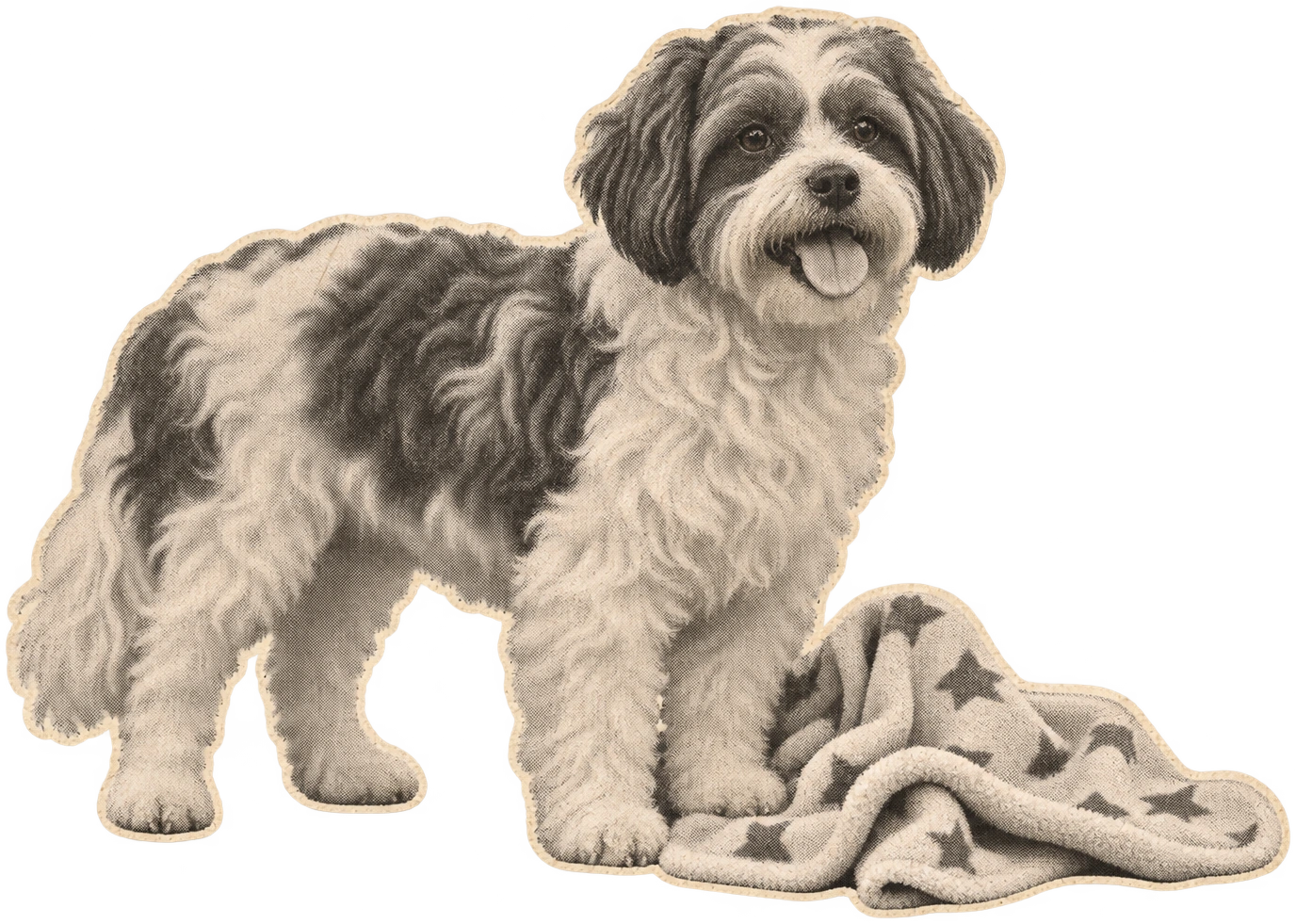
A Zuchon is a Shih Tzu and Bichon Frise cross. The name tends to get attached to a small dog with a big coat, but it can’t tell you how short their muzzle will be, how much brushing they’ll need or how they’ll get on when you leave the house. Life with one makes more sense when you start with the dog you’ve actually got. You might be able to see its eyes right now. Give that fringe a fortnight. 1234
Jump to a section
The short version
Get your dog used to a hand near their chin before you need to clean around the eyes or brush their teeth. Start with a touch and a reward, then let them go. Doing one corner of the face while they’re still happy is a better start than trying to finish the whole thing with them wriggling away. 5 6 7
Pay attention to their breathing on an ordinary walk. If it’s regularly loud or they take a long time to recover, get a vet to check it. Don’t decide a noise is normal because the dog’s got Shih Tzu in it. If they’re struggling to breathe or collapse, call an emergency vet. 8 9 48
Zuchon notes / 01
Where to start
| Start here | Do this |
|---|---|
| Face handling | Teach brief, gentle handling before you need it. 5 6 |
| Breathing | Notice what it sounds like at rest and on a normal walk. 8 |
| Brushing | Check where the hair rubs under straps and behind the ears. 5 10 |
| Leaving the house | Practise being apart briefly before the first long absence. 11 |
What “Zuchon” actually tells you
Zuchon and Shichon are names used for a Shih Tzu and Bichon Frise cross. “Teddy bear” is a description used for the look, not proof of either parent. The Royal Kennel Club lists the two parent breeds separately and does not give Zuchons a breed standard. A name on an advert or rescue record is a useful starting point, not verified ancestry. 1 2 3 4 12
Buy the harness when you can measure the dog
There’s no single registered adult size for this cross. Both parent breeds are small, but their written standards describe different proportions and do not tell you what your dog will measure. Feel for the waist and ribs rather than judging how much dog is under the fur. Get the chest measurement before buying anything with a buckle. 1 3 4 10 13 14 15
A harness should let them walk comfortably without rubbing into the armpits. Part the coat where straps sit after the first few outings. Small doesn’t necessarily mean you’ll need the smallest thing in the shop, particularly after you’ve already bought two of it online. 5 10
A short trim still leaves you four places to check
A curlier coat and a softer wavy coat won’t necessarily need the same brush or schedule. Ask a groomer to show you what the comb catches on this dog. Start where the coat is easy to part, then check behind the ears, under the front legs and beneath the harness. If a knot is tight against the skin, don’t pull at it or try to snip it out. 1 5 16 17
Use a soft damp cloth to clean the hair around the mouth if food collects there. Have a look at the hair around the eyes as well. Wiping the fur is one thing; an eye being held closed, a sore eye or a change in sight is for the vet. A short coat won’t make any dog safely hypoallergenic. Low shedding and low allergen exposure aren’t the same thing. 5 6 18 19 20
Zuchon notes / 04
Under all that hair
Likes sitting with you doesn’t tell you what happens when you go out
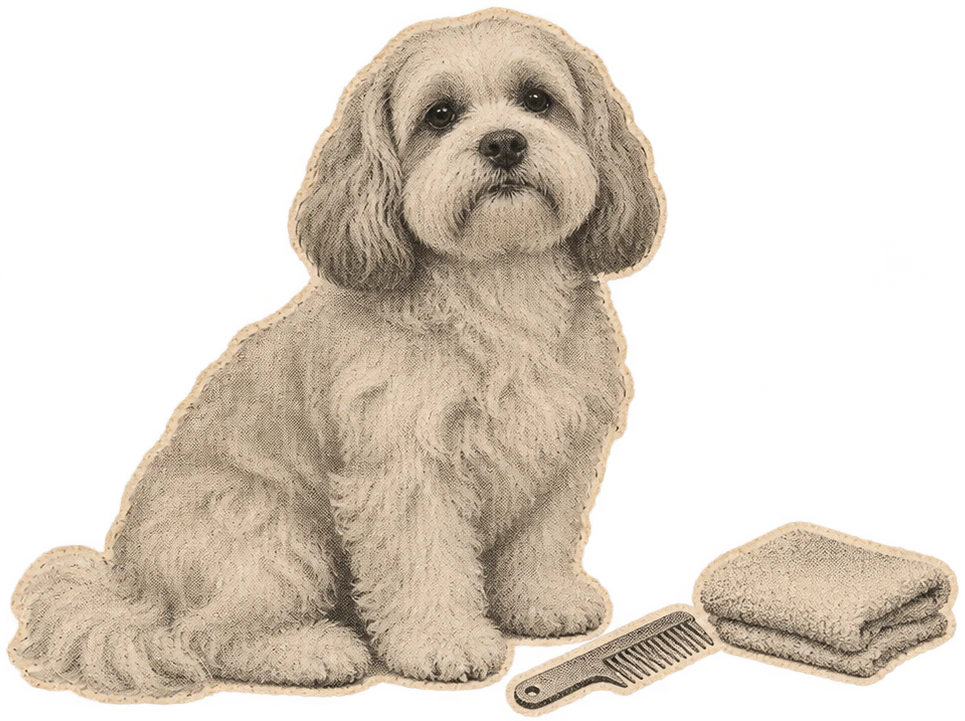
Some enjoy company and still cope fine on their own for a bit. Others start pacing or barking as soon as you’re on the other side of the door. A recording can tell you what happens rather than leaving you to guess from the neighbours’ increasingly specific reports. Start with a separation this dog can manage, and get help if they’re distressed. 2 11 21
Watch for signs they want space before anyone reaches down to pick them up. A little dog can still dislike a hand towards its face. If that’s new rather than usual, look for things like a sore mouth or a knot instead of assuming they’ve gone off you. 6 22 23
Zuchon notes / 05
Read the room
| What you notice | What to try first |
|---|---|
| Barking or pacing after you leave | Record briefly to see when it starts and get help if it’s distress. 11 21 |
| Turning away from hands | Stop and let them choose whether to come back. 6 22 |
| New sensitivity near mouth | Let the vet know, particularly if they’re eating differently. 23 |
Teach the face stuff in bits
Hold a dog toothbrush near the dog for a moment without trying to get it in their mouth. Let them investigate and build up to brushing gently with dog toothpaste, ideally daily once they’re comfortable. If they’re sore or won’t eat the way they normally do, get the mouth checked rather than trying to brush through it. 6 7 23 24
Do the same with other jobs: a quick feel behind an ear, a towel touching a front paw, a chance to walk away. Take them out after sleeping or playing while you’re working on toilet training. It’s easier to reward the right spot than to spend the evening wondering whether that’s a new mark on the rug. 6 25
Zuchon notes / 06
Start with one touch
Small legs still like going somewhere
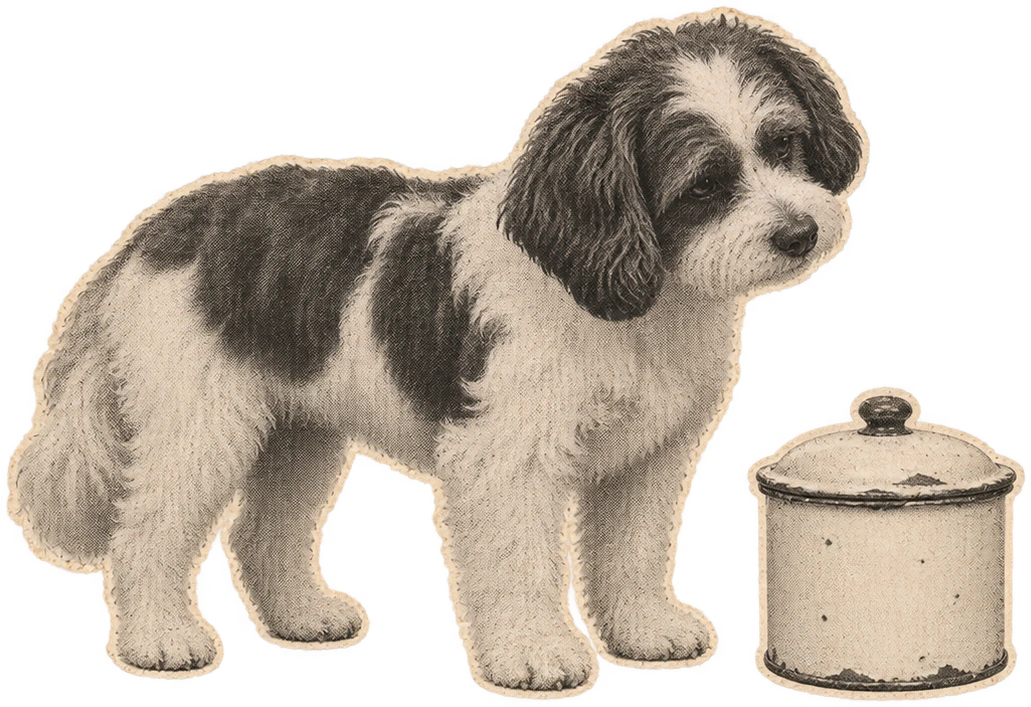
Build a day with walks and things to sniff, and let the dog move on its own feet where it’s safe. Don’t plan the distance by mixing two parent breed recommendations. Watch the pace they choose, how much they want to stop and how they recover afterwards. A dog that’s suddenly reluctant or repeatedly sits down on a route they know could be uncomfortable. 8 26 27 28
Go in the cooler part of a warm day or have shorter outings as needed. A dog with a shorter muzzle may find heat and exercise harder, so ask the vet about repeat noisy breathing, poor recovery or tiring early. Struggling for breath is an emergency, not something to watch for the next half an hour. 8 9 29
Zuchon notes / 07
Walk the dog in front of you
| What you’ve got | A better option |
|---|---|
| Cool day and comfortable dog | Let them sniff at their pace and vary the route. 26 27 |
| Warm weather | Water, shade and shorter outings at cooler times. 8 29 |
| Regular skip or limp | Mention it to the vet; a brief video can help show what happens. 28 30 |
| Struggling for breath | Contact an emergency vet straight away. 9 |
Set up the room at dog height
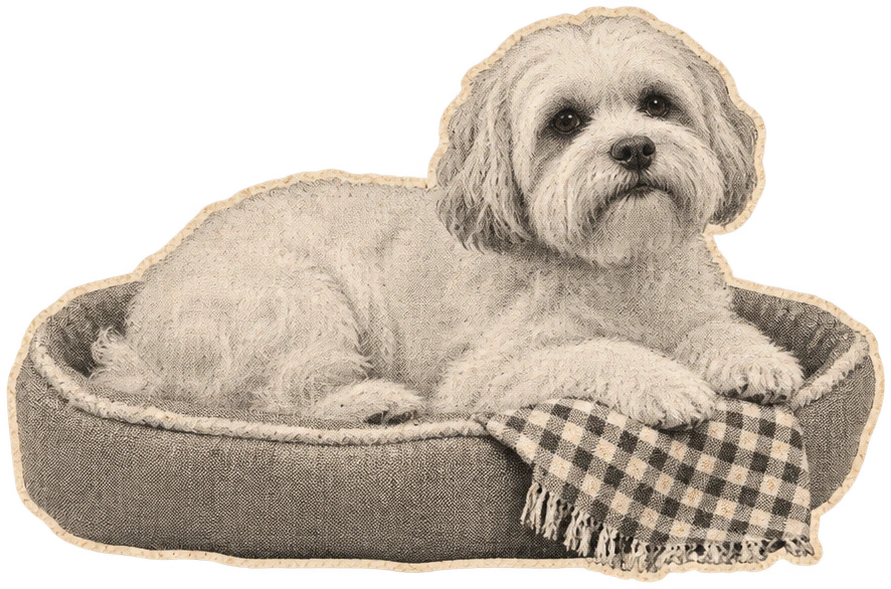
Give them a bed they can get into and out of by themselves, with a route away from feet. If the route from sofa to water bowl ends in a sprint across slippery flooring, try a grippy runner. If they’re hesitating at steps or have stopped jumping somewhere, don’t assume it’s because you moved the cushion. Take notice and get new or persistent changes checked. 28 31 32
Check any gate or puppy pen for gaps your dog could squeeze through. Put the brush and face cloth where you’ll use them and leave the bed out of the grooming routine; it’s a good place to leave the dog alone. 5 6 31 33
The dog can say no without making a fuss
With children, sit down and let the dog come over first. Don’t let anyone pass them around for a cuddle because they happen to fit in one arm. Adult supervision matters and the dog needs somewhere it can walk away to. Leave sleeping and eating dogs to get on with it. 6 22 34
If another pet is already there, let them meet gradually with routes apart and somewhere separate to eat. If the dog has lived with a cat before, that’s helpful to know but it doesn’t tell you what your cat wants them to do. 35 36
Health: two sets of parent evidence, not a clean bill for the cross
For breeding, the Royal Kennel Club lists the BVA/RKC/ISDS Eye Scheme as Good Practice for both parent breeds. For Shih Tzus, the respiratory grading scheme already lists eligibility, and the RKC says the breathing test will be formally added to Best Practice from January 2027. Those are parent-breed recommendations; don’t assume a dog billed as a Zuchon can book the same test. A vet can still examine any dog with breathing concerns. 3 4 8 37 38 39
In a UK Shih Tzu VetCompass study, gum disease was recorded in 9.5% of the dogs studied for disorders. That is not a Zuchon rate. PDSA flags slipping kneecaps in its Bichon Frise guide; a recurring skip is a reason to get the individual checked, not to diagnose it at home. Watch your dog’s teeth, eyes, breathing and movement rather than relying on the word “cross”. 17 18 24 30 40
The 2024 Dogs Trust study reported median lifespan estimates of 12.8 years for Shih Tzus and 12.5 for Bichon Frises. Neither figure is for Zuchons and averaging them would not give you a lifespan estimate for the cross. 41 42
Zuchon notes / 10
Health conditions and screening
| Topic | What you can use |
|---|---|
| Eyes | Ask for both parent results if available; get a painful eye checked promptly. 3 4 18 39 |
| Breathing | Ask about the Shih Tzu parent’s results and get new or regular breathing trouble assessed. 3 8 37 |
| Teeth | Build up brushing with dog toothpaste and report new mouth pain. 7 23 24 |
| Knees | Get recurring skips or limps checked, whatever the parentage. 28 30 |
| Lifespan | Parent-breed estimates are not a result for this cross. 41 42 |
| Screening and breeding | Ask which dogs were tested, when and under what scheme. 3 4 43 |
| Urgent conditions | Struggling for breath or sudden collapse needs emergency vet advice. 9 48 |
Budget for more than a small food bill
Ask a groomer to look at the actual coat before they quote. Find out how often they think it needs trimming and what they do if the dog doesn’t want its face handled. Work regular brushing at home into the plan either way. If the haircut seems to cost more than yours, at least you’re unlikely to come home with half a twig stuck to your elbow. 5 16 17 44
When you compare insurance, check the excess, limits, existing conditions and how dental work is handled. Put time or money aside for care when you can’t get home. The small harness may be cheap, but that isn’t the bit that runs up a regular bill. 10 24 44 45
Zuchon notes / 11
Price the coat
| Cost | Ask about |
|---|---|
| Groomer | The price for this coat and how they handle face work. 5 44 |
| Insurance | Excess, exclusions and whether dental illness is covered. 24 44 |
| Care when you’re out | What the dog can manage and who can help when needed. 11 45 |
| Routine vet care | Regular checks as well as what’s covered if something changes. 24 44 |
Two older companion breeds, one newer label
The Shih Tzu and the Bichon Frise have their own recorded histories as companion dogs. Zuchon is a label for combining them, not a third old breed with a single development story you can use to explain every dog. The two different faces and coats in the parent standards are more useful context than a tale about who supposedly bred the very first one. 1 2 3 4 13 14
Zuchon notes / 12
Two parent breeds

Ask to see the dog do normal dog things
Meet the dog awake if you can. See how they move, listen to their breathing and ask which grooming jobs they’re comfortable with. A rescue may know what happens when the dog is alone in a foster home or may not have seen it yet. Ask which, rather than treating “loves company” as a complete answer. 2 6 8 11 46
If you’re going to see a litter, meet the puppies with their mum and ask for the actual parent health results. Be wary of promises that crossbreeding guarantees easy breathing, or that nobody in the house can be allergic. A dog’s health and the fit with your household matter more than the photo of a clean puppy with a bow in its hair. 19 20 38 43 47
Zuchon notes / 13
Ask for real examples
| Ask | Why it helps |
|---|---|
| Who are the parents, and what are their results? | Confirms what the label alone can’t. 3 4 43 |
| What happens when they’re brushed or left? | Helps you decide what support to arrange. 6 11 |
| What have you noticed about breathing and movement? | Useful observations for planning and a vet discussion. 8 28 |
| What’s the normal routine now? | Makes the first few days easier to plan. 25 46 |
Sources
- S1Purina UK explanation of the Zuchon label and parent pairSource · checked 21 November 2026
- S2PetMD veterinarian-reviewed article using Shichon for the same parent pairSource · checked 21 November 2026
- S3Royal Kennel Club Shih Tzu parent breed profile and current screening adviceSource · checked 21 November 2026
- S4Royal Kennel Club Bichon Frise parent breed profile and current screening adviceSource · checked 21 November 2026
- S5PDSA veterinary dog grooming adviceSource · checked 21 November 2026
- S6Dogs Trust comfortable handlingSource · checked 21 November 2026
- S7PDSA practical daily toothbrushingSource · checked 21 November 2026
- S8PDSA veterinary BOAS clinical signs and owner adviceSource · checked 21 November 2026
- S9PDSA emergency guidance for breathing difficultiesSource · checked 21 November 2026
- S10Dogs Trust fitting and introducing a harnessSource · checked 21 November 2026
- S11Dogs Trust introducing alone time graduallySource · checked 21 November 2026
- S12Royal Kennel Club official breed standards directorySource · checked 21 November 2026
- S13Royal Kennel Club written Shih Tzu breed standardSource · checked 21 November 2026
- S14Royal Kennel Club written Bichon Frise breed standardSource · checked 21 November 2026
- S15PDSA checking body condition under a coatSource · checked 21 November 2026
- S16PDSA Shih Tzu parent coat and health profileSource · checked 21 November 2026
- S17PDSA Bichon Frise parent coat and health profileSource · checked 21 November 2026
- S18PDSA veterinary advice on painful or closed eyesSource · checked 21 November 2026
- S19Original Vredegoor et al. observational research on Can f 1 and hypoallergenic claimsSource · checked 21 November 2026
- S20Original Nicholas et al. study of Can f 1 in homesSource · checked 21 November 2026
- S21Dogs Trust signs and support for separation anxietySource · checked 21 November 2026
- S22Dogs Trust body languageSource · checked 21 November 2026
- S23PDSA veterinary signs of a painful mouthSource · checked 21 November 2026
- S24PDSA veterinary dental disease and preventionSource · checked 21 November 2026
- S25Dogs Trust toilet trainingSource · checked 21 November 2026
- S26PDSA choosing exercise by age and healthSource · checked 21 November 2026
- S27Dogs Trust sniffing and other enrichmentSource · checked 21 November 2026
- S28PDSA guidance on limpingSource · checked 21 November 2026
- S29Dogs Trust hot-weather dog safetySource · checked 21 November 2026
- S30PDSA veterinary advice on luxating patellas and skippingSource · checked 21 November 2026
- S31Dogs Trust teaching a settle and putting beds in quiet locationsSource · checked 21 November 2026
- S32Canine Arthritis Management veterinary home access and non-slip surfacesSource · checked 21 November 2026
- S33Dogs Trust preventing escapesSource · checked 21 November 2026
- S34Dogs Trust child safety and supervisionSource · checked 21 November 2026
- S35Dogs Trust dogs and cats living togetherSource · checked 21 November 2026
- S36Dogs Trust introduction to another dogSource · checked 21 November 2026
- S37Royal Kennel Club and Cambridge respiratory grading eligibilitySource · checked 21 November 2026
- S38Royal Kennel Club Health Standard central tables and Shih Tzu timingSource · checked 21 November 2026
- S39British Veterinary Association clinical Eye SchemeSource · checked 21 November 2026
- S40Original UK Shih Tzu VetCompass study, not a Zuchon cohortSource · checked 21 November 2026
- S41Original McMillan et al. UK companion dog longevity studySource · checked 21 November 2026
- S42Dogs Trust original breed median estimates, separate parent-breed rowsSource · checked 21 November 2026
- S43Royal Kennel Club record lookup for named dogsSource · checked 21 November 2026
- S44PDSA dog ownership costs and insuranceSource · checked 21 November 2026
- S45Dogs Trust choosing a dog walkerSource · checked 21 November 2026
- S46Dogs Trust settling a rehomed dogSource · checked 21 November 2026
- S47RSPCA choosing a puppy breeder and meeting the motherSource · checked 21 November 2026
- S48PDSA veterinary first aid for collapsed petsSource · checked 21 November 2026
