Breed guide / Yorkie Poo
Living with a Yorkie Poo
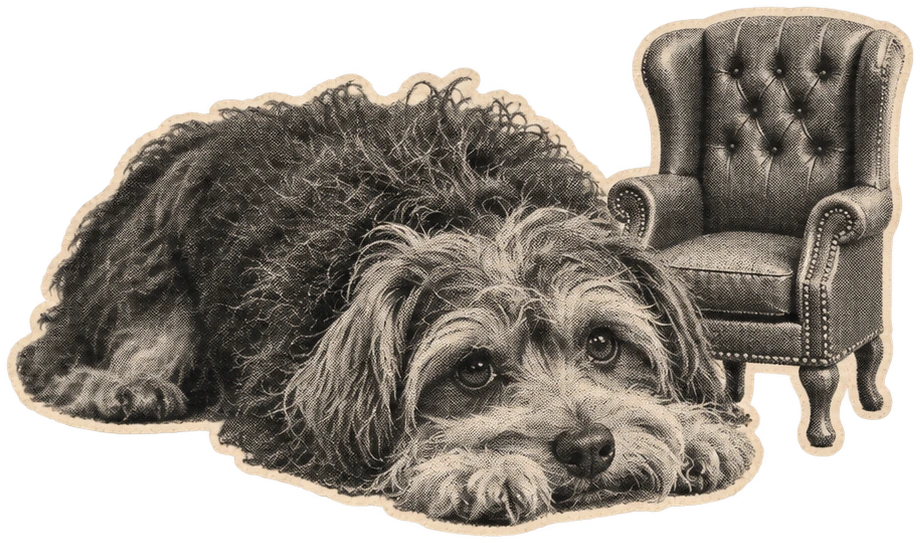
A Yorkie Poo is a Yorkshire Terrier crossed with a Poodle. You might get a wiry-looking little dog with a fringe that refuses to stay put, or a softer coat with much more curl. Either way, the grown-up dog needs walks where they get to use their own feet. Work out what the coat needs, get them comfortable with having their teeth looked at and give them somewhere to switch off when life gets a bit noisy. 12345
Jump to a section
The short version
Set up one small thing you can do most days. If you’re starting mouth care, reward a light touch to the lip and leave it there. You can work up to a brush with dog-safe toothpaste while your dog is comfortable. If they’re dropping food or seem sore when they chew, make that a vet call instead of a lesson. 4 6 7
Look at the coat they have now, particularly after a clip or a few days of wet walks. Check the spots that snag rather than brushing all the visible bits and hoping for the best. Behind an ear is a good place to start, and a groomer can show you how to find a knot without tugging it. 5 8
Yorkie Poo notes / 01
Coat, teeth and a proper walk
| Start with | The useful bit |
|---|---|
| Mouth | Teach a brief lip touch and ask the vet about any sign of pain. 4 6 7 |
| Coat | Check below the surface on a patch that rubs or snags easily. 5 8 |
| Exercise | Leave enough time for a walk with a bit of choice about where they sniff. 9 10 |
| Rest | Put a bed where they can see the room without lying in its busiest spot. 11 |
What the name means
Yorkie Poo and Yorkipoo are used for Yorkshire Terrier and Poodle ancestry. An Isle of Wight school uses Yorkipoo to describe its own Yorkshire Terrier–Poodle dog. That’s an example of the name, not evidence that all Yorkie Poos are suited to a busy school or that they share one breed standard. 1 2
Yorkie Poo notes / 02
Check the parent names
What size do you buy things for?
The UK pedigree standards give useful parent context. The Yorkshire Terrier’s written weight is up to 3.2 kg, the Toy Poodle is under 28 cm at the shoulder and the Miniature Poodle stands at least 28 cm but below 38 cm in its standard. These are different measures of the pedigree dogs. They don’t turn into a weight or height you can promise for a cross. 2 12 13 52
For walking gear, use measurements from your dog rather than from a photo online. Watch how they move and how the harness sits when they lower their head to sniff. Some coat volume comes off at the groomer, so check the fit again then. 5 16
Yorkie Poo notes / 03
Measure this dog
Don’t groom the picture on the advert
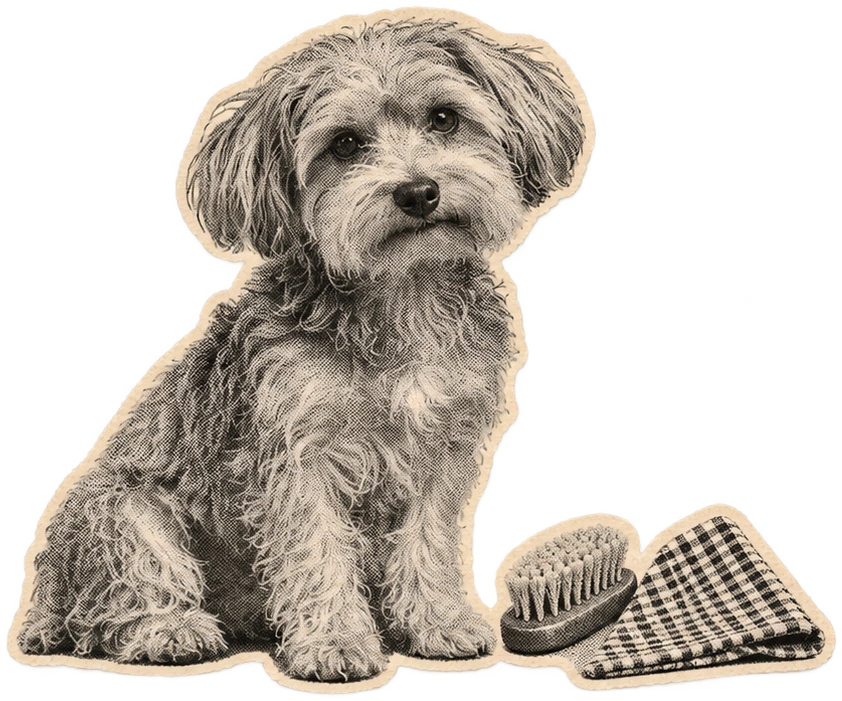
Fine, straight hair can tangle in different places from a thicker wavy coat. Check whichever one you actually have behind the ears and just behind the forelegs. If a brush glides over the top but the comb won’t comfortably pass through a little section, ask the groomer to look at it. The dog is under no obligation to admire a glossy surface. 3 5 8 19
When they come in damp, dry off the patch below the collar and get the wet harness off. Watch for changes in how they respond to touch. Don’t cut close to the skin to get rid of a tight knot, and don’t take a low-shedding coat as a promise about someone’s allergies. 5 16 19 20
Yorkie Poo notes / 04
Brush under the surface
| Spot | Good regular check |
|---|---|
| Ear fringe | Look and feel under the top layer, without tugging. 5 8 |
| Harness area | Check for rubbing and trapped dampness after a wet walk. 5 16 |
| Dense knots | Let a groomer deal with mats close to the skin. 5 |
| Itching or redness | Ask the vet if it keeps happening instead of trying another brush. 19 21 |
The dog isn’t a doorbell
Not all Yorkie Poos bark at the door. If yours does, start by making arrivals quieter and easier to manage. Let the visitor get seated before you consider a greeting. A dog that can settle behind a gate doesn’t need to run an inspection on everyone who comes to fix the boiler. 22 23 24
Notice what got their attention before the bark. If it’s people going past the glass, try closing the view for part of the day and reward a quiet rest somewhere else. You’re changing one situation, not making a judgment about a little dog with a loud voice. 11 22 24
Yorkie Poo notes / 05
Keep arrivals quieter
| When it happens | Make the situation easier |
|---|---|
| Front door opens | Prepare a quiet spot with a barrier before the visitor comes in. 23 |
| Street is visible | Reduce the view and reward them for settling elsewhere. 11 22 |
| Touch suddenly becomes a problem | Pause and speak to the vet if there might be discomfort. 7 24 |
Teach the bits you’ll actually use
A short wait on a mat while you put your shoes on is a useful lesson. Start when you aren’t going out. Reward your dog for being comfortable on the mat and let them get up when they want. When putting the shoes on barely gets a look, you can try it with the rest of the leaving routine. 11 25
On a walk, let them notice a person from a comfortable distance and reward them for turning back to you. No introductions are required. For a dog who’d rather use their nose, put a familiar toy in an easy place to find and build up from that instead of repeating the same trick until neither of you cares. 10 24 25
A walk, not just a trip in a bag
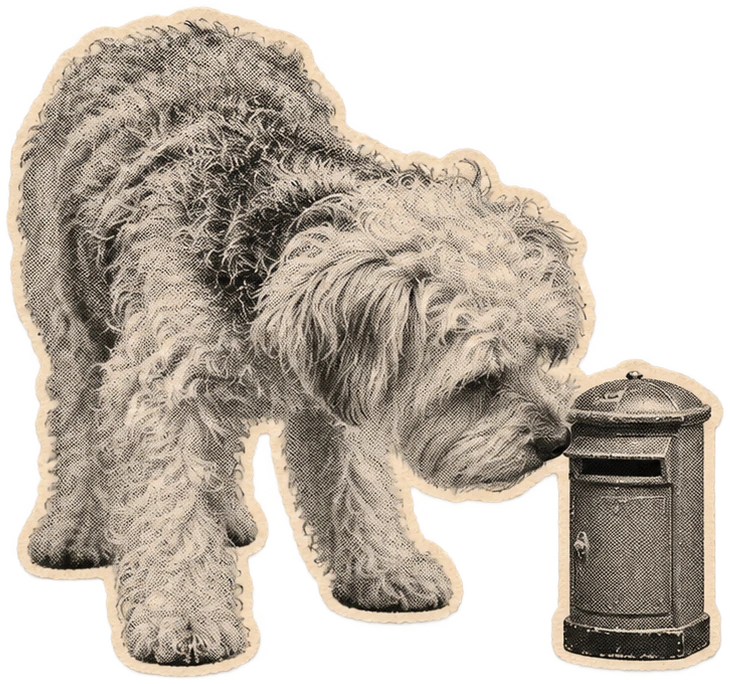
If your dog is fit and comfortable, give them proper walks with a chance to stop and sniff. The pavement can look fairly dull from your side of the lead while your dog’s got a whole other version of it at nose height. Don’t swap it all for indoor games because carrying them is quicker. 9 10 26
If they start stopping on a walk they normally handle, think about what’s changed. If there’s recurring coughing or a new change in movement, speak to the vet. Some small-breed windpipe conditions can cause coughing, but there are other causes and the sound alone doesn’t tell you which it is. 26 27 28
Yorkie Poo notes / 07
A walk at their pace
| Out on the walk | What helps |
|---|---|
| Quiet route | Give them spare lead to sniff where it’s safe. 9 10 |
| Busy place | Train a return in an easier setting before expecting it near distractions. 29 |
| Hot conditions | Pick a cooler time and don’t insist on finishing the usual route. 30 |
| Coughing or pulling up short | Stop and get advice if it’s recurring or new; difficulty breathing is urgent. 27 31 |
Give them time off
Set up somewhere they can snooze while you get on with things. A bed that needs a jump onto a high chair is less useful than one they can walk to whenever they want. If they’re slipping on the turn to their bed, see whether adding grip helps. Ask the vet about a new movement problem. 11 28 32
If they’re used to spending the day with you, build time apart in short, quiet steps. Check what they do when you leave rather than assuming that all is well because they’re quiet when you get back. If they’re distressed right away, start with an easier step and speak to someone qualified if they’re struggling. 33 34
Yorkie Poo notes / 08
Put the bed to work
Children and other pets
Let children play with the dog at their level rather than carrying them round. An adult should be able to step in straight away if the dog’s trying to leave or the play’s getting loud. Let the dog eat and rest without anyone leaning over them. 35 36
With a cat, start behind a barrier and make sure the cat can get somewhere safe easily. With another dog, use a short meeting with room to move away and let both animals rest afterwards. Being the smaller animal doesn’t make a dog comfortable with every meeting. 24 37 38
Health
The sources here don’t provide a representative UK Yorkie Poo lifespan or health rate. A UK VetCompass study of Yorkshire Terriers recorded periodontal disease in 698 of 3,308 dogs in its 2016 disorder sample (21.10%, 95% CI 19.71–22.49%). That gives dental care a reason to be on your list, but it isn’t a Yorkie Poo figure or a prediction for yours. A large UK study of three other Poodle crosses didn’t include this one. 39 40
For breeding screening, the Royal Kennel Club lists no formal Good or Best Practice tests on the Yorkshire Terrier row at present. That does not mean there are no inherited or clinical concerns. Toy Poodle Good Practice includes prcd-PRA DNA. The clinical Eye Scheme and hip scoring are in Best Practice. For Miniature Poodles, Good Practice is blank and Best Practice includes clinical eyes and hips. It also lists DNA tests for prcd-PRA and osteochondrodysplasia (OC). Check the actual Poodle parent’s registered size rather than accepting “Poodle tested” as a result. 3 41 42 43
Yorkie Poo notes / 10
Health conditions and screening
| Health topic | What you can do |
|---|---|
| Teeth | Use dog-safe toothpaste once they’re comfortable. Bring signs such as mouth pain or dropping food to the vet. 4 6 7 |
| A cough that keeps coming back | Ask the vet rather than assuming it’s a small-dog noise. Struggling to breathe needs urgent help. 27 31 |
| Skipping or limping | Ask about a new change in gait. A slipping kneecap is one possible cause, not the only one. 28 44 |
| The Yorkie parent | Ask about health and family history despite the absence of formal named tests in the current row. 3 41 |
| The Poodle parent | Check the separate Toy or Miniature listing against their named results. 41 42 43 |
| Eye changes | Call the vet about a painful eye, squinting or holding it shut. 45 |
| Limits | A cross name and a parent certificate do not predict one dog’s outcome. 2 39 41 |
Look past the small food bill
Get a quote for the coat they actually have. Tell the groomer which parts of the dog are hard to handle rather than waiting until they’ve got a comb there. Check what insurance excludes for dental care. Ask separately whether it covers any existing conditions. Don’t assume that a cheap month now always means a cheap year later. 5 6 36 46
If you need a regular walker, ask what a small-dog walk looks like with them. You want a route and pace your dog can manage, not just a group with a space. Give them specific things to look for if the dog has recently changed what they can do comfortably. 26 27 47
Yorkie Poo notes / 11
Budget beyond food
| Cost | Good question to ask |
|---|---|
| Coat | How often does this coat need doing, and what can I learn to do at home? 5 |
| Vet care | What are the excesses and exclusions if I need dental or other ongoing treatment? 6 46 |
| Walking | Can the walker follow the routine this dog does well with? 47 |
| Kit | What actually fits now, and will I need to replace it as they change? 16 |
Where the two names come from
The Yorkshire Terrier has a British breed history. The Royal Kennel Club traces the original Poodle form to water retrieving in Germany. Toy and Miniature have their own UK standards. Those are histories of the parents, rather than evidence about the first Yorkie Poo. The name is documented, but these sources don’t establish a foundation date. 1 3 12 13 48

Getting to know the dog in front of you
Ask the rescue what this dog does when they hear a knock, how they handle the lead and what a brush near their face looks like on an ordinary day. Allow some quiet time to learn what’s already familiar. For a dog you already live with, those questions are still more useful than guessing which parent supplied the personality. 5 23 26 49
For a puppy, meet their mother at the place where the litter is being raised and check the named records. Ask what they’ve already experienced around people. Find out what care they’ve been handled for and whether they’ve had any comfortable time away from the litter. You can want the little dog with the fringe and still go home to read the documents before making a decision. 41 50 51
Yorkie Poo notes / 13
Ask about the dog today
| Ask about | A useful answer |
|---|---|
| Coat comfort | What can already be brushed and where they’re worried about being touched. 5 36 |
| Parents | Actual names, Poodle size and results that match the corresponding parent row. 41 51 |
| Walks | What they can comfortably do and how they respond to the lead. 16 26 |
| Time apart | What their previous carer has really seen, and what helps them settle. 33 49 |
Sources
- S1Oakfield CE Primary School, first-hand UK Yorkipoo naming example, Oaklife archiveSource · checked 21 November 2026
- S2Royal Kennel Club crossbreed names and varied inheritanceSource · checked 21 November 2026
- S3Royal Kennel Club Yorkshire Terrier history and no currently recommended pre-breeding testsSource · checked 21 November 2026
- S4PDSA veterinary advice on introducing toothbrushingSource · checked 21 November 2026
- S5PDSA grooming dogs with different coatsSource · checked 21 November 2026
- S6PDSA dental disease signs and clinical adviceSource · checked 21 November 2026
- S7PDSA painful mouth and signs requiring assessmentSource · checked 21 November 2026
- S8Standard Poodle Club example of care below curly coat surfaceSource · checked 21 November 2026
- S9Dogs Trust reward-based comfortable lead handlingSource · checked 21 November 2026
- S10Dogs Trust practical hide and seek toy gameSource · checked 21 November 2026
- S11Dogs Trust training a dog to settle on a matSource · checked 21 November 2026
- S12Royal Kennel Club written Toy Poodle standardSource · checked 21 November 2026
- S13Royal Kennel Club written Miniature Poodle standardSource · checked 21 November 2026
- S14Terrier SOS UK rescue’s documented Chorkie, Yorkshire Terrier x ChihuahuaSource · checked 21 November 2026
- S15Greenleaf Animal Rescue documented Shih-Poo, Shih Tzu x PoodleSource · checked 21 November 2026
- S16Dogs Trust fitting and introducing a harnessSource · checked 21 November 2026
- S17PDSA body condition and healthy dog weightSource · checked 21 November 2026
- S18Dogs Trust car and dog equipment fitSource · checked 21 November 2026
- S19PDSA Yorkshire Terrier coat and veterinary guidanceSource · checked 21 November 2026
- S20Vredegoor et al. measured dog allergen in Poodles and other dogsSource · checked 21 November 2026
- S21PDSA itchy skin adviceSource · checked 21 November 2026
- S22Dogs Trust window barking guidanceSource · checked 21 November 2026
- S23Dogs Trust handling visitors and giving spaceSource · checked 21 November 2026
- S24Dogs Trust body language and consent signalsSource · checked 21 November 2026
- S25Dogs Trust positive reinforcementSource · checked 21 November 2026
- S26PDSA adapting exercise for the individual dogSource · checked 21 November 2026
- S27PDSA cough and windpipe collapse as one possibilitySource · checked 21 November 2026
- S28PDSA new limping, stiffness and veterinary helpSource · checked 21 November 2026
- S29Dogs Trust recall and use of long line and harnessSource · checked 21 November 2026
- S30Dogs Trust hot weather safetySource · checked 21 November 2026
- S31PDSA first aid for pets having difficulty breathingSource · checked 21 November 2026
- S32PDSA non-slip footing and existing mobility issuesSource · checked 21 November 2026
- S33Dogs Trust gradual time-alone trainingSource · checked 21 November 2026
- S34PDSA separation anxiety and veterinary or behaviour helpSource · checked 21 November 2026
- S35Dogs Trust active supervision for children and dogsSource · checked 21 November 2026
- S36Dogs Trust handling preferences and letting the dog moveSource · checked 21 November 2026
- S37Dogs Trust safe cat and dog introductionsSource · checked 21 November 2026
- S38Dogs Trust introducing a dog to another dogSource · checked 21 November 2026
- S39Original Yorkshire Terrier 2025 VetCompass study, Table 2 of 2016 clinical recordsSource · checked 21 November 2026
- S40Original UK research on three Poodle crosses, excluding Shih-PooSource · checked 21 November 2026
- S41Royal Kennel Club central parent-breed Health Standard, Yorkshire Terrier and PoodlesSource · checked 21 November 2026
- S42Royal Kennel Club Toy Poodle actual screening testsSource · checked 21 November 2026
- S43Royal Kennel Club Miniature Poodle actual screening testsSource · checked 21 November 2026
- S44PDSA veterinary guidance on slipping kneecapSource · checked 21 November 2026
- S45PDSA painful eye and urgent actionSource · checked 21 November 2026
- S46PDSA typical dog ownership costs and insurance considerationsSource · checked 21 November 2026
- S47Dogs Trust how to choose a dog walkerSource · checked 21 November 2026
- S48Royal Kennel Club Standard Poodle history and profileSource · checked 21 November 2026
- S49Dogs Trust settling a rehomed dog at homeSource · checked 21 November 2026
- S50RSPCA responsible puppy purchase and meeting the motherSource · checked 21 November 2026
- S51Royal Kennel Club Health Test Results FinderSource · checked 21 November 2026
- S52Royal Kennel Club Yorkshire Terrier written breed standard and ideal weightSource · checked 21 November 2026