
Breed guide / White Swiss Shepherd Dog
Living with a White Swiss Shepherd Dog
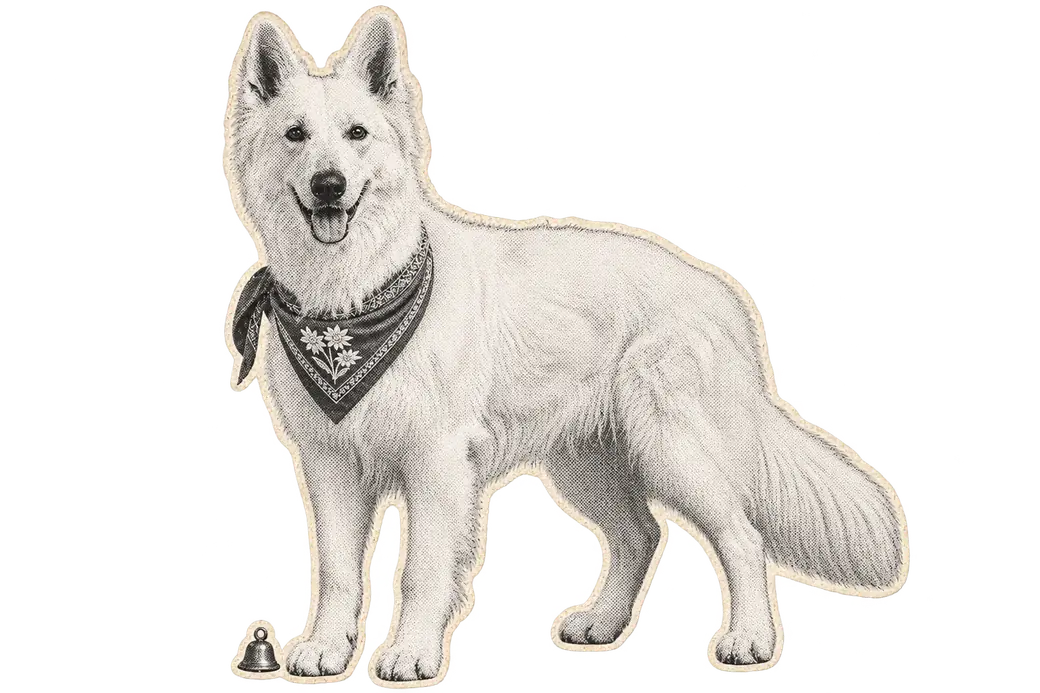
The White Swiss Shepherd Dog is an athletic white shepherd with upright ears and a dense double coat, in medium or long. There's German Shepherd ancestry in there, but it's a recognised breed in its own right. If yours follows you from room to room, being able to lie down while you get on with something is a much more useful skill than a flawless sit. 1 2 3 7
Jump to a section
Teach them that you're allowed to go to the loo
Start near where you actually spend time, with a bed or mat a little to one side. When your dog lies down of their own accord, put a treat between their paws without calling them over. Once they're managing that, take one step away and sit back down. Work up to moving around when they can stay relaxed. The mat is somewhere good to be, not somewhere they get sent for being a nuisance. 7
White Swiss Shepherd Dog notes / 01
Field notes
If your dog already gets upset when you disappear, filming a short absence can show whether they're resting or still listening by the door. Start below the point at which they get upset. If they can't cope even with very brief departures, speak to your vet and ask about qualified behaviour support. 8 14
Where the Swiss bit comes from
White dogs existed in German Shepherd lines. Switzerland later developed and registered the related dogs as a distinct breed. The FCI lists it as Berger Blanc Suisse with Switzerland as the country of origin; the UK entry is White Swiss Shepherd Dog, in the Pastoral group. The white coat on its own doesn't tell you which breed a dog is. Use the paperwork if the distinction matters. 1 2 3 4
White Swiss Shepherd Dog notes / 02
Field notes
Measure the dog before buying the boot liner
The UK standard gives shoulder heights of 58–66 cm for males and 53–61 cm for females, and weights of 30–40 kg and 25–35 kg respectively. Those are ideal ranges, not targets to feed towards. A long coat can make a dog look broader than they are. Check the ribs and waist with your hands and ask your vet about the right condition for your dog. 2 12
If they've got to turn right round in the car, measure the usable space with the seats where they'll actually be. On walks, check a harness on the move: they need to lower their head to sniff and turn freely without the fit shifting round their shoulders. 9 13
Start where the collar rubs
Both coat lengths have dense undercoat. A long coat has extra hair at the neck and backs of the legs, which is exactly where the brush ought to go before the bit everybody can see. Feel behind the ears and under the collar. Run your fingers through the longer hair on the back legs. The white hair on your jumper will make itself known without your help. 2 10
White Swiss Shepherd Dog notes / 04
Field notes
| What you find | What to do |
|---|---|
| Loose coat and a dog happy to be brushed | Use a tool suited to their coat; work in small sections and stop before it turns into a wrestling match. 10 |
| A tight knot close to skin | Get a groomer's help rather than guessing where the skin ends with scissors. 10 |
| Sore skin or a dog suddenly avoiding touch | Stop and speak to your vet if discomfort persists or they seem in pain. 10 14 |
A dog can notice somebody without having to meet them
Give a dog that finds people difficult enough room to look and turn away. If they can't take a familiar treat or won't stop staring, start further back. Don't ask a visitor to reach out across a gate. A visitor can drink their tea without having to prove they've got a way with dogs. 7 11
If the behaviour is new or getting worse, speak to your vet. If there's a bite risk, keep dog and guests apart and get qualified support. 11 14
Pay for the turn away
Start the walk on a quiet stretch. Let them look at something harmless, then reward the moment they turn back to you. Practise often enough that it feels familiar before you ask for it anywhere busy. For recall practice, clip a long line to a well-fitting harness in a suitable open space and work away from roads. 9 15
A quieter walk still counts
Try an outing with enough room for your dog to sniff the verge and pick up your pace again without being led straight past another dog. On days when the lane is busy, another route can be more useful than trying to get the same number of miles out of it. Adjust for the weather and what your own dog can comfortably manage. Use a lead around stock and wherever necessary for safety. 9 15 16 17
Don't add distance and a harder route on the same outing. If you are building an older dog's fitness back up, ask your vet what sort of walking they can comfortably manage. 16
Move the bed out of the lookout post
If the window by the bed gives them a view of everyone passing, offer another spot where they can lie down without tracking the pavement. Give them a clear way out of the hall so they can move away instead of squeezing past a visitor. Practise settling in that space when the house is quiet. 7 11
Give everyone a way out of the room
An adult needs to be close enough to intervene when a child and dog are together. Keep the dog's bed and food out of the child's reach and separate them when you can't supervise. A dog moving away should be allowed to leave. For a cat, set up a dog-free room and a route up and away before you try introductions. 18 19
Keep the joint scores and the symptoms separate
The Royal Kennel Club lists BVA/RKC hip and elbow screening for prospective breeding dogs under Good Practice, alongside its genetic diversity advice. Ask for both parents' results and check them in the RKC finder if the dogs are registered. These are screening results, not a claim that a puppy will stay free of joint problems. 1 5 20
White Swiss Shepherd Dog notes / 10
Field notes
| For an existing dog | What to do |
|---|---|
| Persistent limp, stiffness or trouble getting up | Contact your vet. Don't assume it's age, or use the parents' scores to rule anything out. 6 |
| A seller mentions an extra DNA test | Ask for the exact variant and result; have your vet interpret what it can and cannot tell you. It does not replace the hip and elbow checks. 1 5 |
The RKC profile puts lifespan in its over-ten-years category. That's a breed profile, not a measured median for White Swiss Shepherd Dogs. This guide does not use German Shepherd Dog studies as a stand-in for this breed. 1 3
Ring the groomer with the coat in mind
Tell a groomer whether the dog has a medium or long coat, how they cope with their feet being handled and if there are knots. Ask what the quote includes. If you use a dog walker, ask how they'd manage your dog around traffic and other dogs, not just what their hourly rate is. Price insurance at your own postcode and compare excess, ongoing-condition limits and exclusions rather than assuming two policies with the same headline price do the same thing. 10 21
The breed got its own name before the UK listing
White Swiss Shepherd Dog notes / 12
Field notes
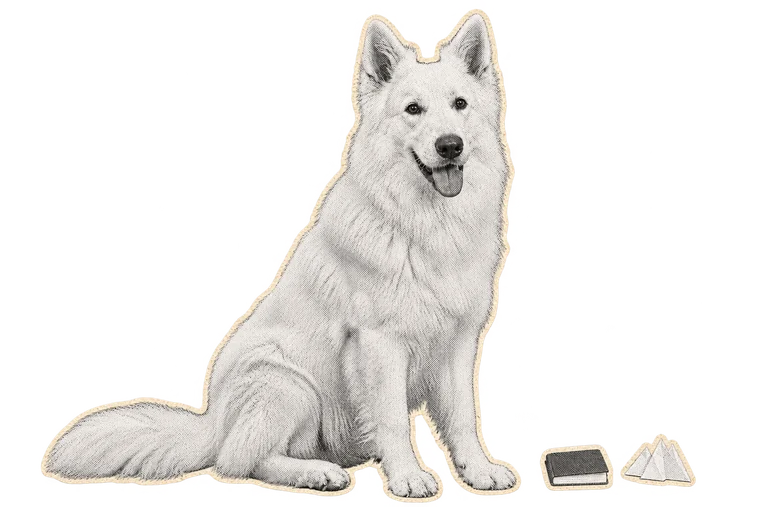
White shepherd lines imported to Switzerland went into its stud book appendix in 1991. The FCI dates its definitive recognition to 2011. In the UK, breed status followed in October 2017. It was still on the UK Imported Breed Register when we checked; the RKC has announced a move to its Breed Register from 1 January 2027. 1 3 4 23
Ask what the dog does after a visitor sits down
White Swiss Shepherd Dog notes / 13
Field notes
If you're meeting an adult through a rescue, ask what they do when left and how they're handled around the collar and back legs. Ask which of those things staff have actually seen. If you're looking at a puppy, see it with its mum where it was raised and check the parents' result records before committing. 1 10 11 22
Sources
- S1Royal Kennel Club White Swiss Shepherd Dog profile and health guidanceSource · checked 22 November 2026
- S2Royal Kennel Club White Swiss Shepherd Dog breed standardSource · checked 22 November 2026
- S3FCI White Swiss Shepherd Dog nomenclatureSource · checked 22 November 2026
- S4Royal Kennel Club UK recognition announcementSource · checked 22 November 2026
- S5Royal Kennel Club Health StandardSource · checked 22 November 2026
- S6PDSA hip dysplasia and observable signsSource · checked 22 November 2026
- S7Dogs Trust settling adviceSource · checked 22 November 2026
- S8Dogs Trust separation anxiety and home observationSource · checked 22 November 2026
- S9Dogs Trust recall, safe space and harness line adviceSource · checked 22 November 2026
- S10Dogs Trust handling and grooming adviceSource · checked 22 November 2026
- S11Dogs Trust visitor management and behaviour helpSource · checked 22 November 2026
- S12PDSA body condition scoringSource · checked 22 November 2026
- S13Highway Code rule 57, safe transportSource · checked 22 November 2026
- S14Animal Behaviour and Training Council practitioner typesSource · checked 22 November 2026
- S15Dogs Trust working safely around chasing triggersSource · checked 22 November 2026
- S16PDSA dog exercise adviceSource · checked 22 November 2026
- S17Natural England Countryside CodeSource · checked 22 November 2026
- S18Dogs Trust children and dogsSource · checked 22 November 2026
- S19Dogs Trust living with dogs and catsSource · checked 22 November 2026
- S20British Veterinary Association Canine Health SchemesSource · checked 22 November 2026
- S21PDSA pet insurance guideSource · checked 22 November 2026
- S22RSPCA responsible puppy-buying guidanceSource · checked 22 November 2026
- S23Royal Kennel Club announced Breed Register transfer on 1 January 2027Source · checked 22 November 2026
