Breed guide / West Highland White Terrier
Living with a West Highland White Terrier
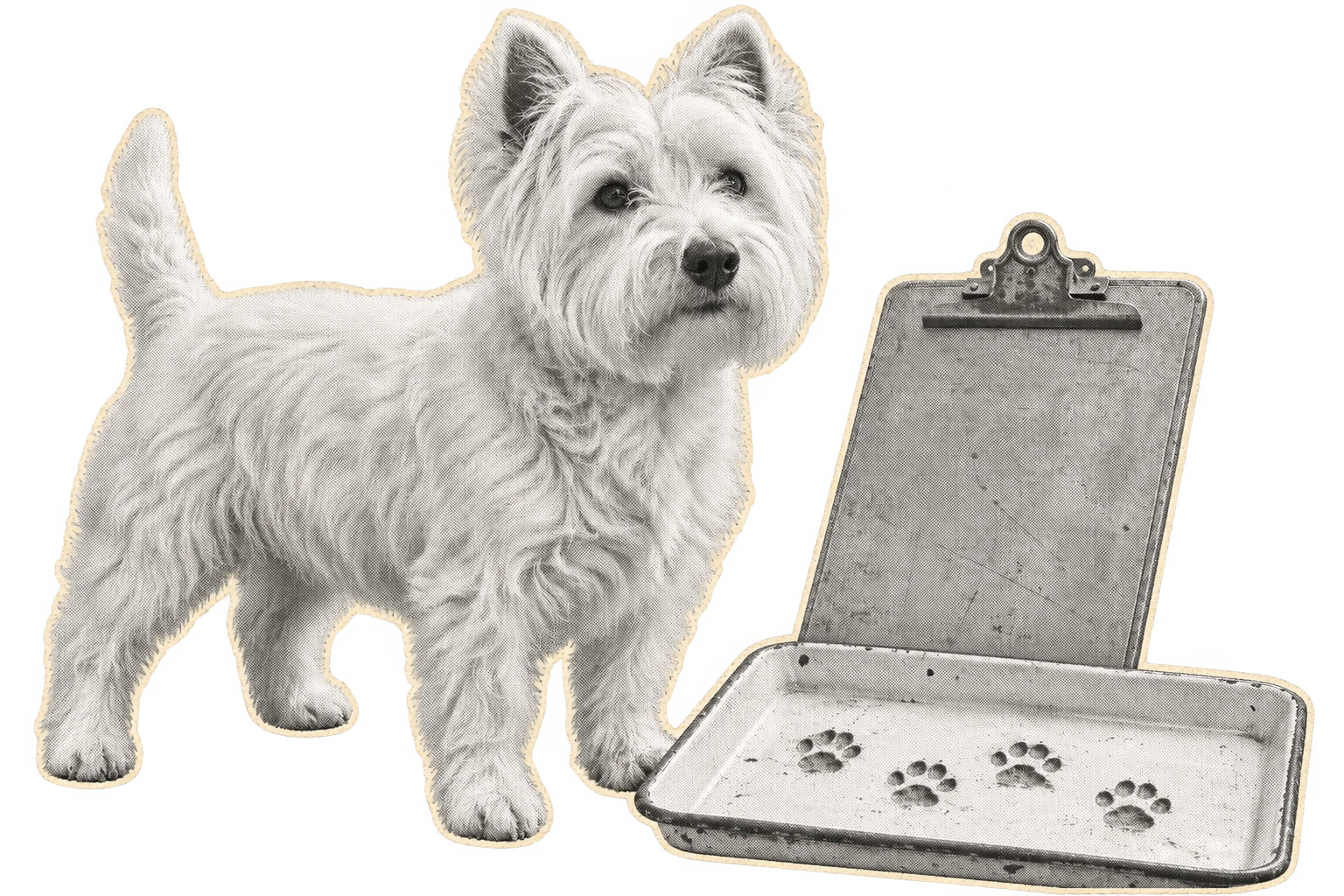
The West Highland White Terrier is a small Scottish working terrier with a harsh white coat and a soft undercoat. Give one a muddy path and you’ll soon see why it pays to get them used to having their feet checked.
Jump to a section
The short version: a white dog with things to investigate
Westies are Scottish working terriers, and a walk with things to sniff often suits them better than a hurry round the block. If your Westie comes home with all four feet the colour of the path, you can usually deal with that at the back door. If they keep licking the same foot after it’s clean, that’s something else. That’s the useful bit of living with one: there’s plenty going on underneath the coat, and you get to know the difference between a dog who’s been having a good time and a dog who can’t get comfortable. Give them somewhere quiet afterwards, especially if the front window doubles as a lookout. 123
West Highland White Terrier notes / 01
The first three things to sort
Start with a paw, not a shopping list.
| Worth sorting early | An ordinary way to do it |
|---|---|
| A route they can explore | Leave time to sniff. Practise coming away from an interesting spot before relying on it near traffic or animals. |
| Handling without a row | Reward one calm look at a foot or a few strokes of the brush, and stop while it’s still easy. |
| A baseline for skin and ears | Know what the normal coat, pads and ears look and smell like. Mention repeated licking, itching or head shaking to the vet. |
Names: Westie is the one everyone uses
West Highland White Terrier is the registered name. The Royal Kennel Club puts it in the Terrier group and lists white as the standard colour. You might come across Poltalloch or Roseneath terrier in the breed’s history; you’re not expected to pick one from a dropdown when booking your dog into the groomer. A Westie cross can inherit a different build or coat, even where both parents are known. Use what you know of the dog rather than assuming the rest from the face. 14
West Highland White Terrier notes / 02
What a name actually tells you
Roseneath is history, not a second breed.
| Description | What it tells you |
|---|---|
| Westie or West Highland White Terrier | Everyday and registered names for the breed. |
| Poltalloch or Roseneath | Historical names associated with breeding in Scotland, not types identified from a present-day dog’s coat. |
| Westie cross | Ask whether the parentage is documented. Check the individual’s grooming and walking needs; don’t borrow the breed’s health figures. |
| RKC group | Terrier. It is a classification, not a prediction about the dog in front of you. |
| RKC standard colour | White. |
| Scottish place-name | Poltalloch is in Argyllshire; the historical name refers to a line, not a separate current breed. |
| Pedigree evidence | Ask for records rather than identifying parentage from the coat. |
Size: the coat makes a poor set of scales
A Westie can look quite round when the coat’s grown out. Put your hands on the dog before deciding what that means. The UK show description is about 28 cm at the shoulder and doesn’t set a number for weight. A VetCompass study found a mean adult weight of 9.6 kg in its 2016 Westie records. That’s what the dogs weighed, not what they should all weigh. Your vet or nurse can show you the ribs and waist under the coat and help you make sense of the dog’s own trend. 567
West Highland White Terrier notes / 03
Measure the dog, not the coat
Those weight figures describe dogs, not targets.
| Measure | How to read it |
|---|---|
| UK show-standard height | Approximately 28 cm at the shoulder; no numerical standard weight. |
| Observed adult weights, UK 2016 records | Mean 9.6 kg overall (SD 1.8), 10.1 kg males (SD 1.8) and 9.0 kg females (SD 1.6). An observed mean with spread, not a healthy range. |
| Observed adult weights, separate UK 2019 cohort | Median 9.5 kg overall, 10.0 kg males and 9.0 kg females. Study counted 35,814 Westies of all ages, not 35,814 measured adults. Means and medians from different studies are not a change in healthy weight. 8 |
| Finding a harness | Measure the neck and chest and check it on the moving dog. Recheck after a big trim rather than guessing from the packet. 9 |
Coat: the beard gets a rinse, the skin gets a look
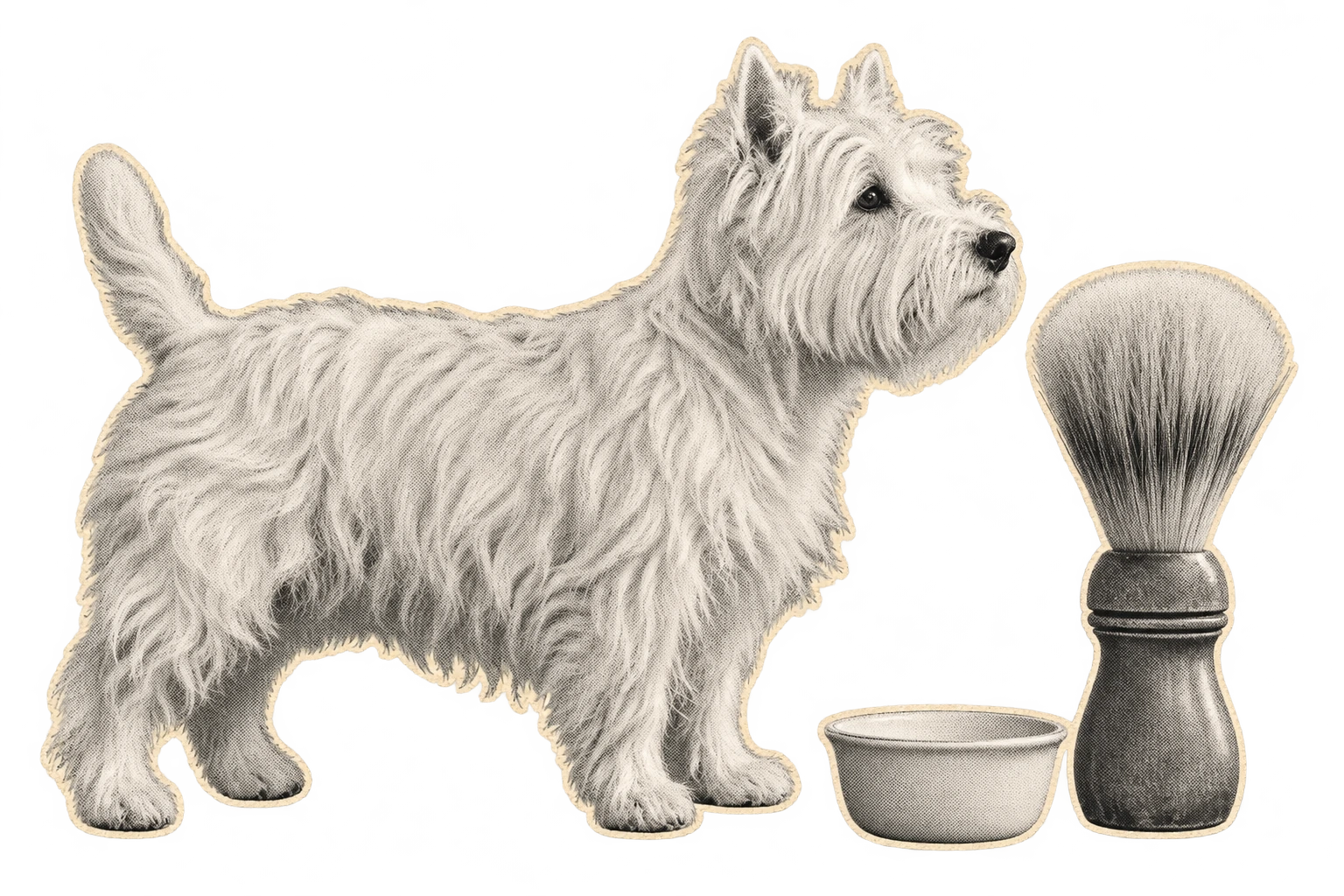
The outer coat is harsh, with a short, soft undercoat. Brush through the face, legs and anywhere the harness rubs; a quick pass over the back won’t find the tangle under an elbow. You can rinse off mud and dry the feet without trying to get the dog back to the exact colour they were that morning. Brown staining can go with repeated licking. If the skin’s sore, smells different or the licking keeps happening, ring the vet instead of working through whitening shampoos. 523
West Highland White Terrier notes / 04
Four jobs for a white coat
Look at the skin you can’t see from across the room.
| Job | How to keep it comfortable |
|---|---|
| Brush and comb | Short sessions, regularly enough to keep tangles out of this coat. Check beard, legs, feet and under the harness. |
| Hand strip or clip | Ask a groomer who works with terrier coats what suits the dog’s coat and comfort. If the skin is inflamed or touch hurts, speak to the vet before a grooming session. |
| Nails | Check the dewclaws as well as the obvious nails. If you’re unsure where to clip, ask a vet nurse or groomer to show you. |
| Bath | Ask the vet what’s appropriate if there’s recurring itch or a prescribed skin routine. Being white doesn’t give a dog a different medical shampoo requirement. |
| Beard | Rinse when it is dirty and look at the skin underneath. |
| Check the feet | Look between the toes as well as at the pads; repeated licking after cleaning warrants attention. |
| Ears | Notice a change from normal, including smell or repeated head shaking. Mention persistent changes to the vet. |
Temperament: why are they standing at the window?
Some Westies notice every dog that goes past. Some are mainly interested when the person coming up the path belongs to them. Before deciding yours has a barking problem, take a look at what gets them up and whether they can move away afterwards. Pull a chair back from the window or try blocking the view at the busy part of the day. Give them a quieter place to lie down. If a normally easy-going dog begins snapping when you brush a leg or touch an ear, consider pain, not a sudden discovery that they’re a terrier. 21011
West Highland White Terrier notes / 05
When the watch turns into work
Notice how easily they settle after the alarm.
| What happens | A useful response |
|---|---|
| They notice movement and settle again | Reward moving away or returning to their bed. Let them rest when the street is quiet. |
| They get stuck rehearsing the same bark | Change the setup, give more distance and practise in easier moments. Seek qualified reward-based help if there’s fear, guarding or risk. |
| An unexpected change | Speak to the vet about new sensitivity, disturbed sleep or restlessness, especially if a familiar touch is suddenly a problem. |
Training: get good at leaving an interesting thing
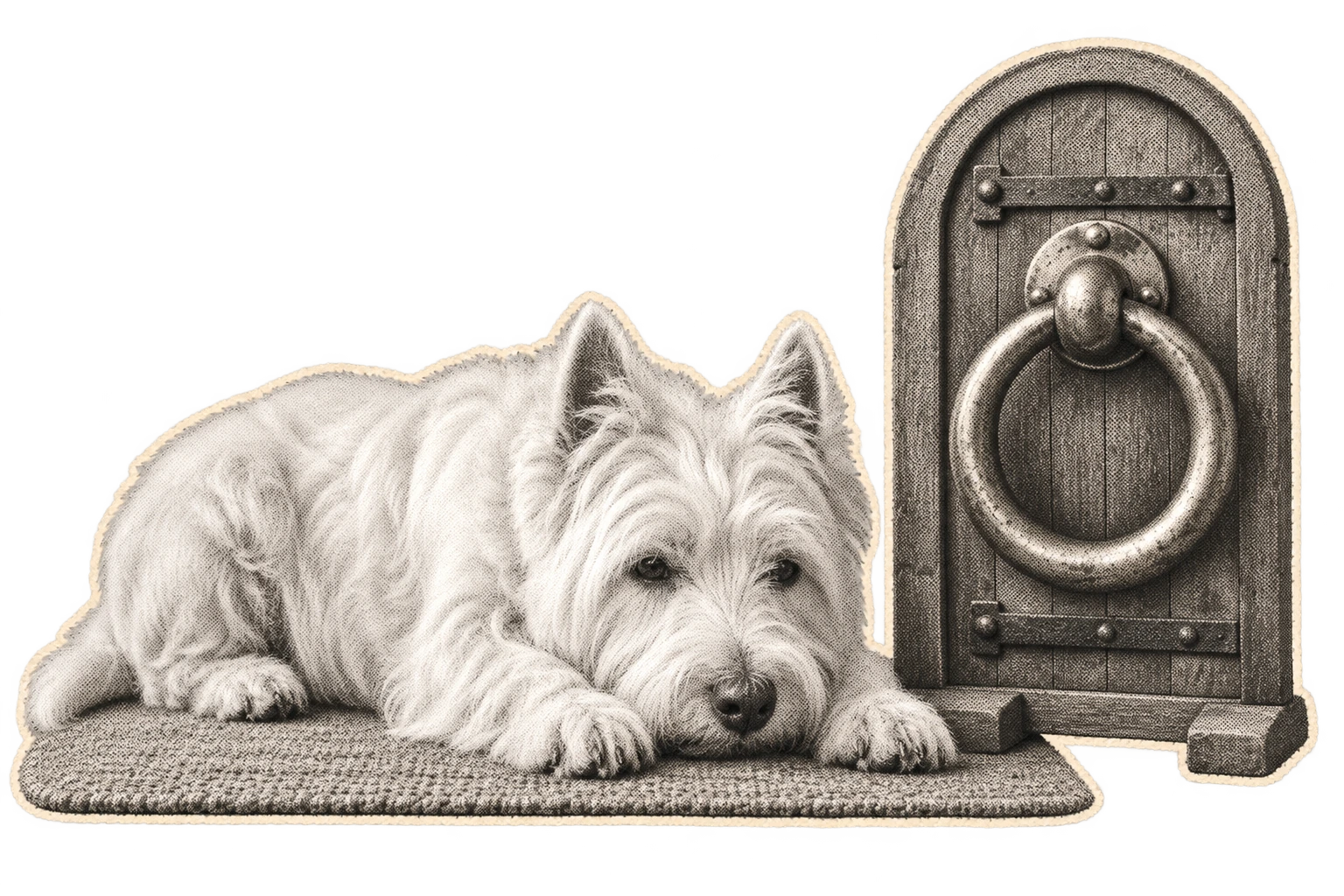
It’s easier to teach a Westie to come away from a flowerpot in the garden than a smell that goes halfway under a shed. Practise in the garden first. Make it worth leaving, and sometimes let them go back to the sniff. At home, a mat away from the doorway is a decent place to practise settling before you need it with the doorbell going. If you plan to work on paw handling, do a few seconds on a comfortable day. The day you discover a sore toe is not the time to make a big lesson of it. 121310
West Highland White Terrier notes / 06
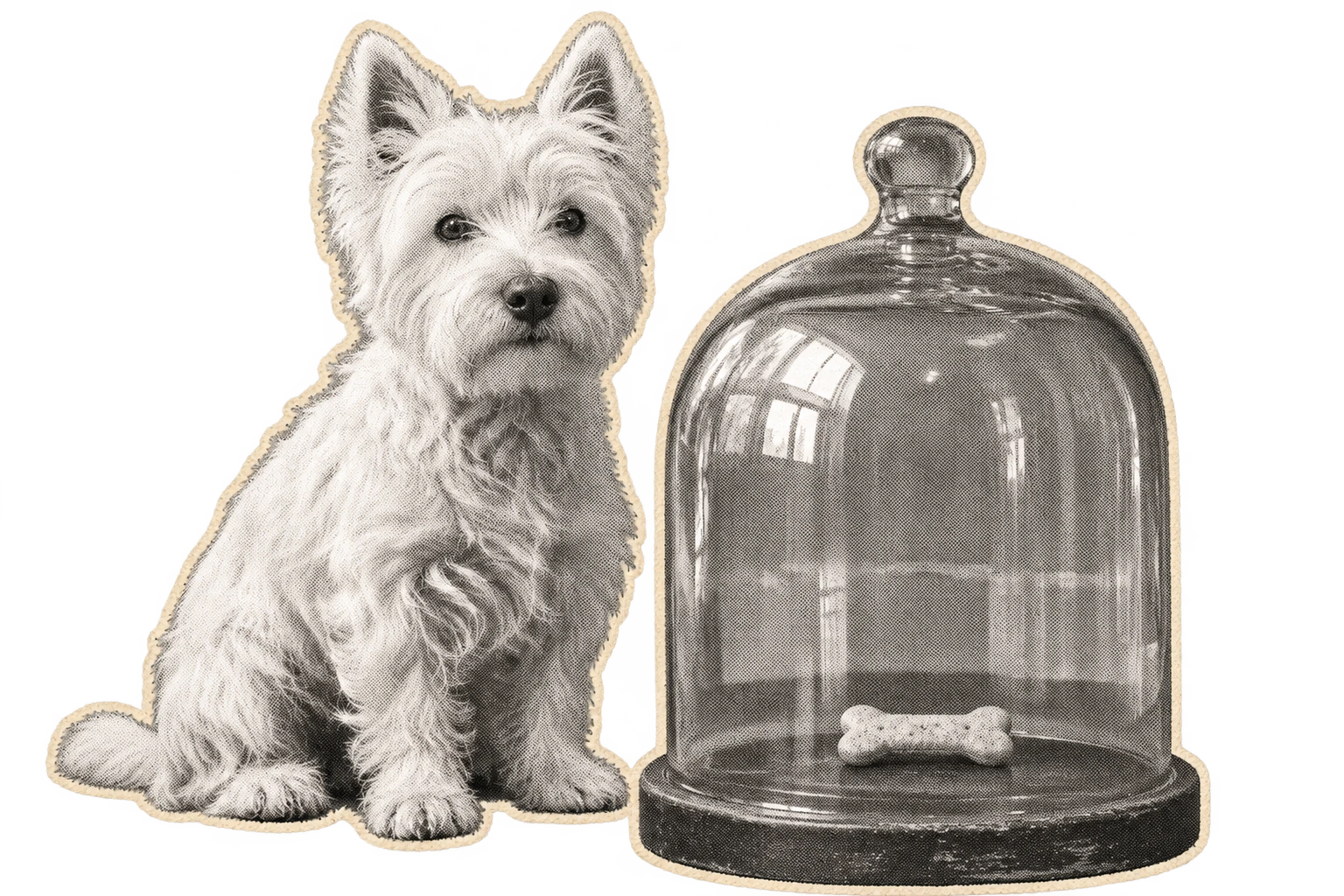
What to practise away from the door
Get useful at the boring distance first.
| Job | Start with |
|---|---|
| Recall | Quiet, enclosed ground and a reward they like. Use a suitable long line on a fitted harness when building up safely; use a short lead where the line might tangle or near a road. |
| A calm door | Reward settling on a mat with the door still shut. Use a barrier while visitors arrive if needed. |
| Paw and face handling | Brief touch, then a reward. Let the dog step away; don’t read staying still under restraint as being comfortable. |
| Something to do indoors | Use some of the usual food for a safe, supervised sniffing game when the walk needs to be short. 14 |
Exercise: a small dog still needs a proper walk
PDSA gives an hour a day as its planning minimum for Westies. That’s for thinking through a healthy adult’s routine, not a target for a puppy or a dog who’s coughing or limping. Break it up if that suits you both. A quieter walk at the right pace gives them a chance to nose about without the whole thing turning into lead practice. If your regular dog now stops halfway on a route they used to do happily, notice what else has changed and get it checked. 215
West Highland White Terrier notes / 07
A walk to suit these legs
Leave time for a proper sniff.
| Situation | How to adapt |
|---|---|
| Healthy adult | Split walking, sniffing and play over the day if that suits the dog. Give them time to rest between outings. |
| Puppy, older or unwell dog | Take advice for the dog’s stage of life, health and recovery. Call the vet for new coughing, exercise intolerance or lameness. |
| Livestock or narrow routes | Use a suitable lead and give others room. If you’re heading onto unfamiliar land check its signs and the local walking guidance: 16, 17, 18. |
| How the walk feels | Make room for sniffing. Shorten or change the route if the individual dog is struggling rather than chasing a time target. |
Home: look at the fence from down there
You can see the big bit of fence from the kitchen. The dog can see what’s going on below it. Check joins and gaps around the shed and gate, and give them something else to investigate if digging there keeps them occupied. Indoors, put a towel and the brush where you’ll actually use them. A bed in a quiet spot is more useful than one under the window they keep getting up to look out of. If an older dog slips on the floor on the way to the garden, add a runner that won’t slide and mention the change to the vet. 1920
West Highland White Terrier notes / 08
Home from a Westie’s eye level
Secure the gap they can actually get under.
| Home job | What works |
|---|---|
| Outside boundary | Check the bottom of boards and gate edges. A barrier is useful before the dog practises getting through, not just after. |
| Quiet rest | A bed they can reach easily, somewhere away from the front door and the busiest part of the house. Keep it undisturbed. |
| Time alone | Start from what the dog can manage comfortably. Barking, pacing or being unable to rest may mean shortening absences and arranging support. 21 |
| Lookout | If the front window keeps setting off the alarm, a quieter position helps them switch off. |
| Back door | Set up a calm spot to clean feet and check them. Stop while handling is still easy. |
| Visitor traffic | Give the dog a quiet spot away from the doorway. |
Kids, cats and other dogs: small enough to pick up doesn’t mean they want you to
Let the dog leave when the game’s over for them. An adult needs to be there when children and dog are together, and a barrier is simpler when somebody’s cooking or on the phone. It’s the same common sense around a cat: somewhere the cat can go without getting past the dog, and time to see how this pair gets on. A dog being comfortable with one familiar cat isn’t permission to try them with the neighbour’s rabbit. 2223
West Highland White Terrier notes / 09
How to live with the little one
Small enough to lift isn’t an invitation.
| Who’s in the house | Practical setup |
|---|---|
| Children | Active adult supervision or physical separation. Don’t let children pick the dog up, follow them to bed or bother them around food. |
| Cats and small pets | Protected escape routes for cats, secure separation for smaller pets where there’s any risk. Ask the rescue which interactions have actually been observed. |
| Other dogs | Give them space for introductions and separate food or chews while you learn what each is comfortable with. |
| Handling | Let the dog choose to move away rather than picking them up to keep an interaction going. |
Health: itchy feet, sore mouths and a cough worth a call
If you only remember three things, let it be these: a dog can still eat with a painful mouth, a paw can be itchy even when the coat looks clean, and a new cough is worth describing to your vet. Notice when a problem happens rather than waiting to get a perfect photo. Call an emergency vet straight away for breathing difficulty, collapse or blue-grey gums. 24325
West Highland White Terrier notes / 10
Skin, teeth and eight practical checks
Old UK practice records are context, not a forecast.
Recorded conditions, lifespan and screening
What UK veterinary records saw: The corrected 2016 VetCompass study included 6,605 Westies among 336,865 dogs from 438 clinics. Disorder figures below come from the randomly selected 2,058 Westie records reviewed for the year, not all 6,605. These are recorded problems in one past year, not lifetime risk or today’s prevalence. 626
| Recorded condition | Count / 2,058 | Percentage (95% CI) |
|---|---|---|
| Periodontal disease | 323 | 15.7% (14.1–17.3) |
| Outer-ear inflammation | 218 | 10.6% (9.3–12.0) |
| Overgrown nails | 149 | 7.2% (6.2–8.4) |
| Allergic skin disorder | 134 | 6.5% (5.5–7.7) |
| Obesity | 126 | 6.1% (5.1–7.2) |
| All recorded skin disorders, broader group | 468 | 22.7% (20.9–24.6); broader than allergy, not a separate number to add. |
Lifespan context
| Two UK longevity estimates | How they differ |
|---|---|
| VetCompass 2016 study | Median age at death 13.4 years in 164 recorded deaths; middle half 11.0–15.0 years. |
| Multi-source study published 2024 | Median survival estimate 13.4 years, 95% CI 13.3–13.5. Different data and method even though the point estimate matches. Neither predicts how long an individual will live. 2728 |
Eight useful checks
Teeth and gums
Bad breath, red gums, dropping food or chewing differently are reasons to book a check. Ask about brushing gently with dog toothpaste once the mouth is comfortable; eating normally doesn’t rule out pain. 24
Outer-ear inflammation
New head shaking, smell, discharge or pain warrants a prompt appointment. Don’t use old drops or cotton buds. Get same-day advice for head tilt or lost balance. 11
Overgrown or damaged nails
Look at what touches the ground and what never does, including any dewclaws. Ask a nurse or groomer to demonstrate clipping. Persistent bleeding or obvious pain from a torn nail needs veterinary advice. 29
Itch and allergic skin disease
Licking paws, rubbing the face or having repeated sore ears can be part of a skin problem. Fleas, infection and allergies can look similar. Let the vet check the cause before changing several foods at once or putting something from the cupboard on the skin. 3
Weight gain
Feel ribs and waist through the coat. Keep track of meal portions and extras, and set a personal target with the vet rather than following the show picture or study average. 7
Dry eye and other painful eye problems
Sticky discharge, redness, rubbing or squinting can have several causes. Contact the vet promptly instead of trying human drops or assuming a runny eye means plenty of tears. 30
Westie lung disease, including idiopathic pulmonary fibrosis
A progressive scarring lung condition described in the breed, particularly in older dogs. New persistent cough, tiring earlier, or a change in breathing merits veterinary assessment; heart, airway and other causes are possible. Breathing difficulty or collapse is an emergency. The study’s broad category of lower respiratory deaths is not an estimate for this condition. No current UK breed-wide rate asserted. 3132
Craniomandibular osteopathy, sometimes called Westie jaw
This bone disorder can affect growing dogs. If a pup is keen to eat but seems in pain when opening the mouth, has jaw swelling or struggles to eat, contact your vet promptly. Don’t try to force the mouth open. A known risk-variant test exists, but the result is not a clinical diagnosis or a guarantee; the University of Bern describes incomplete penetrance, meaning not every dog with the variant develops signs. 3334
| Breeding and screening evidence | What to ask |
|---|---|
| Royal Kennel Club Good and Best Practice | Both are blank for this breed in the current UK Health Standard; the breed page explicitly says no recommended pre-breeding screening is currently in place. That is not a warranty or advice to ignore health history. 35 |
| Other evidence and tests | Ask what parental health information or tests actually exist, on which dogs, and what the results mean. The Westie club discusses available CMO testing separately. Ask the vet about relevance, especially if there is a jaw problem in the family. 36 |
| Breed Watch | Category 2 points for UK show judges are misplaced canine teeth and signs of current or past dermatitis. This is a show observation scheme, not a pre-breeding test or rate estimate. 37 |
Costs: make room for the groom and the awkward vet visit
PDSA’s general small-dog basket was £415 to get set up and £69 a month, using prices collected in 2024. Its Westie page gives a £70 monthly breed guide figure after purchase and setup. These are planning floors. They don’t price the rescue fee, a regular groom, a skin problem needing repeat visits or emergency treatment. Ask the groomer what they charge for the coat you want managed. Then check the insurance terms for ongoing skin and ear problems rather than assuming the first quote keeps paying for them next year. 382
West Highland White Terrier notes / 11
The price of the coat and everything under it
Ask what the groom and the insurance actually cover.
| Budget separately | What to check |
|---|---|
| Grooming and handling | Local clip or hand-strip quote, whether nails are included, and what appointments the dog tolerates. |
| Regular care | Food, routine care, insurance and any dog walker. Avoid counting the same cost again if using a basket that already includes it. |
| Treatment or interruptions | Cover limits, excess, co-pay and pre-existing condition rules. Know the local out-of-hours number and how payment works. |
| Buying or adoption | No robust current breed-wide price used. Ask the actual provider what’s included and check the records. |
| PDSA small-dog basket | £415 setup and £69 a month, using 2024 prices. General planning figures, not a bill for a Westie. |
| PDSA Westie running guide | £70 a month after purchase and setup; local prices and individual needs vary. |
History: useful on a Scottish hillside before anyone put one on a cushion
The Royal Kennel Club traces the breed to white Cairn-type dogs developed by the Malcolms of Poltalloch in Argyllshire in the mid-19th century. Being easy to see on the moor mattered to them. It names Roseneath as another line and records Kennel Club recognition in 1907, rather than saying that’s when the first Westie appeared. You can get the point of a hardy little working coat without having to give the dog a job under your neighbour’s shed. 16
West Highland White Terrier notes / 12
A Scottish working dog, not just a white one
Scotland is the context, not the date on every pedigree.
| Then | Something useful now |
|---|---|
| Working terriers from Scottish lines | Make some time for a proper sniff and give them a job they can finish, like finding a bit of their meal in a safe place you’ve chosen. Avoid pursuing wildlife or disturbing other animals. |
Bringing one home: ask how the last groom went
Whether a Westie is coming from a rescue or from a breeder, there’s a good question buried in the paperwork: what do they do when somebody touches their feet? Ask about last time, including whether they could leave, whether there was anything sore and what helped. For a rescue, ask about prior skin, ears, teeth and any cough, then get the records rather than guessing from a fresh trim. For a puppy, meet it with its mother where it was raised and ask for actual family health information. If you’ve already got a Westie, spend ten minutes sorting the one awkward daily job rather than buying a cupboard of things to fix it. 3940
West Highland White Terrier notes / 13
Ask about the feet and see the records
A calm handling history is worth a lot.
| When | Good next step |
|---|---|
| Before collection | Check vet history, food, handling and chip details. Ask what’s known about prior skin or ear treatment, and what’s unknown. |
| First few days | Register with a vet, update chip keeper details and stick to a low-pressure routine. Northern Ireland also has dog licensing through councils. 4142 |
| Already living with one | Note which foot gets licked, when the ears get sore, or what changed about the walk. Bring that to a vet check if the problem persists. |
Sources
- W1Royal Kennel Club breed guideReference · checked 20 November 2026
- W2PDSA Westie guideReference · checked 20 November 2026
- W3PDSA itchy skinReference · checked 20 November 2026
- W4Westie Rescue UK breed informationReference · checked 20 November 2026
- W5Royal Kennel Club standardReference · checked 20 November 2026
- W62016 VetCompass studyReference · checked 20 November 2026
- W7PDSA body conditionReference · checked 20 November 2026
- W8VetCompass 2019, Table 1Reference · checked 20 November 2026
- W9Dogs Trust harness guideReference · checked 20 November 2026
- W10Dogs Trust settlingReference · checked 20 November 2026
- W11PDSA painful earsReference · checked 20 November 2026
- W12Dogs Trust recallReference · checked 20 November 2026
- W13Dogs Trust reward-based trainingReference · checked 20 November 2026
- W14Dogs Trust enrichmentReference · checked 20 November 2026
- W15PDSA limping and stiffnessReference · checked 20 November 2026
- W16England and WalesReference · checked 20 November 2026
- W17ScotlandReference · checked 20 November 2026
- W18Northern IrelandReference · checked 20 November 2026
- W19Dogs Trust escape preventionReference · checked 20 November 2026
- W20PDSA arthritis careReference · checked 20 November 2026
- W21Dogs Trust alone-time guidanceReference · checked 20 November 2026
- W22Dogs Trust child safetyReference · checked 20 November 2026
- W23Dogs Trust cat introductionsReference · checked 20 November 2026
- W24PDSA dental diseaseReference · checked 20 November 2026
- W25PDSA breathing emergenciesReference · checked 20 November 2026
- W26Published denominator correctionReference · checked 20 November 2026
- W27McMillan et al.Reference · checked 20 November 2026
- W28Dogs Trust breed tableReference · checked 20 November 2026
- W29PDSA nail careReference · checked 20 November 2026
- W30PDSA dry eyeReference · checked 20 November 2026
- W31University of Edinburgh researchReference · checked 20 November 2026
- W32Clinical studyReference · checked 20 November 2026
- W33University of Bern genetics study teamReference · checked 20 November 2026
- W34PDSA painful mouthReference · checked 20 November 2026
- W35Current Health StandardReference · checked 20 November 2026
- W36Westie club healthReference · checked 20 November 2026
- W37Royal Kennel Club Breed WatchReference · checked 20 November 2026
- W38PDSA cost methodologyReference · checked 20 November 2026
- W39Dogs Trust rescue questionsReference · checked 20 November 2026
- W40Defra buyer guidanceReference · checked 20 November 2026
- W41UK microchip guidanceReference · checked 20 November 2026
- W42Northern Ireland licensingReference · checked 20 November 2026
Five original generated editorial photo-first newspaper cutouts. The source photographs and cutout treatments are synthetic; the dogs and pictured props do not document an individual or establish clinical facts.