
Breed guide / Welsh Terrier
Living with a Welsh Terrier
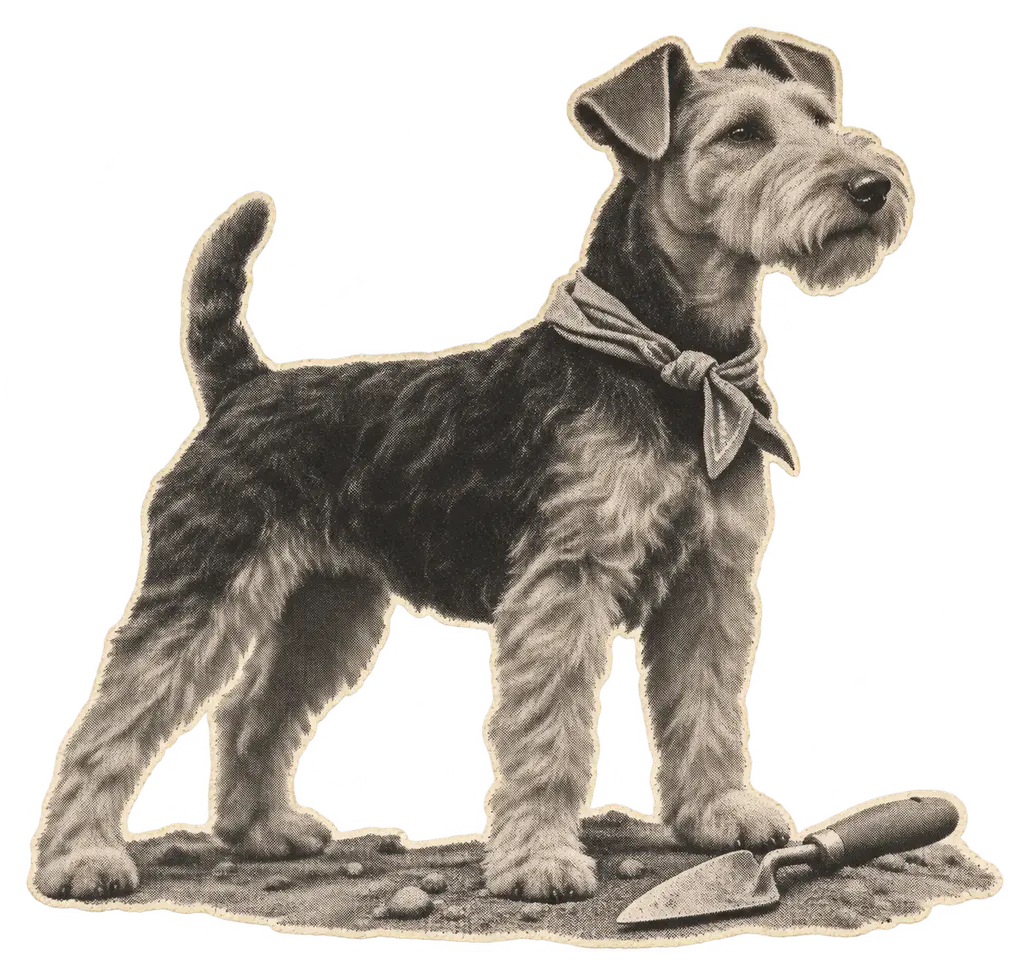
A Welsh Terrier is a compact black-and-tan dog with a wiry coat and a working history that goes back to Welsh hunting terriers. It was bred to go into places people couldn't follow. You’ll still appreciate that persistence when your dog’s trying to find a toy under the sofa, although you may feel differently about what it’s doing to the corner of the lawn. 1 2 3 4
Jump to a section
Give that nose a better place to dig
If your dog is already renovating the garden from underneath, check the boundary first. Keep the vulnerable bits secure and supervise outside while you teach a different job. Try hiding a safe toy or placing a few bits of food among suitable things it can investigate. Reward the find somewhere you can live with, rather than only showing up to say no at the flower bed. 11 27 28 29
On walks, practise turning with you before you get to the verge where you know they’ll stop to investigate. Coming away from a quiet bit of pavement is the rehearsal. Coming away from whatever is moving in the hedge is the final exam. 11 20 27 28
Welsh Terrier notes / 01
Short version
| First change | Try this |
|---|---|
| Holes by the gate | Check for escape routes and supervise. 11 28 |
| Too much interest in a hedge | Turn away earlier, using lead and space rather than pulling harder. 11 20 |
| Energy left after the walk | Offer a short search game and a real rest afterwards. 12 29 |
| Sudden painful, red or cloudy eye | Call your vet immediately rather than trying to identify the cause yourself. 18 41 |
No, it isn’t a little Airedale
Welsh Terrier is the official UK breed name. An Airedale and a Lakeland Terrier have their own standards and should not be used as substitutes for Welsh Terrier size, routine or screening. The black saddle, tan and beard can look familiar from several breeds. Paperwork or known ancestry tells you more than the eyebrows. 1 2 3 5 43
The UK breed-standard colouring is black and tan or black grizzle and tan. Be wary of treating a black-and-tan look as proof of breed. For a rescue dog, use the label as a starting point and ask what the people caring for it have actually seen at home and on walks. 2 4
A solid little dog, especially if there’s something under a bin
The UK standard describes a shoulder height of no more than 39 cm and a guide weight of 9–9.5 kg. Neither figure is an instruction to make your dog fit the number. Feel ribs and waist through the coat and ask the vet about condition if you’re uncertain. The right harness is the one that stays put while the dog twists, stops and lowers its head. 2 19 20
Measure the dog for travel separately; a walking harness does not tell you how you’ll keep them safe in the car. Practise short, uneventful journeys if they’re not already comfortable. 20 21
Look after the wire coat without making it an ordeal
The Welsh has a harsh, dense coat with an undercoat. Grit and bits of plants have a way of hiding around the legs and beard. Make quick checks part of coming home. Lift between the toes gently; if the dog suddenly won’t let you touch a spot, stop and think about soreness. 2 13 15 16 22
If you're unsure how much work the coat needs, ask a groomer who does wire coats to explain maintenance, clipping and hand stripping. Ask them to demonstrate what your dog can comfortably tolerate. An even show finish matters a lot less to a pet than a coat that isn’t pulling on their skin. 2 13 16 17
Welsh Terrier notes / 04
Coat and grooming
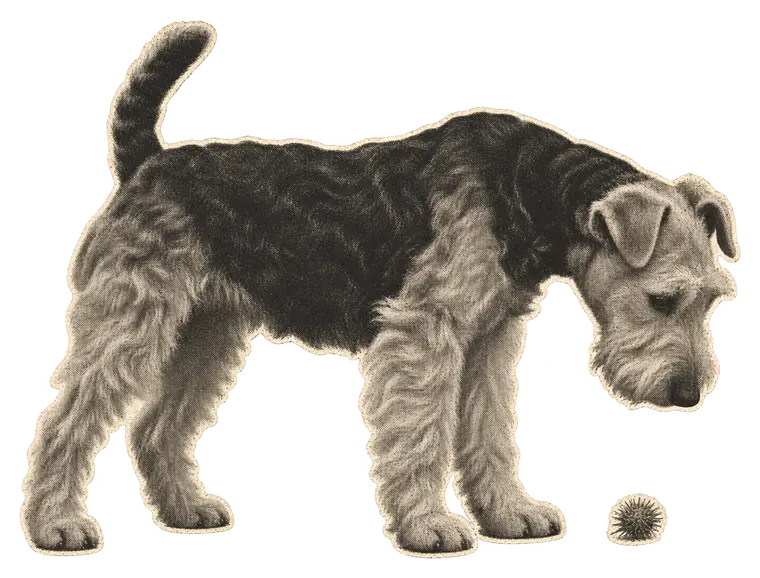
Persistence isn’t a character flaw
The breed club describes a family companion with a genuinely working background. What that means in your house depends on the dog. If yours gets very interested in a sound, visitor or smell, make enough space that they can turn away and reward what you want them to do next. 1 4 12 14 27
Build rest into the day too. Practise short absences at a level the dog can handle and see what happens on a recording. If it paces, barks or can’t rest when alone, get support instead of taking it as evidence you need to run them round the block again. 24 25 26 42
Welsh Terrier notes / 05
Temperament
Teach a turn before you need an emergency U-turn
Reward a check-in on a quiet lead walk, then gradually add an easy turn away from something mildly interesting. If the dog already has its whole front end in a bush, your new cue hasn’t had much of a chance. Make it easier on the next attempt. 11 20 27 28
Give the search games an ending. Find the toy, have a moment with it, put it away and offer a rest. Don’t rely on a new recall around rabbits, roads or livestock; use secure management and choose the practice site carefully. 12 28 29 31
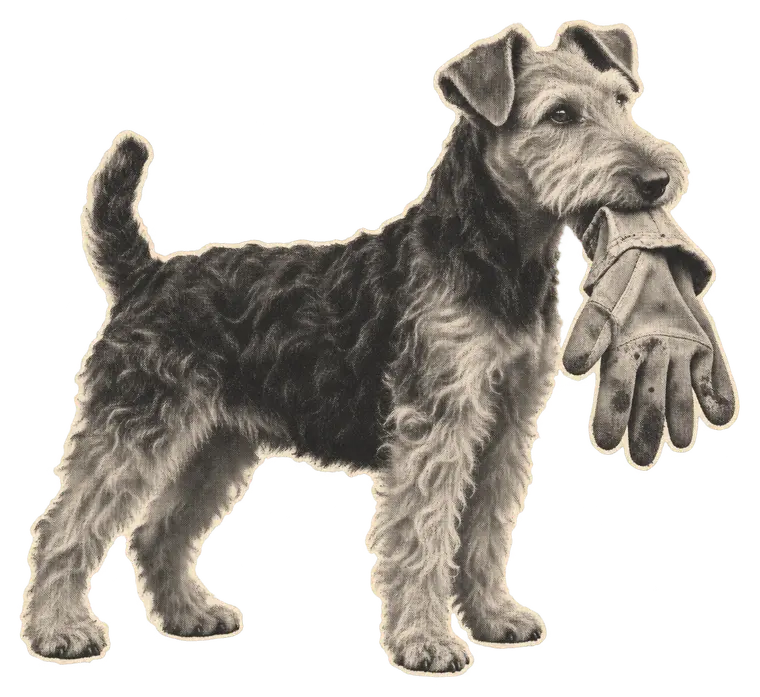
Give them a proper outing, not just more laps
Regular walks and chances to sniff are more useful than marching round the same block at top speed. Adjust the outing to the dog's age, health and mobility. In heat, pick a safe cooler time or change the plan. Don’t expect an adult routine from a growing puppy. 10 30 32 33
Use a lead early near livestock and wildlife and follow local access rules. If you’re introducing a long line, keep it where you can safely manage it. Under a hedge, round a wheel or between two people on a narrow path is not where you want the lesson. 20 28 31
Welsh Terrier notes / 07
Exercise
Give your dog somewhere else to spend the afternoon
If the front window is a nonstop broadcast of the street, move the bed or give the dog another resting place away from it. Use a gate before opening the door if there’s a risk of bolting. Practise the calm version while the postie is doing somebody else’s street. 12 14 27 42
Outside, give safe digging or searching a clear place. Secure the edges and watch what the dog is actually doing. Indoors, leave room to rest without someone clipping the lead on every time the dog sits down. 12 28 29
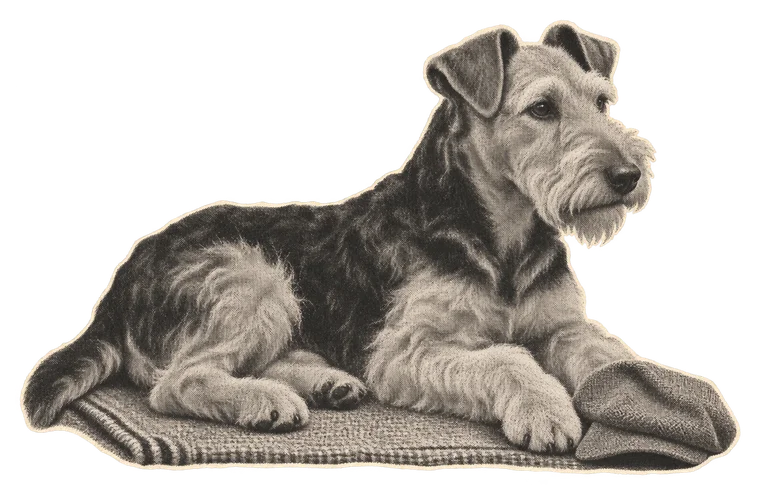
Children and cats don’t owe the dog a game
Let adults oversee interactions, keep children away from resting or eating dogs and separate when you can’t supervise closely. If the dog turns away or heads for the bed, let it go. Don’t let the beard stand in for a grab handle. 13 35
Keep small pets and cats secure while you learn how the dog behaves. The cat needs a way out without going past the dog. Separate valuable food and chews as needed. If the dog keeps stalking or following another pet and can’t disengage, get help before trying the setup again. 11 26 34 36 37
Welsh Terrier notes / 09
Children and pets
Eyes: the DNA report and the dog in front of you
For pre-breeding screening, the current Royal Kennel Club Welsh Terrier row lists DNA testing for primary lens luxation (PLL) in Good Practice and no named Best Practice test. The club and vet resources also discuss eye health beyond the gene result. A clinical eye examination, a DNA report and gonioscopy are different things. The breed club specifically recorded removal of Welsh Terrier primary glaucoma from the old Schedule B from January 2020; an older leaflet isn’t a current breed-tier checklist. 1 6 7 38 39
In lens luxation, the lens moves out of its normal place. Research linked an ADAMTS17 variant to inherited PLL and reported it across breeds. That doesn’t give a present-day UK Welsh Terrier risk percentage, and not all eye problems are the tested form. An eye suddenly painful, tightly shut, red or cloudy warrants immediate veterinary advice. A clear genetic result isn't a reason to wait. 7 8 9 18 40 41
Welsh Terrier notes / 10
Health
| What you’re checking | Meaning |
|---|---|
| RKC Good Practice | Official PLL DNA check; ask to see named results for both parents. 1 7 38 |
| RKC Best Practice | No named test in that column of the current Welsh Terrier row. 1 38 |
| A separate eye examination | An assessment by an eye specialist, not the same as looking for a gene. 39 |
| Gonioscopy and glaucoma | Do not confuse a clinic procedure or historical club guidance with a current mandatory breed tier. 6 38 39 |
| Current pain or sudden change | Call the vet immediately and describe what you are seeing. 18 41 |
| Primary study | A multi-breed finding, not a risk number for this Welsh Terrier. 8 40 |
| Lifespan | The 2024 UK table estimated 13.8 years median, 95% CI 13.5–14.6, with 146 deaths recorded. It’s a cohort estimate, not a countdown for your dog. 44 45 |
The practical costs are the useful ones to price
Ask a groomer what regular wire-coat maintenance would cost for your dog, then consider how much of it you can do comfortably yourself. If you’ll use a walker, ask how they manage wildlife, busy dog spaces and a dog that wants to inspect every opening in a hedge. 16 27 28 46
Read insurance terms and plan how you would pay for out-of-hours care. A price for regular food and a groom is one thing. An eye emergency is another. Know which practice to call before you need their number. 18 47
Welsh Terrier notes / 11
Costs
A real bit of Welsh working history
The breed club traces the Welsh Terrier to working terriers in Wales and describes their role in going to ground. The old record of wiry black-and-tan terriers helps explain some of the familiar appearance without turning this dog into a smaller version of the Airedale. Current registry entries are separate. 1 3 5 43
None of that means your dog needs to go after anything alive. Use safe ways to search, investigate and solve something with you. If they drop a stuffed mouse in your tea, you’re allowed to change the rules of the game. 27 29 31
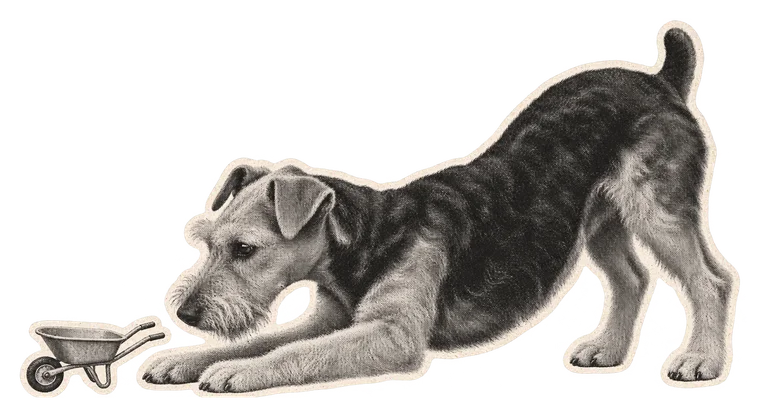
Meet the version who comes back from a walk
Ask what the dog does when it spots wildlife, how it rests after exercise and what happens when someone tries to handle the feet. Meet adult dogs if you can. A puppy should be seen with its mother where it’s raised, and health records should identify the parents. A rescue can tell you what has and hasn’t happened in the settings they’ve been able to observe. 13 28 38 48 49
Think through your own week. Where does the dog safely explore? How do you give it a quiet break? Who’s doing the coat check when it comes in muddy? If those things have sensible answers, you know much more than you did when the attraction was mainly the face. 12 15 29 30
Welsh Terrier notes / 13
Bringing one home
| Ask | Look for |
|---|---|
| Can I see the actual test records? | Named dogs, relevant tests and matching details. 7 38 48 |
| What does the dog do around small animals? | A real observation and an honest account of unknowns. 26 36 |
| How do they react to grooming? | A short comfortable example or a realistic plan. 13 16 |
| What’s the normal routine? | Walking, searching, calm company and proper rest. 12 29 30 |
Sources
- S1Royal Kennel Club Welsh Terrier UK profile and health screeningSource · checked 21 November 2026
- S2Royal Kennel Club Welsh Terrier breed standardSource · checked 21 November 2026
- S3Welsh Terrier Club historical accountSource · checked 21 November 2026
- S4Welsh Terrier Club breed overviewSource · checked 21 November 2026
- S5Royal Kennel Club breed standards directory and separate terrier entriesSource · checked 21 November 2026
- S6Welsh Terrier Club breed health resources including 2020 eye scheme noteSource · checked 21 November 2026
- S7Royal Kennel Club Welsh Terrier primary lens luxation DNA testSource · checked 21 November 2026
- S8Gould et al. original multi-breed ADAMTS17 work, not UK Welsh Terrier prevalenceSource · checked 21 November 2026
- S9Cornell veterinary guidance on primary lens luxationSource · checked 21 November 2026
- S10PDSA Welsh Terrier breed veterinary profileSource · checked 21 November 2026
- S11Dogs Trust preventing or managing chasingSource · checked 21 November 2026
- S12Dogs Trust settling practiceSource · checked 21 November 2026
- S13Dogs Trust comfortable handlingSource · checked 21 November 2026
- S14Dogs Trust reactivity and spaceSource · checked 21 November 2026
- S15PDSA vet guidance on home health checksSource · checked 21 November 2026
- S16PDSA vet guidance on groomingSource · checked 21 November 2026
- S17Blue Cross general grooming supportSource · checked 21 November 2026
- S18PDSA vet guidance on glaucoma or painful eyesSource · checked 21 November 2026
- S19PDSA vet guidance on body conditionSource · checked 21 November 2026
- S20Dogs Trust harness fittingSource · checked 21 November 2026
- S21Dogs Trust safe travelSource · checked 21 November 2026
- S22PDSA vet guidance on grass seedsSource · checked 21 November 2026
- S23PDSA vet guidance on ear symptomsSource · checked 21 November 2026
- S24Dogs Trust introducing time aloneSource · checked 21 November 2026
- S25Dogs Trust recognising separation distressSource · checked 21 November 2026
- S26Dogs Trust sourcing behaviour supportSource · checked 21 November 2026
- S27Dogs Trust positive reinforcementSource · checked 21 November 2026
- S28Dogs Trust recall and long lineSource · checked 21 November 2026
- S29Dogs Trust enrichment and search gamesSource · checked 21 November 2026
- S30PDSA vet guidance on exerciseSource · checked 21 November 2026
- S31Natural England keeping dogs under control in the countrysideSource · checked 21 November 2026
- S32Dogs Trust warm-weather careSource · checked 21 November 2026
- S33PDSA vet guidance on stiffness and limpingSource · checked 21 November 2026
- S34Dogs Trust resource guardingSource · checked 21 November 2026
- S35Dogs Trust supervising dogs around childrenSource · checked 21 November 2026
- S36Dogs Trust introducing dogs and catsSource · checked 21 November 2026
- S37Dogs Trust introducing dogsSource · checked 21 November 2026
- S38Royal Kennel Club current Welsh Terrier Health Standard rowSource · checked 21 November 2026
- S39Royal Kennel Club clinical eye screening schemeSource · checked 21 November 2026
- S40Originating ADAMTS17 research in selected breedsSource · checked 21 November 2026
- S41PDSA vet guidance on painful or closed eyesSource · checked 21 November 2026
- S42Dogs Trust handling and reducing barkingSource · checked 21 November 2026
- S43FCI Welsh Terrier nomenclature and Great Britain originSource · checked 21 November 2026
- S44Dogs Trust original UK breed lifespan tableSource · checked 21 November 2026
- S45McMillan et al. original lifespan study and methodsSource · checked 21 November 2026
- S46Dogs Trust finding a dog walkerSource · checked 21 November 2026
- S47PDSA costs and insuranceSource · checked 21 November 2026
- S48Royal Kennel Club Health Test Results FinderSource · checked 21 November 2026
- S49RSPCA buying a puppy and seeing the motherSource · checked 21 November 2026
