
Breed guide / Welsh Springer Spaniel
Living with a Welsh Springer Spaniel
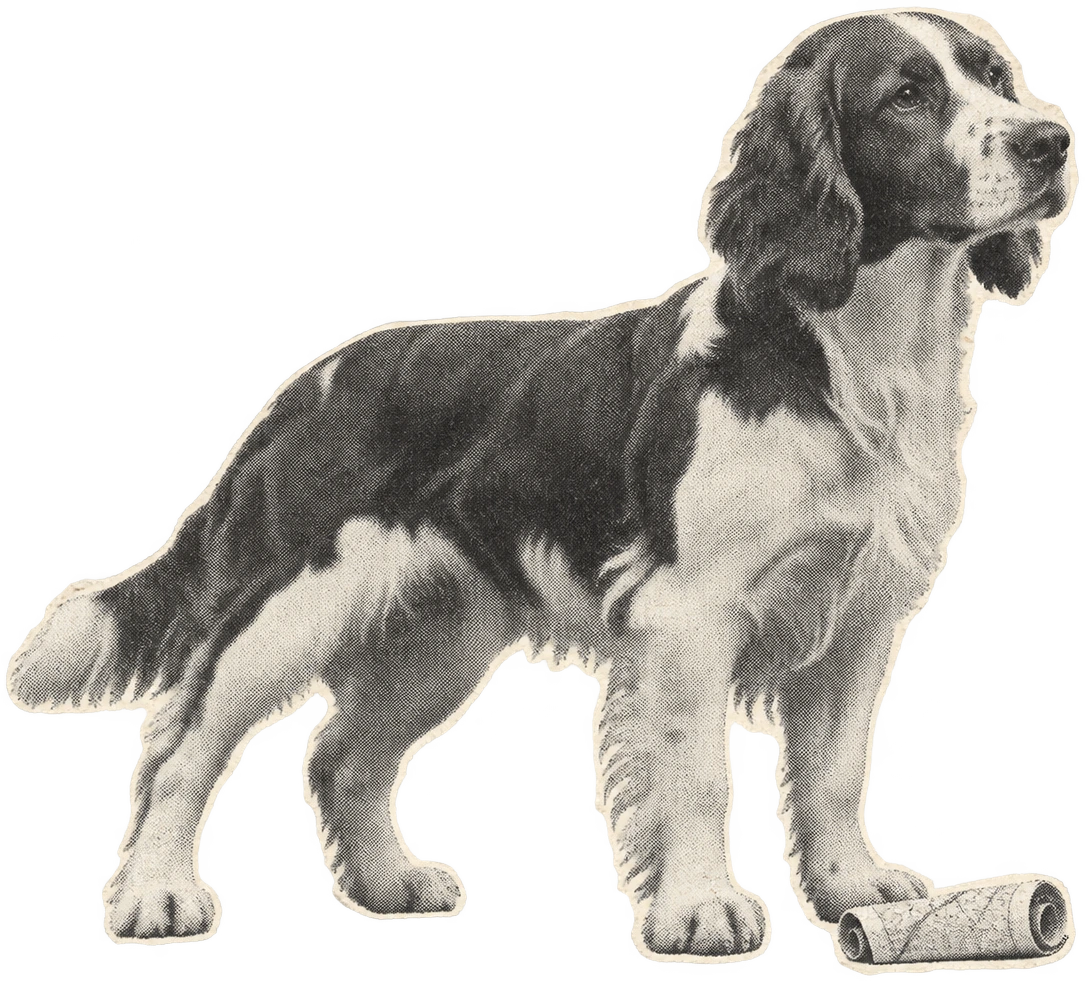
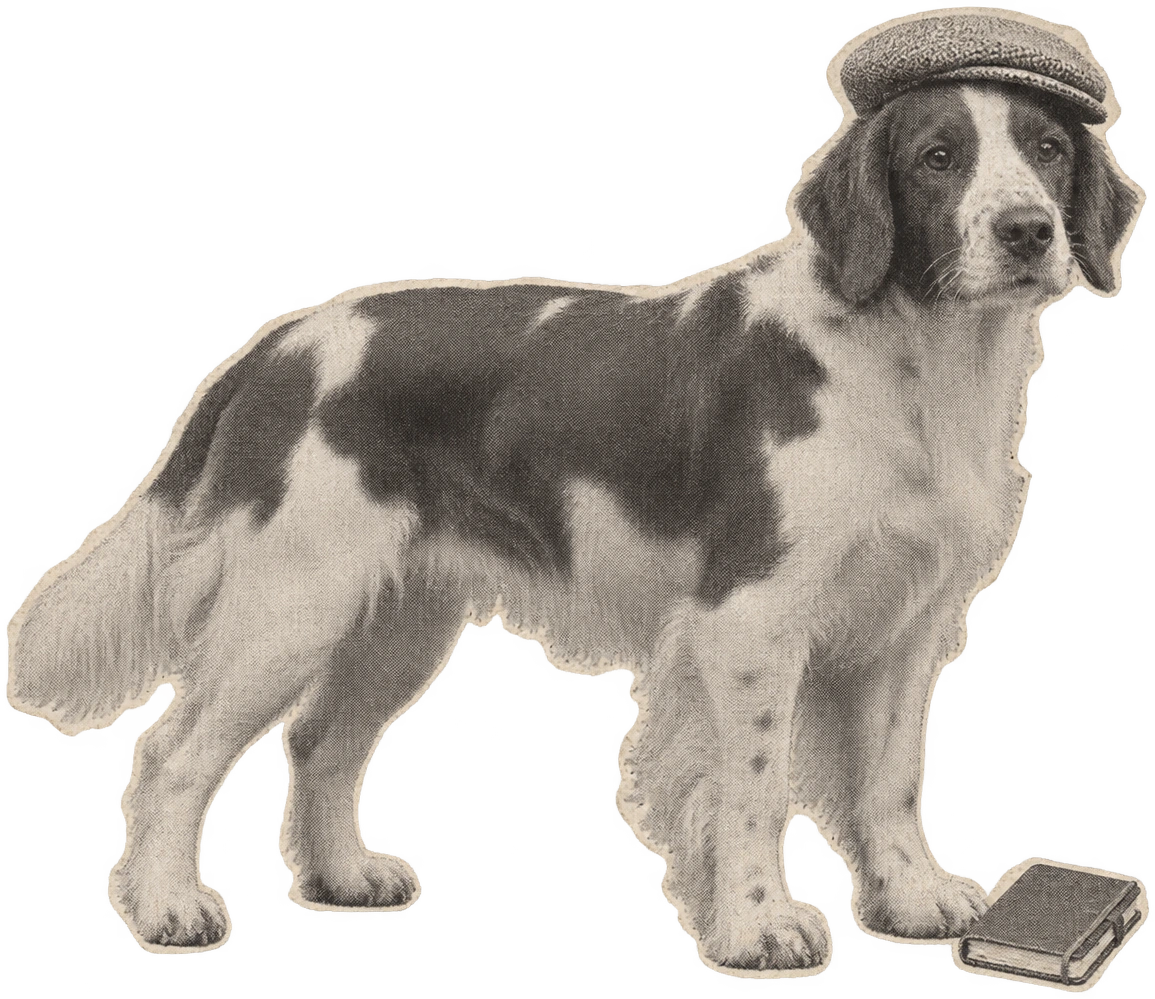
The Welsh Springer is the compact red-and-white spaniel bred to find and flush birds from cover. It’s a separate breed from the English Springer, not just the same dog in a red coat. If yours keeps disappearing into the verge nose first, give them some time to do it safely and work on a turn before the next hedge. When you get back, check what came home in the ears and feathers. 12351923
Jump to a section
The short version
Build a walk with a stretch where the dog can get their head down and spend time smelling things. Near livestock, roads or somewhere busy, shorten the lead early instead of waiting for whatever’s in the hedge to come out. Practise coming away from easy smells first. The beginning of the chase isn’t a reasonable place to ask for the first good recall. 8 15 23 24 27
Once you’re indoors, look at feet and the feathering under the ears and legs. If there’s sudden head shaking or a sore spot between toes after long grass, ask the vet about it rather than trying to find something deep under the hair or in the ear. 5 17 18 19 37
Welsh Springer Spaniel notes / 01
Where to start
| Start with | What to do |
|---|---|
| Sniff time | Choose a safe stretch with enough room to stop and turn. 8 23 24 |
| Recall | Work somewhere quiet before asking them to leave a scent. 11 23 |
| After rough grass | Look at toes, legs and the outside of the ears. 18 19 |
| Eye that suddenly looks painful | Phone the vet promptly. 42 45 |
Welsh Springer is its own breed
The Royal Kennel Club lists Spaniel (Welsh Springer) and Spaniel (English Springer) separately. Rich red and white is the Welsh standard’s coat colour, and the ears are relatively small and taper towards the tips. The English breed has a different standard. Don’t lift a result, a training assumption or a health number off a page just because it says “Springer”. 1 2 3 9 12
Welsh Springer Spaniel notes / 02
Check the name
| Name | How to read it |
|---|---|
| Welsh Springer Spaniel | Separate Welsh gundog, listed in the UK as Spaniel (Welsh Springer). 1 2 |
| English Springer Spaniel | A different RKC entry with its own standard and health guidance. 9 12 |
| “Springer” on an advert | Ask which breed or ancestry is documented. Colour isn’t paperwork. 2 3 12 |
Smaller than you think, still plenty of dog on a lead
The UK standard describes about 48 cm at the shoulder for males and 46 cm for females. That’s a guide to scale, not a way to buy a harness. See how the straps sit after a turn or once the dog has put their head down to smell something. Check ribs and waist with your hands; the feathering and a wet coat can both confuse what you’re seeing. 2 15 16
Welsh Springer Spaniel notes / 03
Measure yours
Look under the ear, not just at the ear
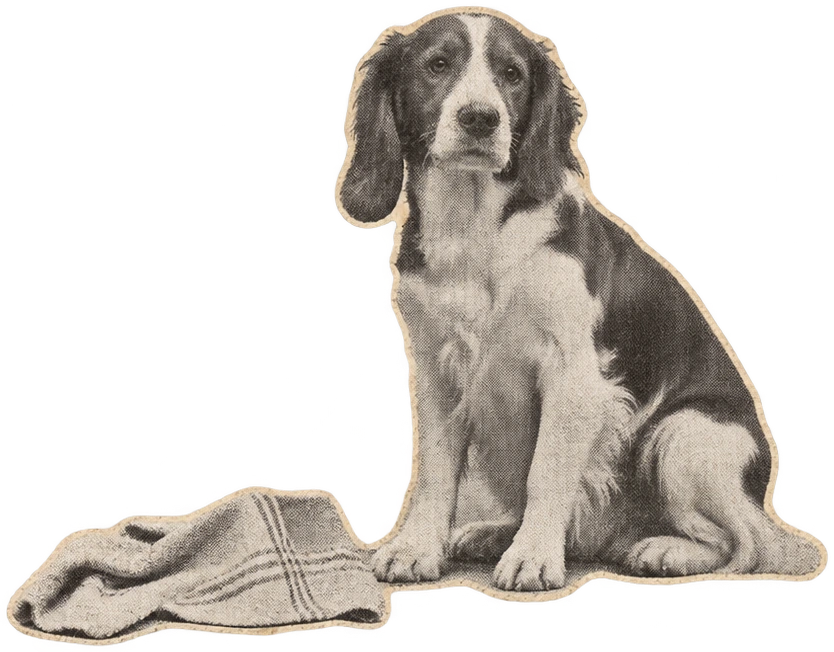
The Welsh Springer’s flat silky coat has feathering where muck collects. Feel through the hair behind the ears, under the front legs and at the backs of the legs. Towel-dry after a wet walk and make grooming a short, predictable job; tackle one comfortable area rather than trying to comb the whole dog while they’re wet and restless. 2 5 17 20
Check the outer ears, and get pain, redness, a new smell or discharge assessed. Head shaking after a long-grass walk can also mean a seed, not necessarily an infection. Don’t push cotton buds or fingers into the ear canal. 18 19 37
Welsh Springer Spaniel notes / 04
Check after grass
| Where | What to look for |
|---|---|
| Feathering | Burrs, knots or damp next to the skin after a walk. 5 17 |
| Outer ears | Check for redness, a new smell, discomfort or discharge. 18 37 |
| Between the toes | Persistent licking, swelling or something stuck after grass. 18 19 |
| Sore skin or a tight mat | Get help instead of cutting close to the skin. 17 20 |
Pay attention to what winds them up
Some dogs can walk through the car park and be fine, then lose all interest in you as soon as they reach the verge. Pay attention to where that change happens. Back up to a spot where they can still look towards you, reward it and take it from there. At home, a dog who follows you about isn’t necessarily distressed when left; a short recording gives you a better idea. 6 7 8 11 21 23
Welsh Springer Spaniel notes / 05
Let them switch off
Use their nose without making the whole walk a search
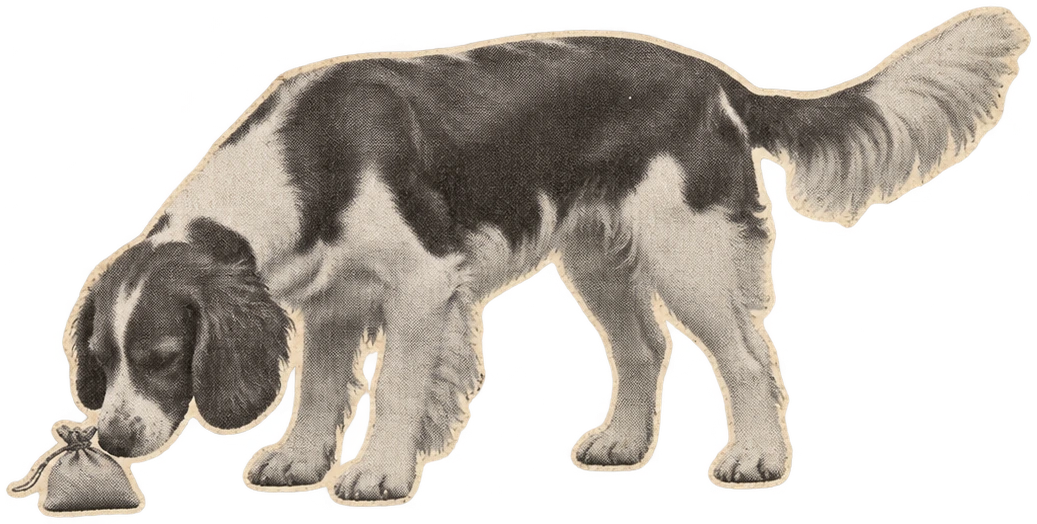
Start with an easy find indoors or in a safe garden. Reward coming back to you afterwards and put the toy away. Outside, reward the early head turn, then occasionally let them go back to sniffing. That way, checking in doesn’t always mean the good part’s over. Keep a longer line for safe open space, on a well-fitted harness. 11 15 23 24 25
Welsh Springer Spaniel notes / 06
Come away
A nice route needs a way to change your mind
Give a fit adult regular movement and time to sniff. If the same narrow path always ends in a tug of war at a gate, put the longer line away and find a route with more room. Use a lead around livestock, leave wildlife alone and avoid water with steep exits, currents or suspected blue-green algae. A wet spaniel may be an ordinary sight, but that doesn’t make every pond a sensible stop. 8 13 15 23 26 27
Welsh Springer Spaniel notes / 07
Look ahead
| Situation | Better call |
|---|---|
| Safe open ground | Give the dog room to investigate within what you can manage. 15 23 26 |
| Narrow paths or livestock | Use a shorter lead and make a decision before passing. 8 23 27 |
| Hot day or unsafe water | Choose a cooler time or a dry route. 13 28 |
| Movement changes | Get recurring stiffness or a limp checked. 26 29 |
Give the wet dog somewhere to go
Get a towel and non-slip mat by the door, with enough room that nobody has to step round the dog while you’re checking a foot. Put the bed somewhere away from the back-and-forth. Practise walking to it on quiet days instead of pointing at it for the first time while you’re holding two bags and the dog’s still dripping. 20 25 30 31
Welsh Springer Spaniel notes / 08
Move the bed
Let everybody step out of the game
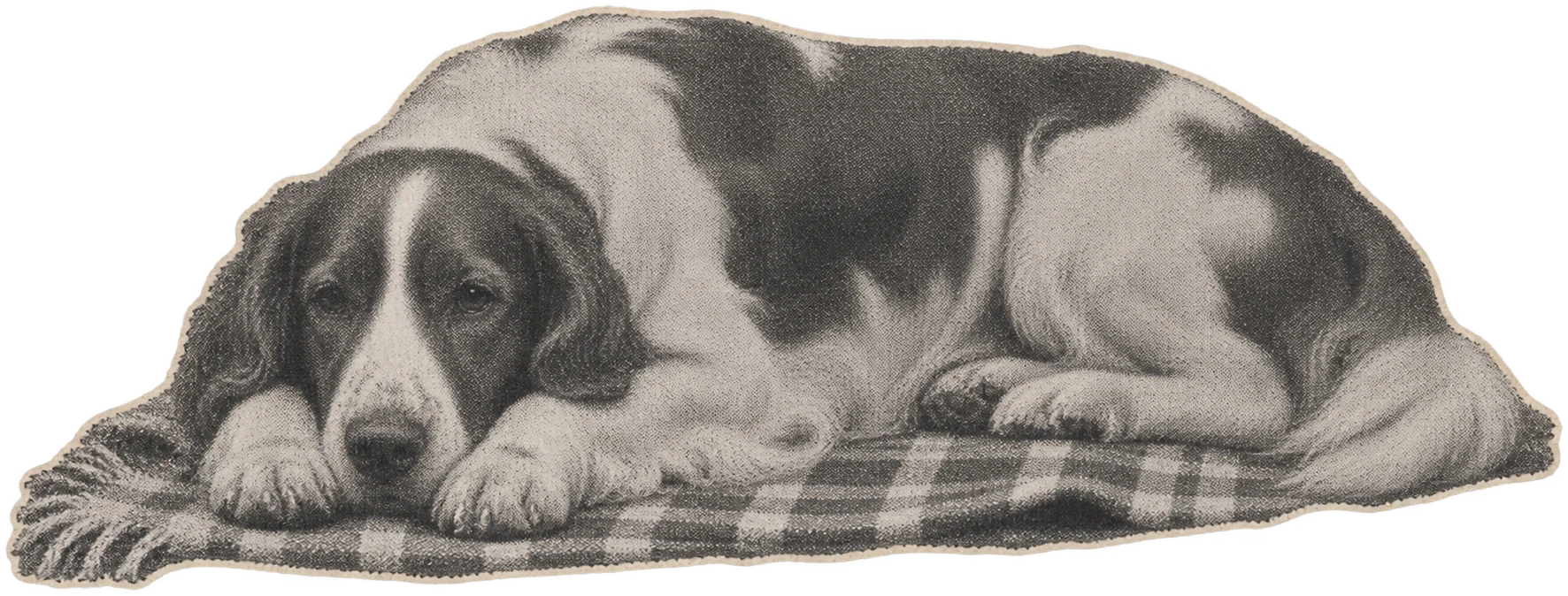
With children, supervise and keep fast games away from places where nobody has room to move. If the dog goes to lie down, leave them to it. Meet other pets with space and a way apart. Keep food and toys separate where they cause tension, and don’t give a dog access to a cat or small animal they keep trying to chase. 8 21 31 32 33 34
Welsh Springer Spaniel notes / 09
Give them a way out
Health: the eye checks are worth reading properly
For breeding, UK Good Practice includes prioritising genetic diversity and the BVA/RKC/ISDS eye exam with gonioscopy. The exam and gonioscopy check different things; gonioscopy lets the specialist look at the eye’s drainage angle. The central table lists BVA/RKC hip scoring as additional Best Practice. Ask for named results for both parents and ask the eye panellist what the most recent results do and don’t mean. 1 35 36 38 39 46
A primary study examined 227 Welsh Springers and found that features of pectinate ligament dysplasia, an abnormality at the drainage angle, could progress in dogs tested again. That isn’t a glaucoma rate and doesn’t say what will happen to your dog. A suddenly red, cloudy or painful eye, or sudden trouble seeing, warrants an urgent call to the vet regardless of any previous screening. 38 42 43 45
The Dogs Trust UK study reported median lifespan of 14.0 years, with a reported 13.3–14.3-year interval and 162 recorded deaths. That’s a cohort estimate, not a forecast for one dog or a measure of years without health conditions. 40 41
Welsh Springer Spaniel notes / 10
Health conditions and screening
| Health conditions and screening | What you can use |
|---|---|
| Good Practice eye exam | Look for an official eye result rather than “the vet said the eyes looked fine”. 1 35 36 |
| Gonioscopy | Check this separate drainage-angle assessment is documented. 1 35 38 |
| Additional Best Practice | Ask for the official hip results for both parents. 1 35 39 |
| Sudden red, cloudy, painful eye or new vision loss | Call a vet urgently, even after a previous normal screen. 42 45 |
| New smell or pain in an ear | Ask the vet rather than putting things into the canal. 19 37 |
| Persistent limp | Note when it happens and book an assessment. 29 |
| 14.0 years | UK sample median lifespan, not a promise for yours. 40 41 |
Ask what your walker actually does on the walk
If you’ll need help, ask how the walker handles livestock, wildlife and a dog who likes to disappear into cover. Find out whether the plan is a busy group outing or quiet sniff time. Budget for coat care where needed, routine vet visits and a contingency, not just the monthly insurance premium. Find out what it won’t cover before you’re counting on it. 14 17 23 44
Welsh Springer Spaniel notes / 11
Price the coat
| Cost | Good question |
|---|---|
| Walker or day care | Where do they go, what lead rules do they use and how do they handle group walks? 14 23 |
| Groomer | Are the ears, feathers and handling breaks included? 17 20 |
| Vet cover | What are the excess, limits and exclusions? 44 |
| Outdoor kit | What fits securely now, and what can simply be replaced when worn? 15 |
The Welsh spaniel behind the name
The UK breed club traces a distinct Welsh spaniel type back before formal kennel registration. The North of England club records registration in 1902. The springing work was finding and flushing game from cover; today that history can help explain a dog’s interest in a hedge without excusing letting them do it wherever they like. 1 3 4 10
Welsh Springer Spaniel notes / 12
Welsh roots
See what they do when the fun stops
If you’re adopting, ask how the dog walks, what they do after an outing and what will happen if they get a burr in one ear. With a litter, see the puppies with their mother where they’re raised. Ask for the actual eye, gonioscopy and hip records on both parents, as well as what they’ve been doing to make quiet handling feel normal. 6 20 25 35 36 46 47
Welsh Springer Spaniel notes / 13
Ask about a day
| Ask this | What helps |
|---|---|
| What is a normal walk like? | An answer about routes, recall and what changes near wildlife. 8 23 |
| What do they do afterwards? | Look for quiet recovery, settling and easy access to a resting spot. 25 31 |
| Can I see both parents’ tests? | Named separate eye, gonioscopy and hip results. 35 36 46 |
| Can I meet the puppy with its mother? | See their home set-up, not just a pickup point. 47 |
Sources
- S1Royal Kennel Club Welsh Springer Spaniel official profile and live health tiersSource · checked 21 November 2026
- S2Royal Kennel Club Welsh Springer Spaniel UK breed standardSource · checked 21 November 2026
- S3Welsh Springer Spaniel Club UK history and breed-specific backgroundSource · checked 21 November 2026
- S4United Kennel Club official Welsh Springer Spaniel history and standardsSource · checked 21 November 2026
- S5PDSA veterinary grooming and coat maintenanceSource · checked 21 November 2026
- S6Dogs Trust introducing time alone, using a recordingSource · checked 21 November 2026
- S7Dogs Trust recognising and getting help for separation distressSource · checked 21 November 2026
- S8Dogs Trust safer handling around chasing and wildlifeSource · checked 21 November 2026
- S9Royal Kennel Club separate English Springer Spaniel profile and testsSource · checked 21 November 2026
- S10North of England Welsh Springer Spaniel Club history of UK recognitionSource · checked 21 November 2026
- S11Dogs Trust reward-based trainingSource · checked 21 November 2026
- S12Royal Kennel Club separate English Springer breed standardSource · checked 21 November 2026
- S13PDSA dog water safety, currents, exits and suspected algaeSource · checked 21 November 2026
- S14Dogs Trust finding a suitable dog walkerSource · checked 21 November 2026
- S15Dogs Trust harness fitting and checking free movementSource · checked 21 November 2026
- S16PDSA body condition at homeSource · checked 21 November 2026
- S17Blue Cross assessing and caring for coat, skin and matsSource · checked 21 November 2026
- S18PDSA home health check including feet and skinSource · checked 21 November 2026
- S19PDSA veterinary guidance on grass seeds and the signs at ears or pawsSource · checked 21 November 2026
- S20Dogs Trust building comfort with handlingSource · checked 21 November 2026
- S21Dogs Trust recognising and managing reactivitySource · checked 21 November 2026
- S22Dogs Trust sourcing qualified behavioural supportSource · checked 21 November 2026
- S23Dogs Trust recall and long-line trainingSource · checked 21 November 2026
- S24Dogs Trust safe enrichment and search gamesSource · checked 21 November 2026
- S25Dogs Trust building settling skillsSource · checked 21 November 2026
- S26PDSA tailoring dog exercise to the individualSource · checked 21 November 2026
- S27Natural England Countryside Code on keeping dogs under controlSource · checked 21 November 2026
- S28Dogs Trust safe outings in hot weatherSource · checked 21 November 2026
- S29PDSA veterinary guidance for limping and stiffnessSource · checked 21 November 2026
- S30Canine Arthritis Management veterinary access and safe flooring guidanceSource · checked 21 November 2026
- S31Dogs Trust children and dog supervisionSource · checked 21 November 2026
- S32Dogs Trust safer dog and cat introductionsSource · checked 21 November 2026
- S33Dogs Trust introductions to another dogSource · checked 21 November 2026
- S34Dogs Trust resource guarding and separate feedingSource · checked 21 November 2026
- S35RKC live central Health Standard exact Welsh Springer entrySource · checked 21 November 2026
- S36Royal Kennel Club BVA/RKC/ISDS Eye SchemeSource · checked 21 November 2026
- S37PDSA symptoms and veterinary assessment of ear problemsSource · checked 21 November 2026
- S38British Veterinary Association owner information about gonioscopy and primary glaucomaSource · checked 21 November 2026
- S39British Veterinary Association/Royal Kennel Club hip scoring schemeSource · checked 21 November 2026
- S40Dogs Trust original UK lifespan table, exact Welsh Springer Spaniel rowSource · checked 21 November 2026
- S41Primary 2024 McMillan UK longevity studySource · checked 21 November 2026
- S42PDSA veterinary red or swollen eyes guidanceSource · checked 21 November 2026
- S43Oliver et al. original prospective Welsh Springer eye studySource · checked 21 November 2026
- S44PDSA costs and insuranceSource · checked 21 November 2026
- S45Animal Trust UK veterinary glaucoma and urgent eye symptom adviceSource · checked 21 November 2026
- S46Royal Kennel Club health results finderSource · checked 21 November 2026
- S47RSPCA buying a puppy and seeing mother with the litterSource · checked 21 November 2026
