
Breed guide / Pembroke Welsh Corgi
Living with a Pembroke Welsh Corgi
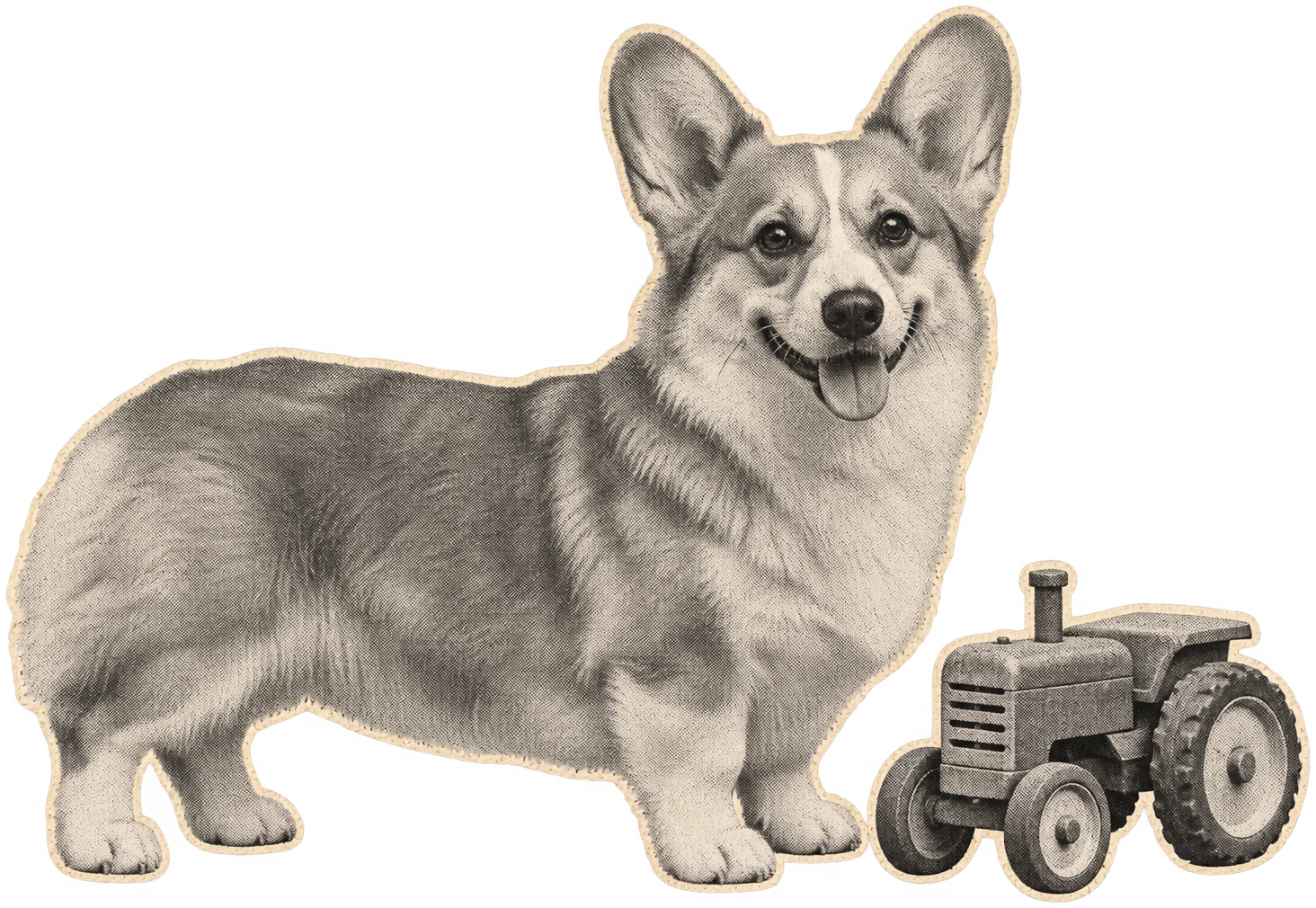
The Pembroke Welsh Corgi is a low-set Welsh cattle dog with a thick coat and a surprising amount of dog behind those short legs. It can still get to the other end of the garden before you’ve shut the door. Give them a decent walk, keep an eye on what’s going in the bowl and get to know how they move when all’s well. The first sign something’s wrong may be a change you could easily put down to them being short. 1234
Jump to a section
The short version
You don’t need a set of scales in the hallway. You do need to know how your Corgi’s ribs feel under the coat and where the waist is when you look down. If several people feed them, agree who’s doing what. Being given a little something by every member of the family adds up to a meal the dog will never admit to having. 3 5
Watch how your dog gets up and turns on an ordinary day. If they suddenly become wobbly, start dragging a foot or look as though their back hurts, call the vet immediately and ask how to move them safely. That’s a different conversation from how much exercise to give a dog that’s well. 4 6
Pembroke Welsh Corgi notes / 01
Food, movement and change
| Start here | A practical first move |
|---|---|
| Food | Measure a day’s portion and count what the other people in the house give. 3 5 |
| Movement | Get to know how they get up and walk when comfortable. 4 6 |
| Walking | Make time to sniff, not just to get round the block. 7 |
| Changes | New back pain, weakness or difficulty walking warrants urgent veterinary advice. 4 6 |
Pembroke or Cardigan?
Pembroke Welsh Corgi is the common name for the Royal Kennel Club’s Welsh Corgi (Pembroke) listing. The Cardigan is another breed, not a Pembroke in a different colour. The UK descriptions distinguish them by shape as well as size. A full tail doesn’t settle the question because Pembrokes can have one too. If you’re reading health data, check which listing it refers to before you apply it. 1 2 8 9 10
A long shape isn’t a target weight
The UK breed standard gives a shoulder height of about 25–30 cm. Its ideal weight ranges are 10–12 kg for males and 9–11 kg for females. Those are descriptions for the breed standard, not a weight prescription. Ask your vet about the right shape for the individual you’ve got, and use repeated measurements rather than one photo taken from the side. 2 3 11
Feel the ribs lightly and look for a waist behind them. Don’t go by the outline of the fur. If you train with food, put aside some of their daily ration where suitable and make it clear what’s already been given. Weigh food instead of relying on how full the scoop looks. 3 5 11
Pembroke Welsh Corgi notes / 03
Fit kit to the dog
| Thing to measure | What it helps with |
|---|---|
| Chest and shoulders | Fit a harness to the actual dog. Check it while they move, not just when they stand. 12 |
| Body condition | Use your hands and the view from above; have the vet show you what to feel. 3 11 |
| Food portion | Check the amount being fed across the whole household. 3 5 |
Where all that fur comes from
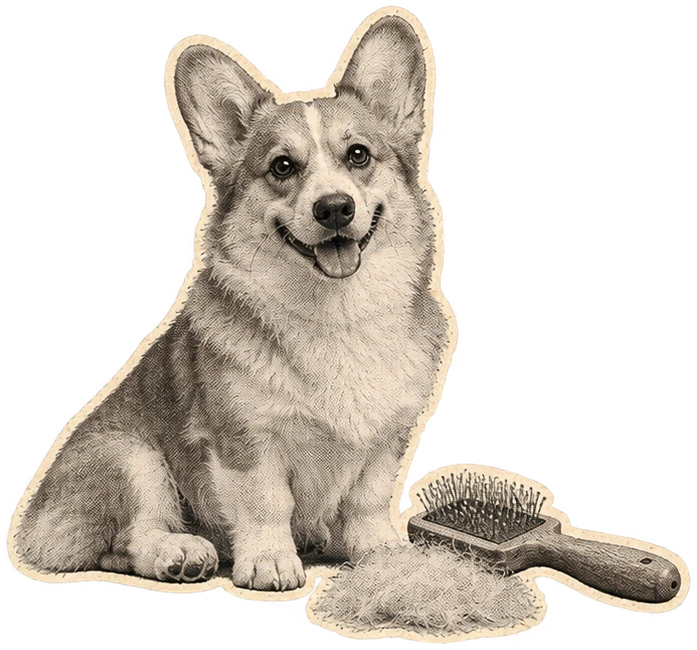
There’s a dense undercoat under the straighter outer hair. Lift a section on the neck with your hand and you’ll see how much a quick pass on top misses. Brush gently and try shorter sessions if your dog has no intention of standing there while you do the lot. In shedding season you’ll know how it’s going from the state of your clothes. 2 13 14
Check under their chest after a wet outing. It’s the part that’s had the closest look at the puddle. Take off a wet harness. As you towel them dry, look for areas that rub. Get veterinary advice for skin that’s sore or persistently itchy rather than assuming that’s just what the coat does. 12 14 15 16
Pembroke Welsh Corgi notes / 04
Check under the coat
| Check | Where to look |
|---|---|
| Loose coat | Below the surface of the neck hair and across the rump. 13 14 |
| Dampness | Under the chest and around the legs after a wet walk. 14 16 |
| Rubbing | Under straps, especially if the dog rubs or scratches after a walk. 12 15 |
| Persistent itching | Ask the vet; it’s not a grooming technique problem to solve by brushing more. 15 |
When they want to know what everyone’s doing
Some Pembrokes take a keen interest in movement and noise. That doesn’t mean yours will bark at the front window, or that barking there needs to become part of their day. If it happens, make the view less interesting and reward them for settling away from it. A dog can sound as though they’re having a marvellous time and still be finding it hard to switch off. 1 17 18
If you notice a dog going after feet during noisy play, stop the game early and use a barrier. Practise calling them away in a quieter setting with a toy or an appropriate reward. Don’t label every nip as herding; if there’s repeated nipping or anybody is worried, get qualified help. 19 20
Pembroke Welsh Corgi notes / 05
Keep busy moments manageable
Jobs that don’t need a herd of cattle
A search across the sitting room can be enough of a task. Start with a toy on the floor in plain sight and see if your dog enjoys finding it. Once it makes sense to them, hide it behind something they can walk round instead of asking them to clamber over the furniture. 22
Practise a return and a turn cue when there’s nothing much going on. Then you’ve got something to fall back on when a bicycle goes past. Use rewards they’ll actually work for, and finish before you both start wondering whether there’s something better to do. 23 24 25
Walking on short legs
Short legs don’t turn a fit dog into a home ornament. Build regular exercise around their current fitness and give them time to sniff. Increase distance gradually, particularly after a spell without much exercise. If your dog’s recovering from a back or joint problem, use the exercise plan from your vet rather than the walk you used to do. 1 4 7
If a steep step into the car keeps ending in a scramble, try an easier way in and ask for advice if they’re struggling. There’s no promise that changing the furniture or cutting out all ordinary movement prevents a disc problem. New stiffness or reluctance to move is a reason to reassess the dog rather than get stricter about the house. 4 6 26 27
Pembroke Welsh Corgi notes / 07
Make the walk count
| Out and about | What to pay attention to |
|---|---|
| Regular walks | Keep a routine the dog can manage without being sore afterwards. 6 7 |
| Off-lead | Practise recall first. Use a line with a fitted harness where safe if you still need back-up. 23 |
| Warm weather | Walk at a cooler time and be willing to end the outing early. 28 |
| Symptoms | Stop the outing and contact the vet if they suddenly seem weak or painful. 4 |
Make the busy bits of home easier
Watch what happens at the kitchen turn. If that’s where they lose their footing, put down a secured non-slip runner. It’s a sensible change for comfort and grip, not a treatment. Get new slipping or difficulty standing checked if it isn’t explained by the surface. 6 27
Give them somewhere to rest where people aren’t constantly stepping over them. Leave that place alone when they’re using it. If you’re teaching time alone, keep the first practice short enough to feel comfortable. See what happens once you’re actually out of sight. 18 29 30
Children and other animals
If a game ends with everyone running in circles around the dog, make it easier to manage before you have to intervene. An adult actively supervises shared time and makes sure the dog has somewhere to move away to. Teach children what it looks like when the dog wants to be left alone. 19 21 31
Let the cat keep useful high spots and a way to leave that the dog can’t block. With another dog, make first meetings low-pressure and give them their own eating spaces where needed. A Pembroke that likes a dog on a walk may still want a bit of space around their dinner. 32 33
Pembroke Welsh Corgi notes / 09
Leave space to move away
Health
A 2024 UK study estimated median lifespan at 13.2 years for Pembroke Welsh Corgis (95% CI 12.7–13.6), using records for 643 dogs including 221 recorded deaths. It analysed Pembroke and Cardigan separately. A cohort estimate isn’t a prediction about a particular dog. 34 35
Pembrokes are among the breeds associated with early disc changes and intervertebral disc disease (IVDD). Degenerative myelopathy (DM) is a different spinal condition and can produce some similar signs. Don’t try to tell them apart at home. If your dog has sudden weakness, a painful back or trouble walking, contact your vet immediately. There’s no reason to take the dog round the block to see whether it wears off. 4 36 37
For breeding screening, the Royal Kennel Club’s current Pembroke row lists hip scoring under Best Practice with a blank Good Practice column. The UK breed club discusses tests including DM and vWD1 separately from those formal tiers. A test result relating to one condition doesn’t explain a new symptom, and results for the Cardigan do not stand in for the Pembroke’s. 9 10 37 38 39
Pembroke Welsh Corgi notes / 10
Health conditions and screening
| Health topic | What you can do |
|---|---|
| Disc disease | Get urgent veterinary advice for sudden weakness, pain or trouble walking. 4 36 |
| Gradual wobbliness | Ask a vet to assess changed movement; DM and disc problems can look similar. 37 |
| Hips | Ask for both parents’ named hip scheme results. Clinical symptoms still need their own assessment. 6 10 39 |
| Other tests | Ask what a reported DM or vWD1 result means, and which dog was tested. 37 38 |
| Weight | Use body condition and an individual plan, particularly if mobility is already limited. 3 4 |
| Painful eye | Phone the vet promptly about an eye held shut or a sudden painful change. 40 |
| What isn’t known | No individual outcome follows from a cohort median, parent result or dog’s shape. 2 34 37 |
The bill for a small dog can still be big
Work out routine costs with an ordinary month in mind. A short dog still needs the basics, including a harness that fits. Food and routine vet care go in the same budget. Price the cover you’ll need on days you can’t make the walk, rather than hoping that a dog which lives close to the ground comes with a smaller diary. 12 41 42
If you’re comparing insurance, look at the excess and any fee you’d pay on top, and check which ongoing or pre-existing conditions are excluded. Ask how the policy handles investigations and specialist referrals rather than shopping only by the monthly payment. 4 41
Pembroke Welsh Corgi notes / 11
Pay for the actual dog
| Cost | What to find out |
|---|---|
| Daily food | Price an amount that fits your own dog’s needs. 3 5 |
| Equipment | Buy for the actual chest and for how they get into the car. 12 26 |
| Walking help | Ask how the walker manages the lead and the actual route. 42 |
| Vet care | Keep enough room for the excess and know the conditions of the cover. 41 |
The farm dog underneath the fancy collar
The Pembroke’s working history is in Wales, where the breed was used to move cattle. The UK kennel club recognised Pembroke and Cardigan as two distinct breeds in 1934. Herding is useful context for a dog that might enjoy paying attention to where things are going; it’s no reason to let them get that close to someone’s livestock. 1 8 43 44
Bringing one home
If you’re considering an adult, ask the rescue what walking and indoor movement look like now. Find out if they’re comfortable around the pace of your household, and give them a quiet few days to get their bearings. Be honest about slippery floors and how often the dog has to get in and out of the car. 26 27 45 46
If you’re looking at a puppy, meet its mother where the litter is being raised. Ask for named parental screening results and for specifics about how the litter has been raised so far. If the dog in front of you is a Pembroke, a piece of paperwork for a different dog shouldn’t be the end of the conversation. 10 47 48
Pembroke Welsh Corgi notes / 13
Ask about everyday care
| Ask about | Evidence worth seeing |
|---|---|
| Parents | Registered names and hip results you can verify. 10 39 48 |
| Health history | What is known about movement and any condition in close relatives. 37 38 |
| Adult dog | A real account of the walks they manage, handling and how they settle. 45 46 |
| Fit at home | Where the dog can rest and an easy route in and out before the first day. 27 46 |
Sources
- S1Royal Kennel Club Pembroke profile, breed differences and healthSource · checked 21 November 2026
- S2Royal Kennel Club Pembroke written breed standardSource · checked 21 November 2026
- S3PDSA body condition and healthy dog weightSource · checked 21 November 2026
- S4PDSA disc disease symptoms and urgent adviceSource · checked 21 November 2026
- S5PDSA pet portions and body conditionSource · checked 21 November 2026
- S6PDSA new limping, stiffness and veterinary helpSource · checked 21 November 2026
- S7PDSA adapting exercise for the individual dogSource · checked 21 November 2026
- S8Royal Kennel Club Cardigan history and distinct recognitionSource · checked 21 November 2026
- S9Royal Kennel Club Cardigan written breed standardSource · checked 21 November 2026
- S10Royal Kennel Club Health Standard, Pembroke and Cardigan rowsSource · checked 21 November 2026
- S11PDSA practical body condition scoringSource · checked 21 November 2026
- S12Dogs Trust fitting and introducing a harnessSource · checked 21 November 2026
- S13Welsh Corgi League Pembroke characteristics and coatSource · checked 21 November 2026
- S14PDSA grooming dogs with different coatsSource · checked 21 November 2026
- S15PDSA itchy skin and veterinary reviewSource · checked 21 November 2026
- S16PDSA systematic at-home pet health checkSource · checked 21 November 2026
- S17Dogs Trust barking and reducing view of triggersSource · checked 21 November 2026
- S18Dogs Trust settle training and ordinary household calmSource · checked 21 November 2026
- S19Dogs Trust puppy/adult play and mouthingSource · checked 21 November 2026
- S20Dogs Trust qualified behaviour help and safe trainingSource · checked 21 November 2026
- S21Dogs Trust body language and consent signalsSource · checked 21 November 2026
- S22Dogs Trust practical hide and seek toy gameSource · checked 21 November 2026
- S23Dogs Trust recall and use of long line and harnessSource · checked 21 November 2026
- S24Dogs Trust positive reinforcementSource · checked 21 November 2026
- S25Dogs Trust rewarding turns and distance around triggersSource · checked 21 November 2026
- S26Dogs Trust comfortable and secure car travel for dogsSource · checked 21 November 2026
- S27PDSA practical mobility and traction around the homeSource · checked 21 November 2026
- S28Dogs Trust hot weather safetySource · checked 21 November 2026
- S29Dogs Trust gradual time-alone trainingSource · checked 21 November 2026
- S30PDSA separation anxiety and veterinary or behaviour helpSource · checked 21 November 2026
- S31Dogs Trust active supervision for children and dogsSource · checked 21 November 2026
- S32Dogs Trust safe cat and dog introductionsSource · checked 21 November 2026
- S33Dogs Trust introducing a dog to another dogSource · checked 21 November 2026
- S34Dogs Trust 2024 lifespan results, separate Pembroke Welsh Corgi rowSource · checked 21 November 2026
- S35Original UK study, McMillan et al. (2024), scientific method and overall medianSource · checked 21 November 2026
- S36Cornell veterinary guidance on chondrodystrophy and disc diseaseSource · checked 21 November 2026
- S37University of Glasgow corgi degenerative myelopathy research and diagnostic uncertaintySource · checked 21 November 2026
- S38Welsh Corgi League Pembroke health work and associated testsSource · checked 21 November 2026
- S39BVA Hip Dysplasia SchemeSource · checked 21 November 2026
- S40PDSA painful eye and urgent actionSource · checked 21 November 2026
- S41PDSA typical dog ownership costs and insurance considerationsSource · checked 21 November 2026
- S42Dogs Trust how to choose a dog walkerSource · checked 21 November 2026
- S43Welsh Corgi League Pembroke historySource · checked 21 November 2026
- S44Dogs Trust keeping a dog under control around livestockSource · checked 21 November 2026
- S45Welsh Corgi League UK rescue and rehomingSource · checked 21 November 2026
- S46Dogs Trust settling a rehomed dog at homeSource · checked 21 November 2026
- S47RSPCA responsible puppy purchase and meeting the motherSource · checked 21 November 2026
- S48Royal Kennel Club Health Test Results FinderSource · checked 21 November 2026
