Breed guide / Weimaraner
Living with a Weimaraner
A Weimaraner is a big grey German gundog, built to follow a scent across a fair bit of country. At home, some are just as determined to follow you to the loo. Teach them that they can rest without being part of everything, and use a line outdoors before they find out how much better they are at reaching the next field than you are. Grooming the short coat is easy. Making room for the dog in a normal working week is the real decision. 123478

Jump to a section
The short version
If your Weimaraner follows you all day, make one small change before looking for a longer route to walk them. Put a bed somewhere quiet but near enough that they can still see you get on with things. Reward a lie-down they chose for themselves. When they can manage that, move around for a moment and come back before it bothers them. Try it while you’re making tea, not when you’ve got a train to catch. 3478
On walks, look for the moment they first lift their head towards a smell. That’s a better time to reward a turn back than after they’ve gone charging over the horizon. If they’re already pulling towards it and can’t come away, leave more room on the next approach. Where there’s livestock or wildlife to disturb, get the lead on before you reach it. 91011
Weimaraner notes / 01
Rest at home, check in outdoors
| Start here | What to do |
|---|---|
| At home | Reward quiet rest while you move about normally. 78 |
| Before the gate | Get the lead on before a situation you can’t control. 911 |
| During the walk | Give their nose some work and practise coming back somewhere easy. 1012 |
| When it’s urgent | Keep the emergency vet number handy and know the signs of possible bloat. 313 |
Short hair, long hair and shades of grey
The Royal Kennel Club describes short and long-haired varieties of the Weimaraner. Long-haired dogs have feathering on the tail and backs of the legs and a longer coat on the body. Both are the same breed. If an advert says long hair automatically means a quieter dog, ask how that dog actually spends an afternoon. 1256
Silver and mouse grey are among the shades in the UK standard. It lists blue as non-standard. That tells you where the colour sits against the show standard, and nothing about whether that puppy ought to cost more. I’d pay more attention to a breeder who can show named health results than to one whose main selling point is the shade under a ring light. 1214
Size and what it feels like to handle one
The UK standard gives 61 to 69 cm at the shoulder for males and 56 to 64 cm for females. Those are show-standard heights, not the limits nature has agreed to. Measure an actual dog for a harness and check it sits clear of shoulder movement and doesn’t rub behind the front legs. 115
These are long-legged dogs. Check that yours can turn and lie down in the car and reach a resting spot without having to jump or clamber over something. For weight, ask your vet to show you how to feel the ribs and look for a waist. Muscular and heavy aren’t interchangeable, however much dog there appears to be when yours is sitting on your foot. 31617
The coat’s easy. The ears still need a look.
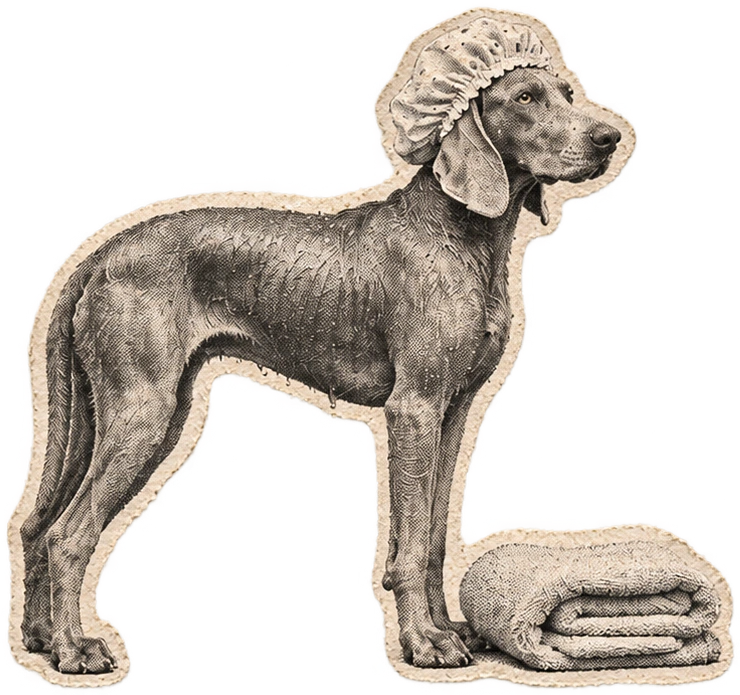
A soft brush does most of the regular work on a short-haired Weimaraner. Keep a towel handy for wet days. On the long-haired variety, pay more attention behind the ears and through the feathering after a wet walk. If you find a tangle, don’t yank it. Work gently around the loose hair or ask a groomer for help if it’s tight against the skin. 151819
A flap can hide a bit of grass that’s made its way in. Look over the outside of the ears and check between toes after a route through long grass. Talk to your vet if the dog starts shaking their head repeatedly, scratching at one ear or worrying a foot. Don’t poke down the ear canal to find out what it is. 1820
Weimaraner notes / 04
Look under those ears
| Where | What helps |
|---|---|
| Short coat | Soft brush and a towel after a muddy or wet outing. 318 |
| Feathering | Check for tangles after walks, especially behind the ears and along legs and tail. 1518 |
| Ears and toes | Look for seeds and changes after walks. Don’t probe inside the ear. 20 |
| Handling | Build in small rewarded checks so the dog can learn to relax for them. 19 |
Attached to you, not obliged to greet everyone
People who’ve lived with a Weimaraner will recognise the dog that wants to be where you are but takes its time with somebody new. Those things can happen in the same dog. When a visitor arrives, give yours room to hang back and let them approach if they want to. A friendly visitor can still be a lot when they’re standing between the dog and the way out. 34621
Notice the change from curious to uncomfortable. If your dog grows still or starts shifting away, give them distance before anyone tries to pet them. Use a barrier if they bark repeatedly or rush visitors. The postie doesn’t need to help with another experiment; a qualified behaviourist can. 2122
Weimaraner notes / 05
Give the dog room to choose
Recall that works before it matters
Teach a check-in before you try recall away from a scent. Pick a quiet place and reward the dog for looking back without being called. Keep some of those rewards for the moment they turn up, then let them sniff again when it’s safe. If coming back always ends the best part of the walk, your dog has a decent reason for delaying it. 91023
For getting the nose into gear at home, hide a favourite soft toy while the dog waits somewhere easy. Start with one they can find without a lot of help. On the next turn, make it slightly harder or call it there. Getting one good search done together is useful even when the rain is coming in sideways. 1224
Weimaraner notes / 06
Keep the walk a two-way thing

What to do with all that energy
A fit adult Weimaraner needs real exercise and time to use its brain. The RKC profile puts it in the more-than-two-hours exercise category. That is a broad indication of the commitment, not a timer to force on a young, sore or unwell dog. Build up activity with age and fitness and talk to your vet if the dog’s ability changes. 231725
Try giving the walk a shape: an easier start, time to explore somewhere suitable and a quieter finish. Some enjoy tracking or supervised gundog-style training; the breed club has ideas if plain walking isn’t quite cutting it. If yours gets fixated on wildlife, pick ground where you can keep hold safely. Plan for the days when it’s tipping it down and nobody fancies a new route. 9101126
Weimaraner notes / 07
Find a good day’s work
| Situation | Make the outing fit |
|---|---|
| Typical fit adult | Budget substantial time for activity; include sniffing, exploring and practising skills. 2312 |
| Growing or older dog | Adjust the type and amount of exercise with age, comfort and vet advice. 1725 |
| Wildlife or livestock | Get the lead on early and follow local rules and signs. 911 |
| Your dog slows down unexpectedly | Ease off and speak to the vet, especially about changes you’ve noticed on familiar routes. 17 |
A dog that can stay home without you
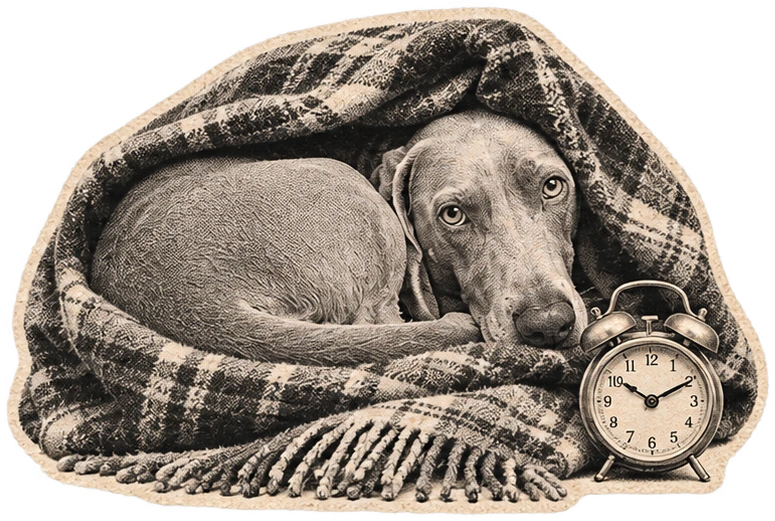
Spend a bit of the first week finding out how the dog feels about being alone. Leave for a moment when they’re settled, then use a camera or listen from outside if you’re not sure what happened. If they pace constantly, howl or repeatedly scratch at the exit, make the next practice easier and get help if they’re distressed. An empty house can be a much bigger step than you walking into the kitchen. 37827
Before taking one on, work out what happens on a normal long day. A person who can keep the dog company may make the week workable. A visit in the middle of the day can help with exercise and toileting, but it won’t sort distress that starts when the front door shuts. Ask the vet about behaviour support if that’s what you’re seeing. 3627
Weimaraner notes / 08
Start with short absences
Kids and other animals
A Weimaraner doesn’t have to mean any harm to send a small child flying in a narrow hall. Give dogs and children good spaces apart, especially at noisy times. Make the dog’s bed somewhere kids leave alone and separate for meals or chews. Put the precaution in place before everyone gets excited. 328
For a cat, ask what this dog has done around cats before. Even good experience indoors isn’t permission to chase one outdoors. Use a barrier for first meetings and give the cat somewhere high to go or their own room. For another dog, take the excitement out of the first greeting by starting with room to move apart. 692930
Health checks, bloat and lifespan
For pre-breeding screening the Royal Kennel Club puts its elbow, eye and hip checks in Best Practice. Its table does not give this breed a separate Good Practice entry. Get the reports for both parents and check what was assessed. Those are three different checks, even if an advert describes the parents with one “health tested” badge. 214313233
Gastric dilatation-volvulus (GDV, often called bloat) is an emergency. A UK study published in 2010, using a 2004 pedigree dog health survey, identified Weimaraners among breeds at greatest risk of reported GDV illness. That historical result doesn’t tell you your dog’s odds. If they repeatedly try to be sick and nothing comes up, especially with drooling, restlessness or a swollen belly, ring the emergency vet now. Swelling may not be obvious, so don’t wait for it. 31334
Hypomyelination is a recognised inherited cause of puppy tremors in Weimaraners. There’s a DNA test for the known variant, separate from the three RKC schemes above. Any trembling or unsteady puppy needs a vet to work out what’s going on. Don’t assume it is this condition or wait for it to pass. 235
The 2024 UK longevity table gives a median of 12.8 years (95% CI 12.6 to 13.0) from a group of 2,990 Weimaraners. It describes the study population, not a forecast for an individual dog. For your own dog, keep track of changes in comfort and movement and ask the vet about them early. 173637
Weimaraner notes / 10
Health conditions and screening
| Condition or check | What to know |
|---|---|
| Hips | BVA/RKC hip scoring is Best Practice before breeding. 21431 |
| Elbows | BVA/RKC elbow grading is a separate Best Practice check. 21432 |
| Eyes | BVA/RKC/ISDS clinical eye screening is Best Practice. A swab doesn’t replace it. 21433 |
| Suspected GDV | Dry retching can come before obvious swelling. Call the emergency vet immediately. 1334 |
| Hypomyelination | A known inherited cause of puppy tremors; ask your vet about symptoms and the appropriate test. 35 |
| New stiffness or lameness | A vet needs to assess the actual dog; the parents’ results don’t diagnose the cause. 173132 |
| Lifespan estimate | UK median 12.8 years in the 2024 study, not an individual prediction. 3637 |
Budget for who’s around on a weekday
Food and good equipment are the easy costs to remember. Put weekday cover on the list before you start comparing puppy prices. If your dog can’t happily be left for the length of your working day, regular care is part of the cost of owning the dog. Ask whether a walker can comfortably handle a dog this size. Find out what they’d do when your dog spots something along the hedgerow. 36938
Tell the insurer about the dog you’re actually taking on and compare what’s excluded as well as what’s included. Find out which emergency vet is open at night and how you’ll get there. There’s no point having the number in the kitchen drawer if you’re always the one out with the dog. Save it on your phone. 1338
Weimaraner notes / 11
Budget for a normal weekday
| Cost | What to price |
|---|---|
| Food and kit | Food for a large dog and harness or leads that actually fit. 31538 |
| Weekday help | The right walker, sitter or another reliable person the dog can settle with. 62738 |
| Training | Hands-on reward-based support or somewhere safe to practise if you need it. 92238 |
| Health cover | Routine costs, policy limits and where you’ll go in an emergency. 1338 |
Why the dog wants to follow a scent
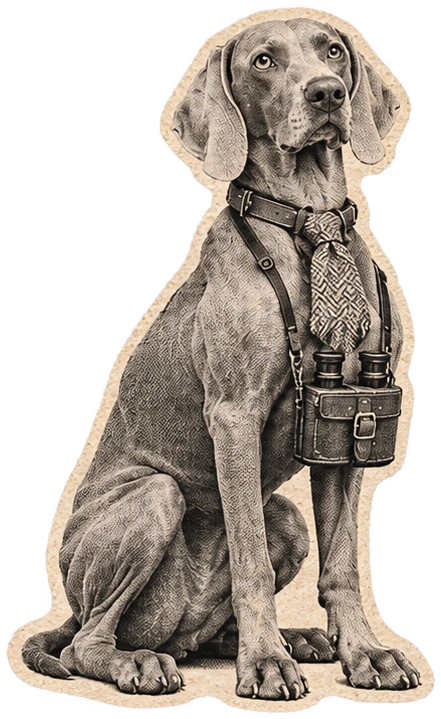
Weimaraners originated in Germany. The FCI describes established use of dogs around Weimar in the nineteenth century and notes that planned breeding began around 1890. The breed is now known in Britain as a hunt, point and retrieve gundog. Its earliest ancestry is less settled, so I’d leave the portraits of grey dogs out of the family tree. 2263940
Those jobs explain why games with a clear end are worth trying now. Let the dog follow a short trail to something they can find, then reward them for coming back to you. You don’t need a field full of game to find out whether they like using their nose. A toy hidden in a spare room will do. 122426
Weimaraner notes / 12
From Weimar to Britain
| Part of the story | What sources support |
|---|---|
| Origin | Germany; part of the breed’s story is associated with the area around Weimar. 3940 |
| Historic work | Hunting dog used for finding and tracking game; a versatile pointing breed. 263940 |
| UK clubs | The Weimaraner Club of Great Britain formed in 1953 and still runs working activities. 2641 |
A better conversation before bringing one home
Ask to see the mother with her puppies and wait long enough to see what she does once people have been in the room a while. Ask how she is alone and what happens when she catches a scent on a walk. Get dated results from the three screening schemes for both parents, then look up what the RKC records. If a breeder changes the subject to colour, go back to the question. 26144243
If you might prefer an adult, start with Weimaraner rescue as well as general rescues. Ask for a description of the dog’s actual weekday, including how it gets on in the car and what happens when the house empties. If you already have one and are struggling with those bits, write down examples rather than deciding the whole breed is hard work. That gives a trainer or the vet somewhere to start. 622273044
Weimaraner notes / 13
Ask the useful questions
| Ask for | Why it matters |
|---|---|
| Individual health records | Get names and dates and check published results where available. 21442 |
| Ordinary home behaviour | Ask about rest and being left, not just the first greeting. 627 |
| A real walk | Ask what draws the dog in and whether it can turn back on a line. 91030 |
| Rescue or breeder support | Find out who you can call if the dog needs help settling in. 4344 |
Sources
- S1Royal Kennel Club Weimaraner standardSource · checked 21 November 2026
- S2Royal Kennel Club Weimaraner breed profile, activity and health screeningSource · checked 21 November 2026
- S3PDSA Weimaraner breed guideSource · checked 21 November 2026
- S4Weimaraner Club of Great Britain, living with the breedSource · checked 21 November 2026
- S5Weimaraner Club of Great Britain, long-haired varietySource · checked 21 November 2026
- S6Woodgreen behaviour and rehoming overview of the WeimaranerSource · checked 21 November 2026
- S7Dogs Trust learning to settleSource · checked 21 November 2026
- S8Dogs Trust teaching time aloneSource · checked 21 November 2026
- S9Dogs Trust managing and training around chasingSource · checked 21 November 2026
- S10Dogs Trust recall and long-line practiceSource · checked 21 November 2026
- S11The Countryside Code for England and WalesSource · checked 21 November 2026
- S12Dogs Trust scent-based enrichmentSource · checked 21 November 2026
- S13PDSA GDV signs and emergency guidanceSource · checked 21 November 2026
- S14Royal Kennel Club Health Standard tableSource · checked 21 November 2026
- S15Dogs Trust lead walking and equipmentSource · checked 21 November 2026
- S16PDSA weight and body conditionSource · checked 21 November 2026
- S17PDSA healthcare and noticing changesSource · checked 21 November 2026
- S18PDSA grooming petsSource · checked 21 November 2026
- S19Dogs Trust practising handlingSource · checked 21 November 2026
- S20PDSA grass seeds, ears and pawsSource · checked 21 November 2026
- S21Dogs Trust advice on preparing for visitorsSource · checked 21 November 2026
- S22Dogs Trust managing aggressive behaviour towards visitorsSource · checked 21 November 2026
- S23Dogs Trust using rewards wellSource · checked 21 November 2026
- S24Blue Cross scent work practiceSource · checked 21 November 2026
- S25PDSA individual exercise needsSource · checked 21 November 2026
- S26Weimaraner Club of Great Britain on working activitiesSource · checked 21 November 2026
- S27PDSA recognising separation distress and seeking helpSource · checked 21 November 2026
- S28Dogs Trust guidance for homes with childrenSource · checked 21 November 2026
- S29Dogs Trust dog and cat introductionsSource · checked 21 November 2026
- S30Dogs Trust breed-specific rescue and rehoming guideSource · checked 21 November 2026
- S31BVA Hip Dysplasia SchemeSource · checked 21 November 2026
- S32BVA Elbow Dysplasia SchemeSource · checked 21 November 2026
- S33BVA Eye SchemeSource · checked 21 November 2026
- S34Evans and Adams 2010, UK pedigree GDV morbidity and mortality from the 2004 surveySource · checked 21 November 2026
- S35University of California, Davis Veterinary Genetics Laboratory on hypomyelinationSource · checked 21 November 2026
- S36Dogs Trust breed-level UK longevity estimatesSource · checked 21 November 2026
- S37McMillan et al. 2024 original UK longevity studySource · checked 21 November 2026
- S38PDSA dog ownership costsSource · checked 21 November 2026
- S39FCI official origin and classificationSource · checked 21 November 2026
- S40FCI standard, working suite and breed historySource · checked 21 November 2026
- S41Weimaraner Club of Great Britain formation and roleSource · checked 21 November 2026
- S42Royal Kennel Club Health Test Results FinderSource · checked 21 November 2026
- S43RSPCA responsible-breeder guideSource · checked 21 November 2026
- S44Weimaraner Club of Great Britain Rescue and RehomingSource · checked 21 November 2026