
Breed guide / Tibetan Terrier
Living with a Tibetan Terrier
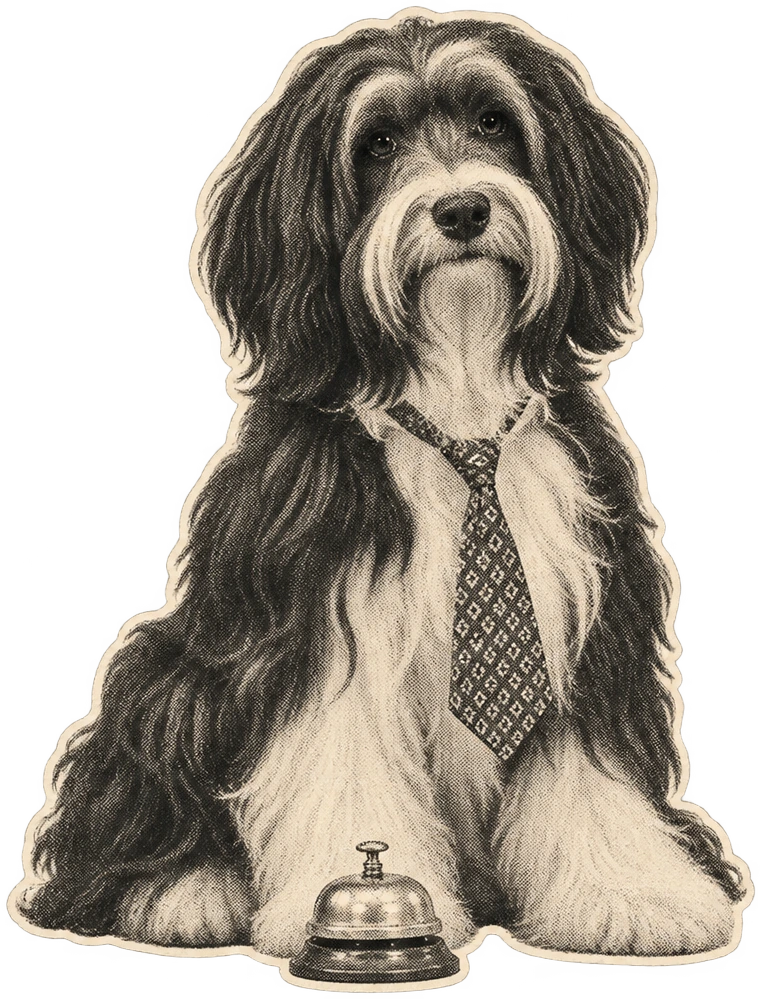
A Tibetan Terrier is a sturdy, long-coated dog from Tibet, with big round feet under all that hair. Despite the name, it isn’t a terrier: the British Royal Kennel Club puts it in Utility. At home, the useful things to learn are how to get a comb under the fringe without making it a wrestling match, and what the dog looks like moving through a dim hallway. If they start hesitating in places they used to charge through, don’t put it down to the fringe and leave it there. 12345
Jump to a section
The short version
Do a quick comb check where the lead or harness sits and behind one ear. A very tidy top layer can hide a tight knot close to the skin. If you find one, get help rather than cutting into it. Take the time to teach the dog that a short brush session ends before they need to wriggle away. 1467
Notice changes around steps and familiar furniture. If they start bumping into things or balking when the light goes, mention what you’ve seen to the vet. A dog who suddenly cannot see, or who holds one eye shut in pain, needs prompt veterinary help. Don’t keep moving a chair to see if they’ll bump it again. 589
Tibetan Terrier notes / 01
Coat, feet and eyesight
| Start here | What to do |
|---|---|
| Coat | Comb down to the roots and ask a groomer about tight mats. 46 |
| Feet | Check between the toes after wet or grassy walks. 610 |
| Eyesight | New hesitation in dim light or bumping into things merits a veterinary check. 58 |
| Screening | Get named health records rather than a claim about every dog in the line. 11 |
A Tibetan Terrier is not in the Terrier group
The name is misleading if you’re expecting a Jack Russell with a long coat. In Britain it’s listed in Utility. The FCI puts it with companion dogs of Tibetan breeds, and the Royal Kennel Club’s history describes use as a herding dog. These classifications tell you which breed the name belongs to. They don’t tell you what a dog has to be interested in on a walk. 12312
The Lhasa Apso and the Tibetan Spaniel have their own breed entries. If your dog came through rescue and nobody has the ancestry on paper, don’t decide from a fringe whether it must be one or the other. See how well they get around first. Find out what sort of brushing they tolerate. 1571314
Tibetan Terrier notes / 02
Separate breeds
A solid dog with big feet
The British standard gives males 36 to 41 cm at the shoulder and describes females as a little smaller, without a separate number. It describes large round feet with hair between the toes. The standard doesn’t give a body-weight range. These are breed descriptions, not a target for a dog whose shape is hard to see under the coat. 116
Feel for the ribs and get the vet to show you how to assess condition. For a harness, measure the chest with the coat sitting normally. Check the fit once they’ve walked and turned a few times. A strap with a wad of damp hair stuck under it can rub even when the size on the label looks right. 461617
Tibetan Terrier notes / 03
Fit the kit to the actual dog
Get underneath the fringe, not just over the top
The long outer coat sits over a finer undercoat. Part the hair in one small area and work where you can see what you’re doing. Check behind the ears as well as under the harness. Ask a groomer to show you how to check close to the skin without pulling it. The top looking tidy is probably the easiest bit to get right. 146
Look between the toes after a wet or grassy walk. If they’re shaking their head or chewing one paw, ask the vet whether there could be a seed or another problem. If hair keeps getting in the eyes, ask the groomer about managing it. A sore eye or a change in vision needs the vet rather than a shorter fringe. 5910
Tibetan Terrier notes / 04
Check the roots and feet
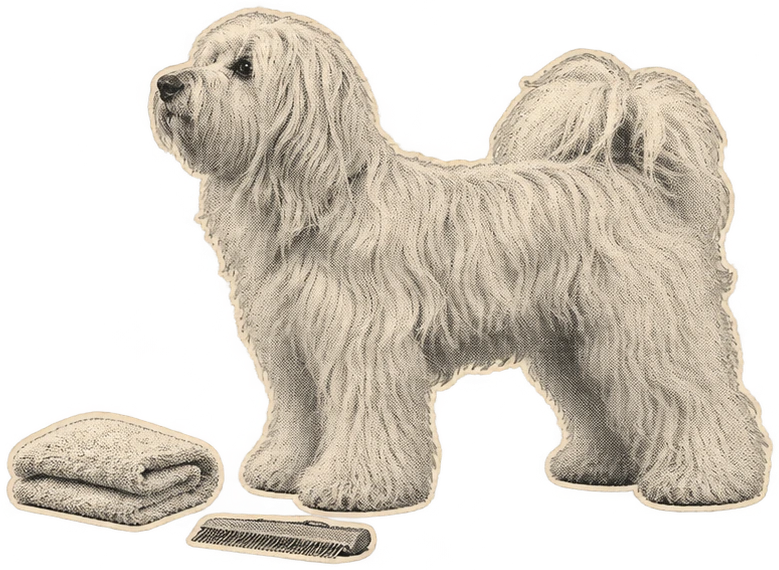
| Check this area | What to do |
|---|---|
| Behind ears and harness line | Part the hair; a shallow brush can miss tangles. 46 |
| Fringe around the face | Ask your groomer about coat management. Treat painful eyes and new poor vision as health concerns. 59 |
| Feathered feet | Check for mud and debris, especially between the toes. 110 |
| Coat tight against skin | Don’t use scissors. Ask a groomer, or a vet if the skin is already sore. 46 |
Let the dog decide whether to come and say hello
Some dogs want to know every time the door goes. Others would rather watch from somewhere out of the way. If they stand back as a visitor reaches out, call the greeting off. It’s more useful to know your dog will move away when uncomfortable than to persuade them to tolerate a busy hall. 1819
Block the view if the barking keeps starting at the same window. Reward them for lying somewhere quieter. Ask for help if reactions keep getting worse. Don’t assume a dog is choosing to ignore you if they start startling or bumping into things in that same part of the house. 5202122
Tibetan Terrier notes / 05
Give them room
| What you see | What to try |
|---|---|
| Moves away from a visitor | Give them room. Don’t follow them with an outstretched hand. 1819 |
| Runs to the window | Reduce the view and teach settling elsewhere. 2022 |
| Startles where they used to go confidently | Note the change and ask the vet, especially if you’ve noticed other sight changes. 518 |
Teach them to stand while nothing much happens
Build up to grooming with a few seconds of contact the dog accepts. Reward the touch before asking for more. Let them leave when they’ve had enough, and make the next session easier. It’s much easier to teach this when the comb is a benign object than when it only appears to tackle a knot. 4723
Teach a cue to come towards your voice in a quiet place. That’s useful even if their sight is normal, and especially helpful if you’ve discussed a change with your vet. Keep games simple if the dog seems unsure in low light. A short sniffing game in a familiar room is still a proper activity. 5242526
Tibetan Terrier notes / 06
Useful jobs for a normal day
A walk that matches the dog you have
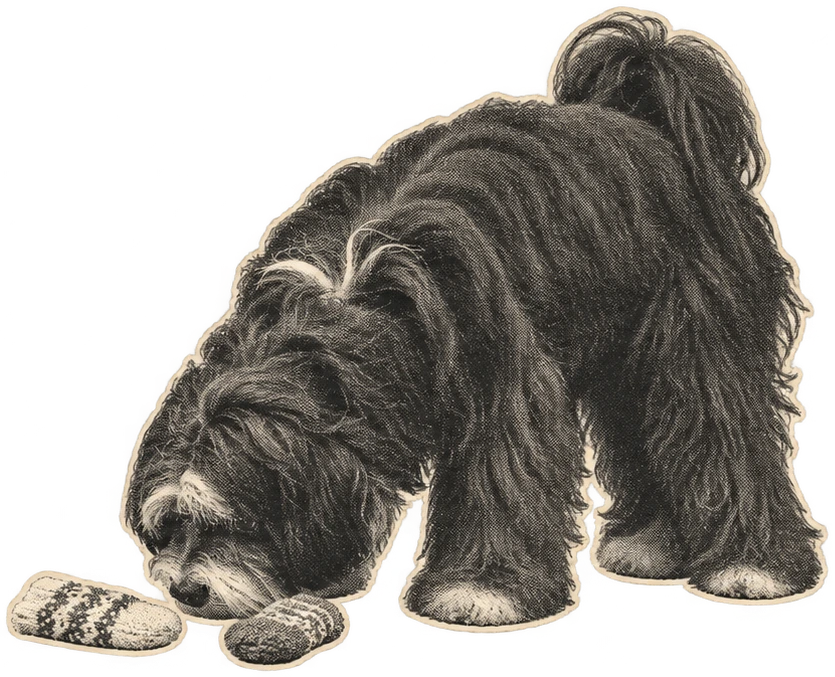
Build walks around how the dog moves, rather than how outdoorsy they look in a photograph. Let them sniff and use a well-fitted harness where they need to stay on lead. If they get stiff after a familiar route, shorten it while you ask your vet about the change. 17242728
Use a familiar, well-lit route if the dog has started hesitating on steps or at edges. Don’t suddenly let them off lead to test their new confidence. Give them space to take their time, and see the vet if the change is new. 52526
Tibetan Terrier notes / 07
Keep the walk comfortable
| When | Better plan |
|---|---|
| Just after a muddy walk | Check the feet and lower coat while the dog is comfortable. 4610 |
| Quiet outdoor space | Practise recall and take time for sniffing. 2425 |
| Walk has become harder | Adjust the route and get new changes checked. 528 |
| Dusk or stairs cause hesitation | Use a familiar path and talk to the vet about new behaviour. 5826 |
If sight is changing, make the house easier to read
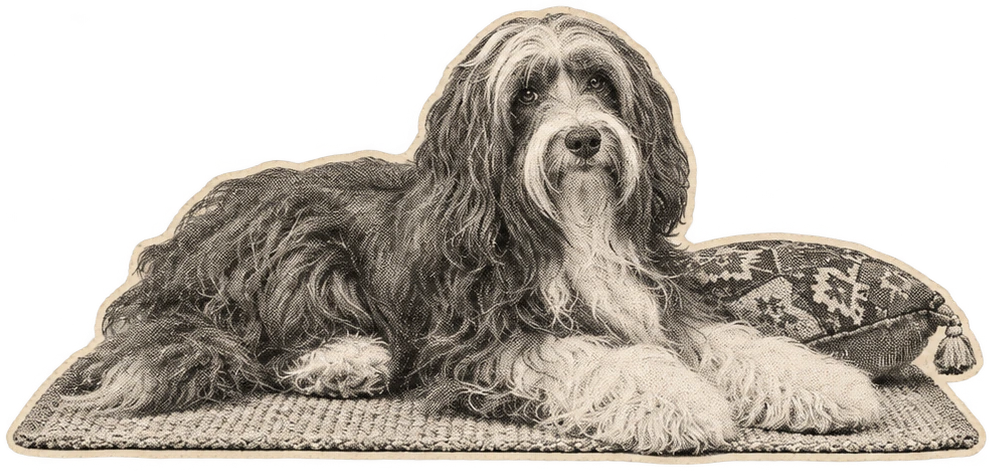
Give the dog a resting spot out of the main walkway. For a dog with vet-confirmed poor sight, leave the furniture and bowls in familiar places. Block off unsafe steps. Talk before reaching over to move them on. Losing track of the coffee table is enough to deal with without finding you’ve put it somewhere clever. 52226
Build up time alone slowly. Check on a camera if you can, particularly if the dog starts following you more than before. Make absences shorter if they can’t settle, and ask for advice if it keeps happening. 2930
Tibetan Terrier notes / 08
A place to rest
Children, cats and other dogs
An adult needs to supervise the dog with children. Ask the children to speak before getting close, and let the dog walk away. Don’t treat a long coat as permission to play hairdresser, especially round the ears and face. Give the dog one place nobody can follow them to. 71831
With a cat, use physical separation to start and make sure they both have somewhere to move away. When introducing another dog, leave enough room for breaks and don’t bring favourite toys into it straight away. 3233
Eyes, hips and which DNA tests to ask about
The November 2026 Royal Kennel Club row lists NCL12, PLL, PRA (rcd4) and pituitary dwarfism DNA tests under Good Practice, along with the BVA/RKC hip scheme. Best Practice adds PRA3 DNA and the BVA/RKC/ISDS Eye Scheme. Ask for named results for the breeding dogs. PRA3 and rcd4 refer to different inherited risks; a clear result for one isn’t an eye examination or a clear result for the other. 113435363738
If eyesight seems worse, tell your vet what you’ve noticed and when it happens. A sudden loss of vision or painful, held-shut eye needs prompt attention, regardless of screening. The 2024 UK lifespan study estimated a median of 13.8 years for the Tibetan Terrier cohort (95% confidence interval 13.5 to 14.2; 1,947 dogs). It doesn’t predict the lifespan of your individual dog or tell you how likely they are to develop any particular condition. 5893940
Tibetan Terrier notes / 10
Health conditions and screening
| What to check | Where it fits |
|---|---|
| Good Practice DNA | NCL12, primary lens luxation (PLL), PRA (rcd4) and pituitary dwarfism. 113435 |
| Good Practice hips | The BVA/RKC hip scheme result is separate from the DNA tests. 1141 |
| Best Practice additions | PRA3 DNA and the clinical BVA/RKC/ISDS Eye Scheme. 113637 |
| PRA3 vs rcd4 | Two specific tests. Neither checks the whole eye or rules out all eye conditions. 113638 |
| Bumping into things or dim-light changes | Ask your vet to assess eyesight. Get prompt help for sudden vision loss or pain. 589 |
| Actual screening records | Match the result to the dog named on it, and ask what it covers. 1141 |
| Lifespan context | UK 2024 median 13.8 years in the study cohort, not an individual forecast. 3940 |
Price up the comb time as well as the clip
Ask a groomer how often they’d want to see a dog with this coat and how much work you can reasonably take on between visits. Make sure there’s help available if your dog can’t tolerate much brushing yet. The bit you can’t do is what sets the appointment, not what the puppy photo looked like. 4742
Ask the practice what routine care costs locally. Check which eye or joint issues the policy would exclude if the dog already has signs or a diagnosis. Write down who will do the walk or grooming while you’re away, and tell them anything they need to know about the dog’s sight. 5264243
Tibetan Terrier notes / 11
Budget beyond the food
| Budget item | What to check |
|---|---|
| Grooming | Price for the coat and upkeep you can manage. 442 |
| Routine vet care | Local practice prices and who to call outside normal hours. 42 |
| Insurance | Limits, excess and exclusions, especially conditions already known. 42 |
| Backup care | A person who can follow walking and coat routines. 743 |
How the name got here
Tibet is the place of origin in the FCI record. The Royal Kennel Club describes Dr Greig, an English surgeon working around the Indian and Tibetan border in the early 1920s, in the breed’s history of coming to Britain. That account also describes the working background and the old show grouping with Lhasa Apsos. 2344
The big feet and dense coat tell you something about the dog’s build. They don’t mean every Tibetan Terrier needs a long hike before breakfast. Pay as much attention to what your dog can comfortably do as to what earlier dogs had to do. 1227
Before or after bringing one home
Meet a puppy with their mum where they were raised and ask to see the screening records. Ask a rescue whether they’ve seen the dog on stairs or in a dim room, and what grooming the dog already accepts. An adult dog’s behaviour can tell you which bit to start with when they get home. 57114546
If you’ve already got one, start with an easy coat session and a record of any changes you’ve seen. Tell the vet if they’ve suddenly started missing a familiar step, instead of trying to tidy the fringe and waiting a month. Get the grooming routine working in small steps rather than holding out for the day you’ve got a whole Sunday free. 4579
Tibetan Terrier notes / 13
Ask for evidence you can use
| Ask or check | What to look for |
|---|---|
| The actual dog | How they get around in familiar places and what handling they accept. 5746 |
| Health records | Named parental DNA, clinical eye and hip results where relevant. 114145 |
| Coat plan | A short handling routine and a groomer you can ask when it gets tricky. 47 |
| If sight seems to change | Contact the vet and note when you saw it. 589 |
Sources
- S1Royal Kennel Club Tibetan Terrier breed standard and foot, coat and size descriptionsSource · checked 21 November 2026
- S2Royal Kennel Club Tibetan Terrier history and classificationSource · checked 21 November 2026
- S3FCI Tibetan Terrier register and groupingSource · checked 21 November 2026
- S4PDSA brushing and managing tangled coatsSource · checked 21 November 2026
- S5PDSA recognising poor vision and blindness in dogsSource · checked 21 November 2026
- S6PDSA at-home coat, skin and foot checkSource · checked 21 November 2026
- S7Dogs Trust gentle handling practiceSource · checked 21 November 2026
- S8Royal Kennel Club guidance on PRA and difficulty seeing in low lightSource · checked 21 November 2026
- S9PDSA painful or closed eye and veterinary urgencySource · checked 21 November 2026
- S10PDSA grass seed symptoms in feet and earsSource · checked 21 November 2026
- S11Royal Kennel Club formal Health Standard Tibetan Terrier rowSource · checked 21 November 2026
- S12Royal Kennel Club separate Jack Russell Terrier standardSource · checked 21 November 2026
- S13Royal Kennel Club separate Lhasa Apso standardSource · checked 21 November 2026
- S14Royal Kennel Club separate Tibetan Spaniel standardSource · checked 21 November 2026
- S15Dogs Trust adopting a rescue and finding a suitable matchSource · checked 21 November 2026
- S16PDSA on healthy body condition and dog weightSource · checked 21 November 2026
- S17Dogs Trust lead walking and suitable equipmentSource · checked 21 November 2026
- S18Dogs Trust interpreting body language before interactionsSource · checked 21 November 2026
- S19Dogs Trust visitor routine and appropriate introductionsSource · checked 21 November 2026
- S20Dogs Trust managing barking at windowsSource · checked 21 November 2026
- S21RSPCA reward-based training and seeking qualified helpSource · checked 21 November 2026
- S22Dogs Trust at-home settle practiceSource · checked 21 November 2026
- S23Dogs Trust positive reinforcementSource · checked 21 November 2026
- S24Dogs Trust home enrichment, including easy scent gamesSource · checked 21 November 2026
- S25Dogs Trust recall training stagesSource · checked 21 November 2026
- S26Dogs Trust advice on living with a dog with reduced sightSource · checked 21 November 2026
- S27PDSA matching exercise to individual and ageSource · checked 21 November 2026
- S28PDSA limping, stiffness and veterinary assessmentSource · checked 21 November 2026
- S29Dogs Trust building time alone at the dog’s paceSource · checked 21 November 2026
- S30PDSA recognising separation distressSource · checked 21 November 2026
- S31Dogs Trust active supervision around childrenSource · checked 21 November 2026
- S32Dogs Trust introductions and escape routes for catsSource · checked 21 November 2026
- S33Dogs Trust introducing a dog to other dogs in the householdSource · checked 21 November 2026
- S34Royal Kennel Club scope of Tibetan Terrier pituitary dwarfism DNA testingSource · checked 21 November 2026
- S35Original Tibetan Terrier NCL12 genetic evidenceSource · checked 21 November 2026
- S36Original retinal atrophy PRA3 genetic association in Tibetan breedsSource · checked 21 November 2026
- S37British Veterinary Association on clinical Eye SchemeSource · checked 21 November 2026
- S38Royal Kennel Club PRA rcd4 DNA schemeSource · checked 21 November 2026
- S39Dogs Trust 2024 UK lifespan table covering Tibetan TerriersSource · checked 21 November 2026
- S40Original 2024 scientific study of UK dog longevitySource · checked 21 November 2026
- S41British Veterinary Association health testing schemes and limitationsSource · checked 21 November 2026
- S42PDSA ownership costs, insurance and routine careSource · checked 21 November 2026
- S43Dogs Trust choosing a dependable dog walkerSource · checked 21 November 2026
- S44FCI Tibetan Terrier breed standardSource · checked 21 November 2026
- S45RSPCA responsible puppy buying and viewing the motherSource · checked 21 November 2026
- S46Dogs Trust helping a newly rehomed dog settleSource · checked 21 November 2026
