
Breed guide / Standard Schnauzer
Living with a Schnauzer
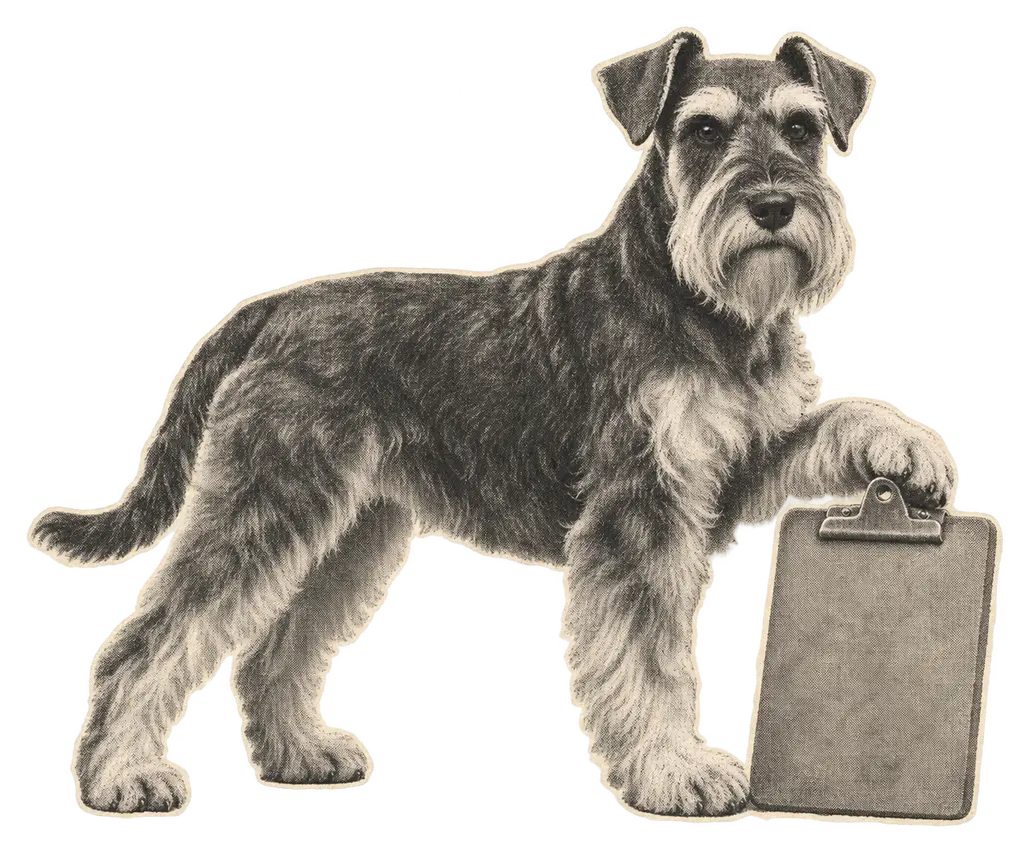
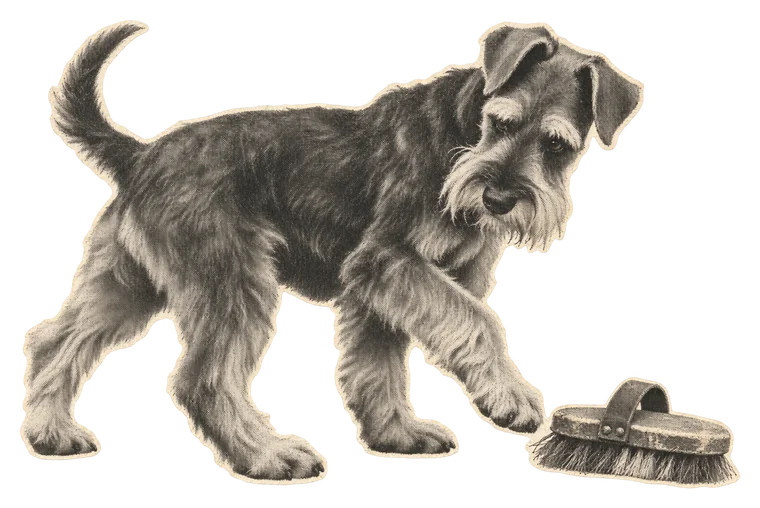
The Schnauzer is the medium-sized German working dog with the wiry jacket, rectangular muzzle and very definite eyebrows. It sits between the Miniature and Giant in size, but it’s a breed in its own right. If yours keeps an eye on how the house is run, the first thing to teach is how to go off duty. They don't need to interview every person who brings a parcel. 1 2 3 5
Jump to a section
Give the dog something to do when someone knocks
Next time you practise, start when nobody is actually on the step. Teach the dog to go to a mat, pay for a few seconds of quiet and let them go. Then add a soft knock somebody can repeat without the whole house joining in. Start behind a gate or shut door if you need the space. You’re teaching a different thing to do, not trying to win an argument about who heard the knock first. 12 14 26 42
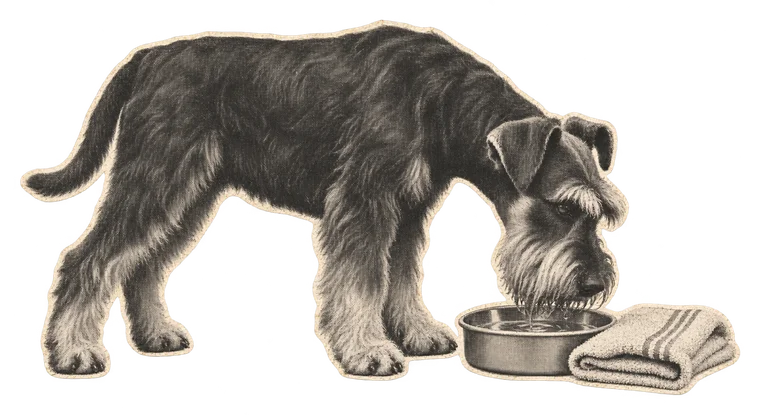
Set up a second easy habit around the beard. Give it a gentle wipe or towel press after a soggy drink and check the skin underneath. Stop and get help if there's soreness or a smell that keeps coming back. Dogs who normally tolerate a quick wipe but suddenly won’t may be trying to tell you something useful. 2 13 15 16
Standard Schnauzer notes / 01
Short version
| Start with | Try this |
|---|---|
| Door sounds | Rehearse a mat routine with no visitor first. 12 42 |
| Beard after a drink | Gently dry where it stays wet and check the skin. 2 15 |
| More barking than usual | Notice when and where it starts; work on that situation, not the noise alone. 14 42 |
| Dog struggles to breathe or collapses | Call your emergency vet immediately. 38 40 |
This is the middle one
The Royal Kennel Club lists Schnauzer, Miniature Schnauzer and Giant Schnauzer as separate entries. In this guide, Schnauzer means the dog also called the Standard Schnauzer, not a general word for any dog with the eyebrows. A Miniature’s eye guidance or a Giant’s screening list is not automatically the right one for this dog. 1 3 4 5 37 41
The UK standard lists black and pepper and salt. The coat colour and beard aren’t substitutes for checking the actual breed, especially if you’re looking at a dog without reliable pedigree information. Judge fit, habits and health from the dog you know. 1 2 4
Sturdy enough that lead manners matter
The UK standard’s ideal shoulder heights are 48 cm for males and 45.7 cm for females. Those figures describe the breed standard rather than what your dog has to measure. Check ribs and waist under the coat, and fit walking and travel kit to the dog you actually have. 2 18 19 20
Check the harness while they’re moving and turning. If it rides up when they put the beard to the ground, try another adjustment or shape. Work on loose-lead turns somewhere quiet so your first rehearsal isn’t when the dog spots something under the hedge with you attached. 11 19 26 27
The jacket and the beard want different jobs
The breed standard describes a harsh outer jacket and a dense undercoat. The beard and leg hair pick up the everyday mess. Keep the beard and legs clean and untangled; ask a groomer who knows wire coats to talk you through what clipping or hand stripping means for your dog. You don’t have to maintain a show finish, but the dog should be comfortable enough to walk, eat and have the coat handled. 2 13 15 16 17
At home, start with a few strokes where the dog is relaxed. Brush the longer furnishings gently, use your fingers to spot tight mats or grit, and get help with matting near the skin rather than cutting blind. If a dog repeatedly chews at a foot or shakes its head after a walk, check what you can see and speak to the vet if you suspect something stuck. 13 15 17 21 22
Standard Schnauzer notes / 04
Coat and grooming
| Where | What to do |
|---|---|
| Beard | Check underneath after food and water; dry damp areas gently. 2 15 |
| Legs and toes | Look for bits caught in the hair and examine any persistent licking. 15 21 |
| Body jacket | Agree a practical, comfortable routine with a wire-coat groomer. 2 16 17 |
| Sore skin or ears | Address discomfort with the vet before changing cosmetics or tools. 15 22 |
Watch what happens after the first bark
A dog who notices strangers or sounds doesn’t have to stay wound up once they’ve noticed. Look for the point where they’re still able to turn away or find the mat. If the landing is where all the sound comes through, practise somewhere else first. Visitors can wait for the dog to approach rather than trying to make friends with it across a gate. 12 14 26 42
Keep practising being left separately. Short comfortable departures and a camera check tell you more than silence through the front door. If the dog paces, cries or can’t settle, take a step back and ask for support. Behaviour can change with discomfort too; a normally easy dog that suddenly objects to touch deserves a vet check. 13 23 24 25
Standard Schnauzer notes / 05
Temperament
| Situation | Small first move |
|---|---|
| Bark and remain fixed at the door | Practise at lower intensity and provide space from the sound. 14 42 |
| Dog hangs back from guests | Let them observe and leave rather than insisting on a greeting. 13 14 |
| No rest while alone | Keep absences manageable and get appropriate help. 23 24 25 |
Teach a turn that doesn’t involve dragging them back
Use a turn cue on a low-distraction walk. Say it, turn with the dog and reward them as they catch up. If there’s an animal under the hedge and they can’t look at you, you’re too close for practice. Lead management and a different route beat hauling on a lead while making the cue louder. 11 19 26 27
Make an indoor search out of a spare toy rather than making every game about chasing. Let the dog find it, then ask for a brief quiet settle. At the door, work on the wait when it’s closed, then cracked open, before adding an actual guest. 12 26 28
Build an outing they can come down from
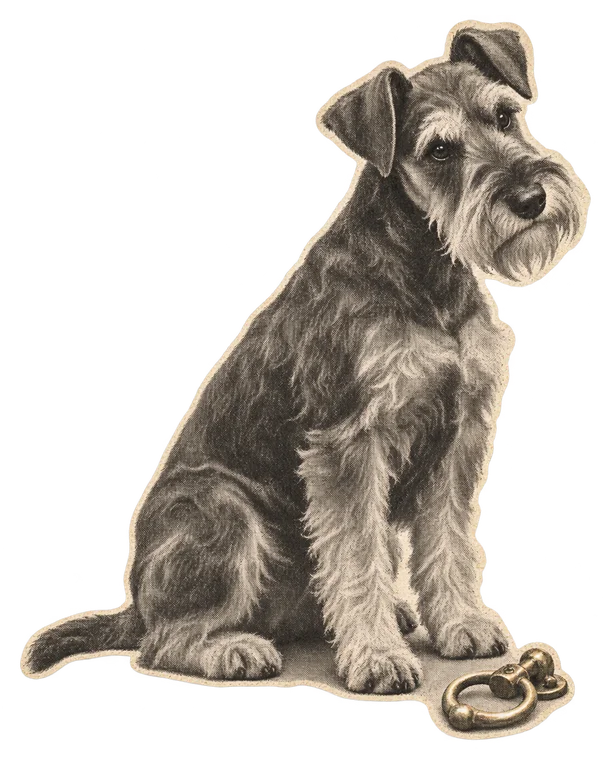
Use walks that give the dog room to move and sniff, and adjust for age, weather, body condition and comfort. An unfamiliar walk with constant close passes may not be more useful than a calmer route where they can look away and slow down. If the dog can’t maintain the old pace, don’t push on to hit a target. 18 29 31 32
Use a lead around stock and wildlife where needed. With a dog that fixates, practise away from the distraction before relying on any cue. If you see unusual tiring, cough or a change in breathing, note what was happening and call your vet. Trouble breathing or collapse is an emergency. 11 27 30 38 40
Standard Schnauzer notes / 07
Exercise
| Day or change | What to do |
|---|---|
| Normal walk | Allow sniffing and some practical recall or lead rehearsal. 27 28 29 |
| Hot weather | Move the outing to a safe cooler time or skip it. 31 |
| Stock nearby | Put the lead on early and follow local countryside guidance. 30 |
| Unexplained change in stamina | Speak to a vet instead of building the exercise up. 32 38 |
Move the bed out of the security office
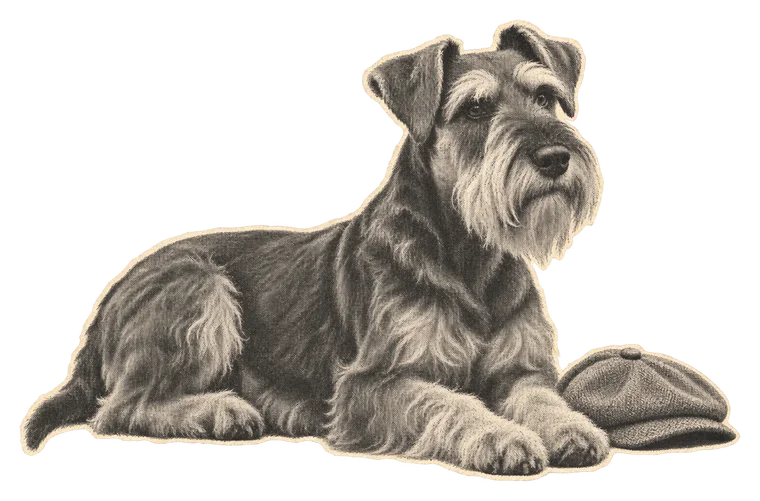
If your dog can see the whole pavement from their bed, it’s worth offering another place. Try a spot with less movement around it and practise using it before the busiest time of day. Leave a clear route away from the front door so neither visitor nor dog is trapped in a greeting. 12 14 42
The house doesn’t have to be silent. It does help if an ordinary door, bin or delivery sound doesn’t always turn into an event. Give the dog a predictable response, a quieter room if needed and something safe to do when noise is likely. 12 26 28 42
Children aren’t the doorbell training team
Have an adult manage greetings. Keep children out of the dog’s bed, don’t let them use the beard as a handle, and separate when you’re not watching. If the dog moves away, that’s the end of the interaction. You can have a perfectly friendly dog and still need a quieter setup. 13 14 34
Give cats high or separate escape routes and let dogs meet with room and without prized chews between them. If your dog chases repeatedly or blocks another pet’s movement, pause and get help. Nobody learns much from running the same bad introduction again. 11 25 33 35 36
Hips and the heart: read the right certificates
For pre-breeding screening, the Royal Kennel Club’s Schnauzer page puts genetic diversity under Good Practice; the central row has no named Good Practice test. DCM DNA and BVA/RKC hip scoring are Best Practice for this medium breed. The three Schnauzer sizes don’t share one row. Ask which parents were tested and what each result actually says. 1 4 6 10 37 47
DCM stands for dilated cardiomyopathy, a disease of the heart muscle. Research on the RBM20 variant used submitted test samples; an earlier case series reviewed 15 affected Standard Schnauzers. Neither gives a current UK pet prevalence or a timetable for an individual. The DNA test is for a specific inherited variant, not every possible cause of heart disease or a substitute for checking symptoms. 7 8 9 10 38
Standard Schnauzer notes / 10
Health
| Health topic | What you should know |
|---|---|
| RKC Good Practice | Breed page highlights genetic diversity; no named test is in the exact central row's Good column. 1 37 |
| DCM DNA | Best Practice; check the identity and precise result on both parent certificates. 1 10 37 |
| Hips | Best Practice parent radiographs; they don’t explain a current limp in your dog. 6 32 37 |
| Heart symptoms | New cough or loss of stamina merits a vet call. Call immediately for struggling to breathe or collapse. 7 38 40 |
| Research | Small affected-case series and selected submitted samples do not estimate modern UK prevalence. 8 9 |
| Current care | Bring the history and any reports; ask which assessment fits the dog's symptoms. 7 38 |
| Lifespan | In the 2024 UK study, the Standard Schnauzer median was 13.0 years, 95% CI 12.7–13.2, with 435 deaths in the table. That’s a cohort estimate, not a forecast. 43 44 |
Don’t leave the grooming line out of the sums
Ask a groomer for a charge that reflects this dog’s coat and the finish you want to maintain, not an average for anything called a Schnauzer. If someone else walks your dog, cover what to do at the door, how they handle distractions and where you’re comfortable with the dog off lead. 2 16 27 45
Look at cover, exclusions, the excess and how you’d pay for an emergency visit. Regular grooming appointments and unexpected medical care are different spending problems. 46
Standard Schnauzer notes / 11
Costs
| Cost | Ask before committing |
|---|---|
| Grooming | What maintenance will you need between visits? 16 17 |
| Home help or walking | Can they do the kind of lead work and arrivals your dog needs? 27 45 |
| Kit | Does it fit and can you use it with the dog moving? 19 20 |
| Vet arrangements | Know the number for out-of-hours advice and your payment arrangements. 38 46 |
A working dog in an excellent jacket
The breed originated in Germany and is historically described as a working farm and stable dog. The medium dog helps make sense of the wider Schnauzer family, not the other way round. The UK puts it in the Utility group. Pepper and salt is the coat description, even if the face looks as though it’s just heard the price of dinner. 1 2 3 39 41
You can put that interest in what’s going on to work without asking the dog to patrol anything. A short search, good lead turns and a practised settle are useful jobs for a pet. 12 26 28
Meet the adult version if you can
Ask what the dog does when a visitor arrives, how they behave once the first bark is over and what coat care looks like in practice. For a puppy, see the mother with the litter, and look at the names, dates and actual health results for both parents. If it’s a rescue or you don’t have records, ask what you can do with the information the team has, rather than filling in the gaps. 1 4 13 37 47 48
Picture yourself walking in from the rain, drying the beard and trying to put the shopping away while somebody knocks again. If you’ve got a quiet place for the dog and a plan that doesn’t need a third hand, you have thought it through properly. 12 16 42
Standard Schnauzer notes / 13
Bringing one home
| Ask first | Good evidence |
|---|---|
| Which breed and tests? | Exact named UK entry and the actual parent results. 1 37 47 |
| What does an ordinary greeting look like? | Show the setup or explain what helps, not just “he’s protective”. 13 14 42 |
| Can I see the coat handled? | A short comfortable attempt. 13 16 |
| What does the dog's week look like? | Walking, resting and everyday management with room to adapt. 12 29 |
Sources
- S1Royal Kennel Club UK Schnauzer breed profile and test tiersSource · checked 21 November 2026
- S2Royal Kennel Club UK Schnauzer official breed standardSource · checked 21 November 2026
- S3FCI Schnauzer breed nomenclature and German originSource · checked 21 November 2026
- S4Schnauzer Club of Great Britain health information across the three sizesSource · checked 21 November 2026
- S5Royal Kennel Club separate UK breed-standard entriesSource · checked 21 November 2026
- S6Royal Kennel Club BVA/RKC hip scoring procedure and limitationsSource · checked 21 November 2026
- S7PDSA vet guidance on canine DCMSource · checked 21 November 2026
- S8Original retrospective report of 15 Standard Schnauzer DCM casesSource · checked 21 November 2026
- S9Original study of DCM-associated RBM20 in submitted canine DNA samplesSource · checked 21 November 2026
- S10Royal Kennel Club official DCM DNA test descriptionSource · checked 21 November 2026
- S11Dogs Trust preventing or managing chasingSource · checked 21 November 2026
- S12Dogs Trust settling practiceSource · checked 21 November 2026
- S13Dogs Trust comfortable handlingSource · checked 21 November 2026
- S14Dogs Trust reactivity and spaceSource · checked 21 November 2026
- S15PDSA vet guidance on home health checksSource · checked 21 November 2026
- S16PDSA vet guidance on groomingSource · checked 21 November 2026
- S17Blue Cross general grooming supportSource · checked 21 November 2026
- S18PDSA vet guidance on body conditionSource · checked 21 November 2026
- S19Dogs Trust harness fittingSource · checked 21 November 2026
- S20Dogs Trust safe travelSource · checked 21 November 2026
- S21PDSA vet guidance on grass seedsSource · checked 21 November 2026
- S22PDSA vet guidance on ear symptomsSource · checked 21 November 2026
- S23Dogs Trust introducing time aloneSource · checked 21 November 2026
- S24Dogs Trust recognising separation distressSource · checked 21 November 2026
- S25Dogs Trust sourcing behaviour supportSource · checked 21 November 2026
- S26Dogs Trust positive reinforcementSource · checked 21 November 2026
- S27Dogs Trust recall and long lineSource · checked 21 November 2026
- S28Dogs Trust enrichment and search gamesSource · checked 21 November 2026
- S29PDSA vet guidance on exerciseSource · checked 21 November 2026
- S30Natural England keeping dogs under control in the countrysideSource · checked 21 November 2026
- S31Dogs Trust warm-weather careSource · checked 21 November 2026
- S32PDSA vet guidance on stiffness and limpingSource · checked 21 November 2026
- S33Dogs Trust resource guardingSource · checked 21 November 2026
- S34Dogs Trust supervising dogs around childrenSource · checked 21 November 2026
- S35Dogs Trust introducing dogs and catsSource · checked 21 November 2026
- S36Dogs Trust introducing dogsSource · checked 21 November 2026
- S37Royal Kennel Club Health Standard, distinct Schnauzer rowsSource · checked 21 November 2026
- S38PDSA veterinary heart problem signs and urgent breathing adviceSource · checked 21 November 2026
- S39Standard Schnauzer Club of America historical accountSource · checked 21 November 2026
- S40Blue Cross immediate veterinary emergencies including collapseSource · checked 21 November 2026
- S41Schnauzer Club of Great Britain background and three sizesSource · checked 21 November 2026
- S42Dogs Trust support with common barking problemsSource · checked 21 November 2026
- S43Dogs Trust original UK breed lifespan tableSource · checked 21 November 2026
- S44McMillan et al. original lifespan study and methodsSource · checked 21 November 2026
- S45Dogs Trust finding a dog walkerSource · checked 21 November 2026
- S46PDSA costs and insuranceSource · checked 21 November 2026
- S47Royal Kennel Club Health Test Results FinderSource · checked 21 November 2026
- S48RSPCA buying a puppy and seeing the motherSource · checked 21 November 2026
