
Breed guide / Standard Poodle
Living with a Standard Poodle
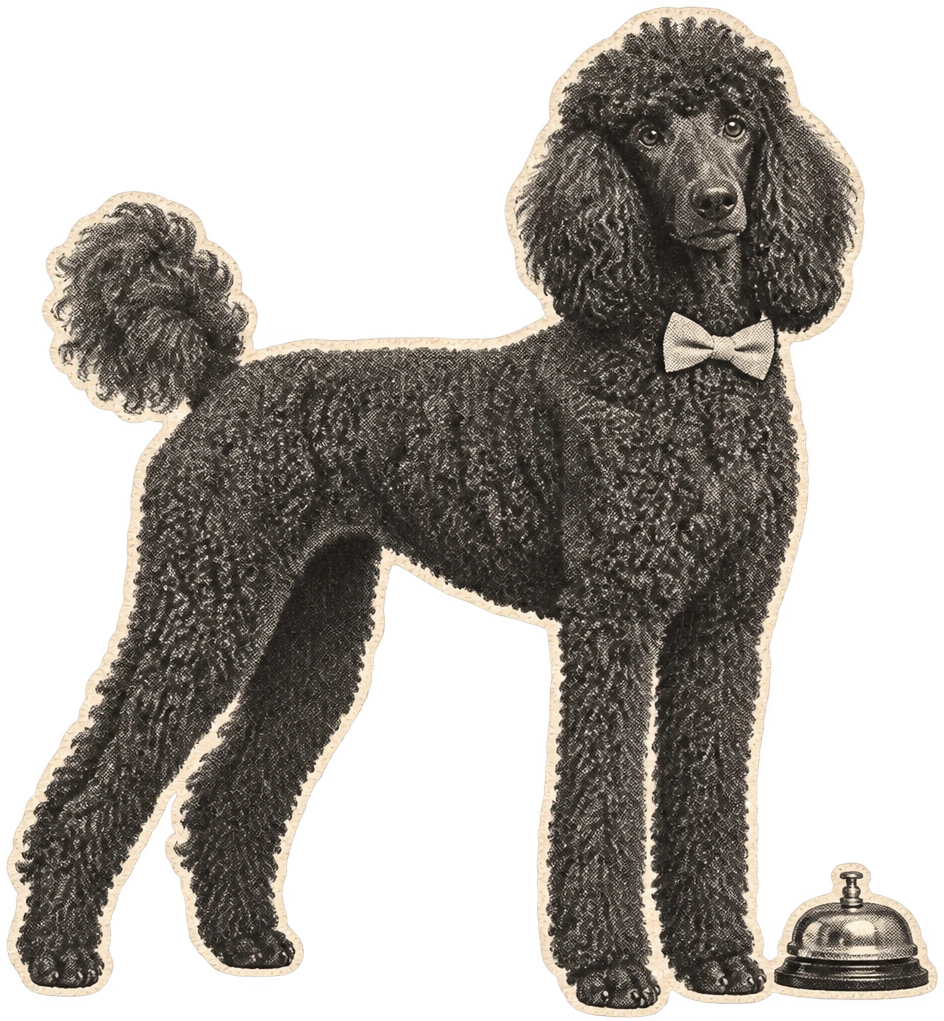
The Standard is the tall Poodle, with a dense curly coat and a history of fetching ducks out of water. Give them something to carry home and they may give the parcel you came out to collect a good hard look. Take the haircut out of the picture and you’ve still got a proper dog to walk and train. Get the coat routine sorted early and teach them where to switch off after a good outing. 1234
Jump to a section
The short version
There’s a lot of dog under that coat and quite a bit of coat under the bit you just brushed. Ask a groomer to show you what it feels like when a comb gets through to the roots without snagging. Once you know that, it takes seconds to check whether the hair behind an ear is beginning to stick together. 3 5
Decide what you want your dog to do when you come home with both hands full. Going to their mat works better than climbing straight into your shopping. Put the mat away from the route you take to the kitchen and make using it worth their while before you ever test it with a delivery. 4 6
Standard Poodle notes / 01
Coat care and ways to settle
| Start here | What you can do today |
|---|---|
| Coat | Check down to the roots where the collar sits. 3 5 |
| Outings | Give them time to sniff and a short job if they enjoy carrying things. 7 8 |
| Home | Reward a brief rest on a mat clear of the hallway. 4 |
| Safety | Save the out-of-hours vet number before you have a reason to need it. 9 |
Which Poodle is which?
Standard is one of three UK Poodle breed listings. The names describe height at the shoulder under the Royal Kennel Club standards, not how much fluff you get above the ears. If you’re comparing health test results, look for the correct size in the registration record. The three listings don’t all ask for the same screening. 1 2 10 11 12
Plan for a tall dog
A neat short clip can make a dog look much slighter than they did the day before at the same weight. Feel the ribs beneath the curls and run a hand along the waist. Ask at your next vet appointment if you can check the body condition together so you know what you’re feeling for at home. 2 13
Size the travel kit using the dog in front of you. Check whether they can get in comfortably without asking them to launch themselves into a high boot. At home, put a washable runner where they tend to turn or stop on a hard floor if they’re slipping. 14 15
Brush the coat you actually have
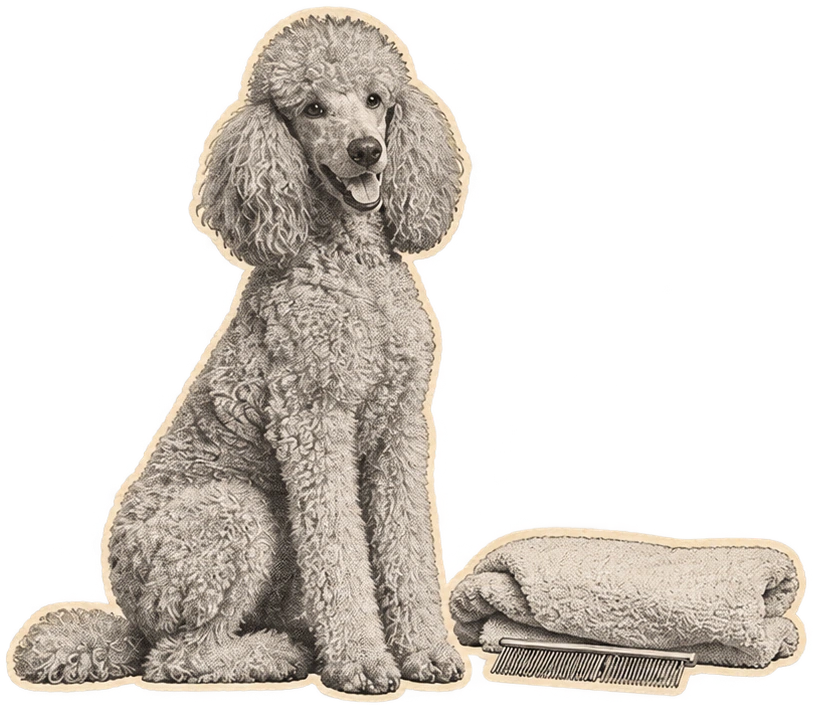
A curly coat can look fine from the outside while it’s knotting close to the skin. Start with a patch you can see and reach easily. Part the hair so you can work in small sections and don’t drag a comb through resistance. It’s easier to ask the groomer about a tight patch than spend forty minutes convincing a dog that none of this is your fault. 3 5 17
Pick a pet clip that fits how you live. Tell the groomer if your dog comes home soaked most mornings or hates having their front legs touched. Learn what to use between appointments, and ask them to handle tight mats near skin. Low shedding isn’t the same as being safe for someone with a dog allergy. 3 17 18
Standard Poodle notes / 04
Check below the curls
| Spot | What to check |
|---|---|
| Behind ears | Feel underneath the soft curls, not just along the ends. 3 17 |
| Under collar or harness | Part the coat after a wet walk and let it dry properly. 3 17 |
| Feet | Look between the toes after grass or mud; get persistent licking or soreness checked. 19 |
| Dense knots | Get a groomer’s help instead of pulling or cutting next to the skin. 3 17 |
Living with the personality in front of you
The breed description gives you an idea of a lively dog, not a guarantee about what yours will do when the boiler engineer walks in. Start with enough space to watch without having to say hello. If they leave their mat to move away, don’t send them back to a spot they’re avoiding. You want it to stay somewhere they choose to lie down. 2 4 20 21
If the easy-going adult who’s always liked having their feet dried suddenly whips a paw away, check for discomfort rather than practising foot handling harder. Keep a note of when it started; that’s more useful to a vet than saying they’ve got fussy. 19 21 22
Standard Poodle notes / 05
Read the dog, not the breed
| What you see | First move |
|---|---|
| Gets jumpy by the front door | Put more distance between the dog and the visitors before you ask for anything. 20 21 |
| Can’t leave the interesting thing | Try an easier location and reward turning back to you. 23 |
| New reluctance to be touched | Pause the session and ask the vet about pain if it persists. 21 22 |
Put the nose to work
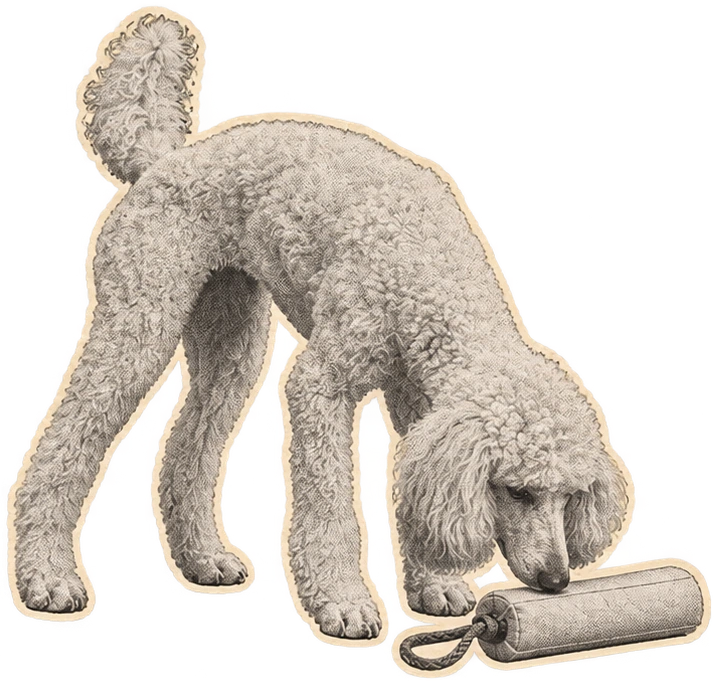
Try a simple retrieve on dry ground if your dog keeps presenting you with things. Roll a soft toy a short way. When your dog comes back, offer a swap rather than grabbing straight for it. A return gets less appealing once they work out that bringing it over ends the game. 7 8
A slower game works on a day when neither of you fancies a muddy field. Let them see you put a familiar toy by a chair, then send them to find it. Once they know the game, set it up while they’re out of the room. Let them finish one successful search instead of getting ambitious with an upstairs landing and a closed cupboard. 7 24
Standard Poodle notes / 06
Jobs for a dog who likes to carry
Outside, including round water
For an adult that’s fit and comfortable, build regular outings around what they actually enjoy. That might be a quieter walk with time to investigate rather than constant throwing. Start shorter after illness or a break in exercise and take the vet’s advice where a joint or other condition changes what’s comfortable. 26 27
A water-retriever history doesn’t give a dog any sense of current, cold or what’s growing on the surface. Keep them out where there’s a warning or suspected blue-green algae. Don’t let them lick their coat and call the vet immediately if you think they’ve been exposed. Even in safe water, don’t force a reluctant dog in. 1 28 29
Standard Poodle notes / 07
Walking and water safety
| Situation | Useful ground rule |
|---|---|
| Recall on a new route | Practise on a long line attached to a harness first. 23 |
| Hot day | Move walks to a cooler time and avoid hard exercise in the heat. 30 |
| Unknown water | Stay out if you can’t judge access, currents or water quality. 28 29 |
| Stiffer after a walk | Cut back and speak to the vet for new or recurring stiffness. 22 26 |
An off switch for indoors
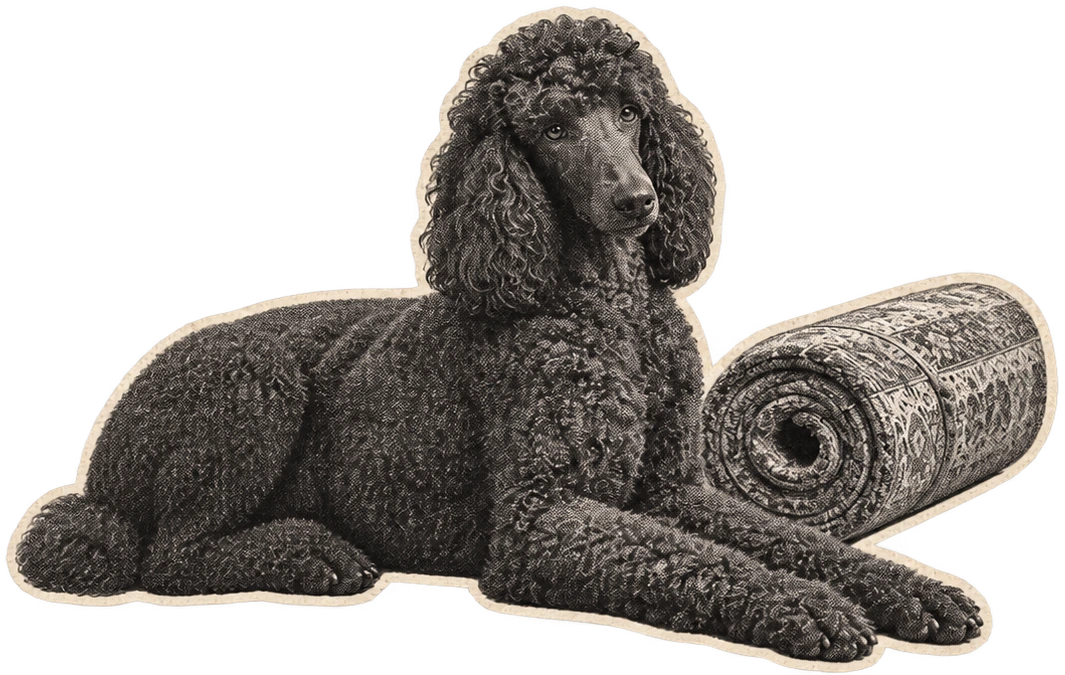
If they can lie on their side and settle when the house is quiet, practise there first. Give them a wide enough bed and leave them alone while they’re using it. You can reward a quiet moment near the mat before expecting them to stay there through the whole business of cooking tea. 4
A tired dog can still find it hard to be left alone. Build up departures from below the point where they get distressed, and see what they actually do when you go. If they’re pacing or barking through the absence, work on a shorter gap rather than doing an extra lap of the park in the hope of fixing it. 31 32
Standard Poodle notes / 08
Somewhere off duty
| Home friction | Start here |
|---|---|
| Sleeping in the doorway | Try a bed close enough to see you but away from where people are passing. 4 |
| Paws sliding as they stand | Give them grip underfoot and get new mobility problems checked. 15 22 |
| Can’t relax alone | Keep departures short enough to stay comfortable and seek help if they can’t settle. 31 32 |
Children and other animals
A dog this tall can bump a small child without doing anything other than turning to follow you. Set up a gate for the part of the day when children are running about and hands are full. When they’re together, an adult should be watching closely enough to step in. Let the dog eat and sleep undisturbed. 2 33
For cats, give them a way to leave which doesn’t involve running straight past the dog. Start behind a barrier and give them time to get used to one another at their own pace. Don’t assume that being good with the neighbour’s cat carries over to every animal they meet. 34
Standard Poodle notes / 09
Good boundaries at home
| Household | Set up before you need it |
|---|---|
| Young children | Separate busy play from the dog’s resting place and supervise when together. 33 |
| Resident cats | Provide quiet exits and high places the dog can’t reach. 34 |
| Resident dog | Introduce gradually and separate meals until you know how both dogs handle proximity. 35 |
Health
The Royal Kennel Club gives the Standard a broad lifespan guide of over 12 years, not a forecast. Three things worth knowing about are Addison’s disease, a skin condition called sebaceous adenitis and a true emergency called gastric dilatation-volvulus (GDV). They’re different conditions and the signs warrant different responses. 1 9 36 37
A UK VetCompass study estimated a 2016 Addison’s prevalence in Standard Poodles of 2.26% when all recorded case types were counted (95% CI 1.14–4.43%). The lab-confirmed estimate was 1.14% (95% CI 0.43–3.00%). That’s a particular year of primary-care records with wide uncertainty, not your dog’s lifetime chance, and it says nothing about an individual vomiting episode. Tell the vet if the same bouts of low energy or stomach upset keep returning. Collapse or severe weakness needs urgent veterinary care. 36 38
For breeding screening, the Standard’s current Royal Kennel Club Good Practice column is blank. Best Practice lists the two PRA DNA tests, vWD1 DNA, the clinical Eye Scheme and hip scoring. The clinical eye exam and the DNA tests cover different things. The RKC lists the club’s sebaceous adenitis scheme separately and publishes distinct PRA registration rules for imports and litters from overseas sires. Ask the breeder to show named results for both parents. 1 12 39 40 41
Standard Poodle notes / 10
Health conditions and screening
| What to know | What to do with it |
|---|---|
| GDV | Repeated unproductive retching, abdominal swelling or sudden distress can be emergencies. Call the vet immediately if GDV is suspected; swelling isn’t always visible. 9 |
| Addison’s disease | Report repeated episodes that leave your dog unusually tired or unwell. Severe weakness or collapse warrants urgent help. 36 38 |
| Sebaceous adenitis | Ask the vet about persistent scaling or unusual hair loss rather than assuming it’s a coat-management problem. 37 41 |
| PRA DNA | Best Practice lists rcd4 and prcd-PRA. They don’t replace an eye examination. 1 12 39 |
| Bleeding risk | vWD1 is a separate named DNA test listed under Best Practice. 1 12 42 |
| Hips and clinical eyes | Check the actual hip scores and eye certificate when evaluating a breeding decision. 12 39 40 |
| Evidence limits | Neither a screening panel nor a breed lifespan is a promise about one dog. 1 12 43 |
Budget for the coat before the coat arrives
Ask two good local groomers what they charge to do a full Standard with the pet clip you want. The useful quote is one for your area and coat length. Ask what happens if they find mats. If you’re budgeting on being able to dry a dripping Standard in ten minutes with the spare hand towel, give that some thought. 3 17 44
Separately, work out what you can pay for routine care and what you could do if something urgent happens over a weekend. Compare how insurance handles exclusions, excesses and renewal before you rely on it. 44
Standard Poodle notes / 11
Budget for a full coat
| Cost | Get a real number |
|---|---|
| Groomer | Ask for a Standard Poodle pet clip quote and the normal interval for that coat. 3 17 |
| Day-to-day | Food, vet care and reliable cover for days you can’t do the walk. 44 45 |
| Equipment | Measure before spending on a bed, harness or car set-up. 14 16 |
| Urgent care | Know who covers your vet practice out of hours and what your insurance actually covers. 9 44 |
Before the fancy luggage
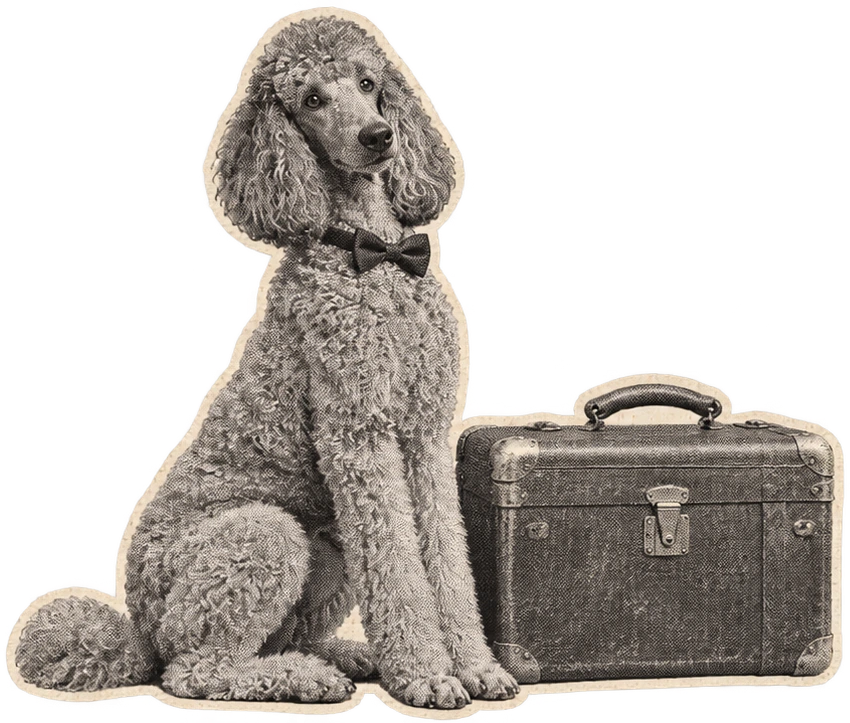
The Royal Kennel Club traces the Poodle to Germany and duck retrieving. France is part of the breed’s later story, and the Royal Kennel Club lists the three sizes in its Utility group today. None of that means you need a lake or a show clip. The fetching game is on offer if they like it. If they just want to have a sniff, they’ve got nothing to prove. 1 2 46 47
Standard Poodle notes / 12
From the water
If one is coming home
If you’re adopting an adult, ask how grooming goes in the real world. Their reaction to a comb near the face matters more than a photo straight out of a salon. Ask what happens on an ordinary wet walk and how long they’ve stayed comfortable alone. Keep the first few days quiet while you learn what they’re used to. 17 48 49
If you’re looking at a puppy, meet it with its mother in the place it’s being raised and see the parents’ named paperwork. Take a photo of the results if you have permission and go away to read them rather than deciding with a warm puppy parked across your feet. 12 50 51
Standard Poodle notes / 13
Questions worth asking
| Ask about | What a useful answer looks like |
|---|---|
| Grooming | Which parts they’re comfortable having touched and how a normal appointment goes. 17 48 |
| Parents | Registered identities and underlying results, not a list of checks the breeder promises were done. 12 51 |
| Existing routines | A walk, a meal and a period of rest they can manage without having to learn everything at once. 49 |
| Support | Who you can ask if health, settling or grooming problems crop up later. 41 48 49 |
Sources
- S1Royal Kennel Club Standard Poodle profile, health, history and registrationSource · checked 21 November 2026
- S2UK Standard Poodle written breed standardSource · checked 21 November 2026
- S3Standard Poodle Club practical coat careSource · checked 21 November 2026
- S4Dogs Trust quiet settle and mat trainingSource · checked 21 November 2026
- S5PDSA grooming dogs with different coatsSource · checked 21 November 2026
- S6Dogs Trust preparing for visitorsSource · checked 21 November 2026
- S7Dogs Trust play and toysSource · checked 21 November 2026
- S8Dogs Trust teaching a dog to pick up and release a toySource · checked 21 November 2026
- S9PDSA emergency GDV veterinary adviceSource · checked 21 November 2026
- S10UK Miniature Poodle written breed standardSource · checked 21 November 2026
- S11UK Toy Poodle written breed standardSource · checked 21 November 2026
- S12Royal Kennel Club Health Standard and Poodle size varietiesSource · checked 21 November 2026
- S13PDSA body condition and healthy dog weightSource · checked 21 November 2026
- S14Dogs Trust safe travel and comfortable dog equipmentSource · checked 21 November 2026
- S15PDSA non-slip flooring and mobility adjustmentsSource · checked 21 November 2026
- S16Dogs Trust safe leads and harness fitSource · checked 21 November 2026
- S17Standard Poodle Club grooming routineSource · checked 21 November 2026
- S18Vredegoor et al. measured dog allergen in Poodles and other dogsSource · checked 21 November 2026
- S19PDSA systematic at-home pet health checkSource · checked 21 November 2026
- S20Dogs Trust walking around triggers and making spaceSource · checked 21 November 2026
- S21Dogs Trust body language and consent signalsSource · checked 21 November 2026
- S22PDSA new limping, stiffness and veterinary helpSource · checked 21 November 2026
- S23Dogs Trust recall and use of long line and harnessSource · checked 21 November 2026
- S24Dogs Trust practical hide and seek toy gameSource · checked 21 November 2026
- S25Dogs Trust positive reinforcementSource · checked 21 November 2026
- S26PDSA adapting exercise for the individual dogSource · checked 21 November 2026
- S27PDSA veterinary Standard-sized Poodle owner guidanceSource · checked 21 November 2026
- S28PDSA water safety for dogsSource · checked 21 November 2026
- S29PDSA blue-green algae exposure veterinary adviceSource · checked 21 November 2026
- S30Dogs Trust hot weather safetySource · checked 21 November 2026
- S31Dogs Trust gradual time-alone trainingSource · checked 21 November 2026
- S32PDSA separation distress and getting helpSource · checked 21 November 2026
- S33Dogs Trust active supervision for children and dogsSource · checked 21 November 2026
- S34Dogs Trust safe cat and dog introductionsSource · checked 21 November 2026
- S35Dogs Trust introducing a dog to another dogSource · checked 21 November 2026
- S36PDSA signs of Addison’s and emergency crisisSource · checked 21 November 2026
- S37Poodle Council Standard Poodle health and sebaceous adenitis signsSource · checked 21 November 2026
- S38Schofield et al. original 2021 VetCompass analysis, 2016 dataset and table 2Source · checked 21 November 2026
- S39BVA clinical Eye SchemeSource · checked 21 November 2026
- S40BVA Hip Dysplasia SchemeSource · checked 21 November 2026
- S41Standard Poodle Club open health registersSource · checked 21 November 2026
- S42Royal Kennel Club dog DNA tests and named vWD1Source · checked 21 November 2026
- S43British Veterinary Association canine health screening scope and limitsSource · checked 21 November 2026
- S44PDSA typical dog ownership costs and insurance considerationsSource · checked 21 November 2026
- S45Dogs Trust how to choose a dog walkerSource · checked 21 November 2026
- S46United Kennel Club poodle history and French associationSource · checked 21 November 2026
- S47Canadian Kennel Club Standard Poodle originsSource · checked 21 November 2026
- S48Standard Poodle Club rescueSource · checked 21 November 2026
- S49Dogs Trust settling a rehomed dog at homeSource · checked 21 November 2026
- S50RSPCA responsible puppy purchase and meeting the motherSource · checked 21 November 2026
- S51Royal Kennel Club Health Test Results FinderSource · checked 21 November 2026
