
Breed guide / St. Bernard
Living with a St. Bernard
The St. Bernard is the giant Swiss dog kept at the hospice high in the Alps. It comes in smooth and rough coats, and even the smooth one can bring a fair share of the weather indoors. Size is the thing that changes daily life: a young dog that flies to the front door can already be harder to stop than you’d think. Teach the turn away from the door while you can still get through it. 1234

Jump to a section
Make one trip from the bed to the car
Walk the route the dog will take: stand up from the bed, get round the corner, cross the floor, go out the door and into the car. Watch the dog, not just the floor plan. Is the first step on laminate? Do they slide when they turn? Can they get back out of the car in control? Grippy runners and a suitable ramp can make the route easier. Introduce the ramp low and steady before you need it on a wet night. 4567
St. Bernard notes / 01
Field notes
| Where it goes wrong | A change you can make |
|---|---|
| Front feet slide during the turn | Lay a firmly fixed, non-slip runner across the whole turn. 7 |
| Landing from the boot | Set up a secure, suitably rated ramp or discuss another way in with your vet if movement has changed. 67 |
| Everybody squeezes through the hall | Put the bed out of the line of traffic without shutting the dog away from the household. 48 |
Smooth and rough are both St. Bernard
St. Bernard notes / 02
Field notes
Measure the dog, then the boot
The UK breed standard has minimum heights of 75 cm for dogs and 70 cm for bitches. These describe the ideal, not a minimum you should feed towards or a guarantee of adult size. Measure your own dog standing and turning, then check the usable height and width of the space they’ll travel in. The sloping bit under the boot lid counts. 16
Where the second towel goes
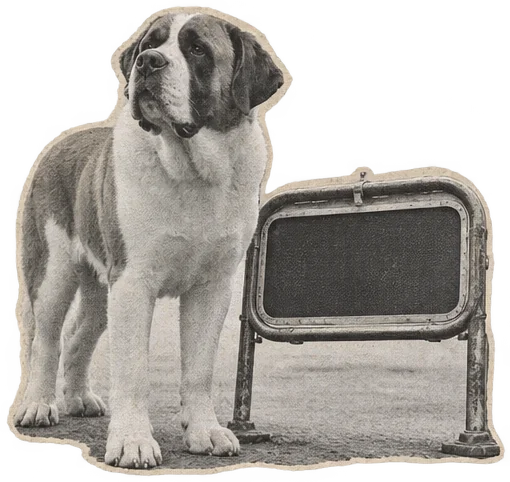
Keep a cloth within reach of the water bowl. PDSA notes that St. Bernards are among the breeds whose mouth shape can let more saliva escape. Know what your dog’s normal drool looks like so a sudden change doesn’t get dismissed as another job for the washing machine. For the rough coat, part the hair behind the ears and through the feathering. A short coat still needs a brush and a check underneath. 14910
Give visitors a route into the house
St. Bernard notes / 05
Field notes
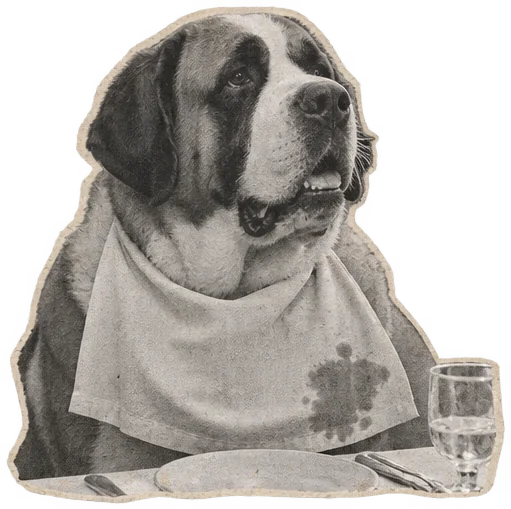
Use a secure barrier where appropriate and practise with someone your dog already knows. Reward the dog for moving away from the door while it opens. Keep the route to the living room clear, so a visitor doesn’t have to edge past a dog that’s standing its ground or desperate to see them. Ask people to wait before greeting. 81213
Teach the move you’ll need when they’re fully grown
St. Bernard notes / 06
Field notes
Practise a cheerful turn with you on a quiet stretch of pavement. If a dog appears at a narrow gap or by a blind corner, you can walk out together instead of waiting for two leads and a wall to sort it out. Give space well before you’re leaning on the lead. Don’t ask a child to hold a dog they couldn’t safely control. 131415
Cold-country history doesn’t make a summer plan
Start with a time and route that fit the weather and your dog’s condition. Shade and water help, but skip an outing that’s too hot. Check how comfortably they get moving after rest and how they recover afterwards. If that changes or they repeatedly fall behind, adjust the walk and get persistent or painful changes checked. Don’t buy a tougher walk to solve stiff legs. 471617
Plan for a day you can’t lift the dog
St. Bernard notes / 08
Field notes
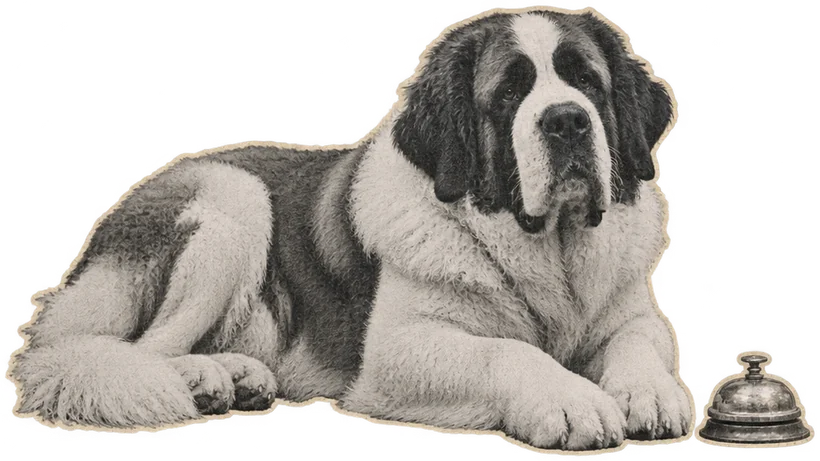
Save the vet and out-of-hours numbers where everyone in the house can find them. Ask the practice how they advise transporting a very large dog that cannot walk, and tell them the dog’s size when you ring. Check who could drive and which vehicle works for your dog. Don’t force them onto a ramp when they’re struggling; follow the emergency vet’s instructions. 56719
Where the dog goes when the children run
St. Bernard notes / 09
Field notes
A dog doesn’t have to jump up on purpose to knock someone over. Put its rest area clear of running games, and separate the dog when you can’t supervise. Nobody needs to lie across the dog for a photo, and a child shouldn’t have to squeeze around it to get to the stairs. Give the dog a route away from contact. 81315
Health: records are useful, so is seeing the dog move
The Royal Kennel Club lists BVA/RKC elbow and hip screening and the BVA/RKC/ISDS eye scheme under Good Practice, with no additional test named in the St. Bernard’s central Best Practice column. Health records are for breeding decisions, not a guarantee about an individual dog. Ask for the named parents, scores or results and dates, not just confirmation they were checked. 22021
Emergency: repeated retching with little or nothing coming up, a suddenly swollen belly, or those signs with restlessness or heavy drooling can mean GDV. Call your emergency vet immediately. A swollen belly isn’t always obvious; don’t wait for one to appear. 922
St. Bernard notes / 10
Field notes
| Watch or check | How to use it |
|---|---|
| Eyelids and comfort | The standard calls for eyes free of irritation from the lids. Report persistent watering, rubbing or squinting instead of assuming it comes with the face. 111 |
| Gait and getting up | New limping, stiffness or struggling to get upright isn’t explained by being huge. Use a normal movement video if the vet would find it useful. 717 |
| Bone cancer and heart concerns | PDSA lists these among breed health concerns. It doesn’t give a rate that predicts your dog’s future. Raise specific family history or symptoms with your vet. 4 |
| Lifespan research | A 2024 UK study estimated a median of 9.3 years (95% CI 9.0–9.8); its table contains 1,129 St. Bernards and 509 deaths. It describes the study cohort, not your dog’s expiry date. 2324 |
Get a cost that covers a giant dog
St. Bernard notes / 11
Field notes
Ask how your walker or boarding provider handles large dogs on their own premises. Can the dog turn round in the transport space? Is there a safe entry for an older dog? In your budget, separate routine grooming, food and equipment from insurance excess or emergency costs. Check whether your insurer uses fixed, percentage or combined contributions and whether conditions have limits. 462526
The hospice dogs weren’t built for your hallway
St. Bernard notes / 12
Field notes
Before you bring one home
St. Bernard notes / 13
Field notes
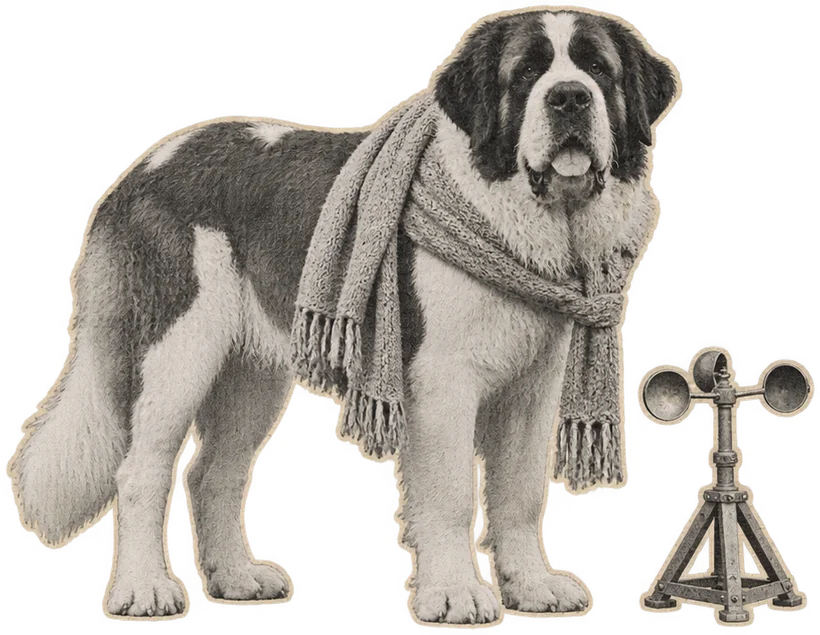
Meet adult dogs and watch one get up, walk, turn and greet a person who isn’t already their best mate. For a puppy, see the mother with the litter where they live and use the screening results. For a rescue, ask what they’ve done in a car, down steps and around children, and what hasn’t been observed yet. Then see whether those answers still work with your actual front door and car. 21315212829
Sources
- S1Royal Kennel Club breed standardSource · checked 21 November 2026
- S2Royal Kennel Club breed and health profileSource · checked 21 November 2026
- S3Barry Foundation history and hospice recordsSource · checked 21 November 2026
- S4PDSA veterinary breed care and concernsSource · checked 21 November 2026
- S5PDSA emergency first aidSource · checked 21 November 2026
- S6Dogs Trust travel and restraintsSource · checked 21 November 2026
- S7PDSA arthritis and movement adaptationsSource · checked 21 November 2026
- S8Dogs Trust home settlingSource · checked 21 November 2026
- S9PDSA normal versus changed droolingSource · checked 21 November 2026
- S10PDSA general veterinary grooming adviceSource · checked 21 November 2026
- S11PDSA entropion and symptomsSource · checked 21 November 2026
- S12Dogs Trust training for visitorsSource · checked 21 November 2026
- S13Dogs Trust handling and giving spaceSource · checked 21 November 2026
- S14Dogs Trust reactivity and distanceSource · checked 21 November 2026
- S15Dogs Trust supervision with childrenSource · checked 21 November 2026
- S16Dogs Trust warm-weather adviceSource · checked 21 November 2026
- S17PDSA limping and stiffnessSource · checked 21 November 2026
- S18PDSA veterinary body conditionSource · checked 21 November 2026
- S19PDSA pet first aid guideSource · checked 21 November 2026
- S20Royal Kennel Club central health tiersSource · checked 21 November 2026
- S21Royal Kennel Club health results finderSource · checked 21 November 2026
- S22PDSA GDV emergency guidanceSource · checked 21 November 2026
- S23Dogs Trust research team's original UK study results tableSource · checked 21 November 2026
- S24McMillan et al., original UK longevity and methodsSource · checked 21 November 2026
- S25Dogs Trust selecting walking careSource · checked 21 November 2026
- S26PDSA cost of ownershipSource · checked 21 November 2026
- S27Fondation Barry on taking over the programmeSource · checked 21 November 2026
- S28RSPCA seeing the mother and puppiesSource · checked 21 November 2026
- S29Dogs Trust rescue matchingSource · checked 21 November 2026
