
Breed guide / Shih-Poo
Living with a Shih-Poo
A Shih-Poo is a Shih Tzu crossed with a Poodle. One can have loose curls and a more obvious muzzle; another can take more after the Shih Tzu. By the time you’ve found a comb that works through the cheeks, nobody cares what the coat was called on the advert. Find out what your dog is comfortable with, pay attention to how they breathe on an ordinary walk and make the face and mouth checks small enough that you can do them often. 12345
Jump to a section
The short version
Get to know the face when it’s clean and dry. Look at the skin where wet hair sits and notice if either eye starts closing more than usual. You can get them used to a gentle cheek touch without immediately following it up with a comb. If there’s squinting or pain, leave the grooming for later and call the vet. 3 5 6
Listen to how they breathe when they’re resting and when they’re out with you. Persistent noisy breathing or falling behind on a walk they used to manage warrants a call to the vet. If they’re struggling to get air, that’s an emergency. Having a Poodle parent doesn’t tell you how well this dog’s airway works. 2 4 7
Shih-Poo notes / 01
Eyes, coat and breathing
| Start here | What you can do now |
|---|---|
| Face | Check the skin and eyes without pulling the fringe about. 3 5 6 |
| Coat | Ask a groomer to demonstrate how to check for knots close to the skin. 5 |
| Mouth | Practise a gentle lip touch; get dental pain checked before trying to brush. 8 9 |
| Breathing | Notice their usual pattern. Get urgent help if they’re struggling to breathe. 4 7 |
What the name tells you
UK rescue Greenleaf uses Shih-Poo for a dog it describes as Shih Tzu crossed with Poodle. That explains the name, not a fixed Poodle size or a guarantee about the way the dog was bred. Ask what’s known of the actual parents if you need to understand their size or health results. A dog that looks similar may have a different history. 1 2 10
Shih-Poo notes / 02
Two parents, not a standard
| Label | Useful distinction |
|---|---|
| Shih-Poo | Shih Tzu and Poodle ancestry; no fixed cross size or coat. 1 2 |
| Shih Tzu | A separately recognised pedigree breed and one side of this cross. 10 11 |
| Poodle | Toy, Miniature and Standard are separate UK entries. The label Shih-Poo doesn’t tell you the Poodle size. 12 13 43 |
Fit things to the dog you’ve got
The Royal Kennel Club’s written Toy Poodle standard is below 28 cm at the shoulder. Miniatures are listed from 28 cm to under 38 cm, and the Shih Tzu standard describes up to 27 cm. None of those figures turns into a height guarantee when two dogs have puppies. Measure the dog that’s actually standing in front of you. 2 11 12 13
Check that a harness doesn’t rub behind the front legs or sit up against the throat. The fit can feel different after a clip, especially if a thick coat was doing half the measuring for you. If they dislike the harness, practise putting it on without immediately taking them out and look for a better fit. 5 14
Shih-Poo notes / 03
Fit the actual dog
Look under the fringe
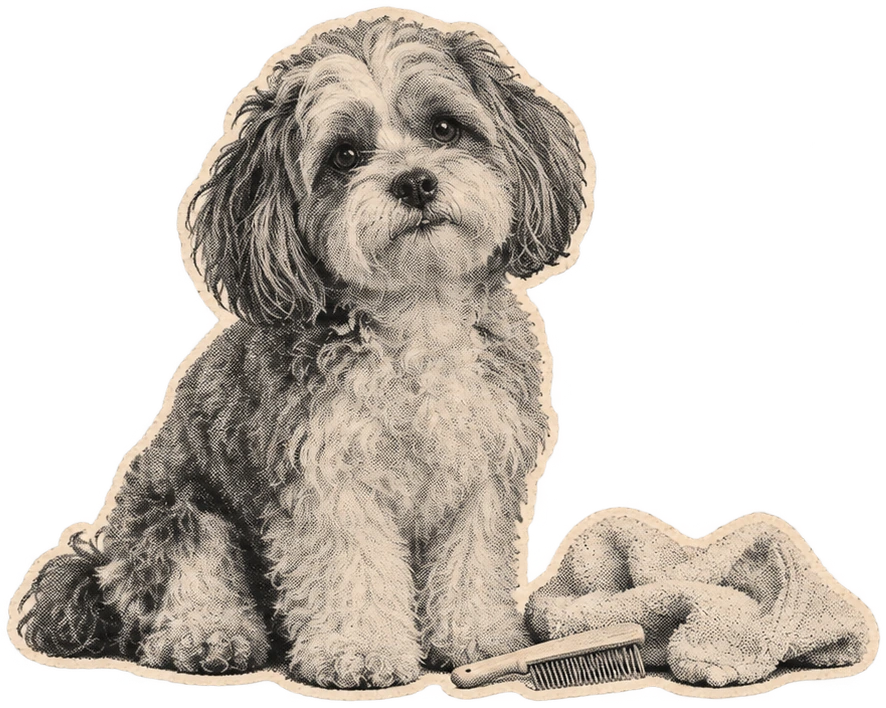
There’s no point getting the top of the coat smooth if it’s still caught behind both ears. Ask your groomer where knots are forming on this dog. Take a small patch at a time and don’t drag a comb through a knot that’s close to the skin. A shorter practical trim might suit the dog better if the beard gets wet every time they look at the water bowl. 3 5 16
Wipe away food and dampness around the mouth gently, and ask who should tidy hair near the eyes rather than pointing sharp scissors at a dog who can turn their head. Low shedding is not the same as no allergic reaction. No coat description makes a dog reliably safe for an allergic person. 3 5 17
Shih-Poo notes / 04
Look under the fringe
| Spot | What to check |
|---|---|
| Around the eyes | Keep the view clear. Phone the vet about pain, squinting or a new problem. 3 6 |
| Under the chin | Clean away leftover food and notice soreness that doesn’t go away. 3 5 |
| Behind the ears | Lift the top layer so you can feel tangling close to the skin. 5 16 |
| Tight mats | Ask a groomer. Don’t cut into a knot when you can’t see where the skin is. 5 |
What they’re comfortable with
Being small doesn’t mean they want to spend the day being passed around. Let a new visitor sit and get on with the conversation. If the dog starts to approach, let them decide whether to stay. It’s much easier to do that than to explain afterwards why they snapped at somebody who insisted they were good with dogs. 18 19 20
Don’t put a sudden dislike of handling down to personality. If they used to let you touch one side of the face and now turn quickly away, pause the session. A sore mouth or an eye problem needs a vet’s assessment rather than more practice. 5 6 9 19
Shih-Poo notes / 05
Leave room to choose
A small useful lesson beats a big performance
If you can get a quick cheek touch accepted and rewarded without worrying about what comes next, you’ve got a better start on grooming than a long session spent persuading them to hold still. Keep a separate cue for getting on a mat. Not every minute on it has to end with somebody looking in their mouth. 8 18 21
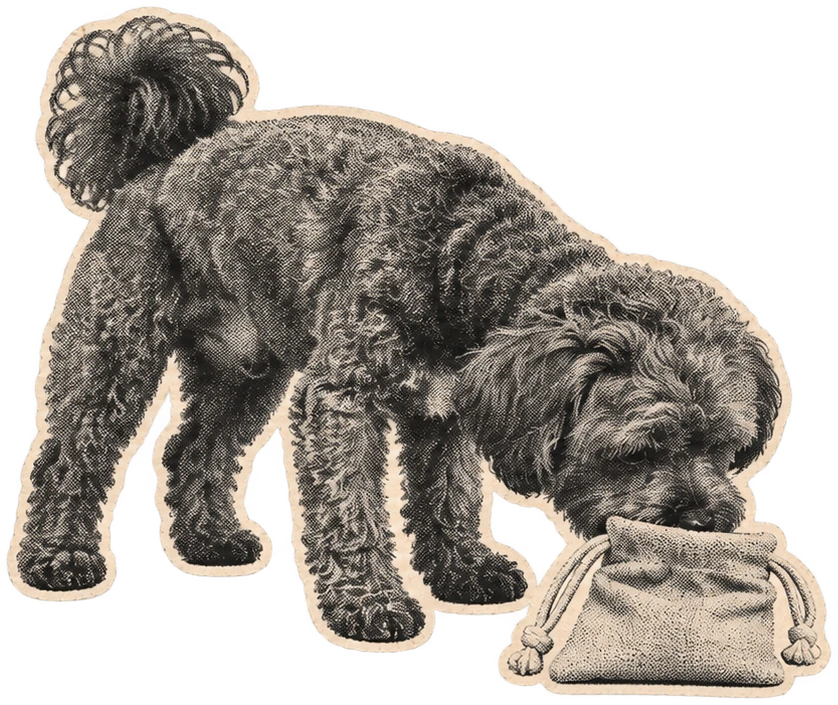
Let them work for a toy in the sitting room. Hide it somewhere easy and keep it low enough to reach without climbing. For a dog who likes sniffing, one good search on a wet day may be more satisfying than a string of tricks they only do for the biscuit. 22 23
The walk that suits your dog
Walk at a pace your dog can manage comfortably. Give them time to investigate the things they find interesting rather than counting steps. If they start tiring on an outing they usually cope with, cut it short. Repeated trouble catching up or noisy breathing needs a vet’s attention, not a longer walk to get them fit. 4 24 25
Heat is worth planning around, especially if your dog has a short muzzle or an existing breathing problem. Go earlier if it’s cooler and stay off hot pavements. If breathing becomes difficult, stop the walk. Get urgent veterinary help. 4 7 26
Shih-Poo notes / 07
Walk at their pace
Home without the constant fuss
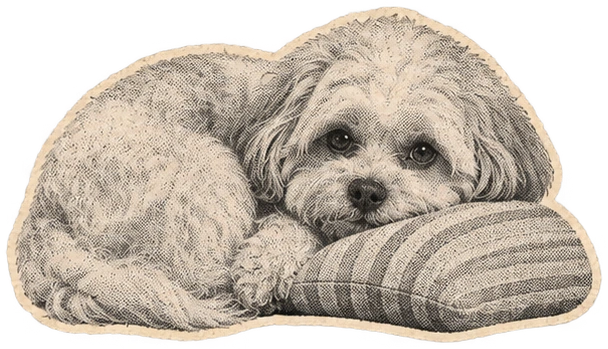
Give them somewhere to rest where they’re not always being stepped over and where reaching the bed doesn’t involve an awkward jump. If hard floors are a problem, a secured runner can give them more grip; get new stiffness or reluctance to move checked. 21 28 29
Practise being apart for short periods while they can still relax. See what actually happens when you leave the room. If they’re already crying behind the door, reduce the length of the practice and get help if they’re finding it hard to cope. 30 31
Shih-Poo notes / 08
Somewhere easy to rest
Kids and other animals
A child can help lay out a toy for the dog to find without lifting the dog to reach it. Keep an adult involved when they interact, and leave the dog’s bed and food alone. Give them enough floor space to walk away without anyone following. 18 32
Start with a barrier for cats. Make sure they can get out of the room without passing the dog. With another dog, start somewhere they have room to move away and supervise closely. A smaller dog still needs space to choose whether to join in. 33 34
Health
These sources don’t give a representative UK Shih-Poo lifespan or rates for the conditions below. In a UK VetCompass study of Shih Tzus, periodontal disease was recorded in 229 of 2,423 dogs from the 2016 disorder sample (9.5%, 95% CI 8.4–10.7%). That’s useful parent-breed context, not a figure you can apply to this cross. A major UK study of three other Poodle crosses didn’t include Shih-Poos. 35 36
For breeding screening, the Shih Tzu’s UK Good Practice listing includes the clinical Eye Scheme. The RKC says Shih Tzu Respiratory Function Grading was recognised in August 2026 and will formally be added to the Best Practice scheme and Find a Puppy in January 2027. It recommends testing ahead of then. The live grading eligibility list includes Shih Tzu, not Shih-Poo. Your own vet can assess symptoms whatever the breed entry. 7 10 37 38
The Poodle rows differ: Toy lists prcd-PRA DNA under Good Practice, with the Eye Scheme and hips under Best Practice. Miniature has a blank Good Practice column, with the Eye Scheme and hips under Best Practice. The same tier also includes DNA tests for prcd-PRA and osteochondrodysplasia (OC). Use the correct parental row rather than asking whether the cross has “passed.” 12 13 37 39 40
Shih-Poo notes / 10
Health conditions and screening
| Health topic | What to do with it |
|---|---|
| Breathing | Ask the vet about persistent noise or trouble with exercise. Struggling to breathe is an emergency. 4 7 |
| Painful eyes | Call the vet if they’re squinting, not opening an eye or it suddenly looks painful. 6 |
| Mouth | Build up to daily brushing with dog-safe toothpaste if comfortable; ask the vet about soreness or dropping food. 8 9 |
| Shih Tzu parent | Ask for the clinical eye result and a separate RFG result where available. 10 37 38 |
| Toy Poodle parent | Check the Toy row for which results should be present. 12 37 40 |
| Miniature Poodle parent | Look for the named tests, including OC where the actual parent is Miniature. 13 37 39 |
| Limits | A parent’s certificate, face shape or a parent lifespan does not diagnose or predict one dog. 2 35 37 |
Find out what this coat costs
Ask a local groomer what they’d charge to do the coat and trim you want, then ask what you’ll need to do yourself in between. A new shaggy face that can’t be handled calmly may take more than one visit to get comfortable. Find out whether the groomer can build it up rather than promising to get everything done in the first session. 5 18 41
Make room for vet care as well as grooming. Check how a policy deals with teeth and any existing breathing or eye problems before relying on it. If somebody else will walk them regularly, talk about what a comfortable outing looks like and when to cut it short. 4 6 9 41 42
Shih-Poo notes / 11
Budget for real care
| Cost | What to find out |
|---|---|
| Grooming | Price by this coat and the appointment length, not just the cross name. 5 |
| Dental checks | Ask about routine care, extra costs and any insurance exclusions. 9 41 |
| Daily kit | Fit the harness and get a brush that makes sense for the coat. 5 14 |
| Walking help | Share the dog’s actual pace and what signs mean they’ve had enough. 24 42 |
Two histories, not one origin story
The Royal Kennel Club traces the Shih Tzu to China with links to Tibetan breeds, and its Poodle account traces the older Standard’s history to water retrieving in Germany. The smaller Poodles have separate UK listings. Those histories explain where the parent names come from; they don’t tell us when the first Shih-Poo was bred. 10 12 13 43
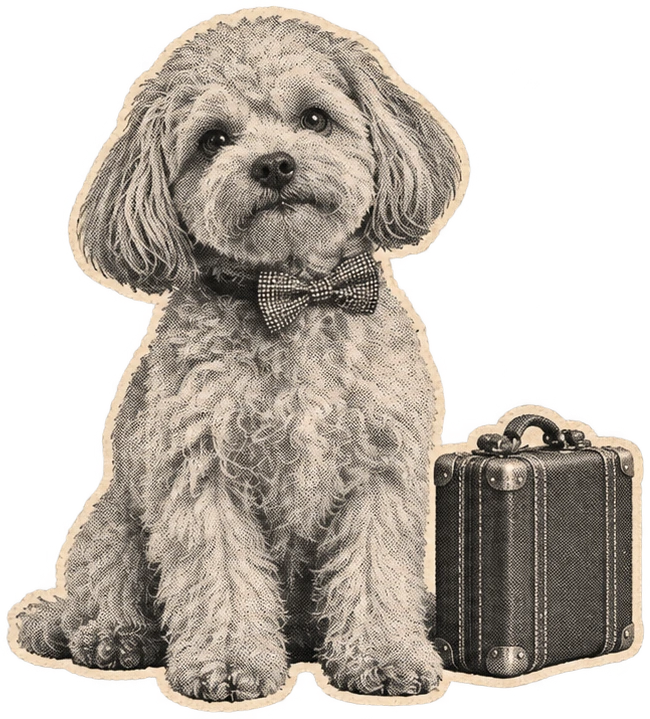
Bringing one home or learning the one you’ve got
Ask the rescue what this dog does at grooming time, how it breathes on an ordinary walk and what helps it settle. If you already live with one, write down the things you can actually observe. Note how the dog eats and whether they’re moving comfortably. That tells you more than trying to decide which parent they’ve taken after. 1 2 4 9 44
If you’re considering a puppy, meet it with its mother where it’s being raised and see the named test records. Find out the Poodle parent’s exact size variety, if it’s known. Ask how the parents breathe at rest and with ordinary exercise. Don’t ask someone to exercise a struggling dog to prove it’s fine. 4 37 38 45 46
Shih-Poo notes / 13
Ask about routines
| Ask about | A useful answer |
|---|---|
| Parents | Names, actual ancestry and relevant screening that you can check. 2 37 46 |
| Existing routine | Whether they let someone brush the face, and how often that actually happens. 5 18 |
| Walk | What pace they can comfortably manage and what changes the carer has noticed. 4 24 |
| First week | How they settle and what you’ll do if mouth, eye or breathing concerns turn up. 6 7 9 44 |
Sources
- S1Greenleaf Animal Rescue documented Shih-Poo, Shih Tzu x PoodleSource · checked 21 November 2026
- S2Royal Kennel Club crossbreed names and varied inheritanceSource · checked 21 November 2026
- S3PDSA Shih Tzu care, face and coat contextSource · checked 21 November 2026
- S4PDSA BOAS in flat-faced dogs and assessmentSource · checked 21 November 2026
- S5PDSA grooming dogs with different coatsSource · checked 21 November 2026
- S6PDSA painful eye and urgent actionSource · checked 21 November 2026
- S7PDSA first aid for pets having difficulty breathingSource · checked 21 November 2026
- S8PDSA veterinary advice on introducing toothbrushingSource · checked 21 November 2026
- S9PDSA dental disease signs and clinical adviceSource · checked 21 November 2026
- S10Royal Kennel Club Shih Tzu history and dated respiratory screening noticeSource · checked 21 November 2026
- S11Royal Kennel Club written Shih Tzu standardSource · checked 21 November 2026
- S12Royal Kennel Club written Toy Poodle standardSource · checked 21 November 2026
- S13Royal Kennel Club written Miniature Poodle standardSource · checked 21 November 2026
- S14Dogs Trust fitting and introducing a harnessSource · checked 21 November 2026
- S15PDSA body condition and healthy dog weightSource · checked 21 November 2026
- S16Standard Poodle Club example of care below curly coat surfaceSource · checked 21 November 2026
- S17Vredegoor et al. measured dog allergen in Poodles and other dogsSource · checked 21 November 2026
- S18Dogs Trust handling preferences and letting the dog moveSource · checked 21 November 2026
- S19Dogs Trust body language and consent signalsSource · checked 21 November 2026
- S20Dogs Trust handling visitors and giving spaceSource · checked 21 November 2026
- S21Dogs Trust training a dog to settle on a matSource · checked 21 November 2026
- S22Dogs Trust practical hide and seek toy gameSource · checked 21 November 2026
- S23Dogs Trust positive reinforcementSource · checked 21 November 2026
- S24PDSA adapting exercise for the individual dogSource · checked 21 November 2026
- S25PDSA breed-shape effects on breathing and exerciseSource · checked 21 November 2026
- S26Dogs Trust hot weather safetySource · checked 21 November 2026
- S27Dogs Trust recall and use of long line and harnessSource · checked 21 November 2026
- S28PDSA non-slip footing and existing mobility issuesSource · checked 21 November 2026
- S29PDSA new limping, stiffness and veterinary helpSource · checked 21 November 2026
- S30Dogs Trust gradual time-alone trainingSource · checked 21 November 2026
- S31PDSA separation anxiety and veterinary or behaviour helpSource · checked 21 November 2026
- S32Dogs Trust active supervision for children and dogsSource · checked 21 November 2026
- S33Dogs Trust safe cat and dog introductionsSource · checked 21 November 2026
- S34Dogs Trust introducing a dog to another dogSource · checked 21 November 2026
- S35Original UK 2016 Shih Tzu VetCompass study, published 2024Source · checked 21 November 2026
- S36Original UK research on three Poodle crosses, excluding Shih-PooSource · checked 21 November 2026
- S37Royal Kennel Club central Health Standard, Shih Tzu and Poodle rowsSource · checked 21 November 2026
- S38Royal Kennel Club and Cambridge current RFG scheme eligibilitySource · checked 21 November 2026
- S39Royal Kennel Club Miniature Poodle actual screening testsSource · checked 21 November 2026
- S40Royal Kennel Club Toy Poodle actual screening testsSource · checked 21 November 2026
- S41PDSA typical dog ownership costs and insurance considerationsSource · checked 21 November 2026
- S42Dogs Trust how to choose a dog walkerSource · checked 21 November 2026
- S43Royal Kennel Club Standard Poodle history and profileSource · checked 21 November 2026
- S44Dogs Trust settling a rehomed dog at homeSource · checked 21 November 2026
- S45RSPCA responsible puppy purchase and meeting the motherSource · checked 21 November 2026
- S46Royal Kennel Club Health Test Results FinderSource · checked 21 November 2026
