Breed guide / Shar Pei
Living with a Shar Pei
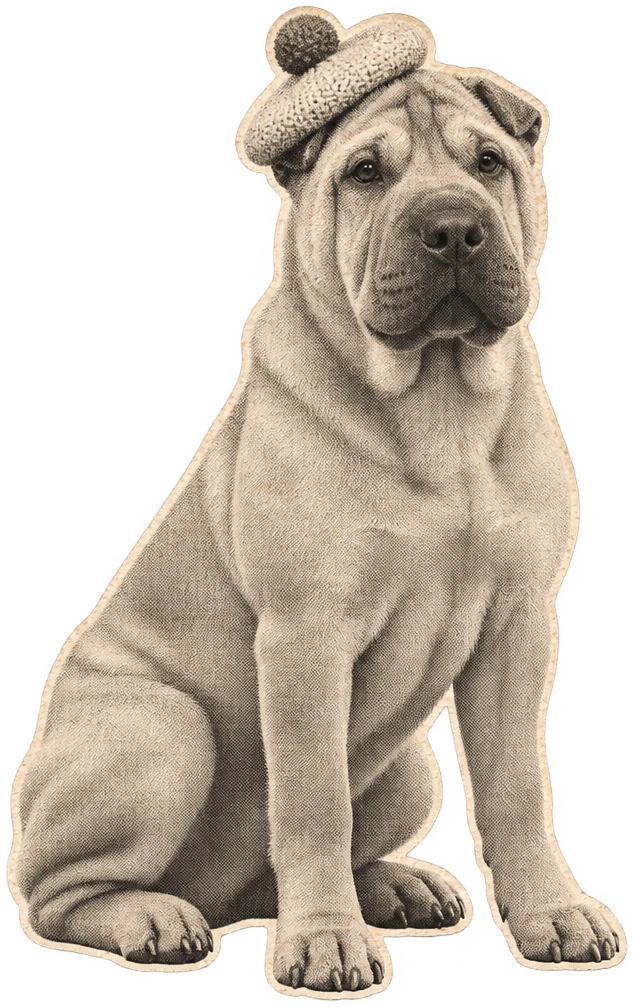
A Shar Pei is a compact Chinese dog with a bristly coat and small folded ears. The creases are what people notice first. What’s worth noticing at home is whether the dog can open both eyes comfortably and whether the skin in a fold is dry and settled. A newly squinting dog hasn’t just perfected the Shar Pei frown. Something could be hurting, and that’s for the vet to check. 12345
Jump to a section
The short version
Get to know what your dog’s eyes look like when they’re comfortable. A new squint or a dog holding one eye shut warrants prompt veterinary advice. The eyelid can roll in and rub the surface of the eye. Don’t wait to see if they can get used to it. 356
Check any folds and the outside of the ears during a relaxed moment. Soreness or a new smell is worth a call to the vet. If the dog has repeated noisy breathing, make a note of when it happens and get it checked. Trouble breathing is an emergency, whether it happens on a walk or on the kitchen floor. 4789
Shar Pei notes / 01
Eyes, folds and ears
| What to pay attention to | What to do |
|---|---|
| Squinting or painful eye | Seek prompt veterinary advice. 56 |
| Sore or smelly skin | Check the fold without pulling it open forcefully and ask the vet about symptoms. 47 |
| Head shaking or painful ears | Get an examination instead of using leftover drops. 8 |
| Difficulty breathing | Call an emergency vet. Don’t wait for a routine appointment. 9 |
Loose skin has limits
The British standard describes loose skin and a harsh coat, but says that the eyes and lids should work normally. Hair and folded skin shouldn’t interfere with the eye. Breed Watch flags eyelid problems and irritation in folds. It also draws attention to a lower lip that folds over the lower incisors. Extra folds aren’t a measure of quality. 13
Some records hyphenate the name or call the breed Chinese Shar Pei. Here we use the Royal Kennel Club’s Shar Pei spelling. A name or registered ancestry can’t tell you if the dog’s eyes are comfortable today, so make time to look at the individual rather than zooming in on an advert. 1210
Medium-sized doesn’t mean they can’t pull
The British standard puts Shar Pei at 46 to 51 cm at the shoulder. That’s a reference for the breed, not a weight or fitness target. Ask the vet to show you how to check body condition rather than trying to see it from a photograph or guessing from the skin across the shoulders. 111
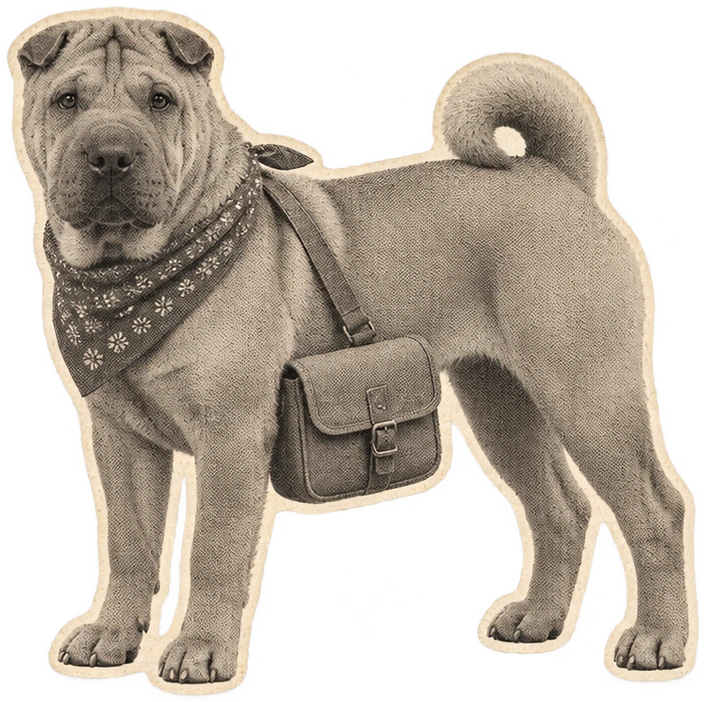
Measure the chest for the harness and check how it sits when the dog turns. Look for any strap that rubs the skin, particularly around the neck or behind the front legs. Practise following you on a loose lead before you expect somebody else to take the dog out. 71213
Short coat, but it pays to check underneath
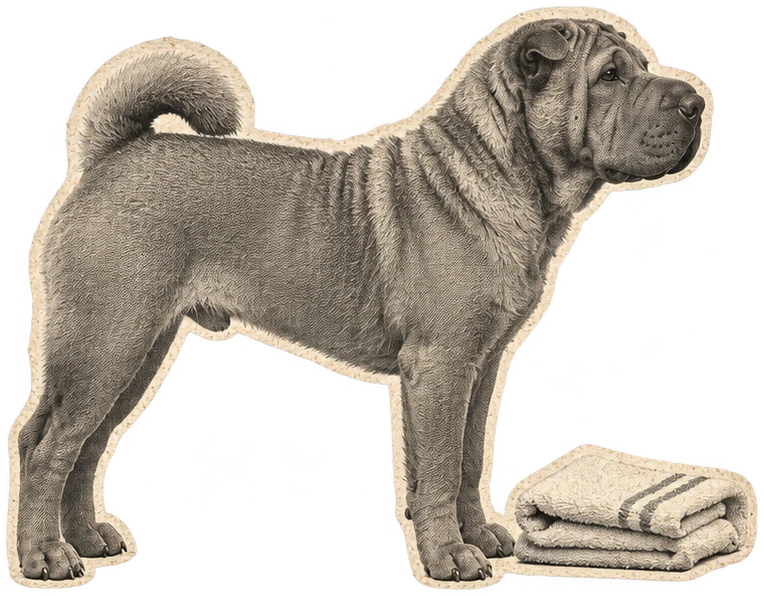
Look at the folds you can see comfortably. After a muddy walk or a wash, dry any folds that have stayed damp. Don’t try a new wipe or powder each time a fold smells. Redness or an obvious change is a reason to check with the vet, not to rub harder. 4714
Do a quick look at the ears while the dog is relaxed. A bad smell, repeated shaking or a dog suddenly refusing touch around one ear all warrant veterinary advice. Don’t put anything into a sore ear to clean it out before it’s been checked. 81516
Shar Pei notes / 04
Dry the folds gently
| Where to look | Useful check |
|---|---|
| Skin folds | Note redness, soreness or unpleasant smell. Dry gently after getting wet. 7 |
| Outside of the ears | Ask the vet about new head shaking, pain or discharge. 815 |
| Around the eyes | Get prompt advice for squinting or discomfort. 56 |
| Harness contact | Check the skin where equipment repeatedly rubs. 71214 |
Respect the dog who wants a bit of room
Your dog doesn’t have to greet a person who wants to see them. If they go stiff or keep stepping away, let them leave. With visitors, give them somewhere they can settle before the door goes. It’s much easier to set this up when you aren’t also trying to take a coat off somebody. 161718
If the dog suddenly starts avoiding touch they used to accept, ask whether they could be in pain. Get help if a reaction keeps happening or you think somebody might get hurt. Don’t bring them back into the same crowded hallway to see if they’ve changed their mind. 171920
Shar Pei notes / 05
Give them room
Make ordinary handling easier
Touch a spot the dog accepts and reward them, then finish while they’re still happy to stay. Build up to checking the ears or skin a little at a time. If they leave, let them go. A short check that went well is more useful than a thorough one you can’t repeat. 1621
Teach a turn on a loose lead so you can use it when another dog approaches. Pick a quiet place first and reward yours for following you. If they’re already planted on the pavement staring, make space instead of trying to teach something new there. 121321
Watch how they recover after an ordinary walk
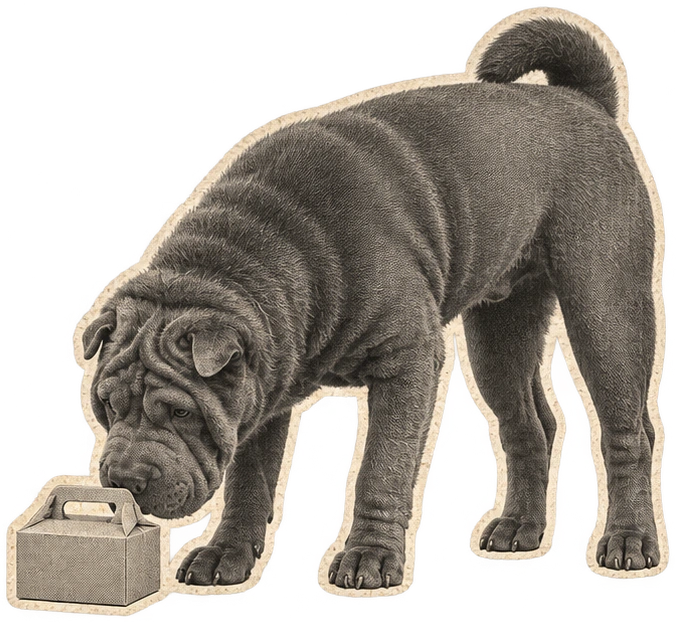
Choose walks to suit the dog’s age and how comfortably they move. Watch how they breathe during and after the outing. Give them time to sniff and a route you can cut short. If their breathing becomes repeatedly noisy after easy exercise, talk to the vet before stepping up the distance. Some dogs have airway problems that make exertion harder. 492324
On hot days, use a cooler time and leave the long route for another day. Start cooling straight away for suspected heatstroke. Get emergency veterinary guidance. A dog who struggles for breath needs emergency care whatever the weather. 92526
Shar Pei notes / 07
Keep the walk comfortable
| Situation | Better plan |
|---|---|
| Warmer than expected | Switch to shade and a shorter route where safe, or skip it. 25 |
| Too hot to go out | Try a calm scent game indoors somewhere cool. 2527 |
| Repeated noisy breathing | Stop the exercise and get a vet assessment. 423 |
| Obvious breathing distress | Emergency vet. If heatstroke is suspected, start cooling while you get help. 926 |
Give them somewhere to stay out of the way
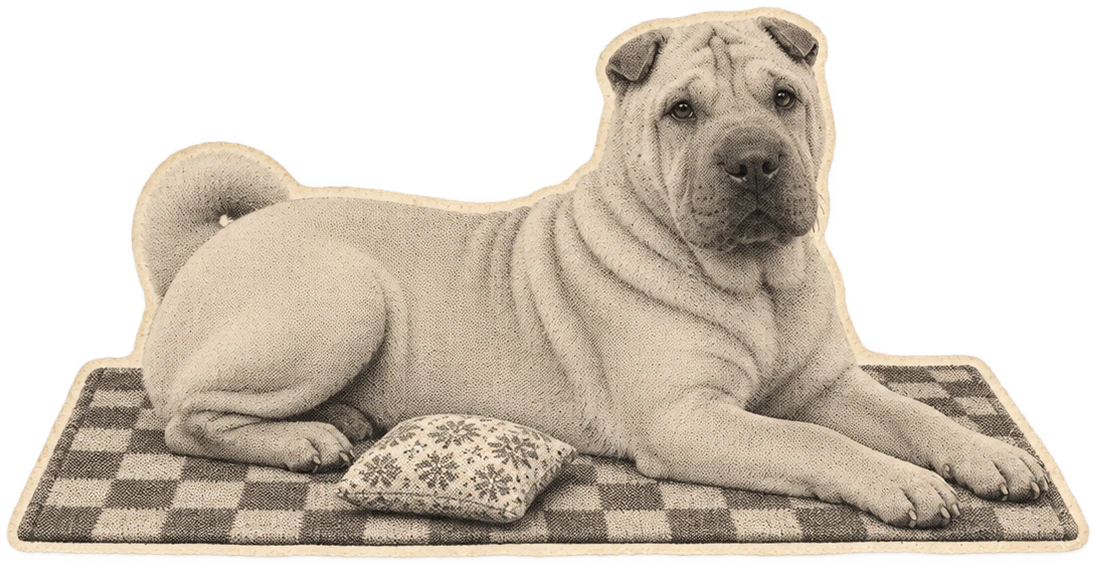
Use a resting spot people aren’t always walking past. A dog who moves off when they’ve had enough is easier to live with if there’s somewhere decent to go. Rehearse being on the mat when the house is quiet, then give the dog the option to stay there when people come in. 1822
Build time alone a little at a time. Check what they actually do after you leave. If they pace or bark repeatedly, shorten the next absence and ask for help if it persists. The house being quiet when you get back hasn’t told you much about the half-hour in between. 2829
Shar Pei notes / 08
A place to rest
Family and other animals need room too
An adult must supervise children and dogs together. Teach children not to touch the dog’s face or skin folds and to leave them alone when they’re resting. If a dog has an eye or ear problem, take extra care about people reaching over them. Give the dog an exit instead of having a child run a test on whether they’re feeling better. 58161730
Introduce a cat with a physical barrier to start and a way for the cat to leave. When two dogs meet, choose a place with room to step apart. If either dog gets stuck staring, end the interaction rather than waiting for one of them to take the hint. 13173132
Eye screening isn’t a verdict on today’s eye
As of November 2026, the Royal Kennel Club lists the BVA/RKC/ISDS Eye Scheme under Good Practice. Best Practice adds POAG/PLL DNA along with elbow and hip screening. Ask to see the results for the actual breeding dogs. Those tests do different jobs, and a clear DNA result is not an assessment of an eyelid or a new symptom. 33343536
In the VetCompass study of 1,913 Shar Pei under UK primary veterinary care in 2013, entropion was recorded in about 18% and outer ear inflammation in about 16%. A separate study of UK eye records in 2019 reinforces the need to take eyelid problems seriously. The figures describe the historical records, not the chance of illness for your dog today. The 2024 UK longevity study estimated a median lifespan of 10.6 years for its Chinese Shar Pei row (95% confidence interval 10.3 to 10.9; 4,326 dogs). 37383940
Shar Pei notes / 10
Health conditions and screening
| Check or sign | What it means |
|---|---|
| Good Practice | BVA/RKC/ISDS Eye Scheme. Ask for results. 3335 |
| Best Practice additions | POAG/PLL DNA and the separate hip and elbow schemes. 333436 |
| New squinting or eye pain | Contact your vet promptly. Don’t rely on a screening result. 56 |
| Skin or ear changes | Ask the vet about ongoing soreness, smell, or repeated head shaking. 7837 |
| Fever or joint swelling | Get veterinary advice straight away. Report repeat episodes; don’t assume a breed-related condition is the cause. 441 |
| Breathing | No Shar Pei entry in the RKC/Cambridge scheme list checked. A vet can still assess symptoms; difficulty breathing is an emergency. 4942 |
| Lifespan context | UK 2024 cohort median 10.6 years, not a forecast for an individual. 3940 |
Budget for more than the short coat
Find out what an ordinary appointment costs at your practice and how you’d get there if you needed an appointment late at night. Read the insurance terms around existing eye and skin problems. The cheap monthly number can mean less than you think if it rules out the care you want covered. 443
Ask anybody who walks or looks after the dog to follow your lead and visitor routine. Write down what’s normal with the dog’s eyes and ears so they know what to mention. It helps to have them call about something that’s changed rather than telling you afterwards the dog had “a funny look” for three days. 8121844
Shar Pei notes / 11
Budget beyond the food
| Budget item | Check first |
|---|---|
| Routine and emergency vet care | Local cost and out-of-hours contact details. 43 |
| Cover | Limits, excess, exclusions and existing conditions. 43 |
| Harness and coat kit | Fit to the actual dog; a towel and a gentle brush are more useful than a stack of products. 1214 |
| Backup care | Someone who can follow the dog’s routine and spot a change. 1844 |
A Chinese breed, not a competition for the most folds
The FCI records China as the breed’s origin. In Britain the breed is in Utility, with a standard that describes a compact dog with a harsh coat. The past explains the name and some of the appearance. It doesn’t tell you how much touch or company your dog will enjoy. 121017
The original coat texture is more interesting than the idea that a good dog ought to have more rolls. At home you want to see a dog who opens their eyes comfortably and breathes without obvious effort. They should be able to rest without skin discomfort. You don’t need a breed-history lesson to know when one of those has changed. 13469
Before and after bringing one home
If you’re buying a puppy, meet them with their mum and ask about eye problems in the family as well as the documents. Watch how the dogs move and breathe while they’re relaxed. If it’s a rescue, ask about any recurring skin, ear or eye symptoms and what the dog is comfortable with during a check. 416334546
If the dog’s already home, pick a short check you can do when both of you are calm. Learn what’s normal for them and put the practice’s number somewhere you can get to quickly. If the dog starts squinting, you can take a photo for the vet as long as it doesn’t delay getting them seen. 561416
Shar Pei notes / 13
Ask for evidence you can use
| Find out | What to ask or do |
|---|---|
| How the dog gets on today | Check comfortable eyes and breathing at rest. 4523 |
| Health records | Actual parent results, recent care and any symptoms seen. 334546 |
| Handling | Ask what the dog already accepts and start with that. 1646 |
| What to do next | Register with a vet and get prompt advice for a new painful eye. 543 |
Sources
- S1Royal Kennel Club Shar Pei breed standard and eye function requirementsSource · checked 21 November 2026
- S2Royal Kennel Club Shar Pei listing and breed historySource · checked 21 November 2026
- S3Royal Kennel Club Shar Pei Breed Watch Category 2 pointsSource · checked 21 November 2026
- S4PDSA Shar Pei health and care guideSource · checked 21 November 2026
- S5PDSA painful or closed eye adviceSource · checked 21 November 2026
- S6PDSA entropion and veterinary examinationSource · checked 21 November 2026
- S7PDSA skin-fold dermatitis and symptom guidanceSource · checked 21 November 2026
- S8PDSA ear infections in dogsSource · checked 21 November 2026
- S9PDSA emergency advice for difficult breathingSource · checked 21 November 2026
- S10FCI Shar Pei country of origin and entrySource · checked 21 November 2026
- S11PDSA assessing healthy weight and body conditionSource · checked 21 November 2026
- S12Dogs Trust lead walking and suitable harness fittingSource · checked 21 November 2026
- S13Dogs Trust managing reactivity at a safe distanceSource · checked 21 November 2026
- S14PDSA regular skin and coat checks at homeSource · checked 21 November 2026
- S15PDSA when to contact a vet before cleaning an earSource · checked 21 November 2026
- S16Dogs Trust safe and gradual handlingSource · checked 21 November 2026
- S17Dogs Trust body language and changes that may reflect discomfortSource · checked 21 November 2026
- S18Dogs Trust preparing for visitorsSource · checked 21 November 2026
- S19Dogs Trust behaviour and safety around visitorsSource · checked 21 November 2026
- S20RSPCA reward training and finding professional helpSource · checked 21 November 2026
- S21Dogs Trust positive reinforcementSource · checked 21 November 2026
- S22Dogs Trust settle trainingSource · checked 21 November 2026
- S23PDSA recognising airway problems in short-faced dogsSource · checked 21 November 2026
- S24PDSA matching exercise to the individual dogSource · checked 21 November 2026
- S25PDSA preventing and recognising heatstrokeSource · checked 21 November 2026
- S26PDSA emergency first aid for heatstrokeSource · checked 21 November 2026
- S27Dogs Trust indoors enrichment and scent activitiesSource · checked 21 November 2026
- S28Dogs Trust building time alone graduallySource · checked 21 November 2026
- S29PDSA on separation distressSource · checked 21 November 2026
- S30Dogs Trust active supervision with childrenSource · checked 21 November 2026
- S31Dogs Trust introductions between cats and dogsSource · checked 21 November 2026
- S32Dogs Trust introducing another dog to the householdSource · checked 21 November 2026
- S33Royal Kennel Club November 2026 Health Standard Shar Pei rowSource · checked 21 November 2026
- S34Royal Kennel Club explanation of POAG/PLL DNA testSource · checked 21 November 2026
- S35British Veterinary Association clinical Eye SchemeSource · checked 21 November 2026
- S36British Veterinary Association on health screening and its limitationsSource · checked 21 November 2026
- S37O’Neill et al. original UK VetCompass study of Shar Pei under 2013 primary careSource · checked 21 November 2026
- S38Original UK VetCompass study of conformational eyelid disorders in 2019 recordsSource · checked 21 November 2026
- S39Dogs Trust 2024 UK longevity table, Chinese Shar Pei rowSource · checked 21 November 2026
- S40Original 2024 UK dog breed longevity studySource · checked 21 November 2026
- S41Cornell University veterinary diagnostic laboratory on Shar-Pei autoinflammatory diseaseSource · checked 21 November 2026
- S42RKC/University of Cambridge published respiratory grading scheme eligibilitySource · checked 21 November 2026
- S43PDSA costs and insurance for dogsSource · checked 21 November 2026
- S44Dogs Trust choosing a walker who follows your routineSource · checked 21 November 2026
- S45RSPCA responsible breeding and seeing a puppy with the motherSource · checked 21 November 2026
- S46Dogs Trust settling a rehomed dogSource · checked 21 November 2026