
Breed guide / Scottish Terrier
Living with a Scottish Terrier
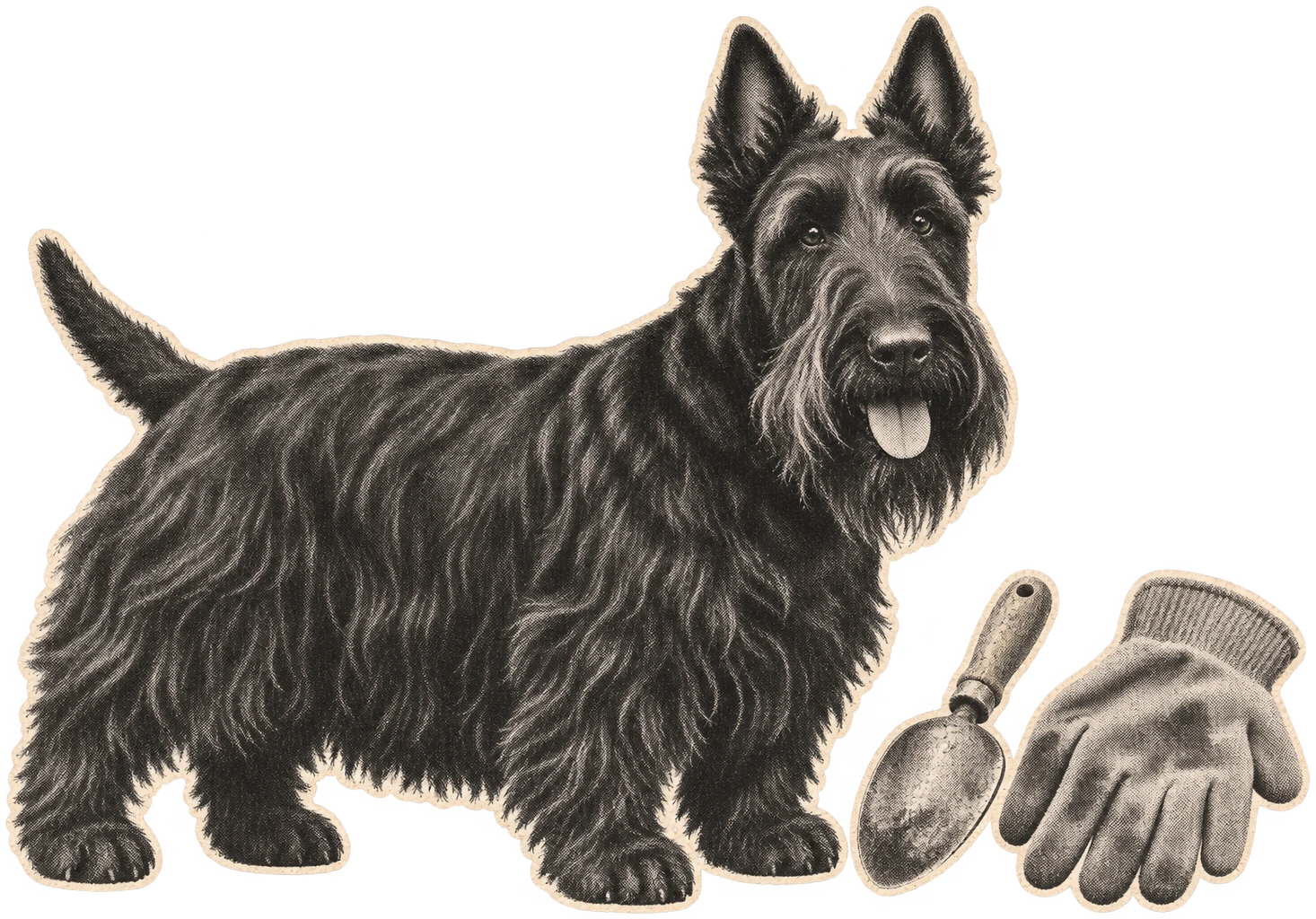
The Scottish Terrier is a low, sturdy little working dog with a long head, pricked ears and a hard coat over a softer undercoat. A Scottie can spend an impressive amount of a walk investigating two feet of hedge. The useful jobs are giving them a better thing to look for, checking the beard and low-hanging coat afterwards, and knowing when a change in their toilet habits needs a vet rather than another trip outside. 12345
Jump to a section
The short version
Look for a gap at the bottom of the fence, not just a way over the top. On a walk, practise moving away before the dog has fully committed to whatever’s going on by the wall. Give them a chance to sniff somewhere safe instead of turning every walk into a tug of war. 4 6 7 8
Part the beard and the hair under the front legs to check for knots or damp. Notice how often your dog normally wees and how much comes out. Straining or blood in the urine needs veterinary advice; if they can’t pass urine, call the emergency vet. 5 9 10
Scottish Terrier notes / 01
Where to start
| Start here | One useful thing to do |
|---|---|
| Garden | Check under the gate and behind plants for gaps. 7 |
| Walks | Practise a turn away before they have to ignore a serious distraction. 6 8 |
| Coat | Check where longer hair touches the floor or rubs against straps. 2 9 |
| Toilet trips | Notice new straining, frequent small wees or blood; no urine is an emergency. 5 10 |
Scottie is short for Scottish Terrier, not every terrier from Scotland
The Royal Kennel Club lists the Scottish Terrier by that name. Aberdeen Terrier appears in accounts of its history. The West Highland White Terrier and the Cairn Terrier are separate breeds with their own UK standards. A dog’s beard or coat colour can’t tell you whether a rescue label is accurate. 1 2 11 12
Measure the dog under the skirt
The written UK standard gives a shoulder height of 25–28 cm and a weight of 8.5–10.5 kg. Those figures describe the breed standard, not the right weight for every dog. The body can feel more substantial than it looks. Feel for a waist and ribs, and measure the chest before buying the harness. 2 13 14
Make sure straps don’t catch the hair beneath the front legs. Check the fit when the dog backs up and turns, not just standing still. If they’re short enough to hit the edge of a step on the way up, see if there’s a route that’s easier on their joints. 14 15 16
The beard and skirt get most of the weather
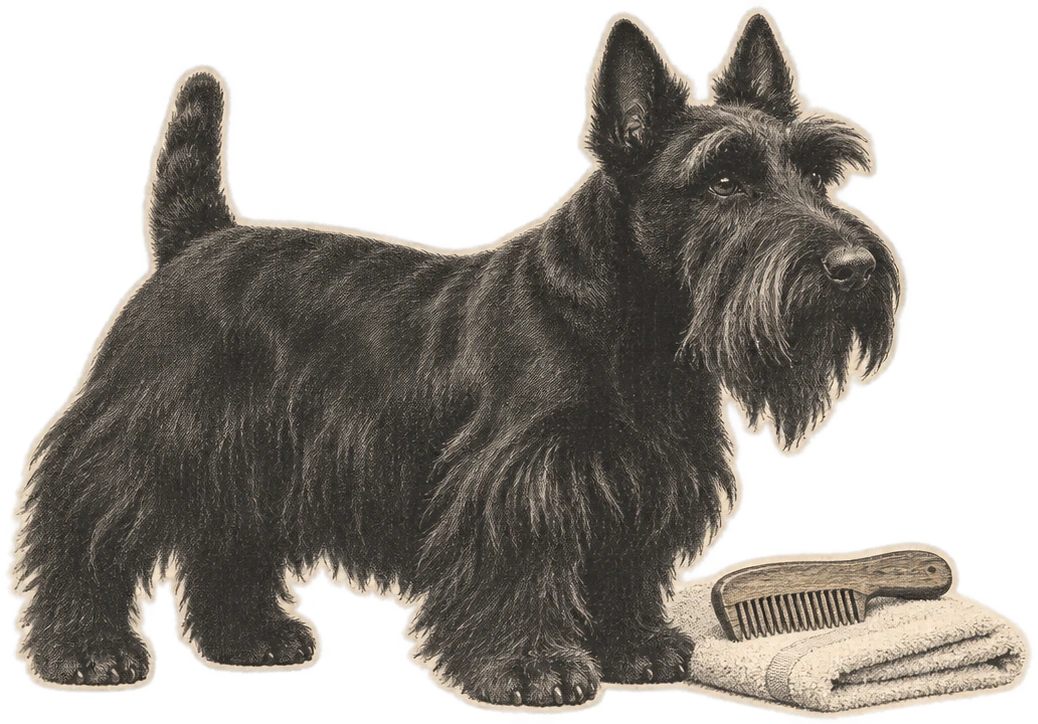
The Scottie’s short, dense undercoat sits under a hard outer coat, according to the breed standard. Open a small section with your fingers and comb a bit at a time, especially behind the elbows, under the collar and along the skirt. Ask a groomer familiar with wire coats about a pet clip or hand stripping to keep the texture. The show outline isn’t a condition of owning one. 2 3 9 17
Wipe and dry the beard if food or water stays in it, and look between the toes after a walk. The hair can hide all kinds of things, including the bit of grass they’ve been licking for half an hour. Don’t cut a mat from right against the skin. Stop if the dog is sore and get help. 9 17 18 19
Scottish Terrier notes / 04
The beard and skirt
Watch the first look towards the fence
If your dog stops to stare or presses forward at the sight of a cat, make a little space straight away. Don’t wait until they’ve got to the end of the lead to see whether they’ll come with you. Some Scotties are more interested in scents than movement and some will barely notice what the one next door acts as if it’s their job to deal with. 3 4 6 20
If they bark along the fence, see what sets them off and whether they’re better further from it. If it happens when you leave, check with a recording and work on alone time separately. A dog who won’t settle as soon as the house empties needs a different plan from one shouting at the postie. 21 22 23
Scottish Terrier notes / 05
Catch the first look
| What you see | First thing to try |
|---|---|
| Leaning or staring at movement | Turn before the lead tightens. 6 20 |
| Barking at the fence | Interrupt earlier, manage the view and offer a calmer activity. 7 21 |
| Pacing or barking while alone | Find out what happens when you leave, and ask for help if they’re distressed. 22 23 |
Give them somewhere to dig that’s actually theirs
Try an approved digging spot if your dog loves digging, or hide a toy on safe ground and let them look for it. Start with a shallow easy find and lead them away from things that could hurt them. If they bring the toy back, make that worth doing as well. You might save a corner of the flowerbed without spending the whole afternoon telling them it’s off limits. 8 24 25
Practise recall on its own and keep it easy at first. A long line on a good harness can give you a backup in suitable areas. Give the dog a chance to settle once the game’s over rather than getting them going again as soon as they look at you. 8 14 26
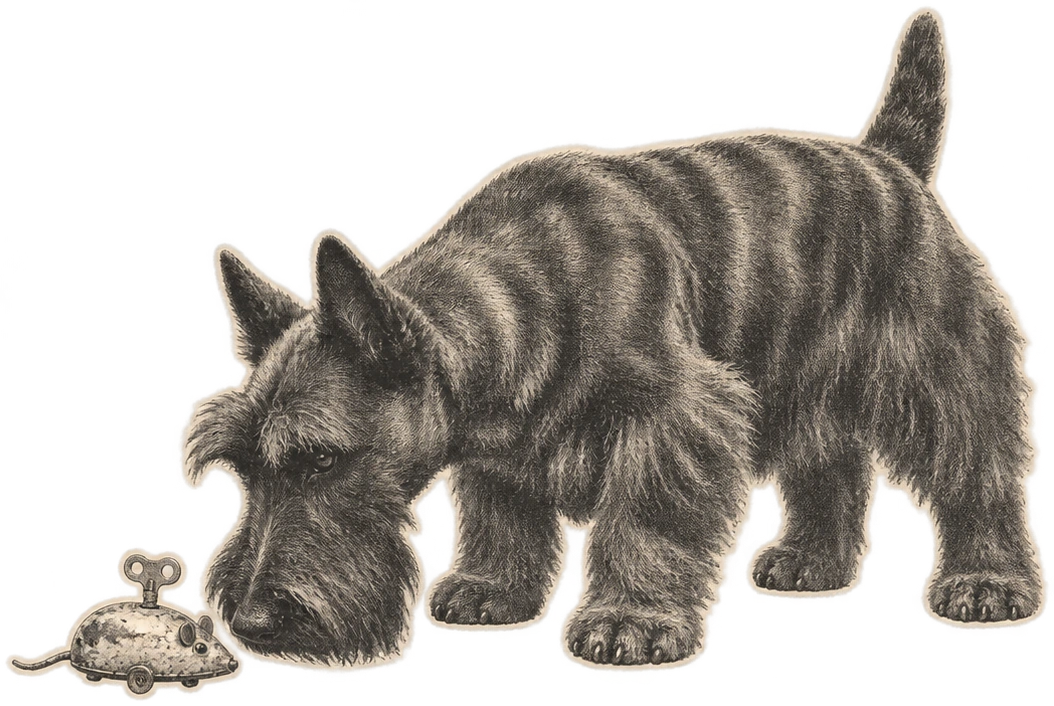
Short legs are still capable of getting you into a hurry
Give the dog time to sniff at its pace, with enough room to turn away if something more interesting appears. A secure space is useful if you’re not ready to trust recall without a line. Keep them on a lead around livestock and avoid making a busy road part of the lesson. 6 8 27 28
Make outings easier in hot weather. If your dog starts repeatedly stiffening, stumbling, stopping or limping, get the change assessed. Scottie cramp is a condition to be aware of, not a name for every funny step. A short video can help your vet see an episode that’s over by the time you get there. 3 15 27 29 30
Scottish Terrier notes / 07
Choose your route
| Situation | Sensible choice |
|---|---|
| Quiet route | Include time to sniff and an easy way to turn back. 8 27 |
| Road or livestock nearby | Keep a lead on and give plenty of clearance. 8 28 |
| Hot weather | Go at a cooler time and shorten the route if needed. 29 |
| Repeated unusual steps | Note what was happening and speak to your vet. 15 30 |
See which part of the garden the dog is actually using
Get down and look under the gate, at the fence corner behind that big shrub and beside the shed. If another animal regularly appears on the wall, supervise the dog in the garden and move them away before they get going. A route out tends to be easier to see from below than standing on the patio wondering how they did it. 6 7
Keep a towel where the dog comes in, and pick a dry sleeping spot away from the busiest bit of the room. Try a grippy runner if they skitter when turning. If you’re gradually introducing time alone, leave the dog somewhere it already likes to rest rather than changing the whole setup as you go out. 9 16 22 26
Scottish Terrier notes / 08
Check the gate
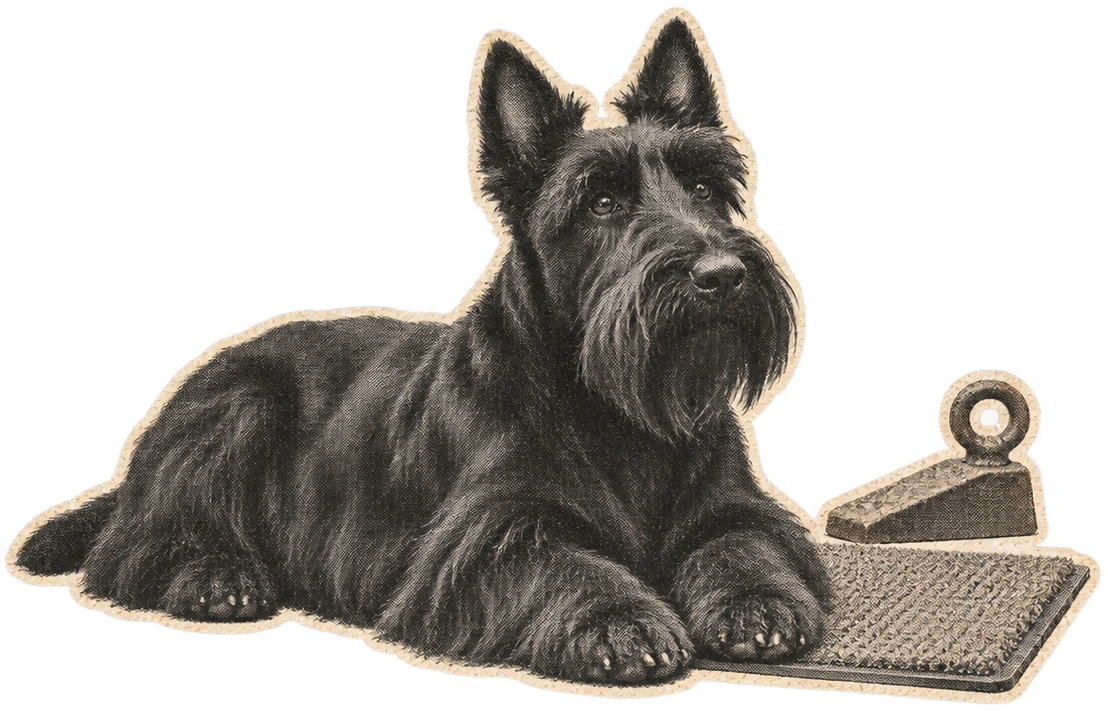
Make room for the dog to say it’s had enough
Ask children to get down to the dog’s level without crowding it or picking it up. Have an adult stay close, and give the dog an easy way away from games or cuddles. Leave a sleeping or eating dog alone. It’s a lot easier to teach that once than to ask the dog to put up with everyone coming and going. 19 20 31
For a cat or smaller animal, plan separate safe places before they meet at all. Keep early encounters short and controlled. If the dog has met other pets before, ask what actually happened rather than just whether they’ve been in the same house. 6 32 33
Health: take the toilet changes seriously
There’s no Scottish Terrier-specific pre-breeding screening currently listed in the Royal Kennel Club’s Health Standard. That doesn’t mean there are no inherited conditions or no tests. A breed-specific DNA test exists for type 3 von Willebrand disease, an inherited bleeding disorder. That’s one specific test, not a test for every cause of bleeding and not an RKC Good or Best Practice requirement. Ask a vet what makes sense for the dog and family history. 1 34 35 36
Bladder cancer has been studied in Scotties. One US study followed 120 Scottish Terriers aged six or older from a screening cohort. That doesn’t give us the UK rate or tell you why an individual dog is having trouble weeing. Ring your vet if they’re passing blood, repeatedly straining or asking to go out more. If they can’t pass urine, contact the emergency vet straight away. 5 10 37 38
PDSA includes Scottie cramp in its breed guide; let the vet assess recurrent movement changes instead of trying to diagnose an episode from its name. The Dogs Trust 2024 UK study reported median lifespan of 12.7 years for Scottish Terriers, a group figure rather than a prediction for one dog. 3 15 30 39 40
Scottish Terrier notes / 10
Health conditions and screening
| Topic | What you can use |
|---|---|
| Urinary symptoms | Blood or repeated straining warrants a vet call. 5 |
| Unable to wee | This is an emergency. Call immediately. 10 |
| Movement episodes | Tell the vet what they look like and when they happen. 3 30 |
| Lifespan | UK median 12.7 years, not an individual forecast. 39 40 |
| Screening and breeding | Ask for the named test, result and relevant family history. 1 34 35 |
| Bleeding conditions | Tell the vet about unusual or prolonged bleeding and any known results. 35 36 |
| Bladder research | The 120-dog US cohort is not a UK incidence figure. 37 38 |
Get the price for the coat you live with, not the show one
Ask a groomer what a manageable pet trim would look like and what needs doing between visits. If you want hand stripping, find out how it’s priced and whether it suits the actual coat and dog. A short trim still leaves places to check under straps and between the toes. 9 14 17 18
Check insurance limits and exclusions, including ongoing and inherited conditions. If somebody else is going to walk the dog, explain what makes them pull and how you’d turn away. It’ll be more useful than “he’s fine as long as nothing happens”. 6 8 41 42
Scottish Terrier notes / 11
Price the right trim
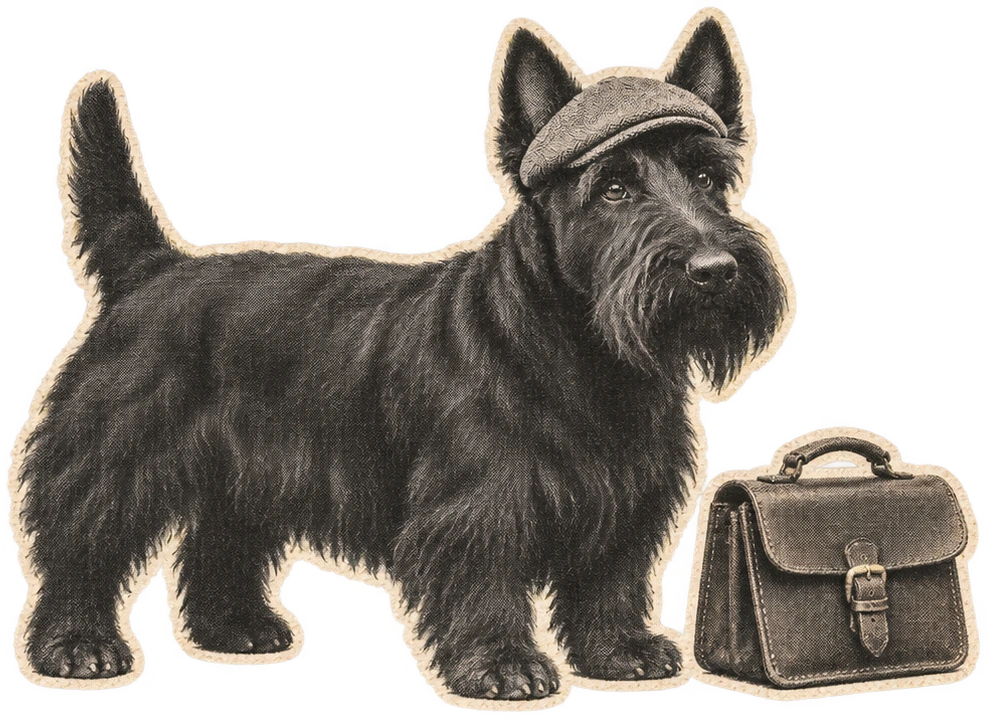
An old Scottish working terrier, even without the bonnet
The breed’s account traces its history to Scotland, including the old Aberdeen name. The compact build was part of a dog used to work on rough ground and below it. That tells you a bit about the shape of the dog and why it has a serious beard. It doesn’t say how your own dog will act when a pigeon walks through the gate. 1 2 3
See what they do on a day that isn’t all about you visiting
Ask what the dog is like at a gate, on a walk and during grooming. Find out whether that’s been seen in a foster home, at the breeder’s or in a kennel. If you’re adopting, use that information to set up a manageable first week, with some quiet space and walks that don’t throw in every distraction at once. 6 19 26 43
If you’re meeting a litter, see the pups with their mum and ask about health history in the family, including urinary problems or unusual bleeding. Ask for named test records, not just “health tested”. Watch a grown Scottie negotiate a walk, a rest and a bit of coat care if possible. The puppy has an unfair advantage when it comes to first impressions. 1 19 34 35 44 45
Scottish Terrier notes / 13
Ask about daily life
| Ask | Why it’s useful |
|---|---|
| How do they handle a dog or cat appearing on a walk? | Helps plan routes and distractions. 6 8 |
| What health records can you show me? | Makes it easier to discuss real findings with a vet. 1 34 44 |
| How do they cope with the comb and feet being checked? | Gives you a starting point they already know. 9 19 |
| Where have they actually been seen settling? | Relates to your home more than a general description. 26 43 |
Sources
- S1Royal Kennel Club Scottish Terrier breed profile, history and current screening statusSource · checked 21 November 2026
- S2Royal Kennel Club written Scottish Terrier breed standardSource · checked 21 November 2026
- S3PDSA veterinary Scottish Terrier owner profile, including movement conditionsSource · checked 21 November 2026
- S4Dogs Trust Scottish Terrier rescue and owner guideSource · checked 21 November 2026
- S5PDSA veterinary guidance on bladder and urinary symptomsSource · checked 21 November 2026
- S6Dogs Trust understanding and managing chasingSource · checked 21 November 2026
- S7Dogs Trust checking boundaries and preventing escapesSource · checked 21 November 2026
- S8Dogs Trust recall and safe long-line trainingSource · checked 21 November 2026
- S9PDSA veterinary grooming and coat maintenanceSource · checked 21 November 2026
- S10PDSA emergency veterinary advice if a dog cannot pass urineSource · checked 21 November 2026
- S11Royal Kennel Club separate West Highland White Terrier standardSource · checked 21 November 2026
- S12Royal Kennel Club separate Cairn Terrier standardSource · checked 21 November 2026
- S13PDSA assessing a dog's body condition by touchSource · checked 21 November 2026
- S14Dogs Trust harness fitting and checking for safe movementSource · checked 21 November 2026
- S15PDSA veterinary advice on limping and handling changesSource · checked 21 November 2026
- S16Canine Arthritis Management veterinary access and safe home footingSource · checked 21 November 2026
- S17Scottish Terrier Club grooming and coat educationSource · checked 21 November 2026
- S18PDSA practical home health checks including skin and pawsSource · checked 21 November 2026
- S19Dogs Trust comfortable handling including groomingSource · checked 21 November 2026
- S20Dogs Trust reading canine body languageSource · checked 21 November 2026
- S21Dogs Trust signs of and management for barking triggersSource · checked 21 November 2026
- S22Dogs Trust teaching a dog to spend time aloneSource · checked 21 November 2026
- S23Dogs Trust distress when alone and how to get supportSource · checked 21 November 2026
- S24Dogs Trust enrichment and search gamesSource · checked 21 November 2026
- S25Dogs Trust giving dogs their own safe digging spotSource · checked 21 November 2026
- S26Dogs Trust settle training and calm resting placesSource · checked 21 November 2026
- S27PDSA tailoring exercise to the actual dogSource · checked 21 November 2026
- S28Natural England countryside code, dogs and livestockSource · checked 21 November 2026
- S29Dogs Trust safe outings in hot weatherSource · checked 21 November 2026
- S30PDSA veterinary guidance on loss of balance and movement changesSource · checked 21 November 2026
- S31Dogs Trust child and dog supervisionSource · checked 21 November 2026
- S32Dogs Trust safer introductions and living with catsSource · checked 21 November 2026
- S33Dogs Trust introducing another dog safelySource · checked 21 November 2026
- S34Royal Kennel Club current Health Standard central Scottish Terrier rowSource · checked 21 November 2026
- S35UC Davis Veterinary Genetics Laboratory Scottish Terrier-specific vWD type 3 testSource · checked 21 November 2026
- S36Cornell Veterinary Medicine clinical von Willebrand disease guidanceSource · checked 21 November 2026
- S37Original US Scottish Terrier prospective screening cohort researchSource · checked 21 November 2026
- S38Purdue veterinary research team description of its 120-dog screening cohortSource · checked 21 November 2026
- S39McMillan et al. original UK dog longevity studySource · checked 21 November 2026
- S40Dogs Trust original breed longevity table, Scottish Terrier rowSource · checked 21 November 2026
- S41PDSA dog ownership costs and insuranceSource · checked 21 November 2026
- S42Dogs Trust finding a walker who suits the dogSource · checked 21 November 2026
- S43Dogs Trust settling a rescue dogSource · checked 21 November 2026
- S44Royal Kennel Club lookup for named health resultsSource · checked 21 November 2026
- S45RSPCA guidance on choosing a breeder and seeing the litter with its motherSource · checked 21 November 2026
