
Breed guide / Samoyed
Living with a Samoyed
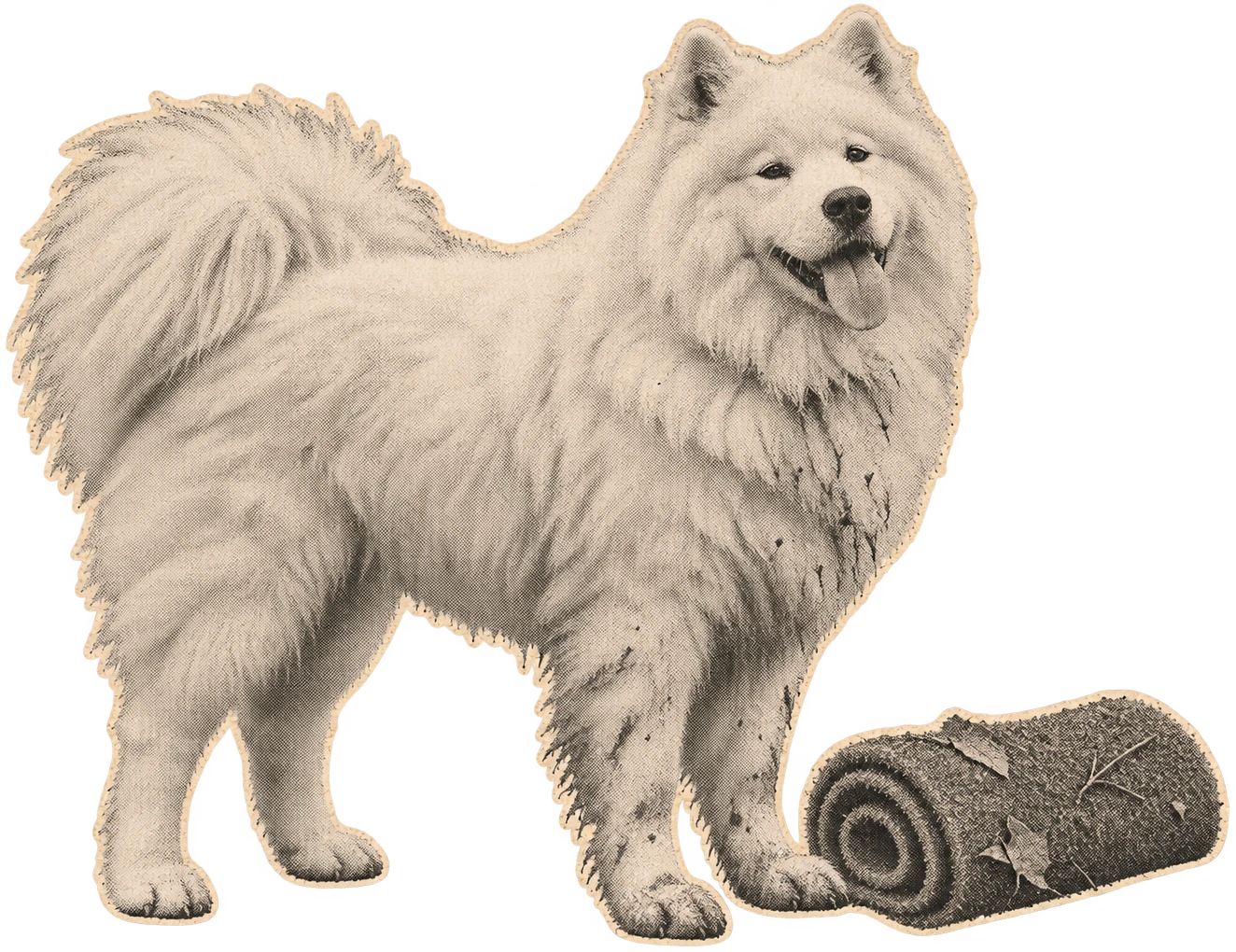
The Samoyed is a white, thick-coated working dog from Siberia, bred to pull, herd and spend time around people. There’s a reason the face gets all the attention, but the coat, the voice and the need for a decent outing are what you’ll actually live with. A Samoyed can come in from a muddy walk looking like it’s been dragged through a hedge, then mysteriously look clean again once your floor is filthy. Here’s what’s worth getting right around the house and out on a walk. 1234
Jump to a section
The short version
Get a comb right down underneath the fluff behind an ear. If the surface looks lovely but the comb stops an inch in, that’s the bit to work on gently. Start with a small patch and stop before either of you is fed up. This is easier to teach when the coat’s in decent shape, not when you’ve found a knot that needs sorting. 3 5 6
Find out what starts the barking or howling. If it’s the view from the front window, changing the view might save everyone more grief than another week of saying “quiet”. And when it’s warm, change the walk before you leave the house, rather than finding out halfway round that it was a bad idea. 7 8 9
Samoyed notes / 01
First things first
| Start here | Try this |
|---|---|
| Coat | Separate one patch and check down to the base rather than fluffing the top. 3 5 |
| Noise | Work out whether the trigger is outside, the door, being left or something else. 7 10 |
| Warm afternoons | Switch to a cooler time or a short toilet outing if needed. 8 9 |
| Recall | Use a long line on a well-fitted harness while you practise. 11 |
Samoyed, not just any white spitz
The Royal Kennel Club lists the Samoyed in its pastoral group. The thick coat, upright ears and dark eye rims go with the look, but a white spitz-type dog isn’t necessarily a Samoyed. The Japanese Spitz, for example, has its own UK breed entry. You’re better off knowing a dog’s background than buying on the strength of a particularly splendid tail. 1 2 12
The UK show standard allows white, white and biscuit, or cream. “Biscuit” here means colour, not an extra occupation for anyone holding a packet. Health, confidence around people and the practical fit with your home matter more. 1 2 6
Under the coat, there’s a dog you still need to size
The UK breed standard gives shoulder heights of 51–56 cm for males and 46–51 cm for females, with weight in proportion to height. Those figures describe the breed standard, not every dog you’ll meet. Measure your actual dog for a harness and feel for the ribs and waist when checking body condition. The coat will make a pretty convincing case for having no waist at all. 2 13 14
For car rides, check there’s space to turn and settle when the travel restraint is fitted. At home, try a washable mat big enough to lie flat on after a walk, rather than a little one they can sit on with the wet bit still hanging over the edge. 15 16
Brush the part that doesn’t make it into photos
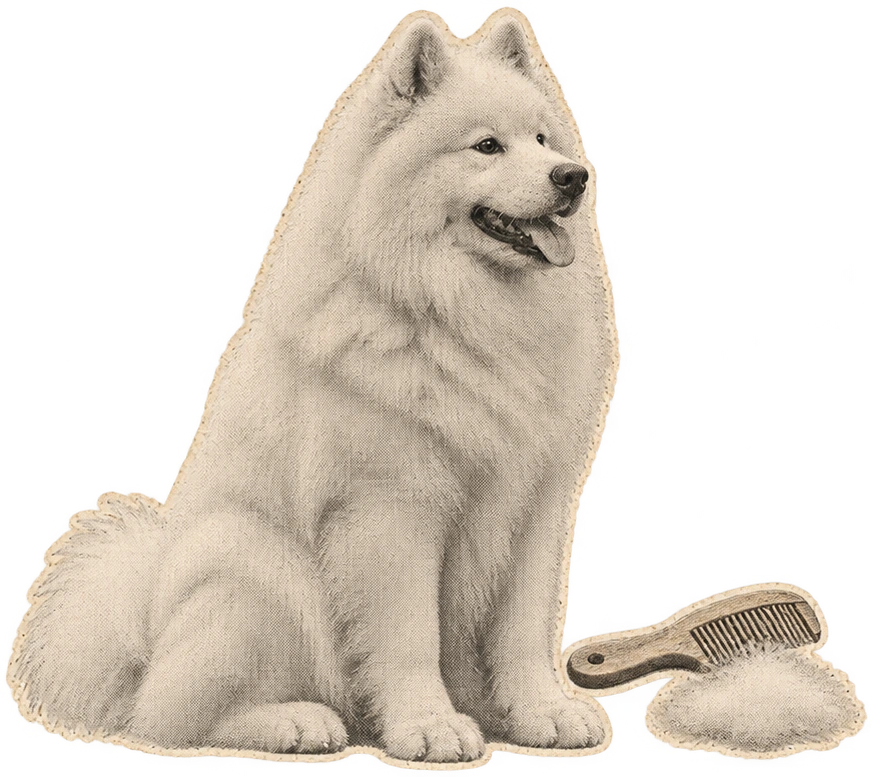
This is a double coat, with a soft layer underneath and longer outer hairs. Part it a little at a time, then gently work the section outwards. Behind the ears, under the collar and at the back of the legs are worth getting to first. If a knot is tight to the skin, don’t drag the comb through it or get the kitchen scissors out. Ask a groomer or your vet, especially if the skin is sore. 2 3 5 17
On wet days, get a towel down by the door and check where the coat still feels damp underneath before you put the harness back on. During a big shed, a few short sessions will usually be easier to fit in than trying to get through the whole coat in one go. Don’t shave it as your summer plan: change the time and intensity of the walks instead. 3 5 8 18
Samoyed notes / 04
Coat trouble spots
| Area | What to look for |
|---|---|
| Behind ears | Tight little tangles a brush can skim over. 3 5 |
| Under harness or collar | Damp fur, rubbing or sensitivity. 5 13 |
| Back of legs | Dense undercoat that’s easy to miss from above. 2 5 |
| Skin you can’t see | If it smells, itches or hurts, get it checked rather than scrubbing it. 5 17 |
Work out when they’ve found their voice
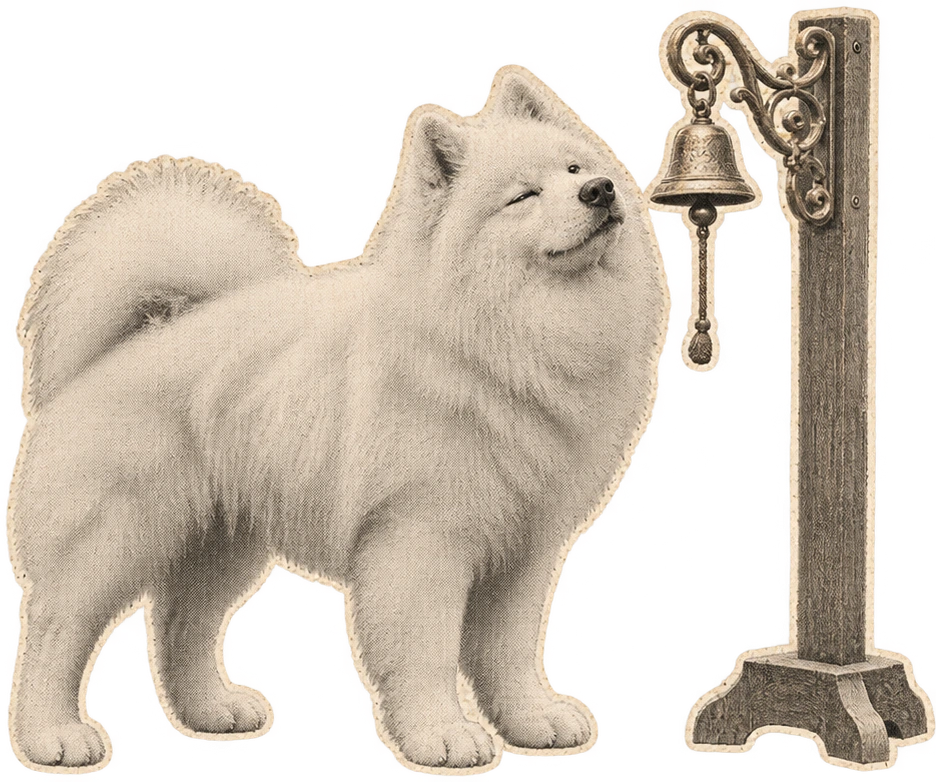
A Samoyed may bark, howl or be fairly quiet. The howl can be funny when you’re expecting it. It’s less charming when the postie can hear it through three closed doors, or when the dog is doing it because it can’t cope on its own. Check which situation you’ve got before deciding how to handle it. 3 4 7 10
If people on the pavement set it off, block the view at dog height and let them settle somewhere quieter. If it starts after you leave, a recording can tell you when the barking starts and whether there’s pacing or difficulty settling as well. Build alone time up gently and ask for help if they’re getting distressed. A louder “quiet” isn’t going to fix either problem. 7 10 19
Samoyed notes / 05
What sets it off?
Practise while there’s nothing riding on it
Put the comb on the floor and reward a quiet sniff before it goes anywhere near a knot. A couple of gentle passes on a patch they don’t mind is enough to start. If they move away, let them. Rehearse it in little bits now so an hour with a stranger and a noisy dryer isn’t the first time anyone’s asked to handle their coat. 5 21
On walks, practise a turn and a return while not much else is going on. If someone interesting appears, create distance early. A bright-eyed Samoyed looking back at you has not technically come back yet, however much the face says “we both know what I meant”. Reward the return when they reach you; keep the line on in places it’s needed. 11 13 22
A working coat doesn’t mean a hot dog is fine
Build up steady daily outings around the dog you have, with time for sniffing as well as moving. If you want to try a pulling sport, find someone who can show you how to fit the kit and introduce it sensibly. Don’t make the regular walk a test of strength, and don’t start hard work with a growing, sore or unfit dog. 1 3 22 23 24
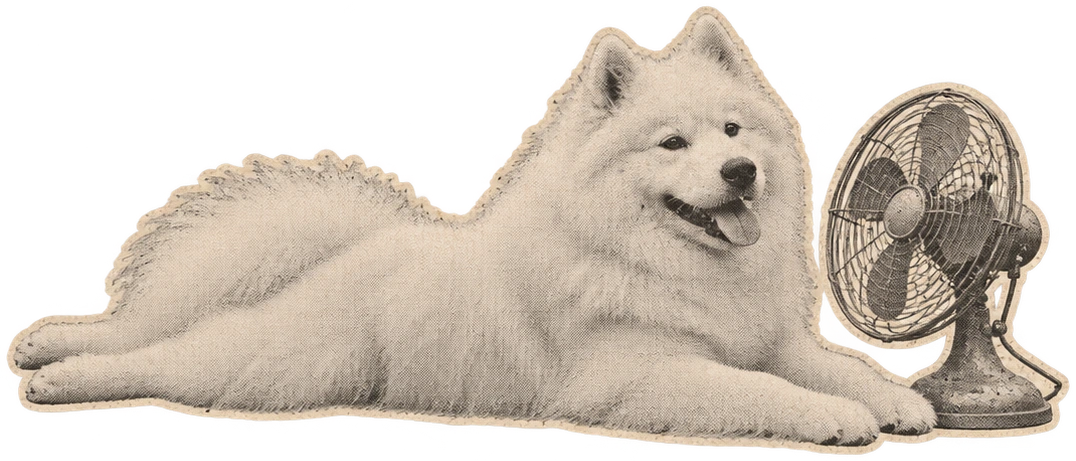
Keep hot-weather plans flexible. Give them water and a cool place to rest. Heavy panting that won’t settle, obvious weakness or collapse after heat or exertion are urgent. If you suspect heatstroke, start cooling straight away and call the vet for emergency advice. Don’t wait in the car for it to pass. 8 9 18
Samoyed notes / 07
Make a plan for the weather
| The day you’ve got | Sensible option |
|---|---|
| Cool and quiet | A varied route with space for sniffing and moving at their pace. 23 25 |
| Hot | An early or late outing if it’s cool enough, or toilet breaks and shaded indoor activity. 8 18 |
| Poor recall near stock | Keep sufficient distance and use a lead. 11 26 |
| Possible heatstroke | Start cooling and speak to an emergency vet straight away. 9 18 |
Make coming in less of an event
Set up one place to towel off by the door and a separate place to flop that isn’t in the way. If the cool spot is the hallway, make sure there’s a route past without everybody climbing over the dog. Check the ordinary stuff: can they get away from the dryer, do they slide on the kitchen floor, and can they settle without being sent to a room they find worrying? 16 19 21 27
Check side gates from dog level before you rely on the garden. Make sure the household knows when the door can be opened and where the dog will be first. That includes when someone is trying to bring the shopping in with their foot. 20 28
Samoyed notes / 08
Towel now, collapse later
Children, cats and visitors aren’t part of the job description
Let the dog come over if it wants to, and let it leave. Explain to the kids that a dog lying down is off duty, even if it looks like the nicest cushion in the room. An adult should stay close enough to intervene, and use a barrier if they can’t supervise. Teach calm arrivals separately, before testing them out on a room full of excited people. 20 29
With a cat, start apart and give the cat an escape route the dog can’t block. Pay attention to fixating and attempts to chase before allowing closer contact. An individual history of living with another animal is useful, but it’s not a promise about how they’ll do with a new one. 4 30 31
Samoyed health: eyes, joints and two specific DNA tests
The Royal Kennel Club Samoyed row has no standalone Good Practice entry. It lists eyes, hips and elbows plus DNA tests for X-linked hereditary nephritis (XLHN) and X-linked progressive retinal atrophy (XL-PRA, type 1) under Best Practice. The DNA tests look for specific variants linked to kidney and retinal disease. They’re not certificates for every possible kidney or eye problem, and don’t replace the eye exam or the joint screening. 1 32 33 34 35 36 37
Keep an eye on how your own dog moves, especially after rest. If they begin to limp or stop doing something they’d usually manage, get it checked. Tell the vet if they’re drinking and weeing noticeably more, or seem to struggle with vision in dim light. A red, sore or held-shut eye is a different problem to see a vet about promptly, not something to put down to a breed DNA result. 34 38 39 40
The Dogs Trust 2024 UK study gives a Samoyed median lifespan of 13.1 years. That’s a middle estimate for recorded dogs in the research, not a prediction for the one asleep by your door. Early Samoyed family studies helped establish how the nephritis can be inherited, but don’t tell us how common it is in today’s UK Samoyeds. 41 42 43
Samoyed notes / 10
Health conditions and screening
| Topic | What you can do |
|---|---|
| Hips and elbows | Look at discomfort or movement changes now. If buying, ask for results from each parent. 32 35 36 38 |
| Eyes | Ask about the clinical eye exam and the particular DNA result. Tell the vet about new trouble seeing. 32 34 37 |
| XLHN | A specific inherited kidney condition, not a label for all increased thirst. 33 39 41 |
| XL-PRA | The listed DNA test is type 1, not a screen for every cause of sight loss. 34 37 |
| Lifespan | Median 13.1 years in a 2024 UK cohort. Don’t use it as a countdown. 42 43 |
| Screening before breeding | Check the named dog, date, method and actual result. 32 44 |
| Call a vet about | A persistent limp, unusual thirst, noticeably impaired sight or an eye that seems painful. 38 39 40 |
Get the real cost of getting all that coat dry
Get a quote from a groomer who works with dense double coats. Ask what a wash, full dry and brush-out cost, whether a big shed changes the price and how they introduce dogs that dislike the dryer. You’ll still want to do some brushing at home unless you’ve got the groomer living in your spare room. 3 5 45
Price insurance on your actual postcode and read the terms, particularly ongoing cover, limits and what’s excluded. Allow for travel gear, routine vet care and cover for days you can’t get home. If you need a walker or sitter, be straight about the lead work and being left alone before they come round. 13 19 45 46
Samoyed notes / 11
Price the actual routine
Why there’s so much dog underneath the fluff
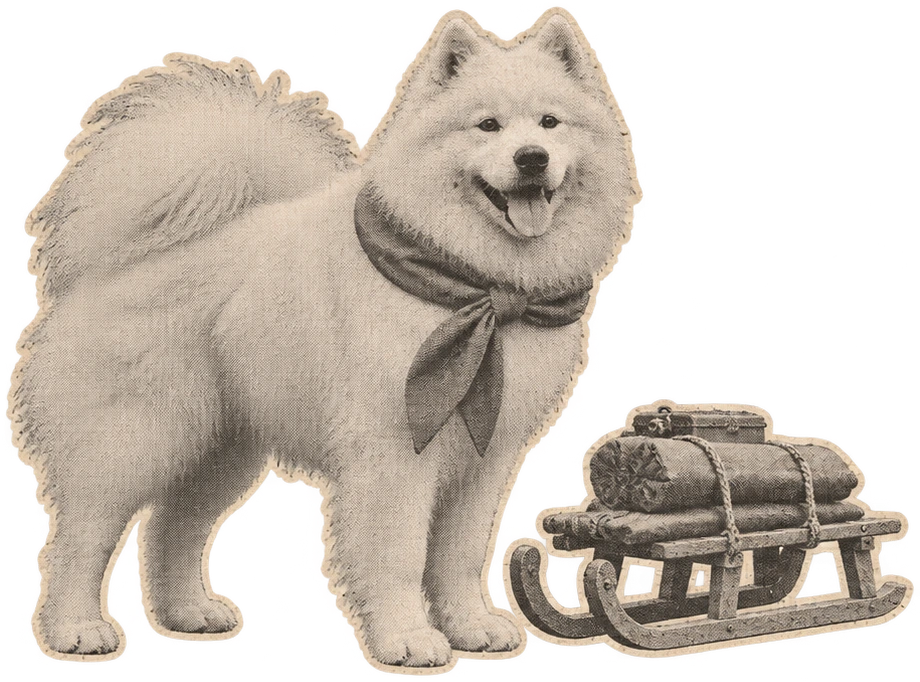
The breed takes its name from peoples in northern Siberia. Dogs there worked around people, with jobs that included herding reindeer and pulling sledges. The coat and working build make more sense when you picture the conditions they were used in rather than a dog drying out in a utility room on the outskirts of Swindon. 1 2 3
Plenty of pet Samoyeds will never see a sledge. Give them things to look for, routes worth sniffing and a chance to spend quiet time with you. The history is useful context, not a list of duties your individual dog has to perform. 4 23 25
Samoyed notes / 12
Bred for cold work
If one’s coming home, ask about the ordinary days
Ask what happens when the door goes, how they behave during brushing and how long they can be alone without distress. In rescue, find out where those observations came from; a busy kennel and a quiet home are different places. Once they’re home, keep the first few days simple and don’t invite the entire family round to admire the coat. 4 10 21 47
If you’re getting a puppy, see the puppy with its mother and ask for the parents’ real screening results. Someone saying “DNA clear” has told you very little until they can say which tests. Spend time around full-grown Samoyeds if you can. The puppy already made a strong argument; now you need to meet the adult that’s going to bark at the recycling lorry. 32 44 48 49
Samoyed notes / 13
Ask about ordinary days
| Ask whoever knows the dog | What the answer helps with |
|---|---|
| Can I see the grooming they’re used to? | Finding a manageable starting point. 5 21 |
| What do they do when you go out? | Planning company and an alone-time routine. 10 19 |
| Can you show screening results by registered name? | Checking claims and talking them through with your vet if needed. 32 44 |
| Where have you seen them living or settling? | Understanding which observations apply to your home. 4 47 |
Sources
- S1Royal Kennel Club Samoyed breed profile, origin and current screeningsSource · checked 21 November 2026
- S2Royal Kennel Club Samoyed written UK breed standardSource · checked 21 November 2026
- S3PDSA veterinary Samoyed breed profile, coat and vocalisationsSource · checked 21 November 2026
- S4Dogs Trust Samoyed owner and rehoming profileSource · checked 21 November 2026
- S5PDSA veterinary grooming and skin careSource · checked 21 November 2026
- S6UK Samoyed Association practical breed and coat overviewSource · checked 21 November 2026
- S7Dogs Trust spotting barking triggers and managing the environmentSource · checked 21 November 2026
- S8Dogs Trust hot-weather safetySource · checked 21 November 2026
- S9PDSA veterinary signs, first steps and emergency advice for heatstrokeSource · checked 21 November 2026
- S10Dogs Trust gradual introduction to spending time aloneSource · checked 21 November 2026
- S11Dogs Trust recall training and long-line safetySource · checked 21 November 2026
- S12Royal Kennel Club separate Japanese Spitz breed profileSource · checked 21 November 2026
- S13Dogs Trust introducing and fitting a harnessSource · checked 21 November 2026
- S14PDSA checking body condition by shape and touchSource · checked 21 November 2026
- S15Dogs Trust travelling safely with a dogSource · checked 21 November 2026
- S16Dogs Trust choosing a quiet space and training a settleSource · checked 21 November 2026
- S17PDSA veterinary advice on itching or irritationSource · checked 21 November 2026
- S18Royal Veterinary College VetCompass emergency heatstroke cooling adviceSource · checked 21 November 2026
- S19Dogs Trust identifying and managing separation anxietySource · checked 21 November 2026
- S20Dogs Trust preparing for visitor arrivalsSource · checked 21 November 2026
- S21Dogs Trust calm low-pressure handling and grooming foundationsSource · checked 21 November 2026
- S22Dogs Trust practical loose-lead walkingSource · checked 21 November 2026
- S23PDSA veterinary guidance on tailoring exercise to the individualSource · checked 21 November 2026
- S24Royal Kennel Club introduction to canicrossSource · checked 21 November 2026
- S25Dogs Trust indoor and outdoor enrichmentSource · checked 21 November 2026
- S26Natural England countryside code, dogs near livestockSource · checked 21 November 2026
- S27Canine Arthritis Management veterinary home environment adaptationsSource · checked 21 November 2026
- S28Dogs Trust preventing escapes and checking boundariesSource · checked 21 November 2026
- S29Dogs Trust child and dog safety guidanceSource · checked 21 November 2026
- S30Dogs Trust safe introductions and living with catsSource · checked 21 November 2026
- S31Dogs Trust dog-to-dog introductions and separate resourcesSource · checked 21 November 2026
- S32Royal Kennel Club central current Health Standard, Samoyed rowSource · checked 21 November 2026
- S33Royal Kennel Club Samoyed XLHN DNA test, scope and inheritanceSource · checked 21 November 2026
- S34Royal Kennel Club Samoyed XLPRA1 DNA test, scope and clinical signsSource · checked 21 November 2026
- S35British Veterinary Association hip dysplasia schemeSource · checked 21 November 2026
- S36British Veterinary Association elbow dysplasia schemeSource · checked 21 November 2026
- S37British Veterinary Association clinical eye schemeSource · checked 21 November 2026
- S38PDSA veterinary guidance on limping and painSource · checked 21 November 2026
- S39PDSA veterinary guidance on increased thirst or urinationSource · checked 21 November 2026
- S40PDSA veterinary guidance on painful or closed eyesSource · checked 21 November 2026
- S41Original Samoyed family study on hereditary glomerulopathy inheritanceSource · checked 21 November 2026
- S42McMillan et al. 2024 original UK longevity studySource · checked 21 November 2026
- S43Dogs Trust original UK breed longevity table, Samoyed rowSource · checked 21 November 2026
- S44Royal Kennel Club individual health results finderSource · checked 21 November 2026
- S45PDSA cost of owning a dog and insuranceSource · checked 21 November 2026
- S46Dogs Trust finding a dog walkerSource · checked 21 November 2026
- S47Dogs Trust advice for settling a rehomed dogSource · checked 21 November 2026
- S48RSPCA puppy breeder checksSource · checked 21 November 2026
- S49UK Samoyed Breed Council puppy information and meeting adult dogsSource · checked 21 November 2026
