
Breed guide / Saluki
Living with a Saluki
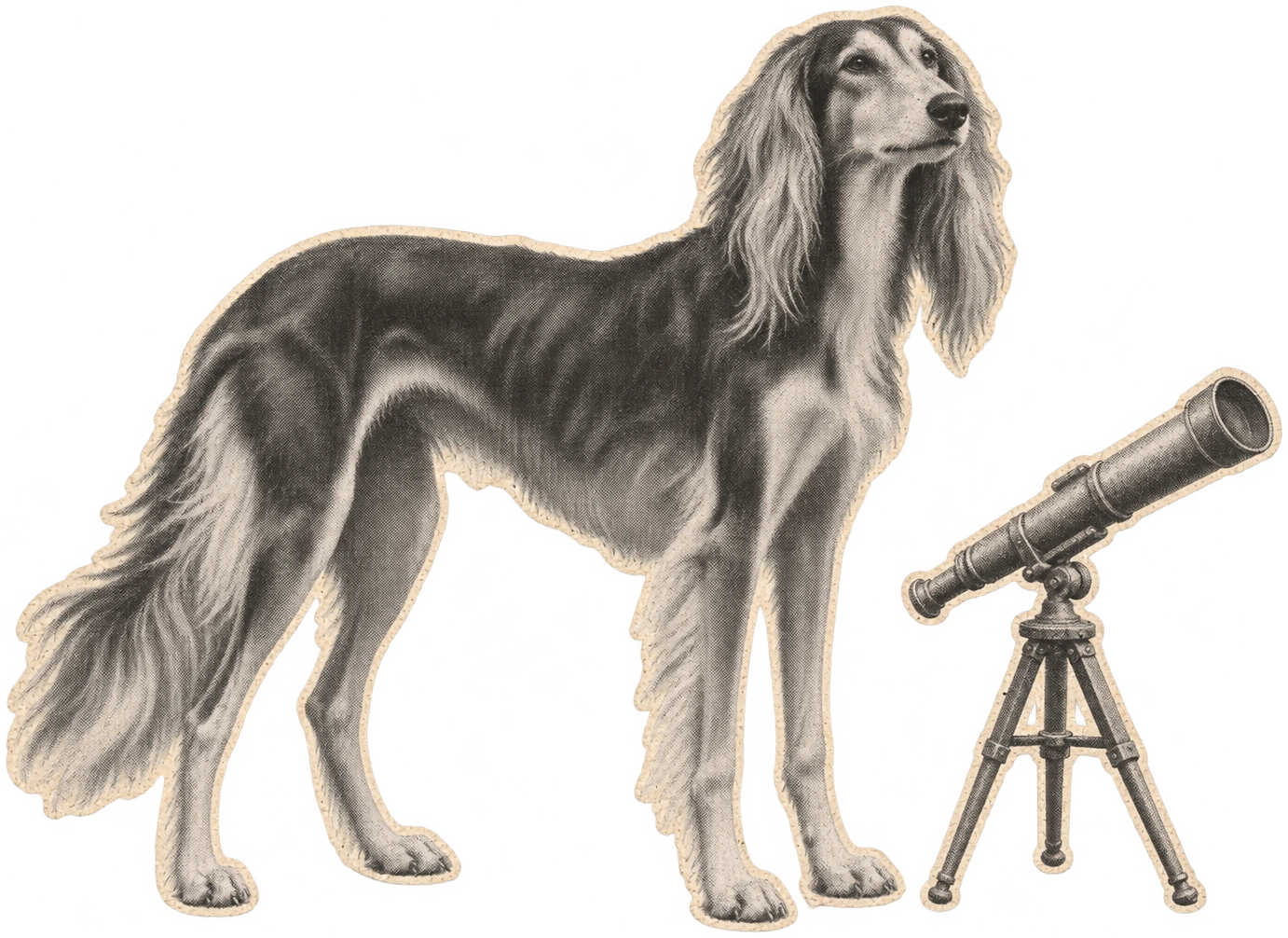
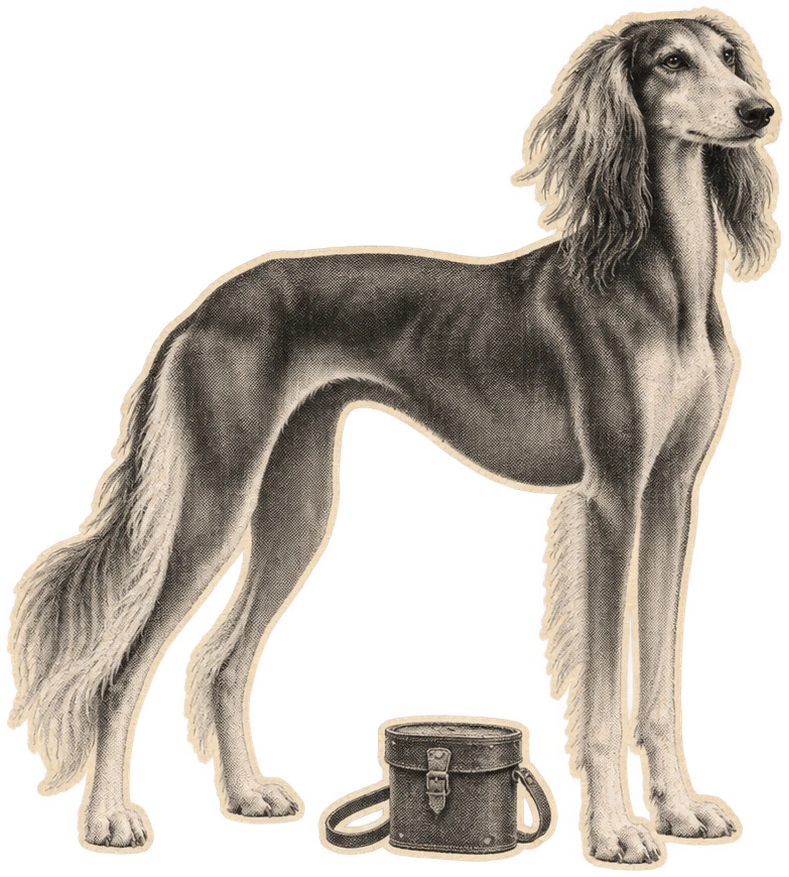
The Saluki is a tall, fine-built sighthound from the Middle East. They come with or without feathering and are their own breed, not a Whippet with longer ears. A useful walk is one with room to notice what’s moving before they do, an easy way to turn away and somewhere genuinely secure for a proper run. Back home, the deep chest and long limbs are a good reason to buy the bed and the harness for the dog you actually have. 12345
Jump to a section
The short version
If the dog goes still and looks past you towards the next field, take the hint. Turn away early and create room rather than waiting for the chase to start. Practise recall in calm, secure places and keep a lead on near roads and livestock. A good recall from one end of the sitting room to the other tells you very little about a rabbit. 3 4 6 7
Check the fit of the harness while they back up, give them a bed they can stretch out on and look between the toes after rough ground. Learn the emergency signs too: repeated attempts to vomit with nothing coming up, especially with distress or a swollen belly, mean call the emergency vet immediately. Don’t wait for the belly to look obviously bigger. 5 8 9 10
Saluki notes / 01
Where to start
| Start here | Useful thing to do |
|---|---|
| Chase | Move with the dog before the first stare becomes a sprint. 4 6 |
| Recall | Practise in a safe enclosed space, away from traffic and livestock. 6 7 |
| Kit and rest | Check their actual fit and let the whole dog fit on the bed. 5 9 |
| Repeated unproductive retching | Call the emergency vet immediately; don’t wait for a big belly. 10 |
A Saluki isn’t a long-haired Greyhound
The Royal Kennel Club lists the Saluki, Greyhound and Whippet separately. The Saluki standard describes both smooth and feathered forms within the same breed. The smooth dog is not automatically a Greyhound, and a long-legged rescue with fringed ears might be a cross. If the dog came with an uncertain history, that’s a perfectly good answer. 1 2 11 12 13
Saluki notes / 02
Read the name
Deep chest, narrow waist: buy by measurement
The UK standard gives 58–71 cm at the shoulder for males and describes females as proportionately smaller. It describes a deep chest and distinct rise behind the ribs. Those are a shape and a written size reference, not individual target weights. Get body condition assessed by feel and by change over time. 2 15
Measure chest and neck where the harness will sit and check it walking, turning and backing up in a safe place. If the harness moves forward or rubs near the elbow, change the fit before heading out. Work out where those long legs are going to go in the car before buying a crate or a boot liner. 5 16
Most of the coat is easy; check the feathering
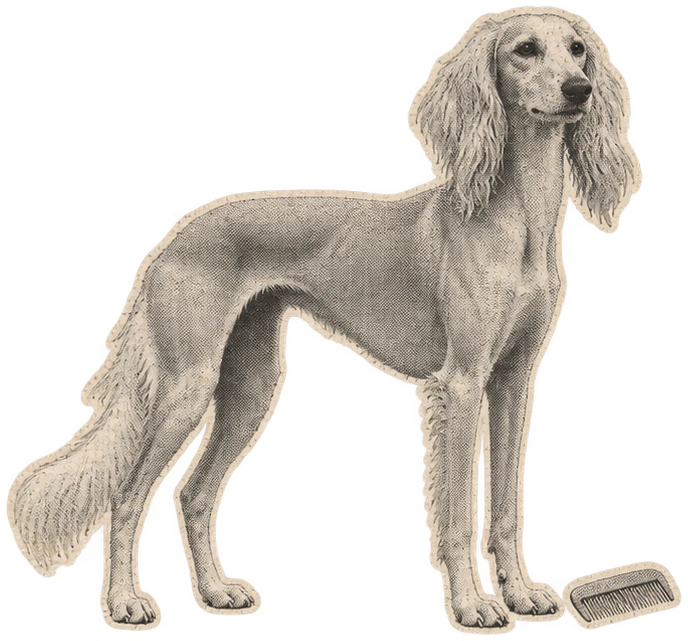
The smooth variety doesn’t have the feathering. If yours does, comb the ears, backs of the legs and under the tail in small sections. After long grass, look at the toes and under the ear hair where seeds or burrs can hide. If they keep licking a particular foot or it swells, speak to the vet. 2 8 17 18
A towel helps after a damp walk, especially around long ear hair. A short close coat also means you should pay attention to how the actual dog copes with cold, wet or still conditions. A well-fitted coat may help some dogs, but if it rubs or gets in the way of their stride, it’s not the right fit. 5 17 19
Saluki notes / 04
Check the feathering
| Where | Useful check |
|---|---|
| Feathered ears and tail | Gently separate the hair and see what’s caught underneath. 2 17 |
| Toes and pads | Check for debris, cuts and persistent licking after rough ground. 8 18 |
| Harness line | Look for rubbing or trapped grit. 5 17 |
| Cold or wet weather | Watch the individual dog and fit any coat for free movement. 5 19 |
Learn the pause before the launch
Some Salukis spot movement at a distance where it hasn’t even registered with you. If yours freezes or angles their body towards it, move away before they’re hard against the lead. That early head turn back to you is the useful response to reward. If they can’t do it at that distance, give them more. 3 4 6 20
At home, a dog who wants a bit of space isn’t automatically afraid or difficult. Let them come towards new people and don’t make the visitor lean over them. If they can’t rest alone or something has changed, work out which situation is causing it rather than blaming the breed. 20 21
Saluki notes / 05
Read the pause
| What you see | First thing to try |
|---|---|
| Long stare or weight shifting forward | Give the dog room and practise a quiet turn away. 4 6 |
| Backing away from a visitor | Stop the approach and let the dog choose whether to come back. 20 |
| Pacing when left | Check on a recording and ask for support if they’re distressed. 21 |
Teach a turn before you need a recall
Pick an easy place to cue a change of direction and reward the dog for moving with you. Teach coming back separately and make sure returning doesn’t always end the good bit. A long line on a well-fitted harness can be a practice aid in suitable open ground, not a way to catch a Saluki at full speed. Avoid roads, livestock, other people and places a line can snag. 4 5 6 7
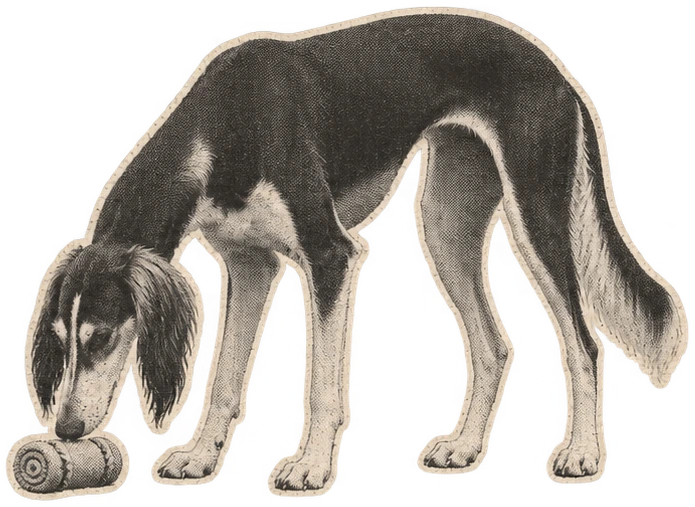
Find a safe use for the brain as well as the legs. A short toy search or a few finds from the usual ration can give the day some variety. If they have the space to run, check gates, footing and who else is there before taking the lead off. 13 22 23
Saluki notes / 06
Teach the turn
A proper outing doesn’t have to be one long sprint
PDSA and the RKC both give more than two hours a day as general breed guidance, not a target for every dog. A fit adult may enjoy plenty of steady walking and safe bursts of speed, but no amount of extra running makes an unfit, growing or sore dog ready for more. Fit the day to their condition, and give them routes where they can also stop and sniff. 1 3 22 24
For an enclosed run, check the fencing, gates and terrain first. By traffic or livestock, keep a short lead and leave a comfortable gap. If the dog repeatedly tires earlier than before, limps or seems unwell after ordinary activity, get advice instead of using a harder run as a test. 7 13 24 25
Saluki notes / 07
Leave room to run
| Situation | Better plan |
|---|---|
| Regular exercise | Steady walks, safe enclosed activity and recovery suited to the dog. 3 13 24 |
| Road or livestock | Short lead and room to pass. 7 |
| Heat, rough weather or poor footing | Shorten the outing or choose a safer route. 19 24 26 |
| New limp or reduced stamina | Stop hard exercise and seek veterinary advice. 25 27 |
The long dog needs somewhere to unwind
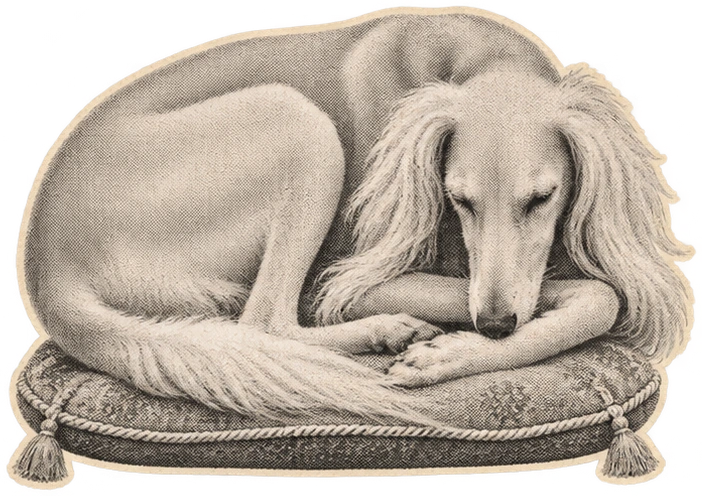
Give them a padded bed they can use with their legs out and room to get up. A runner can help if they skid turning on wood or tiles. Find a quiet spot away from doors that bang and people having to step over them, especially if they’re still learning how the house works. 9 23 28
Check the fence and gate before letting them explore alone. Look both for gaps and for nearby things a dog could use as a step; there’s no point sorting the top of a gate if it doesn’t shut properly. Keep enough room behind the front door for leads to go on without holding them in the doorway. 13 29 30
The cat needs a route the dog can’t follow
Keep small animals separate where needed and give cats high and dog-free ways out. A calm meeting with a cat on a chair doesn’t tell you what will happen when it runs past at floor level. Use barriers and professional help if you’re unsure, rather than making repeated introductions at an unsafe distance. 3 4 31
Children need active adult supervision with any dog. Leave the Saluki’s bed alone when they’ve gone to it and give them room at doors. Ask them to step aside if the dog wants to leave rather than putting the tall dog in the middle for a photo. 20 32
Saluki notes / 09
Give the cat a route
Heart figures and DNA results answer different questions
Call the emergency vet immediately for repeated unproductive retching, a suddenly swollen abdomen or other signs of bloat. The swelling isn’t always obvious. Collapse or trouble breathing also needs urgent veterinary help. You don’t need to know whether it’s the heart or the stomach before you call. 10 27 35
The RKC Saluki page names prioritising genetic diversity as Good Practice and the Saluki NCL8 DNA test as Best Practice. NCL8 concerns a particular inherited neurological condition. The separate club voluntary breeding code discusses cardiac assessment, including ultrasound. Studies in healthy Salukis published Saluki-specific heart ultrasound reference ranges. These are for clinicians interpreting measurements, not an estimate of how many Salukis have heart disease. 1 36 37 38 39
The 2024 Dogs Trust UK table estimated median lifespan at 13.3 years, using 428 Saluki records including 169 deaths. Its 95% confidence interval was 12.3–14.0 years. That gives context, not a personal forecast, and it doesn’t mean new symptoms are just age. 40 41
Saluki notes / 10
Health conditions and screening
| What you want to know | Useful answer |
|---|---|
| Trying to vomit repeatedly without bringing anything up? | Call the emergency vet immediately, even if swelling isn’t obvious. 10 |
| Collapse or breathing trouble? | Call the emergency vet. 27 35 |
| RKC Good Practice? | Prioritising genetic diversity on the breed page. 1 36 |
| RKC Best Practice? | Saluki NCL8 DNA test. Read the result for the named dog, not a generic panel. 1 36 37 |
| What about hearts? | A separate club recommendation and Saluki-specific reference measurements, not a formal RKC Saluki test tier. 38 39 |
| A result marked clear? | A test result is for what was tested. It isn’t a whole-dog health certificate. 36 37 |
| Lifespan? | 13.3 years was the UK dataset median; individual outcomes vary. 40 41 |
The secure run is part of the budget
If you’ll use a secure field, price the one you can actually get to and check what their fencing and gate setup is like. Make room for replacement straps and bedding that doesn’t have the dog half off it. If someone else walks them, find out where they use a lead and what they do as soon as the dog notices livestock or wildlife. 5 7 9 13 42
Ask the vet what routine care costs and check the insurance wording around out-of-hours visits, diagnostics and existing problems. Don’t assume “covered” means the same thing across two policies. Have emergency contact details where anyone looking after the dog can find them. 10 43
Saluki notes / 11
Price the secure run
| Cost | What to check |
|---|---|
| Secure running | A genuinely enclosed place you can reach regularly. 13 |
| Harness, coat and bed | The dimensions and fit on the dog, including movement. 5 9 19 |
| Walking help | Whether they keep walks separate or on lead where appropriate. 7 42 |
| Vet and cover | Local fees, exclusions and whether there are treatment limits. 43 |
Look at where and how they worked
The Royal Kennel Club’s history describes a hunting hound of the Middle East, bred to work across different terrain. It notes variation in build and suggests more than one possible origin for the name. You don’t need to pick one neat origin story to explain why a Saluki is its own dog. The long head and legs, deep chest and distinct coat forms are enough to start with. 1 2
Saluki notes / 12
Sighthound history
Walk with the dog before you plan what they’ll be like
Ask a rescue which routes go well, what the dog does when something moves and how they cope with other animals. Find out which kit fits and where they rest. If you’re buying a puppy, see the litter with the mother where they’re raised and ask for dated results linked to the parents, including the correct NCL8 result and whatever heart assessment the breeder says they’ve done. 13 37 38 44 45
For a dog you already have, look at the part of the routine that’s hardest to get right. A safer route home from the park, a better fitting harness or a proper quiet bed can improve a lot of days without asking the dog to get better at everything at once. 5 6 9 23
Saluki notes / 13
Walk with the dog
| Ask to see | Why |
|---|---|
| An ordinary walk | Notice what the dog watches and how they can turn away. 4 6 13 |
| Existing handling and pet history | Avoid making the first week a series of new tests. 20 31 44 |
| Identified parents and dated results | Separate a DNA result from a heart assessment or a verbal reassurance. 37 38 45 |
| How the dog settles | Give them a place and routine that makes rest possible. 23 44 |
Sources
- S1Royal Kennel Club Saluki history, working build and live health tierSource · checked 21 November 2026
- S2Royal Kennel Club Saluki standard: height, coat and buildSource · checked 21 November 2026
- S3PDSA veterinary Saluki owner guidanceSource · checked 21 November 2026
- S4Dogs Trust safe management around small animals and chasingSource · checked 21 November 2026
- S5Dogs Trust harness fitting and checking free movementSource · checked 21 November 2026
- S6Dogs Trust recall and long-line trainingSource · checked 21 November 2026
- S7Natural England Countryside Code, controlling dogs around livestockSource · checked 21 November 2026
- S8PDSA veterinary guidance on grass seeds and pawsSource · checked 21 November 2026
- S9Canine Arthritis Management veterinary access and safe flooring guidanceSource · checked 21 November 2026
- S10PDSA veterinary emergency advice for GDV/bloatSource · checked 21 November 2026
- S11Royal Kennel Club separate Greyhound standardSource · checked 21 November 2026
- S12Royal Kennel Club separate Whippet standardSource · checked 21 November 2026
- S13Saluki Welfare Fund owner advice on safe exercise and boundariesSource · checked 21 November 2026
- S14Royal Kennel Club full directory of recognised standardsSource · checked 21 November 2026
- S15PDSA body condition at homeSource · checked 21 November 2026
- S16Dogs Trust gentle car familiarisation and safe travelSource · checked 21 November 2026
- S17PDSA veterinary grooming and coat maintenanceSource · checked 21 November 2026
- S18PDSA practical home health checksSource · checked 21 November 2026
- S19Dogs Trust dealing with cold and winter weatherSource · checked 21 November 2026
- S20Dogs Trust canine body languageSource · checked 21 November 2026
- S21Dogs Trust identifying and getting help for separation distressSource · checked 21 November 2026
- S22Dogs Trust safe enrichment and search gamesSource · checked 21 November 2026
- S23Dogs Trust building settling skillsSource · checked 21 November 2026
- S24PDSA tailoring activity to age and conditionSource · checked 21 November 2026
- S25PDSA veterinary guidance for a new or persistent limpSource · checked 21 November 2026
- S26Dogs Trust safe outings in hot weatherSource · checked 21 November 2026
- S27PDSA first aid for pets struggling to breatheSource · checked 21 November 2026
- S28Dogs Trust settling a rescue dogSource · checked 21 November 2026
- S29Dogs Trust checking boundaries and preventing escapesSource · checked 21 November 2026
- S30Dogs Trust calm doorway trainingSource · checked 21 November 2026
- S31Dogs Trust safer dog and cat introductionsSource · checked 21 November 2026
- S32Dogs Trust children and dog supervisionSource · checked 21 November 2026
- S33Dogs Trust introductions to another dogSource · checked 21 November 2026
- S34Dogs Trust resource guarding and separate feedingSource · checked 21 November 2026
- S35Animal Trust UK veterinary guidance on collapseSource · checked 21 November 2026
- S36Royal Kennel Club live central Health Standard and Basset Hound tier rowSource · checked 21 November 2026
- S37Kolicheski et al. original Saluki NCL8 associationSource · checked 21 November 2026
- S38Saluki or Gazelle Hound Club separate voluntary breeding codeSource · checked 21 November 2026
- S39Original breed-specific heart ultrasound reference ranges in healthy SalukisSource · checked 21 November 2026
- S40Dogs Trust 2024 UK lifespan table, Saluki row, confidence interval and countsSource · checked 21 November 2026
- S41McMillan et al. original UK dog longevity studySource · checked 21 November 2026
- S42Dogs Trust finding a suitable walkerSource · checked 21 November 2026
- S43PDSA dog ownership costs and insuranceSource · checked 21 November 2026
- S44Saluki or Gazelle Hound Club guide to Saluki Welfare rescue and home fitSource · checked 21 November 2026
- S45RSPCA buying a puppy and seeing mother with the litterSource · checked 21 November 2026
