
Breed guide / Rhodesian Ridgeback
Living with a Rhodesian Ridgeback
The Rhodesian Ridgeback is a big, athletic hound from southern Africa, named for the strip of hair that grows the other way down its back. There’s a lot of dog on the end of the lead when something catches their eye. Get the hang of quiet routes, easy recall practice and a place to switch off at home before you worry about doing more miles. 1234
Jump to a section
The short version
A Ridgeback can be easy to live with on the sofa and quite a different proposition when a deer crosses the path. Pick a route where you can see ahead and move over before the lead goes tight. If that’s not possible, turn back rather than discovering how much grip your boots have. 3 4 5
Run a hand over the coat while they’re comfortable, so you know what’s normally there. The ridge itself is hair. An opening, sore patch or recurring swelling along the back is something else and deserves a vet’s attention. 2 6 7
Rhodesian Ridgeback notes / 01
The first things to get right
| Start here | What you can do today |
|---|---|
| Lead | Rehearse moving off together before you get to a busy crossing. 4 5 |
| Body | Notice how they get up, turn and walk when they’re relaxed. 3 8 |
| Back | Ask the vet about an opening or swelling rather than picking at it. 6 7 |
| Rest | Give them somewhere they can lie without having to move for every visitor. 9 |
The ridge is not a health test
The written breed standard describes a strip of reversed hair that tapers along the back. It is a feature of the coat, not a reading of the dog’s health or a sign of how brave they are. Dermoid sinus is a separate developmental problem. The breed club has a specific puppy check for it. Don’t try to tell the two apart by pressing hard on a lump. 1 2 6 7
Fit the actual dog
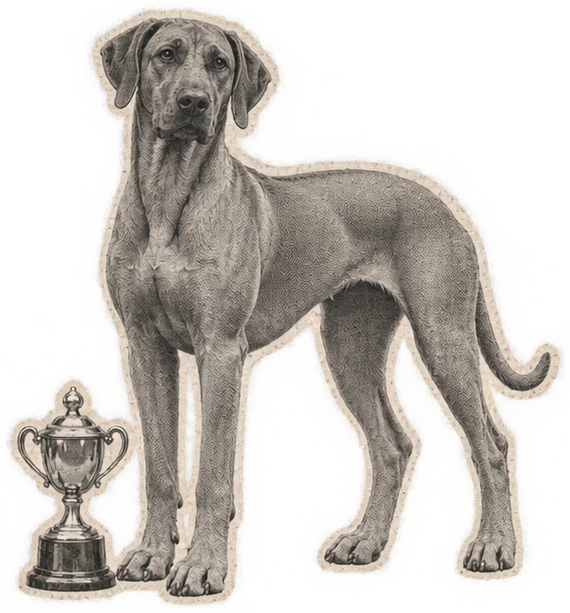
The written UK ideal gives shoulder heights of 63–69 cm for males and 61–66 cm for females. That tells you about the written ideal for height, not how much your dog should weigh. Look at body condition and ask the vet what weight makes sense for the dog in front of you. 2 10
Check a harness while your dog walks and lowers their head to sniff. When it rubs or shifts, owning the size marked “large” hasn’t solved anything. Work out how you’d get this dog into the car if they couldn’t hop in on their own. 8 11
Rhodesian Ridgeback notes / 03
Measure the dog
The useful bit of a brush
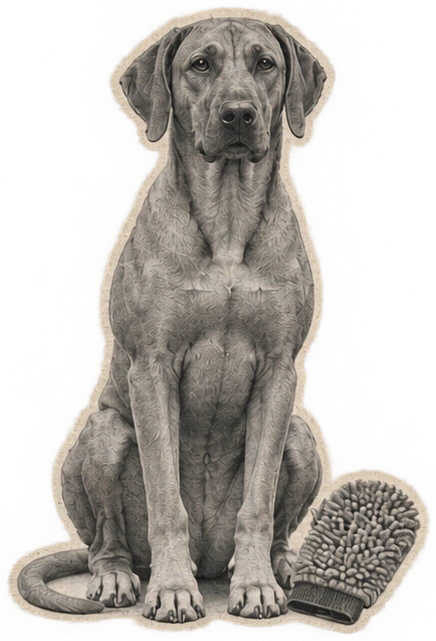
The short coat doesn’t need a marathon groom. It gives you a good chance to spot a sore patch behind an elbow or under a strap. Put the mitt down between strokes if they’re moving away. It’s easier to do another minute tomorrow than turn it into something they dread. 2 11 12 13
A bump in the area of the ridge isn’t automatically a dermoid sinus. Neither is a good-looking ridge a clean bill of health. If an area swells or leaks, call the vet and say what you’ve noticed, including whether it’s happened before. 6 7
Rhodesian Ridgeback notes / 04
A minute with the mitt
| Where | Useful check |
|---|---|
| Back and neck | A new skin opening, painful swelling or discharge needs a vet. 6 7 |
| Under straps | Look for rubbed skin after a longer walk. 11 12 |
| Ears | Ask the vet about repeated head shaking, a changed smell or discharge. 14 |
| Feet | Check after rough ground, especially if they start favouring a foot. 8 12 |
They don’t have to meet everyone
If your dog would rather watch the bloke at the gate from six feet back, leave six feet. Reward looking back at you and give them an exit. Don’t ask a visitor to lure a worried dog closer with a biscuit, then reach for its head once it gets there. 13 15 16
When your dog’s behaviour changes abruptly, think about what else has changed. Footing, pain and the previous encounter can all matter. Call the vet if you think they’re uncomfortable rather than blaming a streak of stubbornness. 8 15
Rhodesian Ridgeback notes / 05
A bit of space
| What you see | What to change |
|---|---|
| Dog stiffens at the gate | Step back inside and let the person enter without a greeting. 9 15 |
| Watches a dog without checking in | Take more space while they can still move and listen. 4 16 |
| Suddenly hates being touched | Stop asking for contact and check for a health reason. 8 13 |
Practise before the deer turns up
Train on a quiet stretch where your dog can succeed. Call once, reward the return, then often let them go back to what they were doing. When it’s safe to use a long line, put it on a well-fitting harness and handle it with room to spare. Near traffic or livestock use a normal lead and stay close. 4 5 11
You don’t need a breed-specific course. Find what your dog actually wants, whether that’s food, a toy or going back to the sniff. Don’t rely on a recall you’ve only tested in the kitchen. The kitchen is an excellent training room and a terrible imitation of a field full of rabbits. 4 16 17
Give the walk a point
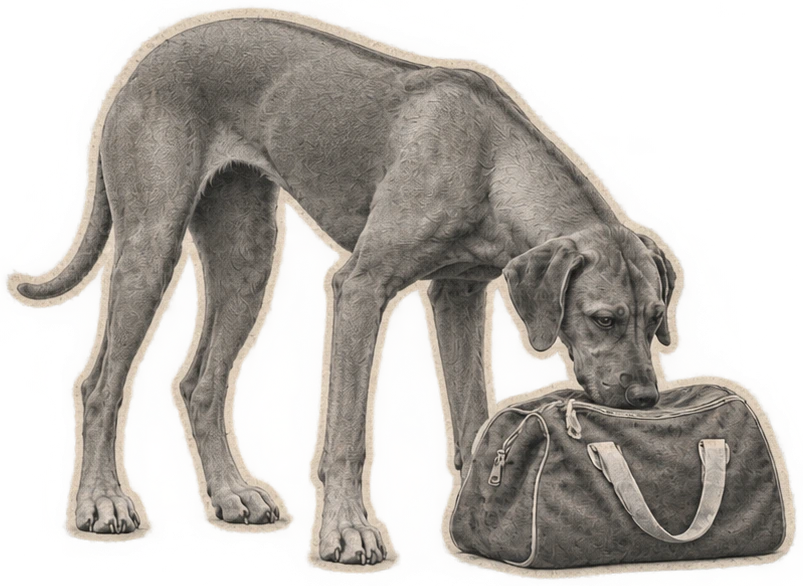
An adult Ridgeback generally needs substantial daily activity, but the right outing depends on age, condition, health and weather. A walk where they can sniff and make choices needn’t be brisk the whole way. Build up demanding routes gradually. A growing dog doesn’t need to keep up with your fitness plans. 3 17 18
In warm weather choose shade and a cooler time, or keep activity very easy. If they’re tiring on a route they normally enjoy, shorten it and pay attention to whether that’s new. Ask the vet about a repeat change rather than adding another lap to get them fitter. 8 18 19
Rhodesian Ridgeback notes / 07
Give the walk a point
| Situation | Better plan |
|---|---|
| Wildlife ahead | Put them on a lead before they commit to chasing. 4 5 |
| Growing dog | Let the pace and demands suit their stage, and ask your vet if unsure. 18 |
| Hot day | Cooler hours, shade and no pressure to finish the usual circuit. 19 |
| New stiffness | Ease off and seek advice if it persists or keeps coming back. 8 |
Make coming home uneventful
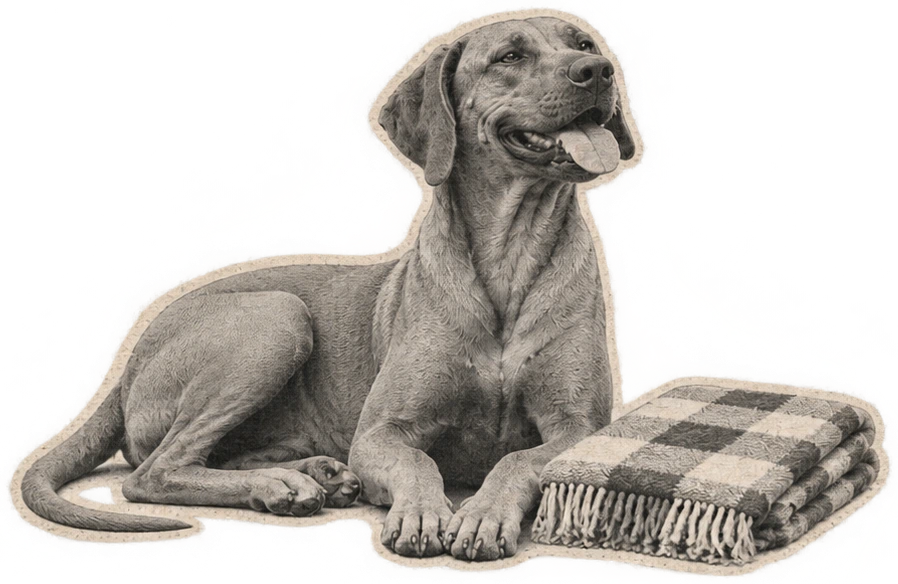
Set up a bed that fits the whole dog, out of the main route from the front door. A mat session is useful before you expect them to go there during a delivery. If bracing yourself with one foot behind the door is part of accepting a parcel, set up a gate and practise with nobody at the door first. 5 9 16
Work up to being left alone gradually. Watch what the dog does rather than counting the time you managed to get out. Use a safe food search if they enjoy it, and keep track of what you’ve taken from the dinner portion. 17 20 21
Give small members of the household space
Have a grown-up supervise children and dog together, and separate them when that isn’t possible. It takes very little for a large hound turning round to knock over a toddler. A sleeping or eating dog should be left alone. Let children take part in ways that don’t need them to put their face near the dog or hold the lead. 22 23
For cats or other dogs, ask about that individual’s history and use distance with a safe way to separate. Calm in the living room doesn’t mean safe around a cat that suddenly bolts outside. Avoid testing what they’ll do with no way to interrupt it. 3 24 25
Know what needs a phone call
Repeated retching with nothing coming up, a swollen belly or pronounced distress can signal gastric dilatation-volvulus, usually called GDV. Ring the emergency vet immediately if that’s suspected. Don’t wait for every one of those signs to turn up. 3 26
A vet should assess repeated twitches or jerks that seem out of character, and persistent limping or difficulty getting up. The original JME study documented a particular inherited juvenile epilepsy in Ridgebacks; it doesn’t diagnose an individual dog from one movement. If you suspect a seizure, speak to your vet straight away, especially if it’s the first one. 7 8 27 28
For breeding, the Royal Kennel Club puts JME DNA testing, hip scoring and elbow grading in Good Practice. Degenerative myelopathy (DM) DNA testing is in Best Practice, on top of those tests. The breed club’s dermoid sinus check is a separate complementary scheme, not an extra DNA test in either tier. Ask for the records for each parent and what was checked on the puppy. 1 6 29 30 31
In the 2024 UK longevity study, the median estimate for the 2,108 Rhodesian Ridgebacks in the data was 12.0 years. That doesn’t predict what will happen to an individual dog or how many of those years will be healthy. 32 39
Rhodesian Ridgeback notes / 10
Health conditions and screening
| Issue | Use the information this way |
|---|---|
| Suspected GDV | Call the emergency vet immediately. 26 |
| Dermoid sinus | Ask who checked the puppy. Get a sore or draining area examined. 6 7 |
| JME | Good Practice DNA test; individual symptoms still need a vet. 1 27 28 |
| Hip dysplasia | Good Practice hip score for parents, not a substitute for checking the dog’s gait. 1 8 29 |
| Elbow dysplasia | Good Practice elbow grading for parents. 1 30 |
| Degenerative myelopathy | Best Practice DNA test in addition to the Good Practice tests. 1 31 |
| Lifespan | 12.0 years in this UK cohort, not an individual forecast. 32 39 |
Cost it as a large dog
Use actual food portions, real insurance quotes and what your local practice charges instead of assuming large just means a bigger bag of food. Find out what an excess or policy limit would mean if you needed a referral and whether cover changes as the dog gets older. 21 33
A walker needs to be able to handle the dog you own, not a breed name on a booking form. Ask them to tell you where they walk, how they manage wildlife and how many dogs they take. 4 34
Rhodesian Ridgeback notes / 11
Plan for a big dog
What the history does and doesn’t tell you
The breed developed in southern Africa and took its modern name from Rhodesia, now Zimbabwe. The Royal Kennel Club describes hunting with dogs that kept game at bay. It’s useful context for a big hound built to move, not a promise about what your pet will chase, guard or tolerate. 1 2 27
Rhodesian Ridgeback notes / 12
A southern African hound
Ask how they live now
For an adult, ask to see how they travel, work on a lead and settle after an outing. Talk through the situation that’s hardest for them instead of just meeting in the garden where everyone knows the score. For a puppy, see them with their mum where they were bred. Ask for the actual test results and the documented dermoid sinus check. 1 6 36 37 38
Set up the first week so the hard bits are optional. A secure place to rest, familiar food and short outings where you can keep a handle on things will tell you more than a busy weekend of introductions. 4 9 36
Rhodesian Ridgeback notes / 13
Ask to see their routine
| Before they come home | Ask to see or arrange |
|---|---|
| Screening | Parent results and the individual puppy check, not just “vet checked”. 1 6 38 |
| Lead | A calm walk you can do together and an honest discussion of chasing. 4 36 |
| Handling | How they cope with a harness, car ride and being looked over. 11 13 35 |
| Settling | Somewhere safe to lie and a first week that isn’t full of visitors. 9 36 |
Sources
- S1Royal Kennel Club Rhodesian Ridgeback profile, breed group, history and current testingSource · checked 21 November 2026
- S2Royal Kennel Club written breed standard, movement, ridge, face and sizeSource · checked 21 November 2026
- S3PDSA breed profile, owner routine and clinical concerns including GDVSource · checked 21 November 2026
- S4Dogs Trust recall and safe long-line useSource · checked 21 November 2026
- S5Dogs Trust leaving a safe distance and preventing escapesSource · checked 21 November 2026
- S6Rhodesian Ridgeback Club of Great Britain puppy guidance and dermoid sinus checksSource · checked 21 November 2026
- S7Rhodesian Ridgeback Club of Great Britain breed health overviewSource · checked 21 November 2026
- S8PDSA limp and pain in dogsSource · checked 21 November 2026
- S9Dogs Trust mat and settle trainingSource · checked 21 November 2026
- S10PDSA checking a dog's body conditionSource · checked 21 November 2026
- S11Dogs Trust introducing and fitting a harnessSource · checked 21 November 2026
- S12PDSA grooming and skin checksSource · checked 21 November 2026
- S13Dogs Trust low-pressure handlingSource · checked 21 November 2026
- S14PDSA recognising ear infection signsSource · checked 21 November 2026
- S15Dogs Trust reading body languageSource · checked 21 November 2026
- S16Dogs Trust reward-based focus trainingSource · checked 21 November 2026
- S17Dogs Trust enrichment and search gamesSource · checked 21 November 2026
- S18PDSA exercise by age, comfort and conditionSource · checked 21 November 2026
- S19Dogs Trust safety in hot weatherSource · checked 21 November 2026
- S20Dogs Trust practising time alone graduallySource · checked 21 November 2026
- S21PDSA practical dog feeding and treatsSource · checked 21 November 2026
- S22Dogs Trust child and dog supervisionSource · checked 21 November 2026
- S23Dogs Trust food and resource guardingSource · checked 21 November 2026
- S24Dogs Trust cat and dog introductionsSource · checked 21 November 2026
- S25Dogs Trust dog-to-dog introductionsSource · checked 21 November 2026
- S26PDSA veterinary guidance on urgent GDV symptomsSource · checked 21 November 2026
- S27Wielaender et al., original DIRAS1 study in juvenile Rhodesian RidgebacksSource · checked 21 November 2026
- S28PDSA seizures in dogs and when to contact the vetSource · checked 21 November 2026
- S29British Veterinary Association hip dysplasia schemeSource · checked 21 November 2026
- S30British Veterinary Association elbow dysplasia schemeSource · checked 21 November 2026
- S31Royal Kennel Club central Health Standard, Rhodesian Ridgeback row and complementary breed club schemeSource · checked 21 November 2026
- S32McMillan et al. original UK dog longevity cohort, methods and supplementary breed estimatesSource · checked 21 November 2026
- S33PDSA dog ownership costs and insurance considerationsSource · checked 21 November 2026
- S34Dogs Trust guidance on finding a walkerSource · checked 21 November 2026
- S35Dogs Trust safer travel with a dogSource · checked 21 November 2026
- S36Dogs Trust settling a rehomed dogSource · checked 21 November 2026
- S37RSPCA advice on selecting and visiting a breederSource · checked 21 November 2026
- S38Royal Kennel Club individual health results finderSource · checked 21 November 2026
- S39Dogs Trust original UK longevity results, Rhodesian Ridgeback rowSource · checked 21 November 2026
