
Breed guide / Puggle
Living with a Puggle
A Puggle is a Pug crossed with a Beagle. The dog you get can be quite different in face and build from the one you saw in a photo. If yours likes to follow a smell, give them enough time to find out where it goes without having to let go of the lead. Learn how they breathe on a normal outing and use that to decide what a comfortable walk looks like for them. 12345
Jump to a section
The short version
Notice how your dog sounds at rest and what happens on a routine walk. If they regularly make a lot of breathing noise or start dropping behind, ask the vet rather than deciding it’s normal because one parent was a Pug. A dog struggling to breathe needs emergency care. 3 5 6
Scent games can give an interested dog something to do without turning the walk into a race. Try one easy search using some of their food or a familiar toy. If their contributions to the household involve monitoring every open cupboard, keep their food allowance somewhere everyone can see it. 4 7 8
Puggle notes / 01
Breathing, food and a sniff
| Start here | What you can do today |
|---|---|
| Breathing | Learn their normal and get recurring noise or tiring checked. 5 6 |
| Walks | Give them sniffing time. Practise recall before relying on it. 4 9 |
| Weight | See what they’re fed across the day, not just what’s in the main bowl. 8 10 |
| Face | Check for irritation where skin folds or hair stay damp, if your dog has those features. 5 11 |
Which name are we using?
Puggle is used for a Beagle and Pug cross. UK rescues use it that way, as does recent veterinary research. Pug and Beagle have separate pedigree listings. The cross name doesn’t say how long the muzzle will be or which adult build you’ll get. It also doesn’t tell you the generation or which tests the parents actually had. 1 2 3 12 13
Fit the actual chest and waist
The UK Pug standard gives an ideal weight of 6.3–8.1 kg. The Beagle standard describes a shoulder height of 33–40 cm. Those are different measurements from two separate written standards, not figures for the cross. Your dog’s vet can help you judge their body condition by feeling the ribs and looking at the waist. 10 12 13 14
Measure their actual chest before buying a harness. Check it while they move and lower their head. If several people feed them, put aside their training allowance at the start of the day. A dog looking hungry after someone else gave them breakfast is not an accurate record of what they’ve eaten. 8 10 15
Look where it stays damp
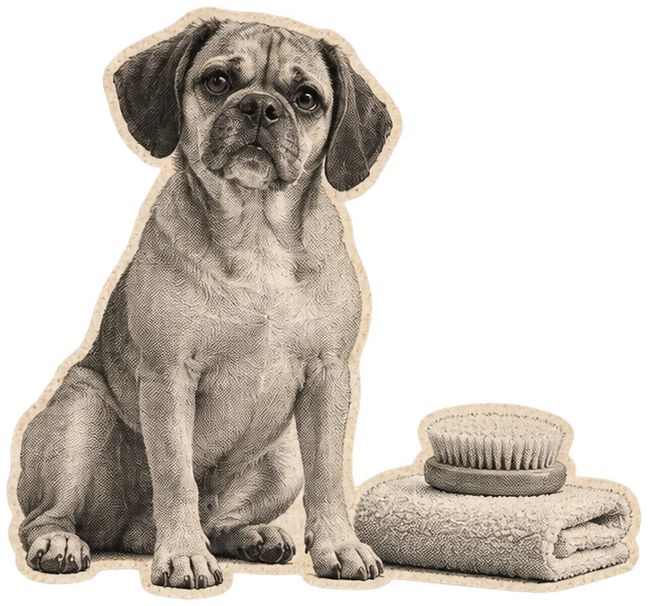
A short coat can be quick to brush. That doesn’t mean there’s nothing to check. If your dog has facial folds, look for dampness or irritation underneath them and ask your vet how to care for the skin if it keeps getting sore. A red patch isn’t something to scrub away while the dog tries to dodge you. 5 11 16
Look at the ears regularly too. If they smell different, have discharge or the dog keeps shaking their head, get advice instead of trying to clean deeper. Keep the grooming gentle and work on one comfortable bit at a time. 16 17 18
Puggle notes / 04
Look where it stays damp
| Place | Useful check |
|---|---|
| Facial folds, if present | Notice redness or soreness rather than assuming damp skin is normal. 5 11 |
| Short coat | Use a gentle brush and look for rubbing under the harness. 15 16 |
| Ears | New smell or discharge is a reason to ask the vet. 17 |
| Eyes | Get a painful or held-shut eye checked rather than wiping and waiting. 19 |
Let them follow a smell without running the day
If a smell gets all their attention, work with the distance at which they can choose to look back at you. Make the first practice easier. The leftover chips at the entrance to the park are not a fair audition for a new cue. 4 9 20
Don’t assume yours will enjoy all the same things as either parent. A dog can like meeting somebody one day and prefer more room the next. Give them a bit more distance if they’re worried. Notice what changes. Get advice about a sudden shift in behaviour, especially if they seem uncomfortable. 3 18 21
Puggle notes / 05
Observe the actual dog
Three minutes with a nose is still a job
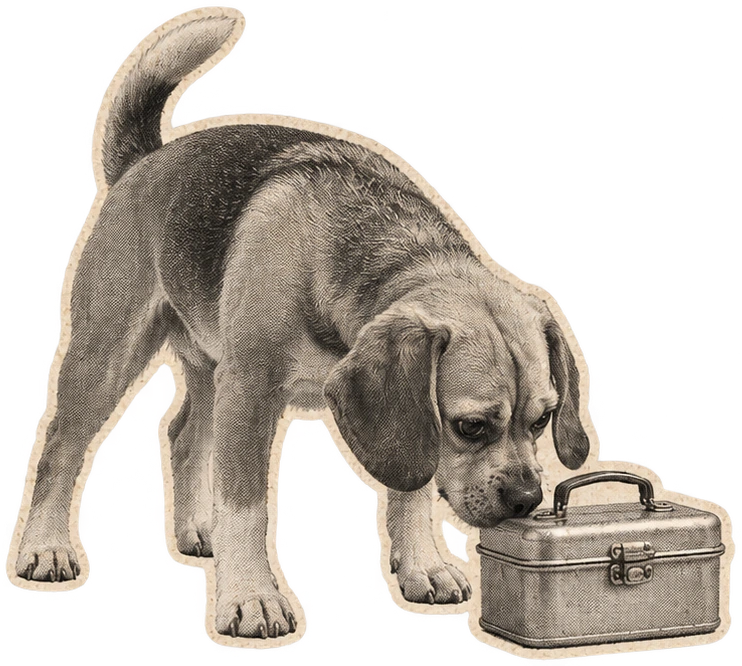
Hide something familiar at floor level. Let the dog see where you put it the first time, then build up the search. A few pieces of their own food can work, provided you don’t forget they were part of the day’s portion. Make it a sniffing game, not a contest to see how fast they can tear through the room. 7 8 23
Rehearse a return on a quiet route before you need it somewhere busy. Let them go back to sniffing when it’s safe. If returning always means the walk’s over, you can see why they might be in no rush. 9 20
Get the pace right before you add distance
Build walks around the way your dog moves and breathes. Two dogs with the same cross name may not be comfortable on the same route. Give them breaks and let them sniff if they enjoy it, but phone the vet if they’re regularly tiring early or making a breathing noise. Don’t try to make them fitter by pushing through it. 3 5 25
Pick cooler hours in warm weather and be willing to turn back. Suspected heatstroke is an emergency. Start cooling straight away while you arrange urgent vet help. Struggling to breathe is also an emergency. A more obvious muzzle isn’t a guarantee they’ll be all right to stay out. 3 5 6 26 27
Puggle notes / 07
Walk at their pace
| Out on a walk | What helps |
|---|---|
| A scent-heavy route | Give time to sniff; use a lead until recall is reliable there. 4 9 |
| Warm weather | Make a cooler, shorter trip and have fresh water available. 26 |
| A new harness | Check for rubbing and free chest movement before going far. 15 |
| Breathing trouble | Stop and call for urgent veterinary help if they’re struggling. 6 |
Tell the household what’s in the bowl
Measure out the day’s food rather than relying on each person to remember what they handed over. Find a spot for bags and bins the dog can’t nose open. It isn’t a character test to see whether a dog will leave the kitchen bin alone when nobody’s there to intervene. 8 10 28
Give them somewhere away from kitchen activity to settle. If they find being left difficult, practise short absences during which they can stay relaxed and check what happens while you’re gone. A food toy can be part of the routine, but it isn’t a substitute for getting help if the dog is distressed. 7 24 29 30
Puggle notes / 08
Keep track of the food
Give family meals and play a bit of space
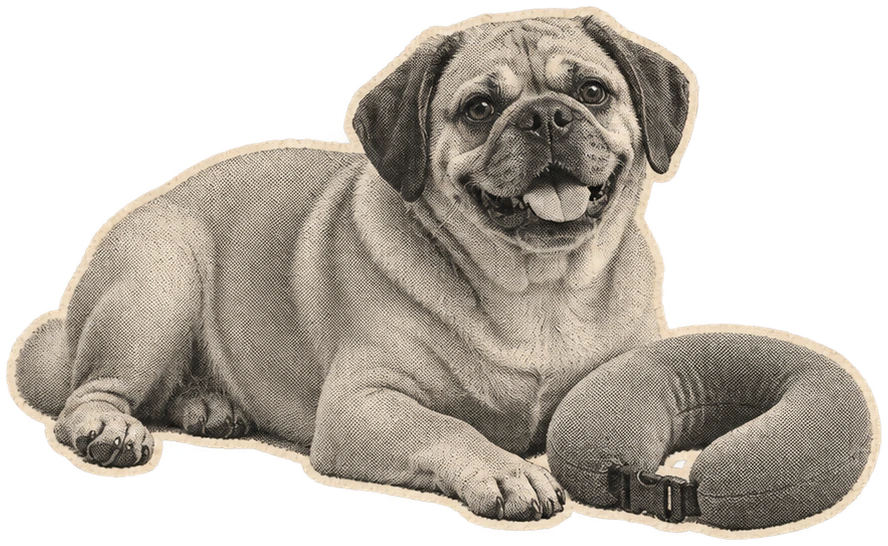
Have an adult actively supervise children’s time with the dog. If a child wants to be involved, an adult can help set up a simple search rather than asking them to take something out of the dog’s mouth. Leave the dog alone while they eat and rest. 23 31 32
Provide an exit the cat can use without passing the dog. With another dog, keep first meetings brief and food separate until you know how both handle it. The fact that a dog looks cheerful around people says very little about how they feel about sharing a bowl. 32 33 34
Health
In a 2026 UK study, researchers examined 48 owner-recruited Puggles. Of those dogs, 47 received respiratory Grade 0 and one received Grade 1. The Puggles in the study had longer relative muzzles and fewer severe nostril restrictions than the study’s Pug comparison group. That’s evidence about the dogs tested, not how often trouble occurs in all Puggles or a reason to ignore symptoms in yours. These sources don’t establish a representative UK Puggle lifespan. 3
The Royal Kennel Club and University of Cambridge grading scheme lists Pug as eligible. It doesn’t list Puggle in its current eligible breeds, even though the researchers used grading methods in this study. The RKC Pug parent row lists respiratory grading and clinical eyes as Good Practice. The Best Practice column adds the PDE DNA test and hip scoring. No parent result substitutes for your vet seeing a dog with symptoms. 3 5 35 36
The Beagle parent has a different UK list. Good Practice lists the Lafora and NCCD DNA tests. Best Practice adds three more DNA tests: IGS-2 plus the FVIID and MLS tests. Veterinary signs such as a painful eye or recurring sore skin are a different matter from reading breeding screening results. Ask for the results for each actual parent. 13 35 37 38
Puggle notes / 10
Health conditions and screening
| Health question | What to do |
|---|---|
| Noisy or difficult breathing | Ask the vet about recurring noise or poor exercise tolerance. Difficulty breathing is urgent. 5 6 |
| Heatstroke | Start cooling and get urgent veterinary advice if suspected. 27 |
| Painful eye | Ask the vet promptly about squinting, pain or an eye held closed. 19 |
| Skin folds | Get repeated soreness or redness checked if your dog has folds. 5 11 |
| Pug parent | Ask for named eye and breathing results, plus the other tests in its row. 35 36 |
| Beagle parent | Check the relevant named DNA results rather than a generic health label. 35 37 |
| Evidence limits | Research grades in a recruited group do not clear an individual dog. 3 6 36 |
Count the actual costs, not the food bowl
Work out the regular food and vet bills. Add whatever you’d spend on a walker. Ask a walker what they’d do if the dog slowed or started breathing noisily, and whether they can choose a shorter route. If you’re comparing insurance, check how it handles breathing investigations and anything already on the vet record. 5 6 39 40
Have out-of-hours details somewhere handy and decide how you would reach the vet in an emergency. A monthly quote that looks reasonable tells you little about what you’d pay after an excess and exclusions. 6 39
Puggle notes / 11
Plan for real costs
Two different starts
The Royal Kennel Club describes the Pug as a long-established companion breed with Asian origins. The Beagle is a separate scent hound with a history of following small game. Puggle is the documented name for the pairing. These sources don’t establish one original litter or tell us which activities a particular dog will enjoy. 1 3 13 37 41

How this dog lives now
Ask a rescue how the dog manages ordinary walks and whether they’ve noticed coughing, snoring or a change in stamina. Find out what they already do with the dog to keep it comfortable. If you live with one already, those same questions are worth revisiting when their normal routine gets harder. 5 25 42
For a puppy, meet their mother where the litter is being raised and ask for the named parent results. Look for animals who can breathe without effort, but don’t get a dog with symptoms to exercise to demonstrate it. A vet can assess anything you’re worried about. 5 35 43 44
Puggle notes / 13
Ask about the dog today
| Ask about | What a useful answer includes |
|---|---|
| Parents | Separate breed-specific results that match the actual dogs. 35 44 |
| Daily walks | Pace, breaks and signs somebody has actually seen. 5 25 |
| Handling | What they tolerate around the face and ears, and how people help. 16 18 |
| First week | What makes it easier to settle, eat and get outside on the lead. 24 42 |
Sources
- S1Chesterfield Animal Rescue, first-hand Pug x Beagle Puggle labelSource · checked 21 November 2026
- S2Royal Kennel Club crossbreed names and variable inheritanceSource · checked 21 November 2026
- S3Youens et al., original 2026 UK Puggle and Pug study, methods and Figure 6Source · checked 21 November 2026
- S4PDSA Beagle parent profile and scent outletsSource · checked 21 November 2026
- S5PDSA BOAS signs and clinical assessmentSource · checked 21 November 2026
- S6PDSA emergency advice if your dog is struggling to breatheSource · checked 21 November 2026
- S7Dogs Trust scent and toy enrichmentSource · checked 21 November 2026
- S8PDSA measuring food portions and keeping track of weightSource · checked 21 November 2026
- S9Dogs Trust recall and use of long line and harnessSource · checked 21 November 2026
- S10PDSA body condition and healthy dog weightSource · checked 21 November 2026
- S11PDSA flat-faced dog care, weight, skin folds and breathingSource · checked 21 November 2026
- S12Royal Kennel Club Pug written standard, including ideal weightSource · checked 21 November 2026
- S13Royal Kennel Club Beagle written standard, including shoulder heightSource · checked 21 November 2026
- S14PDSA assessing an individual dog’s body conditionSource · checked 21 November 2026
- S15Dogs Trust fitting and introducing a harnessSource · checked 21 November 2026
- S16PDSA grooming dogs with different coatsSource · checked 21 November 2026
- S17PDSA vet guidance on ear infectionsSource · checked 21 November 2026
- S18Dogs Trust handling and choice for a dogSource · checked 21 November 2026
- S19BVA clinical eye screening, its scope and purposeSource · checked 21 November 2026
- S20Dogs Trust attention and check-in trainingSource · checked 21 November 2026
- S21Dogs Trust body language and consent signalsSource · checked 21 November 2026
- S22Dogs Trust loose-lead walkingSource · checked 21 November 2026
- S23Dogs Trust an easy floor-level hide-and-seek toySource · checked 21 November 2026
- S24Dogs Trust settle and mat trainingSource · checked 21 November 2026
- S25PDSA adapting exercise for the individual dogSource · checked 21 November 2026
- S26Dogs Trust hot weather safetySource · checked 21 November 2026
- S27PDSA heatstroke in dogs and urgent careSource · checked 21 November 2026
- S28Dogs Trust management if a dog keeps stealing thingsSource · checked 21 November 2026
- S29Dogs Trust gradual time-alone trainingSource · checked 21 November 2026
- S30PDSA separation anxiety and veterinary or behaviour helpSource · checked 21 November 2026
- S31Dogs Trust active supervision for children and dogsSource · checked 21 November 2026
- S32Dogs Trust keeping dogs safe around food and other resourcesSource · checked 21 November 2026
- S33Dogs Trust safe cat and dog introductionsSource · checked 21 November 2026
- S34Dogs Trust introducing a dog to another dogSource · checked 21 November 2026
- S35Royal Kennel Club central Health Standard Pug and Beagle rowsSource · checked 21 November 2026
- S36Royal Kennel Club and University of Cambridge, current RFG scheme breed eligibilitySource · checked 21 November 2026
- S37Royal Kennel Club Beagle breed profile, history and testingSource · checked 21 November 2026
- S38PDSA itchy skin adviceSource · checked 21 November 2026
- S39PDSA typical dog ownership costs and insurance considerationsSource · checked 21 November 2026
- S40Dogs Trust how to choose a dog walkerSource · checked 21 November 2026
- S41Royal Kennel Club Pug breed profile, history and testingSource · checked 21 November 2026
- S42Dogs Trust settling a rehomed dog at homeSource · checked 21 November 2026
- S43RSPCA responsible puppy purchase and meeting the motherSource · checked 21 November 2026
- S44Royal Kennel Club Health Test Results FinderSource · checked 21 November 2026
