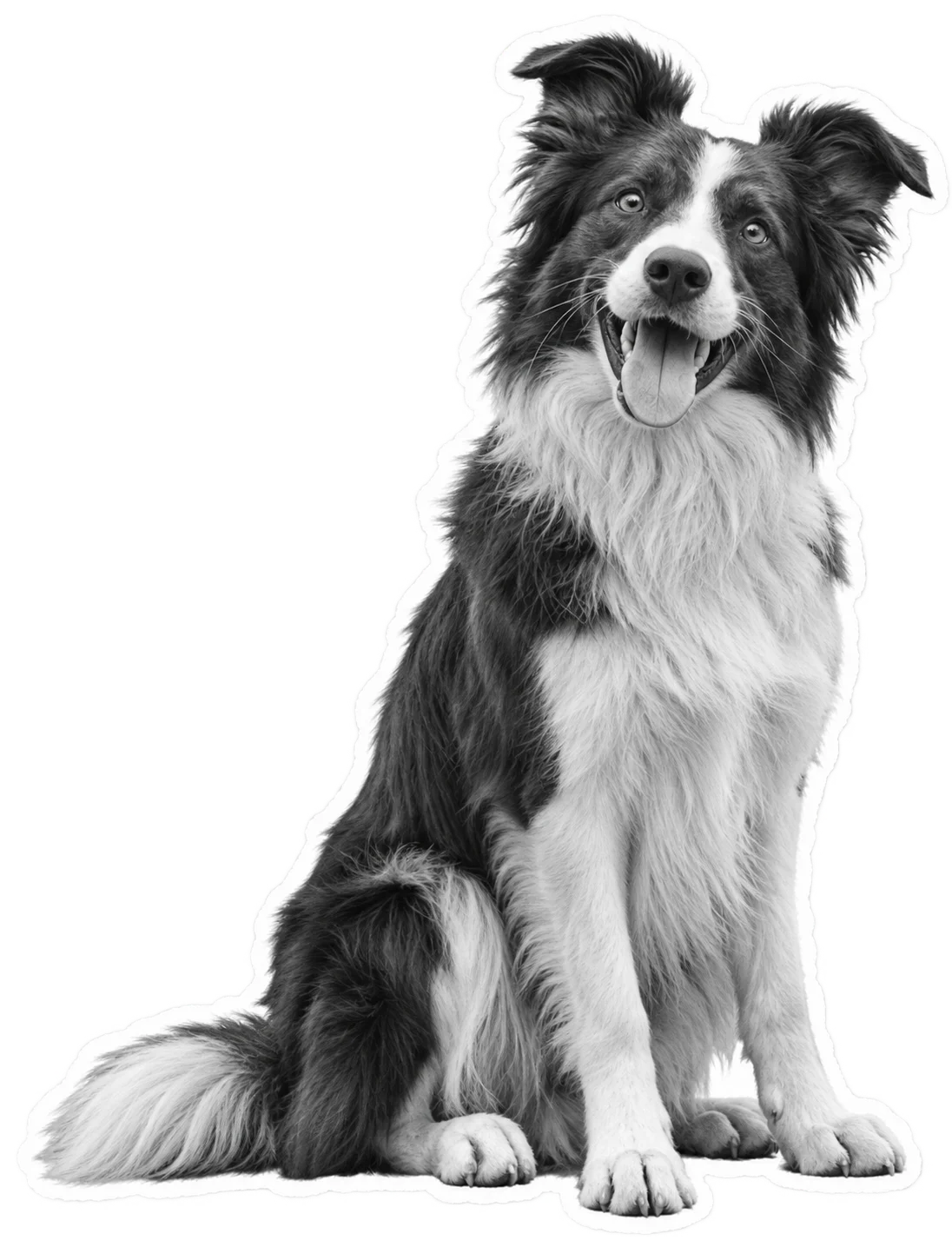
Breed guide / Poochon
Living with a Poochon
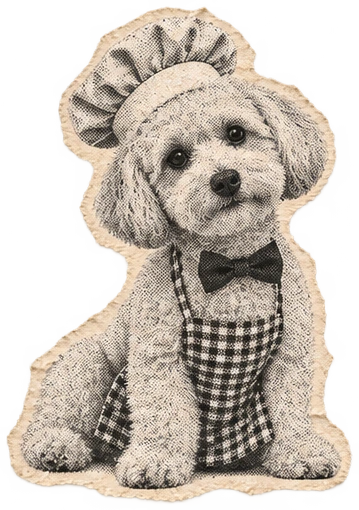
A Poochon is a cross between a Bichon Frise and a Poodle. The two parents can both bring curls to the deal, so even when the dog’s small there can be a fair bit of coat to manage. A Poochon is still a dog that needs to walk, sniff and learn how to relax on their own, not a convenient way of fitting a dog into the space where a cushion went. Find out how your dog likes to be handled and ask a groomer to show you how to reach the roots without pulling. 1234913
Jump to a section
The short version
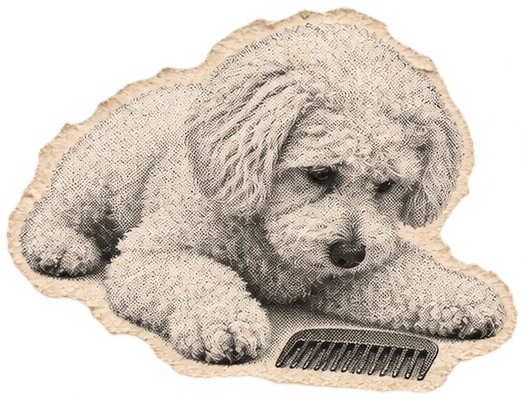
With a Poochon, there’s a small change worth making before you buy anything else: leave the comb and a towel where you take the harness off. Run your fingers where the straps sit while the coat is dry. Catch a tangle while you can still get a comb through it. Pulling an established knot is a quick way to make them suspicious of all the brushing you’ll have to do next. 9
Then give them a chance to sniff outside and a small job to finish at home. A folded towel with a bit of their usual food tucked into it can make a decent supervised game if they won’t chew the material. You can probably spare a towel more easily than you can spare the loose corner of the carpet. 1213
Poochon notes / 01
The day-to-day work
| Start here | What matters |
|---|---|
| The cross | Bichon Frise and Poodle ancestry. Not a separate UK pedigree standard. 12 |
| The coat | Plan for regular checks down to the roots, plus professional grooming if the coat needs it. 349 |
| Regular activity | Daily outings and things to sniff or work out, tailored to the individual dog. 1213 |
| The paperwork | Confirm which Poodle variety and get the relevant results for both sides. 67 |
What the name includes
Poochon describes Bichon Frise and Poodle ancestry. The Royal Kennel Club lists the two parent breeds, including Poodle varieties separately, but not a Poochon pedigree standard. A result card with “Poochon” across the top doesn’t tell you what was tested or which dog it belonged to. 126
A first cross means two parents from the original breeds. A backcross includes an offspring from that cross bred back to one of those breeds. Ask to see the parentage rather than assuming every Poochon has the same mix or taking a claim about their coat or size from those labels. If your adult is from rescue, put more weight on how they’ve actually behaved round a brush, a busy hallway or a visiting dog. 61618
Poochon notes / 02
What the name tells you
| What’s on the label? | What to check |
|---|---|
| Poochon | Intended Bichon Frise and Poodle ancestry, not proof of individual parentage. 12 |
| Toy or Miniature | Ascertain the actual Poodle variety before comparing breed information. 457 |
| F1 / backcross | Shorthand for the mating pattern, not a coat, behaviour or health certificate. 6 |
Find out what size dog you actually have
The Bichon Frise UK show standard gives an ideal shoulder height of 23 to 28 cm. Toy Poodles are under 28 cm and Miniatures are at least 28 cm and under 38 cm in their UK standards. Those are three parent reference points. None is a range for the cross, and a pair of measurements in a puppy listing won’t establish the finished size. 345
Use a tape behind the front legs for harness fit and follow the maker’s measuring points. Recheck straps after a major clip, and make sure the chest piece still sits properly while the dog walks. For weight, the practice can show you where to feel the ribs and waist, which is useful when the thing you can see from above is mostly hair. 1011
Poochon notes / 03
Measure the dog here
| What to measure | How to use it |
|---|---|
| Parent standard heights | Compare the recognised parent varieties; don’t use them as a prediction. 345 |
| Neck and chest | Fit comfortable kit to your dog and watch how they move in it. 11 |
| Ribs, waist and weight trend | Monitor the same dog, rather than chasing a target copied from a pedigree page. 10 |
Curls don’t look after themselves
Bichon Frise and Poodle standards both describe curled coats, but they don’t describe identical hair. Look where surfaces rub: skin behind the ears, under the forelegs and along the collar or harness. If the top is smooth and the comb stops halfway down, you’ve found where the work is. 3459
Ask the groomer to demonstrate one small section while your dog is comfortable. Choose a practical length and agree how often that coat actually needs a trim. If a mat is tight to the skin, leave scissors out of it and ask a groomer to help. If the skin underneath is sore, ask the vet. The dog will be happier with a shorter trim you can keep clear than a long one that tangles every time they lie down. 9
Poochon notes / 04
Where curls need a check
| Where to look | What helps |
|---|---|
| Harness, armpits and collar | Make a habit of checking after taking the kit off. 9 |
| Behind ears and in longer curls | Part the coat and check it gently at root level. 9 |
| Tight mats or painful skin | Ask a groomer or vet for help as appropriate; don’t cut close to the skin. 9 |
| Low shedding claim | Less hair on the sofa doesn’t prove less allergen exposure. 8 |
Being good company goes both ways
A Poochon that spends the day near you might be perfectly relaxed there, or might be keeping an eye out in case you disappear. See what happens when you move around while they’re settled. Start somewhere they can stay relaxed, reward that, and keep the next bit small. You don’t need to leave the house to learn the landing is already far enough away. 1415
People who want to greet a curly little dog sometimes come in with both hands before the dog’s had a chance to say hello. Let yours approach if they want, and do nothing if they leave. If barking, freezing or backing away keeps happening in the same spot, give them more distance. Marked or sudden behaviour changes are worth a vet check. 161722
Poochon notes / 05
Notice when they need space
| What you notice | First change |
|---|---|
| Gets up at every small movement | Start calm practice without asking for more distance than they can cope with. 1415 |
| Pulls away from a greeting | Give them space and stop people following or reaching after them. 1617 |
| New or recurring distress | Ask your practice about health and qualified behaviour support. 1522 |
Practise the bits that save an argument
Teach the Poochon to stand briefly on a non-slip towel while you touch an area they already accept. Reward, let them move away and finish before the fuss starts. When that’s ordinary, practise with the handle of the comb near the coat. You’re teaching the start of grooming, not trying to finish the whole dog before they realise the handle has teeth at the other end. 917
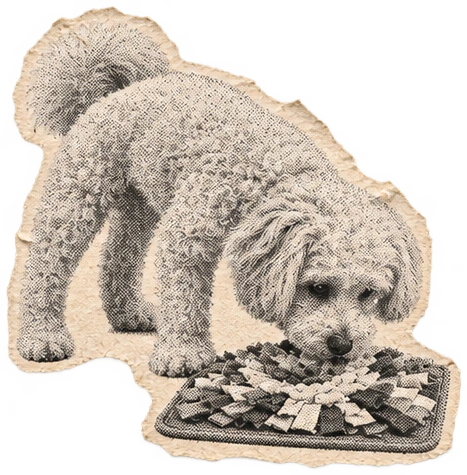
Use a search game to give them a different sort of job. Put one piece of food on a snuffle mat in view. Once they know what to do, make the next find one fold away. Count training food as part of the day if you can. Keep the puzzle simple enough they don’t spend most of the time asking you to operate it. 1013
Poochon notes / 06
Small, useful things to learn
Give the walk some room to breathe
Some Poochons are happy spending a fair while out exploring. Others prefer shorter routes with more breaks. Neither parent’s exercise profile gives you the right number for the cross. Think about age, health and stamina, then see how the dog does during the outing and afterwards. A walk with plenty of sniffing can be useful even when the map barely changes. 1213
Check paws after a muddy stretch and dry the dog before leaving the damp coat to sort itself out. If a familiar route starts tiring them or they’re repeatedly hopping or limping, speak to the vet. A puppy and an older Poochon don’t need to chase the same walking target. 91223
Poochon notes / 07
Build a walk around them
| Outing | Practical read |
|---|---|
| Usual walk | Make space for sniffing and choose a pace your dog can sustain. 1213 |
| Puppy, older dog or recovery | Tailor outings and ask the practice if you’re not sure how much to do. 12 |
| Wet route | Dry and check feet and the areas where wet coat rubs. 9 |
| New repeated skipping, stiffness or limp | Ask the vet and stop pushing the exercise. 23 |
Give them somewhere ordinary to settle
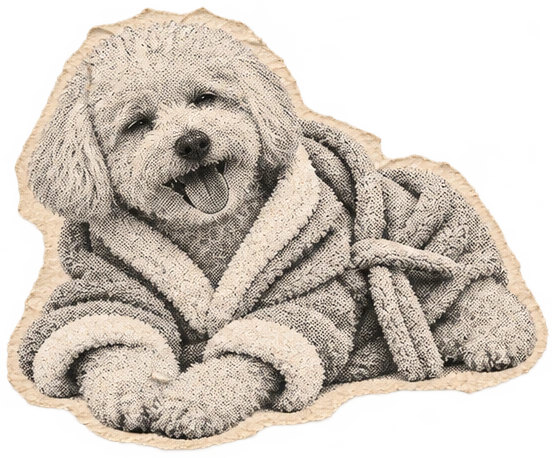
Poochon coats make some dogs look like they’d be happy sleeping anywhere upholstered. That doesn’t mean the centre of a busy sofa is good rest. Try a washable bed in a place the dog already chooses, out of the path of feet, and let them use it without being picked up or called back. 1416
If you’re practising time alone, watch for what they do instead of guessing from how pleased they are when you return. Start with steps they can handle and check whether they really settle. If they become distressed as soon as you leave, the next step is help, not a longer trial. 15
Poochon notes / 08
A place to settle
Children, cats and other dogs
A Poochon may be light enough for a child to lift, but interactions are safer with the dog on the floor and an adult actively supervising. Separate them when supervision isn’t possible. Protect the dog’s sleep and feeding area, and stop if the dog moves away or either the dog or child looks uncomfortable. 16
Start an introduction to a cat behind a secure barrier, with a way for the cat to retreat. Let both stay at their own distance. When introducing dogs, use what you know about the individuals rather than assuming a small dog will be comfortable with another small dog. Ask the rescue or a qualified behaviourist for help if you’re not sure. 161820
Poochon notes / 09
Set up safe introductions
| Who’s involved? | First consideration |
|---|---|
| Children | Adult supervision, a rest area without interruptions and no picking the dog up. 16 |
| Cat | Secure barrier and retreat route; stop if there is chasing or fixation. 20 |
| Another dog | Plan the introduction around observed behaviour and give both ways to move away. 18 |
Health
Ask for the results for both actual parents. In the current Royal Kennel Club Health Standard, clinical eye screening is Good Practice for Bichon Frise. The British Veterinary Association lists hereditary cataract for the Bichon Frise in its known inherited eye conditions. For Toy Poodles, Good Practice includes prcd-PRA DNA; Best Practice adds clinical eyes and hips. For Miniatures, Best Practice lists prcd-PRA DNA, osteochondrodysplasia (OC) DNA, clinical eyes and hips. If the parent is a different Poodle variety or a cross, use the relevant guidance with a vet rather than simply borrowing one of these checklists. 6721
In a 2021 analysis of 22,333 UK dogs’ 2016 primary-care records, Bichon Frises had 1.67 times the adjusted odds of recorded periodontal disease compared with crossbred dogs (95% confidence interval 1.21 to 2.30), and Toy Poodles had 3.97 times the adjusted odds (2.21 to 7.13). Those are two separate parent-breed associations, not a Poochon estimate. Both support a conversation about teeth and gums, not a prediction that your dog will have a problem. 2425
The 2024 UK longevity table gives a median estimate of 12.5 years for Bichon Frise (5,902 dogs) and 14.0 for its pooled Poodle category (6,427). It does not identify a separate Poochon lifespan. Do not average the parent estimates or use them to predict one dog’s life. 26
Contact your vet for recurrent skipping or limping, persistent rubbing or discharge, or signs of mouth pain. An injured, painful or suddenly cloudy eye, or suspected sudden sight loss, needs urgent veterinary assessment. Ask your vet about your dog’s teeth and routine preventive care rather than waiting for trouble. 22232527
This is general information, not veterinary advice. If you’re worried about your dog, contact your vet.
Poochon notes / 10
Parent conditions and screening
| Conditions and screening | What to check |
|---|---|
| Bichon Frise parent | BVA/RKC/ISDS clinical Eye Scheme in Good Practice; hereditary cataract is on the BVA’s Bichon list. 721 |
| Toy Poodle parent | Good Practice prcd-PRA DNA; Best Practice adds clinical eyes and hips. 7 |
| Miniature Poodle parent | Best Practice: prcd-PRA and OC DNA, clinical eyes and hips. 7 |
| Dental evidence | Adjusted odds in Bichon Frise and Toy Poodle records, not in the cross. 24 |
| Lifespan | 2024 estimates for Bichon and pooled Poodles, not a separate Poochon figure. 26 |
| What a result can’t do | A pre-breeding result is not a diagnosis or a substitute for examining the dog. 62127 |
| When to call urgently | Painful or injured eye or suspected sudden loss of sight. 27 |
Ask the groomer before you do the sums
Get a quote for the kind of coat your Poochon actually has, and ask how often they’d expect to see the dog. Ask whether a straightforward short trim costs less time than maintaining the fuller style. A “small dog” rate is useful as a starting point, but it doesn’t tell the groomer what’s packed underneath the top layer. 928
PDSA’s 2024 calculation gives £69 a month as an estimated minimum for basic care of a small dog. It excludes grooming, buying the dog and treatment fees for illness or injury. Work out your real costs with the groomer, your vet and any sitter you’ll need. Get the insurance excess, exclusions and terms for ongoing conditions before comparing the premiums. 28
Poochon notes / 11
Costs of the coat and more
| Cost | What to price |
|---|---|
| Coat care | Your actual clip, appointment frequency and any extra mat removal work. 928 |
| Routine care and dental checks | The practice’s fees and what comes with an examination. 2528 |
| Insurance and paid help at home | Excess, limits, exclusions and the days you’ll need to pay for help. 1528 |
| Purchase or adoption | Ask for a real written figure; a UK average for this cross wasn’t verified. 1829 |
Two older histories, one newer label
The Royal Kennel Club puts the Bichon Frise in its Toy group and traces its development to France, describing earlier roots connected to Tenerife. The Poodle sits in Utility, with the Miniature profile tracing the breed to European water dogs and German retrieving work. These accounts describe the parent dogs. Neither offers an official founding kennel or date for the Poochon. 23031
The Poochon name turns up in UK use, including a parish record describing a Poochon with Toy Poodle and Bichon Frise parents. That’s evidence the label was used, not evidence about where the cross started or whether everyone uses it for exactly the same mating. The only thing a bit of history should do here is help you ask better questions about the dog in front of you. 16
Poochon notes / 12
What we know about the roots
Get the details for this dog
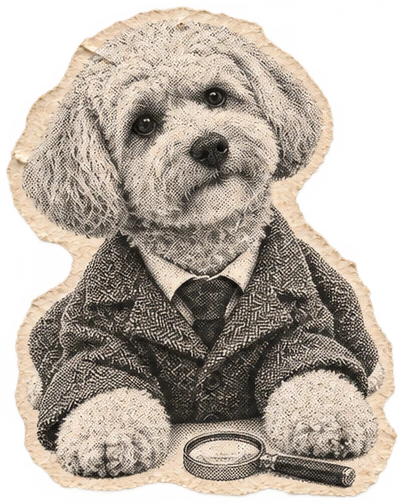
Visit a puppy where they were raised and see them with their mother. Ask about both parents and verify what the screening results say and which dogs they name. Don’t treat “hypoallergenic” as a medical promise. Research on the common dog allergen Can f 1 did not establish that supposedly hypoallergenic dogs reliably reduced home exposure; Poodles were included, Poochons were not a separate test group. If someone has a dog allergy, they should get individual advice before deciding. 6829
For a rescue adult, ask what the team has observed about handling, grooming, being left and walks. If yours is already home and grooming is the awkward bit, find out which part they’re happiest to let you touch and start there. A good groomer can see the dog’s actual coat and give you something more useful than a universal Poochon timetable. 9151718
Poochon notes / 13
Ask for the actual evidence
| Ask | Evidence to look for |
|---|---|
| Which Poodle parent? | Identity and screening suited to that variety or ancestry. 67 |
| Where were they raised? | See the puppy and their mother in the rearing space; get clear written records. 29 |
| What can this adult manage right now? | Observations of grooming, walking and settling, including what nobody has tried yet. 151718 |
| Does the coat make it allergy-safe? | No promise from either parent’s name or the coat’s appearance. Seek individual medical advice. 8 |
Sources
- S1Anstey Parish Council meeting papers, contemporary UK use of Poochon and parentageSource · checked 21 November 2026
- S2Royal Kennel Club official UK pedigree breed standards and group listSource · checked 21 November 2026
- S3Royal Kennel Club Bichon Frise size and coat standardSource · checked 21 November 2026
- S4Royal Kennel Club Toy Poodle standardSource · checked 21 November 2026
- S5Royal Kennel Club Miniature Poodle standardSource · checked 21 November 2026
- S6Royal Kennel Club crossbreeding terminology and relevant tests for both parentsSource · checked 21 November 2026
- S7Royal Kennel Club current parent-breed Health StandardSource · checked 21 November 2026
- S8Vredegoor et al. 2012, Can f 1 in dogs and homesSource · checked 21 November 2026
- S9PDSA grooming and coat careSource · checked 21 November 2026
- S10PDSA weight and body conditionSource · checked 21 November 2026
- S11Dogs Trust lead and harness guidanceSource · checked 21 November 2026
- S12PDSA exercise by individual needSource · checked 21 November 2026
- S13Dogs Trust enrichment and scent workSource · checked 21 November 2026
- S14Dogs Trust settling practiceSource · checked 21 November 2026
- S15Dogs Trust training for time aloneSource · checked 21 November 2026
- S16Dogs Trust dogs and childrenSource · checked 21 November 2026
- S17Dogs Trust building handling skillsSource · checked 21 November 2026
- S18Dogs Trust choosing an individual dogSource · checked 21 November 2026
- S19Dogs Trust recall trainingSource · checked 21 November 2026
- S20Dogs Trust safe introductions for dogs and catsSource · checked 21 November 2026
- S21BVA 2026 known inherited ocular disease list, Bichon Frise hereditary cataractSource · checked 21 November 2026
- S22PDSA changes in health and behaviourSource · checked 21 November 2026
- S23PDSA when to call about limping and stiffnessSource · checked 21 November 2026
- S24O’Neill et al. UK primary-care periodontal disease study, Table 3Source · checked 21 November 2026
- S25PDSA dog dental diseaseSource · checked 21 November 2026
- S26Dogs Trust table for McMillan et al. 2024 UK longevity studySource · checked 21 November 2026
- S27Royal Kennel Club eye emergenciesSource · checked 21 November 2026
- S28PDSA small-dog budget and estimate exclusionsSource · checked 21 November 2026
- S29RSPCA checking a responsible puppy breederSource · checked 21 November 2026
- S30Royal Kennel Club Bichon Frise history and current profileSource · checked 21 November 2026
- S31Royal Kennel Club Miniature Poodle history and profileSource · checked 21 November 2026