Breed guide / Pomsky
Living with a Pomsky
A Pomsky usually means a Pomeranian crossed with a Siberian Husky. The toy dog and the sled dog are quite different starting points, so don’t buy the coat, the bed or the idea of a mini Husky before you’ve seen the dog in front of you. Work out how they like to walk, what sets them off at home and how much brushing that coat actually takes. 12345
Jump to a section
The short version
Check what your dog does at the front door and on the lead before you rely on a command. Use a barrier for deliveries, reward a check-in somewhere easy and get a harness that fits their actual chest. A dog doesn’t have to be big to slip out while somebody’s signing for a parcel. 6 7 8
Look through the coat rather than just brushing over the fluff. Notice how your dog moves and breathes on an ordinary walk. If they’re regularly coughing, hopping or slowing down, don’t put it down to which parent you think they take after. 9 10 11
Pomsky notes / 01
First jobs
| Start here | Try this |
|---|---|
| Doors | Add a secure place to wait while the outside door is open. 6 |
| Walks | Reward turning back towards you before adding distractions. 7 |
| Coat | Check where hair rubs under the harness and behind the ears. 8 9 |
| Health | Get a new cough or a repeat hop checked instead of guessing from ancestry. 10 11 |
The name isn’t a family tree
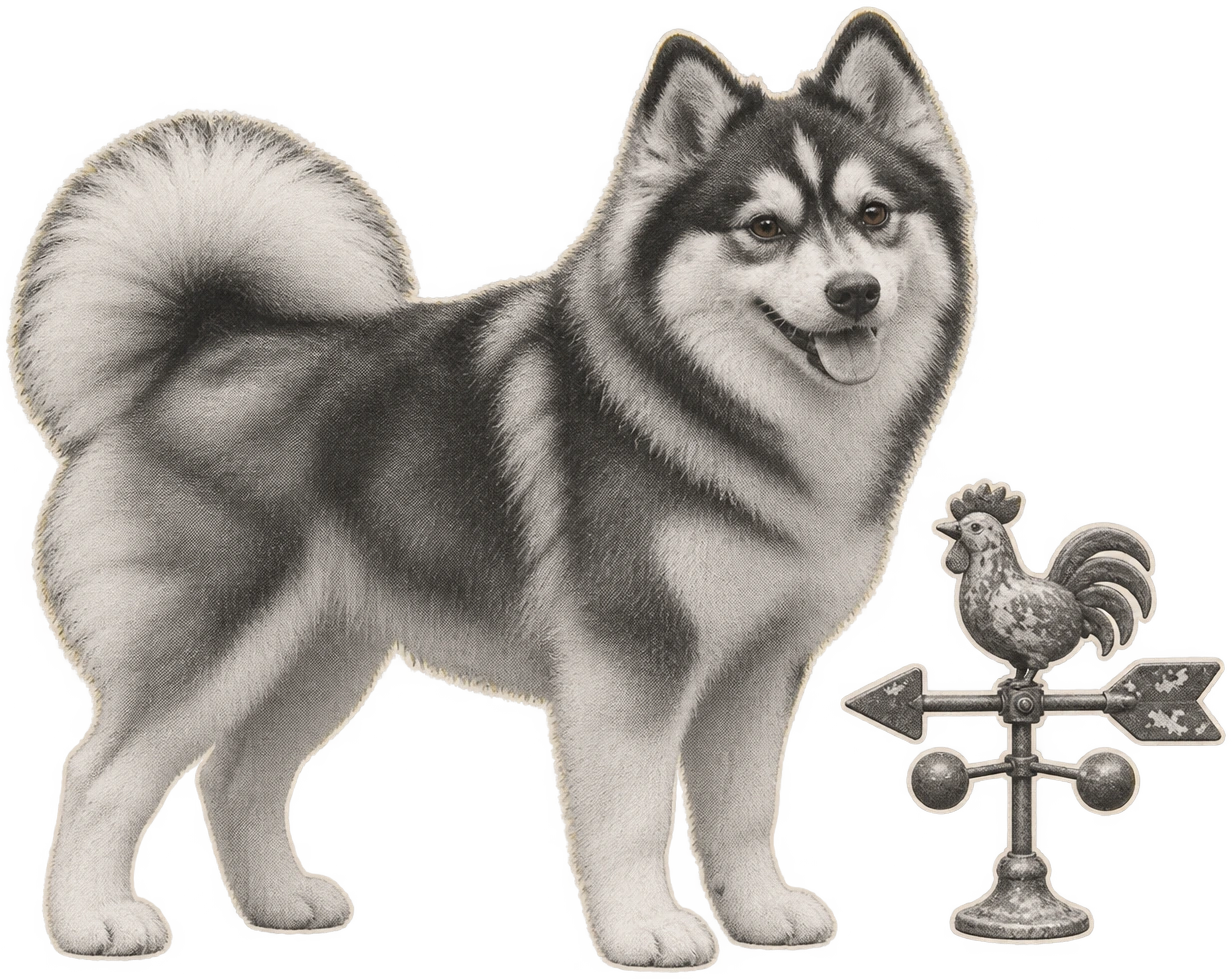
Pomsky is used for Pomeranian and Husky ancestry. In this guide, the usual Husky parent is the Siberian Husky. A rescue may be working from what it was told; a seller may use the same name for a later-generation cross. Ask for the records they actually have rather than trying to read the family history off the eyes and tail. 1 2 3 4 5
The parents are very different sizes
The UK written Pomeranian ideal ranges from 1.8 to 2.5 kg across the male and female ranges. The Siberian Husky standard sets shoulder height limits of 60 cm for males and 56 cm for females. Those figures measure different things. Averaging them wouldn’t tell you how big a Pomsky will get, even if you could somehow add kilos to centimetres. 3 4
For an adult, use the measurements you can take. For a growing dog, fit things again as they fill out. The coat can obscure ribs, waist and the strap that’s moved since the start of the walk. Fit the dog, not the outline made by its hair. 8 12
There’s more to it than a brush over the top
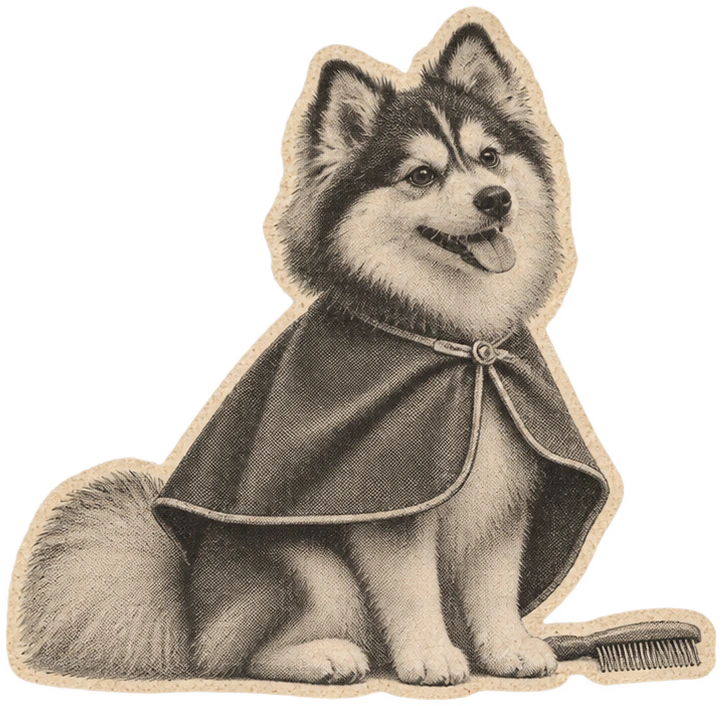
Both written parent standards describe two coat layers, but the amount and feel of fur on the cross can vary. Work in sections down to the undercoat without scraping the skin. Check behind ears, under the harness and around the back legs. That’s where the knot can be doing quite nicely while the top still looks tidy. 3 4 8 9
If the dog finds brushing uncomfortable, make the first session short and give them a choice to step away. Ask a groomer or vet to help with tight matting, bald patches or sore skin. Don’t reach for scissors next to skin you can’t see. 9 14 15
Pomsky notes / 04
A proper brush
Find out what sets the dog off
If your dog calls out at the window, figure out what happened just before. Move their bed away from that view and reward turning back to you while they’re still able to listen. Different arrangements are needed if the noise starts when they’re left alone. Start with absences they can cope with rather than seeing which of you gives in first. 16 17 18
The same goes for greetings and small animals. Watch the actual dog and give them more space when they’re tense. Don’t decide a worried dog should like being held because it’s small, or that a larger one is bound to be fine because it’s walked further. 14 19 20
Pomsky notes / 05
Notice the trigger
| What you notice | What to change |
|---|---|
| Noise at the window | Block the view or move the resting spot, then practise in an easier setting. 16 |
| Noise when you leave | Try much shorter, comfortable absences and get help if distress continues. 17 18 |
| Freezes when somebody reaches down | Let them move away and offer more space. 14 19 |
Build a recall on a dull bit of ground
Choose somewhere quiet and see if they’ll walk a few steps with you before asking them to come away from anything exciting. Reward a return well. Sometimes let them go back to sniffing, or the only thing they learn is that coming back brings an end to the good part. 7 21
Try a short search with a familiar toy or part of a measured meal if they enjoy it. Use a fixed-length lead near roads or livestock. A long line attached to a fitted harness can be useful in suitable space; a park gate isn’t where you find out whether the return is ready. 7 8 22 23
Walk for this dog, not the bigger parent
One Pomsky may be up for a longer ramble and another may do best with shorter outings. Build up according to fitness and age and notice how they move during and after exercise. You don’t need a sled-dog distance target or a toy-dog time limit. 10 24 25
Keep an easier plan for warm days. Use the cooler part of the day, choose shade and don’t push a dog that’s finding the outing hard. Ring a vet straight away if your dog is struggling to breathe or you suspect heatstroke. 26 27 28
Pomsky notes / 07
Walk for this dog
| Situation | What helps |
|---|---|
| Starting a longer route | Add distance gradually and give yourself somewhere to turn back. 24 |
| A warm day | Cooler times and less effort instead of stretching the usual walk. 26 |
| Near moving animals | Secure lead and room to change direction. 7 20 |
| Breathing distress | Emergency veterinary advice now. 27 |
Set up the quiet end of the day
A bed away from the hall and window gives them a good shot at resting. Pay attention when they do settle, not just when they start walking about looking for you. Practise a brief arrival with someone familiar and keep the dog behind a barrier until the door is shut. 6 16 29
Keep track of meals and training food. If somebody’s spent half the walk rewarding check-ins, don’t let the next person guess what went into the dog. A note by the bowl will do. 12 23
Give every animal an exit
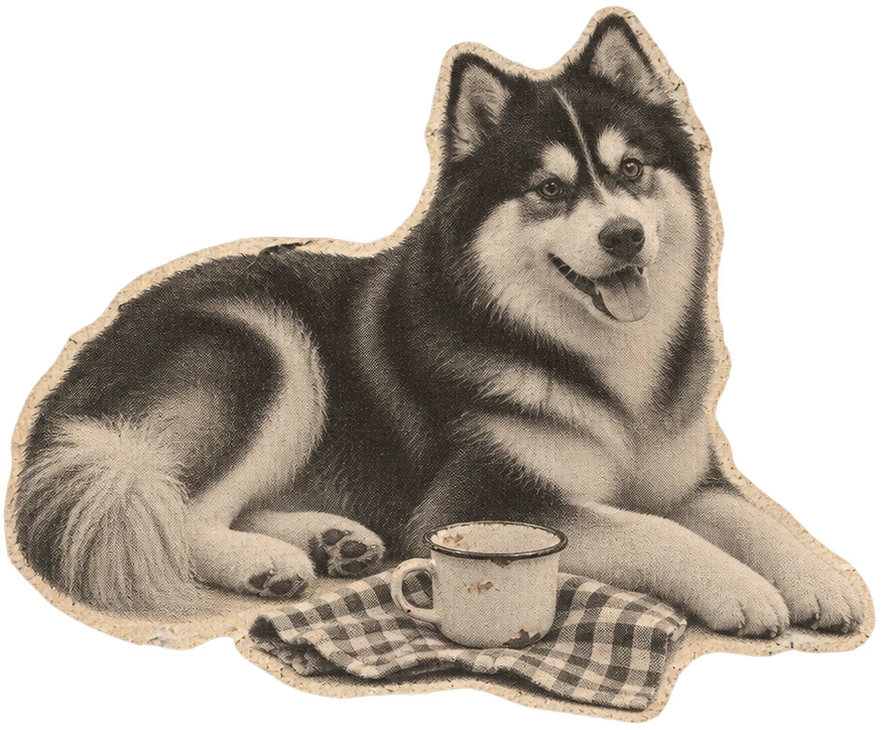
Supervise the dog around children, even if they look small enough to put under your arm. Let the dog move away without being followed, and separate them when you can’t watch. A bed isn’t much of a retreat if everybody’s allowed to climb into it. 14 30
Ask about experience with cats or smaller pets. Use separated areas and gradual introductions when appropriate. Keep them separated if they can’t be safely managed together. A dog who looks relaxed watching a still cat might behave differently when the cat runs. 19 20 31
Health: ask for the results on both sides
For breeding, the Royal Kennel Club lists clinical eye testing under Best Practice for Pomeranians, with no Good Practice test shown on that row. For Siberian Huskies, Good Practice lists eyes including gonioscopy for pectinate ligament abnormality (PLA). Best Practice adds hip scoring. These are recommendations for those parent breeds, not a formal Pomsky screening tier or a diagnosis for one dog. 32 33 34 35 36
PDSA lists kneecap slippage and tracheal collapse among Pomeranian concerns. A repeated hop or cough deserves a vet’s assessment rather than an ancestry diagnosis. Ask about new sight changes too. Parent research and testing give you things to ask, not a way to compute how often a cross develops any of these conditions or how long it will live. 10 11 27 34 37 38
Pomsky notes / 10
Health conditions and screening
| Check | How to use it |
|---|---|
| Pomeranian eye screening | RKC Best Practice clinical eye scheme on that parent row. 32 33 35 |
| Siberian Husky eyes | RKC Good Practice eye testing with gonioscopy for PLA. 32 34 35 |
| Siberian Husky hips | RKC Best Practice advice on hip scoring. 32 34 36 |
| Repeated skipping | Ask the vet to check the dog rather than assume it’s the kneecap. 10 11 |
| Repeated coughing | Make a vet appointment. Breathing distress is urgent. 10 27 |
| A painful or held-shut eye | Seek urgent veterinary advice. 37 |
| Lifespan | No verified representative Pomsky figure used; parent medians aren’t averaged. 38 |
Price the actual work
Get quotes based on your dog’s adult size and coat where you know them. Price a session of grooming or help with the nails if you’ll need it. Check the excess and exclusions on insurance and what the local vet charges for ordinary care. The label on a puppy ad won’t pay for the second harness when the first one no longer fits. 8 9 39
Ask a walker what they’d do if your dog spots something to chase, needs an easier pace or gets worried around other dogs. The answer matters more than whether they’ve walked somebody else’s Pomsky. 7 19 40
Why there isn’t one Pomsky build
The Pomeranian is a compact toy dog in the UK written standard; the Siberian Husky is a medium working sled dog. The cross name brings those two breed names together. It doesn’t tell you a precise origin date, standard shape or set of behaviours for the individual dog. If your dog likes a sniff and then lies down while you make tea, let that tell you something too. 1 2 3 4
Ask what the dog already does well
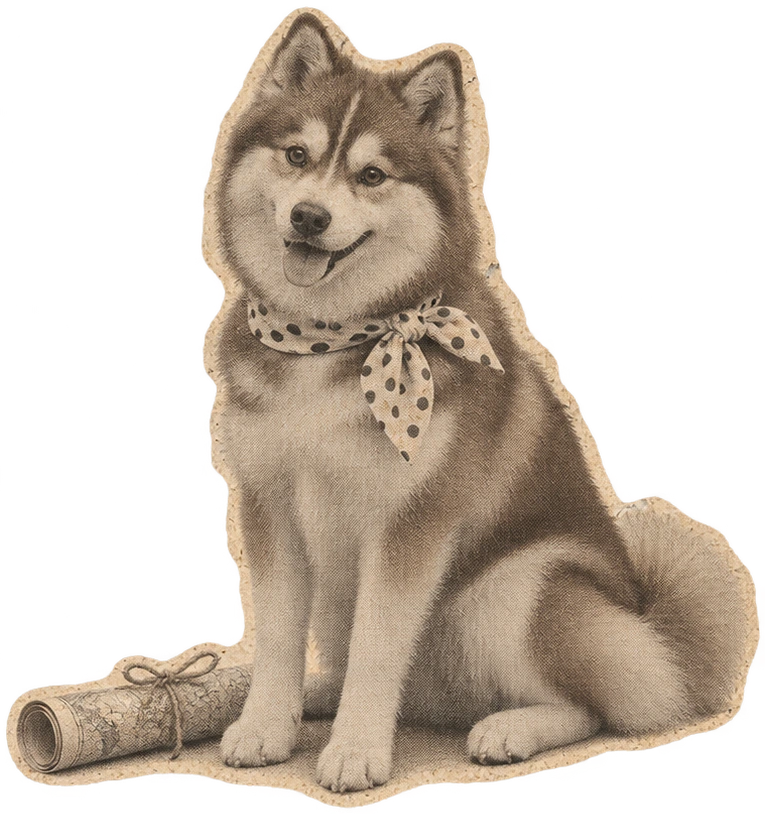
For a rescue, ask how they come back on a walk, whether they can rest while you’re out and what the rescue knows about other animals. Listen when somebody says they don’t know. For a puppy, meet them with their mum where they were bred and ask for parent records and named screening results. 7 17 20 32 41 42 43
Start with a safe door routine and somewhere comfortable to lie. Give them short, straightforward outings while you find out what they actually enjoy. There’s time to tackle the busy park once you can get to the end of the road together without being at cross purposes. 6 7 29 41
Pomsky notes / 13
Ask what they do well
| Ask or arrange | What to look for |
|---|---|
| Ancestry and health | Records where available and named tests for the parent dogs. 2 32 43 |
| Handling | What fits, where they’re happy being brushed and when they need a break. 8 9 14 |
| Time alone | What has actually been observed and a plan to build up at their pace. 17 41 |
| Arrivals | Safe doors, a quiet rest space and an easy first route. 6 29 41 |
Sources
- S1MSPCA-Angell first-hand intake, use of Pomsky for a Pomeranian and Husky crossSource · checked 21 November 2026
- S2UK rescue listing via DogsBlog for a Pomeranian and Husky crossSource · checked 21 November 2026
- S3Royal Kennel Club Pomeranian written standard and ideal sizeSource · checked 21 November 2026
- S4Royal Kennel Club Siberian Husky written standard and sizeSource · checked 21 November 2026
- S5Royal Kennel Club crossbreed name scope and variable inheritanceSource · checked 21 November 2026
- S6Dogs Trust leaving a safe distance and preventing escapesSource · checked 21 November 2026
- S7Dogs Trust recall and safe long-line useSource · checked 21 November 2026
- S8Dogs Trust introducing and fitting a harnessSource · checked 21 November 2026
- S9PDSA grooming and skin checksSource · checked 21 November 2026
- S10PDSA Pomeranian veterinary profile including kneecaps and airwaySource · checked 21 November 2026
- S11PDSA luxating patella and checking a repeated skipSource · checked 21 November 2026
- S12PDSA checking a dog's body conditionSource · checked 21 November 2026
- S13Dogs Trust safer travel with a dogSource · checked 21 November 2026
- S14Dogs Trust low-pressure handlingSource · checked 21 November 2026
- S15PDSA itchy skin adviceSource · checked 21 November 2026
- S16Dogs Trust recognising barking triggers and keeping space at windowsSource · checked 21 November 2026
- S17Dogs Trust practising time alone graduallySource · checked 21 November 2026
- S18PDSA separation anxiety and veterinary or behaviour helpSource · checked 21 November 2026
- S19Dogs Trust reading body languageSource · checked 21 November 2026
- S20Dogs Trust cat and dog introductionsSource · checked 21 November 2026
- S21Dogs Trust reward-based focus trainingSource · checked 21 November 2026
- S22Dogs Trust enrichment and search gamesSource · checked 21 November 2026
- S23PDSA practical dog feeding and treatsSource · checked 21 November 2026
- S24PDSA exercise by age, comfort and conditionSource · checked 21 November 2026
- S25PDSA owner and veterinary profile for Siberian HuskiesSource · checked 21 November 2026
- S26Dogs Trust safety in hot weatherSource · checked 21 November 2026
- S27PDSA emergency advice if your dog is struggling to breatheSource · checked 21 November 2026
- S28PDSA heatstroke in dogs and urgent careSource · checked 21 November 2026
- S29Dogs Trust mat and settle trainingSource · checked 21 November 2026
- S30Dogs Trust child and dog supervisionSource · checked 21 November 2026
- S31Dogs Trust dog-to-dog introductionsSource · checked 21 November 2026
- S32Royal Kennel Club central Health Standard, separate Pomeranian and Siberian Husky rowsSource · checked 21 November 2026
- S33Royal Kennel Club Pomeranian breed profile and Best Practice testingSource · checked 21 November 2026
- S34Royal Kennel Club Siberian Husky history, Good and Best PracticeSource · checked 21 November 2026
- S35British Veterinary Association clinical Eye SchemeSource · checked 21 November 2026
- S36British Veterinary Association hip dysplasia schemeSource · checked 21 November 2026
- S37PDSA veterinary advice on eye pain and holding an eye shutSource · checked 21 November 2026
- S38McMillan et al. original UK dog longevity cohort, methods and supplementary breed estimatesSource · checked 21 November 2026
- S39PDSA dog ownership costs and insurance considerationsSource · checked 21 November 2026
- S40Dogs Trust guidance on finding a walkerSource · checked 21 November 2026
- S41Dogs Trust settling a rehomed dogSource · checked 21 November 2026
- S42RSPCA advice on selecting and visiting a breederSource · checked 21 November 2026
- S43Royal Kennel Club individual health results finderSource · checked 21 November 2026