
Breed guide / Pointer
Living with a Pointer
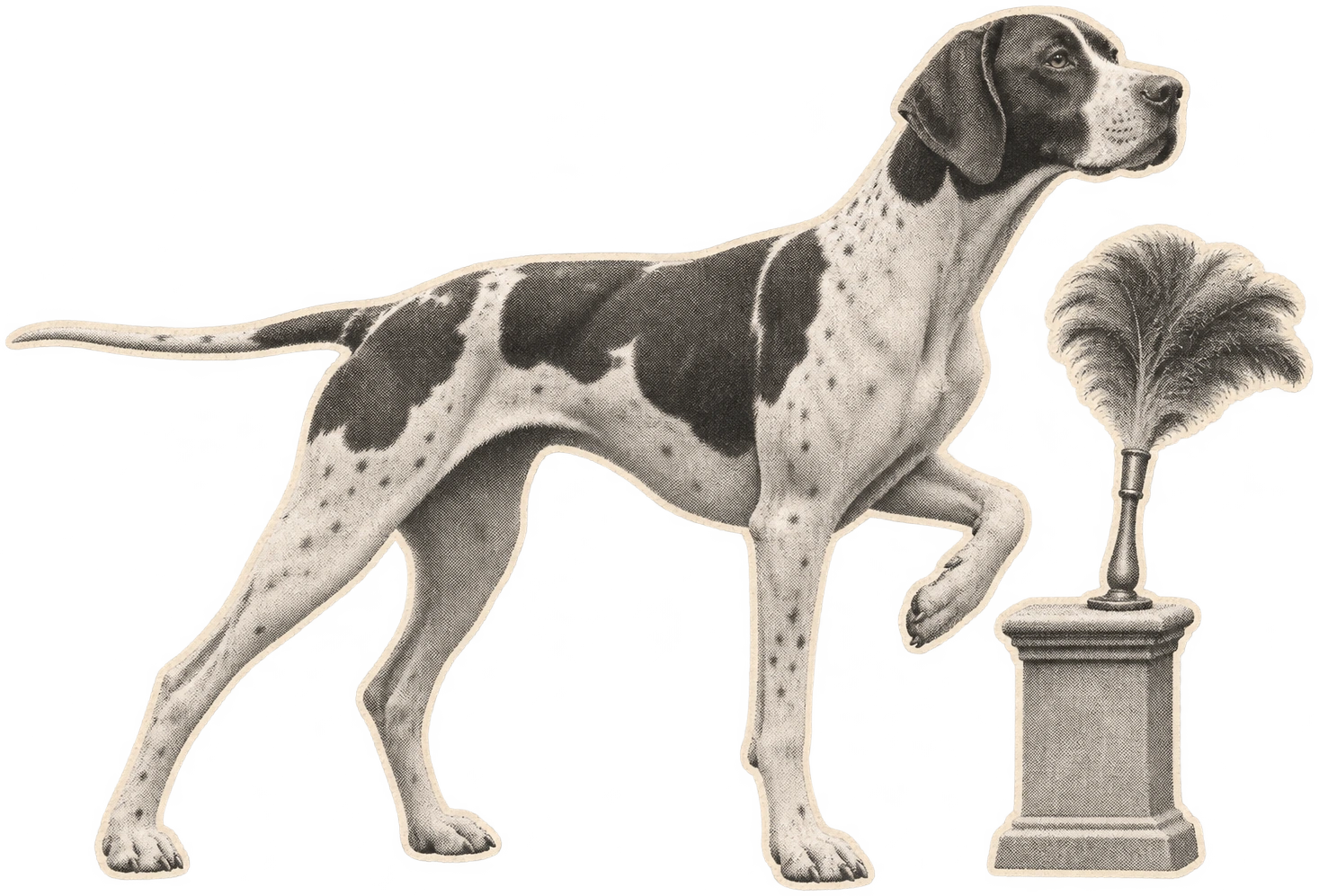
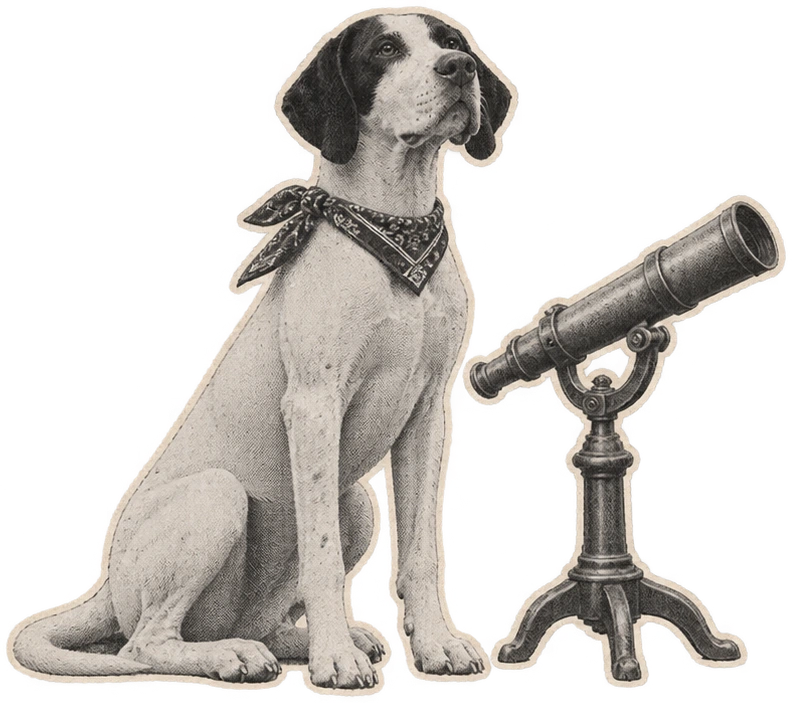
The Pointer, sometimes called the English Pointer, is a lean British gundog bred to find birds by scent and stand still to show where they are. If yours goes from trotting beside you to looking like a statue, pay attention to what they’ve noticed. A good walk gives that nose something to do and gives you enough room to bring the dog back before the quiet bit ends. 12345
Jump to a section
The short version
Work out what your dog looks like just before they stop listening. On a walk that might be a still body and a nose pointing into the grass. Try calling them away while there’s still room to turn. If you know they can’t manage it with birds close by, clip the lead on earlier rather than trying the same call more loudly. 1 4 5
Leave time to let them sniff in places where it’s safe, and give them somewhere to rest when you get home. Check paws and ears after long grass. A dog can be delighted about the walk and still bring back something sharp you’d rather have left behind. 6 7 8
Pointer notes / 01
Start with the useful bits
Pointer means the British breed here
The Royal Kennel Club calls this breed “Pointer”. The FCI lists it as “English Pointer”. The German Shorthaired Pointer has its own UK listing and standard. Being used to point at game doesn’t make all those dogs the same breed or mean they share the same screening advice. 1 2 3 9 10
Fit the deep chest, not the label
The UK written standard gives desirable shoulder heights of 63–69 cm for males and 61–66 cm for females. That isn’t a range you have to fit into, and it isn’t a weight guide. Feel the ribs and check the waist to see whether their body condition changes. 2 11
Choose a harness by their actual chest measurement and watch it in motion. A harness can look fine while the dog stands by the till and sit quite differently once they’re head down in a hedge. Check that they can move their shoulders and it isn’t rubbing behind the front legs. 12
Short coat, still check what’s underneath
A quick brush is usually less work than a long coat. Give the ears, feet and anywhere that a strap sits a look after a walk. Long grass can leave seeds between the toes or in the ears. If they suddenly keep shaking their head, or won’t leave a foot alone, ask the vet rather than digging around for something you can’t see. 2 7 12 14
Do the checks on a day when they’re comfortable. Start with a quick touch, let the dog choose to move and keep it easy. A dog who’s hurt is allowed to be less cooperative than usual. 15 16
Make space before they lock on
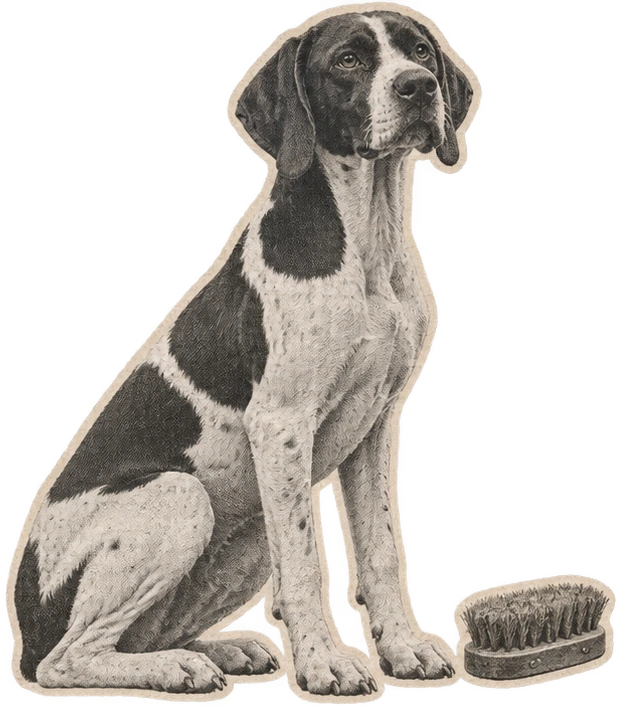
Some Pointers will stand absorbed in a smell or sight. Notice whether yours can look away when you speak and be prepared to move further from the distraction. If they can move off with you while the lead is still loose, you’ve picked a useful distance. You don’t need to test it again two feet closer. 1 4 5 18
Use the same judgment with greetings. A dog who has had a busy outing might want a quiet hour when they get home, not an arrival committee. If they’ve started reacting differently to everyday situations for no obvious reason, consider pain or discomfort and ask the vet. 8 15 16 19
Pointer notes / 05
Before they lock on
Give the nose something you’ve put there
Start a simple search with a familiar toy or a few pieces from their food portion. Let them see where you put it first and make the hiding place harder once they’re choosing to look. This is for using their nose, not for chasing wildlife, and it works in a hallway on a miserable day too. 5 6 21
Keep recall practice separate. Use a quiet spot to call once, reward coming back and sometimes let the dog return to sniffing. A long line on a suitable harness can help in the right space. On a path beside traffic or near livestock, keep them close on a normal lead. 4 12
Plan the route, not just the distance
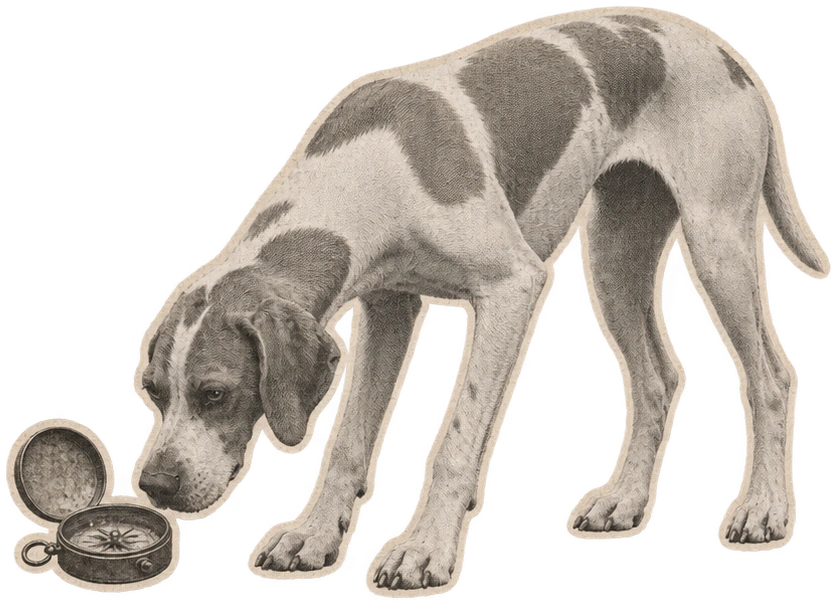
A healthy adult Pointer normally needs an active routine. Build distance and challenge according to the dog’s fitness and age, and include enough stopping and sniffing that you’re not just powering through a route. Young dogs, or dogs coming back from injury, need a plan suited to what they can do now. 1 22 23
If the only route out crosses a field full of livestock, it’s worth having a second one. Use lead control and put distance between the dog and animals. Choose cooler times when it’s hot and check how the dog moves afterwards. Ask the vet about new recurring stiffness instead of sending them out for another run to see if it clears. 4 16 24 25
Pointer notes / 07
Plan the route
| Situation | Better plan |
|---|---|
| Livestock or game | Lead on ahead of time; choose another route if control is doubtful. 4 5 |
| Adult needs more variety | Try sniffing and searches instead of just adding a lap. 6 22 |
| Hot day | Use cooler times, shade and a lower effort outing. 24 |
| New recurring stiffness | Ease off and ask the vet. 16 25 |
Finish the walk properly
Before you take the lead off, have somewhere quiet to go and a towel if they’re wet. Reward them when they choose to rest, not only when you’ve asked for it after three trips round the room. This is useful on an ordinary evening, when the Pointer is ready for another plan and you’re ready for your dinner. 8 14 19
Use short, manageable practice if they struggle when left alone. Give them enough space to change position or move away from a busy spot. If training food keeps coming out of your pockets through the day, count it while you still remember how much there was. 8 21 26
Let everyone get out of the way
Give children jobs such as hiding a toy while an adult holds the lead. Don’t put them in charge of a strong dog in a busy place. Watch interactions properly or separate them, and let the dog sleep or chew without an audience. 6 27
Ask specifically about cats, poultry and small animals. One dog might live calmly with a particular cat and still need a lead around birds. Set up genuine separation where needed and don’t use a chase to see how safe an introduction is. 5 28 29
Watch how they get up as well as how fast they go
Get a repeat limp, difficulty rising or a change in stride checked by the vet. Hip dysplasia is a developmental joint issue and is listed by PDSA as a concern in the breed. For breeding, the Royal Kennel Club currently lists the BVA/RKC Hip Dysplasia Scheme under Best Practice for the Pointer, with no listed Good Practice test in its row. The separate German Shorthaired Pointer row is not the one to use here. 1 9 10 16 23 25 30
The UK Pointer Club’s 2021–22 owner survey retained 1,178 responses. It reported a median age at death of 11 years and seven months among reported deceased dogs with an age recorded. That’s a voluntary survey, not a representative clinical lifespan estimate or a prediction. Don’t use the German Shorthaired Pointer number from a different UK study as a substitute. 31 32 33
PDSA also flags hypothyroidism, or low thyroid hormone, as a condition seen in Pointers. Persistent changes in energy, weight or coat are worth raising with the vet. One sign won’t tell you what’s wrong, and a parent hip result says nothing about the thyroid. 23 34
Pointer notes / 10
Health conditions and screening
| Question | What helps |
|---|---|
| Parent hip screening | Ask for actual BVA/RKC scores for both parents. 1 10 30 |
| Stiffness after rest | Watch for a change and get it assessed if it recurs. 16 25 |
| Energy or coat changes | Tell the vet what’s changed; don’t diagnose the thyroid from the coat. 34 |
| Eye pain | Seek urgent advice if an eye is painful or held shut. 35 |
| Sore feet or sudden head shaking | Look for signs after long grass and ask for help if needed. 7 |
| Health history | Check actual test results and discuss known problems in the family. 10 36 |
| Lifespan | Breed-club survey figure is respondent data, not an individual forecast. 31 |
Work out what a weekday costs
Price the food on what the dog really eats. Look at your local vet’s routine costs and compare what insurance excludes, not just the monthly cost. Walking cover might matter more to your week than a long list of kit. Find out whether someone can actually take the dog out in places that work for them. 21 37 38
Ask a prospective walker what they’d do near livestock and how they handle return practice. If they can only describe the speed of their group walk, they haven’t told you what they’ll do with your Pointer. 4 5 38
What they were pointing at
The Royal Kennel Club describes a dog bred to range across open ground, scent game and stop in its direction. That working history explains the name and helps make sense of a dog going still on a walk. It doesn’t mean a pet must work with birds, and you don’t need to put a bird in front of your dog to see what they do. 1 3 5
Ask about an ordinary walk
For an adult, ask where they’re walked now, what happens when they find an animal and how well they settle afterwards. Ask to join a straightforward outing if possible. For a puppy, meet them with their mum where they were bred and ask to see the hip results and any relevant health history. 1 10 36 39 40
Set up a quiet first route and a proper place to rest. Check your own gate before you decide they’re ready to practise coming back in the garden. You can find out plenty about a dog without making their first weekend one long audition. 4 8 41
Pointer notes / 13
Ask about an ordinary walk
| Ask or set up | Useful detail |
|---|---|
| Health | Named screening results for the correct breed and family history. 10 36 |
| Recall | What has worked when the dog is distracted. 4 39 |
| Small animals | What was actually observed and what management was used. 5 28 |
| First week | Safe gates, a quiet bed and simple outings. 8 39 41 |
Sources
- S1Royal Kennel Club Pointer profile, work and Best PracticeSource · checked 21 November 2026
- S2Royal Kennel Club Pointer written standard and desirable heightSource · checked 21 November 2026
- S3FCI naming entry for English PointerSource · checked 21 November 2026
- S4Dogs Trust recall and safe long-line useSource · checked 21 November 2026
- S5Dogs Trust handling a dog that chases wildlife or vehiclesSource · checked 21 November 2026
- S6Dogs Trust enrichment and search gamesSource · checked 21 November 2026
- S7PDSA veterinary guidance on grass seeds in paws, ears and eyesSource · checked 21 November 2026
- S8Dogs Trust mat and settle trainingSource · checked 21 November 2026
- S9Royal Kennel Club German Shorthaired Pointer separate written standardSource · checked 21 November 2026
- S10Royal Kennel Club central Health Standard, Pointer and German Shorthaired Pointer rowsSource · checked 21 November 2026
- S11PDSA checking a dog's body conditionSource · checked 21 November 2026
- S12Dogs Trust introducing and fitting a harnessSource · checked 21 November 2026
- S13Dogs Trust safer travel with a dogSource · checked 21 November 2026
- S14PDSA grooming and skin checksSource · checked 21 November 2026
- S15Dogs Trust low-pressure handlingSource · checked 21 November 2026
- S16PDSA limp and pain in dogsSource · checked 21 November 2026
- S17PDSA recognising ear infection signsSource · checked 21 November 2026
- S18Dogs Trust reward-based focus trainingSource · checked 21 November 2026
- S19Dogs Trust reading body languageSource · checked 21 November 2026
- S20Dogs Trust loose-lead walkingSource · checked 21 November 2026
- S21PDSA practical dog feeding and treatsSource · checked 21 November 2026
- S22PDSA exercise by age, comfort and conditionSource · checked 21 November 2026
- S23PDSA veterinary Pointer profile, hip and thyroid contextSource · checked 21 November 2026
- S24Dogs Trust safety in hot weatherSource · checked 21 November 2026
- S25PDSA arthritis in dogs and recurring stiffnessSource · checked 21 November 2026
- S26Dogs Trust practising time alone graduallySource · checked 21 November 2026
- S27Dogs Trust child and dog supervisionSource · checked 21 November 2026
- S28Dogs Trust cat and dog introductionsSource · checked 21 November 2026
- S29Dogs Trust dog-to-dog introductionsSource · checked 21 November 2026
- S30British Veterinary Association hip dysplasia schemeSource · checked 21 November 2026
- S31The Pointer Club, original 2021–22 survey, sample and death reportsSource · checked 21 November 2026
- S32McMillan et al. original UK dog longevity cohort, methods and supplementary breed estimatesSource · checked 21 November 2026
- S33Dogs Trust original 2024 lifespan table (German Shorthaired Pointer is a separate row)Source · checked 21 November 2026
- S34PDSA veterinary hypothyroidism signs and assessmentSource · checked 21 November 2026
- S35PDSA veterinary advice on eye pain and holding an eye shutSource · checked 21 November 2026
- S36Royal Kennel Club individual health results finderSource · checked 21 November 2026
- S37PDSA dog ownership costs and insurance considerationsSource · checked 21 November 2026
- S38Dogs Trust guidance on finding a walkerSource · checked 21 November 2026
- S39Dogs Trust settling a rehomed dogSource · checked 21 November 2026
- S40RSPCA advice on selecting and visiting a breederSource · checked 21 November 2026
- S41Dogs Trust leaving a safe distance and preventing escapesSource · checked 21 November 2026
