Breed guide / Pekingese
Living with a Pekingese
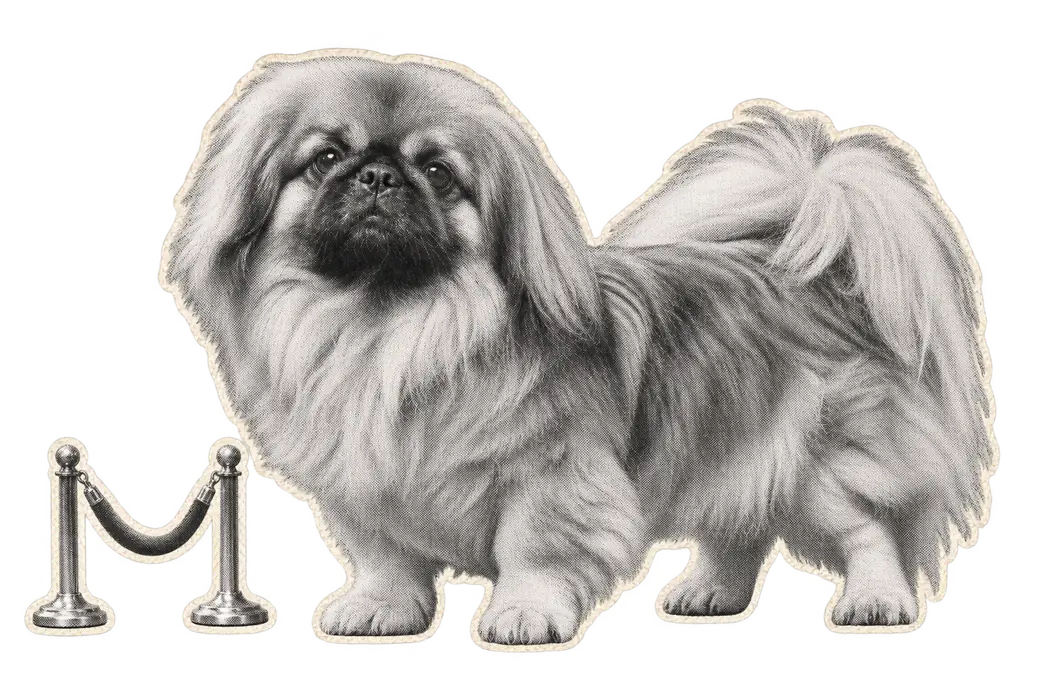
The Pekingese is a low, sturdy little companion dog from China, with a lionlike mane and a short face. That short face matters more to everyday life than the coat does. A Pekingese should be able to breathe comfortably on an easy walk and in their sleep. If yours makes more noise or tires sooner than they used to, get it checked rather than putting it down to the breed. 1 2 3 6
Jump to a section
Know what they're like on an easy walk
Pay attention to how your dog breathes at rest, on a short cool walk and after they stop. If the same stretch starts taking more out of them, or breathing sounds become more frequent, speak to your vet. A short video of what you're hearing can help describe it if your dog is comfortable and it doesn't delay getting help. 4 6
If your dog is struggling to breathe or collapses, call an emergency vet immediately. If you suspect heatstroke, stop the activity, move them somewhere cool, start cooling them and call the vet. Don't wait to see whether they perk up. 6 7
The name belongs to one breed
The Royal Kennel Club puts the Pekingese in its Toy group. The FCI lists its country of origin as China and Great Britain as the country responsible for the international standard. Peke is a nickname; the long coat and short face alone won't tell you a dog's pedigree. 1 2 3
Small dog, solid underneath
The UK breed standard gives ideal upper weights of 5 kg for males and 5.4 kg for females. They're breed-standard figures, not an instruction to get a particular dog down to that number. Feel for the ribs and waist through the coat. Your vet can help you set a suitable weight for your dog. 2 9
Brush the bits that rub first
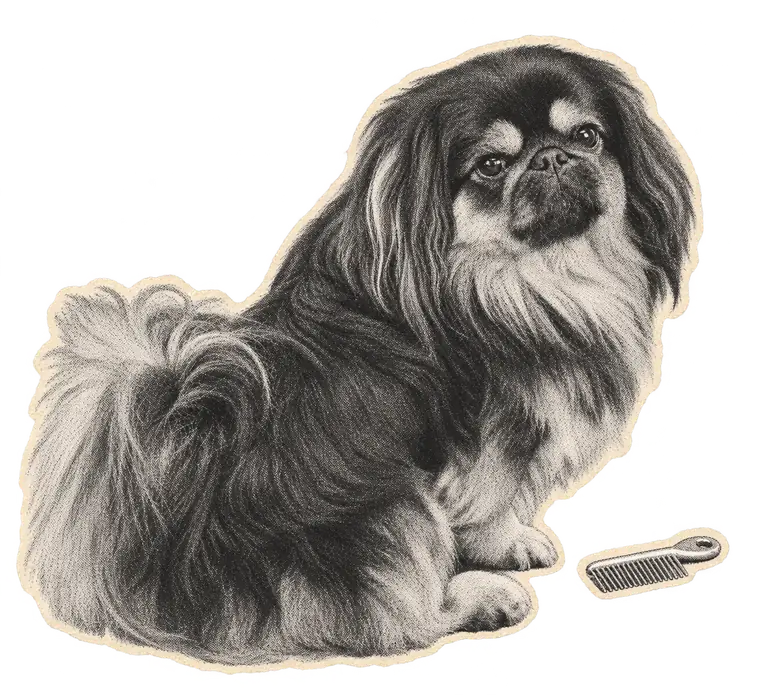
Start the daily coat check around the collar and behind the ears, then part the long hair under the tail instead of just running a brush across the top. That's a better use of your time than getting the back to look immaculate while the knots move in behind the ears. Get a groomer's help with tight mats close to the skin. 2 4 10
Pekingese notes / 04
Field notes
| Where | Habit worth keeping |
|---|---|
| Hair under the tail | Check it stays clean and untangled. Get help if grooming is uncomfortable. 4 10 |
| Face and any fold | Check the skin you can see. If it's sore or smells, speak to your vet. 1 4 |
| Around the eyes | Keep a brush away from the eyeball. If an eye is suddenly held shut or being rubbed, contact your vet promptly. 8 10 |
Let them come over on their own feet
Some Pekingese like company but don't want to be crowded. Start with someone sitting without reaching and give the dog a clear way to leave. A small dog being easy to pick up doesn't mean they've agreed to be passed round the room. 4 10 11
Teach the brush before you need the brush
Put the brush down and reward your dog for coming to look. Later, when they're settled, do a stroke where they normally enjoy being touched. Stop while they're still happy to be there. Work toward the awkward spots in small steps rather than starting with the knot that needs the most work. 10
Give yourself an easy way back
Choose a short route with a way to turn round early. A loop that forces you to walk all the way home at the same distance is less useful when your dog has had enough. Have water available and go out in the cooler part of the day. If it stays too hot, skip the walk. Instead, hide a toy for them to find at home without having to turn it into a running game. Let your vet help decide what exercise suits a dog with breathing problems. 6 7 13
The coolest spot might not be their usual bed
Put the water bowl and a resting spot somewhere out of the sun and away from radiators. A flat can heat up even without a garden, so leave a route to a cooler bit of floor where the dog can settle without asking you to move them. For car trips, use a suitable restraint, make sure the car is cool and never leave the dog in it on a warm day. 4 7 14
Small does not mean safe to scoop up
An adult needs to be close enough to intervene when a child and dog are together. Children shouldn't carry the dog or disturb them while they're eating or asleep. Separate them when you can't supervise. When introducing a cat, give the cat a dog-free area to go back to. 11 15
Ask for eyes and breathing to be checked separately
BOAS stands for brachycephalic obstructive airway syndrome. It can make it difficult for flat-faced dogs to breathe and to cool themselves. The Royal Kennel Club profile also flags the risk of dry eyes and injury to the front surface of the eye. A photo of open nostrils can't tell you how a dog breathes during exercise and is no substitute for a vet's assessment. 1 5 6 8
A 2026 UK study assessed respiratory function across 14 breeds, including Pekingese. The authors reported about 11% as Grade 0, meaning the study's assessment found no respiratory signs of BOAS in that group. That does not mean every other dog in the study had clinically significant disease: Grade 1 can include some noise without reduced exercise performance. The owners volunteered their dogs for testing at Cambridge or at events, including shows. That group might look different from the Pekingese you see at any UK vet practice, so the study can't tell us the exact rate across the country. 5 16
Pekingese notes / 10
Field notes
| What to check | What the source actually says |
|---|---|
| Good Practice before breeding | The RKC profile lists prioritising genetic diversity. 1 |
| Eye screening | The BVA/RKC/ISDS Eye Scheme is listed under Best Practice. An eye screening result isn't an examination of a new eye problem. 1 8 17 |
| Breathing grading | The RKC recognised the test for Pekingese in August 2026. The programme already includes the breed. Formal addition to the Health Standard and Find a Puppy is scheduled from January 2027, and breeders are encouraged to test before then. 1 5 17 |
The scheme can assess dogs from 12 months and recommends repeating assessment every two years. Ask for dated results for both parents if you're considering a puppy. If your own dog has symptoms, call your vet rather than waiting for a screening appointment. 5 6
The RKC and PDSA profiles use an over-twelve-years lifespan category. Neither figure quoted here is a measured median for UK Pekingese or a prediction for your dog. 1 4
Check what's covered before you add up the premium
A small dog can need regular grooming and further veterinary care for eyes or breathing. Ask a local groomer whether a practical trim and nail check are priced separately. Compare the excess and read the bit about existing conditions. If your dog needs ongoing treatment, check what the policy would pay when it renews. If paying for treatment is difficult, call the vet and ask what help or local support is available. PDSA also has an eligibility checker. 4 18 19
The royal bit is history, not an everyday requirement
Find out how the dog breathes when nobody is posing it
Pekingese notes / 13
Field notes
With a rescue, ask what staff have actually seen during a short walk and at rest. Ask if the dog has had airway surgery or eye treatment and request the records before you decide. If you're considering a puppy, see them with their mum where they were raised and ask for dated eye and breathing results for both parents before you commit. Walk away if you are told that struggling for breath just comes with the breed. 1 4 5 6 20
Sources
- S1Royal Kennel Club Pekingese profile, history, care and screeningSource · checked 22 November 2026
- S2Royal Kennel Club Pekingese breed standardSource · checked 22 November 2026
- S3FCI Pekingese nomenclature, origin and patronageSource · checked 22 November 2026
- S4PDSA guide to Pekingese care and healthSource · checked 22 November 2026
- S5Royal Kennel Club and University of Cambridge Respiratory Function Grading SchemeSource · checked 22 November 2026
- S6PDSA flat-faced dogs and BOAS: symptoms, harness and when to contact the vetSource · checked 22 November 2026
- S7PDSA heatstroke prevention and first aidSource · checked 22 November 2026
- S8PDSA eye problems in dogsSource · checked 22 November 2026
- S9PDSA body condition scoringSource · checked 22 November 2026
- S10Dogs Trust gradual handling and groomingSource · checked 22 November 2026
- S11Dogs Trust children and dogs, supervision and spaceSource · checked 22 November 2026
- S12Dogs Trust settling guidanceSource · checked 22 November 2026
- S13Dogs Trust enrichment activitiesSource · checked 22 November 2026
- S14Highway Code Rule 57, safe restraint in vehiclesSource · checked 22 November 2026
- S15Dogs Trust introducing dogs and catsSource · checked 22 November 2026
- S16Tomlinson and colleagues, 2026 PLOS One respiratory grading study, Fig 3 and limitationsSource · checked 22 November 2026
- S17Royal Kennel Club Health Standard, Pekingese screening rowSource · checked 22 November 2026
- S18PDSA explanation of how pet insurance worksSource · checked 22 November 2026
- S19PDSA eligibility for veterinary treatmentSource · checked 22 November 2026
- S20RSPCA responsible puppy buyingSource · checked 22 November 2026