
Breed guide / Patterdale Terrier
Living with a Patterdale Terrier
A Patterdale Terrier is a compact working terrier from the northern English fells. They were bred to follow quarry underground, which tells you more about living with one than their size does. They can be good company for a long walk and hard to talk out of inspecting a hole halfway round it. Plan for that nose: give them somewhere safe to dig and take a lead you’re happy to keep on. 1256
Jump to a section
The short version
With a Patterdale, I’d sort the fence and the lead before paying for any fancy puzzle toy. Have a look under the gate from the dog’s height. A gap you’d never bother tidying can look like a perfectly serviceable exit from down there. While you sort it, go out with the dog and keep them on a suitable lead if there’s a chance they’ll get through. 14
Give them something to investigate on purpose. One cardboard box, some scrunched paper and a few pieces of their food will do, provided you supervise and take the box away if they start eating it. If they already dig up the lawn, a supervised digging spot away from the boundary gives them somewhere else to apply themselves. 514
Patterdale Terrier notes / 01
Check these first
| Start here | What to know |
|---|---|
| What sort of dog? | Small working terrier with fell-terrier roots. 12 |
| Main practical trade | Time outdoors and a secure way to manage chasing, digging and getting through gaps. 246 |
| A sensible first purchase | A properly fitted harness and suitable lead; be honest about where you can use a long line. 67 |
| Biggest health evidence limit | A lens-luxation DNA test exists, but it doesn’t tell us how common the condition is in UK Patterdales. 1112 |
What the name proves
Patterdale is a recognised breed name in the US-based United Kennel Club, which has a written standard. It’s not listed in the Royal Kennel Club’s UK pedigree standards. Similar initials, different registries. Lakeland Terrier has its own current Royal Kennel Club standard. The two names are not interchangeable on modern paperwork. 1316
“Fell terrier” can describe a broader working type and isn’t enough to prove a pedigree. If you’ve got a rescue dog labelled Patterdale or Patterdale cross, treat the label as a clue to ask better questions. What do they do around cats? How do they cope when a dog runs past? That’s useful information even if you never find out who their grandparents were. 289
Patterdale Terrier notes / 02
The registry names
| On the paperwork | What it means |
|---|---|
| United Kennel Club Patterdale Terrier | The US-based registry has recognised the breed since 1995. 1 |
| Royal Kennel Club pedigree listing | Patterdale does not appear in the current UK list. 3 |
| Fell terrier or Patterdale cross | A description, not a guarantee about parentage or the way an individual dog behaves. 12 |
Small dog, proper shoulders
The United Kennel Club standard puts the Patterdale at 10 to 15 inches, around 25 to 38 cm at the shoulder. It describes a solid, compact dog with a fairly flexible build for working in tight spaces and gives no fixed ideal weight. There’s no reason to squeeze your pet round the chest to see if their build fits the description. Measure them with a tape if you’re buying a harness. 1
Try the harness on with the dog standing and walking. Check that the shoulders can move, the straps don’t rub behind the front legs and the dog can’t back out of it. If you’re concerned about weight, use the same scales and ask the practice to show you how to judge the ribs and waist. A number for a different terrier of the same height won’t settle it. 2617
Patterdale Terrier notes / 03
Build and weight
| Measure | What to use it for |
|---|---|
| About 25 to 38 cm at the shoulder | US show-standard reference, not a nationwide UK measurement survey. 1 |
| Chest and neck | Use the maker’s sizing and check fit on the moving dog. 6 |
| Ribs, waist and weight trend | Set an individual target with your practice rather than using a breed weight chart. 217 |
The coat only looks low maintenance
A smooth Patterdale can bring grit home without looking particularly dirty. A broken coat is wirier and might come with a beard; the rough coat carries more hair over the face and ears. Dogs Trust suggests a weekly brush for the breed regardless of coat type. Use that to have a look at the skin rather than just moving the dirt to the other end of the dog. 1218
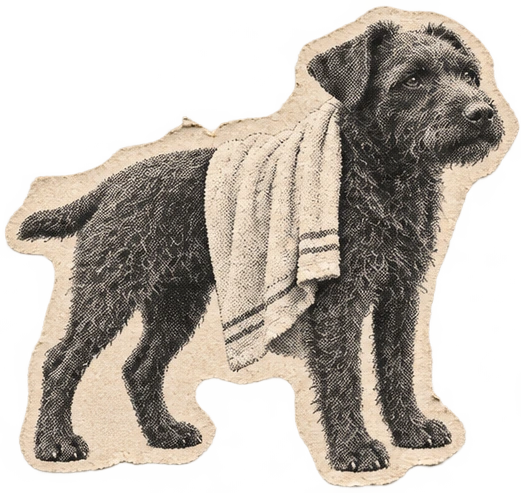
After wet bracken or a run through long grass, check the paws and the bits you can’t see from above. If yours is the sort that offers you one foot and keeps the other three under the table, build up handling separately while they’re comfortable. If they keep licking a paw or shaking their head after a walk, contact your vet. Don’t poke about in an ear to investigate. 1819
Patterdale Terrier notes / 04
The post-walk check
| Check | What to do |
|---|---|
| Smooth coat | Regular gentle brushing; look at the skin as you go. 218 |
| Broken or rough coat | Brush and check under the beard, around the ears and where the lead kit sits. 118 |
| Back from long grass | Inspect between toes and around the ears, without probing. 19 |
| Persistent head shaking or foot licking | Contact the practice; a grass seed is one possible cause. 19 |
What they notice before you do
A Patterdale that goes still at a hedge may already have found something more interesting than the rest of the walk. Look at what changes just before they pull or dig: nose fixes on one spot, body goes forward, ears turn, they stop checking in. At that point I’d give the hedge a wider berth, not try to outbid it with a dry biscuit from six inches away. 1620
Some Patterdales are comfortable walking near other dogs; some prefer a bit of space. Judge the individual. If your dog stiffens or can’t look away, give them room rather than making a greeting happen. Repeated lunging, snapping or guarding needs a plan with your vet or a qualified behaviourist, not a harder correction. 220
Patterdale Terrier notes / 05
Read the dog in front of you
| If you notice | A practical response |
|---|---|
| Hard stare or still, tense body | Get more distance early. 20 |
| Looks back at you on their own | Reward it while you’re both still below the dog’s distraction threshold. 620 |
| Barking/lunging that makes walks hard | Manage the route and ask for qualified, reward-based support. 20 |
Recall, digging and a way to switch off
The first place to practise calling a Patterdale back is somewhere enclosed where they can actually hear you over their own interests. Reward coming back and, where safe, let them go right back to what they were doing. If “come” usually means the lead goes on and the fun stops, the dog has worked out something you probably didn’t mean to teach. 7
For a dig box, start with a reward near the top and a box deep enough not to tip as they get going. Supervise, use safe materials and stop if they start swallowing them. For the other end of the day, reward settling while the house is calm. If your dog is trying to take down the sofa after a walk, adding another half-hour of ball throwing isn’t the only answer. 51415
Going out without losing your dog
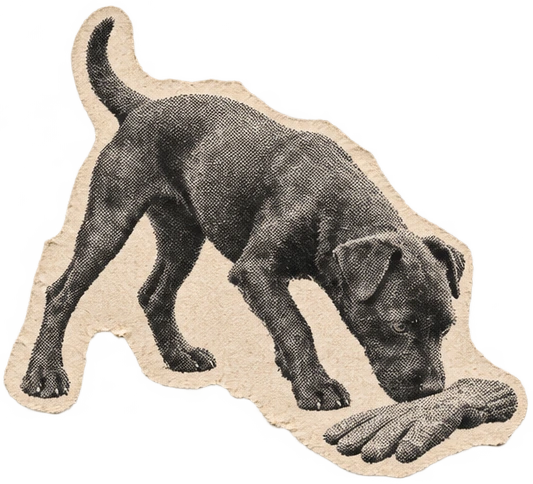
A Patterdale needs daily chances to move and explore. There’s no single minutes target for an adult, let alone for a puppy, an older dog or one coming back from injury. Look for the dog moving comfortably and able to engage with you, not just the time on your watch. Vary the walk and give them time to sniff where it’s safe. 213
Use a long line on a well-fitted harness only where you can handle it and there are no nearby roads, tangles or stock. Use a short lead around livestock and follow local signs and access rules. On applicable Open Access land in England and Wales the Countryside Code gives specific seasonal rules and requirements around livestock. A secure hire field can be a useful way to let them stretch their legs, but walk the perimeter first. 46710
Patterdale Terrier notes / 07
Explore without losing them
| Place | Walk it like this |
|---|---|
| Near livestock or traffic | Short lead and room to turn away. Follow site rules. 610 |
| Safe open area with no nearby livestock | Long line on a harness if recall isn’t reliable. 67 |
| Dog field | Check fences and gates before unclipping. 46 |
| Puppy, older dog or recovery | Adapt duration and pace with veterinary advice as needed. 213 |
A garden is only as good as its bottom edge
For a little dog that likes gaps, the first fence inspection is low down. Look where panels meet posts, especially on sloping ground or behind a shed. Pay attention at the front door too. Give the dog another room or use a secure barrier before the door opens, rather than finding out whether they can get past you while both your hands are full. 4
Put a bed where they can sleep without having to keep tabs on the pavement, and give them a suitable indoor activity they can do at their own pace. If they’re otherwise settled but repeatedly bark from a window, try blocking that view before treating it as a training project. Build alone time gradually; get help if the dog already shows distress. 141521
Patterdale Terrier notes / 08
Secure the low bits
Children, cats and small pets
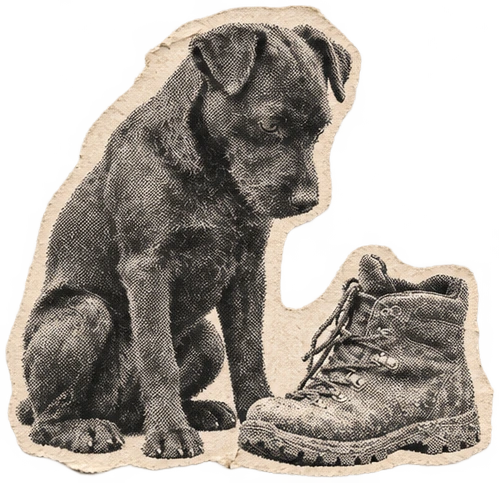
A strong interest in chasing needs managing around other animals, even when the dog is small. Don’t test compatibility by letting a cat run past a loose dog. Use secure separation, give the cat a way to leave and get individual advice if the dog fixates, chases or can’t disengage. Keep rabbits and other small pets in an area the dog cannot access. 168
With children, use an adult’s active supervision or separate them. Teach children to leave a resting dog alone and not to reach for a toy or chew the dog is holding. If you’re bringing a dog into a home with children, discuss the ages, routines and the dog’s observed history with the rescue before deciding. 9
Patterdale Terrier notes / 09
Safe ways to introduce
Health
A DNA test is available for a variant linked to primary lens luxation, where the lens moves out of position. It can cause a painful rise in pressure and loss of sight. The American College of Veterinary Ophthalmologists and OFA list the variant for Patterdales but say their eye-exam data cannot describe this breed’s hereditary eye conditions in detail. The available sample was 19 dogs examined from 1993 to 2018 and one from 2019 to 2023. Those figures are not UK prevalence and aren’t enough to estimate risk. 111222
If you’re weighing up a litter, ask about family eye history, ask to see any DNA results for both parents and take them to your vet if you need help interpreting them. A DNA result for one variant does not rule out other eye conditions or assess an eye that hurts today. The BVA clinical Eye Scheme is open to any breed and cross, and a vet can advise whether examination or other testing is appropriate. No Royal Kennel Club Patterdale-specific Good or Best Practice tier was found in the official list. 3112324
Dogs Trust describes a typical lifespan of 10 years or more as a rough guide. The 2024 UK Dogs Trust lifespan table does not report a separate estimate for the Patterdale Terrier. Treat the broad guide as a planning aid, not a measured UK median or a forecast for your dog. 225
Contact your vet urgently for sudden sight loss, a newly painful or cloudy eye, or an eye injury. Call for persistent paw licking or head shaking after long grass, or for changes in weight, movement or comfort that are not normal for your dog. Ask your vet about routine preventive care matched to where your dog goes. 2121719
This is general information, not veterinary advice. If you’re worried about your dog, contact your vet.
Patterdale Terrier notes / 10
Conditions and screening
| What to ask about | What the evidence supports |
|---|---|
| Primary lens luxation | DNA testing exists for a known variant; ask for the actual lab result and veterinary interpretation. 1122 |
| Frequency in Patterdales | 19 dogs in the older window, one in the newer one; not a UK prevalence estimate. 11 |
| Eye examination | Discuss a clinical examination separately from the genetic test. 23 |
| UK breeding screening | No breed-specific RKC tier located; agree a sensible plan with your vet. 324 |
| Lifespan | Dogs Trust gives a broad 10+ years; no separately identified estimate in the UK 2024 table. 225 |
| When to call now | Sudden sight loss, painful/cloudy eye or suspected eye injury needs urgent veterinary assessment. 12 |
| After exploring rough ground | Report persistent head shaking, paw licking, discomfort or lameness. 19 |
The budget, including the fence
A Patterdale probably doesn’t need a complicated grooming budget, but you may pay for a secure field or a walker who can handle them on lead. Get a quote with the actual restrictions. If a cheap walk assumes your dog can go loose with six others, it’s not a quote for the walk you wanted. A good gate latch is also a better buy than another set of toys if the one you have doesn’t shut. 246
PDSA’s 2024 calculation puts basic ongoing costs for a small dog at a minimum £69 a month. It isn’t a Patterdale quote, and leaves out buying the dog, services like grooming and boarding, and treatment fees after accident or illness. For insurance, check the exact breed or cross description the provider wants, along with cover limits, exclusions and any excess. Ask your local practice for the routine-care prices you’ll actually pay. 26
Patterdale Terrier notes / 11
What to pay for
| Budget for | Question to ask |
|---|---|
| Secure exercise | Will I need a hire field, or do I have somewhere safe already? 6 |
| Walking and care | Can the provider meet my dog’s lead and group requirements? 26 |
| Vet and insurance | What’s routine, what’s excluded and what would I pay myself? 26 |
| Upfront cost | Use the actual rescue fee or a documented price, not a national estimate we can’t substantiate. 27 |
How the fells shaped the dog
The United Kennel Club traces the Patterdale mainly to black, smooth-coated fell terriers of northern England. Small, flexible working dogs were useful in rocky ground, and people selected for the work they did. Breed-club accounts discuss different families and names over time. I wouldn’t pick one tidy year or one inventor and pretend the dog started there. The US-based registry’s recognition date, 1 January 1995, is a firmer reference. 128
For a dog in your house the useful bit is the nature of the work, not its recreation. You can let them use their nose, investigate something safely and dig in an allowed spot without involving any wildlife. Hiding dinner in a box gives them a surprising amount of work for the price of something you were about to put in the recycling. 5614
Bringing one home
Ask a rescue what they’ve seen the particular Patterdale do near traffic, other dogs and small animals, and what they haven’t had a chance to test. Discuss your real walking route and who will handle the dog. If you already own one, answer those questions from observation, and arrange a quiet outing the dog can manage rather than testing everything on one busy route. 2620
If buying a puppy, meet them with their mother where they were raised, ask about both parents and get the relevant records in writing. You are buying a dog to live with, not an advert about how hard their bloodline is. Ask about the parents’ behaviour in ordinary settings, the breeder’s support after collection, and any eye health information they can document. 1127
Patterdale Terrier notes / 13
Questions worth asking
| Ask before deciding | What to look for |
|---|---|
| What has the adult dog managed? | Individual evidence about walks, being left and other animals. 28 |
| Is my boundary secure now? | The whole fence line and a plan for visitors and deliveries. 4 |
| What eye health information is there? | Actual results or history, with the dog identity and limitations clear. 1122 |
| Can I see the puppy with their mother? | A visit where the puppy has been raised, with a proper written record. 27 |
Sources
- S1United Kennel Club Patterdale Terrier standard, history, coats and heightSource · checked 21 November 2026
- S2Dogs Trust Patterdale Terrier profile and practical careSource · checked 21 November 2026
- S3Royal Kennel Club official breed standards listSource · checked 21 November 2026
- S4Dogs Trust bolting, digging and preventing escapeSource · checked 21 November 2026
- S5Dogs Trust how to make a dig boxSource · checked 21 November 2026
- S6Dogs Trust managing chasing and long-line useSource · checked 21 November 2026
- S7Dogs Trust recall trainingSource · checked 21 November 2026
- S8Dogs Trust safe introductions for dogs and catsSource · checked 21 November 2026
- S9Dogs Trust getting a dog when you have childrenSource · checked 21 November 2026
- S10GOV.UK Countryside Code visitor guidance, England and WalesSource · checked 21 November 2026
- S11ACVO and OFA Blue Book 2023, Patterdale Terrier entry pages 759 to 760Source · checked 21 November 2026
- S12Royal Kennel Club eye emergencies including lens luxationSource · checked 21 November 2026
- S13PDSA dog exercise guidanceSource · checked 21 November 2026
- S14Dogs Trust enrichment and scent gamesSource · checked 21 November 2026
- S15Dogs Trust settling trainingSource · checked 21 November 2026
- S16Royal Kennel Club Lakeland Terrier standardSource · checked 21 November 2026
- S17PDSA weight and body condition guidanceSource · checked 21 November 2026
- S18PDSA grooming and handling adviceSource · checked 21 November 2026
- S19PDSA grass seeds in dogsSource · checked 21 November 2026
- S20Dogs Trust reactive dogs and recognising changesSource · checked 21 November 2026
- S21Dogs Trust gradually building time aloneSource · checked 21 November 2026
- S22Gould et al. 2011, original study of ADAMTS17 across breedsSource · checked 21 November 2026
- S23BVA Eye Scheme, eligibility and clinical examinationsSource · checked 21 November 2026
- S24Royal Kennel Club current breed-specific Health StandardSource · checked 21 November 2026
- S25Dogs Trust UK lifespan table for McMillan et al. 2024Source · checked 21 November 2026
- S26PDSA cost of owning a dog, 2024 calculation and exclusionsSource · checked 21 November 2026
- S27RSPCA choosing a responsible puppy breederSource · checked 21 November 2026
- S28Patterdale Terrier Club of America collected breed accountsSource · checked 21 November 2026
