
Breed guide / Old English Sheepdog
Living with an Old English Sheepdog
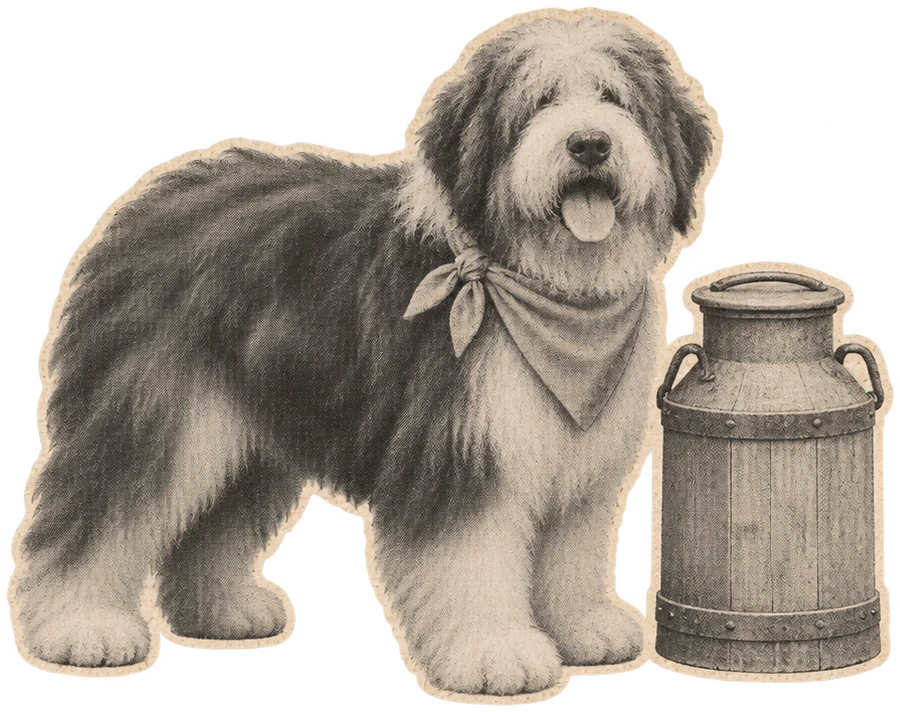
The Old English Sheepdog is a big, square-built British herding dog with a shaggy double coat and a rolling walk. There’s a strong working dog under the hair, which is worth remembering the first time you need to guide one down a narrow hall with a bag of shopping in each hand. A bit of training for those awkward moments, and a way to get the coat dry before it knots, will do more for everyday life than another brush you never get round to using. 1234
Jump to a section
The short version
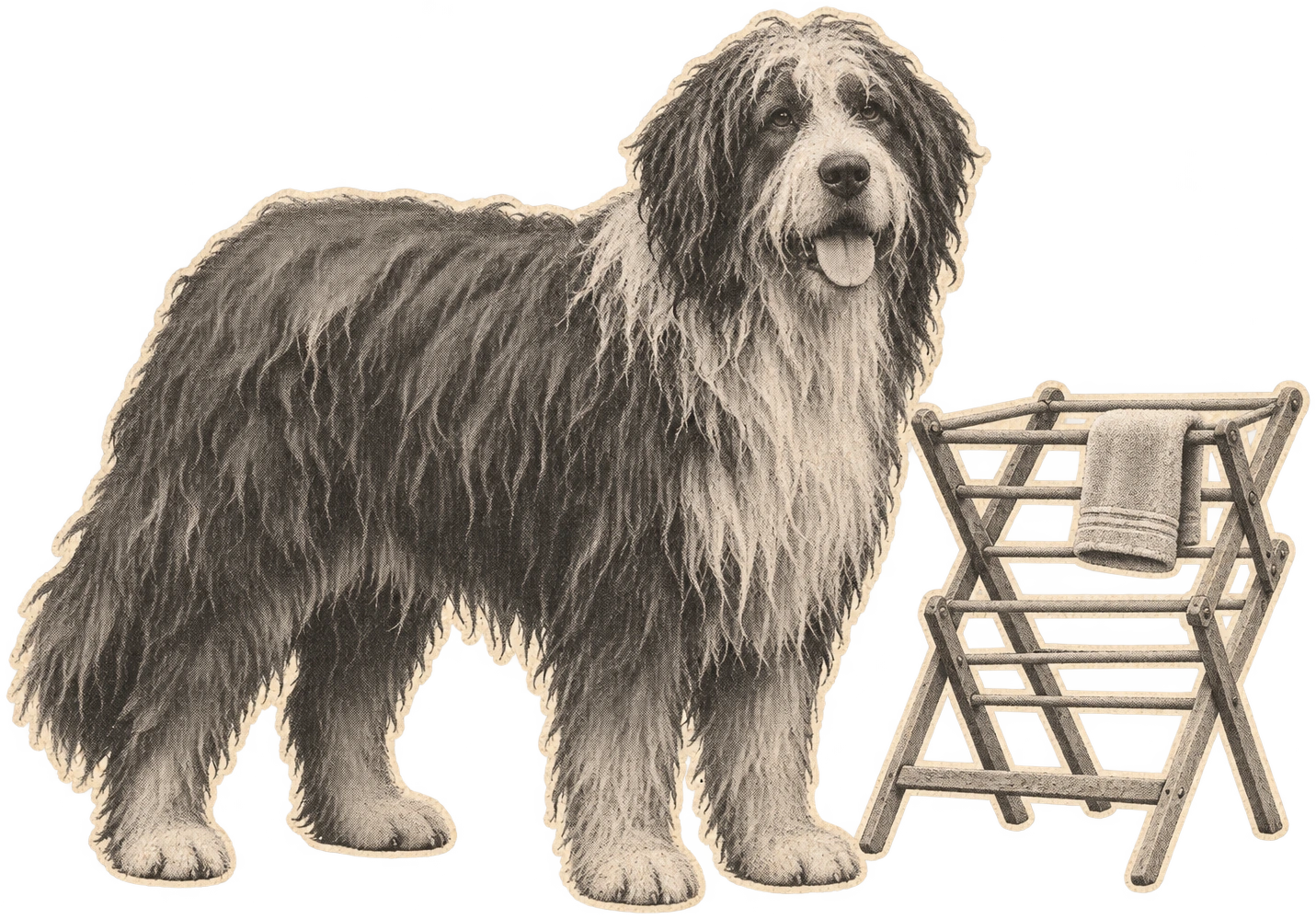
Part the coat where straps and legs rub. If you can’t get down to the base, a brush over the top hasn’t done much. Check under the elbows and behind the ears after a wet walk, dry in sections and don’t pull a tight knot off the skin. Ask a groomer if it’s beyond what you can do comfortably. 2 3 5 6
Teach a turn away from the front door and make a route through the house that doesn’t involve backing your dog around the washing machine. A grown sheepdog can take up most of the available width without doing anything wrong. 2 7 8 9
Old English Sheepdog notes / 01
Where to start
| Start here | Do this first |
|---|---|
| Coat | Check the coat base under the elbows, collar and behind the ears. 3 5 |
| Getting home wet | Towel and part the hair rather than just drying the top. 5 6 |
| Visitors | Give the dog a clear place to go before the door opens. 8 |
| Lead | Rehearse turning and moving away on a quiet stretch. 7 |
The Old English is not the Bearded Collie
The Old English Sheepdog is separately listed in the Royal Kennel Club’s pastoral group. You may hear “Bobtail” from older accounts, but it’s a historical name, not a description every dog will match. The Bearded Collie has its own UK standard. A grey-and-white dog with hair over its eyes isn’t enough to tell the two apart, let alone identify a cross. 1 2 10
Old English Sheepdog notes / 02
Which sheepdog?
You need to know how much dog is under the coat
The UK standard describes heights from 61 cm for males and 56 cm for females at the shoulder. Those are written breed-standard minima, not a shopping size or a target for growth. Check your own dog’s actual chest measurement and feel the ribs and waist when assessing body condition. The silhouette of a well-brushed sheepdog doesn’t give much away. 2 11 12
Measure their space with the car restraint in place and work out how they’ll get in and out as adults. If you need a ramp, introduce it while the dog is comfortable and check the footing. It’s worth doing before anyone is late for the vet and trying to lift a dog who has other ideas. 9 13 14
Old English Sheepdog notes / 03
The dog under the coat
Brush right through or you’ve mostly changed the parting
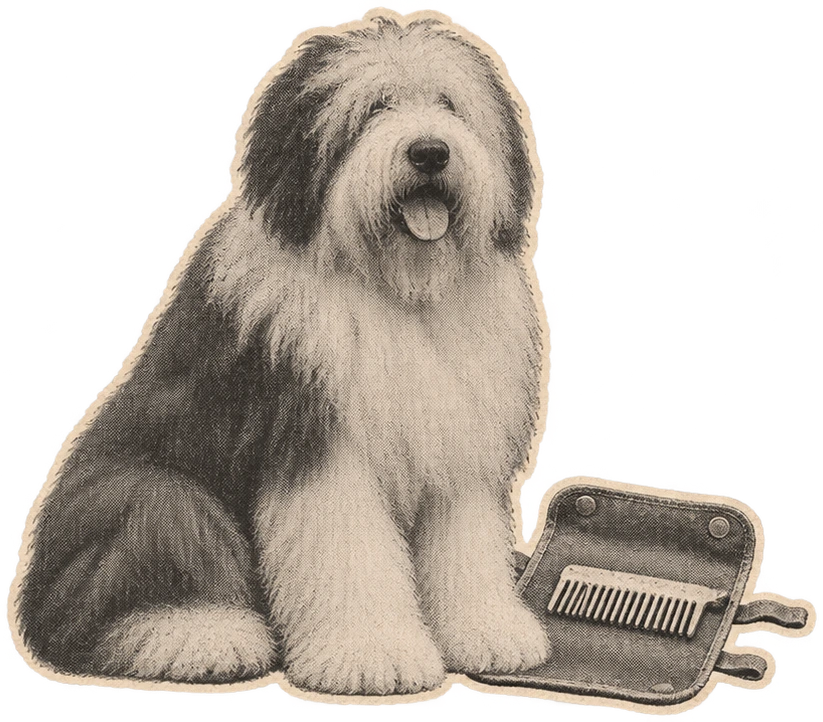
The rough outer coat sits over a dense undercoat. Keep the work down to one small section at a time. Part the hair, brush through gently and see whether a comb can pass without snagging. Move on before the dog gets fed up. Don’t try to snip out a mat you can’t separate from the skin. A groomer can help you choose a practical length and show you what to maintain between appointments. 2 3 5 6
Check the chin after meals and dry the spots that stay damp after a walk. Look for grass seeds or grit between the toes. Get advice if a paw starts to hurt or an eye is red or held shut: a big fringe can hide a problem as easily as it hides an eye. 3 5 15 16 17
Old English Sheepdog notes / 04
Check where it rubs
| Where | What to look for |
|---|---|
| Around the elbows | Mats under the outer coat, especially where the harness crosses. 5 11 |
| Behind ears | Early tangles you can deal with without a battle. 5 6 |
| Chin and lower legs | Bits of dinner, mud and moisture under the top coat. 3 5 |
| Eyes and paws | Pain, squinting, irritation or an obvious change needs checking. 15 16 17 |
Work out what happens before the big reaction
An individual sheepdog might get animated when the house comes alive or stand quietly and watch. If it’s wheels or people running that make your dog tense, start by picking a position with more space. Teach a turn away when they can still notice you. Trying it for the first time beside a bike going full pelt is asking rather a lot. 4 7 18 19
Watch what happens if you brush their feet or guide them through a narrow space. Give them room to back away. A sudden objection to a familiar touch or step can mean it hurts, and is worth a check instead of more insistence. 6 17 19
Old English Sheepdog notes / 05
Catch it early
Practise the polite U-turn before you need it
Find a quiet spot and pick a cue to move away with you. Make the turn wide enough that the dog can follow, rather than asking for a tight pivot on a shiny floor. Reward them for finishing beside you. If it keeps going wrong, give yourself a wider gap instead of pulling them round by the harness. 7 9 11 18
Teach grooming separately: one bit of brush work while the dog chooses to stay, then a pause. A calm mat cue can be handy when you bring the shopping through. Don’t make it the place you always go with the brush and a job you know they hate. Give them a reason to go there voluntarily. 5 6 20
Old English Sheepdog notes / 06
Make room for the turn
Walk for the dog, not for the haircut
Give them regular time to move, sniff and explore at a pace they can manage. An Old English has a characteristic roll at a walk in the written breed standard; that isn’t a reason to dismiss a new limp, uneven stride or difficulty getting up. Notice how your own dog moves when they’re well, and take a short video for your vet if something changes. 2 17 21 22
Take the lead around stock, and be willing to choose an easier route in warm weather. Watch for tiredness and heat, particularly if it’s muggy and there’s nowhere to cool down. If they struggle to breathe, get emergency advice right away. 23 24 25
Old English Sheepdog notes / 07
Notice how they move
| Situation | Useful plan |
|---|---|
| A comfortable, healthy day | Varied routes and somewhere for a proper sniff. 21 22 |
| Stock ahead | Give plenty of room and keep the dog on a lead. 24 |
| Warm weather | Choose a cooler time or a shorter route, with water and shade. 23 |
| A new limp or slow rising | Don’t put it down to the breed’s walking style. 2 17 |
Give the wet dog somewhere to go
Set up a washable, non-slip mat by the door, with a towel you can reach without letting go of the lead. Give the dog room to turn and lie on a dry spot once they’re through. A wet sheepdog shaking in a narrow kitchen will find corners you haven’t cleaned since you moved in. 5 9 20
Find a place where they can get away from busy arrivals, and check the route to it. A mat doesn’t help much if two people and another dog need to step over it. If your dog is distressed when alone, build up time in small steps and get help if they aren’t coping. 8 20 26 27
A large dog doesn’t need to be rough to knock someone over
Stay close enough to manage greetings with children and keep the dog out of fast games if they get excited by the movement. A barrier is more useful than asking a small person to stand still once a dog is already running towards them. Don’t let children pull back the fringe to take a closer look, or climb over a dog who’s resting. 8 18 28
For cats or other dogs, give everyone routes apart and separate food and resting places. The dog’s size makes it worth planning the space even if the introduction goes well. 4 29 30
Health: hips, elbows, eyes and what the DNA tests cover
The Royal Kennel Club’s individual Old English Sheepdog page puts genetic diversity plus hip, elbow and eye screening under Good Practice. It lists the DNA test for primary ciliary dyskinesia (PCD) under Best Practice. It recognised the multiocular defect (MOD) DNA test in August 2026 and says it will formally add it to the Health Standard and Find a Puppy from January 2027. These are separate from checking a sore eye or a new limp on the dog you have now. 1 15 17 31 32 33 34 35 36
PCD can affect how the airways clear mucus. The 578-dog research included selected affected dogs and dogs tested for a known variant; it doesn’t tell us how many pet Old English Sheepdogs in the UK have it today. Get recurrent coughing or nasal discharge checked rather than trying to work out the cause from a breed label. Struggling to breathe is an emergency. 25 35 37 38
The 2024 Dogs Trust UK study reported a median lifespan of 12.1 years for the breed. That’s a group estimate from records, not a promise for an individual. 39 40
Old English Sheepdog notes / 10
Health conditions and screening
| Topic | What’s useful to know |
|---|---|
| Hips and elbows | Ask for the parent results; get new stiffness or limping checked. 1 17 32 33 |
| Eyes | Confirm the clinical check separately from the MOD DNA result. 1 34 36 |
| PCD | The DNA result is for a specific condition, not a diagnosis for every cough. 35 37 38 |
| Lifespan | UK median 12.1 years, not a forecast. 39 40 |
| Screening | Ask for the actual test, date and result for each parent. 1 41 |
| Breeding | Ask how these results and genetic diversity were considered. 1 31 42 |
| Urgent conditions | Call an emergency vet if your dog struggles to breathe. 25 |
Price the whole coat, not a quick wash
Get a groomer to quote based on the actual dog and what a full dry and brush-out take. Ask what a shorter trim would mean for brushing between appointments and what happens if mats need more time. Front up about a dog who doesn’t like being dried rather than hoping the groomer discovers it during a very loud appointment. 3 5 6 43
Price insurance for your postcode and see what happens with ongoing conditions. If you’re booking a walker, make sure they can handle this particular dog, have the room if they travel in a vehicle and know what happens around narrow paths or fast bikes. 7 13 43 44
Old English Sheepdog notes / 11
Price the full routine
| Cost | Question to ask |
|---|---|
| Grooming | How long for a proper wash, dry and brush through? 3 43 |
| Insurance | What are the excess, annual limit and existing-condition exclusions? 43 |
| Walker | Can they manage the dog comfortably around its usual distractions? 7 44 |
| Kit | Measured harness, safe travel restraint and washable floor protection. 9 11 13 |
A British working dog before it was a famous shaggy face
The Royal Kennel Club traces the Old English Sheepdog to working dogs in Britain, though the exact origins of the modern breed are debated. Its compact body and weatherproof undercoat were part of a working build. “Bobtail” comes up in breed history, but the short tail isn’t what makes this a useful, sturdy herding dog. 1 2
Today you can use that information to understand the coat and build. It doesn’t tell you how your own dog will greet a child or behave round the neighbour’s hens. 2 4 18
Old English Sheepdog notes / 12
The working dog
See them on an ordinary walk before falling for the fringe
If you’re adopting, find out what the dog is like on a lead, around visitors and when brushed. Ask whether the person saw that behaviour in a kennels, foster home or somewhere else. Plan the first few days around calm outings and a place the dog can get some rest, not a succession of visitors eager to see that face. 4 5 20 45
When seeing a litter, meet the puppies with their mum and check the parents’ results. Watch an adult dog get up, walk and have a bit of coat handled if there’s a chance. A sleepy pup and a photograph of a show coat won’t give you much idea of what the first soaking wet November walk is like. 1 3 17 41 46
Old English Sheepdog notes / 13
Meet the adult dog
| Ask | Why it helps |
|---|---|
| What grooming does the dog already tolerate? | Gives you a comfortable starting point. 5 6 |
| How do they walk away from something exciting? | Helps you plan safer routes and training. 7 18 |
| Can I match the tests to each parent? | Confirms the dog and scheme rather than taking “health tested” on trust. 1 41 |
| Where have you seen them settle? | Separates a real observation from a guess about your house. 4 45 |
Sources
- S1Royal Kennel Club Old English Sheepdog individual breed profile and screening adviceSource · checked 21 November 2026
- S2Royal Kennel Club written Old English Sheepdog breed standardSource · checked 21 November 2026
- S3PDSA veterinary Old English Sheepdog owner breed profileSource · checked 21 November 2026
- S4Dogs Trust Old English Sheepdog owner and rehoming profileSource · checked 21 November 2026
- S5PDSA regular dog grooming and care guidanceSource · checked 21 November 2026
- S6Dogs Trust gentle handling and grooming foundationsSource · checked 21 November 2026
- S7Dogs Trust loose-lead walking and direction changesSource · checked 21 November 2026
- S8Dogs Trust preparing for visitorsSource · checked 21 November 2026
- S9Canine Arthritis Management veterinary home footing and access guidanceSource · checked 21 November 2026
- S10Royal Kennel Club separate Bearded Collie written standardSource · checked 21 November 2026
- S11Dogs Trust fitting and introducing a harnessSource · checked 21 November 2026
- S12PDSA checking dog body conditionSource · checked 21 November 2026
- S13Dogs Trust safer car travel with a dogSource · checked 21 November 2026
- S14Dogs Trust training for the carSource · checked 21 November 2026
- S15PDSA recognising a painful or held-closed eyeSource · checked 21 November 2026
- S16PDSA practical health check at homeSource · checked 21 November 2026
- S17PDSA veterinary advice on lameness and changes in mobilitySource · checked 21 November 2026
- S18Dogs Trust reducing chasing around movementSource · checked 21 November 2026
- S19Dogs Trust reading canine body languageSource · checked 21 November 2026
- S20Dogs Trust mat and settle guidanceSource · checked 21 November 2026
- S21PDSA tailoring exercise to the individual dogSource · checked 21 November 2026
- S22Dogs Trust enrichment and sniffing activitiesSource · checked 21 November 2026
- S23Dogs Trust warm-weather walking safetySource · checked 21 November 2026
- S24Natural England countryside code with dogs around livestockSource · checked 21 November 2026
- S25PDSA emergency first aid for pets struggling to breatheSource · checked 21 November 2026
- S26Dogs Trust building calm alone timeSource · checked 21 November 2026
- S27Dogs Trust separation distress signs and supportSource · checked 21 November 2026
- S28Dogs Trust safeguarding children around dogsSource · checked 21 November 2026
- S29Dogs Trust cat and dog introduction guidanceSource · checked 21 November 2026
- S30Dogs Trust introduction and separate resources for another dogSource · checked 21 November 2026
- S31Royal Kennel Club current central Health Standard and MOD timingSource · checked 21 November 2026
- S32British Veterinary Association Hip Dysplasia SchemeSource · checked 21 November 2026
- S33British Veterinary Association Elbow Dysplasia SchemeSource · checked 21 November 2026
- S34British Veterinary Association clinical eye screeningSource · checked 21 November 2026
- S35Royal Kennel Club DNA test for PCDSource · checked 21 November 2026
- S36Royal Kennel Club DNA test for multiocular defectSource · checked 21 November 2026
- S37Original Old English Sheepdog retrospective PCD study, 578 selected dogsSource · checked 21 November 2026
- S38PDSA veterinary advice on coughing in dogsSource · checked 21 November 2026
- S39McMillan et al. original UK dog longevity studySource · checked 21 November 2026
- S40Dogs Trust original UK breed lifespan results, Old English Sheepdog rowSource · checked 21 November 2026
- S41Royal Kennel Club individual health results checksSource · checked 21 November 2026
- S42Royal Kennel Club guidance on genetic diversitySource · checked 21 November 2026
- S43PDSA everyday dog ownership and insurance costsSource · checked 21 November 2026
- S44Dogs Trust choosing a dog walkerSource · checked 21 November 2026
- S45Dogs Trust settling in a rescued dogSource · checked 21 November 2026
- S46RSPCA visiting and choosing a puppy breederSource · checked 21 November 2026
