
Breed guide / Newfoundland
Living with a Newfoundland
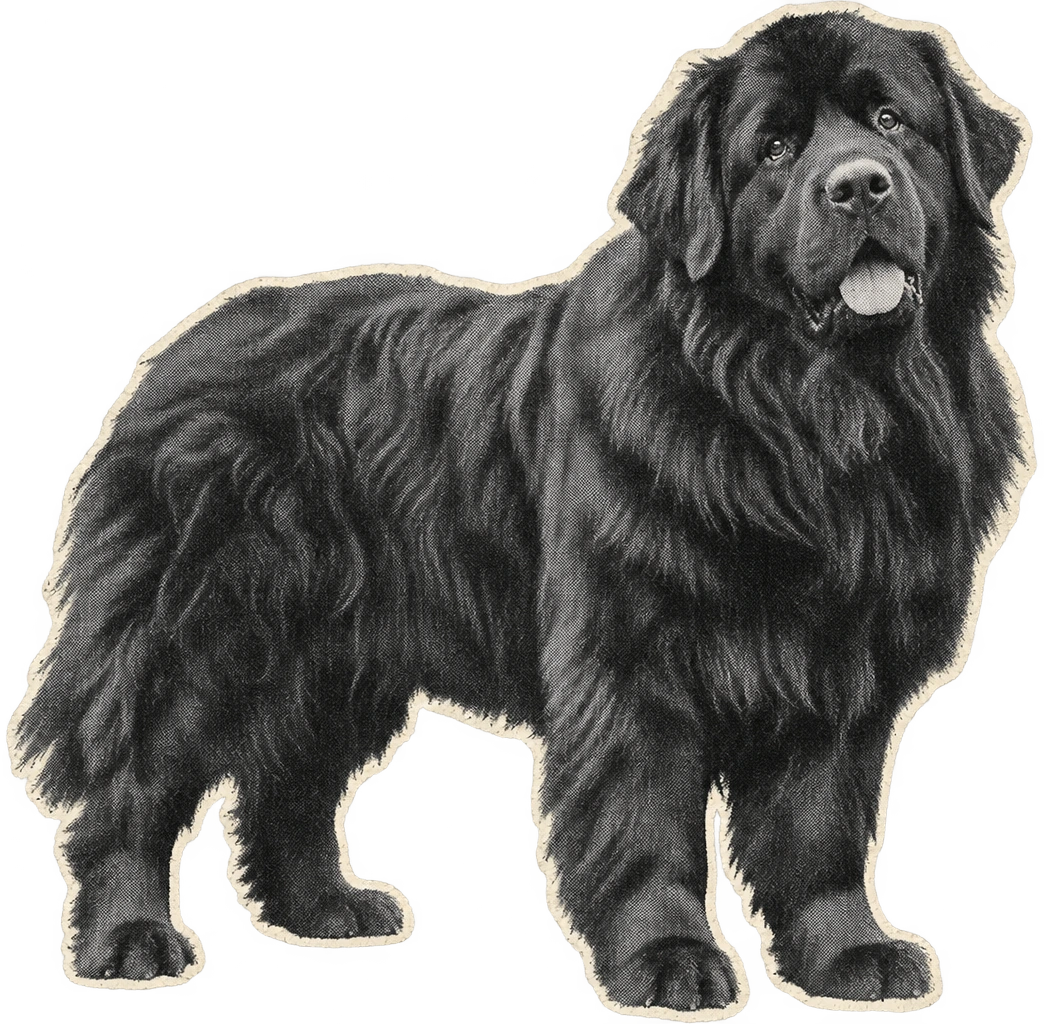
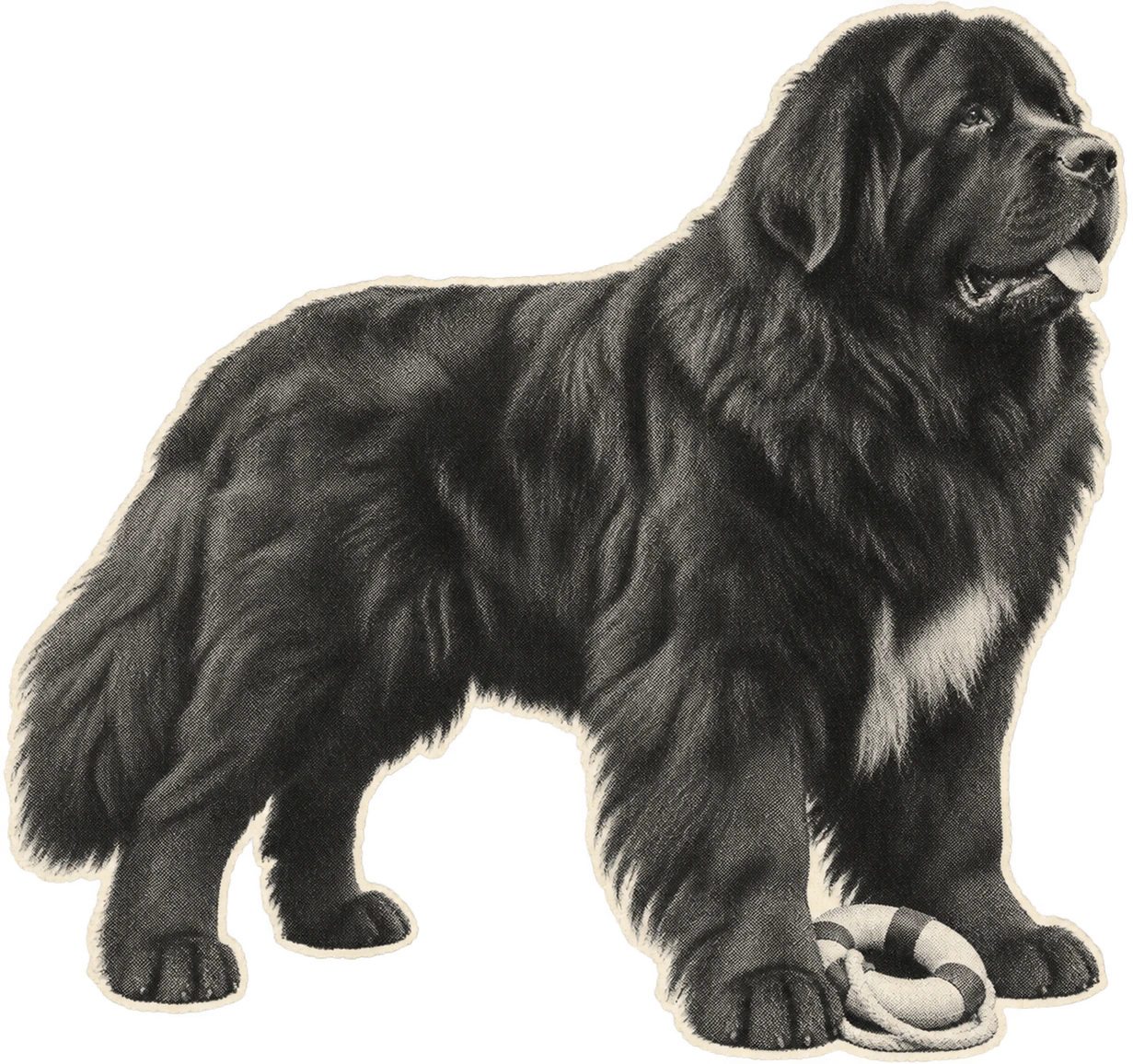
The Newfoundland is a huge Canadian working dog built for pulling on land and swimming in cold water. The thick coat and big paws are the bits you notice first. At home, you’ll get to know the wet dog who wants to be in whichever room you’re in, and who’s quite capable of moving the doormat just by turning round. 123
Jump to a section
Start with the bits you do every day
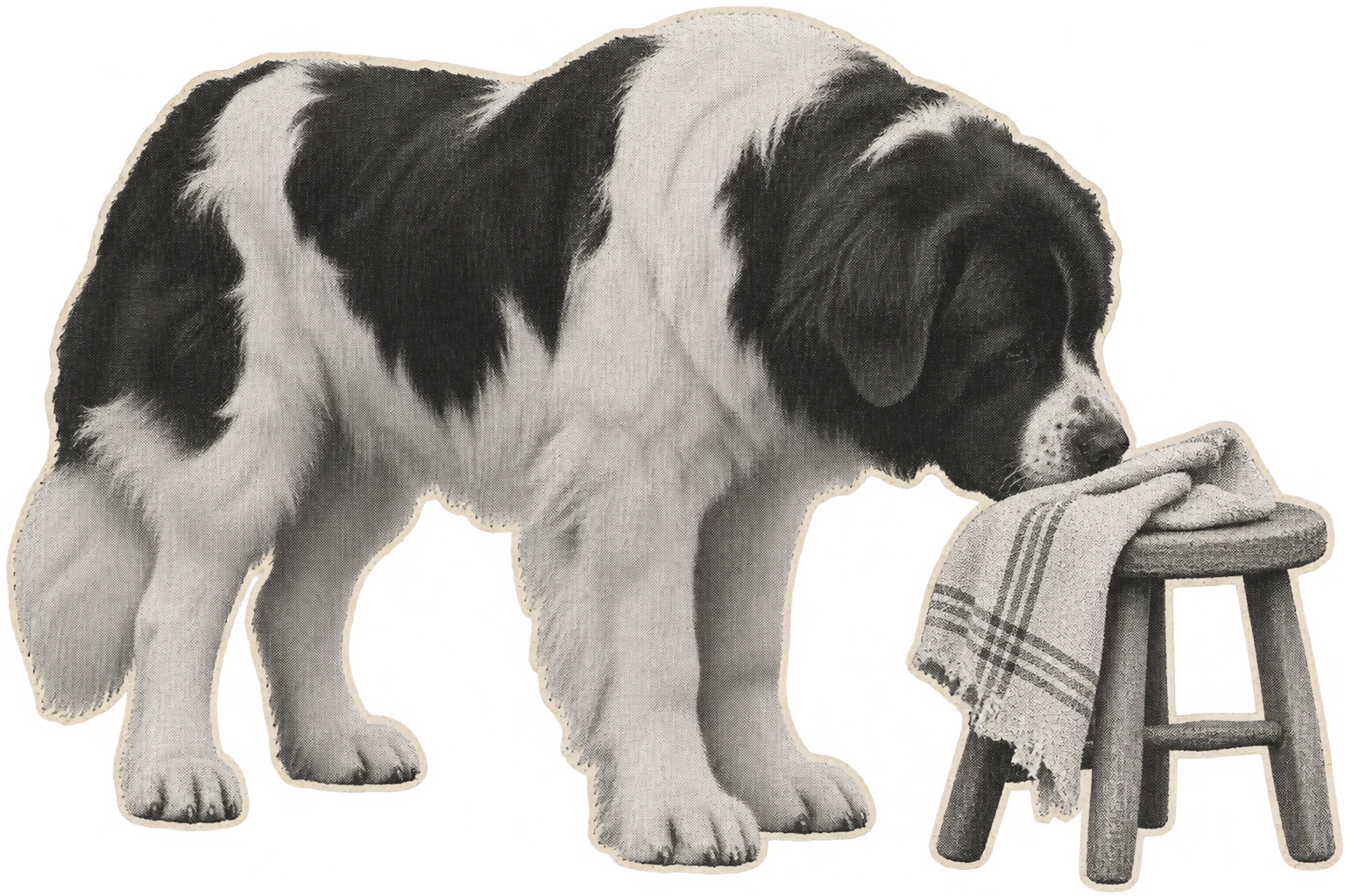
If you share your house with a Newfoundland already, clear a route from the door to the bed. Pick a spot where they can lie flat without somebody stepping over them and put a towel just inside the door, not in the washing machine where it won’t help. A grippy path from the door to the car is more use than a fancy lead if the dog’s hesitant on wet tiles. 3 15 30
Teach a comfortable stand for brushing and a short pause before going through doors. Practise both on quiet days while you have two free hands. It’s much harder to teach a new word while you’re holding an umbrella and a dog the size of the boot. 11 20
Newfoundland notes / 01
Start here
| Start with | Do this |
|---|---|
| Slippery doorway | Use a secured mat that doesn’t move when pushed. 30 |
| Damp undercoat | Dry down near the skin and check for soreness. 5 17 |
| Water | Work out where they get out before letting them get in. 4 |
| New limp or reluctance | Call the vet, especially if sudden, painful or ongoing. 29 |
Newfie, Newfoundland and the Landseer coat
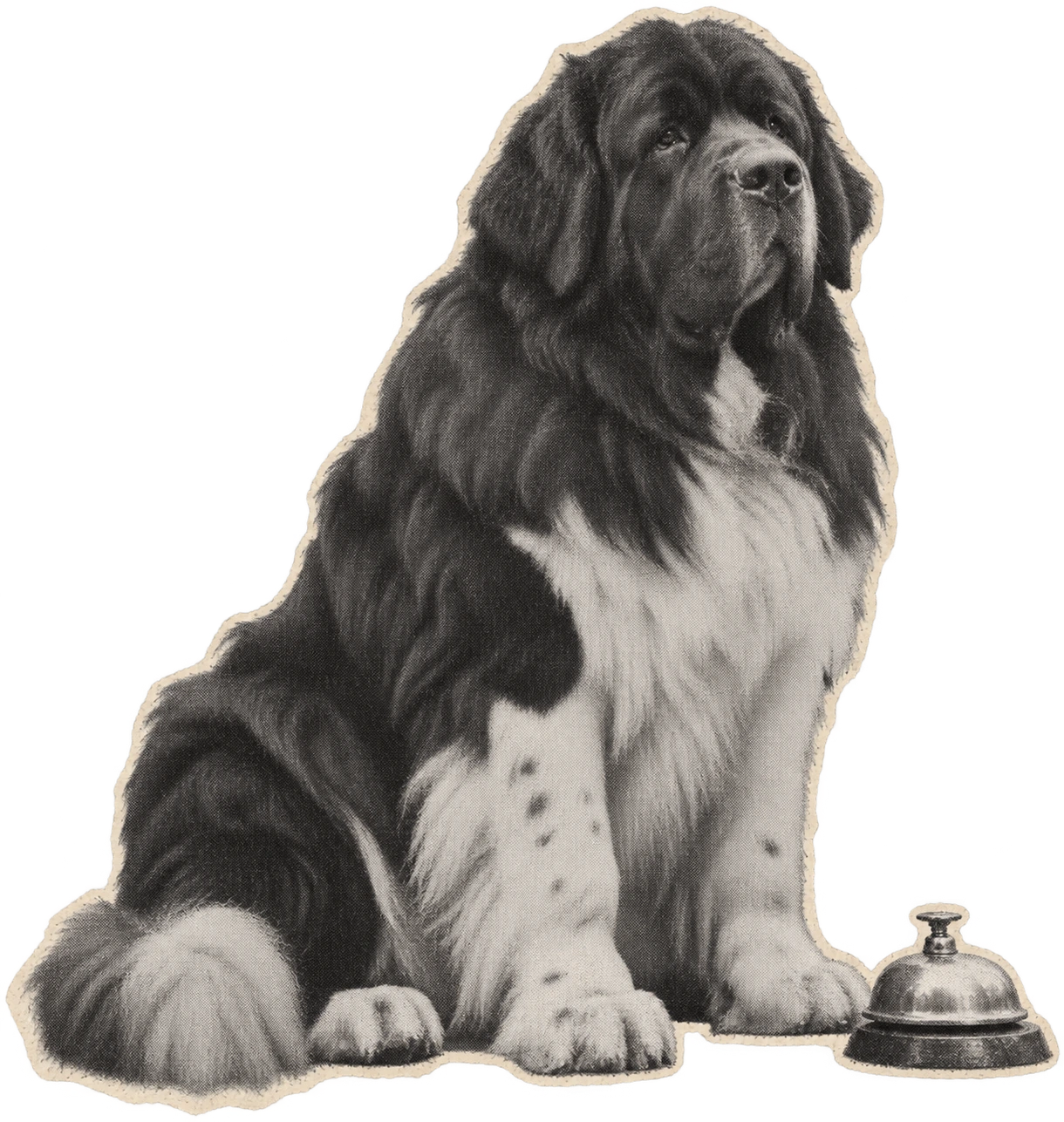
Newfie is the nickname. The Royal Kennel Club lists black, brown and Landseer among the recognised breed colours for the UK Newfoundland. In that context, Landseer is the familiar white-and-black coat, not a claim about a dog’s character or a different UK Newfoundland size. The FCI also lists a separate Landseer (European Continental Type) standard, so pay attention to which registry a document actually comes from. 1 2 8
The working-group label tells us what this breed was built to do. It doesn’t tell you whether your dog likes swimming, is safe off lead at a lake, or is comfortable around somebody else’s children. Check the dog in front of you rather than the paintwork. 2 4 31
How much dog are we talking?
The UK standard gives approximate adult guide figures of 71 cm and 64–69 kg for dogs, and 66 cm and 50–54.5 kg for bitches. Those aren’t targets. If yours is smaller or bigger, take your vet’s view of their build and body condition over a number in a table. Feel for the ribs and waist because that coat can hide both. 2 16
With a dog this size, getting into the boot is a household matter. Check the height and approach when the car is parked somewhere level. If you need a ramp, practise it slowly while the dog’s comfortable, use a stable grippy one rated for the dog and use a suitable travel restraint. Work out who would help if you ever had to move them while injured. 9 30 45
Newfoundland notes / 03
Make room
The coat is only dry when the undercoat is dry
The Newfoundland has a substantial double coat. Get your fingers into the bits behind the ears, under the collar, inside the legs and through the trousers after water or rain. Dry those places gently before the dog disappears under the kitchen table. Brush in manageable sections and part the hair to see the skin. Some days a quick check is enough; when shedding heavily, expect a longer job. 2 3 5 17
A mat is not a challenge to see how much either of you can stand. If the brush catches, stop and see what it’s caught on. Leave tight mats near skin to a groomer or vet instead of trying to snip blindly. A sour smell, sore patch or regular head shaking after swims deserves a vet check. 5 17 18 37
Newfoundland notes / 04
After a swim
| When | Check |
|---|---|
| At the door | Remove obvious debris, dry the feet and check between toes. 18 19 |
| After swimming | Look past the topcoat, especially under the collar and at armpits. 4 5 |
| In shedding season | Work in sections and break before the dog gets fed up. 3 20 |
| Sore, smelly or itchy | Vet first if the skin or ears are bothering the dog. 18 37 |
A friendly dog still needs room to say no
The breed standard calls for a gentle disposition. That is an aim, not a promise. Watch what yours does when the house gets busy. If they keep walking away from the door or try to make themselves smaller on the bed, take the hint and let them go. Visitors can say hello without bending over the dog’s head or reaching for the collar. 2 20 21
A Newfoundland can look so unbothered that it’s easy to miss a change. If yours normally greets you by barging into your knees and suddenly hangs back, think about pain, tiredness, fear or a change at home. New or repeated avoidance is worth a vet call. Practise time alone in short comfortable steps rather than leaving an anxious dog to get on with it. 6 7 22 29
Newfoundland notes / 05
Watch the change
Teach the pause while the puppy is still smaller than you
Start with four paws down and a loose lead around a quiet doorway. Reward the moment the lead softens or the dog pauses; don’t use your shoulder as the training plan. At the park, practise coming away from something boring before trying to call the dog away from deep water, a picnic or a person getting out of a wetsuit. 11 23 25
For day-to-day games, try finding a cloth toy or a few bits of their usual food on a nonslip floor. If you want proper water or draught work, talk to a breed club group about supervised training, equipment and whether the dog is ready. The pram and the supermarket trolley do not need a practice tow. 24 12 13
Newfoundland notes / 06
Four paws down
Walk on land, be choosy about the water
PDSA’s breed guidance suggests around an hour’s exercise for many adults. Use that as an orientation, not a daily test. Break it up if that suits the dog and adjust for age, fitness, heat and joint comfort. For a growing giant puppy, get an individual plan from the vet rather than taking them on the adult route. 3 26 28 29
Pick calm water with a shallow route out, and watch for currents, cold, warning signs and suspected blue-green algae. Bring drinking water, call the dog out for breaks before they tire and don’t make one swim if they’d rather paddle. A strong swimming breed can still get trapped or exhausted. If your dog is in trouble in the water, don’t go in after them; call 999. 4 14 10
Newfoundland notes / 07
Water checks
| When | Practical call |
|---|---|
| Usual walk | Match length and pace to the dog’s condition. Sniffing counts. 24 26 |
| Hot spell | Go in cool hours if suitable, take water and skip the outing if unsafe. 28 |
| Water looks wrong | Strong current, algae or no clear exit means no swim. 4 10 |
| Dog newly slows or stumbles | Stop; get vet advice rather than pushing on. 26 29 |
Make the house easy to walk through
Before buying a bigger sofa, look at the floor. Think about where a fully grown Newfoundland turns, how they pass the fridge door and whether they gain traction going from kitchen to hall. Put down a secured runner where needed. Teach them to go to their own spot rather than hoping two humans and a Newfie can negotiate a narrow landing politely. 25 30
Put a washable bed in a cool, out-of-the-way spot and leave somewhere else for the dog to choose. Give bowls a stable place that gets clean water without creating a slippery puddle. If the dog starts avoiding a floor or struggling to rise even with better grip, talk to the vet. 16 28 29 30
Children, visitors and other pets
A happy greeting from a giant dog can still put a person on the floor. Supervise children and dogs, use gates before the door opens and keep children off the dog’s bed. If an adult can’t watch properly, separate. There’s nothing unfriendly about giving everybody a quieter introduction. 20 31
Give other pets a route out and start introductions with distance. Feed separately if one dog leaves the bowl to check what the other has. Get advice before trying again if one keeps guarding a doorway or another animal can’t move about without being followed. 22 32 33 34
Newfoundland notes / 09
Give them space
Health: joints, heart, urinary signs and bloat
For pre-breeding screening, the Royal Kennel Club’s Newfoundland row puts hip scoring, elbow testing and cystinuria DNA in Good Practice, and the BVA/RKC/ISDS eye scheme in Best Practice. The central page lists heart testing separately under breed-club schemes. The UK Newfoundland Club’s Breeders For Life scheme specifies specialist Doppler echocardiography for breeding dogs. Ask for the report itself as well as the dates and identity on it. A result on a relative is not the same as a result for the dog. 1 35 36 46 48 49
Newfoundland research identified an inherited cystinuria variant, which can contribute to urinary stone formation, and documented familial subaortic stenosis, a narrowing below the aortic valve. These studies establish real breed concerns, not a modern UK percentage or a diagnosis from appearance. If your dog repeatedly strains and can’t pass urine, call the emergency vet now. Call immediately for unproductive retching or sudden bloating, especially with restlessness or collapse. At home you can notice changes; the vet identifies health conditions and appropriate care. 38 39 42 43 50
Newfoundland notes / 10
Health conditions and screening
| Topic | What the evidence means |
|---|---|
| Hips and elbows | Ask for actual parent scores or grades, not merely “tested”. Limping or stiffness in your dog needs its own assessment. 1 29 35 |
| Cystinuria | DNA screens the known variant in this breed; it does not test current bladder health. 35 39 42 |
| Heart | Specialist echo is in the club scheme, not in the two formal RKC columns; no blanket DNA substitute. 35 38 48 49 |
| Eyes | Best Practice UK screening tier; the scheme does not promise lifelong good vision. 1 35 36 |
| Bloat | Retching without bringing anything up or sudden bloat can be emergencies. Call the vet immediately. 3 43 |
| New collapse | Call the emergency vet rather than deciding it is the heart at home. 38 50 |
| Lifespan | The 2024 UK cohort estimated median 11.0 years, 95% CI 10.9–11.6, with 633 recorded deaths in the breed table. It’s a study estimate, not a forecast for your individual dog. 40 41 |
What actually gets expensive?
Measure what you can measure. Get a groomer’s quote for that coat, find out how a dog walker handles a giant dog safely and look at the cost of the right travel restraint or ramp. Ring the vet in advance if you’re unsure how you’d get an injured dog into the car. Size can change equipment and the practical business of caring for a sore dog. 3 9 27 44 45
Read insurance exclusions, the renewal terms and the excess before counting on them. Standard monthly care is one number; money available for emergency out-of-hours care is another. The dog will not wait until payday to do something daft. 44
Newfoundland notes / 11
Budget for the big stuff
| Budget line | Check first |
|---|---|
| Grooming | Does the groomer accept dogs of this size, and what’s included? 5 17 |
| Transport | A correctly sized restraint and a way in that the dog can use. 9 30 |
| Cover | Policy exclusions, excess and how emergency treatment is paid. 44 |
| Food | A suitable diet for the life stage and regular condition checks. 3 16 |
What the breed was built to do
This is a Canadian working breed associated with fishermen and work on land and in water. The official standard describes a dog that can do draught work as well as swim. UK breed clubs still support organised water training and tests. A training group is a sensible place to ask what a first lesson actually looks like for dogs that haven’t done it before. 1 2 12 13
A rescue heritage is not a licence to send your dog after someone in trouble. The pleasant bit you can borrow for ordinary life is working together: finding a toy, coming back from the water when called or walking quietly on a loose lead. Let the dog show you which turns out to be fun. 4 11 23 24
If you’re bringing one home
Ask what it’s like to handle the actual dog, how they get into the car, what they do in warm weather and how they behave when brushed or approached while resting. For a puppy, see the mother with the litter in the setting where they’re raised, and ask for matching parent screening reports, including the club heart reports where applicable. For an adult in rescue, ask what is observed and what remains unknown. 20 35 46 47 48
Spend time with an adult before deciding if the practical stuff works. Then picture a rainy evening when you’re knackered, the floor’s wet and the dog has sat down in the only doorway into the kitchen. If your plan still makes sense, you’ve asked yourself a better question than “do I like a Newfie?” 3 17 30
Newfoundland notes / 13
Ask for proof
| Ask | Look for |
|---|---|
| What do the records show? | Identified dogs, actual results, with scheme and date. 35 46 48 |
| How do you handle grooming? | Calm practical demonstrations with consent and breaks. 17 20 |
| Is the home ready? | A grippy route, real cooling options and a transport plan. 9 28 30 |
| Where can I get help? | Vet, qualified trainer or behaviourist and experienced breed support. 12 22 |
Sources
- S1Royal Kennel Club UK Newfoundland breed profile and Good/Best screeningSource · checked 21 November 2026
- S2Royal Kennel Club official UK Newfoundland breed standardSource · checked 21 November 2026
- S3PDSA veterinary Newfoundland profile and owner careSource · checked 21 November 2026
- S4PDSA veterinary water safety for dogsSource · checked 21 November 2026
- S5PDSA veterinary grooming and coat maintenanceSource · checked 21 November 2026
- S6Dogs Trust introducing time alone, using a recordingSource · checked 21 November 2026
- S7Dogs Trust recognising and getting help for separation distressSource · checked 21 November 2026
- S8FCI Landseer European Continental Type nomenclature and separate standardSource · checked 21 November 2026
- S9Dogs Trust safe dog travel in the carSource · checked 21 November 2026
- S10Blue Cross veterinary information about blue-green algaeSource · checked 21 November 2026
- S11Dogs Trust reward-based trainingSource · checked 21 November 2026
- S12The Newfoundland Club UK water and draught working groups and regulationsSource · checked 21 November 2026
- S13Southern Newfoundland Club current UK water test rulesSource · checked 21 November 2026
- S14Scottish Fire and Rescue Service dog safety and water emergenciesSource · checked 21 November 2026
- S15Dogs Trust harness fitting and checking free movementSource · checked 21 November 2026
- S16PDSA body condition at homeSource · checked 21 November 2026
- S17Blue Cross assessing and caring for coat, skin and matsSource · checked 21 November 2026
- S18PDSA home health check including feet and skinSource · checked 21 November 2026
- S19PDSA veterinary guidance on grass seeds and the signs at ears or pawsSource · checked 21 November 2026
- S20Dogs Trust building comfort with handlingSource · checked 21 November 2026
- S21Dogs Trust recognising and managing reactivitySource · checked 21 November 2026
- S22Dogs Trust sourcing qualified behavioural supportSource · checked 21 November 2026
- S23Dogs Trust recall and long-line trainingSource · checked 21 November 2026
- S24Dogs Trust safe enrichment and search gamesSource · checked 21 November 2026
- S25Dogs Trust building settling skillsSource · checked 21 November 2026
- S26PDSA tailoring dog exercise to the individualSource · checked 21 November 2026
- S27Dogs Trust finding a suitable dog walkerSource · checked 21 November 2026
- S28Dogs Trust safe outings in hot weatherSource · checked 21 November 2026
- S29PDSA veterinary advice on limping and stiffnessSource · checked 21 November 2026
- S30Canine Arthritis Management veterinary access and safe flooring guidanceSource · checked 21 November 2026
- S31Dogs Trust children and dog supervisionSource · checked 21 November 2026
- S32Dogs Trust safer dog and cat introductionsSource · checked 21 November 2026
- S33Dogs Trust introductions to another dogSource · checked 21 November 2026
- S34Dogs Trust resource guarding and separate feedingSource · checked 21 November 2026
- S35Royal Kennel Club Health Standard formal Newfoundland row and separate club heart listingSource · checked 21 November 2026
- S36Royal Kennel Club BVA/RKC/ISDS Eye SchemeSource · checked 21 November 2026
- S37PDSA symptoms and veterinary assessment of ear problemsSource · checked 21 November 2026
- S38Original Pyle Patterson and Chacko familial subaortic stenosis study, not current prevalenceSource · checked 21 November 2026
- S39Original Henthorn and colleagues Newfoundland cystinuria variant studySource · checked 21 November 2026
- S40Dogs Trust original UK longevity table, Newfoundland rowSource · checked 21 November 2026
- S41Original McMillan UK longevity studySource · checked 21 November 2026
- S42PDSA veterinary advice on inability to urinateSource · checked 21 November 2026
- S43PDSA veterinary advice on gastric dilatation-volvulusSource · checked 21 November 2026
- S44PDSA costs and insuranceSource · checked 21 November 2026
- S45PDSA veterinary guidance on safely moving an injured petSource · checked 21 November 2026
- S46Royal Kennel Club health results finderSource · checked 21 November 2026
- S47RSPCA buying a puppy and seeing mother with the litterSource · checked 21 November 2026
- S48UK Newfoundland Club Breeders For Life health testing requirementsSource · checked 21 November 2026
- S49UK Newfoundland Club health testing and Doppler echocardiography detailsSource · checked 21 November 2026
- S50Blue Cross veterinary guidance on dog emergencies including collapseSource · checked 21 November 2026
