
Breed guide / Miniature Pinscher
Living with a Miniature Pinscher
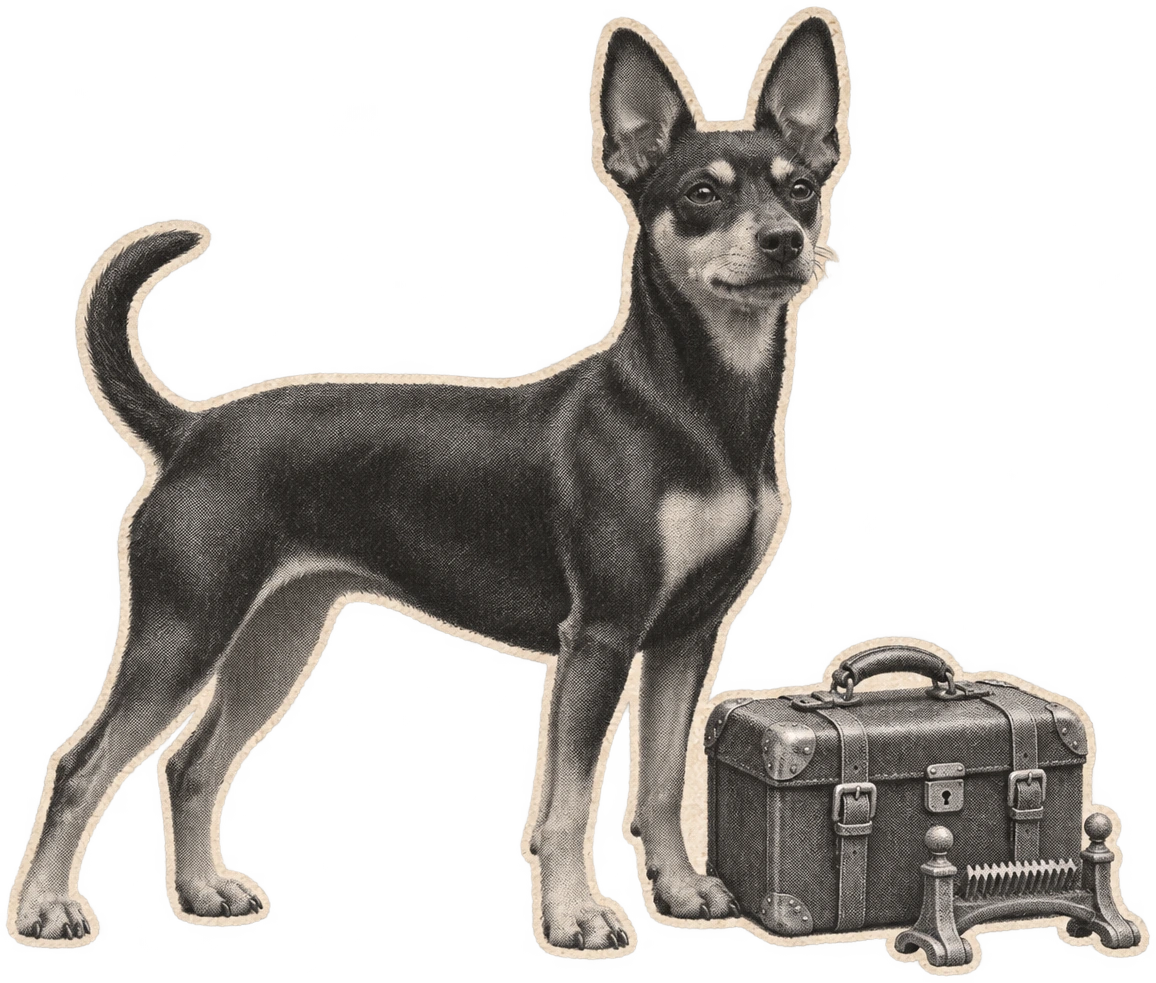
A Miniature Pinscher is a compact German toy dog with a short coat, a square build and a history as a little ratter. That’s a better description than “tiny Dobermann”. They can move through a door quicker than you’d expect, and their feet are too close to everyone else’s to rely on people noticing. A solid doorway routine, interesting walks and a good look at any repeating skip will get you further than treating the dog like a dog that needs carrying everywhere. 12345
Jump to a section
The short version
Put a barrier or a waiting place between the dog and the front door. Practise while the house is quiet. If you’re repeatedly trying to clip the lead on while people step through, there’s no reason to make that the only moment they get to learn it. 4 6
Take them somewhere they can sniff and walk on their own feet, then notice how they move getting home. If one back leg keeps coming up for a few steps, tell the vet even if the dog puts it down again. Don’t assume it comes with the breed’s high-stepping front gait. 2 3 5 7
Miniature Pinscher notes / 01
Where to start
| Start with | What to do |
|---|---|
| Front door | Practise waiting back before the door has to open for real. 4 6 |
| A normal walk | Make room for sniffing and take an easy route past feet and wheels. 3 7 |
| A repeating skip | Make a note of the leg and ask the vet. 5 8 |
| Coat and warmth | Notice how your dog copes with wet and cold, not just the temperature on your phone. 2 9 |
Similar markings don’t make them the same breed
The Royal Kennel Club recognises four separate breeds here. The German Pinscher is part of the Miniature Pinscher’s breed history, and it also features in the history of the Dobermann. The Miniature Pinscher isn’t a Dobermann bred to be tiny. The Manchester Terrier is a separate British terrier, even if a black-and-tan dog makes somebody think of one. 1 10 11 12 13
Miniature Pinscher notes / 02
Check the name
| What it says | How to read it |
|---|---|
| Miniature Pinscher or Min Pin | The small, separately recognised German breed in this guide. 1 2 |
| German Pinscher | Its own larger breed and part of the history of the Miniature Pinscher and Dobermann. 10 |
| Dobermann or Manchester Terrier | Separate RKC breeds with separate standards. 11 12 13 |
A small harness can still be the wrong shape
The UK standard gives 25–30 cm at the shoulder. It describes a compact dog, not an instruction to keep your own dog below a number. Fit around the chest, then check whether they can back away from you without the harness moving over their shoulders or head. Don’t practise that for the first time on a pavement. 2 14 15
Check the front legs while the dog actually walks in the kit. A strap can look tidy while they’re standing and then creep forward every time they turn. Feel the ribs and waist rather than relying on the short coat to tell you everything about condition. 14 15
Miniature Pinscher notes / 03
Fit the harness
Less to brush, plenty to notice
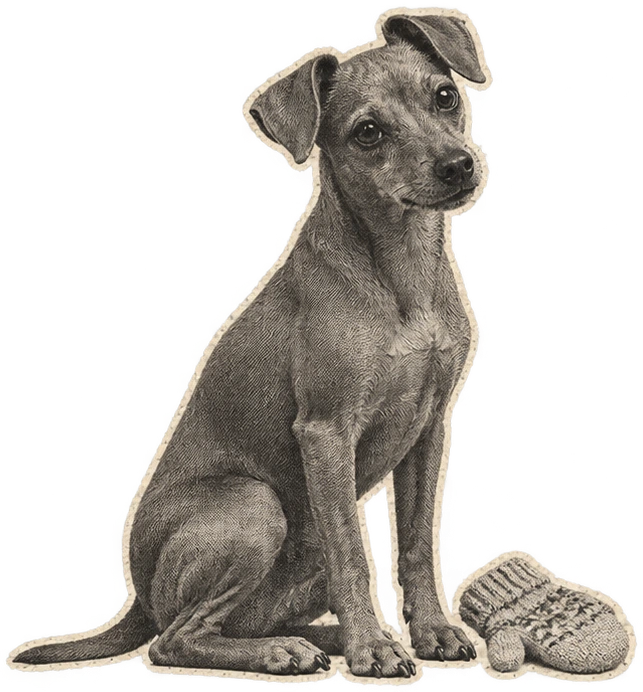
PDSA suggests a weekly brush is usually enough for the short coat. Use that as a chance to look under the harness, around the toes and at the nails. If the dog spends long spells on soft ground, don’t assume they’re wearing their nails down just because they’re busy outdoors. Ask a vet nurse or groomer to show you if you’re unsure about clipping. 2 3 16 17
A short coat can leave some dogs less comfortable in cold or wet weather. Watch what your dog does, and if you use an outer coat, check it doesn’t catch the legs or rub under the harness. A dog standing stiffly in it on the doormat hasn’t offered much evidence it fits. 9 14 18
Miniature Pinscher notes / 04
Check the short coat
| Where | What to look for |
|---|---|
| Short coat | Brush gently and check the skin as you go. 3 16 |
| Harness line | Look for new redness, damp or rubbing. 14 16 |
| Paws and nails | Check for sore feet, long nails or anything caught between the toes. 16 17 |
| Cold or a wet coat | Adjust for the actual dog and check any jacket for free movement. 9 14 |
What happens just before they make a noise?
If your Min Pin sounds the alarm as somebody crosses the front window, take away the best seat for watching it and reward another place to go. If the bark starts after you leave, record what happens rather than working on the doorbell again. Those are two different jobs. 19 20 21
Look for the first ear or head movement before they’ve got all the way to the door. If the dog is already backed into a corner or trying to get away from a visitor, make space instead of asking them to be friendly on command. 6 18 22
Miniature Pinscher notes / 05
Hear the trigger
Give the front door its own lesson
Start somewhere away from the busy door. Reward stepping onto a mat or waiting behind a gate, then add a hand on the latch, then a small opening. If it all falls apart when someone knocks, that tells you to make the practice easier, not louder. 4 6 23
For a change of pace, hide part of the normal ration in an easy search. Give them a way to finish and settle instead of keeping the household on full alert. Make recall worth doing in quiet places before expecting it to undo whatever they’ve spotted on the other side of the hedge. 7 23 24
They can walk. You don’t have to be their lift
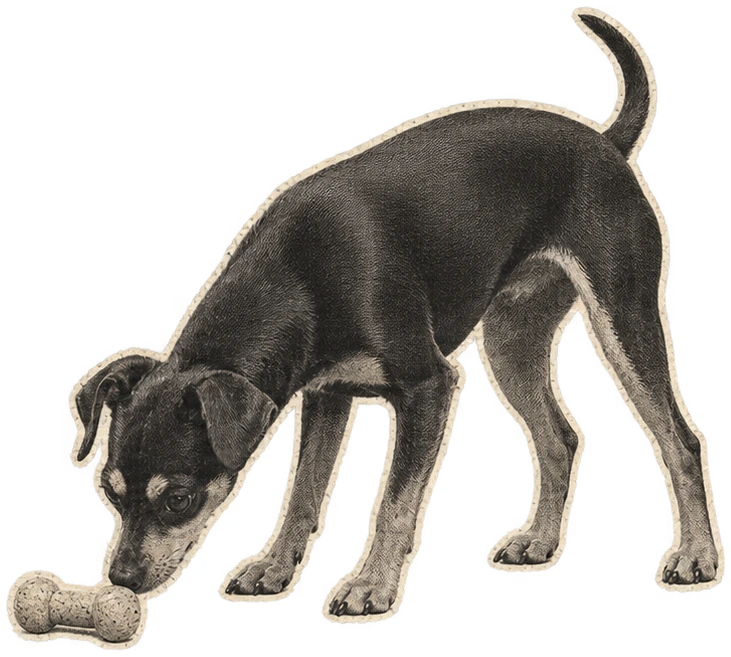
The RKC and PDSA give around half an hour or less as general breed guidance. Take it as a rough starting point, not a cap or a prescription. Give a fit adult regular chances to move and sniff. Adjust the route if heat, cold, a sore foot or a crowded pavement is making it hard. 1 3 7 9 25 26
Use a lead near traffic and livestock. If they suddenly won’t bear weight or are in severe pain, contact your vet straight away. A persistent change that has been there longer needs checking too. Don’t make them do another lap so you can get a better video. 5 8 27
Miniature Pinscher notes / 07
Walk at their pace
| Situation | Do this |
|---|---|
| A fit adult | Regular short outings with room to stop and sniff. 3 7 25 |
| Busy roadside or livestock | Use a lead and make space before you have to pass them. 27 |
| Difficult weather | Make the outing shorter or choose a more sheltered route. 9 26 |
| Repeated skip or new limp | Tell the vet what changes and when, without asking the dog to repeat it. 5 8 |
Walk your house from a dog’s height
Look at the gap where the gate hinges and the stretch of floor where the dog has to turn. A runner can help on a slippery route, and a bed off the main walkway makes it easier for a small dog to stay out of feet without staying under a chair all evening. 6 28 29
If they jump from a high sofa onto tiles, offer a lower resting spot or a stable way down they’ll actually use. Choose a spot near people if they like that, but leave room to get away. Put the lead by the entrance instead of trying to find it after the door is already open. 4 6 23 28
Little dogs don’t owe people a cuddle
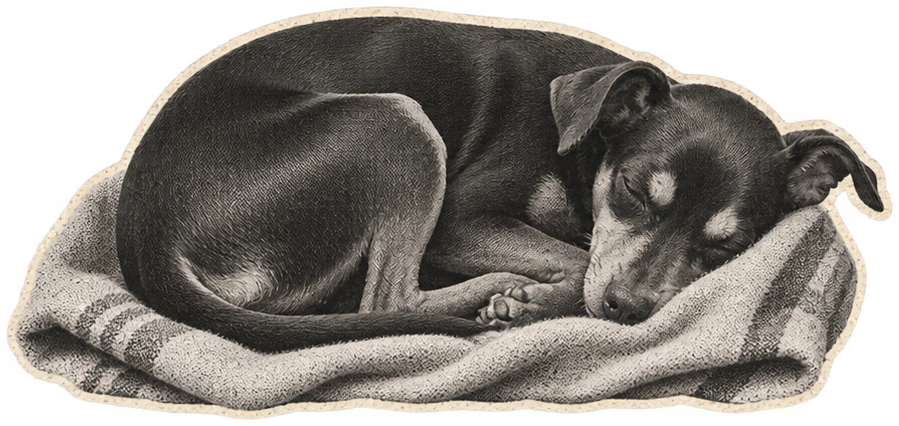
Supervise children and dog together and let the dog walk away without being picked up again. Ask visitors to sit or stand back rather than bending over the dog just because the dog is short. If the dog leaves or stiffens, take that as the end of the greeting. 18 22 29
Introductions to other dogs and cats need space. Give the cat an escape route and keep separate feeding places if food is causing tension. A history of ratting isn’t a verdict on this individual dog, but it’s another reason to take supervision and barriers around small pets seriously. 1 30 31 32 33
Miniature Pinscher notes / 09
Let them say no
The high-stepping walk isn’t a diagnosis
A Miniature Pinscher can have a high-stepping front action in the UK standard. A repeated hind-leg skip, new pain or refusing to bear weight isn’t something to shrug off as part of that action. A vet can check the kneecap and consider other causes. The UK breed club offers its own patella screening. A US referral-record result cited by a UK paper isn’t a current UK Miniature Pinscher prevalence estimate, and club results aren’t an unbiased sample of every dog. 2 5 8 34 35
For breeding dogs the RKC breed page names prioritising genetic diversity as Good Practice. Its Best Practice is the BVA/RKC/ISDS Eye Scheme including litter eye screening. Those aren’t the same as the separate breed club patella check. An eye certificate also doesn’t tell you why a dog has new squinting, cloudiness or difficulty seeing. Contact the vet promptly for a sudden or painful eye change. 1 34 36 37 38
The 2024 Dogs Trust UK table estimates median lifespan at 13.7 years from 660 Miniature Pinscher records, including 167 deaths. Its 95% confidence interval is 13.1–14.2 years. It describes a population, not the number of years your dog has ahead of them. 39 40
Miniature Pinscher notes / 10
Health conditions and screening
| Health question | Useful answer |
|---|---|
| New skip, limp or holding a leg up? | Get a veterinary check; don’t diagnose it from a gait nickname. 5 8 |
| RKC Good Practice? | Prioritising genetic diversity on the breed profile. 1 36 |
| Added in Best Practice? | BVA/RKC/ISDS eye examination and litter eye screening. 1 36 37 |
| What about the kneecaps? | A separate Miniature Pinscher Club patella screening scheme. 34 36 |
| An eye suddenly looks sore or cloudy? | Contact the vet promptly. A result for a different date won’t explain it. 38 |
| What did the cohort find? | A UK dataset median of 13.7 years, not a forecast. 39 40 |
| What rate of slipping kneecaps? | No current UK breed rate inferred from club or overseas records. 34 35 |
Small kit doesn’t make the rest of the bill small
Budget for a properly fitting harness and, if the dog needs it, a winter coat they can move in. Ask what routine vet appointments cost and what a policy would cover if eyes or knees needed investigation. Check how the policy treats existing symptoms, not just the largest number on the sales page. 9 14 41
If you’ll use a walker, ask whether there’s a quieter route and how they handle passing big dogs or people on crowded paths. Make sure they know how you get the lead on before anybody gets to the door. 4 22 42
Miniature Pinscher notes / 11
Price the routine
From German ratting dog to the pet inspecting your hallway
FCI records Germany as the breed’s origin. The Royal Kennel Club describes a Pinscher variety used for ratting and later kept as a companion. Its account puts the breed’s arrival in the UK in the 1950s. Breed history explains some of the labels and the compact working shape, not whether your own dog will get on with small animals. 1 2 43
Miniature Pinscher notes / 12
German roots
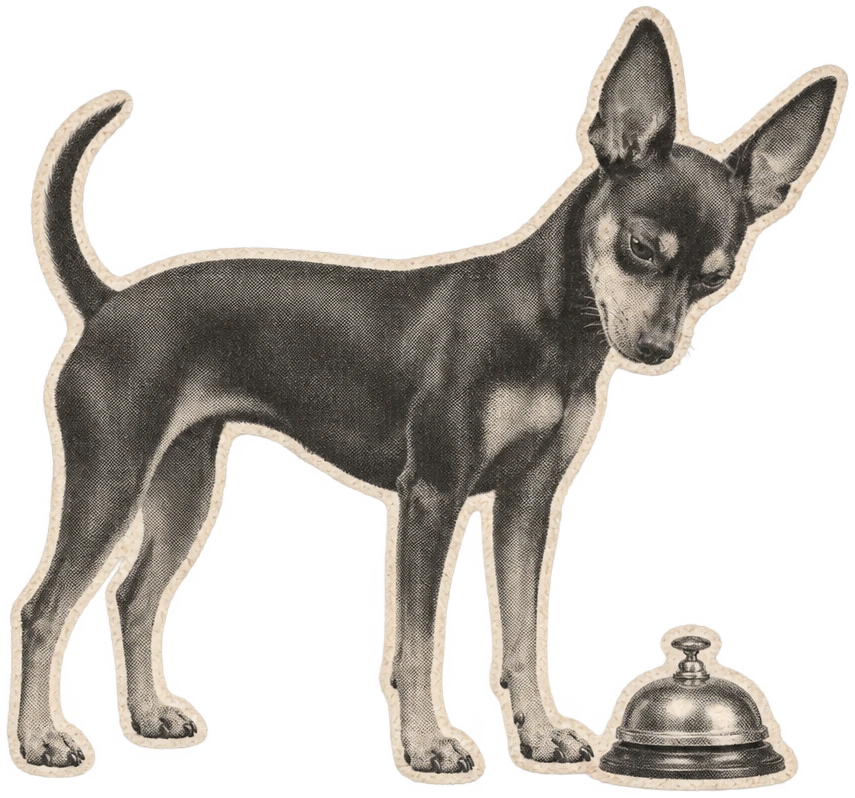
Find out how this dog gets through an ordinary day
For rescue, ask what happens at the door, how the dog handles other pets and whether there’s any record of an eye or kneecap problem. For a puppy, see the litter with its mother where it’s raised and ask for dated parent and litter records where applicable. Check what was done and whose name is on the result, not how many pages came in a folder. 1 34 37 44 45 46
For a dog you already own, start with the routine that gives you both grief. If it’s the door, change where the lead goes on. If they hate the coat, check the fit and practise while it’s not raining. The less you have to do for the first time in a hurry, the better. 4 9 14 18
Miniature Pinscher notes / 13
Ask about a day
| What to ask | Why |
|---|---|
| Ordinary walk and doorway routine | See what the dog can already do comfortably. 4 24 44 |
| Vet and handling history | Pick up an existing routine without guessing about past symptoms. 5 18 44 |
| Named, dated results | Separate registered eye records and the club kneecap result. 34 37 45 |
| Where the mother and litter live | See the actual setup and don’t rely on a photo in an advert. 46 |
Sources
- S1Royal Kennel Club live Miniature Pinscher health and breed profileSource · checked 21 November 2026
- S2Royal Kennel Club Miniature Pinscher written breed standardSource · checked 21 November 2026
- S3PDSA UK veterinary Miniature Pinscher guideSource · checked 21 November 2026
- S4Dogs Trust calm doorway trainingSource · checked 21 November 2026
- S5PDSA slipping kneecap signs, assessment and Yorkshire Terrier contextSource · checked 21 November 2026
- S6Dogs Trust checking boundaries and preventing escapesSource · checked 21 November 2026
- S7Dogs Trust safe enrichment and search gamesSource · checked 21 November 2026
- S8PDSA veterinary guidance for a new or persistent limpSource · checked 21 November 2026
- S9Dogs Trust dealing with cold and winter weatherSource · checked 21 November 2026
- S10Royal Kennel Club separate German Pinscher standard and breed historySource · checked 21 November 2026
- S11Royal Kennel Club separate Dobermann written standardSource · checked 21 November 2026
- S12Royal Kennel Club separate Manchester Terrier standardSource · checked 21 November 2026
- S13Royal Kennel Club full directory of separate breed standardsSource · checked 21 November 2026
- S14Dogs Trust harness fitting and checking free movementSource · checked 21 November 2026
- S15PDSA body condition at homeSource · checked 21 November 2026
- S16PDSA veterinary grooming and coat maintenanceSource · checked 21 November 2026
- S17PDSA practical home health checksSource · checked 21 November 2026
- S18Dogs Trust building comfort with handlingSource · checked 21 November 2026
- S19Dogs Trust identifying barking triggersSource · checked 21 November 2026
- S20Dogs Trust introducing time alone, using a recordingSource · checked 21 November 2026
- S21Dogs Trust identifying and getting help for separation distressSource · checked 21 November 2026
- S22Dogs Trust canine body languageSource · checked 21 November 2026
- S23Dogs Trust building settling skillsSource · checked 21 November 2026
- S24Dogs Trust recall and long-line trainingSource · checked 21 November 2026
- S25PDSA tailoring activity to age and conditionSource · checked 21 November 2026
- S26Dogs Trust safe outings in hot weatherSource · checked 21 November 2026
- S27Natural England Countryside Code, controlling dogs around livestockSource · checked 21 November 2026
- S28Canine Arthritis Management veterinary access and safe flooring guidanceSource · checked 21 November 2026
- S29Dogs Trust children and dog supervisionSource · checked 21 November 2026
- S30Dogs Trust safer dog and cat introductionsSource · checked 21 November 2026
- S31Dogs Trust introductions to another dogSource · checked 21 November 2026
- S32Dogs Trust managing chase behaviour and distractionsSource · checked 21 November 2026
- S33Dogs Trust resource guarding and separate feedingSource · checked 21 November 2026
- S34Miniature Pinscher Club of Great Britain patella screening schemeSource · checked 21 November 2026
- S35O’Neill et al. original English primary-care patella research and historical US contextSource · checked 21 November 2026
- S36Royal Kennel Club live central Health Standard and Basset Hound tier rowSource · checked 21 November 2026
- S37Royal Kennel Club BVA/RKC/ISDS Eye Scheme and screening limitsSource · checked 21 November 2026
- S38PDSA veterinary guidance for painful eyesSource · checked 21 November 2026
- S39Dogs Trust UK breed longevity table, Miniature Pinscher figuresSource · checked 21 November 2026
- S40McMillan et al. original UK dog longevity studySource · checked 21 November 2026
- S41PDSA dog ownership costs and insuranceSource · checked 21 November 2026
- S42Dogs Trust finding a suitable walkerSource · checked 21 November 2026
- S43FCI Miniature Pinscher international entry and German originSource · checked 21 November 2026
- S44Dogs Trust settling a rescue dogSource · checked 21 November 2026
- S45Royal Kennel Club health results finderSource · checked 21 November 2026
- S46RSPCA buying a puppy and seeing mother with the litterSource · checked 21 November 2026
