
Breed guide / Maltese
Living with a Maltese
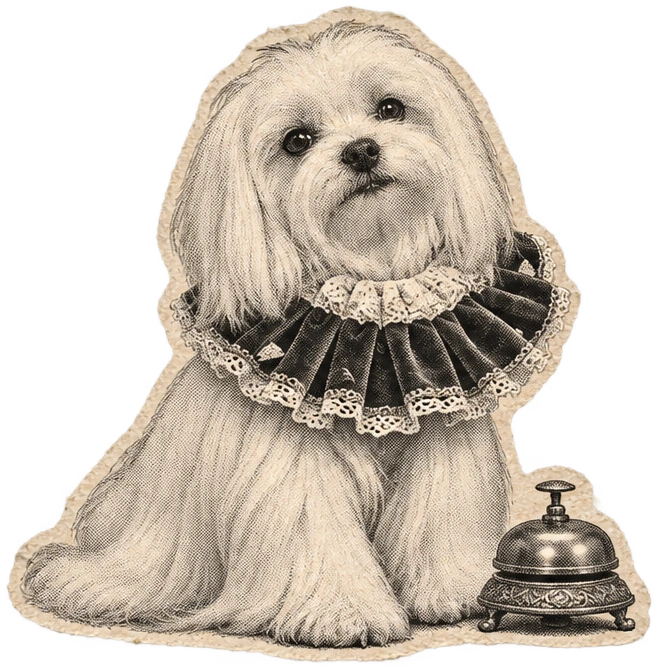
A Maltese is a small companion dog with straight white hair and dark eyes. You don’t need a particularly ambitious haircut to lose sight of the legs. The dog is genuinely small; the work is mostly in the bits people forget to mention. You’ll need to get a comb through the coat without making it a battle, look after the teeth and give them the chance to walk on their own four feet. A little dog can still have a full day. 123456
Jump to a section
The short version
If you’ve already got a Maltese, make two jobs as easy to start as you can: a quick check with the comb and a little toothbrushing practice. Put the kit where you actually use it, and start on a bit the dog is comfortable with. Get the brush near their face before you expect to brush the whole mouth. Stop if touching them hurts and talk to your vet. 3457
Give them a proper chance to sniff on walks and a place where they can get away from busy feet at home. If they sometimes skip on a back leg, tell your vet even if they look normal again a few strides later. “It went away” is useful information for the appointment, not necessarily a reason to skip it. 8910
Maltese notes / 01
The coat, the teeth and the walk
| Start here | What to do |
|---|---|
| The coat | Check close to the skin where the harness sits and behind the ears. 34 |
| The mouth | Work towards daily brushing with dog toothpaste. Ask the vet about pain or inflamed gums. 5 |
| The everyday walk | Allow short, interesting outings that the dog can comfortably manage. 289 |
| A sudden skip | Notice which leg and when it happens, then speak to your vet. 310 |
Maltese, Maltipoo and adverts for tiny dogs
The Royal Kennel Club lists the Maltese in its Toy group. The breed standard describes straight, silky hair rather than a curly or woolly coat. A Maltipoo is a cross with Poodle ancestry; don’t borrow its expected coat care or health-testing details when you’re looking for Maltese information. 1211
There isn’t a separate “teacup” Maltese variety in that standard. If the main selling point in an advert is that the puppy is even smaller than the next puppy, go back to asking for named health results and how its mother is getting on. Tiny looks good next to a coffee cup. It doesn’t tell you how the dog’s going to get up off a slippery floor. 1212
How small is small?
The UK standard gives a shoulder height of no more than 25 cm. Separately, the FCI standard gives a weight of 3 to 4 kg. That’s a reference for the breed, not an instruction to feed or diet an individual dog towards a number. Under a thick curtain of hair, you’ll get a better idea by feeling the ribs and asking your vet to show you what a healthy waist is for your dog. 1613
Get down to their level and look at the floor they have to cross. A hallway with no grip and a doorstep almost as high as the dog aren’t problems you necessarily notice from where you stand. Put grip on the route between bed and door if they’re slipping. Tell your vet if they suddenly stop doing a step they used to manage. 101443
Maltese notes / 03
How small is small?
Keep the coat comfortable
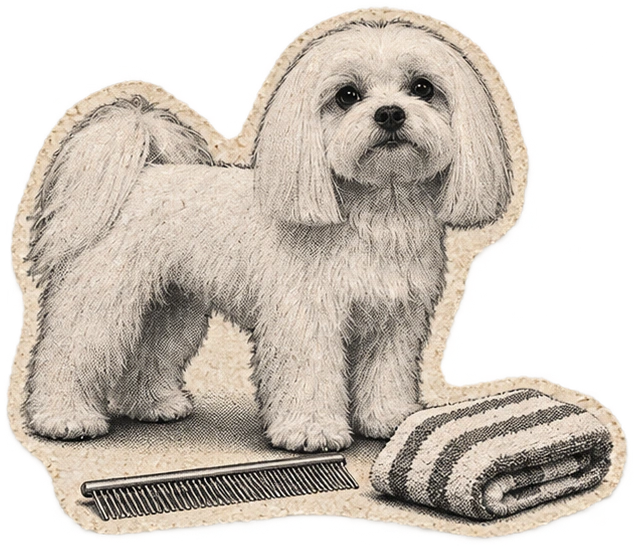
A long Maltese coat needs attention every day. Start behind the ears and under the harness, then check the legs and belly. Work in small sections and see whether your comb goes through close to the roots. It’s possible to brush the top into something respectable while the bit underneath is coming together like the underside of a bath mat. 347
A shorter pet trim can make life easier. It still needs a look after wet walks or messy meals. Ask a groomer how to keep hair clear of the eyes and mouth without pulling it, particularly if the dog isn’t happy being touched there. If an eye is red, painful or suddenly cloudy, speak to the vet promptly; wiping the face won’t sort that out. 4716
Maltese notes / 04
Where the comb needs to go
| Where to look | What helps |
|---|---|
| Behind ears and under harness | Check close to the skin and deal with small tangles early. 34 |
| Beard and face | Clean gently; ask a groomer to show you a practical trim the dog can tolerate. 47 |
| Tight mats | Don’t pull or use scissors close to skin. Ask a groomer or vet for help. 4 |
| Eyes | A sudden change, redness or squinting needs veterinary advice. 16 |
Being small doesn’t make every greeting easy
Some Maltese are keen to say hello; others would rather have a minute. Listen when the dog says no by moving away. A visitor stretching down to pat a dog that’s already tucked itself behind your feet is still quite a lot to deal with, even if they’re only trying to be nice. Give the dog a way out and let an introduction happen later if they want it. 31718
If they bark at every sound from the landing, work on the quiet moment after the sound or give them somewhere less exposed to lie. A good alternative to “stop it” is something they can actually do. If barking or snapping appears out of character, think about pain as well as training and speak to your vet. 171920
Maltese notes / 05
Give them a say about greetings
Teach what makes the day easier
Start handling practice on the floor or another safe, steady surface. If the dog is comfortable, try one brief touch at the shoulder or lip. Reward that and let them go. Don’t hold them until they stop trying to get away. Giving them a say makes it easier to spot the difference between a dog that will sit for brushing and one that only puts up with it. 5719
For toilet training, take them to the same suitable spot after waking and after meals. Go out with them and reward them when they finish. In foul weather, a sheltered spot you can reach quickly is more useful than standing in the doorway waiting for a small dog to make the first move. Ask the vet about a sudden return of accidents in a previously house-trained dog. 202122
Four little legs still need a walk
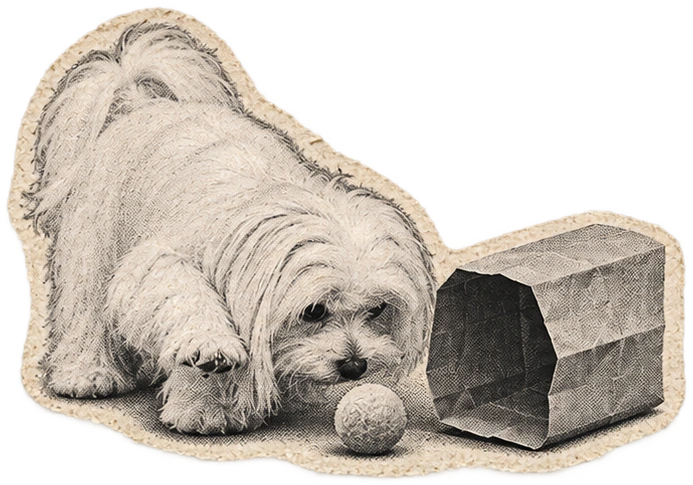
The Royal Kennel Club puts the breed in its up-to-30-minutes daily exercise category. That gives you a broad idea of scale, not a stopwatch rule. Try short outings with time to sniff, and adapt them to weather and how the dog’s moving. A healthy adult often has more to get from a little exploring than from being carried past every interesting smell. 28924
Find routes where you don’t have to force them into a meeting with a much larger dog. Let the Maltese retreat if they want to. If they tire more quickly than usual or begin limping, don’t make them finish your usual loop. Tell the vet what changed. In cold rain, see whether a shorter route or a suitably fitted layer makes them more comfortable. 8101525
Maltese notes / 07
Get the walk to fit the dog
Make the floor the easy place to live
Give them a bed you can reach without squeezing into a corner and that the dog can reach without jumping off furniture. Add a patch of grip on slippery routes and keep it clear of things they’ll have to step over. If they’re forever under your feet, reward a spell resting nearby before you try to do everything with one hand and a dog in the other. 10141943
Practise little bits of time apart on ordinary days. Start with a short trip out of sight when the dog is relaxed. If they’re barking or pacing as soon as you leave, shorten the next go and get advice if it persists. Living in a flat is one thing. Being comfortable hearing the landing or being left there for the afternoon is another. 2192627

Children, cats and other dogs
A small dog can be knocked over or handled too roughly without anybody intending harm. Help children meet them with all four paws on the floor, and don’t expect the dog to sit on someone’s lap if they’re trying to leave. Keep a grown-up in charge and separate them when the dog wants to sleep or chew. 31828
Give cats and dogs room to walk away at first. Let a cat use a barrier or its own room. Even when both dogs are friendly, pay attention to size and play style. Ask about the actual dog’s history and interrupt play before the Maltese has to keep running to get away. 172930
Health, lifespan and the checks to ask for
The Royal Kennel Club lists the BVA/RKC/ISDS Eye Scheme as Best Practice screening for the Maltese. Its Health Standard table doesn’t specify a separate Good Practice test. The eye certificate is a pre-breeding check, not a guarantee that an individual will never develop a problem. Ask the vet about new cloudiness or discomfort. PDSA also identifies slipping kneecaps as a breed concern. Repeated skipping needs an assessment rather than somebody online deciding it’s definitely the patella. 2310163132
Look at the gums as well as the teeth. Dogs can keep eating with a sore mouth, so don’t wait until they refuse a meal. Work towards daily brushing with dog toothpaste when comfortable; ask your vet if the gums are inflamed or there’s persistent bad breath. Cleaning at home doesn’t replace treatment when the mouth is already painful. 533
A 2025 VetCompass study of UK primary-care records from 2019 found 2.17 times the adjusted odds of diagnosed acute diarrhoea in Maltese compared with crossbred dogs (95% CI 1.25 to 3.77). That’s an association in those records, not the chance your dog will get it or a reason to change a symptom-free dog’s food. Get vet advice for diarrhoea in a puppy or symptoms such as blood or low energy. 343536
The 2024 UK longevity study reported a median of 13.1 years for the Maltese (95% CI 12.6 to 13.5). That’s an estimate for a population, not something you can count forward from today for the dog in your house. 3738
Maltese notes / 10
Health conditions and screening
| Condition or check | What to know |
|---|---|
| Eye screening | BVA/RKC/ISDS clinical eye testing is Best Practice before breeding. 23132 |
| New red, cloudy or sore eye | Get veterinary advice promptly. 16 |
| Slipping kneecaps | Ask the vet about a recurring skip, limp or change on steps. 310 |
| Teeth and gums | Brush with dog toothpaste where comfortable and have painful or inflamed areas examined. 533 |
| Acute diarrhoea | The 2.17 adjusted odds figure is relative to crossbreds in UK practice records, not an individual probability. 34 |
| Blood, tiredness or puppy diarrhoea | Contact your vet for advice. 3536 |
| Lifespan estimate | 13.1 years median in the 2024 UK study, not a prediction. 3738 |
Costs you’ll see beyond the food bowl
They won’t get through a large bag of food as fast as a Labrador, but a small food bill won’t pay the groomer. Get a quote based on a sensible routine for the coat you actually keep. If you prefer it long, budget the time to brush it. A shorter trim still means paying for visits and combing at home between them. 3439
Price routine checks and ask what your vet charges for a dental assessment. If you’re comparing insurance, read the dental exclusions before assuming every tooth is covered. Set aside money for the groomer. If the dog struggles being left, have enough for a sitter too. 52739
Maltese notes / 11
What you’ll need to budget
| Cost | What to check |
|---|---|
| Coat work | Professional trims or long-coat upkeep and the tools to keep it comfortable. 34 |
| Teeth | Routine checks and how dental disease is treated or covered. 539 |
| Daytime help | A sitter or walker who understands the dog’s size and routine. 2639 |
| Vet cover | Exclusions, limits and how you’d pay for care yourself. 39 |
The old Mediterranean connection
The FCI gives the central Mediterranean as the breed’s place of origin. The Royal Kennel Club describes longstanding links with Malta and small white companion dogs around the Mediterranean. Exactly where those ancestors came from is less certain. 2640
There’s a long tradition of keeping them as companions. That’s different from making one spend the day sitting prettily near you. A dog can enjoy company and still want a bit of room to sniff round the garden, investigate a noise or get some peace when the visitors arrive. 21724
Bringing one home or helping the one you have
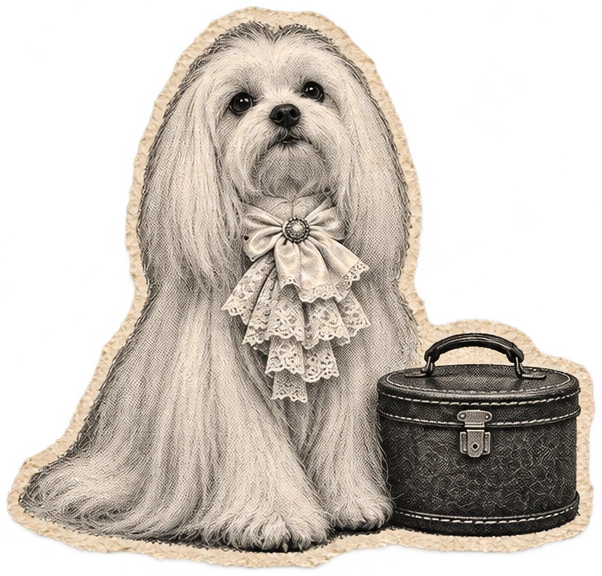
Ask a breeder for dated eye certificates for both parents and see the mother with her puppies. Find out what happens when someone tries to comb the dog or checks a paw. “She’s tiny” doesn’t answer either question. If there’s a history of skips or vet work on knees, get the details rather than assuming an eye certificate covers it. 210123141
If you might prefer an adult, The Maltese Club has a rescue route. Ask how well the dog moves and copes alone in a real home. Find out what they’ll let you do with a toothbrush or comb. If you already have a Maltese and those are the bits that aren’t going well, pick one thing to fix first. A dog who won’t let you near a painful mouth needs a vet before they need a better toothbrush. 572742
Maltese notes / 13
Ask what happens at home
| Ask about | What you want to know |
|---|---|
| Eye certificates | Check names, dates and what the scheme actually covers. 23141 |
| Family and knees | Ask about actual history rather than taking a tiny-size label as information. 1012 |
| Handling | Find out how the individual responds to a comb or a paw check. 7 |
| Adoption support | Ask the rescue about the actual dog’s mobility, teeth and home routine. 42 |
Sources
- S1Royal Kennel Club Maltese breed standardSource · checked 21 November 2026
- S2Royal Kennel Club Maltese profile and screeningSource · checked 21 November 2026
- S3PDSA Maltese breed and care informationSource · checked 21 November 2026
- S4PDSA grooming and brushingSource · checked 21 November 2026
- S5PDSA dental disease and brushing adviceSource · checked 21 November 2026
- S6FCI Maltese standard, coat, size and historySource · checked 21 November 2026
- S7Dogs Trust gentle handling practiceSource · checked 21 November 2026
- S8PDSA fitting exercise to the individual dogSource · checked 21 November 2026
- S9PDSA cold-weather walks and alternative activitiesSource · checked 21 November 2026
- S10PDSA luxating patella and symptomsSource · checked 21 November 2026
- S11Woodgreen on Maltipoo parentage and different crossingsSource · checked 21 November 2026
- S12RSPCA checking a responsible puppy breederSource · checked 21 November 2026
- S13PDSA weight and body conditionSource · checked 21 November 2026
- S14PDSA limping and stiffnessSource · checked 21 November 2026
- S15Dogs Trust walking equipment and trainingSource · checked 21 November 2026
- S16Royal Kennel Club eye emergenciesSource · checked 21 November 2026
- S17Dogs Trust signs of stress and fearSource · checked 21 November 2026
- S18Dogs Trust preparing for visitorsSource · checked 21 November 2026
- S19Dogs Trust teaching settleSource · checked 21 November 2026
- S20PDSA healthcare and changes to tell the vet aboutSource · checked 21 November 2026
- S21Dogs Trust toilet trainingSource · checked 21 November 2026
- S22Dogs Trust on previously house-trained dogs and accidentsSource · checked 21 November 2026
- S23Dogs Trust recall basicsSource · checked 21 November 2026
- S24Dogs Trust scent work and enrichmentSource · checked 21 November 2026
- S25PDSA winter advice for short-haired or susceptible petsSource · checked 21 November 2026
- S26Dogs Trust teaching a dog time aloneSource · checked 21 November 2026
- S27PDSA separation distress and veterinary supportSource · checked 21 November 2026
- S28Dogs Trust living with dogs and childrenSource · checked 21 November 2026
- S29Dogs Trust dog and cat introductionsSource · checked 21 November 2026
- S30Dogs Trust introducing a resident dog to another dogSource · checked 21 November 2026
- S31Royal Kennel Club Health Standard Maltese rowSource · checked 21 November 2026
- S32BVA Eye SchemeSource · checked 21 November 2026
- S33PDSA what to look for when checking a dog's mouthSource · checked 21 November 2026
- S34O’Neill et al. 2025 UK VetCompass acute diarrhoea study, 2019 veterinary recordsSource · checked 21 November 2026
- S35PDSA diarrhoea signs and when to callSource · checked 21 November 2026
- S36PDSA blood in stools guidanceSource · checked 21 November 2026
- S37Dogs Trust breed-level longevity estimatesSource · checked 21 November 2026
- S38McMillan et al. 2024 UK companion dog longevity studySource · checked 21 November 2026
- S39PDSA cost of dog ownership and exclusionsSource · checked 21 November 2026
- S40FCI Maltese origin and groupingSource · checked 21 November 2026
- S41Royal Kennel Club Health Test Results FinderSource · checked 21 November 2026
- S42The Maltese Club rescueSource · checked 21 November 2026
- S43PDSA improving footing and joint comfort at homeSource · checked 21 November 2026
