
Breed guide / Lhasa Apso
Living with a Lhasa Apso
The Lhasa Apso is a small, sturdy Tibetan companion dog with a long, straight topcoat, feathered ears and a tail carried over its back. It was kept as a watchdog as well as a companion. In a modern house the big jobs are keeping the coat comfortable, taking eye changes seriously and deciding what happens after the doorbell rings.
Jump to a section
The short version: a small dog with a proper routine
The Lhasa Apso is a compact, long-coated dog from Tibet, where it was kept for company and to notice arrivals. A shorter pet trim can make the daily coat check easier, but it won’t make it optional. If you’re already living with one, part the hair behind an ear rather than brushing just the top, have a look at both eyes in daylight, and work out where the dog can go when somebody knocks. You can put off buying the novelty door mat. 1223
Lhasa Apso notes / 01
The day-to-day bits
| Quick question | What matters |
|---|---|
| What kind of dog? | Small and sturdy, with a body longer than its shoulder height, a dense long coat and feathered tail over the back. RKC group: Utility. |
| Is the coat a job? | Yes. Check down to the skin daily, particularly behind ears, under harness straps and between legs. Keep the eyes clear of hair. |
| Is it a lapdog? | Being small doesn’t tell you whether this dog likes being picked up, welcomes company or copes with a busy landing. Watch the dog and give them choices. |
| What should I ask for before buying? | Both parents’ Lhasa Apso PRA4 DNA results and dated BVA/RKC/ISDS eye certificates. They aren’t interchangeable. |
| Which health things are worth acting on early? | A change in either eye, sore gums, recurring skips on a back leg, or more thirst and wees. Painful or suddenly changed eyes are urgent. |
| UK survival evidence | 14.0 years median, 95% CI 13.9 to 14.2, in the 2024 multi-source study. A study midpoint, not a forecast for your dog. 15 |
Names and recognition: the “Terrier” bit belongs in the past
In Britain the Royal Kennel Club calls the breed Lhasa Apso and classes it as Utility. Older records can say Lhasa Terrier: the RKC says it was recognised under that grouping with the Tibetan Terrier in 1908 and that the breeds were separated in 1934. That’s history, not a nickname for a modern cross. The international FCI uses the same current breed name but puts it in its Tibetan section of Group 9, Companion and Toy Dogs. 23
Lhasa Apso notes / 02
What the names mean
| Name or registration | What it means |
|---|---|
| RKC | Lhasa Apso, Utility. |
| FCI no. 227 | Tibetan breeds section, Group 9. Origin given as Tibet; patronage Great Britain. Definitive acceptance 19 November 1960. |
| Lhasa Terrier | Historic UK grouping according to the RKC; the modern Lhasa Apso and Tibetan Terrier have separate entries and standards. |
| Recent UK registrations | RKC Utility table: 669 in 2024 and 525 in 2025. These are registrations, not the number of dogs in the country. 5 |
Size and build: get a hand through the coat before judging shape
The RKC describes a low-looking but well-balanced frame, with a strong loin, compact round feet, a level back and a feathery tail carried over the back. The hair can make the body look much closer to the ground than it is, so look for unimpeded movement when you meet one. The UK standard describes a muzzle of about 4 cm as a judging guide. It isn’t a target for a ruler at the breeder’s, but keep an eye out for a dog who can see clearly, move freely and breathe comfortably. 14
Neither standard sets an adult weight. The 2019 UK primary-care study reports recorded weights higher than the PDSA breed profile’s general 6 kg figure. Neither says what your dog should weigh. Ask the vet nurse to show you how an easy-to-feel rib cage and a visible waist feel on your dog, flattening the coat with your hands so the haircut doesn’t set the target. Use the chest and neck measurements under the coat for a harness and check how it sits after a trim. 132324
Lhasa Apso notes / 03
UK size and weight
| Adult size measure | Males | Females |
|---|---|---|
| RKC ideal height at shoulder | 25 cm | Slightly smaller, no number supplied |
| FCI ideal height at withers | 25 cm | Slightly smaller, no number supplied |
| UK 2019 VetCompass adult weight median, where recorded | 8.9 kg | 7.6 kg |
| Standard weight | None specified | None specified |
The same VetCompass row gives an 8.3 kg overall adult median. The 24,553 dogs in the breed row are the all-age practice count, not 24,553 adults weighed. PDSA’s separate 6 kg estimate is not sex-specific. 1323
Coat, colours and grooming: the knots aren't on top
The standard calls for a long, straight, relatively coarse topcoat and a moderate undercoat. It permits a broad range of colours, including gold, dark grizzle, brown, black and parti-colour, but not merle. The key words when you’re paying for a trim are that hair shouldn’t stop the dog seeing or getting about. The show outline is not a haircut you owe your family dog. A groomer can help set a manageable length around the face and feet, and tell you what still needs daily attention. 1223
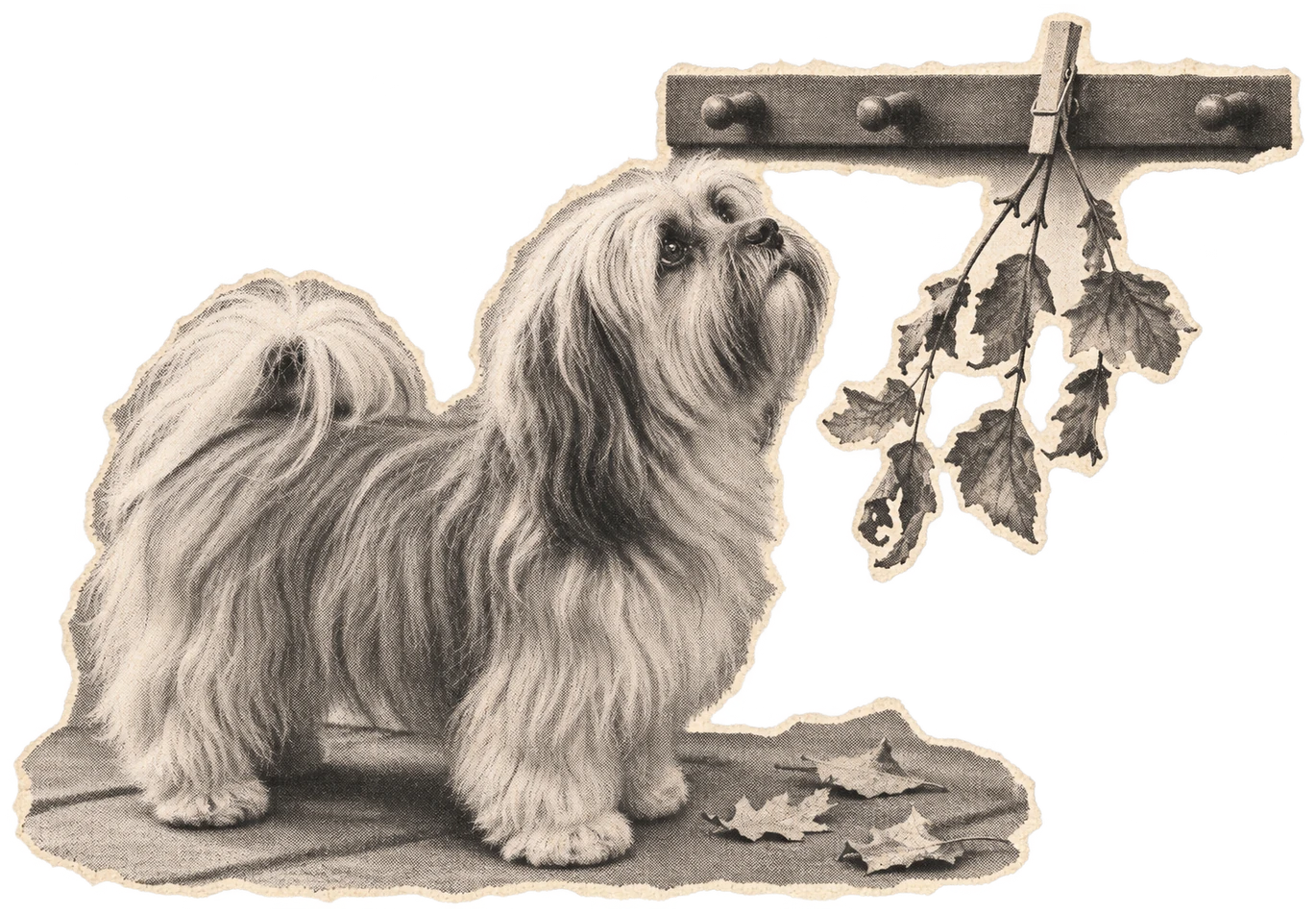
Part the dry hair in small sections so you can see or feel down to the skin. Support the section with one hand so you’re not pulling skin; work gently on loose tangles from the ends, then check with a comb if the dog is comfortable. The high-friction areas are behind each ear, the armpits, where the collar or harness sits, the inside legs and around the tail. A loose fluffy surface can hide a felted layer that tugs with every step. If a mat is close or tight, or the skin is red, damp or sore, stop and speak to a groomer or vet as appropriate. Don’t put scissors under a mat or beside an eye. 252639
A manageable session might be one shoulder, a reward, an invitation to come back and that’s it for now. If they move away, go stiff or keep turning their head from the brush, pause. Arrange someone experienced to deal with painful matting rather than trying to train through it. After a wet walk, get them dry, check between the toes and look for grit around the eye hair without poking or wiping the eye itself. Redness, a partly closed eye or fresh discharge needs a vet call, not a fringe trim. 3927
Lhasa Apso notes / 04
Where the coat needs a look
| Where to look | What helps |
|---|---|
| Face | An unobstructed view. Ask the groomer about a sensible trim. Call your vet promptly for a new eye change. |
| Behind ears, chest and inside legs | Part the hair and check skin rather than smoothing just the top. |
| Feet and underside after walks | Towel dry gently, check the pads and remove loose surface debris that is easy to lift. Get help for anything embedded or close to an eye. |
| Professional trim | Agree a plan your dog can tolerate, not a preset interval. Report when the last trim hurt and where mats have formed. |
Temperament: what happens after they notice the knock?
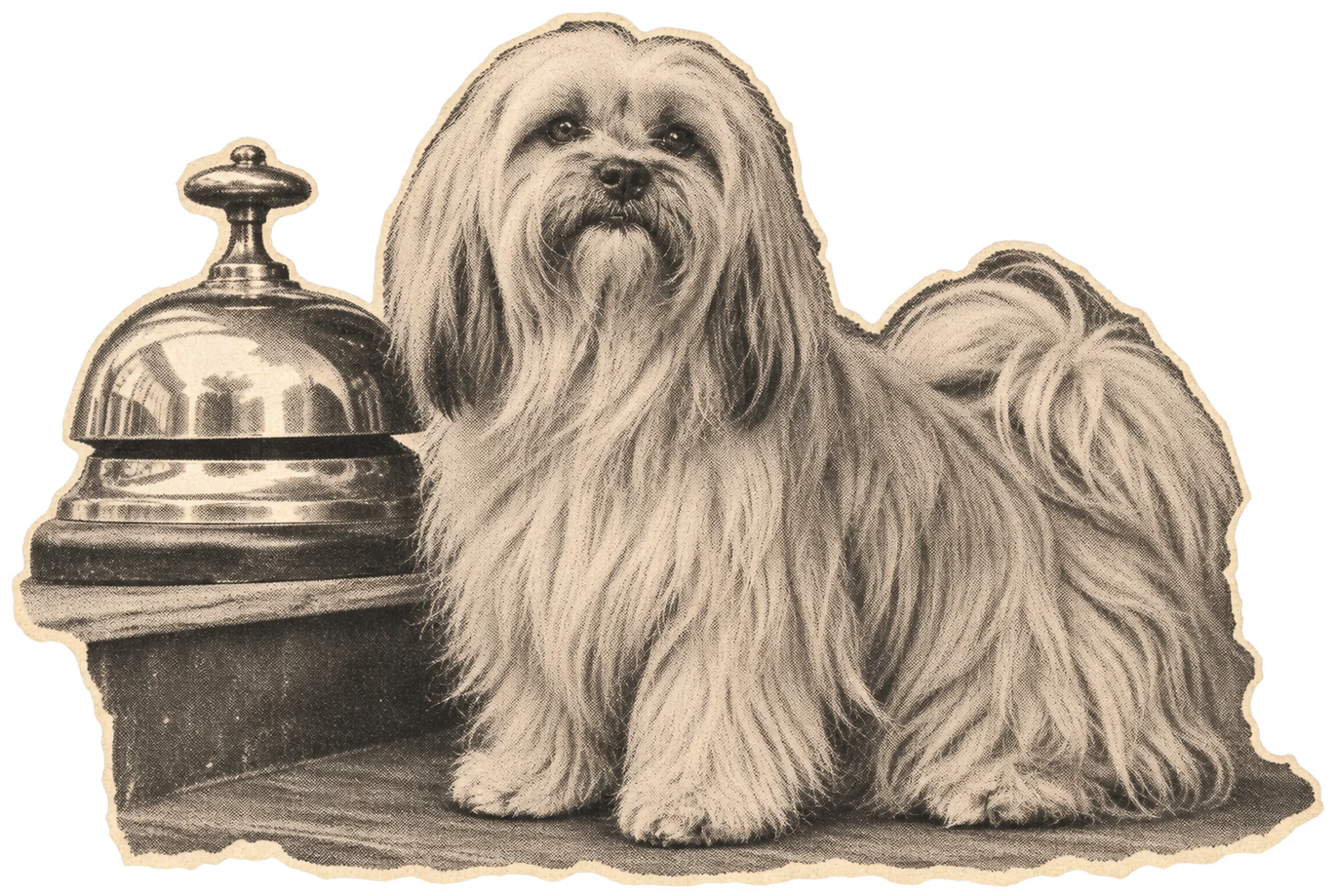
The UK standard describes an alert dog that can be reserved with strangers. The point of being a watchdog was to notice something; it wasn’t to greet every visitor or to behave like a security dog. Some Lhasas come for a sniff, others stay by the bed. Useful things to know are how long this particular dog stays worried, what distance they like and whether they can get on with their own business again. For a rescue or adult, ask what happens when a quiet visitor has sat down for ten minutes, not just how the dog looks as you walk in. 140
If a knock or footsteps set off barking, notice which sound starts it and whether the dog can move away or eat at a comfortable distance. Turning away, lip licking, growing still and stepping back are all reasons to make space and drop the demand to be stroked. A dog who normally chooses a lap can still want you to stop reaching for a sore mouth or a tight knot. A sudden change in tolerating handling or visitors is a good reason to ask the vet about pain, vision or other discomfort before assuming it’s “the guarding”. 444125
Lhasa Apso notes / 05
Read what your dog does
| What you see | Better question |
|---|---|
| Barks at the post | Does the dog relax when they can’t watch the door, and can the post be brought in without a confrontation? |
| Backs off when someone kneels down | Can the person leave them alone and let the dog choose distance? |
| Won’t tolerate the brush they used to | Does it hurt now? Check the coat and ask the vet about a new change. |
| Behaves differently outside | Is the pavement, light, noise, or distance to people different? One scene isn’t a breed temperament test. |
Training: teach them to leave the brush as well as meet it
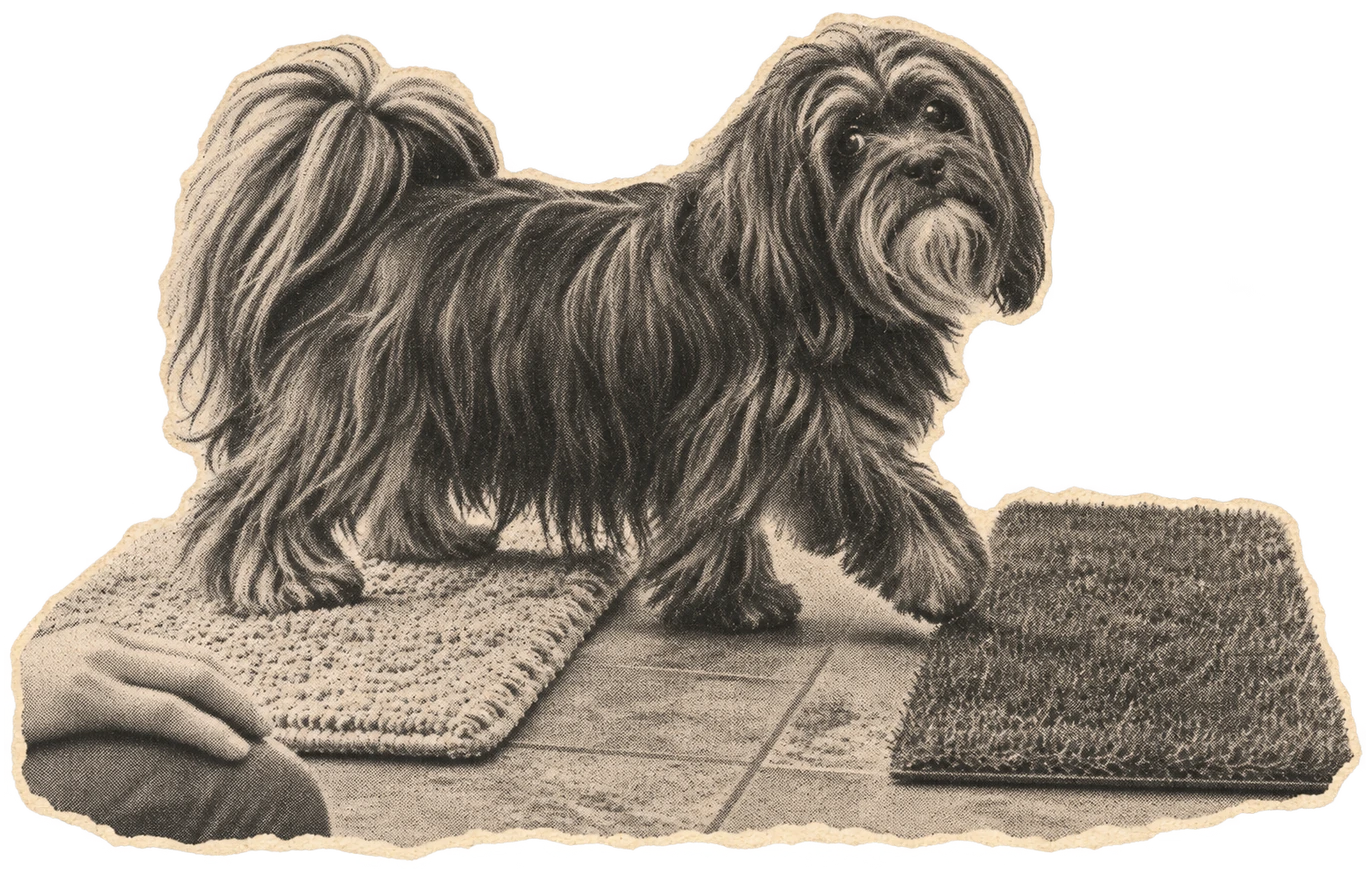
Start grooming practice when you aren’t in a rush, with a small non-slip mat on the floor. Put the brush down, reward relaxed interest, then touch a comfortable part of the body briefly and reward again. Add a single easy stroke later, not the stiff bit behind their ear because you’ve got them there. Let them move away at any point. If the dog has sore skin, treat the soreness before you declare them difficult. That invitation to come back is the useful part of a consent-based routine. 3925
Teach a second mat away from the entrance as somewhere pleasant to go, starting with no visitors. Practise a low recording of the doorbell only while the dog can stay comfortable and take rewards, then build up in small steps. At an actual delivery, use a gate or shut door, so no one has to test the training with a packet in their hand. Keep everyday recall and lead practice in the plan, too. Small dogs need chances to try things without being lifted out of them. 4043
Lhasa Apso notes / 06
Practise without pressure
| First skill | Practise it without pressure |
|---|---|
| Grooming position | Reward choosing the mat. Recognise walking away as a cue to stop. |
| Chin lift and face care | Reward accepting a hand near the cheek, briefly. Painful eyes and teeth are for the vet. |
| Front-door plan | Reward moving to their own space and fit a barrier before you need it. |
| Recall | Reward turning towards you in a quiet safe space, before practising around distractions. |
Exercise: walk the dog, not the little legs on the brochure
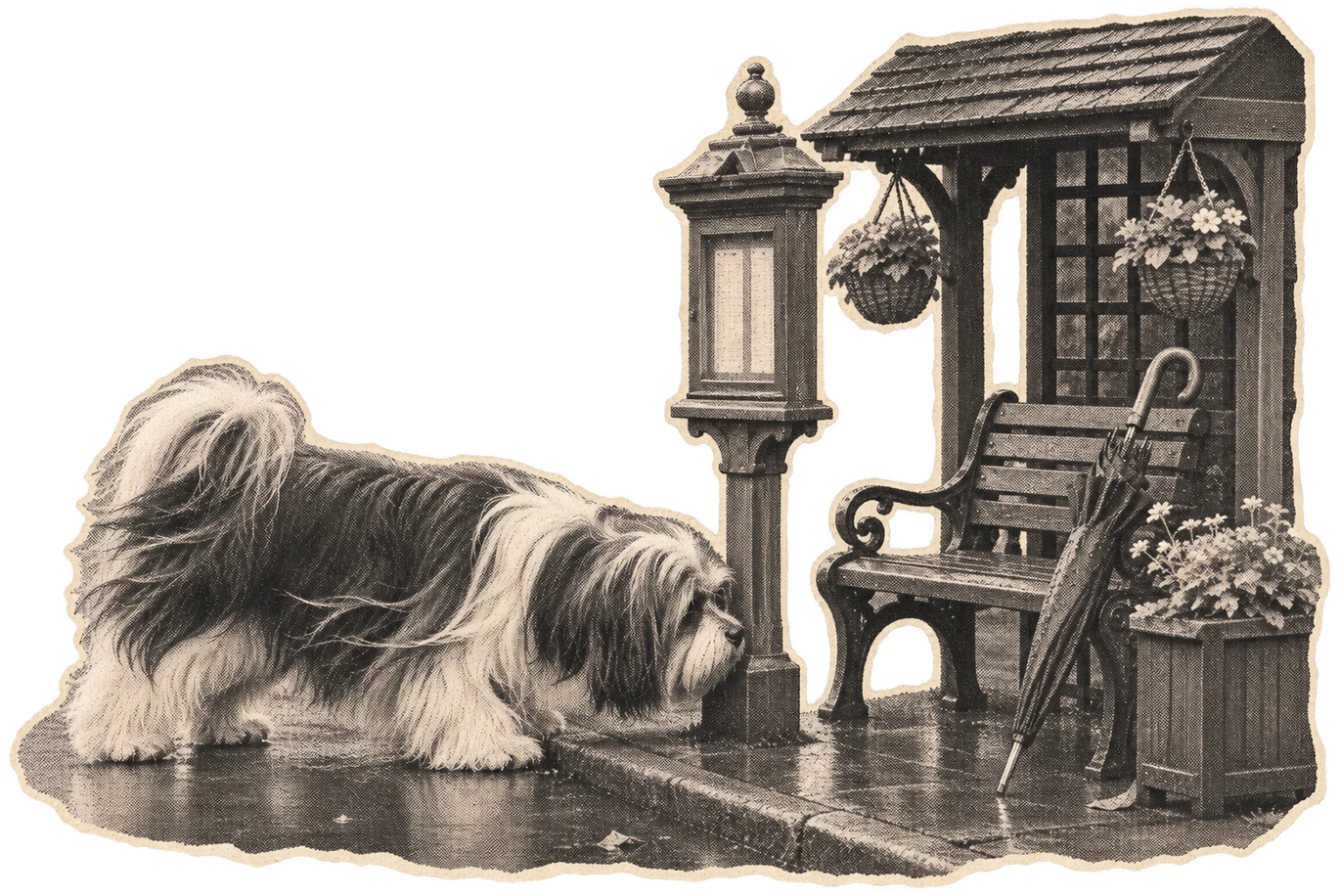
The Royal Kennel Club says up to an hour a day. PDSA describes around an hour and uses an hour as the minimum in its profile table. That makes a useful diary check for a healthy adult, not a dose. Split the time in ways the dog enjoys, with a sniffy outing and another chance to go out later. Lead walking doesn’t have to mean glueing them to your ankle. At times a slow loop with time to choose which lamppost to investigate is the better walk. 22346
For a puppy, older dog or a dog recovering from pain, build walks around what the dog can comfortably do and what the vet advises. Wet vegetation can leave grit in long foot hair, so check the feet at the door. On a hot day use cooler hours, shorten or skip the long walk, and don’t force a panting dog who lags behind to keep up. If a dog who happily walked at dusk starts stopping at kerbs or stumbling in dim light, book a vet check rather than making the late route a training challenge. 46479
Lhasa Apso notes / 07
Outings for the dog you have
| Time or dog | Useful adjustment |
|---|---|
| Fit adult | Spread outings and add sniffing, play or a little training, not just laps of the pavement. |
| Puppy | Short opportunities and breaks; ask the vet about safe places before their course is complete. |
| Senior or after illness | Try an easier surface or shorter route first, with veterinary advice where needed. |
| Unusual hesitation after dark | Keep things predictable and speak to the vet about vision. Don’t assume it is a choice. |
Living with one: test the sound of the landing
The RKC includes flats and apartments as possible homes. Most of the test happens inside the front door: can the dog rest away from the shared landing, can they go out to toilet without a long wait, and can you get down on the floor for coat care without blocking the only route through the house? Try moving the bed out of direct sight of the letter box if they spend the day watching it. Give them a retreat without making it the place they’re sent only when something unsettling happens. 24042
Plan weekday cover that fits the dog, not just the minutes you walk them. Use very short absences to see what they can manage; if distress appears, shorten the next attempt and get support rather than leaving the dog to wear themselves out. An older dog with reducing vision may want the bowl, bed and furniture to stay where they are. Keep passageways clear, use a non-slip surface for grooming, and if a dog suddenly gets clingier or starts weeing in the flat after being reliably dry, speak to the vet. 453035
Lhasa Apso notes / 08
Set the house up first
| Household pressure point | An adjustment that helps |
|---|---|
| Shared or noisy entrance | Bed away from the front door, planned toilet trips and a spare shut door or gate at delivery time. |
| Small spaces | A place the dog can choose to retreat to, with clear paths to water and an area to be groomed without an audience. |
| Vision changes | Consistent layout, safe access near steps, familiar walking route and veterinary advice. |
| Working day | Check what time alone actually looks like and find cover for toilet access and care if needed. |
Children, other pets and first-time owners: small doesn't mean portable
Children can join you on a walk or toss a treat past the dog so the dog can move away to get it. They don’t need to carry the dog, brush a knot out while an adult holds them, or hug them where they sleep. Supervise closely or use a gate. Allow the dog to opt out of visiting legs and hands. PDSA notes that some Lhasas are more reserved with strangers, but that doesn’t settle the question of how this one copes with children or whether they want to be touched. 234839
If there is another dog, meet on a quiet route with space, allow each to sniff at their own pace, and give them separate beds and feeding areas at home. Give a cat somewhere high and a route the dog can’t use. Ask a rehoming team whether they’ve actually seen this dog live with the species and ages in your household. Unobserved is not the same as fine or unsuitable. 5049
First dog? An adult with known grooming and visitor habits can be easier to plan around than a puppy. The practical question is whether everyone can stick to short, calm handling sessions and whether there is a local groomer who will work with the dog’s limits. A small house isn’t much of a drawback if that’s in place. 39512
Lhasa Apso notes / 09
Who lives under your roof?
| Situation | What to ask or set up |
|---|---|
| Young children | Adult within reach when they interact, gated retreat when you can’t supervise, no lifting or waking the dog. |
| Cats | Known history where possible, separate rooms initially, supervised short introductions and an escape route. |
| Resident dogs | Calm meeting at a distance first; separate beds, bowls and chews until you know how they share space. |
| First-time family | Meet a calm adult, ask about actual coat care and price in help, rather than making a choice from puppy pictures. |
Health: the eyes are not just a grooming issue
Dry eye and ulcers: Dry eye, medically called keratoconjunctivitis sicca or KCS, means the eye surface isn’t getting enough tears. A Lhasa with sticky or stringy discharge, regular rubbing or red eyes needs the vet to check, not just a damp cloth to tidy their face. A corneal ulcer is damage to the eye’s clear front surface and can occur alongside dry eye, but is a different diagnosis. If an eye is held shut, suddenly cloudy, painful, injured or accompanied by sudden vision change, call your vet promptly for urgent assessment. Don’t use leftover drops or try to trim close hair while the dog is squinting. 313229
Inherited retina disease: PRA4 is the Lhasa Apso test for one inherited form of progressive retinal atrophy. The original work identified an insertion associated with this form near the IMPG2 gene. It is not the PRA-rcd4 test used in some other breeds. The RKC describes recessive inheritance: two copies matter for this form, one is a carrier result. A result for one variant can’t answer whether your dog’s eyes are healthy today. Mention hesitation in dim light or new difficulty finding steps, whether or not you have a DNA certificate. 109
The UK testing plan: RKC puts PRA4 DNA in Good Practice and the BVA/RKC/ISDS clinical Eye Scheme in Best Practice. Best Practice includes both, not one instead of the other. The BVA inherited-eye list names PRA for the Lhasa Apso. Ask to see the parents’ identity-matched, dated clinical certificates as well as the test outcomes. A breeder’s eye certificate is not a replacement for taking a squinting pet to their own vet. Ask your vet whether a tear measurement is appropriate at routine checks; the KCS investigators recommend considering it during regular examinations in predisposed breeds. 6111217
Teeth and knees: A short, reward-based introduction to dog toothpaste and brushing is an easier start than trying to establish the habit when a gum is already sore. Look for red gums, bad breath, dropping food or new face handling discomfort. A Lhasa who repeatedly hops on three legs then puts the foot down again is worth filming, if safe, and getting checked rather than assuming excitement. Periodontal disease and patellar luxation each have UK primary-care evidence for this breed, but the figures below are different samples and won’t predict your dog’s odds. 331920
Kidneys: Developmental kidney disease has been documented in Lhasas in older clinical reports, including a report of a seven-month-old. Those reports do not tell us how common it is in today’s UK dogs. Nothing in the current two-step RKC scheme supports a claim that a universal commercial DNA panel rules out kidney disease. If a puppy or adult is drinking markedly more, asking to go out more often, losing weight or unwell, talk to the vet and leave fresh water available. Symptoms have several causes; no diet or kidney test is automatically prescribed by this guide. 2235366
What is a comfortable build? The RKC records Breed Watch Category 1, a judging classification with no additional breed-specific points for special attention. It isn’t a health guarantee. The standard itself says the coat shouldn’t obstruct sight or movement. As a pet owner I’d put a dog who can see, move and breathe comfortably above a full sweeping coat or a face selected for its appearance. 721
Lhasa Apso notes / 10
UK evidence and useful checks
| Evidence | What was measured in the Lhasa Apso |
|---|---|
| UK VetCompass dry eye, 2013 | 113 cases among 6,074 Lhasas in the table: 1.86% period prevalence (95% CI 1.52 to 2.20). Adjusted odds 21.58 times the crossbreed comparison (95% CI 16.29 to 28.57), not 21.58% of Lhasas or 21.58 times absolute risk. 17 |
| English VetCompass corneal ulcers, 2013 | 19 of 892 Lhasas, 2.13% (95% CI 1.29 to 3.31); adjusted odds ratio 4.97 against crossbreeds (95% CI 3.01 to 8.22). Different practice sample from the dry-eye study; don’t add the two rates. 18 |
| UK VetCompass gum disease, 2016 | 66 Lhasa cases among 311 reviewed breed records, about 21.2%. Adjusted odds ratio 2.24 relative to crossbreeds (95% CI 1.63 to 3.06). 19 |
| English VetCompass kneecap study, records September 2009 to August 2014 | Reported 3.8% (95% CI 2.2 to 5.4) for the 1,686 Lhasas listed in the prevalence table. Adjusted odds ratio 3.1 (95% CI 1.9 to 5.1) relative to crossbreeds; period studied, not a yearly risk. 20 |
| UK 2024 multi-source lifespan study | Median survival 14.0 years (95% CI 13.9 to 14.2), from 7,216 Lhasa records, of which 2,723 were recorded deceased. A breed estimate, not a guarantee. 1415 |
| Eight useful health checks | Signs or next steps |
|---|---|
| 1. Dry eye | Persistent sticky discharge, eye redness or rubbing: contact the vet, and ask whether a tear test is useful. 31 |
| 2. Corneal ulcer or acute pain | A painful, partly shut, injured or suddenly cloudy eye needs an urgent vet call; don’t treat it as a fringe problem. 32 |
| 3. PRA4 or vision change | Ask for both parents’ DNA and current clinical eye records. A dog newly hesitant in dim light needs their own vet assessment. 9 |
| 4. Periodontal disease | Work up to brushing gently with dog toothpaste. Book a check for sore gums, foul breath or problems eating. 33 |
| 5. Slipping kneecap | Short repeat episodes of skipping or carrying a back leg merit a check; film an episode instead of trying to pop anything back. 34 |
| 6. Developmental kidney or other causes of thirst | Don’t restrict water. New persistent thirst, more urination or weight loss: ask the vet. Old Lhasa case evidence is not a modern breed rate. 35 |
| 7. Back or nerve issues, including IVDD | A marked new reluctance to move, crying on lifting or a new wobbly walk warrants a vet. Sudden weakness or paralysis is urgent. PDSA lists IVDD as a concern; no breed percentage claimed. 2337 |
| 8. Skin and matting | Look under the coat at high-friction spots. Softer brushing won’t fix inflamed skin, a tight mat or ongoing itch; ask the groomer or vet according to what you find. 2526 |
What it costs: include the bit that grows back
PDSA’s generic small-dog basket, priced in 2024, suggests £415 setup and £69 each month for basic care, including an insurance allowance. Its Lhasa Apso profile separately lists £70 a month as a minimum, without giving a dated grooming quote. Use neither number as a promise. Ask a groomer what a manageable pet trim costs for a dog with that coat and how they charge if two quieter visits are needed instead of one long one. The cheapest clip on paper isn’t necessarily cheaper if the dog won’t go back. 3823
Check cover for eye and dental illness, exclusions and excess before you assume that a scan, referral or procedure will be paid. Plan for a vet bill that isn’t covered and a second person who can give weekday care if you need them. Get the actual rescue donation or breeder terms rather than relying on a rounded breed price. 385153
Lhasa Apso notes / 11
What to budget for
| Budget item | What the figure does and doesn’t tell you |
|---|---|
| Generic PDSA 2024 small-dog basket | £415 basic setup; £69 monthly estimate. Excludes purchase and illness/injury vet bills, and doesn’t price grooming or paid help. |
| PDSA breed profile | Its separate minimum is £70/month; not an individual quote. |
| Coat | Get a local trim quote and the care plan between appointments. Ask what happens if mats or handling difficulty extend a session. |
| Vet and insurance | Check cover limits and exclusions; keep room in the budget for eye, dental and other treatment as needed. |
Where the breed came from: someone had to notice visitors
The RKC traces the Lhasa Apso to Tibet, where it was kept in monasteries as a companion and watchdog. The FCI also places its origin in Tibet and discusses the practical role of a heavy coat in the climate. The old account that the dogs brought luck helps explain the RKC’s historic “Talisman Dog” label. It doesn’t explain the behaviour of the dog in your hallway or make a heavy fringe more important than a clear view. 24
The early British dates need some care. The RKC records recognition under the Lhasa Terrier grouping in 1908 and separation in 1934. The Scottish breed club describes Challenge Certificates in 1908. The FCI account dates the arrival of Apsos in Britain to the early 1920s, and a breed club to 1933. These pedigrees, show milestones and institutional histories aren’t a single documented date for the first individual dog ashore. The present standard treats the Lhasa Apso as its own breed. 2524
Lhasa Apso notes / 12
The short timeline
| Event | What the evidence says |
|---|---|
| Tibetan history | Companion and watchdog according to the RKC; not a promise of behaviour. |
| 1908 | Registry milestone in the RKC account and early show certificates according to the Scottish club. |
| Early 1920s / 1933 | FCI history’s arrival account and British breed-club date. Not silently merged with the earlier UK record. |
| 1934 / 1960 | RKC describes separation from Tibetan Terrier in 1934; FCI acceptance is dated 19 November 1960. |
Getting one: ask for the eye paperwork before admiring the pups
For a puppy, go to where it’s being raised, meet the mother and ask to see the actual paperwork for both parents. Write down the dogs’ registered names and check the PRA4 result and date of the clinical eye examination with the 8 where available. A young dog should see and move without a heavy fringe in the way. Ask how they practise handling and grooming, what the puppy does after an ordinary knock or sound, and how much opportunity they have to move away from a person. Ask what eye, kidney, back and knee problems the breeder knows about in the family, not for a promise they can never occur. 65354
For an adult, contact a reputable rescue or start with the Lhasa Apso Club of Scotland’s rescue service if appropriate. Request records, known eye and dental history, a description of the coat under the trim and what handling they currently find comfortable. Ask what they’ve experienced with children, cats, noise and time alone, including what isn’t known. Verify the microchip and update its record; Northern Ireland has separate local guidance on dog licensing as well. 515556
Lhasa Apso notes / 13
What counts as evidence
| What to check | What counts as evidence |
|---|---|
| Inherited eye screening | Exact PRA4 results for both parents and the dated BVA/RKC/ISDS certificates, not “the parent can see” or “DNA cleared”. |
| Everyday handling | Seeing the dog move, rest and recover; a real account of face, mouth and coat care with chances to pause. |
| Adult history | Vet and previous home/foster observations, with unknowns explicit. Don’t test a painful mat in front of a stranger. |
| Before taking the dog home | Written contract or adoption terms, chip details, food and medical history, and an agreed person to call about early problems. |
Sources
- L1Royal Kennel Club Lhasa Apso breed standardRoyal Kennel Club · checked 20 November 2026
- L2Royal Kennel Club Lhasa Apso breed profileRoyal Kennel Club · checked 20 November 2026
- L3FCI Lhasa Apso registerFCI · checked 20 November 2026
- L4FCI Lhasa Apso breed standardFCI · checked 20 November 2026
- L5RKC tablesRoyal Kennel Club · checked 20 November 2026
- L6RKC Health StandardRoyal Kennel Club · checked 20 November 2026
- L7RKC Breed WatchRoyal Kennel Club · checked 20 November 2026
- L8RKC results finderRoyal Kennel Club · checked 20 November 2026
- L9Royal Kennel Club PRA4 DNA testRoyal Kennel Club · checked 20 November 2026
- L10Original Lhasa Apso PRA4 studyPrimary research · checked 20 November 2026
- L11BVA clinical Eye SchemeBVA · checked 20 November 2026
- L12BVA known inherited ocular disease list (2026)BVA · checked 20 November 2026
- L13UK VetCompass body-size study (table 1)Primary research · checked 20 November 2026
- L14McMillan et al. 2024 UK longevity studyPrimary research · checked 20 November 2026
- L15Dogs Trust UK breed lifespan tableDogs Trust · checked 20 November 2026
- L16Teng et al. 2022 UK dog life tablesPrimary research · checked 20 November 2026
- L17O’Neill et al. UK VetCompass dry-eye studyPrimary research · checked 20 November 2026
- L18O’Neill et al. VetCompass corneal-ulcer studyPrimary research · checked 20 November 2026
- L19O’Neill et al. VetCompass periodontal disease studyPrimary research · checked 20 November 2026
- L20O’Neill et al. VetCompass patellar luxation studyPrimary research · checked 20 November 2026
- L21University of Minnesota historical renal studyResearch archive · checked 20 November 2026
- L22Historical Lhasa Apso nephropathy casePrimary research · checked 20 November 2026
- L23PDSA Lhasa Apso breed profilePDSA · checked 20 November 2026
- L24PDSA body conditionPDSA · checked 20 November 2026
- L25PDSA home checksPDSA · checked 20 November 2026
- L26Blue Cross skin careBlue Cross · checked 20 November 2026
- L27PDSA eye signsPDSA · checked 20 November 2026
- L28PDSA eye-problems overviewPDSA · checked 20 November 2026
- L29PDSA painful eyesPDSA · checked 20 November 2026
- L30PDSA vision lossPDSA · checked 20 November 2026
- L31PDSA dry eyePDSA · checked 20 November 2026
- L32PDSA corneal ulcersPDSA · checked 20 November 2026
- L33PDSA dental diseasePDSA · checked 20 November 2026
- L34PDSAPDSA · checked 20 November 2026
- L35PDSA thirst and urinationPDSA · checked 20 November 2026
- L36PDSA kidney diseasePDSA · checked 20 November 2026
- L37PDSA IVDDPDSA · checked 20 November 2026
- L38PDSA cost modelPDSA · checked 20 November 2026
- L39Dogs Trust handlingDogs Trust · checked 20 November 2026
- L40Dogs Trust visitorsDogs Trust · checked 20 November 2026
- L41Dogs Trust visitor aggressionDogs Trust · checked 20 November 2026
- L42Dogs Trust barking adviceDogs Trust · checked 20 November 2026
- L43Dogs Trust recallDogs Trust · checked 20 November 2026
- L44Dogs Trust body languageDogs Trust · checked 20 November 2026
- L45Dogs Trust separation distressDogs Trust · checked 20 November 2026
- L46Battersea exercise adviceBattersea · checked 20 November 2026
- L47Dogs Trust heatDogs Trust · checked 20 November 2026
- L48Dogs Trust child safetyDogs Trust · checked 20 November 2026
- L49Dogs Trust cats and dogsDogs Trust · checked 20 November 2026
- L50Dogs Trust dog introductionsDogs Trust · checked 20 November 2026
- L51Lhasa Apso Club of Scotland rescueLhasa Apso Club of Scotland · checked 20 November 2026
- L52Lhasa Apso Club of Scotland historyLhasa Apso Club of Scotland · checked 20 November 2026
- L53RSPCA puppy adviceRSPCA · checked 20 November 2026
- L54Dogs Trust choosing a puppyDogs Trust · checked 20 November 2026
- L55GOV.UK microchipsGOV.UK · checked 20 November 2026
- L56nidirect dog licensingnidirect · checked 20 November 2026
- L57GOV.UK banned typesGOV.UK · checked 20 November 2026
