
Breed guide / Lakeland Terrier
Living with a Lakeland Terrier
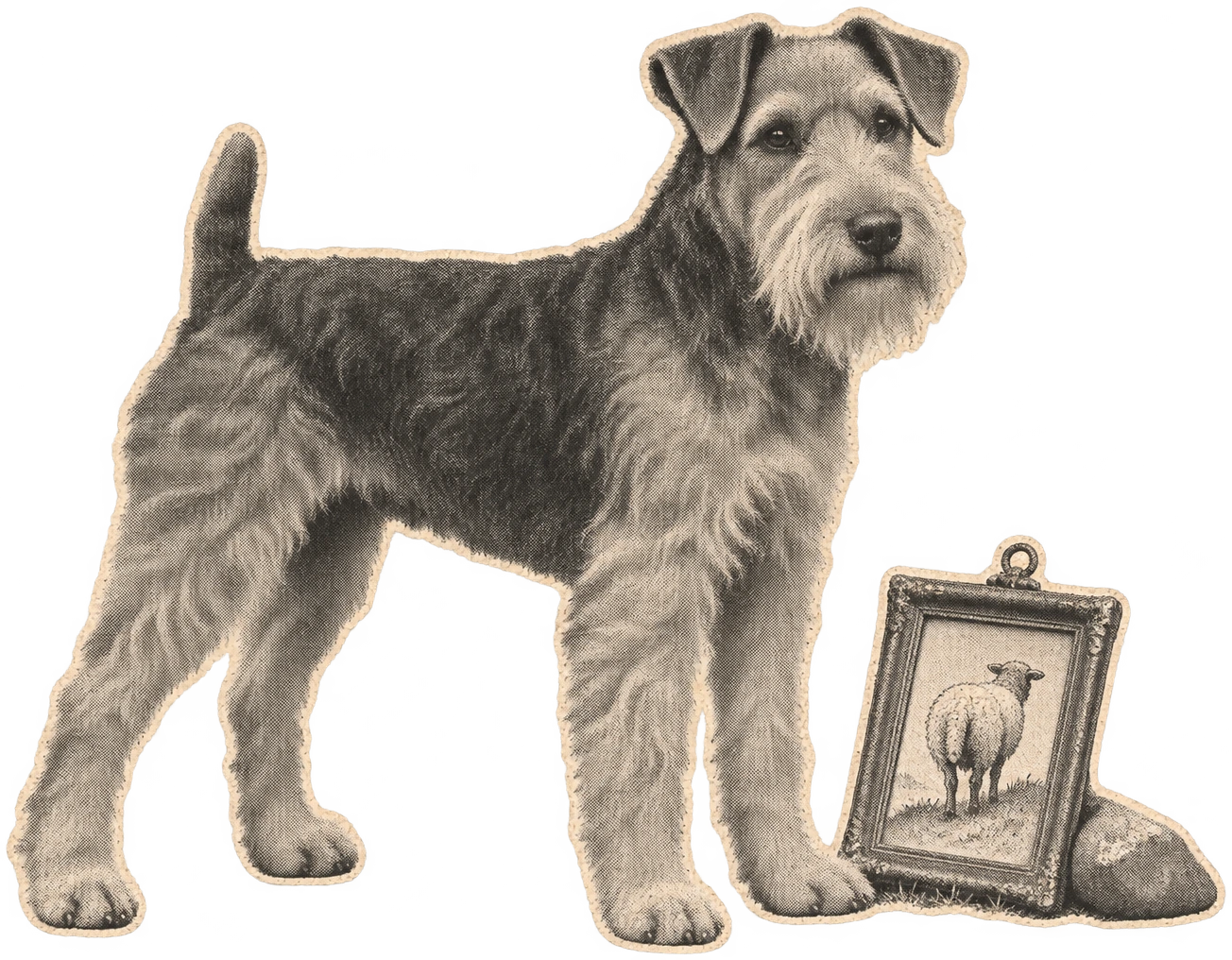
The Lakeland Terrier is a small, square-built working dog from the Lake District, with good legs for rough ground and a dense wire coat for the weather. Living with one is often more about noticing where their attention’s gone than wearing them out. There’s a point between a glance at the hedge and the dog trying to get through it. Learn to catch that, and the rest of the walk usually goes better. 1234
Jump to a section
The short version
Get behind the shed and look at the bottom of the fence. That’s worth more than putting another panel on top if the gap is at dog level. On walks, learn the way your dog looks just before they go after something. A pause, a lean or a head turn is your chance to move together while they can still hear you. 3 4 5 6
Check the wiry hair against the skin, especially where it catches under the front legs or gets muddy between the toes. If your dog starts holding an eye shut or the eye suddenly looks cloudy and sore, call the vet immediately. Don’t put that down to a scruffy fringe. 7 8 9
Lakeland Terrier notes / 01
Where to start
| Think about | The bit that helps |
|---|---|
| The hedge | Interrupt while they’re looking, not after they’re halfway in. 4 6 |
| The fence | Check underneath and behind cover, including where they’ve been digging. 5 |
| The coat | Take a look where a harness rubs and at the feet after a wet outing. 2 7 8 |
| A sudden painful eye | Call the vet immediately, including out of hours if needed. 9 10 |
A Lakeland isn’t any terrier born near a hill
The Royal Kennel Club recognises the Lakeland as a breed in its own right. The Welsh Terrier and Wire Fox Terrier have their own standards, while labels such as Fell Terrier can describe broader working origins. A dark saddle and a beard aren’t a way to tell someone which dog they’ve got. If it matters for health results, check the registered name rather than guessing from a photo. 1 2 11 12 13
Measure under the wire coat
The UK standard says no more than 37 cm at the shoulder and gives average weights of 8 kg for males and 7 kg for females. They’re the written standard’s figures, not an instruction to feed a particular dog until it hits a number. The short back and relatively narrow chest can make a harness sold for a generic “small dog” fit differently than expected. 2 14 15
Measure around the chest and see what happens when the dog turns back towards you. If a strap works forward into the elbow or catches the hair, adjust the fit before the long walk. When you’re checking weight, feel the ribs and waist instead of trying to read the outline of a recently groomed coat. 14 15
Lakeland Terrier notes / 03
Under the coat
The coat that gets you through a wet walk needs a look afterwards
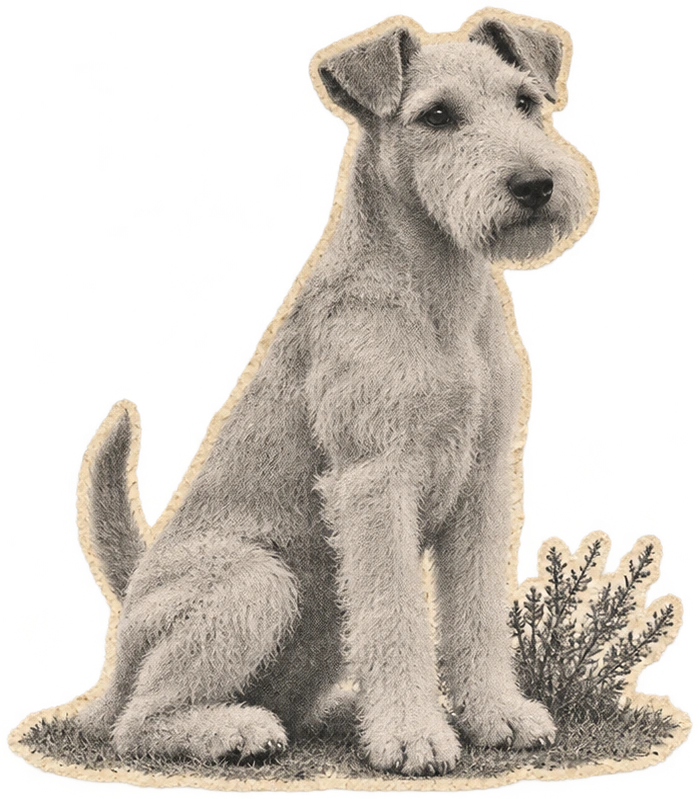
A dense undercoat sits under the harsh outer hair. Start with the sections the harness covers and the hair round their toes. Part it with your fingers before brushing: the bit that looks like a little mud can be a burr or a knot close to the skin. 2 7 8 16
If you want a stripped coat, find a groomer who knows wire coats and ask whether it suits your dog. A comfortable pet trim is also an option. At home, get them used to one paw or a few seconds of beard handling and stop while it’s still going well. No one needs to spend the evening under the table because you’ve brought out a comb. 3 7 16 17
Lakeland Terrier notes / 04
Check the wire coat
| Place | What to check |
|---|---|
| Beard | Dry it if it stays wet and gently tease out debris you can see. 7 8 |
| Chest and armpits | Check the hair where their harness moves. 7 15 |
| Paws and toes | Look after long grass, especially if they keep licking a foot. 8 18 |
| Coat finish | Ask about hand stripping or a comfortable pet trim. 3 7 16 |
Read the moment before the chase
Some Lakelands will stop at a rustle and some will give you half a second before they’re off. Practise leaving while they’ve seen it but haven’t gone stiff over it. If the dog can’t turn back or take a reward, don’t spend the walk repeating their name at the same distance. Give them room, then practise again somewhere easier. 3 4 6 19
If they kick off at the front window, find out what they can see and cut down that view. If the noise only starts when you go out, check on a recording. The dog who races the postie to the end of the fence isn’t necessarily having the same problem as the one pacing in an empty kitchen. 20 21 22
Lakeland Terrier notes / 05
Read the first look
Give the detective an easier case
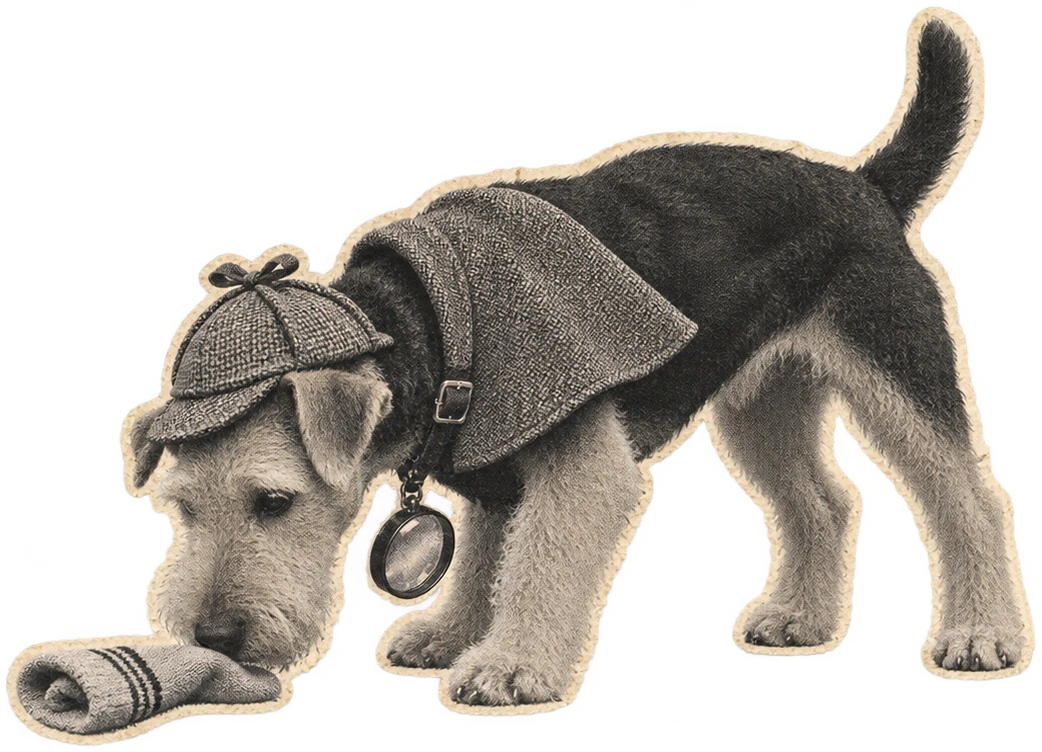
Hide a toy where you can see it but they’ll have to put their nose down. If your dog digs, give them one safe patch or box where finding something is actually allowed. It’s more useful than waiting until they’ve started on the border and trying to negotiate with the back end. 3 23 24
Teach a check back at a quiet bit of the walk and pay it before you need it near a real distraction. A long line can help in suitable open ground; it isn’t a substitute for a short lead by roads or livestock. Once the game is over, a rest without anyone waving another toy is a skill of its own. 6 15 25 26
Lakeland Terrier notes / 06
Give the nose a job
Fell-terrier legs don’t mean every walk belongs on a fell
The RKC profile lists up to an hour daily, and PDSA describes around an hour as a starting point. An adult who is fit and enjoying an outing is different from a new puppy, a dog with a limp or one struggling in the heat. A quiet sniff route with a turnoff can be more useful than another lap of the busy path. 1 3 27 28
At a stile, gate or blind bend, shorten the lead before you can see what’s on the other side. If the dog keeps lifting a leg, slows where they wouldn’t have before or seems sore between walks, get it checked rather than increasing exercise to loosen them up. 25 27 29
Lakeland Terrier notes / 07
Watch the ground
| Situation | Go with |
|---|---|
| Routine outing | Time to sniff and some steady movement, adjusted for the dog. 3 27 |
| Hidden side of a gate or near livestock | Shorten the lead and take the next bit slowly. 25 |
| Hot day | Shade, cooler timing and a route you can shorten. 28 |
| Repeated limp or leg lift | Ask the vet; note when it happens and whether it’s changing. 29 |
Have a look at whatever’s behind the shed
Check the fence along the ground, including around the slabs and the gate hinge. If another animal regularly comes through the garden, do the first few minutes outside together so finding it isn’t the dog’s first job. Indoors, leave the wet kit near the entrance and pick a place the dog can rest without getting stepped over. 5 6 8 26
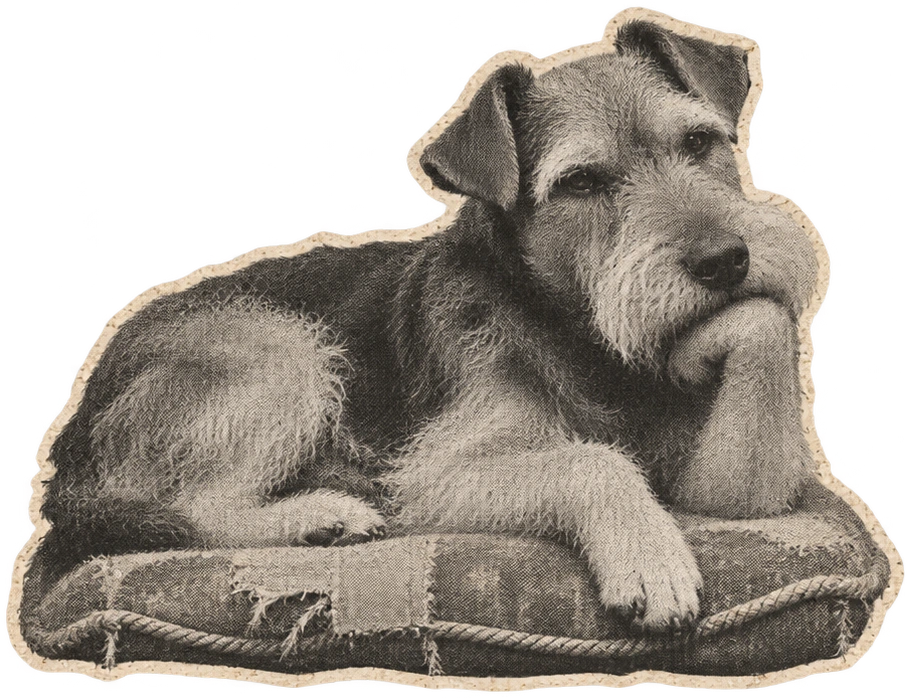
If they’ve found a sunny patch where they actually switch off, you don’t need to move them into the middle of the household just because that’s where you put the expensive bed. Make the route to it easy and add a grippy runner where they slide turning on a hard floor. 26 30
Lakeland Terrier notes / 08
Behind the shed
The dog needs somewhere to go when it’s had enough
Keep an adult close when children and dog are together and make the bed somewhere nobody climbs in after them. If the dog turns away, leaves or stiffens, give them space instead of asking them to sit still for another fuss. 19 31
A Lakeland’s working history is a reason to manage early introductions to small animals carefully, not a prediction about the dog and every cat they’ll meet. Give a cat a proper route away and don’t leave access to small pets to chance. If two dogs guard food or search toys, set up separate spots. 1 3 32 33 34
Lakeland Terrier notes / 09
Give them room
Eyes deserve a closer look than a tick on a form
PDSA includes lens luxation, cataracts and Legg-Calvé-Perthes disease among the conditions worth knowing about in Lakelands. It doesn’t tell us how common any of them is in today’s UK breed. Lens luxation is when the eye’s lens moves out of its usual position. An eye that suddenly clouds, goes red or looks painful needs immediate veterinary advice; there are other causes and you can’t decide which it is from the sofa. 3 9 10 35
For breeding dogs, the RKC Lakeland page names genetic diversity under Good Practice and BVA/RKC/ISDS eye examination under Best Practice. The central Health Standard also lists the eye examination in Best. A DNA test for one primary lens luxation variant exists across relevant dogs, but is not a listed Lakeland tier in that UK standard, and cannot rule out every cause of an eye problem. Ask your vet or a qualified eye panellist what’s relevant to your own dog or line. 1 36 37 38 39
The Dogs Trust UK study table published in 2024 gives a median lifespan of 14.2 years from 1,068 Lakeland records, including 601 deaths. That’s a middle estimate for those records, not a promise or a reason to write off a change in your own dog as old age. 40 41
Lakeland Terrier notes / 10
Health conditions and screening
| Health question | What to do with it |
|---|---|
| Sudden squinting or painful, cloudy eye | Call the vet immediately rather than trying to work out the cause. 9 10 35 |
| An ongoing hind-leg limp | Get it assessed; don’t assume a named breed condition from the way they walk. 3 29 |
| UK Good Practice | The breed page says to prioritise genetic diversity. 1 36 |
| UK Best Practice | Eye screening under BVA/RKC/ISDS, in addition to Good Practice. 1 36 37 |
| What about a PLL DNA test? | A variant test is not the eye exam or a requirement listed in the current Lakeland tier. 36 38 39 |
| What was the longevity figure? | 14.2 years is the UK dataset median, not individual life expectancy. 40 41 |
| Where are the results? | Ask for each named parent’s record and date; verify recorded entries through the RKC. 37 42 |
Ask the groomer what the dog will actually need
Price the coat you want and what the dog can comfortably tolerate, not just the first appointment. If the groomer suggests visits between big trims, see what you can keep on top of yourself. Work out the walk setup, too: a shared field outing and a short lead walk around the lanes aren’t interchangeable for every Lakeland. 3 7 17 43 44
Ask the vet what routine care costs and read the insurance wording before assuming an eye problem would be included. At a minimum know who to call out of hours and how you’d get there. 9 43
Lakeland Terrier notes / 11
Price the coat
| Where the money goes | Ask first |
|---|---|
| Grooming | What coat maintenance fits both the dog and you? 3 7 17 |
| Walking kit | What fits the dog and suits the places you actually walk? 6 15 |
| Walker | What happens near dogs, livestock or other distractions? 25 44 |
| Vet and insurance | What is routine, and what is excluded or limited if something changes? 43 |
A dog built for rough ground
The RKC traces Lakelands back to working terriers in the valleys of Cumberland and Westmorland. Their stamina and ability to move over rocky fells made sense for the work they did. It also lists the Lakeland as a vulnerable native breed, a category about UK registrations, not a statement about the health of one dog. 1 2 45
Lakeland Terrier notes / 12
Lake District roots
Ask about the walk they do now
For a rescue, ask to see how they move round an ordinary spot, which distractions they can leave and what they’re like having their feet handled. For a puppy, meet the litter with the mother where they’re raised, look at dated eye certificates for the parents and ask how their breeder has considered genetic diversity. A promise of a “DNA clear” litter isn’t a substitute for the named screening and paperwork. 1 37 42 46 47
Give the dog time to learn where the door, bed and good sniffing routes are. Then look for what actually works with your own dog, rather than trying to make the new one live like the Lakeland in someone else’s story. 4 6 26 46
Lakeland Terrier notes / 13
Ask about a walk
| Useful thing to ask | Why |
|---|---|
| What does a routine walk look like? | You’ll hear which distractions and routes actually suit them. 4 6 46 |
| Who handles their coat and feet? | You can keep an existing comfortable routine rather than starting over. 7 17 |
| Can I see the dated eye certificates and parents’ details? | You can verify the actual result instead of relying on a shorthand claim. 1 37 42 |
| Where does the dog settle? | A familiar pattern helps you plan the first few days. 26 46 |
Sources
- S1Royal Kennel Club Lakeland Terrier profile and current screeningSource · checked 21 November 2026
- S2Royal Kennel Club Lakeland Terrier UK standardSource · checked 21 November 2026
- S3PDSA veterinary Lakeland Terrier owner and breed-health guideSource · checked 21 November 2026
- S4Dogs Trust Lakeland Terrier owner and rehoming guideSource · checked 21 November 2026
- S5Dogs Trust checking boundaries and preventing escapesSource · checked 21 November 2026
- S6Dogs Trust recall and long-line trainingSource · checked 21 November 2026
- S7PDSA veterinary grooming and coat maintenanceSource · checked 21 November 2026
- S8PDSA practical home health checksSource · checked 21 November 2026
- S9PDSA veterinary guidance for painful eyesSource · checked 21 November 2026
- S10Royal Kennel Club eye emergencies and acute glaucomaSource · checked 21 November 2026
- S11Royal Kennel Club separate Welsh Terrier standardSource · checked 21 November 2026
- S12Royal Kennel Club separate Wire Fox Terrier standardSource · checked 21 November 2026
- S13United States Lakeland Terrier Club account of historical working labelsSource · checked 21 November 2026
- S14PDSA body condition at homeSource · checked 21 November 2026
- S15Dogs Trust harness fitting and checking free movementSource · checked 21 November 2026
- S16Midland Lakeland Terrier Club wire-coat groomingSource · checked 21 November 2026
- S17Dogs Trust building comfort with handlingSource · checked 21 November 2026
- S18PDSA veterinary guidance on grass seeds and pawsSource · checked 21 November 2026
- S19Dogs Trust canine body languageSource · checked 21 November 2026
- S20Dogs Trust identifying barking triggersSource · checked 21 November 2026
- S21Dogs Trust introducing time alone, using a recordingSource · checked 21 November 2026
- S22Dogs Trust identifying and getting help for separation distressSource · checked 21 November 2026
- S23Dogs Trust safe enrichment and search gamesSource · checked 21 November 2026
- S24Dogs Trust creating a safe dig boxSource · checked 21 November 2026
- S25Natural England Countryside Code, controlling dogs around livestockSource · checked 21 November 2026
- S26Dogs Trust building settling skillsSource · checked 21 November 2026
- S27PDSA tailoring activity to age and conditionSource · checked 21 November 2026
- S28Dogs Trust safe outings in hot weatherSource · checked 21 November 2026
- S29PDSA veterinary guidance for a new or persistent limpSource · checked 21 November 2026
- S30Canine Arthritis Management veterinary access and safe flooring guidanceSource · checked 21 November 2026
- S31Dogs Trust children and dog supervisionSource · checked 21 November 2026
- S32Dogs Trust safer dog and cat introductionsSource · checked 21 November 2026
- S33Dogs Trust safe management around small animals and chasingSource · checked 21 November 2026
- S34Dogs Trust resource guarding and separate feedingSource · checked 21 November 2026
- S35Cornell Veterinary Medicine clinical primary lens luxation and urgency guidanceSource · checked 21 November 2026
- S36Royal Kennel Club live central Health Standard and Basset Hound tier rowSource · checked 21 November 2026
- S37Royal Kennel Club BVA/RKC/ISDS Eye Scheme and screening limitsSource · checked 21 November 2026
- S38Gould et al. original multi-breed primary lens luxation variant paperSource · checked 21 November 2026
- S39Orthopedic Foundation for Animals primary lens luxation test and Lakeland listingSource · checked 21 November 2026
- S40Dogs Trust 2024 study table, Lakeland row and countsSource · checked 21 November 2026
- S41McMillan et al. original UK dog longevity studySource · checked 21 November 2026
- S42Royal Kennel Club health results finderSource · checked 21 November 2026
- S43PDSA dog ownership costs and insuranceSource · checked 21 November 2026
- S44Dogs Trust finding a suitable walkerSource · checked 21 November 2026
- S45Royal Kennel Club registration context and vulnerable native listingSource · checked 21 November 2026
- S46Dogs Trust settling a rescue dogSource · checked 21 November 2026
- S47RSPCA buying a puppy and seeing mother with the litterSource · checked 21 November 2026
