
Breed guide / Lagotto Romagnolo
Living with a Lagotto Romagnolo
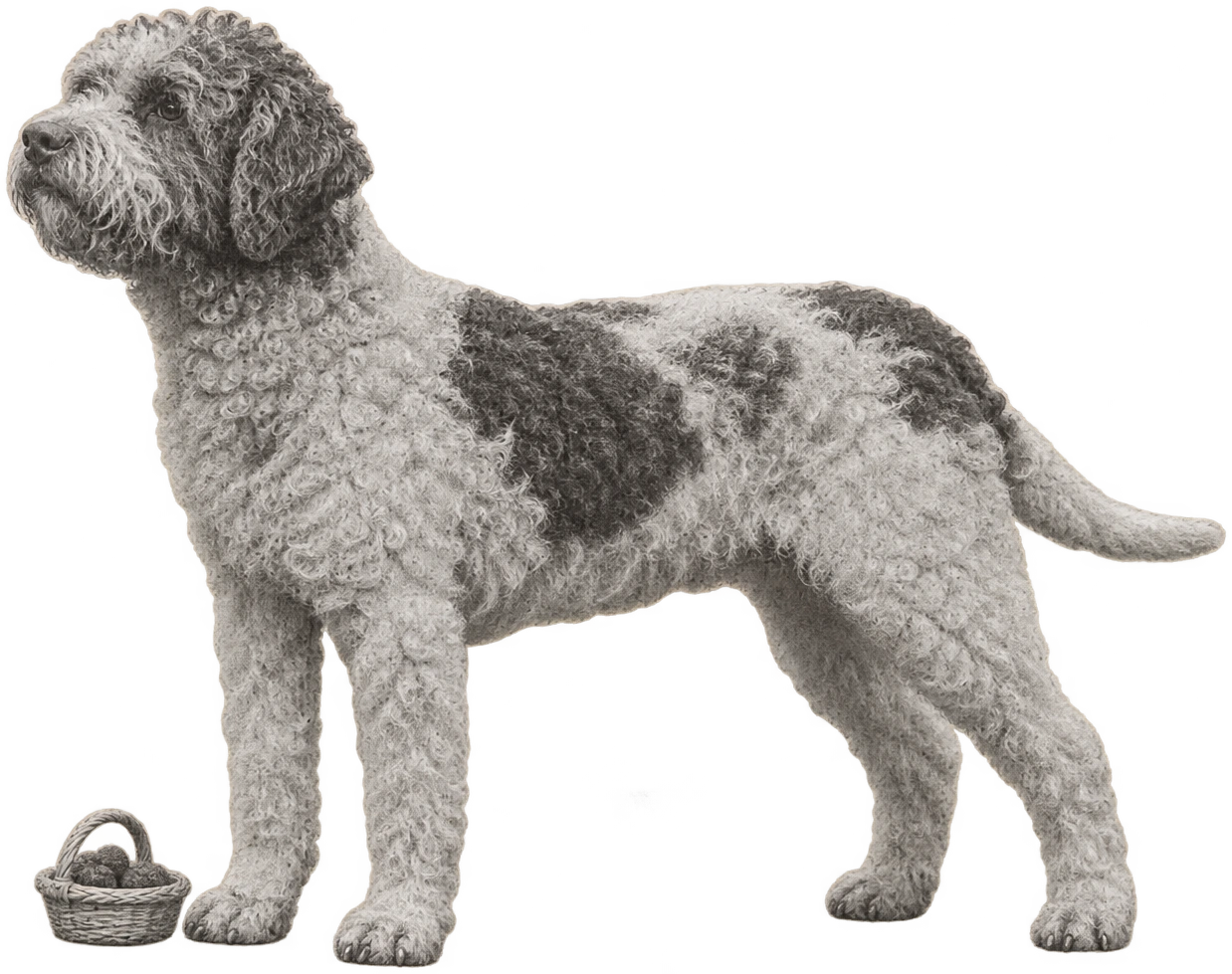
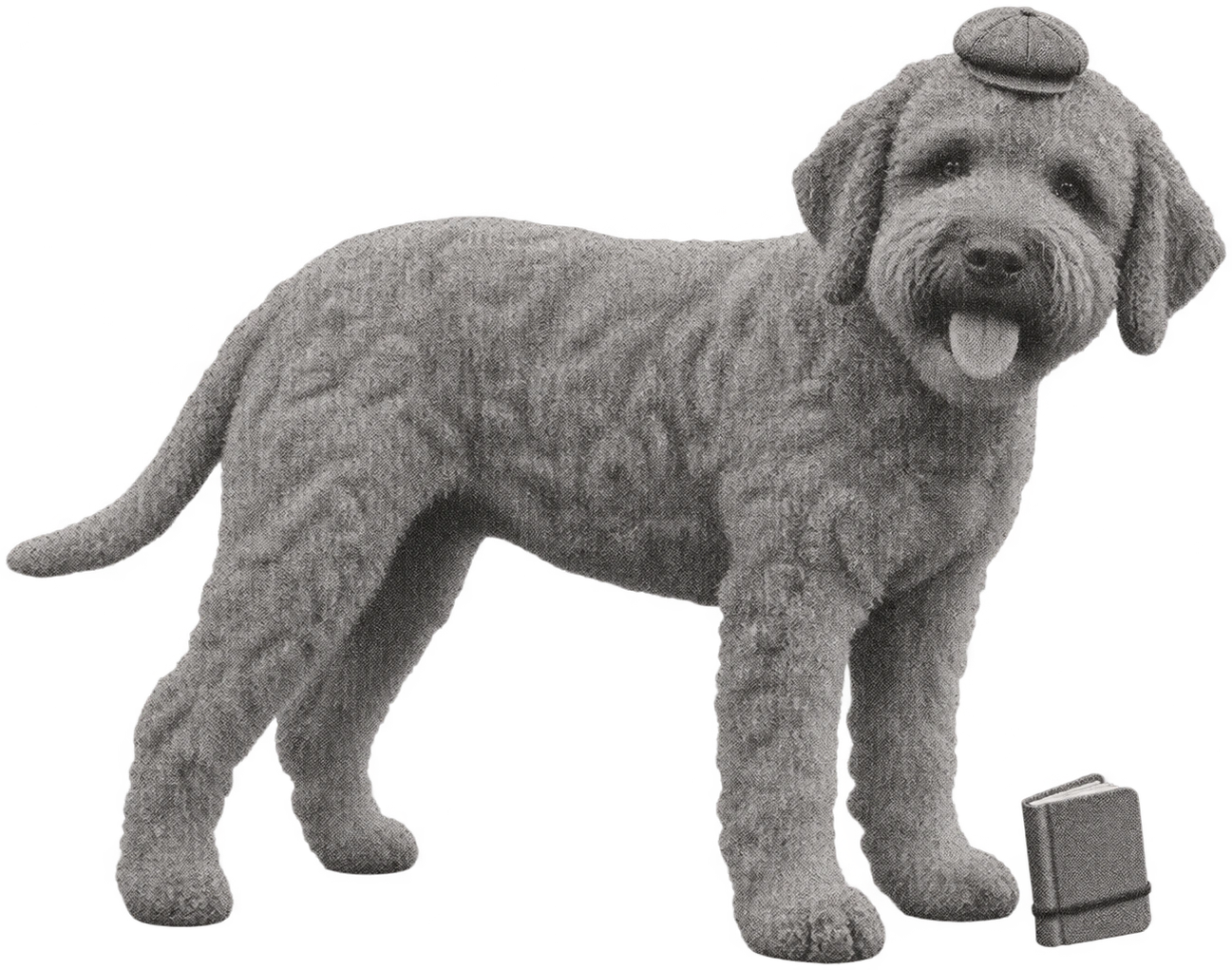
The Lagotto Romagnolo is a sturdy Italian water dog with tight woolly curls and a nose people put to work finding truffles. That makes more sense of the dog than “looks a bit like a Poodle”. You don’t need anything from a posh deli to give one a good afternoon. Try an easy search with their usual food, give them time to sniff on walks and separate the curls after a wet outing so you can see what’s underneath. 123524
Jump to a section
The short version
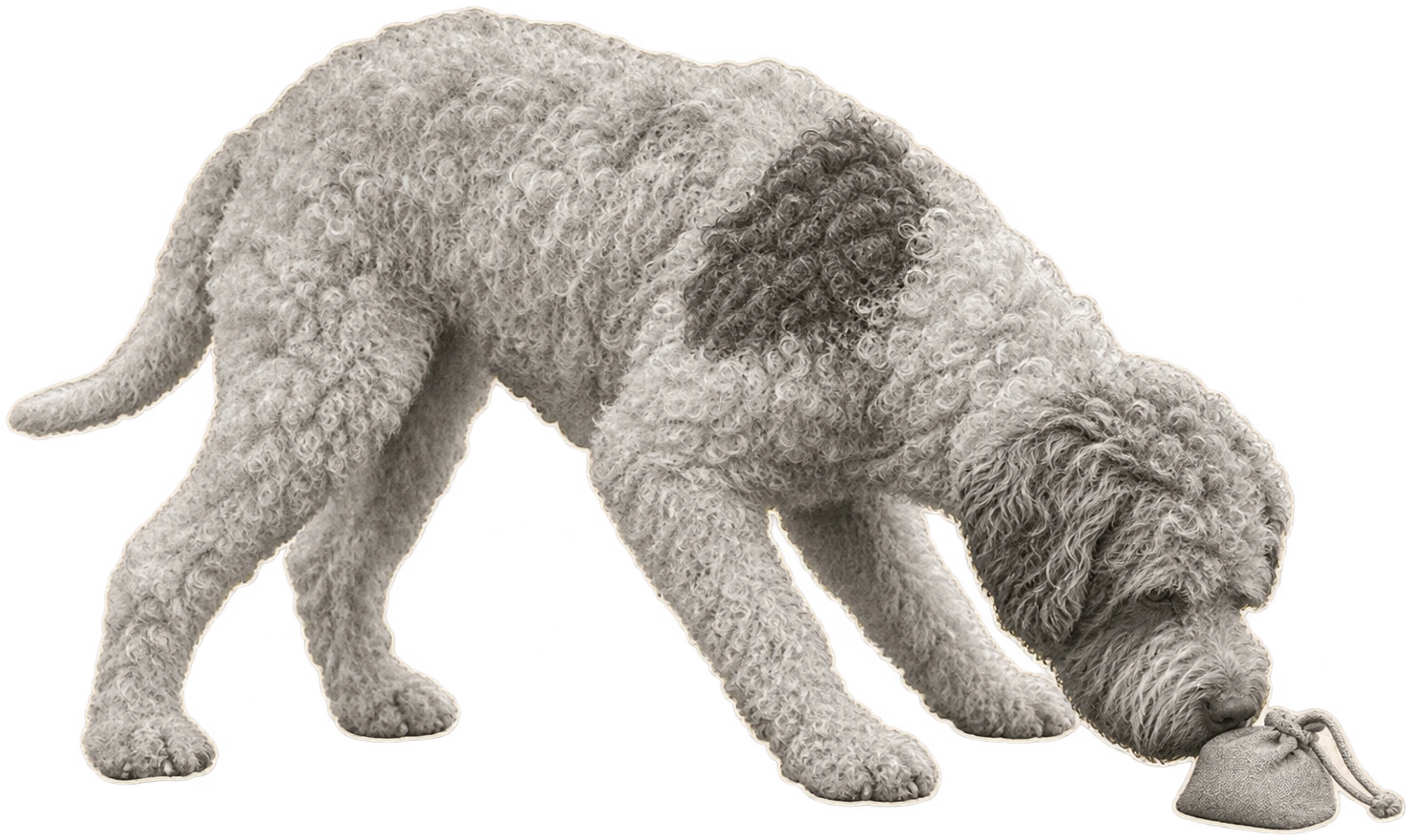
Give their nose a job you can manage. Hide a familiar toy or a few pieces of their everyday food where they can find it, then put the game away and make room for a rest. A dog still interested in the game hasn’t necessarily asked you to make it harder or play it for another hour. 11 24 25
Check down through the coat after long grass, particularly round the straps, toes and ears. If a spot is sore or the dog starts shaking their head, get advice rather than tugging at the hair or poking the ear. 5 17 18 19 37
Lagotto Romagnolo notes / 01
Where to start
| Start here | What to do |
|---|---|
| A short search | Easy first hide, then a clear finish. 11 24 25 |
| After a wet walk | Towel and check skin, straps and curls rather than just the surface. 5 9 18 |
| Lead and boundaries | Make your turn before the tempting bit of hedge or busy field entrance. 15 23 27 |
| New wobble or seizure | Veterinary advice, not a guess based on the breed. 29 42 45 |
The curls don’t make them a Poodle
Lagotto Romagnolo is a separate Royal Kennel Club breed. The FCI also calls it the Romagna Water Dog, and its current standard lists truffle work. Poodles have their own standards, and a curly-coated cross is not automatically a Lagotto. There’s no sure way to read a particular ancestry off a haircut. 1 2 3 12
Lagotto Romagnolo notes / 02
Check the name
Measure through the curls, not round them
The UK standard lists 43–48 cm at the shoulder for males and 41–46 cm for females, with a little tolerance either way. The corresponding ranges in the standard are 13–16 kg and 11–14 kg. Your dog doesn’t have to hit a figure from the book. Part the curls to check harness fit, feel the ribs and watch the dog turn before deciding the straps sit in the right place. 2 15 16
Lagotto Romagnolo notes / 03
Measure yours
| Detail | Useful check |
|---|---|
| 43–48 cm or 41–46 cm | UK standard range for male or female dogs respectively, not a rule for every dog. 2 |
| 13–16 kg or 11–14 kg | Male/female ranges in that same standard; judge the individual dog’s condition. 2 16 |
| Harness | Watch movement with their nose down; look underneath for rubbing. 15 18 |
The coat can felt where you don’t look
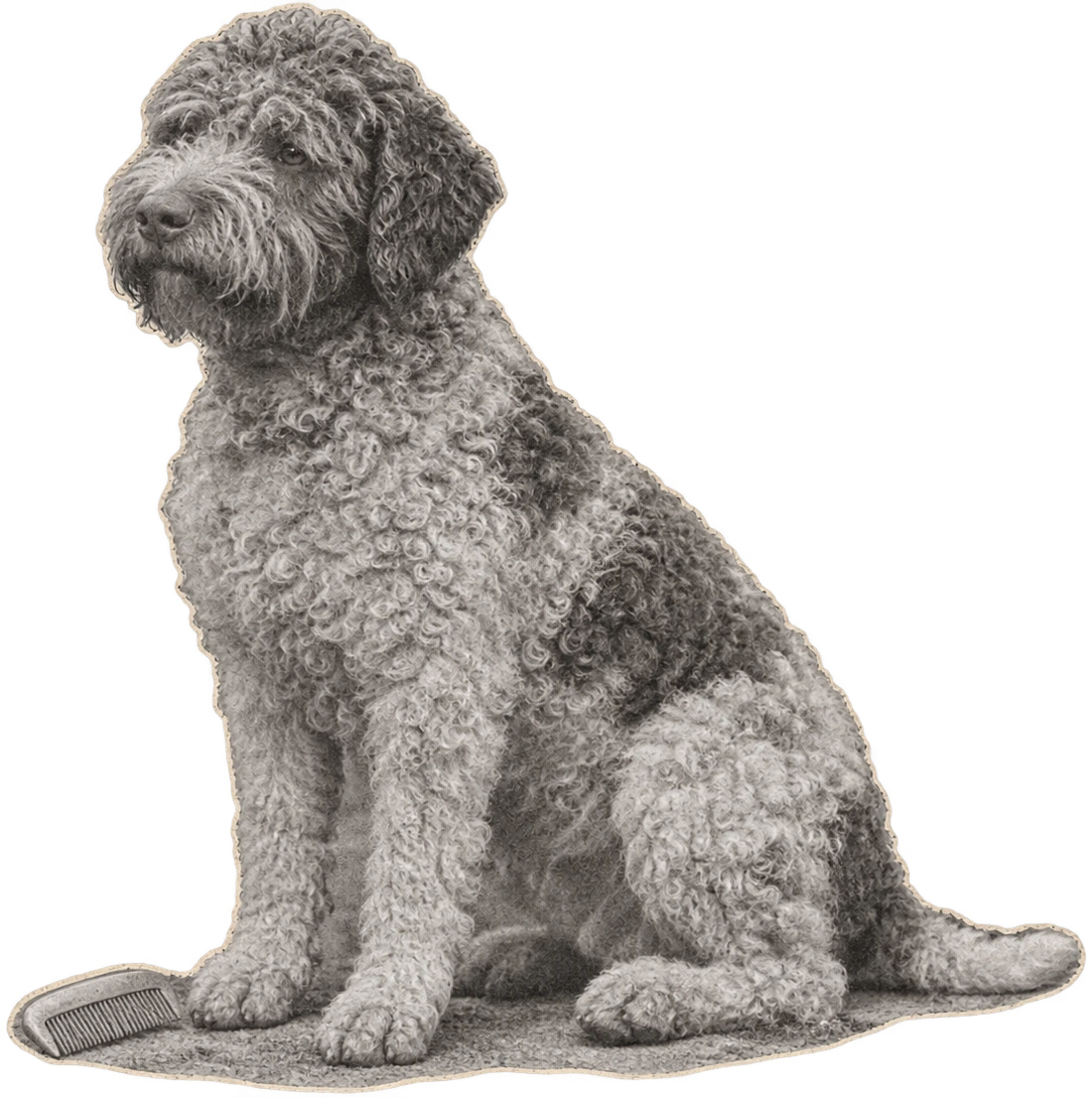
The woolly coat grows and can mat. Put your fingers in between the curls at the base of an ear, under the collar and at the fronts of the armpits. After a wet walk, look for damp and trapped grass and take care not to drag a comb through anything tightly matted. A nice-looking top layer doesn’t mean the skin underneath is comfortable. 2 5 9 17 19
Ask a groomer used to this kind of coat about a practical clip and how to manage it between appointments. Check the visible ear and surrounding hair; a new smell, discharge, pain or repeated shaking needs a vet. Don’t pluck or probe a sore ear to find out what’s going on. 9 17 20 37
Lagotto Romagnolo notes / 04
Check the curls
| Where | What helps |
|---|---|
| Under the straps | Part the curls and check for damp hair, knots or red skin. 5 15 17 |
| Beard and legs | Pick out loose bits and take breaks rather than pulling through mats. 9 17 |
| Ears and paws | Tell the vet about soreness, shaking or a swelling between toes. 18 19 37 |
| The clip | Agree on comfort, maintenance and handling, not a particular fluffy finish. 9 17 20 |
Notice what wakes the dog up
A dog who perks up when the cupboard opens is doing something different from one who starts pacing when you leave. Use the first as a chance to teach a wait; check the second with a short recording and keep departures at a level they can manage. Get help for repeated distress rather than leaving them longer to see if they get used to it. 6 7 11 22 25
Lagotto Romagnolo notes / 05
Let them switch off
| What you notice | Useful first step |
|---|---|
| Searches every time the gear appears | Put the gear out of sight between games and reward a pause. 11 24 25 |
| Alerts at the same window | Change the view and practise moving away while it’s quiet. 14 21 |
| Paces or calls when left | Review a short recording and get qualified help if needed. 6 7 22 |
Make the first search almost too easy
Try two or three pieces of their normal food in safe, easy hiding spots. Once the dog can find those, make one of them a little harder. Add a way to end the game and do something quiet. For training outdoors, reward turning towards you before you ask for a full return. Give them chances to go back to investigating so checking in doesn’t always end the useful bit. 11 23 24 25
Let them sniff without losing the rest of the walk
An ordinary walk can have a couple of stretches where the dog gets time to work their way along something interesting. Take a shorter lead near livestock and narrow paths, and use a long line on a well-fitted harness only where there is room and it’s safe to manage. Avoid suspect algae and difficult exits from water. A history of water work doesn’t make it a good day for a swim. 13 15 23 26 27 28
Lagotto Romagnolo notes / 07
Look ahead
| Situation | Better call |
|---|---|
| Quiet route with safe places to sniff | Give a fit adult room to move at their own pace. 23 24 26 |
| Narrow path or livestock | Shorten up and choose how to pass while there’s room. 23 27 |
| Hot weather or unsafe water | Find a cooler, drier route and adjust the outing to the dog. 13 28 |
| Repeated change in movement | Talk to the vet rather than testing it with more exercise. 29 40 |
Don’t keep the search game in sight all day
Put the scent kit away after use and make the bed somewhere people aren’t constantly getting past. A grippy mat and towel near the door give you somewhere to stop after a muddy walk without cornering the dog. If they prefer going off to lie down to having their coat checked immediately, do a small easy check and come back to it later, unless something hurts and needs help. 17 20 25 30 31
Let the dog leave a greeting
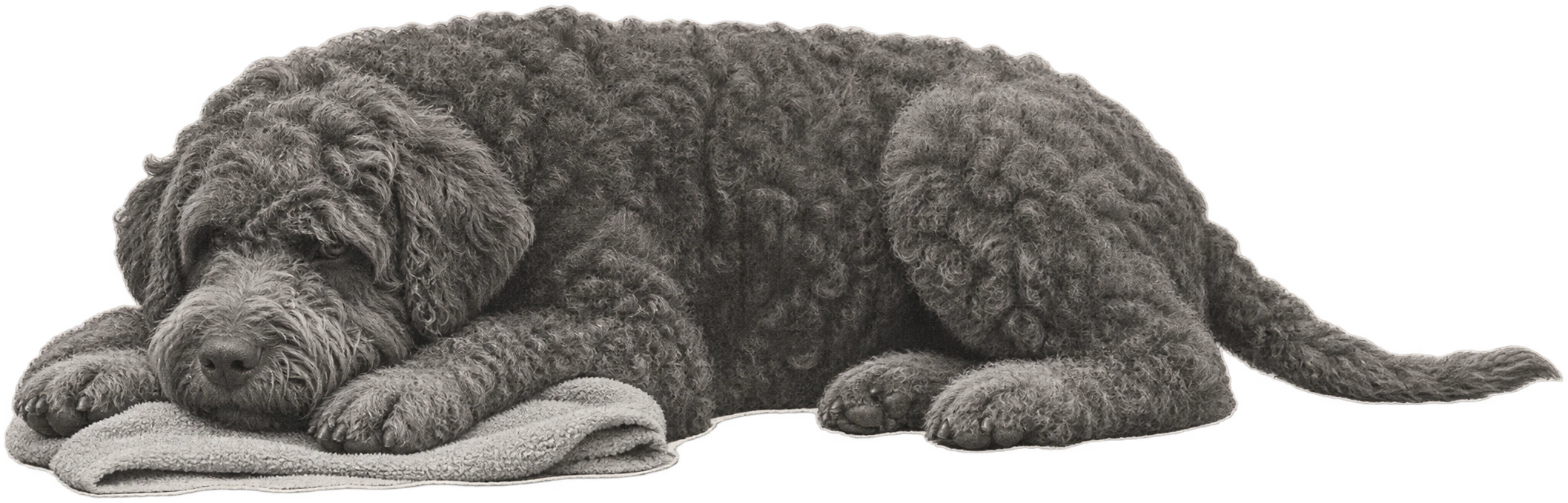
Supervise children, keep them clear of the dog’s bed and don’t make anybody crowd together for an introduction. A dog walking away has offered a useful bit of information. Let cats and other dogs get away separately, and keep contested food and toys out of early meetings. If the dog is repeatedly chasing a cat or small pet, use separation and get help before trying again. 20 21 22 31 32 33 34
Health: two DNA results don’t tell the whole story
For breeding, the Royal Kennel Club’s Good Practice list includes DNA screening for juvenile epilepsy (JE) and lysosomal storage disease (LSD). Additional Best Practice includes official hip and elbow screening and the BVA/RKC/ISDS eye scheme. Ask for the named reports for both parents. Other club suggestions aren’t necessarily the same as the current UK RKC tier. 1 35 36 38 39 43 46
Separate primary studies identified an LGI2 variant in a form of juvenile epilepsy and an ATG4D variant associated with Lagotto storage disease. Those findings explain what the named tests cover, not the cause of every seizure or new wobble. Contact the vet if your dog has a seizure or becomes unsteady. If a seizure lasts more than two minutes or happens again within 24 hours, the PDSA advises calling the vet immediately. Don’t wait for a panel result to make that call. 4 10 29 42 45
The RKC profile gives a broad lifespan indication of over 10 years. That isn’t a measured median or a forecast for your dog, and the genetics studies weren’t designed to answer that question. 1 4 10
Lagotto Romagnolo notes / 10
Health conditions and screening
| Health conditions and screening | What to do with it |
|---|---|
| Good Practice | Read the named JE and LSD DNA results for each parent. 1 35 46 |
| Additional Best Practice | Look for official hip, elbow and eye results. 1 35 36 38 39 |
| Study limits | A variant result is not a diagnosis of current symptoms or a UK disease rate. 4 10 43 |
| Current seizure | Contact the vet for advice; urgent for more than two minutes or repeat within 24 hours. 42 45 |
| A new wobble or loss of coordination | Tell the vet what changed, even with earlier screening. 10 29 42 |
| Limp or stiffness | Ask the vet rather than reading a diagnosis off a hip or elbow result. 38 39 40 |
| Lifespan | Broad breed profile guidance, not a measured cohort median for this guide. 1 |
Find out what the coat costs before it felts
Ask a groomer what maintaining the dog’s actual coat involves and how they work with a dog who needs a break. If you’ll need a walker, ask whether the dog can do some nose time rather than just keep up with a group. Keep money set aside for veterinary care, and read the insurance excess, limits and exclusions. 9 17 20 41 44
Lagotto Romagnolo notes / 11
Price the coat
| Cost | Useful question |
|---|---|
| Grooming | What can I reasonably manage at home, and what’s included in the visit? 9 17 |
| Walker or day care | How are walks paced, and how do they give the dog time to settle? 21 24 41 |
| Vet care and insurance | What’s covered and what could I still need to pay? 44 |
| Everyday kit | Choose a secure harness and a comb recommendation for the coat they have. 15 17 |
Water retriever first, truffle dog later
The breed’s history starts with waterfowl work in the marshes of Romagna in Italy. As the marshes were drained and the work changed, the dogs became specialised truffle searchers. The FCI lists truffle work in its latest standard, and the British club describes how people use that skill today. You can borrow the idea with a safe search game without teaching your dog to grab unknown fungi or needing a patch of woodland. 1 3 8 24
Lagotto Romagnolo notes / 12
From water to truffles
See what they do after the interesting bit
For a rescue dog, ask what they do indoors after a walk and how they cope with brushing, visitors and time alone. For a puppy, meet the litter with its mother where it was raised. Ask for the actual reports on both parents and see how they come off a game rather than only how fast they get into it. Watch whether the people working with the dog notice when it’s had enough. 6 17 20 25 35 46 47
Lagotto Romagnolo notes / 13
Ask about a day
| Ask this | What helps |
|---|---|
| How do they settle? | An example from a normal afternoon after a walk or a game. 24 25 |
| What’s grooming like? | Which bits they’re comfortable with and where they need help. 9 17 20 |
| Can I see the parents’ records? | Named DNA, joint and eye results with dates and scope. 35 46 |
| Can I meet mother and litter where they live? | A visit to the normal set-up, not a doorstep handover. 47 |
Sources
- S1Royal Kennel Club official Lagotto Romagnolo profile and live health tiersSource · checked 21 November 2026
- S2Royal Kennel Club Lagotto Romagnolo UK breed standardSource · checked 21 November 2026
- S3FCI standard 298 for Lagotto Romagnolo, October 2026 edition and historical roleSource · checked 21 November 2026
- S4Primary Lagotto juvenile epilepsy LGI2 studySource · checked 21 November 2026
- S5PDSA veterinary grooming and coat maintenanceSource · checked 21 November 2026
- S6Dogs Trust introducing time alone, using a recordingSource · checked 21 November 2026
- S7Dogs Trust recognising and getting help for separation distressSource · checked 21 November 2026
- S8Lagotto Romagnolo Club of Great Britain on truffle searching and scent workSource · checked 21 November 2026
- S9Lagotto Romagnolo Club of Great Britain original breed grooming notesSource · checked 21 November 2026
- S10Primary Lagotto ATG4D storage disease studySource · checked 21 November 2026
- S11Dogs Trust reward-based trainingSource · checked 21 November 2026
- S12Royal Kennel Club separate Poodle (Standard) breed standardSource · checked 21 November 2026
- S13PDSA dog water safety, currents, exits and suspected algaeSource · checked 21 November 2026
- S14Dogs Trust managing barking triggersSource · checked 21 November 2026
- S15Dogs Trust harness fitting and checking free movementSource · checked 21 November 2026
- S16PDSA body condition at homeSource · checked 21 November 2026
- S17Blue Cross assessing and caring for coat, skin and matsSource · checked 21 November 2026
- S18PDSA home health check including feet and skinSource · checked 21 November 2026
- S19PDSA veterinary guidance on grass seeds and the signs at ears or pawsSource · checked 21 November 2026
- S20Dogs Trust building comfort with handlingSource · checked 21 November 2026
- S21Dogs Trust recognising and managing reactivitySource · checked 21 November 2026
- S22Dogs Trust sourcing qualified behavioural supportSource · checked 21 November 2026
- S23Dogs Trust recall and long-line trainingSource · checked 21 November 2026
- S24Dogs Trust safe enrichment and search gamesSource · checked 21 November 2026
- S25Dogs Trust building settling skillsSource · checked 21 November 2026
- S26PDSA tailoring dog exercise to the individualSource · checked 21 November 2026
- S27Natural England Countryside Code on keeping dogs under controlSource · checked 21 November 2026
- S28Dogs Trust safe outings in hot weatherSource · checked 21 November 2026
- S29PDSA veterinary guidance for a dog suddenly unsteady or falling overSource · checked 21 November 2026
- S30Canine Arthritis Management veterinary access and safe flooring guidanceSource · checked 21 November 2026
- S31Dogs Trust children and dog supervisionSource · checked 21 November 2026
- S32Dogs Trust safer dog and cat introductionsSource · checked 21 November 2026
- S33Dogs Trust introductions to another dogSource · checked 21 November 2026
- S34Dogs Trust resource guarding and separate feedingSource · checked 21 November 2026
- S35Royal Kennel Club central live Health Standard exact Lagotto rowSource · checked 21 November 2026
- S36Royal Kennel Club BVA/RKC/ISDS Eye SchemeSource · checked 21 November 2026
- S37PDSA symptoms and veterinary assessment of ear problemsSource · checked 21 November 2026
- S38British Veterinary Association elbow scheme and official screeningSource · checked 21 November 2026
- S39British Veterinary Association/Royal Kennel Club hip scoring schemeSource · checked 21 November 2026
- S40PDSA veterinary advice for a limp and stiffnessSource · checked 21 November 2026
- S41Dogs Trust finding a suitable dog walkerSource · checked 21 November 2026
- S42PDSA UK veterinary advice on new and recurring seizures in dogsSource · checked 21 November 2026
- S43Lagotto Romagnolo Club of Great Britain breed-specific health test backgroundSource · checked 21 November 2026
- S44PDSA costs and insuranceSource · checked 21 November 2026
- S45PDSA UK veterinary first aid and urgent seizure thresholdsSource · checked 21 November 2026
- S46Royal Kennel Club health results finderSource · checked 21 November 2026
- S47RSPCA buying a puppy and seeing mother with the litterSource · checked 21 November 2026
