
Breed guide / Labrador Retriever
Living with a Labrador Retriever
Labradors are solid, sociable gundogs with thick coats and an appetite for a day out, particularly if there’s water involved. The same dog who cheers you up on a wet walk can take some persuading that the walk is over.
Jump to a section
A retriever through and through
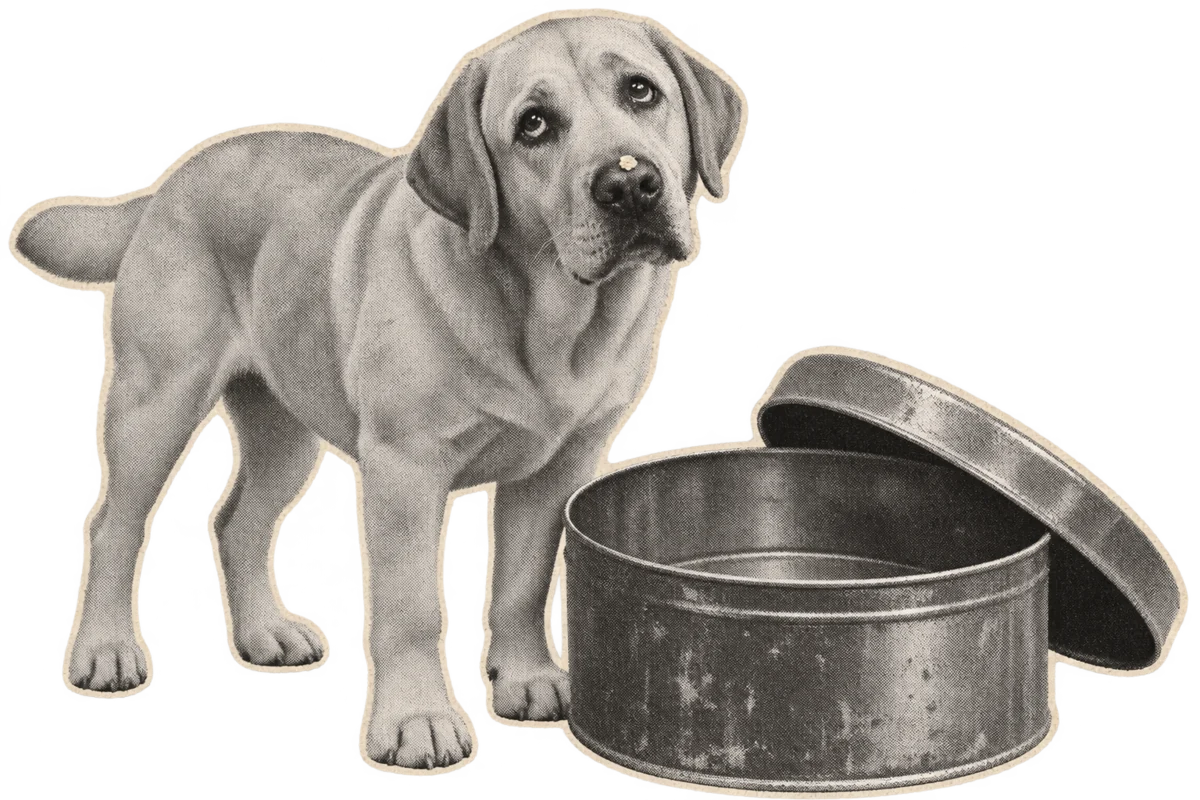
The Labrador Retriever was bred in Britain to fetch game on land and from water, and you can see a bit of that in a pet Lab who brings you something as soon as you walk through the door. Some will turn up with the same toy every time. It’s nice coming home to a dog who’s pleased to see you and has thought to bring their duck. They’ll still need help learning when the two of you are done for the day. 1271427
If more exercise leaves yours looking for more exercise, try giving them something to find on a walk and paying attention to when they settle afterwards. At home, put the day’s food in one pot and take training rewards from it. A Labrador can look entirely sincere when they ask the person who didn’t feed them for dinner. Some Labs are particularly food-motivated, and it’s easier to keep track of what they’ve had when everyone in the house can see what’s left. 456
Labrador Retriever notes / 01
Living with a Labrador
What to expect from an active dog who likes a job.
| What they enjoy | Labs often enjoy company and an activity that involves finding or carrying something. 12 |
|---|---|
| What takes time | You’ll need time for exercise and training. Teaching a dog of around 30 kg to greet people gently is worth doing early. 178 |
| Something to try | Teach a swap with a safe toy, put measured rewards in one pot and have another look at what the dog does the morning after a big walk. 349 |
| UK weight and lifespan data | UK vet records: median adult weight 31.6 kg. The bigger UK lifespan study estimated a 13.1-year median. Use body condition and your dog’s weight history when deciding what’s healthy for them. 710 |
What people mean by English and American Labs
An advert for an “English Lab” may be using the American nickname for show-bred Labradors; “American Lab” often means one from field lines. Those labels can tell you what the breeder selected for, but the broad dog in a show photo might still want to spend hours working. If you can meet the adults, see them after they’ve had their walk, when there’s no one throwing anything for them. 11112
A rescue may describe a dog as a Labrador cross on looks or known parentage. Ask what staff or a fosterer have seen the dog do away from the kennels. A description of how they live with another dog or what happens when the fosterer goes out tells you something you can use. 213
Labrador Retriever notes / 02
Names, lines and registers
There is one recognised Labrador Retriever breed.
| Registered name | The Royal Kennel Club lists Retriever (Labrador); commonly Labrador Retriever, or Lab. 1 |
|---|---|
| Origin | FCI lists Great Britain as the modern breed’s origin; the breed’s working roots go back to Newfoundland and St John’s dogs. 114 |
| Traditional work | Retrieving on land and from water; developed as a gundog in Britain. 114 |
| UK registry group | Gundog, in the retriever subgroup. 1 |
| International FCI | Standard 122, Group 8, Section 1: retrievers. 14 |
| United States | American Kennel Club Sporting group. Its size guidance differs from the UK’s. 1112 |
| Field / show / pet | The registries recognise one Labrador Retriever. Field and show labels can tell you what the breeder selected for. 11112 |
| Compared with a Golden Retriever | The Lab has a short, dense coat; Goldens have longer hair and feathering. 12 |
How much should a Labrador weigh?
With your Labrador standing, run your hands along their ribs. You should usually feel them without having to press hard and see a waist behind them from above. There’s a lot of dog in the front of a Lab even at a healthy weight, and the coat can obscure what you’re looking at. Ask the vet or nurse to show you how they check, especially if you’re looking at the breed’s typical weight and wondering why your dog doesn’t match it. 415
When the weight starts changing, try weighing the food and recording what actually goes into the dog, including chews and rewards. Use the same scale for the next few weigh-ins if you can. Tell the practice if they’re less active or their appetite or thirst has changed, and check before cutting meals sharply or adding distance to the walk of a dog who’s already stiff. 4915
Labrador Retriever notes / 03
Height, weight and body condition
A broad chest tells you very little about the fat over the ribs.
| What to look for | Broad head, short dense coat, strong frame and a thick, tapering otter-like tail. The RKC says the chest’s width should come from the ribs, not from extra weight. 16 |
|---|---|
| UK ideal shoulder height | Males 56–57 cm, females 55–56 cm. The UK breed standard gives ideal height, not an adult kilogram target. 16 |
| International standard | The FCI’s 2026 standard lists 56–57 cm males and 54–56 cm females. Its female range differs from the current RKC text. Both are show standards, not a UK pet population measurement. 14 |
| US standard | Males 22½–24½ in (about 57–62 cm) and 65–80 lb (about 29–36 kg) in working condition; females 21½–23½ in (about 55–60 cm) and 55–70 lb (about 25–32 kg). These are AKC standard figures. 12 |
| Measured UK adult weights | VetCompass 2019: medians 31.6 kg overall, 29.2 kg females and 33.6 kg males. Breed cohort 154,222 of all ages; not all provided adult weights. Adult weight summaries began at 18 months. Published in 2023. 7 |
| A different UK sample | VetCompass 2013: mean adult weight 33.0 kg, with SD 6.1 kg. The different year and use of a mean make this unsuitable for comparison with the 2019 median. 17 |
| Practical UK guide | PDSA gives 25–35 kg as a breed guide, not an ideal range for every individual. WSAVA uses 4–5/9 as its general ideal body-condition band. Ask your vet to show you the method. 1518 |
A short coat with a lot underneath
The Labrador’s coat doesn’t look as though it ought to fill a brush. Have a look after the undercoat starts coming out, and check the Velcro on the lead while you’re there. Brush more often then and keep a towel near the door for walks that take in a ditch or a swim. Use the towel to dry around the outside of the ears and have a look at the skin under the harness while you’ve got the dog standing still. 1218
An ear that starts to smell different, especially if the dog keeps shaking their head or doesn’t want you touching that side, is worth a call to the vet. Drying the outside is fine; get the practice to show you what, if anything, to put in the ear and leave the cotton buds in the bathroom. 19
Labrador Retriever notes / 04
Coat, colour and grooming
The heavy shedding comes from the undercoat.
| Coat | Short, dense and straight, with a weather-resistant undercoat. This is a double coat even though it doesn’t look long. 16 |
|---|---|
| Standard colours | Black, yellow and liver/chocolate. The UK standard accepts yellow from light cream to fox red; “fox red” is within yellow rather than a fourth standard colour. 16 |
| Dilute colours | The RKC lists silver, charcoal and champagne as non-standard. You still need to see the health screens. 120 |
| Import registration | Royal Kennel Club’s imported-dog registration page specifies DNA testing for the dilute colour variant d1 for Labradors. A non-standard colour description is not the same as stating that all such dogs are unregistrable. 2021 |
| Shedding | Yes. Brush regularly, more in heavy shedding; we haven’t verified a useful Labrador-specific hair-loss measure. 12 |
| After the walk | Rinse off muck when needed, towel dry, and check between toes. Check the skin where the harness sits. 22223 |
| Nails and teeth | Get the practice to demonstrate handling and trimming if needed. Daily brushing with dog-safe toothpaste is useful if they’ll tolerate it; pain, bleeding or a broken tooth deserves a check. 2224 |
| Ears | Check for head shaking, smell, discharge or soreness. With a new head tilt or loss of balance, contact the vet for same-day advice. 19 |
A friendly dog still needs room
Some Labradors are delighted to see a visitor and will throw their weight into saying so. Keep the dog behind a gate while the visitor gets in and sits down, then see whether both would like to meet. You can rehearse the whole thing with someone your dog knows, ending the practice while it’s still going well. 28
Watch what your dog does when the room gets busy. A dog who turns away, freezes or leaves needs space, and a Lab who enjoys company can still dislike being hugged. With an object they won’t let you near, leave it alone if it’s safe and work out how to prevent a repeat. Get professional help with guarding, especially if it’s new or worse than it was; pain is one of the things to check. 82526
Labrador Retriever notes / 05
Temperament and greetings
Teach a greeting your visitors and your dog can manage.
| Show-standard ideal | The Royal Kennel Club wants a biddable dog with a kindly nature. Judge how your dog behaves around the people they’ll meet. 16 |
|---|---|
| Carrying stuff | Retrieving is part of the breed background. Keep a safe toy they can carry within reach and put away things you don’t want them to take. 13 |
| Food interest | Researchers linked a POMC variant to food motivation in some Labradors. You can measure meals and check body condition without knowing your dog’s genetic status. 56 |
| Noise and doorbell | No useful measured Labrador-specific barking frequency. Practise in a quiet house if visitors tend to set your dog off. 2827 |
| Puppy vs grown-up | A youngster who jumps and mouths needs help learning how people want to be greeted. Don’t assume every puppy will inherit the temperament of the mature Lab you’ve got in mind. 2828 |
| A change | If their tolerance, play or willingness to walk changes quickly or persists, talk to your vet. 925 |
What to do when they take something
Start a swap with a toy the dog is happy to put down. Offer something worth coming over for, and give the toy back sometimes so handing it over doesn’t always end the game. Once that exchange is familiar, add the cue. If the Lab comes in holding the tea towel, try not to give them the only game in the house that makes everybody stop what they’re doing and chase them. Keep the laundry out of reach and put a suitable toy where they can get to it. Call the vet straight away about a potentially harmful object or anything you suspect they’ve swallowed. 32629
On a quiet walk, call the dog while they’re still able to listen and reward them when they return. Let them go off and sniff again sometimes, so the cue doesn’t always mean you’re putting the lead back on to go home. A long line on a well-fitting harness gives you room to practise; keep a short, manageable lead near water while you check the bank. 2330
Labrador Retriever notes / 06
Swaps, recall and walking on a lead
Practise giving things back before you need the dog to give something back.
| Swap / drop | Start with a safe toy and a better offer. Don’t chase or grab. Get help first if your dog already guards things. 326 |
|---|---|
| Recall | Practise away from picnics, other dogs and water first. A training line goes on a well-fitting harness. Reward the return and avoid calling repeatedly once they’re fixed on something else. 30 |
| Leave it / prevention | Keep unsupervised shoes, laundry, food and bins out of reach. Manage what’s within reach even after they know the cue. 329 |
| Settling | Reward them when they’re already relaxed on a mat. Take tiny training rewards from the day’s food, if appropriate for their diet. 427 |
| Loose lead | Teach it where you can manage the space and before the dog’s noticed their favourite person. Use well-fitted equipment you can hold securely. 23031 |
The walk and the morning after
A healthy adult Labrador usually needs a fair amount of outdoor time. If you throw the ball every time the Lab puts it at your feet, you’re going to be the first of the two of you to get bored. Hide it once and let them do the work. A walk with a search and a few retrieves gives them something to do without all those hard turns on slippery ground. On a new route or after a bigger outing, notice how easily they rise from bed that evening and the following morning. If they’re limping or getting stiffer, speak to the vet before taking them out for more of the same. 1918
Some Labs will be very keen to get in the water. Try to be the one of you who’s thought about how they’re getting out: a bank they can slide down isn’t necessarily one they can climb back up. Check for strong current, boats, ice, livestock and pollution warnings; let a comfortable swimmer choose whether to go in and keep sessions short. Stay out altogether if there could be blue-green algae. 2332
Labrador Retriever notes / 07
Exercise, retrieving and water safety
How your Lab moves afterwards helps you judge how much to do next time.
| A healthy adult’s day | RKC lists more than two hours; PDSA calls for plenty of exercise and enrichment, tailored to the dog. This is a guide to time and commitment, not a minutes target for a young, older or unwell Lab. 118 |
|---|---|
| Putting work into it | Hide a toy to find, then leave time for your dog to rest and see how easily they settle. 1827 |
| After injury or with arthritis | Talk to your vet about steady, suitable movement. Record changes in gait and how the dog looks later and the following morning; avoid turning a painful day into a longer walk. 933 |
| Water | Calm safe access and obvious exit, no algae warnings, don’t force them in. If you suspect blue-green algae exposure, stop them licking and ring the vet immediately. 2332 |
| Hot weather | Walk at cooler times or swap a hard outing for indoor activity. A Lab can get heat illness on a walk as well as in a car; don’t wait for collapse before starting to cool and calling a vet. 3435 |
| Puppy exercise | Give a growing puppy chances to explore and rest, and ask your practice about age-appropriate activity rather than imposing an adult retrieve or long route. 1833 |
Feeding, resting and being left alone
If more than one person feeds the dog, keep the measured food in one place and work from it for that day. Put a mat away from the worktop and reward the dog for going there and waiting while you’re doing something ordinary. Start with the kettle, not with pulling a roast out of the oven while trying to keep a Labrador away from it. 42729
Following you round the house doesn’t tell you how your dog will react when you are actually gone. Try very short absences while they are relaxed, building up from what they can manage and arranging cover if they’re pacing, panting or barking and need help. If a dog who used to get round the house easily is hesitating on tiles or missing a step, make the routes to bed, water and the garden safer and tell the vet what changed. 92736
Labrador Retriever notes / 08
What works in the house
Agree who’s doing the feeding and give the dog space to settle.
| Home size | Royal Kennel Club lists a large house; the dog still needs regular outdoor time and a clear place to rest. A big kitchen doesn’t make up for everything else. 118 |
|---|---|
| Garden | The RKC lists a large garden. If your setup is smaller, make sure there are reliable ways to take them out and give them things to do beyond coming back to the same door. 118 |
| Town or country | The RKC lists either. Check the walking routes, where they can rest and how often you can take them out. 118 |
| Time alone | Build it gradually and watch the particular dog. We don’t have a Labrador-specific number of hours that guarantees they’ll cope. 36 |
| Sleep and resting | Choose a cool or cosy bed according to the dog, away from household traffic. No verified Lab-specific sleep-hour target. Check a change in regular rest or mobility with the practice. 92736 |
| Feeding | Complete food for their life stage, measured meals and extra calories accounted for. Put part of the measured allowance in a slow feeder or safe food toy if that helps them eat more slowly. 41518 |
| Home hazards | Shut food and bins away; put laundry, loose toys and toxic items where the dog can’t reach. If an older Lab needs an easier route, make the changes before asking them to try the same slippery step again. 92229 |
A family dog with elbows
A Lab can like children and still knock one over on the way to a ball. Keep greetings brief and calm, with fetch in a separate space. The dog should be able to eat, sleep or hold a toy without a child reaching for it. If the adult in the room needs to go and do something else, separate them first. 826
Give a resident cat somewhere to go where the dog physically can’t follow. Plan the first meetings when you can keep enough distance for the cat to move away and the Labrador to stay with you. If they’re already chasing or either animal is frightened, separate them and get help before repeating the introduction. 2537
Labrador Retriever notes / 09
The people and animals you already live with
Plan the first meetings and protect the dog’s rest.
| Children | Active, close adult supervision and a quiet retreat for the dog. Reserve food, chews and fast fetch for sessions adults control. 826 |
|---|---|
| Other dogs | Meet calmly and look for relaxed body language. Give dogs room to play and put the ball away if it’s causing competition. 25 |
| Cats | Individual fit matters. Separate when not supervising and give the cat escape routes. A dog who behaves outdoors on a lead hasn’t necessarily lived with a cat. 37 |
| Small animals | Keep small pets securely separated. Ask about observed experience in a real household if choosing a rescue. 1337 |
| Visitors | Use a gate or lead and teach a calmer greeting. Give a nervous guest the option not to meet the dog at all. 825 |
What to watch for as your Labrador ages
An early sign of joint pain can be the way your Lab gets up after a walk they were still keen to finish. If you notice a shorter stride or that they’re struggling to rise from their bed, note when it started and film a few seconds of normal movement if you can do it comfortably. Arrange a vet check for repeated changes. Severe pain, inability to bear weight or collapse needs immediate advice. 93338
Vet-record studies count the problems that make it into the notes, so a dog with an unrecognised condition won’t appear in the count. The odds ratios below compare groups after the researchers accounted for some other differences between the dogs. A diagnosis still depends on what’s happening to your dog and what your vet finds on examination. 1739
Labrador Retriever notes / 10
Labrador health and what the studies found
The figures include vet records and a separate survival study.
Lifespan and measured evidence
| Median survival, UK | McMillan and colleagues, 2024: 13.1 years (95% confidence interval 13.0–13.1), among 43,428 Labradors, with 16,155 recorded deaths. The estimate is based on both dogs still alive during the study and dogs who died. 1040 |
|---|---|
| Life expectancy at birth, UK | Teng and colleagues, 2022: 11.77 years (95% CI 11.67–11.89) from UK VetCompass life tables. This life-table estimate uses a different dataset and method from the median survival figure above. 41 |
| Most recorded problems, 2013 | Of 2,074 Labrador records reviewed, 215 had outer ear inflammation (10.4%, 95% CI 9.1–11.8), 183 overweight/obesity (8.8%, 7.6–10.1) and 115 degenerative joint disease (5.5%, 4.6–6.6). The research was published in 2018. These were recorded diagnoses and one historical year. 17 |
| Osteoarthritis and lipomas, 2016 | In the 2021 comparison of 1,462 Labs and 20,786 other dogs, adjusted odds of a recorded osteoarthritis diagnosis were 2.83× (95% CI 2.21–3.62); for fatty lumps called lipomas, 2.45× (95% CI 1.79–3.34). Neither figure is a lifetime risk. 39 |
| Colour and lifespan, older UK records | The 2013 cohort study compared median ages at death of 10.7 years in 34 chocolate Labs and 12.1 years in 139 non-chocolate Labs. An association in a small subset, not evidence that coat pigment causes disease or a forecast for any colour. 17 |
| Food drive research | A 2016 study linked a POMC variant with higher food motivation and body condition in sampled Labs. Follow-up experiments in 2024 examined both Labradors and Flat-Coated Retrievers. Portion size still depends on an individual dog’s weight and body condition. 56 |
Screening and breeding
| Royal Kennel Club: Good Practice | DNA tests for CNM (centronuclear myopathy), EIC (exercise-induced collapse), MCD (macular corneal dystrophy), prcd-PRA (a form of progressive retinal atrophy), SD2 (skeletal dysplasia 2) and STGD (Stargardt disease). Also BVA/RKC hip and elbow assessments and the BVA/RKC/ISDS eye examination. 142 |
|---|---|
| Best Practice adds | DNA testing for HNPK, hereditary nasal parakeratosis, in addition to all the Good Practice tests above. This is guidance, not a blanket declaration that a registered dog is healthy or has had every test. 142 |
| Hips and elbows | Hip scores range from 0 to 106 total; lower generally indicates less evidence of hip disease on the films. Elbows are graded 0 to 3, from best to worst. Ask to see both parents’ results and compare the hip scores with the breed median in force when you check. A score is a screening result, not a prediction for a puppy. 4344 |
| Eyes and a DNA panel | A DNA panel covers the variants in the report; a separate clinical examination assesses the eyes. Ask for the signed clinical eye exam and date, plus identified DNA reports for both parents or documented hereditary status under the RKC rules. 14245 |
| Breeding decisions | Ask how a mating avoids producing affected puppies for recessive conditions and how family history, diversity and clinical findings were considered. A carrier result by itself is not the same as an affected dog. Your vet or breed health coordinator can explain the specific test. 4245 |
Conditions and situations to recognise
Weight gain and a change in body condition
If the waist is disappearing or you can’t feel the ribs as easily as before, arrange a vet or nurse check and bring a record of food, extras and weights. If they’re stiff, speak to your vet before increasing exercise. Unexplained weight loss, poor appetite or a marked change in thirst needs a vet’s advice too. 41517
Hip and elbow dysplasia, and arthritis
Hips and elbows can develop abnormally even in young dogs; arthritis can develop later. A new foreleg limp after a short walk, reluctance to use stairs or difficulty getting up are reasons to talk to the vet. Sudden marked pain or not bearing weight needs immediate advice. Don’t give human painkillers. For diagnosed arthritis, the right amount of exercise and changes at home are part of a plan made with your vet. 933434446
Outer ear inflammation and infection
Look for repeated head shaking, scratching, strong smell, discharge or an ear they don’t want touched. Your vet may need to check for causes such as skin allergies and choose treatment after looking into the ear. Don’t use old drops from a different problem. Ask for same-day help if they develop a head tilt or lose balance. 1917
A lump you can suddenly feel
Lipomas are non-cancerous fatty growths; other lumps can feel similar. Ask your vet to check a new lump, even if it feels soft. Note the location and whether it’s changing, and call sooner about fast growth, bleeding or pain. A photo or measurement may be useful after the practice asks you to monitor it. 3947
Weakness or collapse after exercise
A variant in the DNM1 gene is associated with exercise-induced collapse in Labrador Retrievers, which can involve weakness, poor coordination and collapse after intense activity. Collapse has many causes. Stop activity, call a vet immediately and don’t repeat the exercise to test whether it happens again, even if the dog looks better. A DNA result is one piece of information for the vet. 3848
Inherited eye disease and failing vision
A dog who starts hesitating in dim light or bumping into things needs an eye examination. Progressive retinal atrophy is one possible explanation, not something you can tell from a single symptom or a photo. A suddenly painful eye, or sudden loss of vision, needs urgent attention. 184549
Swallowed items and possible poisoning
If they’ve swallowed a sock, something sharp, or anything that could be poisonous, ring the vet immediately, even if they seem well. Keep packaging or note the item, quantity and time if you can without delaying the call. Never try to make them vomit unless directed by a vet. These are general emergencies, not Labrador-specific incidence estimates. 2950
Heat-related illness
Excessive panting that doesn’t settle, weakness, confusion or collapse after exertion or heat needs immediate help. Stop activity, move them out of the heat, start cooling with water cooler than the dog and call the vet. Don’t cover them with wet towels or delay cooling until arrival. Save your practice and out-of-hours numbers before you need them. 3435
What the bills look like after the first month
Work out how long a bag of the dog’s usual food lasts when you feed the portion they actually need. Build from there: what you pay the vet for routine care and whether you’ll need a walker or sitter on certain days. An older Labrador may need help getting into the car and ongoing care for a sore joint, so allow for costs your younger dog doesn’t have. 183351
When comparing insurance, look at how much you’d still pay on the same vet bill under each plan. Check whether the limit renews and what happens to any concern already on the vet’s records. There isn’t a reliable UK Labrador-only sale or premium figure here; ask what a consultation and follow-up cost at the practice you’ll actually use. 52
Labrador Retriever notes / 11
Costs of living with a Labrador
Use the estimates to make a budget, then get prices for your dog.
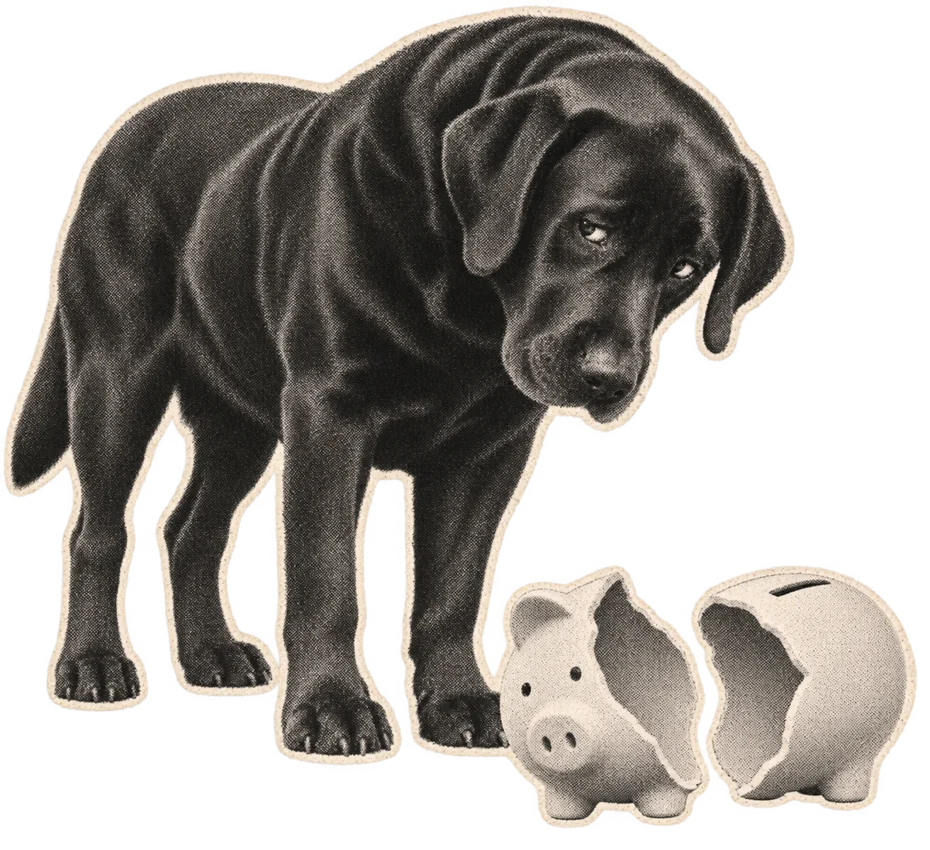
| Labrador page | PDSA’s breed profile lists a minimum £105/month. It doesn’t date that figure specifically. Use it as a starting estimate. 18 |
|---|---|
| Dated UK size benchmark | Separate PDSA model at 2024 prices: large dog estimated minimum £560 set-up, £116/month and £8,200–£18,800 across differing lifespans. A size-group estimate, not the price of owning a Lab. 51 |
| What that model excludes | Its general monthly model includes an insurance allowance but not illness and injury vet bills, special diets or buying the dog. The start-up figure excludes microchipping. If you add your actual insurance quote, first remove the allowance in the estimate. 51 |
| Adoption example | Dogs Trust’s published adult or puppy fee £300 in England, Wales and Scotland, £287.50 in Northern Ireland. Other rescues set their own fees. 13 |
| Puppy from a breeder | No verified representative UK transaction price. Adverts are asking prices. Look at the parents’ screening reports, whatever the price. 204253 |
| Insurance | Get comparable quotes for your dog, age and area. Compare annual or condition limit, excess, contribution, renewal and exclusions. Price emergency travel and out-of-hours care separately. 52 |
| Extras worth pricing | A reputable walker or sitter, optional training support, transport, and joint-friendly gear if the dog needs it. Ask which services you will actually use. 1833 |
How the Labrador became a British gundog
The Royal Kennel Club traces Labrador ancestry to the smaller St John’s working dogs on the Newfoundland coast. Some of those dogs came to England, and the modern breed took shape there as a gundog that could retrieve on land and from water. The official accounts describe the broad history without pinning down every early cross. 114
The breed now includes assistance dogs and family pets as well as working and show dogs. A Labrador who lives a long way from a shoot can still have something to find and bring over to you. Start with a toy hidden somewhere easy and give it back if the dog brings it to you, so they have a reason to keep coming back with it. 1318
Labrador Retriever notes / 12
From Newfoundland to retrieving in Britain
The roots are in working dogs, not a particular look or colour.
| Earlier roots | Working dogs on the Newfoundland coast, with a connection to the smaller St John’s dog described by the RKC. 114 |
|---|---|
| Developed as a retriever | The modern breed was developed in Britain, with dogs used for retrieving and field work. The FCI records Great Britain as the breed’s country of origin. 114 |
| 1916 | The UK breed profile records the foundation of the first Labrador breed club. 1 |
| A public population snapshot | In the 2019 VetCompass dataset, Labs made up 154,222 dogs (6.9%) of the study population used in its breed table. That number is a snapshot of participating practices, not a present-day ownership count. 7 |
What to ask before you bring a Labrador home
Ask a rescue where they observed the dog and whether they can tell you what happened when the fosterer left them alone. If you’ve already got a dog, find out how the Labrador is around shared space and toys. A rescue may not know what the dog’s like in every situation, and that matters when you’re planning the first few days with children or a cat. 8132637
For a puppy, visit where the litter was raised, meet the mother and ask for the health results of both parents. Compare the names and dates on the reports with the dogs’ details and ask about the older dogs in the family, particularly how they move and whether they’ve needed ongoing treatment. Take anything you don’t understand to your vet before agreeing to buy. 14253
Keep walks fairly quiet while the dog gets to know the area, and use the same place for food and rest so those parts of the day are predictable. Clear away things a Labrador can get into their mouth before you leave them unattended. An adult coming from a different home may need that just as much as a puppy. 3272936
Labrador Retriever notes / 13
Questions for a rescue or breeder
Find out what the adult dogs are like outside the appointment.
- See adult dogs or verified foster notes for quiet, everyday behaviour. Ask specifically about food, objects, visitors and resting. 31326
- Check real health results for both parents, including the named UK Good Practice tests; confirm whether the breeder also followed Best Practice. Discuss any relevant records with your vet. 142
- Check microchip details and register the change of keeper. Read the rules that apply where you are buying, particularly if the advert or handover arrangement seems odd. 5354
- For the dog you already have, put two emergency vet numbers in your phone and agree a feeding, exercise and greeting routine the whole household can use. 482738
Sources
- L1Royal Kennel Club: Labrador Retriever breed profile and screening tiersUK registry · checked 20 November 2026
- L2Dogs Trust: Labrador breed guideUK welfare charity · checked 20 November 2026
- L3Dogs Trust: managing stealing and teaching a swapUK welfare charity · checked 20 November 2026
- L4PDSA: obesity and weight managementUK veterinary charity · checked 20 November 2026
- L5Raffan and colleagues: POMC, appetite and weight in Labradors, 2016University of Cambridge primary study · checked 20 November 2026
- L6POMC, food cues and energy expenditure, 2024Primary study · checked 20 November 2026
- L7O’Neill and colleagues: 2019 UK dog demography and adult weights, Table 1UK VetCompass primary study, 2023 · checked 20 November 2026
- L8Dogs Trust: dogs and children living together safelyUK welfare charity · checked 20 November 2026
- L9PDSA: limping and stiffnessUK veterinary charity · checked 20 November 2026
- L10Dogs Trust: Labrador survival result in the McMillan breed tableUK study authors’ published supplementary table, 2024 · checked 20 November 2026
- L11The Labrador Retriever Club: field and show labelsAmerican Kennel Club parent breed club · checked 20 November 2026
- L12American Kennel Club: official Labrador breed standardUS registry · checked 20 November 2026
- L13Dogs Trust: how to adopt and published feesUK welfare charity · checked 20 November 2026
- L14FCI: current Labrador Retriever standard 122International registry, October 2026 document · checked 20 November 2026
- L15WSAVA: canine body condition scoring chartVeterinary association · checked 20 November 2026
- L16Royal Kennel Club: UK Labrador breed standardUK registry · checked 20 November 2026
- L17McGreevy and colleagues: Labrador records for 2013UK VetCompass primary study, published 2018 · checked 20 November 2026
- L18PDSA: Labrador Retriever breed informationUK veterinary charity · checked 20 November 2026
- L19PDSA: ear infections in dogsUK veterinary charity · checked 20 November 2026
- L20Royal Kennel Club: dilute colours and the d1 testUK registry · checked 20 November 2026
- L21Royal Kennel Club: registration of an imported dogUK registry · checked 20 November 2026
- L22PDSA: home health checksUK veterinary charity · checked 20 November 2026
- L23PDSA: keeping dogs safe around waterUK veterinary charity · checked 20 November 2026
- L24PDSA: dental disease in dogsUK veterinary charity · checked 20 November 2026
- L25Dogs Trust: dog body languageUK welfare charity · checked 20 November 2026
- L26Dogs Trust: guarding food, objects and placesUK welfare charity · checked 20 November 2026
- L27Dogs Trust: training a settleUK welfare charity · checked 20 November 2026
- L28Dogs Trust: help with common puppy behaviourUK welfare charity · checked 20 November 2026
- L29PDSA: swallowed items and harmful substancesUK veterinary charity · checked 20 November 2026
- L30Dogs Trust: recall trainingUK welfare charity · checked 20 November 2026
- L31Dogs Trust: loose-lead trainingUK welfare charity · checked 20 November 2026
- L32PDSA: blue-green algae poisoning adviceUK veterinary charity · checked 20 November 2026
- L33PDSA: arthritis in dogsUK veterinary charity · checked 20 November 2026
- L34PDSA: heatstroke first aidUK veterinary charity · checked 20 November 2026
- L35Hall and colleagues: activity-related heat illness among UK dogsUK VetCompass primary study, 2020 · checked 20 November 2026
- L36Dogs Trust: teaching time aloneUK welfare charity · checked 20 November 2026
- L37Dogs Trust: dogs and cats living togetherUK welfare charity · checked 20 November 2026
- L38PDSA: first aid for collapseUK veterinary charity · checked 20 November 2026
- L39Pegram and colleagues: Labrador disorders compared with other dogsUK VetCompass primary study, published 2021 · checked 20 November 2026
- L40McMillan and colleagues: UK companion dog survivalUK primary study, 2024 · checked 20 November 2026
- L41Teng and colleagues: UK dog life tables, Table 3UK VetCompass primary study, 2022 · checked 20 November 2026
- L42Royal Kennel Club: Health Standard, exact Labrador rowUK registry · checked 20 November 2026
- L43BVA/RKC: hip dysplasia screening and breed mediansUK veterinary and registry scheme · checked 20 November 2026
- L44BVA/RKC: elbow gradesUK veterinary and registry scheme · checked 20 November 2026
- L45BVA/RKC/ISDS: clinical eye screeningUK veterinary and registry scheme · checked 20 November 2026
- L46PDSA: Labrador-relevant hip dysplasia signsUK veterinary charity · checked 20 November 2026
- L47PDSA: lumps and tumoursUK veterinary charity · checked 20 November 2026
- L48Patterson and colleagues: DNM1 variant and exercise-induced collapsePrimary veterinary genetics study, 2008 · checked 20 November 2026
- L49PDSA: blindness and changes in visionUK veterinary charity · checked 20 November 2026
- L50PDSA: first aid for poisonsUK veterinary charity · checked 20 November 2026
- L51PDSA: cost of owning a dogUK veterinary charity’s 2024 cost model · checked 20 November 2026
- L52MoneyHelper: pet insuranceUK Money and Pensions Service · checked 20 November 2026
- L53DEFRA: buying a cat or dogUK government guidance · checked 20 November 2026
- L54UK Government: dog and cat microchippingUK government guidance · checked 20 November 2026
