Breed guide / Japanese Spitz
Living with a Japanese Spitz
The Japanese Spitz is a bright little companion dog from Japan, with upright ears and a white double coat that makes it look bigger than it is. The thing to work on at home is what happens between a noise and the decision to tell you about it. If yours can hear the lift from the sofa, start there. Work out which bits of the building they can tune out and which ones make them get up every time. 12345
Jump to a section
Find the noise the dog can’t leave alone
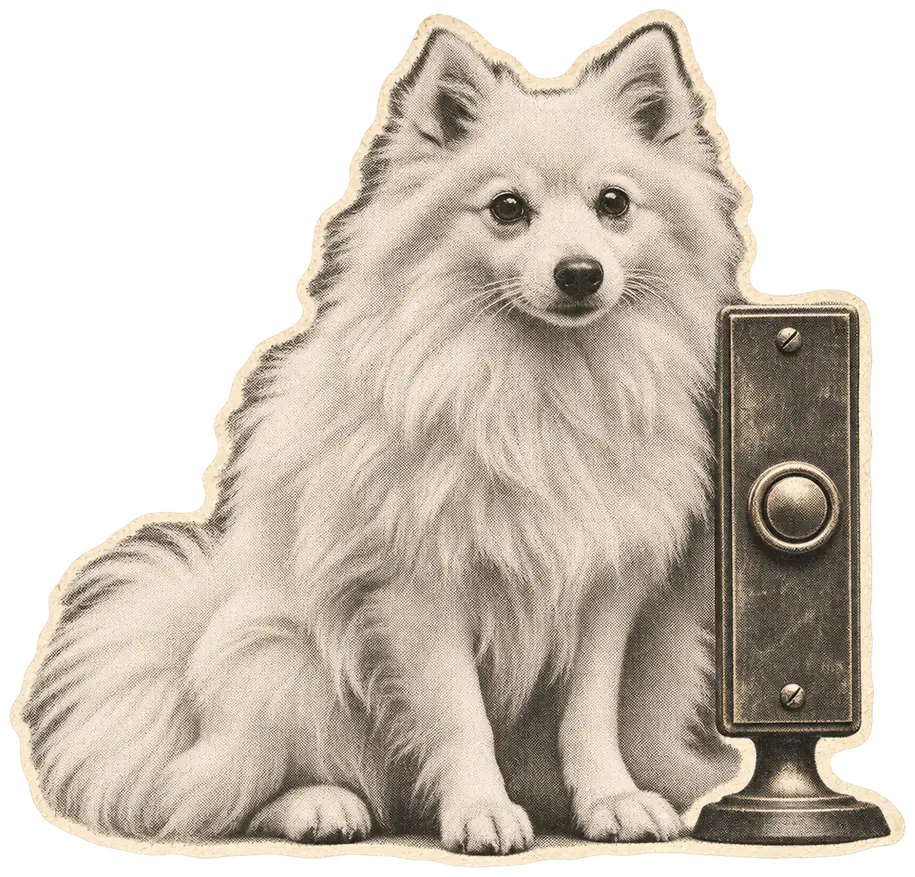
Spend part of an ordinary evening noticing when the barking starts. Is it keys in the hall, the lift, somebody crossing the window or the sound of you leaving? Pick one. Block the view or put a comfortable rest spot further from the sound, then reward the dog for turning away when the sound is quiet enough to handle. Altering the room can help more than repeating “quiet” at full volume. 567
Japanese Spitz notes / 01
Field notes
| Pattern | What to try first |
|---|---|
| Every movement through the window | Change the dog’s access to the view and offer a different place to rest. 56 |
| The sound of visitors | Practise a quiet knock with someone you know and reward moving away from the door. 67 |
| Mainly when you leave | Record what happens; work on time alone gradually rather than treating it as the same problem. 58 |
Not a little Samoyed
Japanese Spitz notes / 02
Field notes
The Royal Kennel Club puts the Japanese Spitz in its Utility group. It has a pointed muzzle, modest triangular ears, white stand-off coat and a plume curved over its back. Samoyeds, German Spitz and Pomeranians are separate breeds in the UK directory, even though you’ll see the family likeness. A white dog with a curled tail isn’t automatically a Japanese Spitz. 123491011
Look where the harness sits, not where the fur sits
Japanese Spitz notes / 03
Field notes
The UK breed standard gives heights at the shoulders of 34–37 cm for males and 30–34 cm for females. Fit equipment to the dog rather than those numbers or the width of the ruff. Feel under the straps and watch for rubbing or the harness shifting when the dog turns. Use a separate restraint for car journeys. 11213
Get beneath the white top coat
There’s a soft dense layer under a coat that stands away from the body. Work a section at a time so you get underneath without pulling at the skin. Look closely behind the ears, under the harness and around the plume; the dog can look quite tidy while loose undercoat is collecting somewhere you rarely brush. Ask a groomer to show you how to work through it before it packs down. 11415
Visitors don’t need a front-row seat
Japanese Spitz notes / 05
Field notes
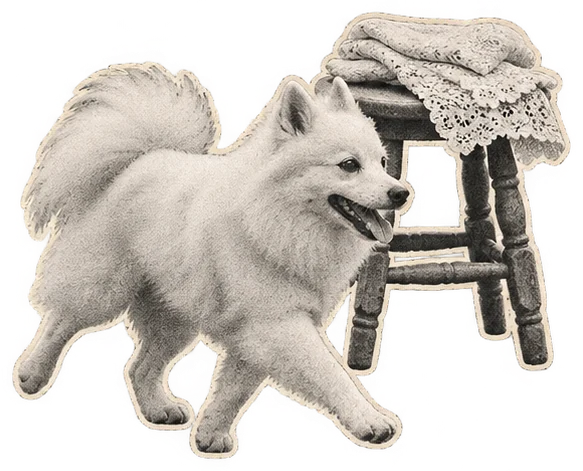
If your dog is wary, make it possible for the visitor to sit down without squeezing past. Ask them to give the dog room, not to lean in for a photograph or to keep calling them. Give the dog a route away from the person. If the noises or arrivals trigger distress, do less at once and get support. 16717
Give them a signal that ends the announcement
Japanese Spitz notes / 06
Field notes
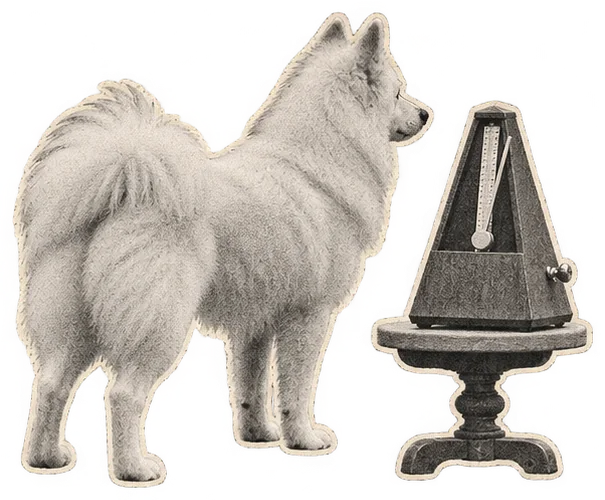
Practise an easy cue that brings the dog away from the window to you. Start when nothing much is happening so the cue has a chance. Put a reward where you want the dog to end up and vary the rehearsal before trying at rush hour. If you have to shout to compete with the trigger, the setup is probably too hard. 56718
Leave time for a small dog to take the long route round
Japanese Spitz notes / 07
Field notes
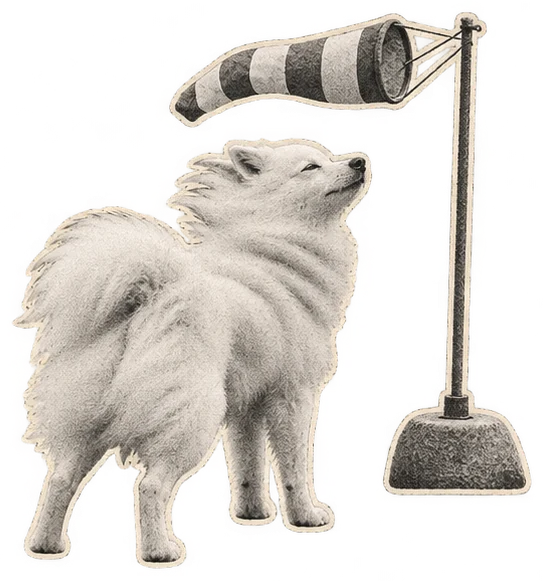
Japanese Spitz are described by their standard as nimble, not ornamental. Let your dog do some walking at its own pace, take a wide route past bigger dogs if needed and give them time to investigate something away from the crowd. Exercise still depends on age, health and fitness. If getting up or climbing into the car changes, tell the vet rather than writing it off as being small. 16131920
Work out whether staying near you is a choice
Japanese Spitz notes / 08
Field notes
A dog can curl up near your feet by preference and still settle when you leave. The difference is what they do once the door closes. Build time alone in tolerable steps, see what a recording shows and arrange help if they struggle. Don’t make them learn to cope by extending absences while they’re already distressed. 821
Keep the dog off the guest list for rough play
Kneecap advice is separate from the RKC list
The central Royal Kennel Club row lists no named Good or Best Practice test for Japanese Spitz. Its breed profile places genetic diversity under Good Practice. The Japanese Spitz Club separately recommends checking breeding parents’ patellas; ask for the recorded assessment, not a claim that patella testing is part of an RKC tier. 2423
Japanese Spitz notes / 10
Field notes
| What you notice or read | Make sense of it |
|---|---|
| A new hop or intermittent skip | A slipping kneecap can cause a skip but it isn’t the only possible explanation. Film a normal walk if safe and show the vet rather than trying to reproduce it. 2024 |
| Fresh staining beneath an eye | Coat colour can make stains easy to see. New staining is worth a check; if the dog holds an eye shut or seems in pain, get urgent veterinary advice. 2526 |
| 13.0 years in a UK lifespan table | The 2024 study reports a median of 13.0 years (95% CI 12.3–13.7) across 336 Japanese Spitz, including 117 recorded deaths. That describes the cohort, not the remaining years for your dog. 2728 |
Start with what you’re likely to pay for twice
Japanese Spitz notes / 11
Field notes
If you’re choosing a harness, ask if you can refit it once the dog has moved about in it rather than buying from a fluff-based guess. If you use a groomer, ask what appointment length and coat work actually cost. Add vet care and check the insurance policy for exclusions and out-of-hours arrangements. 12141529
A breed developed in Japan, not an automatic family tree
Japanese Spitz notes / 12
Field notes
The FCI records Japan as its country of origin. The Royal Kennel Club gives breed recognition dates of 1948 by the Japanese Kennel Club and 1977 in the UK. Accounts of earlier parentage vary, so treat claims about the influence of other white spitz dogs as historical possibilities rather than settled percentages. 23430
Before bringing one home
Japanese Spitz notes / 13
Field notes
Ask to see the dog groomed and walking normally, not just standing on its best side. Get any parent patella records and ask what the breeder or rescue has seen around visitors, everyday noise and time alone. If you’re buying a puppy, see the mother with the litter where they’re being raised. If you’re rehoming, ask which behaviours are unknown so you can plan the first weeks without assuming the answers. 4814173132
Sources
- S1Royal Kennel Club Japanese Spitz standard and dimensionsSource · checked 21 November 2026
- S2Royal Kennel Club breed profile, history and genetic diversitySource · checked 21 November 2026
- S3FCI official breed record and Japanese originSource · checked 21 November 2026
- S4The Japanese Spitz Club, description and parents’ patella recommendationSource · checked 21 November 2026
- S5Dogs Trust reducing barking by identifying triggersSource · checked 21 November 2026
- S6Dogs Trust coping with reactivity and door or window triggersSource · checked 21 November 2026
- S7Dogs Trust controlled knock and visitor trainingSource · checked 21 November 2026
- S8Dogs Trust teaching time alone and monitoringSource · checked 21 November 2026
- S9Royal Kennel Club separate Samoyed entrySource · checked 21 November 2026
- S10Royal Kennel Club separate German Spitz Klein entrySource · checked 21 November 2026
- S11Royal Kennel Club separate Pomeranian entrySource · checked 21 November 2026
- S12Dogs Trust harness fitSource · checked 21 November 2026
- S13Dogs Trust travel restraint and trainingSource · checked 21 November 2026
- S14The Japanese Spitz Club, coat groomingSource · checked 21 November 2026
- S15PDSA general groomingSource · checked 21 November 2026
- S16Dogs Trust hot weather and safe outingsSource · checked 21 November 2026
- S17Dogs Trust dog handling and comfortable contactSource · checked 21 November 2026
- S18Dogs Trust using rewards to practise a responseSource · checked 21 November 2026
- S19PDSA exercise according to the individualSource · checked 21 November 2026
- S20PDSA limping, stiffness and vet adviceSource · checked 21 November 2026
- S21Dogs Trust recognising separation distressSource · checked 21 November 2026
- S22Dogs Trust child and dog supervisionSource · checked 21 November 2026
- S23Royal Kennel Club exact central health tiersSource · checked 21 November 2026
- S24PDSA veterinary guidance on kneecap luxationSource · checked 21 November 2026
- S25PDSA veterinary advice on recent tear stainingSource · checked 21 November 2026
- S26PDSA painful eyes and urgent assessmentSource · checked 21 November 2026
- S27Dogs Trust original UK study breed-label tableSource · checked 21 November 2026
- S28McMillan et al., original UK lifespan study methodsSource · checked 21 November 2026
- S29PDSA routine and emergency cost considerationsSource · checked 21 November 2026
- S30FCI breed standard’s historical summarySource · checked 21 November 2026
- S31RSPCA seeing a puppy with its motherSource · checked 21 November 2026
- S32Dogs Trust rescue matching and useful historySource · checked 21 November 2026