
Breed guide / Jack Russell Terrier
Living with a Jack Russell
A small working terrier with a keen nose, a talent for digging and considerable faith in your throwing arm. How to make daily life work when you already have one.
Jump to a section
The terrier who wants to join in
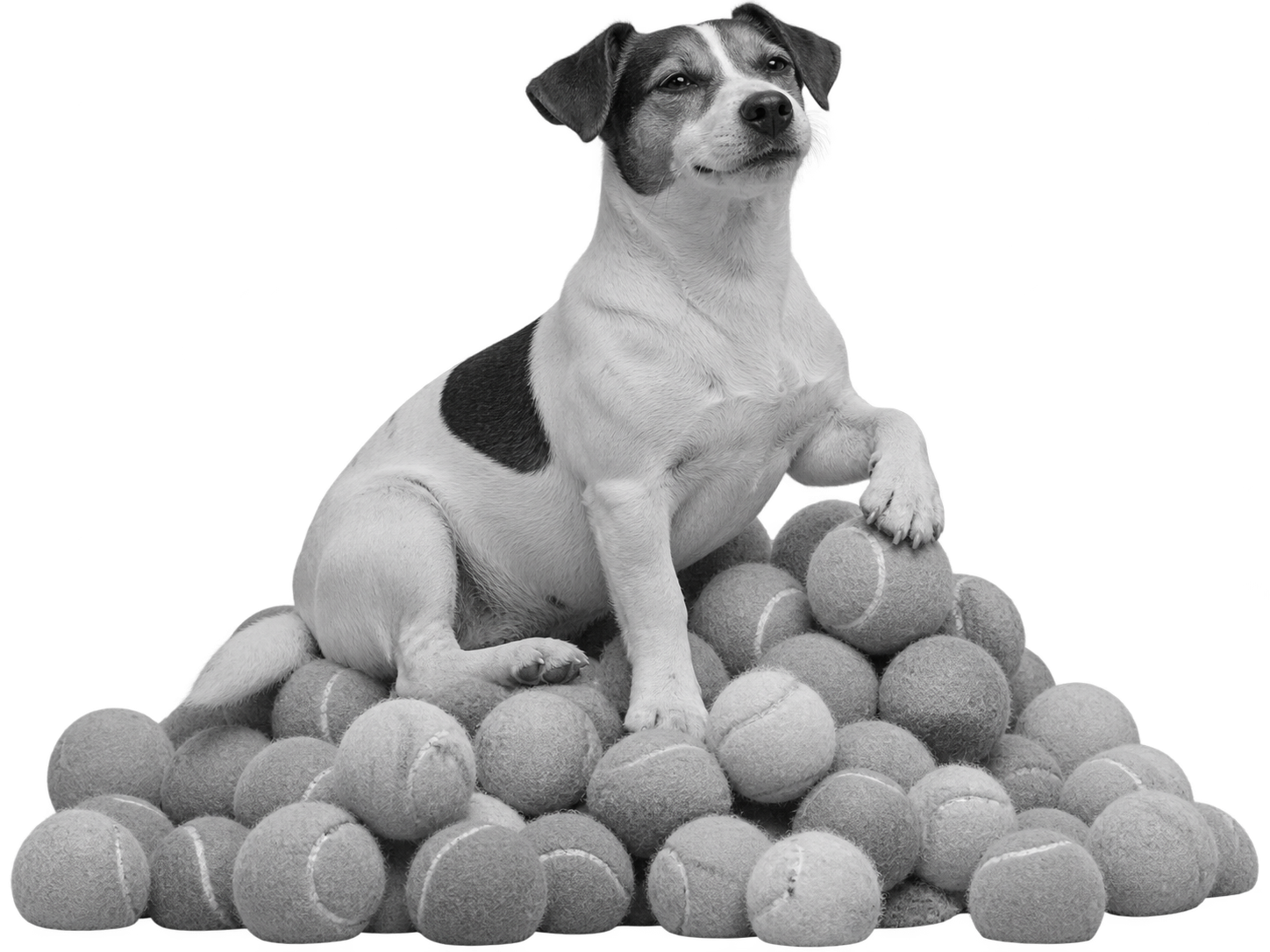
Jack Russells are working terriers in a size you can pick up, with enough interest in the world to make a short walk take ages. Digging and chasing come with the history. So does the concentration they can bring to a toy, which is useful when you’re teaching them and less useful when the toy has rolled under a wardrobe.45
Living with one is easier if you enjoy doing things together. Give them a chance to sniff, teach a few useful skills and make room for rest. Trying to wear the dog out with endless ball throwing leaves you doing a lot of throwing; I’d spend some of that effort teaching them what to do when the game finishes.
If yours already runs the household entertainment programme, start with one change you can repeat. Put a mat near where you sit and reward them for relaxing there. You can keep the walks and the games without agreeing to provide a ball-launching service whenever you sit down.25
Jack Russell Terrier notes / 01
Who this works for
Small dog, substantial daily involvement.
Suits
- Someone who enjoys short training sessions as well as walks.
- A household that can manage a keen chasing dog without relying on perfect recall.
- An owner prepared to teach time alone and settling, not assume either comes with age.
Doesn’t suit
- Someone choosing a small dog to avoid much exercise or training.
- A home where the dog would have unsupervised access to rabbits or other small pets.
- A routine with long absences and no plan for company or care.
These are editorial matching judgements drawn from the care advice, not measured suitability scores.456
The main practical trade-off is persistence. Give that persistence a permitted outlet, and keep the boundaries physically secure.
Which Jack Russell are we talking about?
The registered Jack Russell Terrier is distinct from the Parson Russell Terrier. Everyday use of “Jack Russell” is broader, so a dog in a UK vet study needn’t belong to the exact registered population described by a show standard. That matters when a neat breed chart appears to disagree with the dog on your sofa.137
Parsons have a taller standard: ideal heights are 36 cm for males and 33 cm for females. You can’t settle a dog’s ancestry with a tape measure, though, and long legs don’t automatically make a Jack Russell a Parson.3
Jack Russell Terrier notes / 02
Names and recognition
The name covers a wider UK population than the show register.
| Field | Detail |
|---|---|
| Name used here | Jack Russell Terrier; UK companion and working-type variation acknowledged. |
| Origin | Great Britain; modern registered breed developed in Australia.8 |
| Original work | Working terrier used below ground in fox hunting.2 |
| RKC group | Terrier; recognised in 2016.1 |
| FCI | No. 345, Group 3, small-sized terriers; definitive acceptance 1 January 2003, provisional acceptance 25 October 2000.8 |
| AKC naming | Russell Terrier is the corresponding small-terrier listing; Parson Russell Terrier is separate. AKC recognised the Russell Terrier in 2012.9 |
| Vulnerable native breed | No, on the RKC profile.1 |
| Breed Watch | Category 1. This does not mean free of inherited disease.1 |
| UK legal position | Not named among the prohibited types on GOV.UK. General control duties apply; legal type assessment depends on appearance, not the label alone.10 |
The RKC history mentions an FCI date of 1991, while FCI’s own current nomenclature gives the dates above. This guide follows the registry’s own dated entry for its recognition history.18
Small enough to carry, still a proper dog
A registered Jack Russell’s standard height is 25–30 cm at the shoulder. The standard asks for weight in proportion to height, without giving a kilogram range. That leaves room for the build of the individual rather than telling every owner to aim at the same number.2
UK vet records give a different sort of information. In a large 2019 population, median adult weight was 7.9 kg; females were lighter than males on average. Those figures describe the dogs recorded, not a healthy-weight prescription. Ask your vet to assess body condition and weight trend if you’re unsure about yours.7
Jack Russell Terrier notes / 03
Height and observed weight
Population measurements aren't feeding targets.
| Measurement | What it means |
|---|---|
| Height | 25–30 cm in the RKC standard, no separate male/female range.2 |
| Standard weight | Proportionate to height; no RKC kilogram target.2 |
| Observed adult female median | 7.3 kg.7 |
| Observed adult male median | 8.4 kg.7 |
| Observed combined median | 7.9 kg.7 |
| Population | 101,294 dogs recorded as Jack Russell Terriers in the wider 2019 UK VetCompass population. This is not the count of dogs with an adult weight recorded.7 |
| Adult-weight definition | Measurements from at least 18 months; study published 2023. Breed labels in clinical records do not establish show registration.7 |
Use a complete food suitable for the dog’s life stage. Weigh their portion and include training food in the day’s allowance; no breed-wide grams-per-day figure is justified here.6
Three coats, and some of it on your clothes
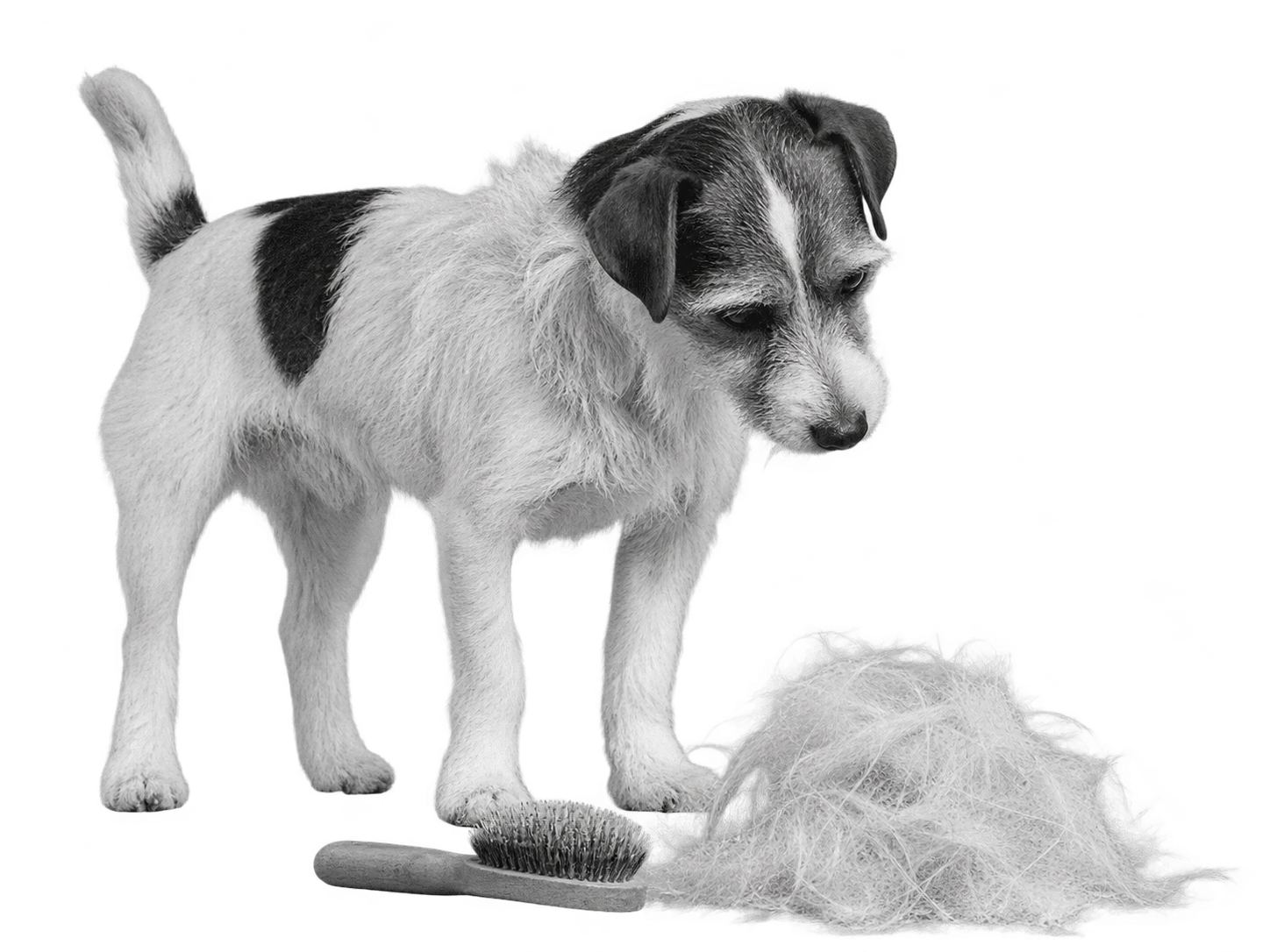
Jack Russells can have a smooth, broken or rough coat. The broken coat has an interrupted, wirier finish rather than an all-over shag, and a rough-coated dog can look rather as if grooming was interrupted by something more interesting. The standard still wants a weatherproof working coat.2
Weekly brushing is a sensible starting point. A rough coat may benefit from professional stripping, so ask a groomer who knows terrier coats before choosing a treatment. Keep the brush somewhere you can reach it; owning the right brush in a cupboard doesn’t remove much hair.6
Build up daily toothbrushing with dog toothpaste, gently and in stages. If the mouth is painful or the gums bleed, ask the vet to check it instead of trying to brush through the problem.11
Jack Russell Terrier notes / 04
Coat and grooming
Check which coat you have before booking a haircut.
| Field | Detail |
|---|---|
| Coat types | Smooth, broken or rough.2 |
| Texture | Weatherproof; not over-trimmed.2 |
| Length | RKC profile classifies the coat as short; visible furnishings vary.1 |
| Standard colours | White predominates, with black and/or tan markings.2 |
| Shedding | Yes; no reliable breed-wide quantity measured here.1 |
| Grooming | Weekly as a starting routine; adapt to coat and dirt.6 |
| Professional grooming | Some rough coats benefit from stripping; not a universal appointment schedule.6 |
| Colour and health | No colour-specific risk estimate verified here. A fashionable colour label is not a health assessment. |
During grooming, notice changes in skin, eyes and ears, and look at the claws. Don’t put anything into a sore ear or assume a new bald patch is ordinary shedding.30 The dental routine above matters even when your dog still eats.11
The garden has an unpaid excavator
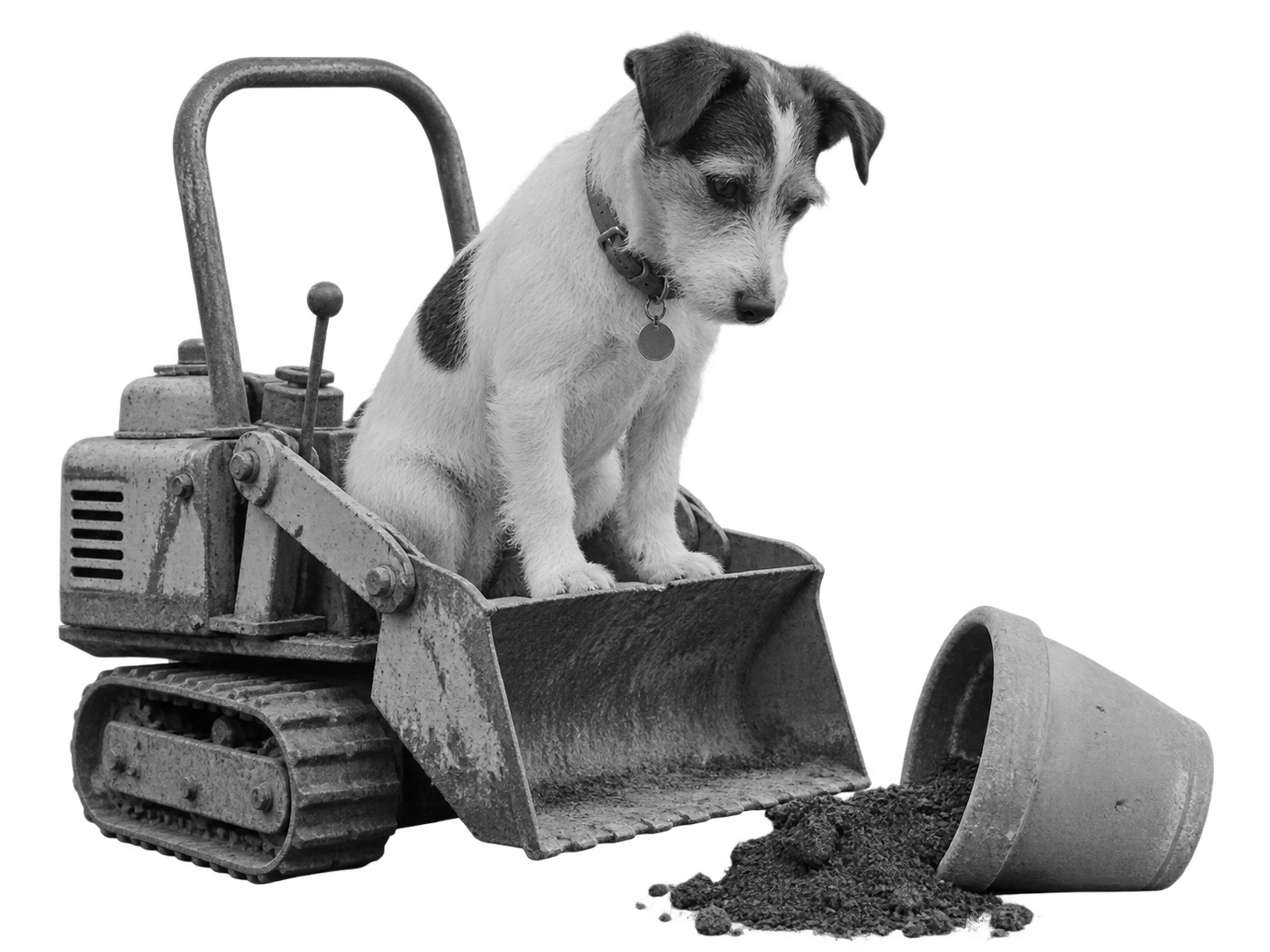
Digging is a normal dog behaviour, and terriers can be particularly keen. If a Jack Russell is repeatedly excavating the border, a permitted digging area gives you something to offer besides standing at the door saying no. Dogs Trust suggests a designated digging pit, with toys or treats hidden there to help the dog discover it.13
Show them the new patch and reward using it. Keep them away from the part you’re protecting while that lesson takes hold, or you’ll have provided an extension rather than a replacement. Check the fence at ground level as well as above it; the dog has considerably more interest in the bottom edge than most humans do.1213
A sudden change in behaviour needs a different response. Pain and distress can change what a dog does, including destructive behaviour. Ask your vet about a new or worsening problem rather than dismissing it as terrier temperament.14
Jack Russell Terrier notes / 05
Behaviour you can plan for
Give digging somewhere to happen.
| Field | Detail |
|---|---|
| Standard temperament | Bold and confident; this describes a breeding ideal, not every individual.2 |
| Barking | Can be vocal; no measured Jack Russell barking-frequency category verified.4 |
| Strangers | Individual response matters; no reliable breed-wide stranger-tolerance score verified. |
| Digging | Recognised terrier tendency; an allowed digging area can help channel it.12 |
| Chase interest | Requires management around wildlife and small animals.6 |
Notice what happens immediately before barking or digging. If it occurs only during absences, investigate distress rather than assuming boredom. Keep a short record to discuss with the vet or an accredited behaviourist.14
A ball gives you something to work with
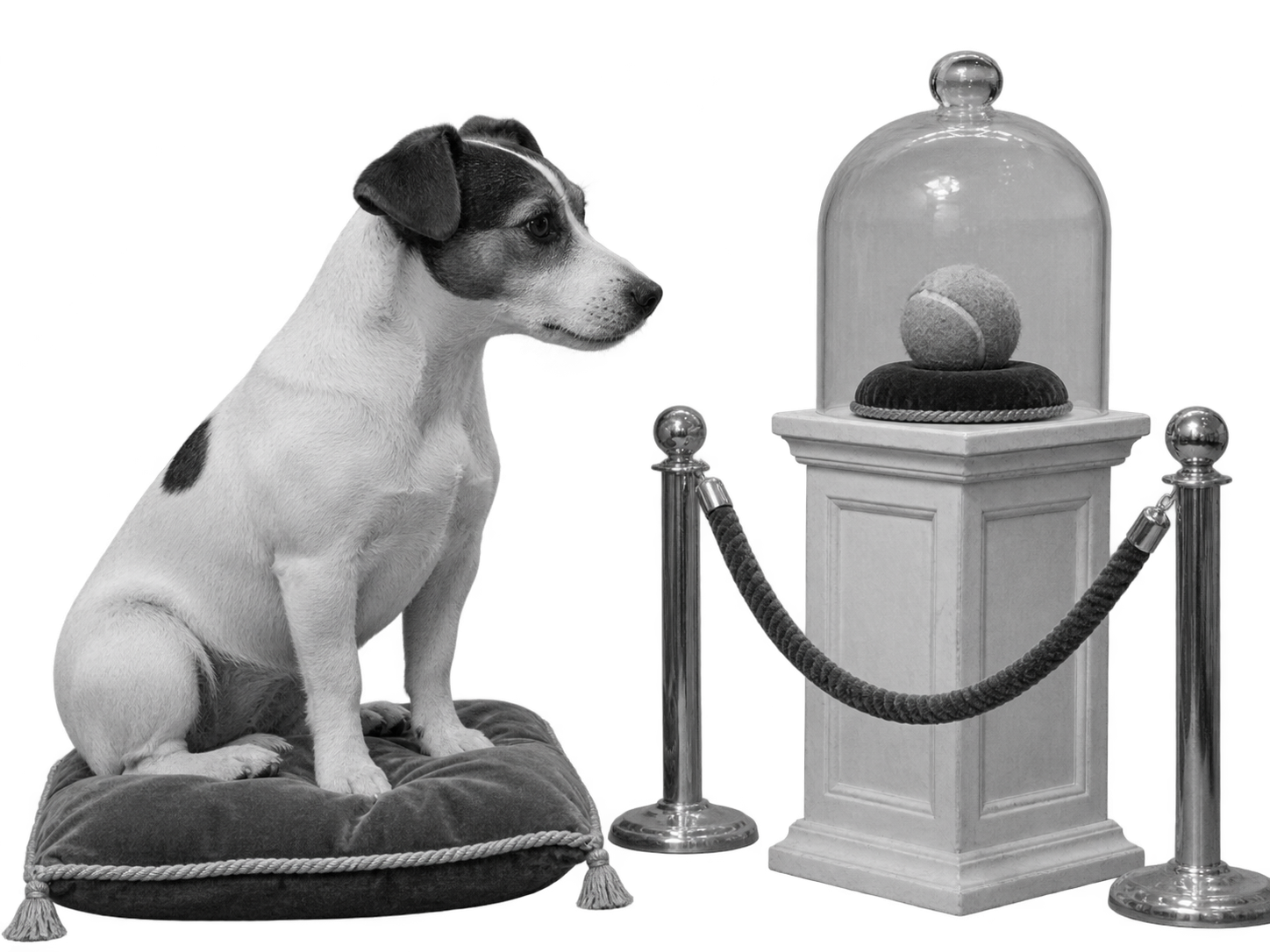
Jack Russells can be keen learners, particularly when you find a reward they care about. That might be a toy rather than a biscuit. Teach a short behaviour, reward it, and let the dog have a break; there’s no benefit in turning a willing terrier into a reluctant pupil through repetition.2223
Practise recall in an enclosed space, then add distraction gradually. Calling over and over while the dog is absorbed elsewhere gives both of you plenty of practice at the wrong arrangement. Make the next repetition easier, with a better reward and less distance. For training in suitable open space, attach a long line to a well-fitting harness. Use a short lead near roads or livestock, where a chase could cause injury.24
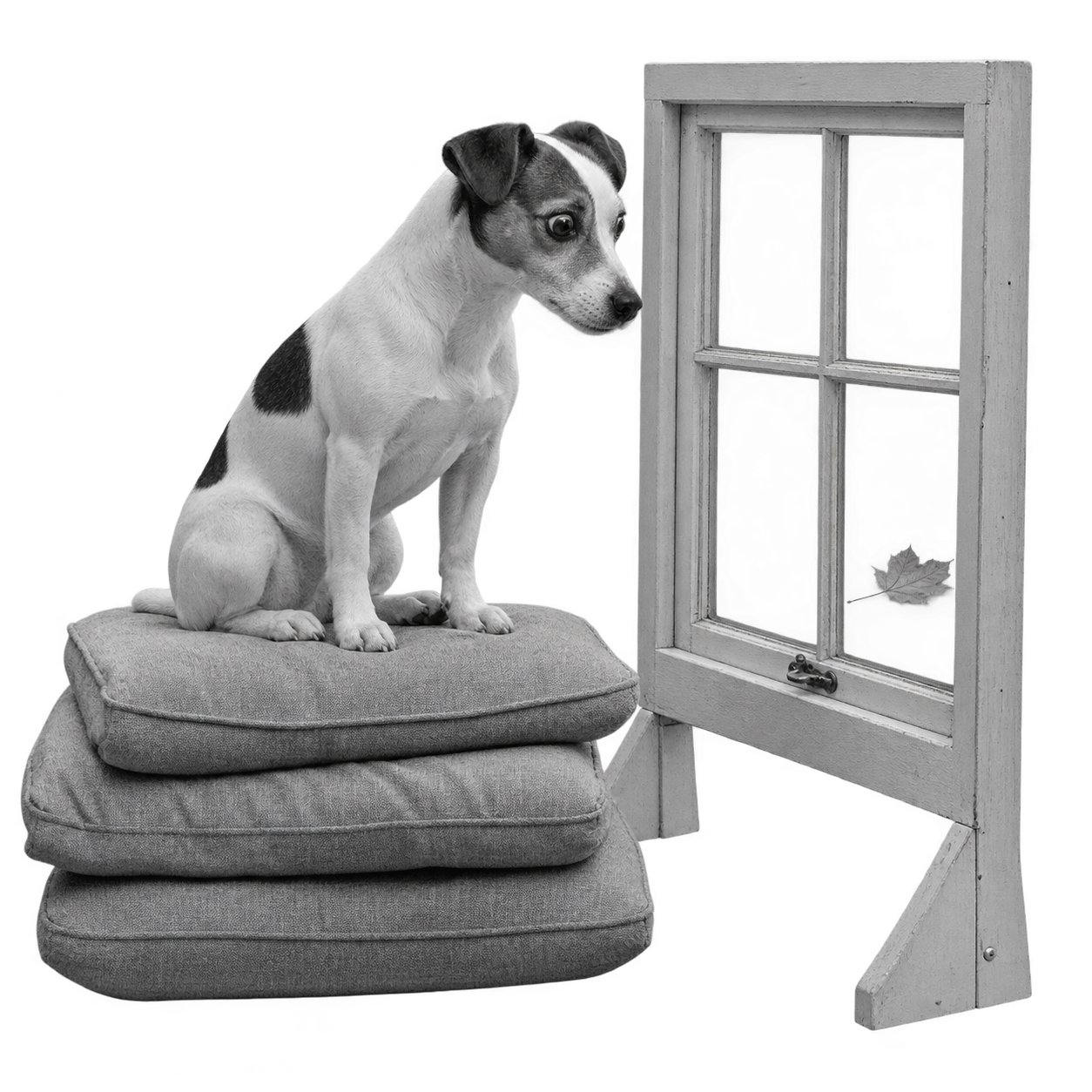
For a dog that starts barking at the window, reduce access to that view while you work on the trigger. Moving a chair can be more useful than delivering another speech to a dog who has found a leaf outside deeply suspicious. Reward a calm alternative away from the window, and get qualified help if fear is driving the barking.15
Jack Russell Terrier notes / 06
Skills worth practising
Keep the reward; shorten the lesson.
| Skill | Practical approach |
|---|---|
| Training difficulty | No validated breed-wide score. Expect to teach consistently and find useful rewards.5 |
| Recall | Rehearse with manageable distractions; secure exercise remains important. |
| Motivators | Food or toys according to the individual; not every dog values the same reward.5 |
| Settling | Reward relaxation on a mat, not only energetic activity.25 |
| Barking | Identify the trigger; reduce exposure and teach an alternative.15 |
Keep everyone using the same cue. If one person allows jumping for attention and another objects, the dog has been given two sets of instructions. Avoid punishment; get help from a reward-based trainer if you’re stuck.2223
Give the nose a turn
Jack Russells need daily activity, but the sources don’t agree on how to label it. PDSA says at least an hour; the RKC’s summary says up to an hour. Neither has examined your dog. Split activity into manageable outings and adjust it to age, fitness and health.615
Let part of the walk be slow. A terrier inspecting a hedge is occupied even when your step count is disappointing. You can add a supervised food search at home or practise a useful cue on the way round; a longer route isn’t the only way to give the dog something to do.5
Use a secure place for free running, and inspect the boundaries before removing the lead. In hot weather, walk at cooler times or skip the walk if it isn’t safe; provide water and shade. Ask your vet about exercise for a growing puppy or a dog recovering from illness. Stop for limping or unusual breathlessness, and seek urgent help for difficulty breathing.26
Jack Russell Terrier notes / 07
Walks and other activity
The published hour is a rough guide, not a stopwatch rule.
| Field | Detail |
|---|---|
| Published duration | PDSA: at least 60 minutes daily. RKC: up to 60 minutes. Guidance bands differ.61 |
| Intensity | Energetic breed description; no measured universal intensity prescription.4 |
| Mental activity | Sniffing, reward-based training and supervised searches suited to the dog.5 |
| Off-lead setting | Secure boundaries and an individual recall assessment, not faith in a breed label. |
| Restrictions | Growth, illness, injury and weather can change the appropriate activity. |
Throwing a toy is optional. If your dog becomes frantic about it or cannot stop, replace some repetitions with quieter searching and settling, and ask a qualified trainer for help if you need it.5
A flat can fit the dog, but the neighbours live there too
The RKC lists a flat or apartment as an option for a Jack Russell. Enough room for the bed is only part of the arrangement: a dog that reacts to every person in the corridor still needs help with those sounds. Put the resting place away from the busiest doorway and reduce the view of triggers while you teach a calmer response.115
Practise short periods apart before you need a long absence. A dog happily occupied while you’re in the next room hasn’t yet shown that they’re comfortable when you leave the building. If there’s barking, pacing or damage while you’re out, investigate what is happening and seek help; letting them rehearse distress isn’t training.27
Store chews and toys where you can rotate them, but supervise anything the dog could break up or swallow. An expensive puzzle is not much of a bargain if the terrier solves it by removing the lid permanently.
Jack Russell Terrier notes / 08
Home and time alone
Look at the routine as well as the floor plan.
| Field | Detail |
|---|---|
| Home size | RKC: flat/apartment can suit.1 |
| Garden | RKC: small/medium. Secure boundaries matter more than the label.113 |
| Town or country | RKC lists country; this isn’t evidence that a town address rules out a good home.1 |
| Alone time | No experimentally established Jack Russell maximum verified. Build up according to the individual and arrange care when needed.14 |
| Heat tolerance | No breed-specific safe temperature verified. Change plans when conditions make exercise unsafe. |
| Cold tolerance | No breed-specific safe temperature verified; coat type, age and health affect comfort. |
| Rest | Provide an undisturbed resting area and practise settling between activities. |
A garden is not a substitute for walks and company. Check for gaps, loose panels and things positioned as climbing aids before relying on it.13
Children, cats and the rabbit hutch
A Jack Russell’s chasing background matters around small pets. Keep rabbits and other small animals securely separated; don’t use a close encounter to find out what the dog will do. A calm moment beside a hutch is not evidence that free access is safe.6
With children, stay present and attentive, and separate them if you can’t supervise. Give the dog a retreat the children leave alone. Ask a rescue or breeder about the individual dog’s behaviour around children of the ages in your home, including what happens around food and toys.28
A resident cat needs its own safe routes and dog-free space. Introductions should be gradual and controlled, with the option to stop; never force the cat to remain near a dog that is chasing or fixating.16
Jack Russell Terrier notes / 09
Matching the individual dog
Affection towards people doesn't establish safety around another animal.
| Household member | What to check |
|---|---|
| Children | Individual history, active supervision and separate rest space; no blanket breed guarantee. |
| Other dogs | Assess compatibility and introductions individually; no reliable universal rating verified. |
| Cats | Chase risk requires careful assessment and safe separation.16 |
| Small pets | Secure physical separation; do not assume training removes the risk.6 |
| First-time owner | Possible with preparation and support, but a poor choice if small size is being mistaken for low effort. Editorial judgement. |
If a dog growls, snaps or guards objects, prevent further confrontations and seek veterinary and qualified behaviour support. Don’t ask a child to remove the item or test the dog’s tolerance.29
Eyes, movement and the teeth you can't ignore
Contact your vet promptly if your Jack Russell develops a painful, red or cloudy eye, squints or appears to lose vision. Eye problems can deteriorate quickly, and you can’t identify the cause from a breed list. Primary lens luxation is one of the inherited conditions for which the RKC recommends testing.171
A recurring skip on a hind leg, persistent lameness or difficulty moving needs assessment. PDSA lists patellar luxation and Legg–Perthes disease among conditions affecting the breed; neither can be diagnosed from a description of the gait. New wobbliness or loss of coordination also warrants a vet call.6
Dental care deserves regular attention. A UK primary-care study found Jack Russells had 1.37 times the adjusted odds of periodontal disease compared with crossbreeds. That is a relative association, not a claim that 37% of Jack Russells have it. Ask your vet about bad breath, bleeding gums or mouth discomfort, even if your dog still eats.1811
Jack Russell Terrier notes / 10
Health evidence and screening
What is measured, what is advised, and when to call the vet.
This is general information about the breed, not veterinary advice about your dog. If you’re worried about your dog’s health, speak to your vet.
Conformation and welfare
The standard describes a functional working terrier. It does not justify exaggeratedly short legs or a body that prevents comfortable movement. Breed Watch category 1 means no listed breed-specific judging concern, not a clean bill of health.21
Conditions
Primary lens luxation (PLL)
The eye’s lens moves out of its normal position. Inherited risk is recognised in the breed’s testing recommendations; no UK population frequency was established here. Pain, squinting or sudden visual change require prompt veterinary attention.171
Late-onset ataxia (LOA) and spinocerebellar ataxia (SCA)
Inherited neurological conditions covered by recommended DNA tests. Problems with coordination need assessment rather than home diagnosis. No breed-wide prevalence or reliable individual onset prediction was verified for this guide.1
Patellar luxation and Legg–Perthes disease
Kneecap instability and a hip condition respectively, listed by PDSA. Lameness may have many causes.6
An England VetCompass study using 2009–2014 records estimated patellar-luxation diagnosis prevalence at 1.7% (95% confidence interval 1.3–2.1) among 13,520 Jack Russells. Adjusted odds were 1.5 times those of crossbreds (95% confidence interval 1.1–2.0). Published in 2016, these are historical study-period findings, not annual or lifetime risk. No comparable Legg–Perthes figure was verified.21
Periodontal disease
Adjusted odds ratio 1.37 (95% confidence interval 1.14–1.65), relative to crossbreds, in the UK VetCompass study of dogs under primary veterinary care in 2016, published in 2021. This is not lifetime risk. The paper’s 7.62% figure is the breed’s share of cases, not its prevalence.18
Lifespan
The 2022 VetCompass life-table study estimated 12.72 years life expectancy at birth (95% confidence interval 12.53–12.90) for Jack Russell Terriers. Its breed table included 1,620 dogs; the full study used 30,563 deaths recorded from January 2016 to July 2020.19
That was the highest estimate among the 18 breeds studied, not a claim about all breeds everywhere. It isn’t median age at death or a prediction for your dog. For an older dog, subtracting current age from 12.72 does not calculate remaining life expectancy.19
RKC’s “over 10 years” is a profile band, not a measured minimum guarantee.1
Health screening
| Tier | RKC recommendation |
|---|---|
| Good Practice | DNA test for PLL.1 |
| Best Practice | DNA tests for LOA and SCA; BVA/KC/ISDS eye testing.1 |
Responsible breeders should address both tiers. Ask for results identifiable to both parents, and an explanation of what the pairing means. A DNA certificate covers the tested condition, not every possible illness. A clinical eye examination and a DNA result answer different questions.1
Breeding rules
No additional breed-specific mating prohibition was verified here. That is not permission to breed from an affected dog. Discuss test results, relatedness and the proposed pairing with a vet and the breed health coordinator; verify current registry requirements before a mating.
When to contact a vet
- Promptly for an eye that is painful, cloudy, red or suddenly different.17
- For persistent or recurrent lameness, or a change in coordination.
- For mouth pain, bleeding gums or persistent bad breath.11
- Immediately for collapse, difficulty breathing or severe distress.
This research did not establish a ranked list of Jack Russell disorders. The population findings above come from separate studies, not a single breed health survey.
The small-dog budget still needs room
A Jack Russell fits the small-dog category in PDSA’s current cost estimate: £415 to get set up and at least £69 a month thereafter. Purchase price is excluded, and illness or injury treatment can add to the bill. Those are general small-dog figures, not a Jack Russell invoice.20
The breed page still shows a lower £50 monthly figure. I’d budget from the current general small-dog estimate and then add what your own routine needs, rather than choosing the smaller number. Day care, a dog walker or boarding can change the total substantially.620
Get an insurance quote for the actual dog and read the excess, limits and exclusions. If a condition is already recorded, ask what will and won’t be covered before relying on the policy. No current purchase-price range was verified for this guide.
Jack Russell Terrier notes / 11
UK cost planning
A minimum estimate is not a quotation for your dog.
| Item | Budget note |
|---|---|
| Setup | PDSA small-dog estimate £415; not breed-specific.20 |
| Routine monthly care | PDSA minimum £69/month, checked 20 November 2026.20 |
| Purchase or adoption | Not included; no verified current Jack Russell price range. |
| Insurance | Included in PDSA’s model; your quote and cover will vary.20 |
| Illness/injury vet care | Excluded from the estimate; cover may have excesses and limits.20 |
| Walking, boarding, classes | Extra where needed; obtain local quotes.20 |
| Grooming | Rough-coat appointments may add cost; no verified national fee. |
If money is preventing treatment, tell the practice and ask about support or payment options. Check eligibility for veterinary charities rather than postponing care while searching for a breed-specific remedy.
British roots, Australian paperwork
Jack Russells take their name from Reverend John Russell and his nineteenth-century working terriers. Their job included going below ground after foxes, which helps explain why a hole in the garden can be so interesting to a modern pet.2
British terriers travelled with emigrants to Australia, where the modern registered breed developed. FCI records Great Britain as origin and Australia as development; its definitive recognition came in 2003. The Royal Kennel Club followed with UK recognition in 2016.81
That paperwork describes recognition by those bodies. It doesn’t mean Jack Russells first appeared in Britain in 2016, or that a familiar working type became invalid when a registry accepted a standard.
Jack Russell Terrier notes / 12
How the name travelled
The registry story doesn't replace the working-dog story.
| Point | Record |
|---|---|
| Namesake | Reverend John Russell, nineteenth century.2 |
| Original work | Working terrier; below-ground hunting role.2 |
| Development distinction | British origin, Australian development recorded by FCI.8 |
| Standard dates | RKC page updated 1 January 2025. FCI valid standard 8 October 2012, English publication 5 December 2012.28 |
The FCI working-trial requirement applies only in countries that have requested it; it isn’t a claim that every registered pet has passed a working test.8
Ask what the dog actually does
Jack Russell adverts rarely struggle to mention energy. Ask what that means for this dog: how they respond to another dog, what happens when left alone, and whether they’ve lived with the animals and children already in your home. A breeder or rescue should be able to discuss observations rather than promising a personality.45
For a puppy, see the mother and the place where the litter is being raised, and ask for the health evidence described above.31 For an adult, find out what food, cues and routine they know, then make the change gradually. Keep introductions controlled and give the dog somewhere to withdraw without being followed.
Before collection, check the gate at terrier height and agree who will handle walks, company and training. The person who likes the idea of a clever dog also needs to like the idea of teaching one.
Jack Russell Terrier notes / 13
Before you bring one home
Behaviour history and identifiable records beat a sales description.
Questions to take with you
- Which health results belong to each parent, and what do they mean for this pairing?
- What has this dog actually done around children, cats and other dogs?
- How has time alone been assessed, and in what setting?
- What happens around food or toys, and what support is available after collection?
First arrangements
Prepare secure transport, a quiet sleeping place and the same food initially. Check identification and veterinary records, arrange a vet appointment, and keep the first days manageable rather than inviting everyone round at once.5
Tell the breeder or rescue about a difficulty early. If the dog is frightened, guarding or unable to settle alone, get qualified help before repeatedly putting them in that situation.14
Sources
- J1RKC Jack Russell profile and health tiersRegistry guidance · checked 20 November 2026
- J2RKC Jack Russell Terrier standardBreed standard · checked 20 November 2026
- J3RKC Parson Russell Terrier standardBreed distinction · checked 20 November 2026
- J4Battersea Jack Russell guideRehoming charity guidance · checked 20 November 2026
- J5Dogs Trust Jack Russell TerrierWelfare charity guidance · checked 20 November 2026
- J6PDSA Jack Russell careVeterinary charity guidance · checked 20 November 2026
- J7O’Neill et al. UK dog demography, 2019 records (2023)Primary population study, Table 1 · checked 20 November 2026
- J8FCI Jack Russell Terrier, no. 345Registry record · checked 20 November 2026
- J9AKC Russell TerrierRegistry naming · checked 20 November 2026
- J10GOV.UK banned dog typesGovernment guidance · checked 20 November 2026
- J11Blue Cross dog dental careVeterinary charity guidance · checked 20 November 2026
- J12Battersea: diggingBehaviour guidance · checked 20 November 2026
- J13Dogs Trust: a dog-friendly gardenWelfare guidance · checked 20 November 2026
- J14Dogs Trust: destructive behaviourBehaviour and welfare guidance · checked 20 November 2026
- J15Dogs Trust: barking triggersBehaviour guidance · checked 20 November 2026
- J16Dogs Trust: dogs and catsIntroduction guidance · checked 20 November 2026
- J17PDSA eye problems in dogsVeterinary charity guidance · checked 20 November 2026
- J18O’Neill et al. periodontal disease in UK dogs (2021)Primary study, adjusted odds · checked 20 November 2026
- J19Teng et al. UK dog life tables (2022)Primary study, life expectancy at birth · checked 20 November 2026
- J20PDSA cost of owning a dogCurrent general small-dog cost model · checked 20 November 2026
- J21O’Neill et al. patellar luxation in England (2016)Primary study, 2009–2014 records · checked 20 November 2026
- J22Dogs Trust top ten training tipsReward-based training guidance · checked 20 November 2026
- J23Dogs Trust positive reinforcementTraining guidance · checked 20 November 2026
- J24Dogs Trust recallTraining guidance · checked 20 November 2026
- J25Dogs Trust settlingTraining guidance · checked 20 November 2026
- J26PDSA heatstroke in dogsVeterinary charity safety guidance · checked 20 November 2026
- J27Dogs Trust time aloneBehaviour guidance · checked 20 November 2026
- J28Dogs Trust children and dogsSafety guidance · checked 20 November 2026
- J29Dogs Trust resource guardingBehaviour safety guidance · checked 20 November 2026
- J30Blue Cross dog groomingCharity care guidance; independently checked, fetch later returned 403 · checked 20 November 2026
- J31RKC visiting a breederPuppy buying guidance · checked 20 November 2026
Five original AI-generated black-and-white photographic-style cutouts, created for this private guide. The props and exaggerated scenes are visual jokes, not handling or exercise instructions.
