
Breed guide / Italian Greyhound
Living with an Italian Greyhound
The Italian Greyhound is a small, fine-boned sighthound with a narrow face and a coat that doesn’t do much about a cold wind. It can look quite serious while getting itself all the way under a blanket. Give them a warm place to rest, teach a return before you rely on it and make the route down from the furniture a bit less of an event. 1234
Jump to a section
The short version
Put one draught-free bed on the floor near wherever they already like to lie. If they keep heading for the thickest bit of your duvet, offer them somewhere warm they can reach on their own. Watch where they land when they get off furniture, especially if they’re young or moving a bit less easily than they used to. A better surface helps with grip, but it doesn’t make a jump risk-free. 3 5 6
Keep toothbrushing low-key at first. A brief lip touch and a reward is a useful beginning for a dog that isn’t sure about it. If the mouth looks sore or they start dropping food, book a vet check before asking them to put up with a brush there. 7 8 9
Italian Greyhound notes / 01
Warmth, footing and mouth care
| Start with | What you can do now |
|---|---|
| Warmth | Give them a warm rest spot and try a comfortable coat on colder walks. 3 10 |
| Footing | Check the routes they use to and from the furniture for slips or awkward drops. 5 6 |
| Mouth | Build familiarity before brushing. Mouth pain needs veterinary advice. 7 8 |
| Outdoors | Keep the dog on suitable equipment while recall is still a work in progress. 4 11 |
Not a small Whippet
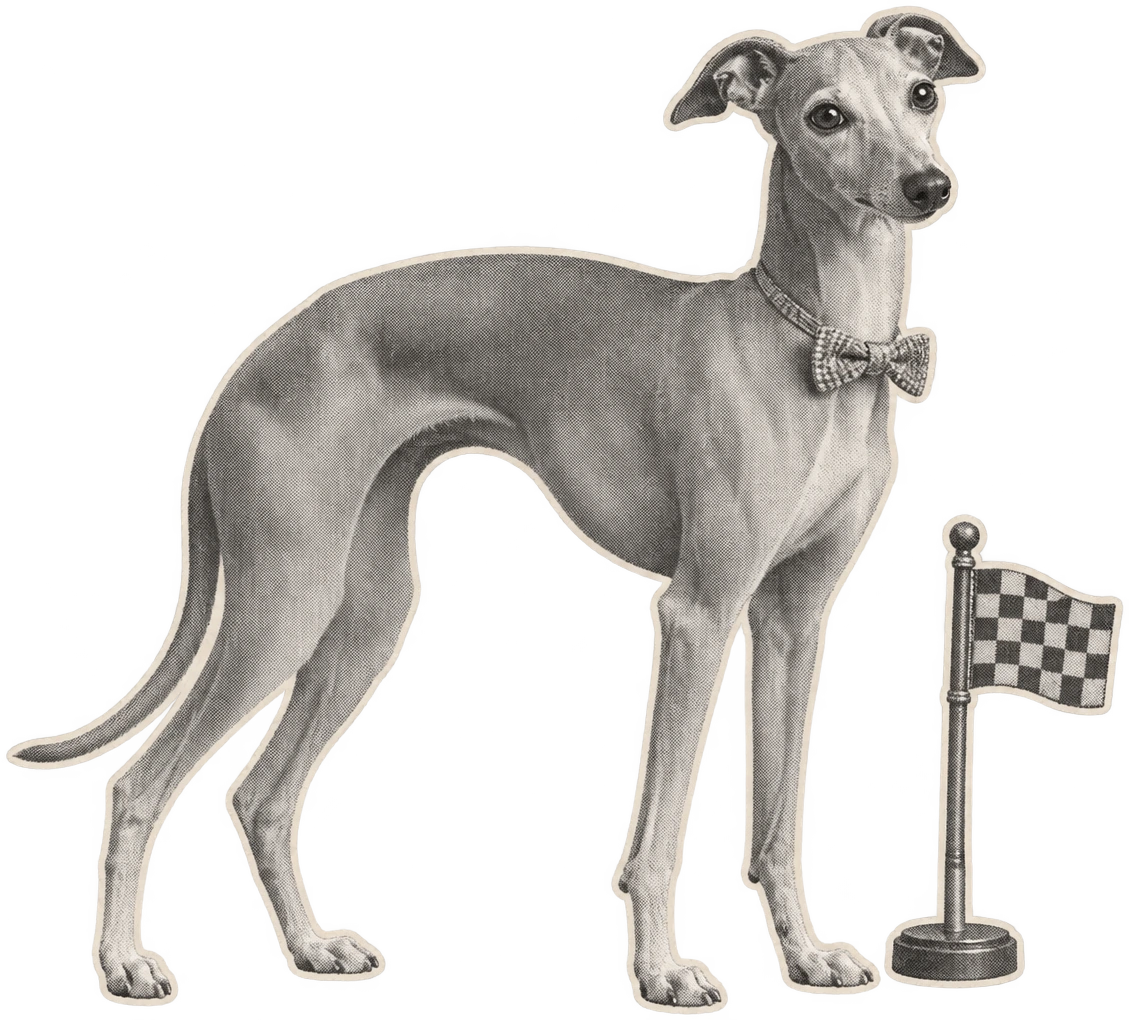
Italian Greyhound is the breed name, with IG as a common short form. Italian Greyhounds, Greyhounds and Whippets are separate UK listings. They share a recognisable outline, but the Italian Greyhound is markedly lighter and finer. The UK registry puts the Italian in Toy, while Greyhound and Whippet are under Hound. Don’t pull in injury rates or a walking routine from either of the other two. 1 2 12 13
Italian Greyhound notes / 02
Three different sighthounds
Measure the dog, not the shape in the picture
The UK breed standard gives an ideal shoulder height of 32–38 cm and an ideal weight of 3.6–4.5 kg. That’s not an instruction to put your dog on a diet. Italian Greyhounds naturally have a tuck behind the ribcage. Ask your vet what a healthy body condition looks and feels like on your dog. A change in condition tells you more than the number written for the show ring. 2 15 16
Fit outdoor gear to their shape. Watch that the coat clears their shoulders and doesn’t cover so much of the rear that they can’t go to the toilet comfortably. If they reverse out of a harness, have someone knowledgeable check the fit rather than trying to solve it by doing every strap up another notch. 3 11 17
Italian Greyhound notes / 03
Fit the fine build
A coat that came with the dog and one that didn’t
The short, fine dog coat doesn’t take much brushing. Use something gentle and look for marks under the walking kit. Pay attention to how they react if you touch a patch they normally don’t mind. Repeated licking or sore skin is worth checking with the vet, not an excuse to brush the spot harder. 2 18 19
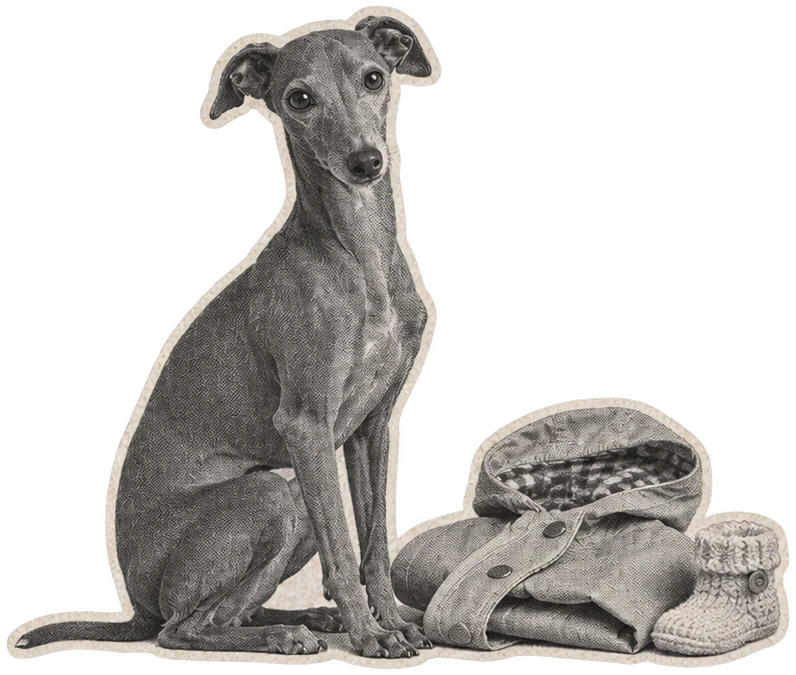
Get them used to an outdoor coat on a day when you aren’t in a rush to go out. Put it on briefly and let them move, then check where it sits. Bring them in if they’re cold or shivering rather than staying out to win an argument about whether it’s cold enough for a coat. 3 10 20
Italian Greyhound notes / 04
A coat for cold days
| What to check | Useful habit |
|---|---|
| Short coat | Brush gently and look for rubbing or sore patches. 18 19 |
| Outdoor coat | Check movement and comfort while they’re actually walking. 3 10 |
| Damp clothes | Take wet layers off once inside and give them a dry rest spot. 3 20 |
| Persistent irritation | Ask the vet what’s behind it instead of assuming it’s the weather. 19 |
Let them make their mind up about people
An Italian Greyhound doesn’t have to greet every person who notices them. Try letting visitors sit down before the dog decides what to do. If they retreat, don’t pick them up and bring them back for a better look. The dog gets to have an opinion about who gets at their ears. 21 22 23
Notice a change in the dog who usually comes over happily. They could be uncomfortable if they suddenly object to having a leg touched or to being picked up. Stop and ask the vet about a change that sticks around, particularly if it’s affecting how they move. 6 22
Italian Greyhound notes / 05
Let the dog choose
The everyday returns
Practise recall where it’s easy to come back. Give them one clear cue, reward them close to you and, where safe, let them go back to what they were doing. If outdoors is too distracting, rehearse on a fitted harness and long line in a place it won’t tangle. Don’t find out how good your return cue is next to a busy road. 4 11 24
For toilet trips in bad weather, take them to a sheltered patch and reward them as soon as they’ve gone. Make trips predictable after sleep or meals. If there’s a sudden change in toileting for an adult who usually manages it, get advice rather than deciding it must be the rain. 3 25 26
Italian Greyhound notes / 06
Useful everyday habits
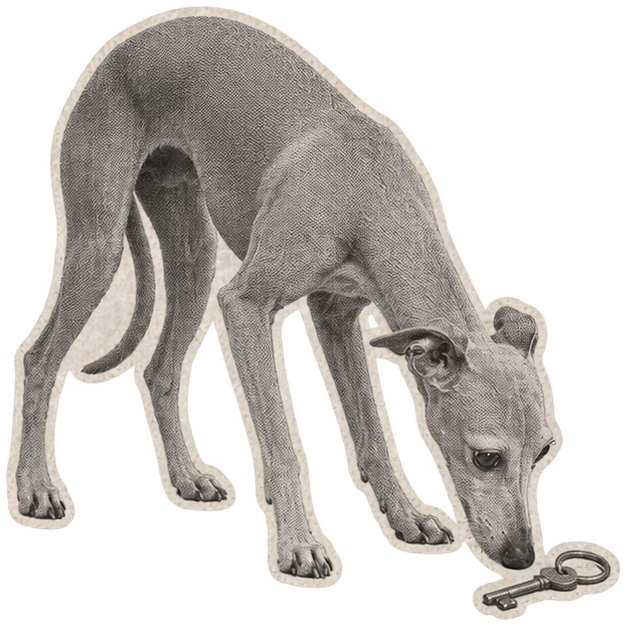
Room to run safely
A few steps to the garden don’t replace an outing. Walk within the dog’s fitness and give them time to sniff. If you want to let them run, start with an area with secure fencing. Check the bottom of gates as well as the height of the fence, and see what else is in the field before you unclip. 3 4 11 28
Cold weather can make the usual route less appealing. Try a shorter trip with suitable kit and turn back if they’re shivering or clearly reluctant to carry on. On a day the paths are slippery, use a steadier route rather than taking your usual shortcut and hoping the dog has better tyres than you. 6 10 20
Italian Greyhound notes / 07
A safe place to run
| Situation | What helps |
|---|---|
| A moving animal catches their attention | Keep control of the lead and practise the cue at a greater distance. 4 29 |
| Safe open space | Check the actual enclosure and their response in that setting. 4 11 |
| Cold or driving rain | Use an appropriate coat and cut the walk short if they’re cold. 3 10 |
| A sudden limp | Stop the outing. Call immediately if they won’t put the leg down. 6 |
Give them an easier way down
If your dog launches off the same chair every morning, take a proper look at where they land. Try a warm bed at floor level and block access to a high drop when you can’t supervise. Secure runners can make a slippery route easier to use. None of that makes them fracture-proof or means a healthy dog shouldn’t move. 5 6 30
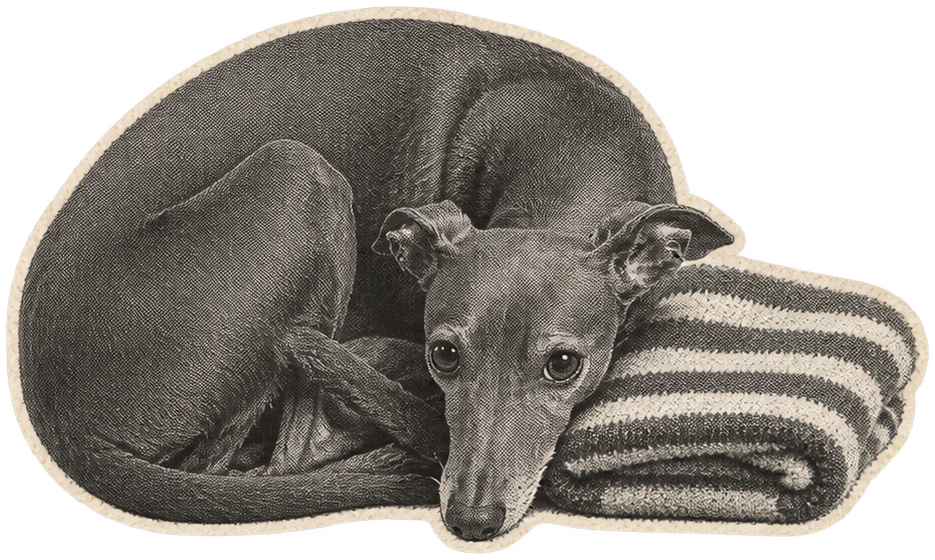
Practise small periods apart from below the point where they get upset. If you sometimes find them asleep under a blanket, check where the dog is before you sit down. An ordinary warm bed in a quiet spot is enough without adding a heat source to it. 3 31 32
Italian Greyhound notes / 08
A warm bed at floor level
Children and other pets
A fine build is a good reason for children to play low down and leave the lifting to adults. Even then, don’t pick the dog up just because they’re small. Supervise time together and make sure the dog can retreat without anyone following, especially if play starts getting noisy. 5 22 33
With a cat, provide a separate route out of the room and use a barrier until both are comfortable. For play with other dogs, watch how the pairing actually works. One dog may be happy with a short sniff and a walk side by side even if the other wants to charge about. 23 34 35
Health
A 2024 UK survival study estimated a median lifespan of 14.0 years for Italian Greyhounds (95% CI 13.2–15.1), based on records for 389 dogs including 70 recorded deaths. This is the Italian Greyhound row, not a Greyhound or Whippet result. The study’s median isn’t an age you can count on for one dog. 36 37
The Italian Greyhound Club’s 2025 voluntary owner survey covered 284 dogs. It recorded 42 reports of periodontal disease and 22 of fractures. Those are reports in a group that chose to take part, not current UK population rates. If you suspect a fracture, call the vet urgently, ask about moving the dog safely and don’t try to straighten the leg. 5 6 38 39
For breeding screening, the Royal Kennel Club lists the clinical Eye Scheme in Best Practice with the Italian Greyhound Good Practice column blank. Ask to see the parent dogs’ actual results. An eye certificate can’t tell you what’s causing a sore eye today or rule out other conditions. 1 40 41 42
Italian Greyhound notes / 10
Health conditions and screening
| Health topic | Useful action |
|---|---|
| Mouth | Build up to regular dog-safe brushing and ask the vet about soreness or changes in eating. 7 8 9 |
| Suspected fracture | Call urgently if they won’t bear weight or a break is suspected. Ask how to move them. 6 38 |
| Clinical eyes | Check both parents’ records when you’re looking at a puppy. 40 41 |
| Eye pain | Don’t wait for it to settle if they’re squinting or holding an eye shut; call the vet. 42 |
| Persistent skipping | Have a vet look at their movement. Kneecap problems are one possible cause. 6 43 |
| After a fall | Get abnormal movement or soreness assessed instead of asking for another jump to see what happens. 6 38 |
| Evidence limits | Parent screening, survey counts and a lifespan study answer different questions. 36 37 39 40 |
Price the useful things
Work out monthly costs around the dog, not the size of the food bag. An outdoor layer that fits properly is worth more than half a dozen smart ones that rub. Ask the vet what regular dental care involves and budget for it rather than assuming brushing at home means you won’t need that conversation. 7 8 10 44
Compare insurance terms for dental care and orthopaedic investigations, not just the monthly price. Know where you can get urgent help and how you’d get there if the dog can’t walk. 38 44
Italian Greyhound notes / 11
Costs worth knowing
| Cost | What to check |
|---|---|
| Outdoor kit | Fit for the actual dog and the conditions you walk in. 10 17 |
| Dental care | Routine assessment and what any insurance excludes. 7 44 |
| Care cover | Whether a walker understands the dog’s pace and safety needs. 45 |
| Urgent vet care | How to reach your local service and what you’d pay after the excess. 38 44 |
The old photograph would be very small
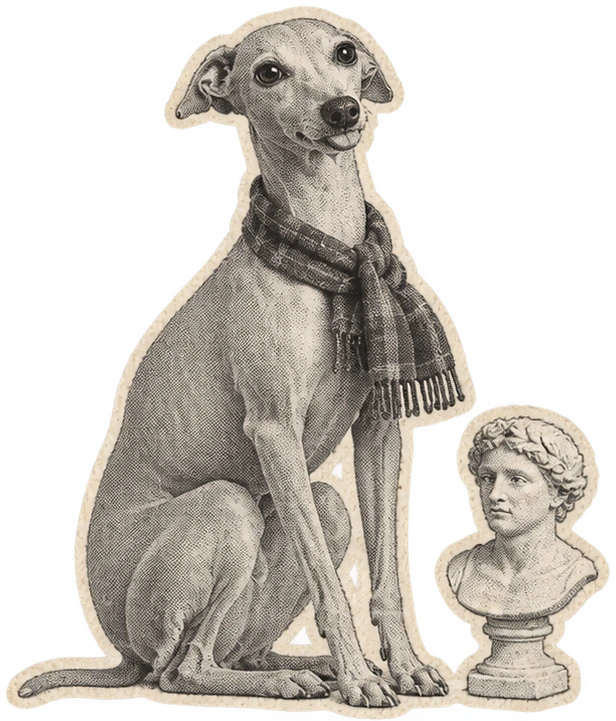
The Royal Kennel Club describes a long history for this type of hound. Italy is named as the country of origin in the international breed standard. The tiny hound shape is the useful clue for living with one today. A dog built like this doesn’t need to spend its life being carried, and it doesn’t need to run in the same places as a full-sized Greyhound to earn the name. 1 2 3 13 50
Italian Greyhound notes / 12
A tiny hound history
If one is coming into your home
Ask an adult dog’s carer about their ordinary day. How do they handle cold walks, and what happens with stairs or the car? Find out what they already know about being alone. Keep the first few days quiet while you get a feel for where they like to rest and how they move around the place. 3 31 46 47
Meet a puppy with its mother at the place where it was raised. Ask about the parents’ eye records and what’s known about previous injuries or dental problems in the family. Look at the actual certificates rather than letting reassurance about a good family line be the last thing you hear. 39 40 48 49
Italian Greyhound notes / 13
Ask about their ordinary day
| Ask about | A useful answer |
|---|---|
| Parents | Named eye results and an honest account of what’s known about family health. 39 40 49 |
| Walking | What this dog is used to wearing and where they can safely exercise. 3 4 |
| Home | An ordinary routine you can continue before introducing busy visitors. 23 46 |
| Rest and care | What makes them comfortable with being left and what health checks are due. 31 47 |
Sources
- S1Royal Kennel Club Italian Greyhound profile and historySource · checked 21 November 2026
- S2Royal Kennel Club Italian Greyhound written breed standardSource · checked 21 November 2026
- S3Italian Greyhound Rescue Charity owner FAQs and toilet, weather and comfort guidanceSource · checked 21 November 2026
- S4Dogs Trust recall and use of long line and harnessSource · checked 21 November 2026
- S5Italian Greyhound Rescue Charity breed health and injury experienceSource · checked 21 November 2026
- S6PDSA new limping, stiffness and veterinary helpSource · checked 21 November 2026
- S7PDSA veterinary advice on introducing toothbrushingSource · checked 21 November 2026
- S8PDSA dental disease signs and clinical adviceSource · checked 21 November 2026
- S9PDSA painful mouth and signs requiring assessmentSource · checked 21 November 2026
- S10PDSA choosing and observing a cold weather dog coatSource · checked 21 November 2026
- S11Dogs Trust secure harness and escape preventionSource · checked 21 November 2026
- S12Royal Kennel Club Whippet standard, separate breedSource · checked 21 November 2026
- S13Royal Kennel Club Greyhound standard, separate breedSource · checked 21 November 2026
- S14Original separate Greyhound VetCompass study, not Italian GreyhoundSource · checked 21 November 2026
- S15PDSA body condition and healthy dog weightSource · checked 21 November 2026
- S16PDSA assessing an individual dog’s body conditionSource · checked 21 November 2026
- S17Dogs Trust fitting and introducing a harnessSource · checked 21 November 2026
- S18PDSA grooming dogs with different coatsSource · checked 21 November 2026
- S19PDSA itchy skin adviceSource · checked 21 November 2026
- S20PDSA cold weather outdoor routinesSource · checked 21 November 2026
- S21Italian Greyhound Rescue Charity temperament and individual practical experienceSource · checked 21 November 2026
- S22Dogs Trust body language and consent signalsSource · checked 21 November 2026
- S23Dogs Trust handling visitors and giving spaceSource · checked 21 November 2026
- S24RSPCA getting a recall started safelySource · checked 21 November 2026
- S25Dogs Trust toilet training for puppies and dogsSource · checked 21 November 2026
- S26PDSA symptoms of urinary problems in dogsSource · checked 21 November 2026
- S27Dogs Trust practical hide and seek toy gameSource · checked 21 November 2026
- S28PDSA adapting exercise for the individual dogSource · checked 21 November 2026
- S29Dogs Trust keeping dogs on lead while managing chasingSource · checked 21 November 2026
- S30PDSA non-slip footing and existing mobility issuesSource · checked 21 November 2026
- S31Dogs Trust gradual time-alone trainingSource · checked 21 November 2026
- S32PDSA separation anxiety and veterinary or behaviour helpSource · checked 21 November 2026
- S33Dogs Trust active supervision for children and dogsSource · checked 21 November 2026
- S34Dogs Trust safe cat and dog introductionsSource · checked 21 November 2026
- S35Dogs Trust introducing a dog to another dogSource · checked 21 November 2026
- S36Dogs Trust 2024 table, exact Italian Greyhound rowSource · checked 21 November 2026
- S37McMillan et al. 2024 original UK survival studySource · checked 21 November 2026
- S38PDSA immediate care for suspected broken bonesSource · checked 21 November 2026
- S39Original Italian Greyhound Club 2025 voluntary survey reportSource · checked 21 November 2026
- S40Royal Kennel Club current Health Standard, Italian Greyhound rowSource · checked 21 November 2026
- S41BVA clinical eye screening, its scope and purposeSource · checked 21 November 2026
- S42PDSA painful eye and urgent actionSource · checked 21 November 2026
- S43PDSA veterinary guidance on slipping kneecapSource · checked 21 November 2026
- S44PDSA typical dog ownership costs and insurance considerationsSource · checked 21 November 2026
- S45Dogs Trust how to choose a dog walkerSource · checked 21 November 2026
- S46Dogs Trust settling a rehomed dog at homeSource · checked 21 November 2026
- S47Italian Greyhound Rescue Charity rehoming and supportSource · checked 21 November 2026
- S48RSPCA responsible puppy purchase and meeting the motherSource · checked 21 November 2026
- S49Royal Kennel Club Health Test Results FinderSource · checked 21 November 2026
- S50Fédération Cynologique Internationale written Italian Sighthound standard and Italian originSource · checked 21 November 2026
