
Breed guide / Irish Terrier
Living with an Irish Terrier
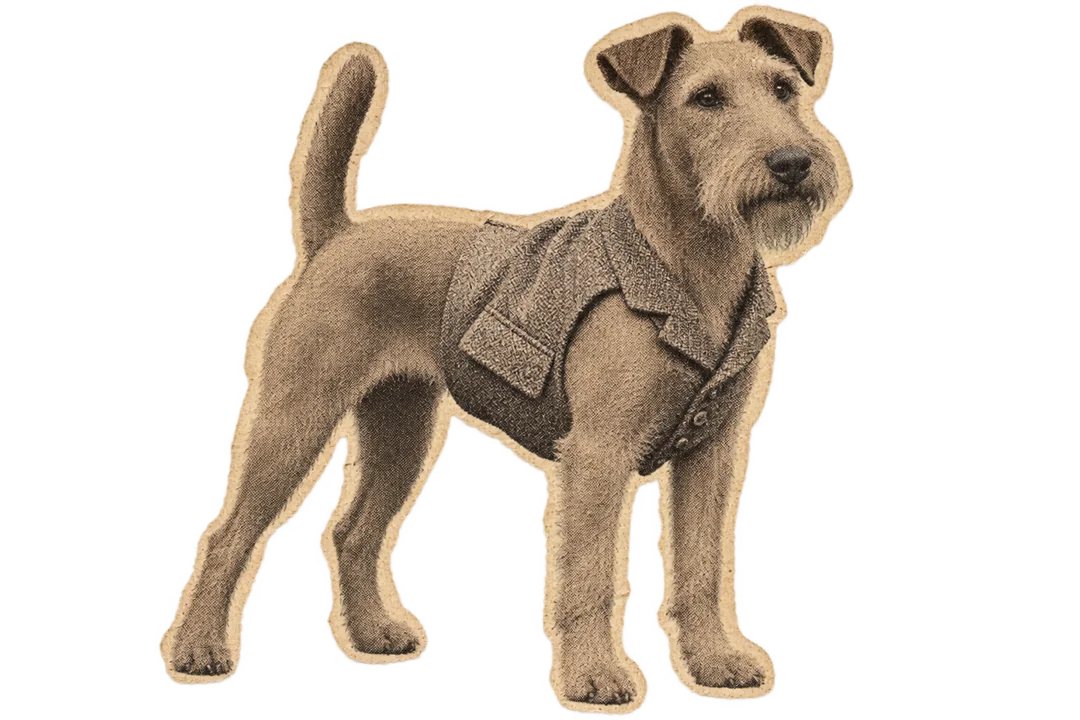
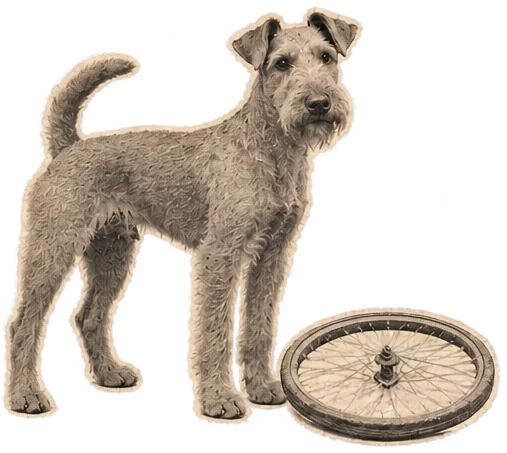
An Irish Terrier is a leggy, wiry dog with a red coat and the businesslike build of an old working terrier. It has a bit more leg than some of the compact, low-to-the-ground terriers people picture. That’s useful to know when you’re fitting a harness, and rather less useful once the dog has decided what needs investigating at the far end of it. 1 2 3 5
Jump to a section
Check the paws before you lengthen the walk
Look at the pads and the spaces between toes after rough ground. Get the dog used to it with a brief, gentle check while there’s nothing wrong. If they stop wanting to put a foot down or the pads keep cracking, call the vet rather than expecting another day off to explain it. 6 12 14 20 31
For a dog that spends walks looking into hedges, practise a turn earlier. Find a stretch where they’ll still look back at you and reward that. If something in the hedge has your dog’s full attention, changing route or making space is a perfectly good decision. 10 18 25 26
Irish Terrier notes / 01
Short version
| First check | Try |
|---|---|
| Rough ground | Look at the pads, nails and toes afterwards. 14 20 |
| Recurring hard or cracked pads | Get vet advice; don’t file or cut the pads yourself. 6 31 |
| Lead goes tight at cover | Turn away sooner and practise on easier ground. 10 26 |
| Repeatedly strains and cannot pass urine | Call the emergency vet immediately. 37 |
Which Irish terrier?
The official UK breed is Irish Terrier, a name belonging to this distinct red-coated breed. Kerry Blue Terrier, Soft-Coated Wheaten Terrier and Irish Glen of Imaal Terrier have separate standards. The Irish Setter isn’t a terrier and isn’t the red-coated dog on this page. 1 3 4 39
Current UK acceptable shades include red, red wheaten and yellow red. Historical sources describe different colours in earlier dogs. Picking anything that looks red and wiry isn’t a way of establishing pedigree or picking health tests. 1 2 5 39
Longer legs than you might think
The UK breed standard’s ideal height is 48 cm for males and 46 cm for females. That’s a description of the ideal, not the range every adult must fit into. Follow your dog’s body condition with hands and eyes rather than asking the coat to show you their ribs. 2 17
Check the harness while the dog turns and lowers the head. It should stay clear of the legs and not travel round the chest when the dog backs up. Keep the vehicle restraint separate from that decision. 18 19
The coat wants a small routine, not a battle
The outer coat is wiry, dense and close to the body. Check beard and feet for caught bits after a muddy or grassy walk. If you’re unsure how to maintain the texture, ask a groomer who works with wire coats about suitable brushing and grooming choices. Keep handling where the dog can tolerate it. 2 12 14 15 16
Fuss near a paw is not always a training issue. Stop if the dog tenses, pulls away repeatedly or starts licking a spot. The skin between toes can be sore even when the outside of a wire coat looks undisturbed. 12 14 20 31
Keen to get involved doesn’t mean keen on everybody
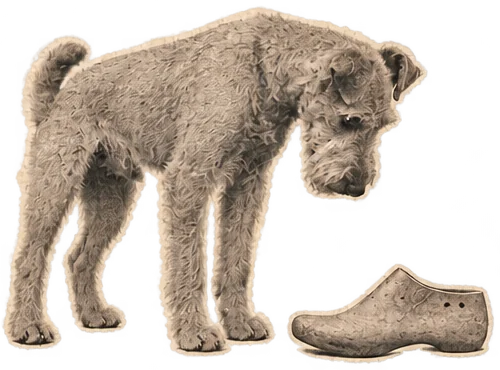
Give visitors room to arrive without greeting the dog straight away. A calm dog can approach if they want; a dog moving away doesn’t need winning over. Practise resting somewhere out of the way when the house is quiet. 11 12 13
If the dog starts barking at one place or time every day, look at what’s happening there. You might need a quieter view or more distance, not a better telling-off. For distress when left, practise short absences and get help if they don’t cope. 13 22 23 24 40
Teach leaving as well as finding
Let the dog find something safe on purpose, then quietly stop the game. Reward a check-in or a turn on a low-distraction walk. Add difficulty slowly, before asking for a perfect response right beside a road, wildlife or a hole with a very interesting smell. 10 25 26 27
An appropriate lead and space are management, not a training failure. A long line can help in the right place, but skip it where it’ll snag or take away your control. Your mate telling you his terrier is always off lead doesn’t make your route safer. 18 26 29
Pay attention to recovery, not just willingness
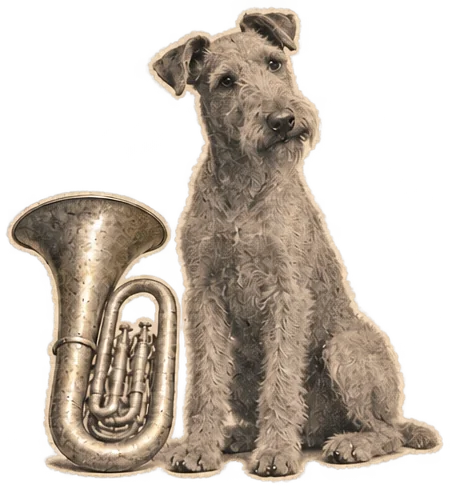
Build exercise around the dog’s age, current fitness and health. A terrier may keep asking to go on even if you’ve made the route harder than usual. Notice how they move later and take new licking, stiffness or a limp seriously. Avoid hard outings in unsafe heat. 14 28 30 31
Keep safe control around livestock and wildlife, and follow local rules. Try a quiet route with room to sniff rather than taking the busiest possible walk every time. If the dog is recovering from injury, run the plan past the vet. 10 26 28 29 31
Make it less interesting to watch the gate
Give the dog a quiet place to stretch out that isn’t in direct view of every delivery. Use a safe barrier before opening the front door if needed. Practise the boring version when nobody’s on the step. A fence can be secure and still be a tiring place to spend all afternoon. 11 13 18 26 40
Check the bottom of gates or fences if your dog investigates or digs. A supervised search for a safe toy is a better place to start than giving them unsupervised access to the whole garden. 10 26 27
Keep introductions short enough to stay calm
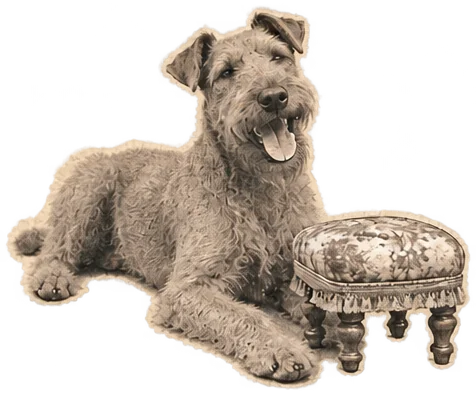
Have an adult oversee any interaction with children. Don’t let the dog get crowded on the bed or get involved in running games if it wants to chase. Separate them whenever an adult can’t watch closely. 10 12 33
If there are cats or smaller pets, give them a retreat the dog can’t reach. Start with separation if you don’t know how the dog will respond. Make sure dogs can eat or have their chews apart if needed. If chasing or guarding persists, seek support before another try. 24 32 34 35
Know the difference between a footpad test and a sore foot
In the Royal Kennel Club’s current Irish Terrier standard for pre-breeding screening, hereditary footpad hyperkeratosis (HFH) DNA testing is Best Practice. Its breed profile prioritises genetic diversity under Good Practice; there is no named Good Practice test in the central row. The original Irish Terrier research linked a FAM83G variant to inherited pad disease; hard or cracked pads in an individual can still have several explanations. 1 6 7 36
Irish Terrier club material also discusses cystinuria separately. It’s about urinary stone risk, not covered by the HFH test. Don’t substitute another breed’s panel or assume the causes are identical. Repeated attempts to pee with little or nothing coming out need immediate vet advice, particularly if the dog cannot pass urine. 8 37 38
Irish Terrier notes / 10
Health
| Evidence or sign | What it means |
|---|---|
| RKC Good Practice | Profile highlights genetic diversity; no named test in that column of the central row. 1 36 |
| HFH DNA | Named Best Practice test; check the actual result for each parent. 1 6 36 |
| Hard pads or cracks | Vet check, not a DIY treatment or an assumed genetic diagnosis. 6 14 31 |
| Cystinuria | Separate breed-club concern; no universal test or current prevalence claimed here. 8 38 |
| Inability to pass urine | Emergency vet straight away. 37 |
| What a result does not cover | Screening for an inherited condition isn’t a general certificate of health. 6 36 |
| Lifespan | The original 2024 UK table gives 13.5 years median, 95% CI 13.1–14.0, with 146 recorded deaths. It’s not a prediction for your dog. 41 42 |
Budget for the dog who needs looking after on a Friday night
Ask a groomer whether they know this kind of wire coat, what maintenance they recommend and what it’ll cost. If you use a walker, agree what they’ll do around livestock, exciting smells and the tempting mystery object under somebody’s hedge. 15 18 26 43
Know which vet you’d call out of hours and how you’d pay, with or without insurance. Read what the policy excludes rather than assuming routine care or a hereditary problem is covered. 37 44
Irish Terrier notes / 11
Costs
A working history without needing the tall tales
The breed comes from Ireland and has a history of versatile work rather than one fixed modern job. Older records describe darker and mixed colours before red became the standard. It’s useful history, but neither the colour nor the old job tells you what the dog wants to do this evening. 1 3 5 39
Use the parts that fit ordinary life. A toy search and a useful check-in are worthwhile. There’s no need to rehearse chasing a live animal to satisfy anybody’s idea of how a terrier should act. 10 25 27 29
See what life with one is like when it’s raining
Meet adults and ask what a walk, a paw check and a slow evening are like. See a litter with its mother where it’s raised and ask for results that identify the parents. With a rescue, ask what the team has actually observed and what’s still unknown. 9 12 26 36 45 46
If there’s a safe place to explore, a quiet place to rest and time to do the practical care, you’ve thought through more than the coat and the face. A dog who doesn’t like the same thing you imagined is still telling you something useful. 11 12 27 28
Irish Terrier notes / 13
Bringing one home
| Ask | Look for |
|---|---|
| Can I see the health results? | Exact test and individual identity. 36 45 |
| What are normal walks like? | How they manage scent, stock and returning to you. 10 26 |
| How are paws and coat handled? | Short calm sessions and an honest description. 12 14 |
| What’s still unknown? | Clear gaps and who can help. 9 24 |
Sources
- S1Royal Kennel Club Irish Terrier breed profile and screeningSource · checked 21 November 2026
- S2Royal Kennel Club current official Irish Terrier UK standardSource · checked 21 November 2026
- S3FCI official Irish Terrier breed nomenclature 139Source · checked 21 November 2026
- S4Royal Kennel Club directory of separate UK breedsSource · checked 21 November 2026
- S5Southern Irish Terrier Society account of breed historySource · checked 21 November 2026
- S6Original FAM83G study including Irish TerriersSource · checked 21 November 2026
- S7Original study of inherited footpad hyperkeratosis in Irish TerriersSource · checked 21 November 2026
- S8North of England Irish Terrier Club's cystinuria information and research contextSource · checked 21 November 2026
- S9Dogs Trust rehoming and matching stepsSource · checked 21 November 2026
- S10Dogs Trust preventing or managing chasingSource · checked 21 November 2026
- S11Dogs Trust settling practiceSource · checked 21 November 2026
- S12Dogs Trust comfortable handlingSource · checked 21 November 2026
- S13Dogs Trust reactivity and spaceSource · checked 21 November 2026
- S14PDSA vet guidance on home health checksSource · checked 21 November 2026
- S15PDSA vet guidance on groomingSource · checked 21 November 2026
- S16Blue Cross general grooming supportSource · checked 21 November 2026
- S17PDSA vet guidance on body conditionSource · checked 21 November 2026
- S18Dogs Trust harness fittingSource · checked 21 November 2026
- S19Dogs Trust safe travelSource · checked 21 November 2026
- S20PDSA vet guidance on grass seedsSource · checked 21 November 2026
- S21PDSA vet guidance on ear symptomsSource · checked 21 November 2026
- S22Dogs Trust introducing time aloneSource · checked 21 November 2026
- S23Dogs Trust recognising separation distressSource · checked 21 November 2026
- S24Dogs Trust sourcing behaviour supportSource · checked 21 November 2026
- S25Dogs Trust positive reinforcementSource · checked 21 November 2026
- S26Dogs Trust recall and long lineSource · checked 21 November 2026
- S27Dogs Trust enrichment and search gamesSource · checked 21 November 2026
- S28PDSA vet guidance on exerciseSource · checked 21 November 2026
- S29Natural England keeping dogs under control in the countrysideSource · checked 21 November 2026
- S30Dogs Trust warm-weather careSource · checked 21 November 2026
- S31PDSA vet guidance on stiffness and limpingSource · checked 21 November 2026
- S32Dogs Trust resource guardingSource · checked 21 November 2026
- S33Dogs Trust supervising dogs around childrenSource · checked 21 November 2026
- S34Dogs Trust introducing dogs and catsSource · checked 21 November 2026
- S35Dogs Trust introducing dogsSource · checked 21 November 2026
- S36Royal Kennel Club exact Irish Terrier Health Standard rowSource · checked 21 November 2026
- S37PDSA veterinary immediate advice when a dog cannot pass urineSource · checked 21 November 2026
- S38PDSA veterinary bladder stones adviceSource · checked 21 November 2026
- S39FCI Irish Terrier official English standard and historical summarySource · checked 21 November 2026
- S40Dogs Trust help with frequent barkingSource · checked 21 November 2026
- S41Dogs Trust original UK breed lifespan tableSource · checked 21 November 2026
- S42McMillan et al. original lifespan study and methodsSource · checked 21 November 2026
- S43Dogs Trust finding a dog walkerSource · checked 21 November 2026
- S44PDSA costs and insuranceSource · checked 21 November 2026
- S45Royal Kennel Club Health Test Results FinderSource · checked 21 November 2026
- S46RSPCA buying a puppy and seeing the motherSource · checked 21 November 2026
