Breed guide / Hungarian Vizsla
Living with a Hungarian Vizsla
A Hungarian gundog who’d like a decent walk, a job to do and a seat right next to yours. The short coat is the low-maintenance bit.
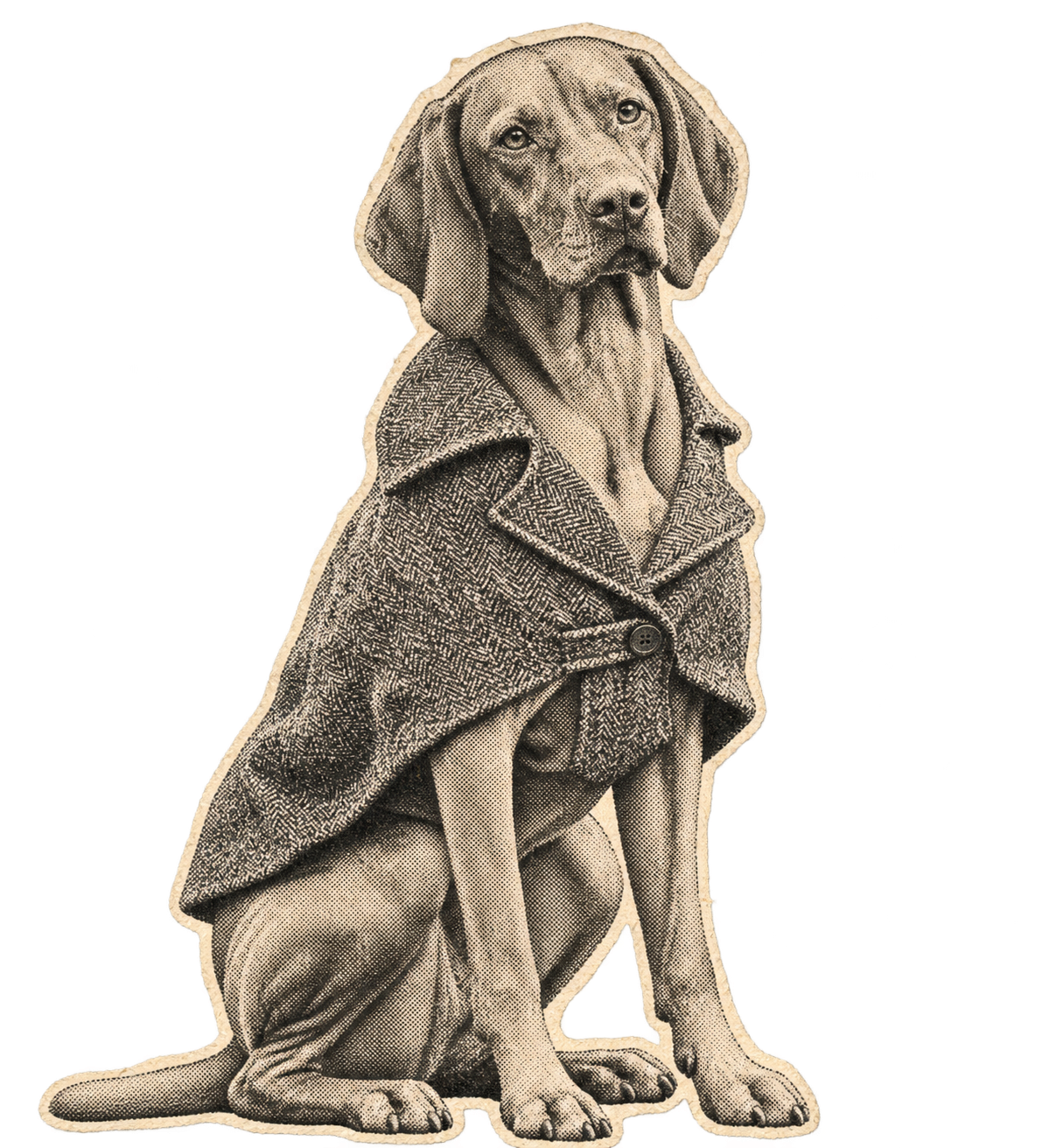
Jump to a section
The short version: a gundog who wants to come with you
A Hungarian Vizsla is a lean, short-coated gundog bred to find game, point it out and bring it back. People bred these dogs to work with them, and you can still see it on an ordinary walk: the dog goes off to investigate a smell, checks where you are, then carries on as if you’ve agreed to another hour. At home you’re likely to have company. The hard bit is making sure the dog can relax when there’s nothing happening, including when you go out without them. 12
Hungarian Vizsla notes / 01
What changes at home
If you have time for the walk but not the rest of the day, read on.
| What you’re choosing | What that means at home |
|---|---|
| An active, cooperative dog | Give them time to explore, train and learn to settle. More distance on its own won’t teach all three. |
| A dog who often likes company | Build time alone gradually and have a real plan for working days. |
| An owner’s first priority | Make recall pay, teach a resting spot, and know when today’s walk should be easier. |
| Before you buy | See the parents’ hips, elbows, eyes and gonioscopy results. Ask about seizures and swallowing problems in the family. 1922 |
Names: this one hasn’t got the beard
“Vizsla” here means the smooth Hungarian Vizsla in the Royal Kennel Club’s Gundog group. The FCI calls it the Hungarian Short-Haired Pointer, standard 57. The Hungarian Wirehaired Vizsla has a separate standard, 239. A short-haired dog’s figures and screening list don’t automatically apply to the wirehaired breed, even if both get called Vizslas over the park. 345
Hungarian Vizsla notes / 02
The smooth one and the other one
The dog with a beard has its own standard.
| Label | What it actually means |
|---|---|
| Hungarian Vizsla, short-haired | The breed covered here. |
| Hungarian Wirehaired Vizsla | A different breed, not an optional coat on the same registration. |
| HPR | Hunt, point and retrieve: the jobs the breed was developed to do. |
| Working or show line | A clue to what a breeder selects for, not a promise about the dog in your kitchen. Ask to see the parents work and settle in a normal setting. |
| Vizsla cross | Ask what’s known about parentage and what’s been seen in the individual dog. |
| Hungarian Short-Haired Pointer | The FCI’s translated name for the same short-haired breed, standard 57. 4 |
| Gundog | UK registry group, not a prediction about whether an individual dog can go off lead. 110 |
Size: there’s a lot of leg to get round in the kitchen
The UK standard puts males at 57–64 cm and females at 53–60 cm at the shoulder, with a 20–30 kg weight range for the breed. That’s the show standard, not a rule about what your pet ought to weigh. A fit Vizsla can look lean; merely seeing a lean outline doesn’t tell you if a dog is underweight or losing muscle. Learn to feel the ribs and assess the waist, and ask your vet if weight or shape is changing unexpectedly. 36
Hungarian Vizsla notes / 03
What to measure on the actual dog
The show range is not a prescription from your vet.
| Measure | Use it for |
|---|---|
| Male height | 57–64 cm at the shoulder in the UK standard. 3 |
| Female height | 53–60 cm at the shoulder in the UK standard. 3 |
| Weight | 20–30 kg in the standard; set an individual goal with your vet, not by the number here. 36 |
| Harness and car setup | Measure chest and length. Check that a fitted harness isn’t rubbing behind the elbows. 7 |
Coat: a two-minute brush, a longer argument with the towel
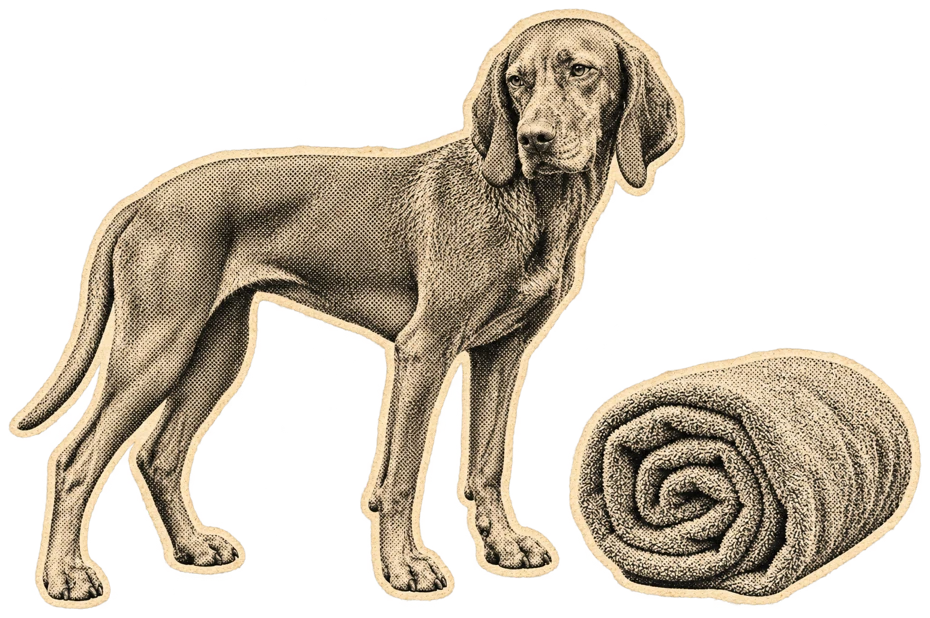
The coat is short, straight and russet-gold, and generally needs little grooming. That doesn’t make it waterproof or mean the dog won’t feel cold standing around wet. Dry them after a soaking and check where the harness rubs. After a walk in long grass, look at the feet, visible parts of the ears and skin. A short coat makes it easier to see something odd; it doesn’t tell you what it is. 328
Hungarian Vizsla notes / 04
Five minutes after a wet walk
The towel still needs doing even if brushing takes two minutes.
| What to look at | What to do |
|---|---|
| Loose hair | A gentle brush or grooming mitt during normal handling. |
| Wet dog | Dry them and check they have a warm place to rest. |
| Thin hair or skin changes | If patches spread, become scaly or sore, ask a vet. Don’t assume it’s a harness mark. |
| Ears and paws | Check after walks without putting anything down the ear canal. Get advice for discomfort or persistent head shaking. |
| Colour and coat | The UK standard describes short russet gold. Colour is not a marker of health. 3 |
| Harness line | Check where straps pass behind the elbows. Look for rubbing rather than assuming the fit is right by size label. 78 |
| Outdoor rest | Give a wet dog a dry place to lie down, especially once they stop moving. 28 |
Temperament: “likes people” doesn’t cover what happens when they leave
Many Vizslas enjoy doing things with people. You’ll hear “Velcro dog” often enough, but it doesn’t tell you whether this one can go to sleep while you make lunch or starts pacing when the front door shuts. If you already own one who follows you everywhere, look at what happens when you aren’t available. A dog who chooses to rest across the room is learning something useful. One who howls after you leave needs a different plan, not substantially louder radio. 29
Hungarian Vizsla notes / 05
Watch what happens when you leave
Going everywhere with you isn’t the same as coping without you.
| Watch for | What to change |
|---|---|
| Pulling away, freezing or turning their head from a hand | Give space instead of getting another person to try. |
| Distress when alone | Shorten practice, organise cover and ask for professional help if it persists. |
| Sudden withdrawal, irritability or reluctance to move | Ask your vet about pain or illness rather than assuming the dog has got difficult. 8 |
Training: give that nose something you’ve chosen
Teach a return from an easy sniff first. Reward it and sometimes let the dog go back. A good recall doesn’t have to mean that everything enjoyable has ended. Practise on a long line clipped to a fitted harness when you add distractions, then choose secure ground for freedom. Keep a short lead near livestock, roads or wherever local signs require it. 1011
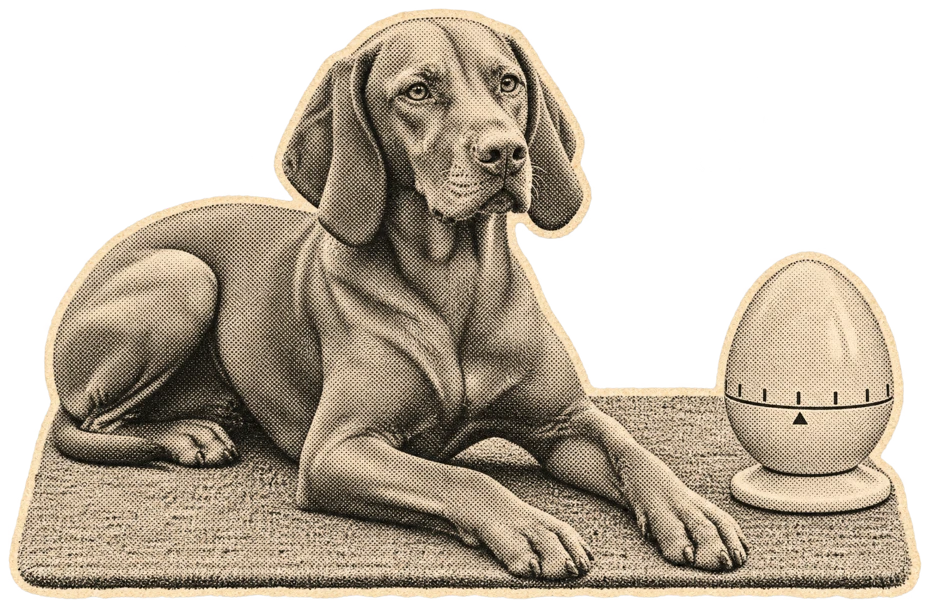
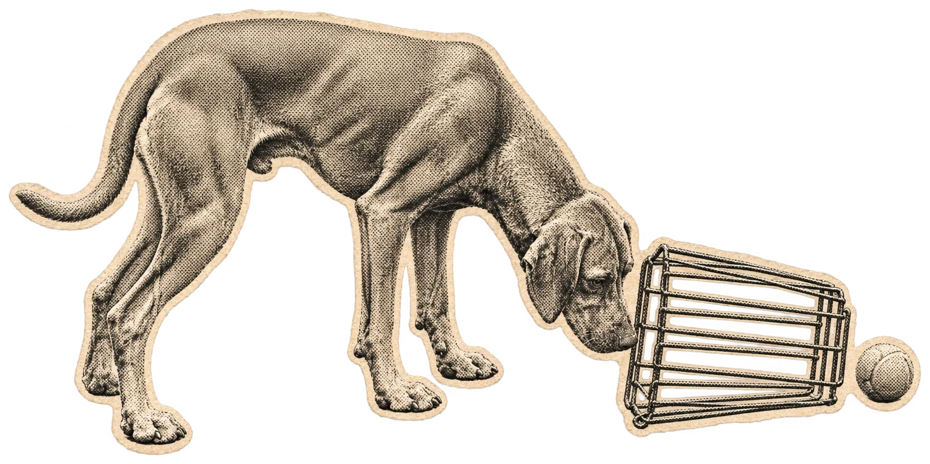
Try an easy find-and-bring game with an ordinary toy in short grass. Let them learn to wait briefly while you put the toy down. Stop while you’re both still enjoying it. There’s no need to buy three whistles when nobody in the house can yet remember which word means come back. Reward lying on a mat while you do something dull as well as charging across a field. 212
Hungarian Vizsla notes / 06
Make the useful things pay
Put one word for come back on the whole household’s list.
| Skill | Start with |
|---|---|
| Recall | Short distance, low distraction, worthwhile reward. |
| Retrieve | Short searches; swap the item rather than chasing the dog to get it back. |
| Settle | Brief calm practice away from the door, never only when visitors arrive. |
| Lead work | Reward a slack lead on an easy route before trying the busy one. |
Exercise: don’t turn every walk into training for a longer walk
PDSA suggests at least two hours’ exercise a day for a Vizsla. Use that to think about how much time an active adult can take, not as a clock-setting instruction. A walk with things to sniff, a short retrieve and a bit of practice close to you can be more useful than another lap at the same speed. Young dogs, older dogs and dogs recovering from illness need their own plan. If your dog is limping or has suddenly started trailing behind, ask a vet rather than trying to walk the problem off. 13214
Hungarian Vizsla notes / 07
What to do with today’s walk
Shorten it for the heat, not for failing to be a proper gundog.
| Today’s conditions | Change the plan |
|---|---|
| Hot or humid | Use cooler times, shade and shorter outings; don’t push on just to meet a number. 15 |
| Near wildlife or stock | Use a lead, give the animals space and follow local access guidance. |
| Long day at work | Arrange cover; a longer weekend walk won’t get the dog out at lunchtime while you’re at work. |
| Easy day | A safe sniff route and short games are useful. Don’t treat rest as a failed walk. |
Home: teach the pause button on days you actually need it
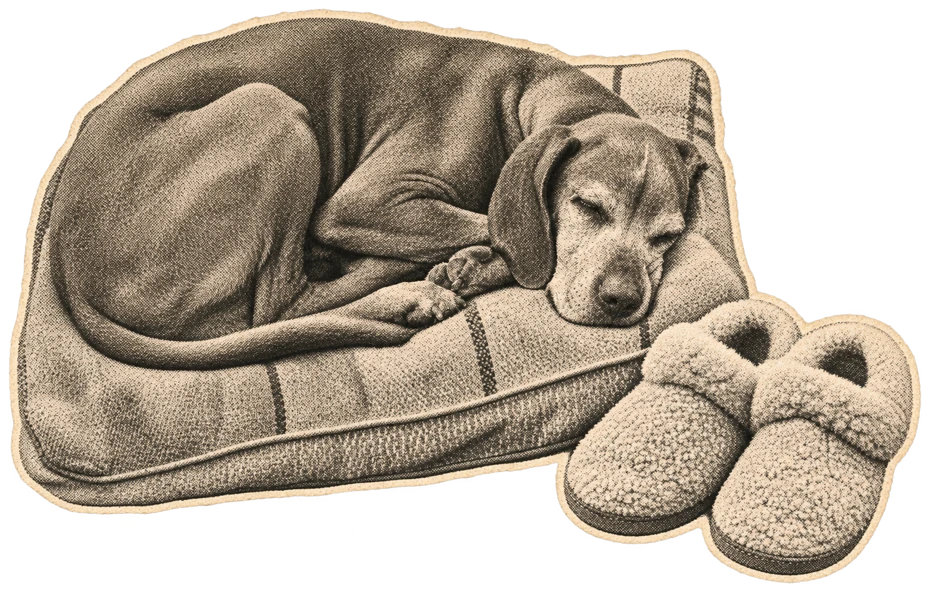
A garden is handy for toilet trips and little searches. It doesn’t provide company or teach rest. Give the dog a bed away from the busiest door and make it a place visitors leave alone. Reward taking time there while you’re at home, so the bed isn’t just a sign that you’re about to put shoes on and vanish. Start alone-time practice below the point where the dog struggles. If the dog can’t cope, arrange cover instead of extending the time by the same amount every day. 912
Hungarian Vizsla notes / 08
Set up somewhere they can switch off
Make the resting place good even while you’re in the room.
| Set it up | What actually helps |
|---|---|
| Doors and garden | Check gate latches and use a barrier near the front door if people come and go. 16 |
| Quiet bed | Somewhere the dog can leave the company without immediately being followed. |
| Working day | Have a walker, sitter or human available before the dog needs more than it can handle. |
| Alone-time progress | Watch how they settle shortly after you go, not just how pleased they look when you come back. |
| Visitors | Keep one clear route away from the hello. Use a barrier if the front door needs to stay open. 1216 |
| Before a longer absence | Arrange a familiar person rather than making your first long practice a work shift. 9 |
Kids and other pets: an enthusiastic hello can knock you over
A Vizsla can be friendly and still floor a toddler by turning round for a toy. Have an adult supervise closely, keep greetings calm and let the dog move away. Don’t expect a young child to referee a very determined game of fetch. With cats and smaller pets, manage space first and use the actual dog’s history. Even a dog who has lived with a cat might chase one outdoors. 171813
Hungarian Vizsla notes / 09
Good company needs some space
Good intentions won’t hold a 25-kilo dog still.
| Household member | What to arrange |
|---|---|
| Children | Active adult supervision; separate them when you can’t watch. Keep beds and bowls undisturbed. |
| Other dogs | Calm introductions and room to stop play, with separate resources as needed. |
| Cat or small pet | Give the cat escape routes and use barriers; physically separate small pets and don’t test them by letting the dog chase. |
| Mealtimes and sleep | Keep children clear of food, chews and the dog’s resting place. Use a barrier if attention is elsewhere. 17 |
Health: ask about the family as well as reading the scores
The Royal Kennel Club puts BVA/RKC hip scoring and elbow grading, BVA/RKC/ISDS clinical eyes and gonioscopy in Good Practice for the short-haired Hungarian Vizsla. The current separate Best Practice cell has no extra item. Ask to see the actual results for both parents, not just the words “health tested”. Gonioscopy examines structures at the eye’s drainage angle and helps assess inherited glaucoma risk; it is not a promise that an eye problem will never happen. The health scheme does not remove the need to ask about seizures or swallowing and muscle disease among relatives. 19202122
The Dogs Trust-led UK study’s published Vizsla row estimates median survival 13.5 years, 95% CI 13.2–13.9, across 2,965 included dogs, of whom 503 were recorded deceased. The chart uses that name; it doesn’t say that every individual’s pedigree was verified. That’s a population estimate, not a date in your diary. 2324
Hungarian Vizsla notes / 10
Conditions, lifespan and breeding
What we know, what was actually counted and when to call the vet.
| What you might read | What the source actually measures |
|---|---|
| UK breed club survey, 2025 | 832 reported dogs in an owner survey; 747 were in a combined UK, Ireland, Channel Islands and Isle of Man group, and 85 overseas. Voluntary responses, not a UK primary-care prevalence study. 25 |
| “Most affected dogs struggle to swallow” | The clinical study selected 77 dogs with case histories consistent with the condition from 369 medical records reviewed for 1992–2013. Difficulty swallowing was recorded in 69 of 77 cases. You cannot turn either figure into risk for a pet Vizsla. 26 |
| Figure for all UK pet Vizslas diagnosed in a year | No whole-breed UK primary-care prevalence table was verified for this draft. Don’t use owner-survey counts or referral samples as substitutes. |
| Breeding screening tier | Short-haired Hungarian Vizsla |
|---|---|
| Good Practice | BVA/RKC hips and elbows, plus BVA/RKC/ISDS clinical eye screening and gonioscopy. 192021 |
| Best Practice | No further item is separately listed for this breed right now; read the Good Practice results. 19 |
Eight things to recognise
Swallowing problems and inflammatory polymyopathy
Repeated gagging while eating, excess drool, food coming back up without obvious heaving or new loss of muscle around the head warrant a veterinary check. There are several possible causes. Call urgently if the dog can’t swallow or is struggling to breathe. 2627
Hip dysplasia and hip pain
Stiffness after rest, difficulty getting up and a change in gait are reasons to ask a vet. Breeding scores are not an at-home diagnosis. 2114
Elbow dysplasia and front leg lameness
A recurring front leg limp might come from several places, including elbow or paw. Seek assessment. Severe pain or inability to bear weight needs urgent advice. 2114
Glaucoma
A suddenly red, painful or cloudy eye or a sudden sight change needs urgent veterinary assessment. Don’t wait for tomorrow or use old drops. 28
Seizures
Contact the vet after an episode, even if the dog recovers. If it continues, happens again in quick succession or the dog doesn’t recover, call the emergency service. Time it if safe and don’t put your hands in the dog’s mouth. 29
Persistent skin and coat changes
Itch, scale, spreading patchy hair loss or recurrent soreness deserve a check. UK breed clubs flag conditions including sebaceous adenitis, but a scaly patch is not enough to identify it. 3031
Bloat and GDV
Repeated attempts to vomit with nothing coming up, sudden belly swelling or retching alongside marked distress can signal a twisted stomach. Call an emergency vet immediately; visible swelling isn’t always present. This is a general emergency to recognise, not a quantified Vizsla prevalence claim. 32
Heat-related illness
In hot conditions, excessive panting with weakness, confusion or a breathing struggle needs urgent help. Stop activity, begin cooling with water and contact an emergency vet. Plan walks for cooler times rather than finding out where that day’s limit is. 33
Costs: the dog walker goes on the budget before the second lead
PDSA lists a £80 monthly minimum after purchase and setup. That’s a starting estimate, not a local price or an upper limit. You’ll want a dog food budget, yes, but also the actual price of cover for a regular working day and a practice you can get to out of hours. Ask how insurance treats earlier problems and the excess you pay. The fancy lead can wait until you’ve got that covered. 1334
Hungarian Vizsla notes / 11
Spend on the bits you’ll use
Find out what it costs on an ordinary Tuesday.
| Allow for | Ask about |
|---|---|
| First costs | Safe car setup, fitted harness, ID and a quiet bed. |
| Routine care | Food, preventative care and vet costs; separate the routine from emergencies. |
| Daytime cover | A real local price, plus someone your dog can cope with. |
| Adoption | Current rescue fee, checks already done and what health records you take home. |
| Monthly baseline | PDSA’s breed estimate starts at £80 after purchase and setup. That isn’t a quote or a cap. 1334 |
| Insurance | Ask about exclusions, the excess and what you might pay yourself. Keep the out-of-hours vet number handy. 34 |
History: a dog who had more than one job
Hungary developed the smooth Vizsla as a versatile pointing dog. The breed needed to find quarry, hold a point and retrieve, including working in water. It wasn’t built just to cover ground: working close enough to a person to do several jobs was part of the point. That’s why a pet Vizsla often gets more out of finding a toy and bringing it to you than being left to do circuits of the lawn. It also explains why you may never open a bag of tennis balls privately again. 4135
Hungarian Vizsla notes / 12
A dog with three jobs
At home a toy can stand in for the old working job.
| Historical trait | Useful outlet now |
|---|---|
| Finding by scent | A supervised search for a toy in easy cover. |
| Working with a person | A quick retrieve or a lead walk where the dog can check in. |
| Ability to work around water | No assumption that every dog enjoys swimming; choose safe situations and let the dog opt in. |
Bringing one home: ask about the last ordinary week
If adopting, ask what happens after a walk, how long the dog has actually been alone without distress, and what they’ve done around cats or livestock. Walk with them if you can. If buying a pup, see the mother with the litter where they were raised, read both parents’ health results and ask the breeder specifically about seizures, swallowing problems and eye disease in relatives. A certificate for hips is good evidence about that test, not an answer about the whole family. Wait if something isn’t clear. Nobody needs to decide while the pup is asleep on their shoe. 363719
Hungarian Vizsla notes / 13
Ask about the actual dog
A normal weekday tells you a lot more than the advert.
| Before collection | After collection |
|---|---|
| Check health records and identity, agree who covers working days and line up your own vet. | Start with a familiar short route, comfortable rest and achievable periods apart before adding a lot of new experiences. |
| Ask about the family and actual daily behaviour. | Watch for changes and write down what happened rather than trying to guess from the breed name. |
Sources
- S1RKC: Hungarian Vizsla profileUK registry · checked 20 November 2026
- S2Dogs Trust: Hungarian Vizsla profileUK charity · checked 20 November 2026
- S3RKC: Hungarian Vizsla breed standardUK registry · checked 20 November 2026
- S4FCI: Hungarian Short-Haired Pointer standard 57International registry · checked 20 November 2026
- S5Hungarian Vizsla Club of Hungary: breed descriptionsHungarian breed club · checked 20 November 2026
- S6PDSA: weight and body conditionUK veterinary charity · checked 20 November 2026
- S7Dogs Trust: fitting and introducing a harnessUK charity · checked 20 November 2026
- S8PDSA: home health checksUK veterinary charity · checked 20 November 2026
- S9Dogs Trust: building time aloneUK charity · checked 20 November 2026
- S10Dogs Trust: recall trainingUK charity · checked 20 November 2026
- S11Defra and Natural England: Countryside CodeUK government · checked 20 November 2026
- S12Dogs Trust: settle trainingUK charity · checked 20 November 2026
- S13PDSA: Vizsla care and costsUK veterinary charity · checked 20 November 2026
- S14PDSA: limping and stiffnessUK veterinary charity · checked 20 November 2026
- S15PDSA: heatstrokeUK veterinary charity · checked 20 November 2026
- S16Dogs Trust: preventing escapeUK charity · checked 20 November 2026
- S17Dogs Trust: children and dogsUK charity · checked 20 November 2026
- S18Dogs Trust: cats and dogsUK charity · checked 20 November 2026
- S19RKC: current breed-specific Health StandardUK registry screening tiers · checked 20 November 2026
- S20BVA: clinical eye scheme and gonioscopyUK veterinary scheme · checked 20 November 2026
- S21BVA: hip and elbow scheme FAQsUK veterinary scheme · checked 20 November 2026
- S22Hungarian Vizsla Club: health overviewUK breed club · checked 20 November 2026
- S23McMillan et al.: longevity in UK companion dogsPrimary UK multi-source study · checked 20 November 2026
- S24Dogs Trust: UK longevity breed tablePrimary UK multi-source breed table · checked 20 November 2026
- S25Joint Health Panel: 2025 breed surveyPrimary voluntary survey · checked 20 November 2026
- S26Tauro et al.: clinical features of inflammatory polymyopathyPrimary referral case series · checked 20 November 2026
- S27PDSA: breathing emergenciesUK veterinary charity · checked 20 November 2026
- S28PDSA: glaucomaUK veterinary charity · checked 20 November 2026
- S29PDSA: seizuresUK veterinary charity · checked 20 November 2026
- S30Hungarian Vizsla Club: breed healthUK breed club · checked 20 November 2026
- S31PDSA: skin problemsUK veterinary charity · checked 20 November 2026
- S32PDSA: gastric dilatation-volvulusUK veterinary charity · checked 20 November 2026
- S33RVC: cooling dogs with heat-related illnessUK veterinary college · checked 20 November 2026
- S34PDSA: general cost of dog ownershipUK veterinary charity · checked 20 November 2026
- S35Hungarian Vizsla Society: buyer’s guideUK breed club · checked 20 November 2026
- S36Dogs Trust: adoptingUK charity · checked 20 November 2026
- S37Defra: buying a cat or dogUK government · checked 20 November 2026