
Breed guide / Great Dane
Living with a Great Dane
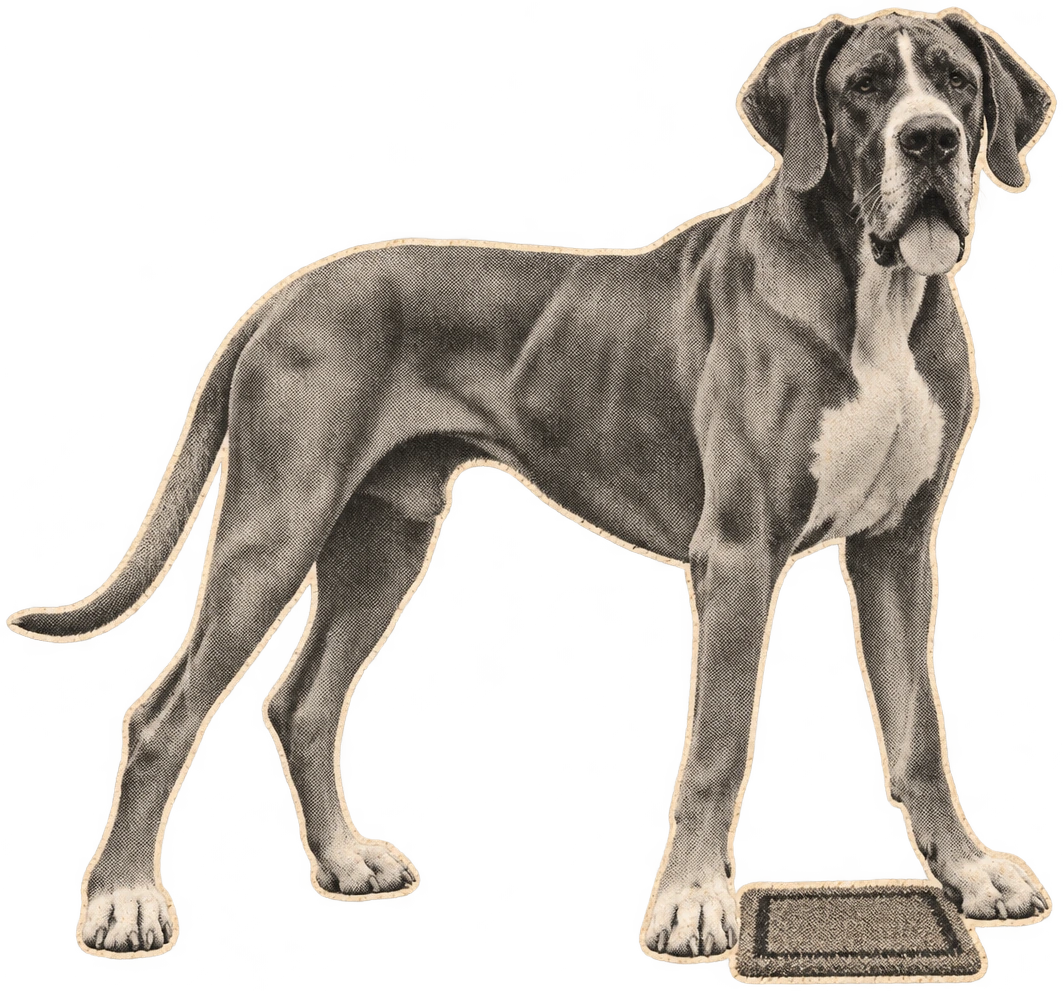
The Great Dane is a tall, deep-chested working dog with German roots and a head that can reach places you were fairly sure counted as out of reach. Life with one means thinking through the front door, the back seat and the bits of the hallway where everyone needs to turn round. It also pays to know the signs of bloat before you ever need them. Repeated attempts to be sick without bringing anything up and an unusually restless dog are reasons to call the emergency vet, even if you can’t see a swollen belly. 1234
Jump to a section
The short version
Teach your Dane to move away from the door with you and clear a route to the bed in advance. Once the dog’s full grown, you don’t want your plan to be asking them to get out of the way while both your hands are full. Use a barrier or a separate spot when visitors come in. 3 5 6 7
Save the emergency vet’s number and work out how you’d get there with a dog you can’t lift on your own. If your dog is trying to vomit without bringing anything up, especially with pacing, drooling or a swollen belly, call immediately. Don’t wait to see if they settle or if the belly gets bigger. 4 8 9
Great Dane notes / 01
Where to start
| Start here | Action to take |
|---|---|
| Front door | Rehearse moving away, with a barrier as backup. 5 6 |
| Car and house | Work out where they can turn and how they get into the car. 7 8 |
| Emergency number | Keep it somewhere everyone in the household can find it. 4 9 |
| Dry retching or suspected bloat | Call the emergency vet immediately. 4 |
Great Dane is the breed name, not a clue to where it came from
The UK registry calls the breed Great Dane and places it in the working group. Its profile traces the origins to Germany, not Denmark. In some contexts you’ll see Deutsche Dogge, the German name used by the international breed federation. A large spotted dog isn’t automatically a Great Dane, and an informal colour label doesn’t prove ancestry or tell you about health. 1 2 10
Measure the dog and the stuff it’s meant to fit into
For adults over 18 months, the UK written standard gives minimum shoulder heights of 76 cm for males and 71 cm for females, and minimum weights of 54 kg and 46 kg respectively. These are breed-standard descriptions, not goals for growth or food. Feel for ribs, look at the waist and ask the vet about a healthy condition for your individual dog. 2 11
Check car and doorway access while the dog is actually using them. Allow for turning around with a restraint fitted and for getting in on a day when they’re sore. If a ramp suits your setup, introduce it before you need to use it, with stable footing and a gentle incline. 7 8 12 13
Short coat, surprisingly large area to wipe down
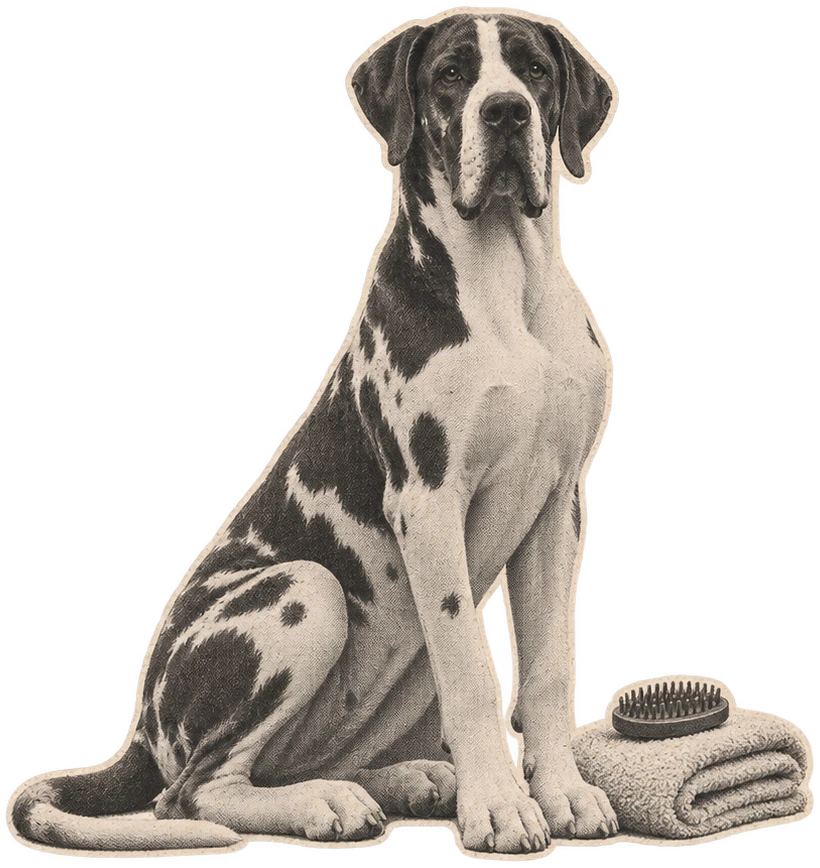
A short coat is easy to look over, but still check under the collar, around the elbows and where the harness sits. Use a soft brush and look for skin irritation, and give the paws a look after rough ground. A folded towel at the door gets more mileage than you’d think when rain has that much dog to land on. 2 3 12 14 15
Get them comfortable with a quick ear or paw check while they’re on the floor and free to move away. Have a look at the skin where they lie on harder surfaces. If they start licking one spot, a paw swells or the dog pulls away from a touch they used to tolerate, consider soreness rather than trying to finish the job. 7 14 15 16
Great Dane notes / 04
Where to check
A friendly greeting can still take somebody’s legs out
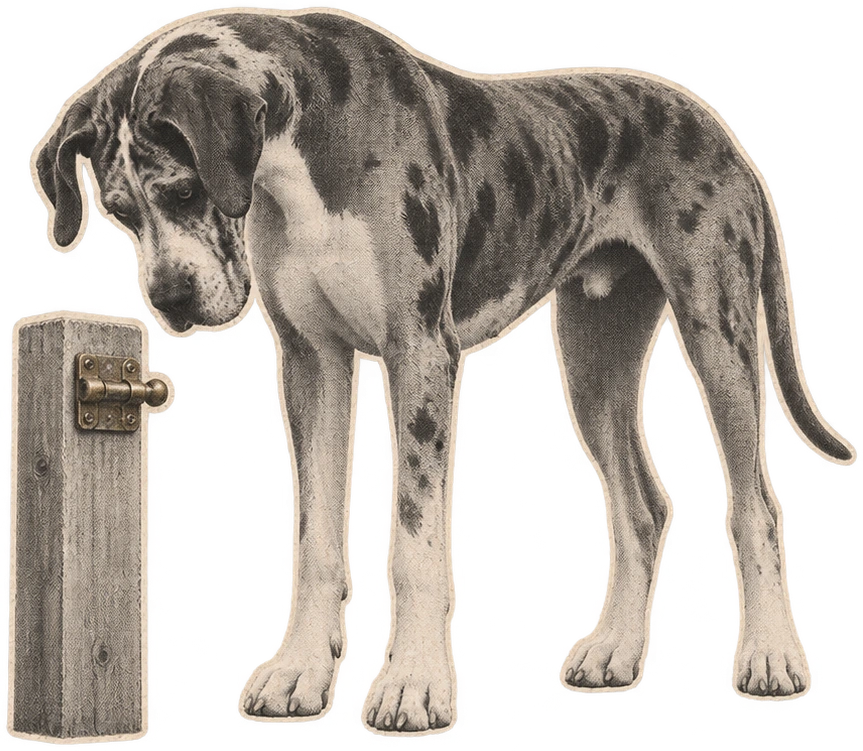
A Dane that’s happy to see everyone can still be too much dog in a narrow hallway. Watch what happens just before they rush through or lean in, and set up a quieter place to greet if you need it. Let the dog control how close they get; don’t assume that big dogs are automatically confident or that a quiet dog wants a fuss. 3 5 18 19
If your dog stops wanting to get up or starts objecting to being handled, think about what’s changed. Look for a slippery route, a sore foot or another reason moving might feel different. An adult that’s behaving differently and seems uncomfortable deserves a check, not louder instructions from the other side of the room. 7 15 19 20
Great Dane notes / 05
Make arrivals easy
Teach some basic steering while you’ve still got room
Practise walking alongside you and making a wide turn, first in a place without much happening. Take the dog away from the thing they’re getting excited by before the lead is doing all the work. Get everyone who actually walks them to practise, rather than counting on the person with the longest arms. 6 12 21
At home, show them where to wait while the door opens. Start without a visitor so they can learn the route. Reward a moment of settling away from feet, and make sure another person can bring the shopping in without steering either the bag or the dog around the coffee table. 5 18 22
Give them a steady outing, not a test of their joints
Walk at a pace that suits your dog and vary the routes so there’s time to sniff as well as cover ground. Get your vet’s guidance on activity for a growing Dane or a dog with joint trouble. A lanky puppy isn’t a miniature adult with all the same exercise options. 3 20 23 24
Keep dogs on a lead around livestock and be willing to shorten a hot-weather outing. If the dog starts tiring much sooner, coughing during or after outings, or taking longer to recover than normal, talk to the vet. Struggling to breathe or sudden collapse needs emergency veterinary advice. 25 26 27 28 29
Great Dane notes / 07
Walk at their pace
| Situation | Practical choice |
|---|---|
| An ordinary walk | Go at their pace and include interesting places to sniff. 23 24 |
| Growing dog | Ask your vet what suits their age and condition. 3 23 |
| Hot weather | Go at a cooler time or shorten the outing. 26 |
| New tiredness, cough or limp | Speak to the vet rather than training through it. 20 27 |
Clear a route the dog can turn round in
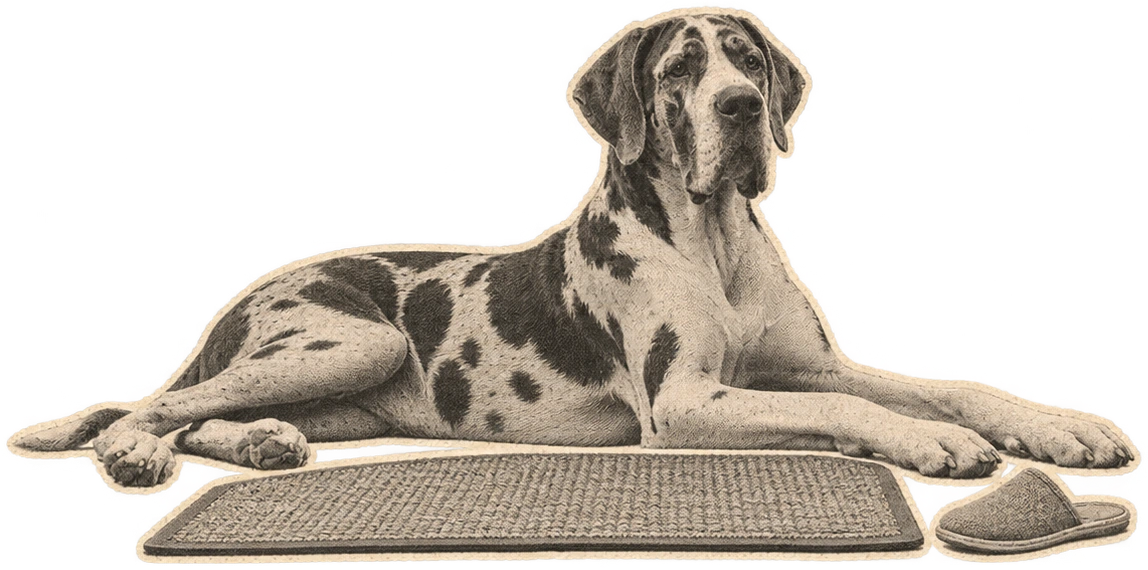
Give them a bed big enough to stretch out on and a way to reach it without making a tight turn on a shiny floor. Try a grippy runner where they cross the room or get up. A bad route stays bad even if you say “careful” every time they use it. 7 22
Put food and medicines genuinely out of reach, rather than at the back of the worktop. Plan what to do if they need urgent transport and can’t walk normally; ask your vet’s emergency team for instructions rather than improvising a lift with a frightened or painful dog. 3 8 9 30
Give small people and pets a bit more room than you think
With children, an adult should be close enough to intervene, particularly in doorways and around games. Put a barrier in if the dog gets excited when people run. Give the dog somewhere quiet to rest and leave them there. They can knock over a child by trying to get past, without having meant to get involved at all. 5 18 31
For cats or other dogs, do introductions in stages with safe places to retreat. A small pet shouldn’t have to go underneath a giant dog to find a way out. Check who can use which space at mealtimes and when nobody’s there to supervise. 32 33
Health: know the bloat signs, and see what the screening covers
Gastric dilatation-volvulus, or GDV, is when the stomach distends and twists. Great Danes are one of the giant deep-chested breeds in which it’s recognised. Repeated unproductive retching, restlessness, drooling, belly swelling or sudden weakness can be warning signs. Swelling isn’t always obvious. If you suspect GDV, call the emergency vet immediately. Do not wait for more signs or try to treat it at home. UK emergency-clinic research supports taking this breed’s risk seriously, not a percentage chance for your dog or a guaranteed way to prevent it. 4 34
The Royal Kennel Club’s Great Dane entry lists hip, elbow and eye screening and the IMGD DNA test under Best Practice, with no separate Good Practice test in the central row. Heart screening is signposted separately through the breed club. If you’re buying or checking your adult’s records, ask what the heart test was and when it was done. A UK DCM study used a recruited screening sample, not an estimate for all UK Great Danes. New tiredness, coughing or fainting warrants veterinary attention; collapse or struggling to breathe is urgent. 1 27 28 29 35 36 37 38 39 40 41
The Dogs Trust 2024 UK study reported a median lifespan of 10.6 years for Great Danes. It’s a group estimate from the study, not an individual forecast. 42 43
Great Dane notes / 10
Health conditions and screening
| Topic | What to do with it |
|---|---|
| Suspected GDV | Emergency vet immediately; do not wait for an obvious swollen belly. 4 |
| Heart | Ask what screening was done and speak to your vet about new symptoms. 27 36 41 |
| Hips and elbows | Check the named scheme results and have new pain assessed. 20 38 39 |
| Eyes and IMGD | The eye exam and the specific inherited-myopathy DNA test are separate. 1 37 40 |
| Lifespan | UK study median 10.6 years, not a date to plan around. 42 43 |
| Breeding and records | Ask for the actual dates, findings and dogs named on results. 1 35 44 |
| Urgent conditions | Sudden collapse or breathing distress needs emergency advice. 28 29 |
Ask what care costs at this size
Check local vets, insurers and sitters with the actual dog’s details. Ask what emergency transport looks like, particularly if you don’t have a suitable car or can’t lift them. Get real quotes for a bed, harness and restraint rather than assuming the largest option in the shop will be the right one. 7 8 12 45 46
Read the insurance terms for ongoing conditions and exclusions. Tell a walker about how the dog behaves at doors, on a lead and around other dogs. It’s better to learn that there isn’t room in their vehicle on a phone call than when they’ve already turned up. 5 6 8 45 46
Great Dane notes / 11
Price the real kit
| Cost | Check now |
|---|---|
| Insurance | Excesses, annual conditions, limits and exclusions. 45 |
| Walker or travel | Safe handling at this size and suitable space in transport. 8 46 |
| Home gear | Measure for equipment where the dog will actually use it. 7 12 |
| Vet care | Routine costs and a plan to reach the out-of-hours practice. 4 45 |
A German working dog with a misleading name
The Royal Kennel Club’s breed account puts the Great Dane’s origins in Germany and mentions heavier ancestors used for hunting. The written UK standard describes today’s tall working breed. Its history explains a bit about the build, not how any individual dog will behave at the door or what it wants from a walk. 1 2 10
Great Dane notes / 12
German roots
Meet a full-size one doing ordinary things
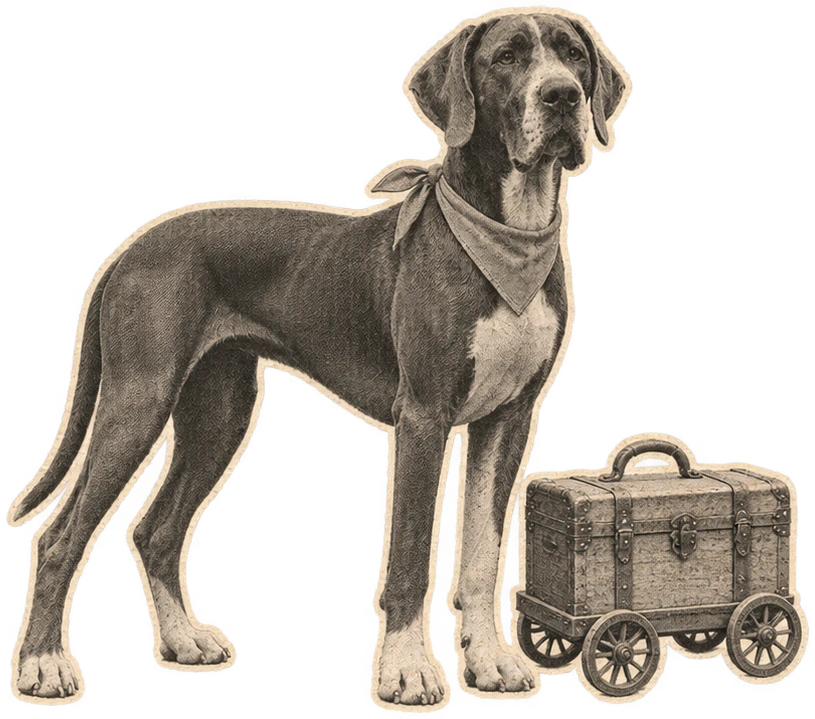
If you’re adopting, ask how the dog gets into a car, how they walk through a busy doorway and what lets them settle. Find out where that behaviour was seen. It’s worth checking whether there’s space at home before you clear a corner for a bed and realise it’s also the only way to the kitchen. 5 7 8 47
If there’s a litter, see the pups with their mum and ask about the actual screening and any family history of bloat or heart trouble. Check results rather than taking “health tested” at face value. Watch an adult Dane walk, turn and lie down if you can. The puppy will be lovely; it’s the size of the grown one you’ll be getting through the door. 1 4 36 44 48
Great Dane notes / 13
Meet a grown one
| Ask | What it helps with |
|---|---|
| How does the dog travel? | Plan access, space and restraint. 8 13 |
| What happens when the door goes? | Helps set up calmer arrivals at home. 5 |
| Can I match the records to each parent? | Makes it possible to verify each kind of screening. 1 44 |
| Where have you seen the dog settle? | A useful starting point for rest and adapting to a new home. 22 47 |
Sources
- S1Royal Kennel Club Great Dane individual breed profile, origin and screeningSource · checked 21 November 2026
- S2Royal Kennel Club Great Dane written UK breed standardSource · checked 21 November 2026
- S3PDSA Great Dane veterinary breed and owner profileSource · checked 21 November 2026
- S4PDSA veterinary emergency GDV, recognition and immediate responseSource · checked 21 November 2026
- S5Dogs Trust managing visitors and arrivalsSource · checked 21 November 2026
- S6Dogs Trust loose lead walking and practising a change of directionSource · checked 21 November 2026
- S7Canine Arthritis Management veterinary home access and safe footingSource · checked 21 November 2026
- S8Dogs Trust safe travel with a dogSource · checked 21 November 2026
- S9PDSA veterinary advice for pet first aid and vet contactSource · checked 21 November 2026
- S10Fédération Cynologique Internationale Great Dane nomenclature and originSource · checked 21 November 2026
- S11PDSA practical dog body condition checkSource · checked 21 November 2026
- S12Dogs Trust harness fitting and introductionSource · checked 21 November 2026
- S13Dogs Trust learning to travel comfortably in the carSource · checked 21 November 2026
- S14PDSA grooming and checking the skinSource · checked 21 November 2026
- S15PDSA veterinary home checks including coat, skin and pawsSource · checked 21 November 2026
- S16Dogs Trust low-pressure handlingSource · checked 21 November 2026
- S17PDSA veterinary advice on ear infectionsSource · checked 21 November 2026
- S18Dogs Trust managing overexcitement and practising calmSource · checked 21 November 2026
- S19Dogs Trust interpreting canine body languageSource · checked 21 November 2026
- S20PDSA veterinary guidance on limping and movement changesSource · checked 21 November 2026
- S21Dogs Trust reward-based training methodsSource · checked 21 November 2026
- S22Dogs Trust mat and settle practiceSource · checked 21 November 2026
- S23PDSA tailoring exercise to age, condition and individual dogSource · checked 21 November 2026
- S24Dogs Trust enrichment and sniffing gamesSource · checked 21 November 2026
- S25Natural England countryside code for dogs around livestockSource · checked 21 November 2026
- S26Dogs Trust warm-weather safetySource · checked 21 November 2026
- S27PDSA veterinary information on canine dilated cardiomyopathySource · checked 21 November 2026
- S28PDSA emergency advice for a collapsed petSource · checked 21 November 2026
- S29PDSA emergency advice for a pet struggling to breatheSource · checked 21 November 2026
- S30PDSA preventing common household poisoning hazardsSource · checked 21 November 2026
- S31Dogs Trust child and dog safetySource · checked 21 November 2026
- S32Dogs Trust safe dog and cat introductionsSource · checked 21 November 2026
- S33Dogs Trust introducing another dog and keeping resources separateSource · checked 21 November 2026
- S34O'Neill et al. original VetCompass UK emergency-practice GDV studySource · checked 21 November 2026
- S35Royal Kennel Club central pre-breeding Health Standard and separate club health signpostingSource · checked 21 November 2026
- S36Great Dane Breed Council heart-screening research and contextSource · checked 21 November 2026
- S37Royal Kennel Club DNA test for inherited myopathy of Great DanesSource · checked 21 November 2026
- S38British Veterinary Association hip screeningSource · checked 21 November 2026
- S39British Veterinary Association elbow screeningSource · checked 21 November 2026
- S40British Veterinary Association clinical eye screeningSource · checked 21 November 2026
- S41Stephenson et al. original UK Great Dane dilated cardiomyopathy screening studySource · checked 21 November 2026
- S42McMillan et al. original 2024 UK lifespan studySource · checked 21 November 2026
- S43Dogs Trust original breed lifespan table, Great Dane rowSource · checked 21 November 2026
- S44Royal Kennel Club lookup for named dogs' screening recordsSource · checked 21 November 2026
- S45PDSA planning for dog ownership and insurance costsSource · checked 21 November 2026
- S46Dogs Trust finding a suitable walkerSource · checked 21 November 2026
- S47Dogs Trust settling a rescue dogSource · checked 21 November 2026
- S48RSPCA selecting a breeder and seeing pups with mumSource · checked 21 November 2026
