
Breed guide / Gordon Setter
Living with a Gordon Setter
A Gordon Setter is the substantial black-and-tan gundog with Scottish roots, long feathering and a nose that can turn a straightforward walk into an investigation. It’s built to find game and hold a point. If you pause as the dog goes still in front of a bit of cover, it’s quite possible nobody on either end of the lead is thinking about getting home for tea. 1 2 3 9

Jump to a section
Get the early part of the walk right
If your Gordon has a usual place where the ears stop working and the nose takes over, do the training before you reach it. Pick a quiet stretch, reward the dog for checking back and practise a simple turn. Once they’re fixed on a scent, space and a properly held lead are more useful than repeating their name. 11 19 25 26
Check the long hair and between the toes afterwards, and pay attention to how they get up later. A willing dog can still come back stiff. At home, changes in how they move through dim rooms are worth a vet call rather than waiting for proof it’s their eyes. 10 15 33 42
Gordon Setter notes / 01
Short version
| Notice first | Try |
|---|---|
| Fixes on cover | Change route or turn earlier; practise on easier ground. 11 26 |
| Wet feathering | Check for grit, seeds and tangles after the walk. 10 15 |
| New reluctance in dim light | Ask the vet; don’t assume training or old age explains it. 42 |
| Unproductive retching or sudden painful bloating | Call the emergency vet immediately. 31 |
Black and tan does not name a breed on its own
Gordon Setter is a separate UK Gundog breed, not a dark English or Irish Setter. Its official standard describes black and tan, with a distinct heavier build than several other setters. Look for documented history rather than deciding exactly what a dog is by two eyebrows and an impressive tail. 1 2 5 6
The name refers to Gordon Castle and the breed’s Scottish development. Breed histories differ on some old origin stories. The practical thing is what the dog does now, not whether someone can confidently tell you what happened two centuries ago. 1 3 4
Size matters most when you’re putting it in a car
The UK standard gives reference figures of 66 cm and 29.5 kg for males, and 62 cm and 25.5 kg for females. These aren’t targets. Check the ribs and waist through the feathering and talk to your vet if you’re unsure of condition. 2 18
Measure the travel space and give the dog room to turn and rest safely. Use a suitable restraint and a grippy route into the car. If the dog suddenly stops wanting to get in, check for slipping, stiffness or discomfort before insisting. 19 20 32 33
Feathering is very good at collecting evidence
The longer hair on ears, legs, body and tail can catch bits of cover. Check the feet and under the collar rather than just pulling the obvious twig from the chest. Short brush sessions with breaks work better for a dog who doesn’t like being held. If you find a close mat, don’t cut blindly near the skin. 2 7 10 13 15 16 17
One ear shaking on the way home, a foot that gets licked repeatedly or a new smell deserves attention. If you think a seed may be embedded, ask a vet rather than digging around. 10 15 21
Gordon Setter notes / 04
Coat and grooming
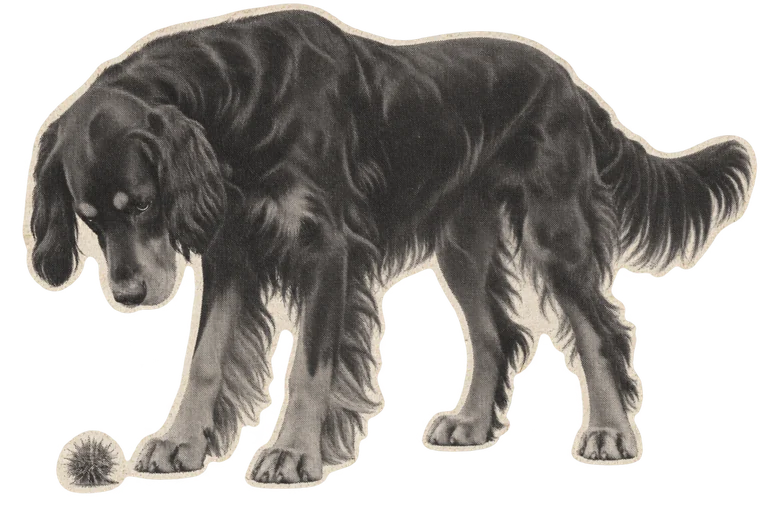
Quiet in the lounge isn’t the same as quiet in a field
The dog who takes up most of the rug without making a sound may be entirely alert to movement once outdoors. Practise both settling and working with you on a lead. Give visitors space to enter without greeting the dog straight away, and let the dog leave interaction when they choose. 1 12 13 14 26
Give time alone its own low-pressure practice. Check a recording if you’re unsure how they cope. If they’re distressed, reduce the difficulty and get help instead of assuming the answer is a longer walk. 22 23 24
A useful recall has an easier rehearsal
Teach it on easy ground and pay for the return. Let them go back to safe sniffing on some repetitions. If they’ve noticed a bird and stopped at the cover, use the space and lead you’ve already arranged. Don't use live wildlife or farm stock to test a cue you haven’t built up. 9 11 19 25 26 29
Make room for work the dog can finish. A toy on safe ground, a small search and a calm end teach more useful things than throwing for as long as the dog will run. 12 25 27
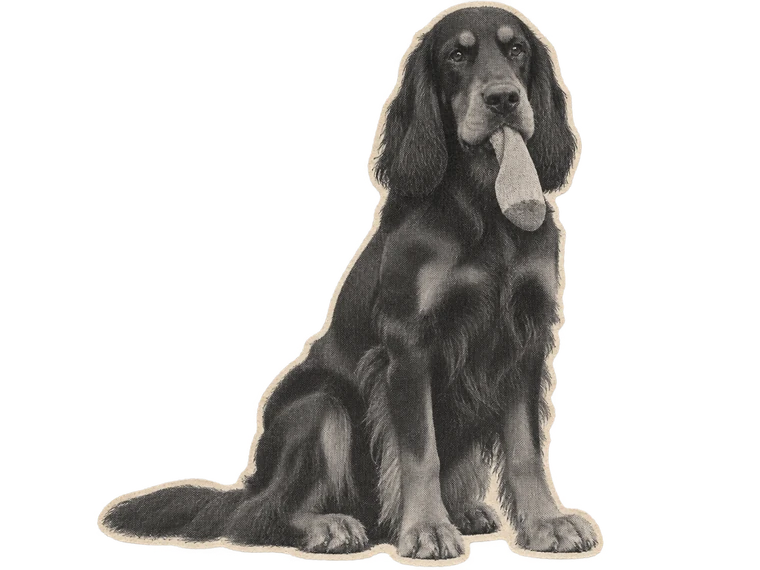
Good exercise is what they can recover from
Build activity around age, joints, temperature and fitness. A substantial dog won’t necessarily come out of a busy outing looking tired straight away, so notice how they move later. Ask your vet how to build up a dog coming back from injury or a longer break. 7 28 30 33
Plan lead routes around the animals already there. Avoid crowded, tangled or roadside areas for long-line practice and give stock space. A quiet walk where the dog is still interested in you is a good use of the time. 11 19 26 29
Sort the turns in the hall
A substantial long-legged dog needs space for the route to the bed and somewhere that isn’t the centre of the room. Secure loose rugs or put down grip where the dog turns. Keep the towel somewhere you won’t trip over the dog while using it. 12 15 32
If the dog can no longer judge a step or hesitates in dim light, manage the route and check it with the vet. Convenient lighting and a predictable layout can help you observe a change without turning it into a test. 32 42
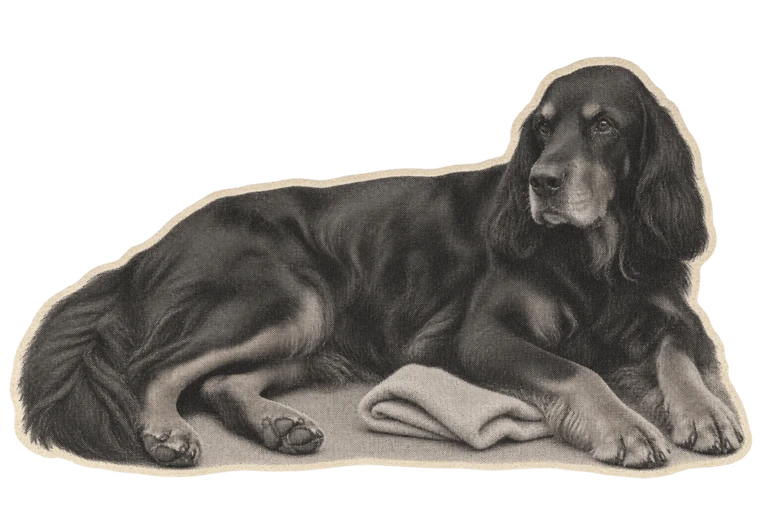
Make the easy household choices in advance
An eager dog can knock over a small child without meaning to. Have adults manage the lead and arrival at the door, keep children away from the dog's resting spot and separate whenever close supervision isn’t possible. 13 19 35
Give a cat or another dog room not to engage. Put prized chews away during introductions and avoid pushing the dog to greet in a corner. If you’re not sure how they behave around smaller pets, start with safe separation and seek help if needed. 24 34 36 37
Read the eye reports as separate pieces of information
The current Royal Kennel Club Gordon Setter row lists rcd4-PRA DNA and BVA/RKC hip scoring in Good Practice, with clinical eye screening and elbow grading in Best Practice. The DNA test is for a specific inherited form of progressive retinal atrophy. The original Gordon Setter work also found cases not explained by the variant, so a clear result is not proof of lifelong normal vision. 1 8 38 39 40 41
New hesitancy in dim light, bumping into things or changes to the eye deserve vet attention; a painful eye is urgent. For symptoms such as unproductive retching or sudden distress with abdominal swelling, call the emergency vet immediately. None of the screening results explains a current symptom by itself. 7 31 42 43
Gordon Setter notes / 10
Health
| Record or sign | Practical meaning |
|---|---|
| rcd4-PRA DNA | Specific variant, Good Practice; not a general eye-health test. 8 38 |
| Hip scoring | Good Practice pre-breeding. It does not diagnose a current limp. 33 38 40 |
| Eyes and elbows | Best Practice clinical/physical screening schemes. 38 39 41 |
| New sight changes | Ask a vet rather than trying to infer a diagnosis from age or a result. 42 43 |
| Painful eye | Get urgent advice. 43 |
| Possible GDV | Unproductive retching or sudden painful bloating warrants an emergency vet call. 7 31 |
| Lifespan | The 2024 UK Gordon Setter cohort estimate was 12.4 years median, 95% CI 12.1–12.8, with 138 deaths in the table. This is not a forecast. 45 46 |
Leave space in the budget for a wet, feathered dog
Get a quote for the actual coat and how you want to maintain it. Ask a walker what they do near cover, what lead they’ll use and how they’ll spot that the dog needs a shorter outing. Price a genuinely suitable car arrangement. 16 20 26 47
Check policy exclusions and know your out-of-hours vet arrangements. The cheapest monthly price doesn’t say how you’d pay in an emergency. 31 48
A Scottish pointing dog before it had a sofa
The breed’s history is linked to Scottish setters and Gordon Castle. The object of a point was to signal where game was, not just to run about looking elegant. Breed histories discuss several strains; there’s no need to tell the more speculative stories as facts. 1 3 4 9
On an ordinary walk, the useful habit is recognising the pause, making space and working with the dog. At home you can practise the turn, finding a toy and doing a reasonable imitation of having finished. 12 25 26 27
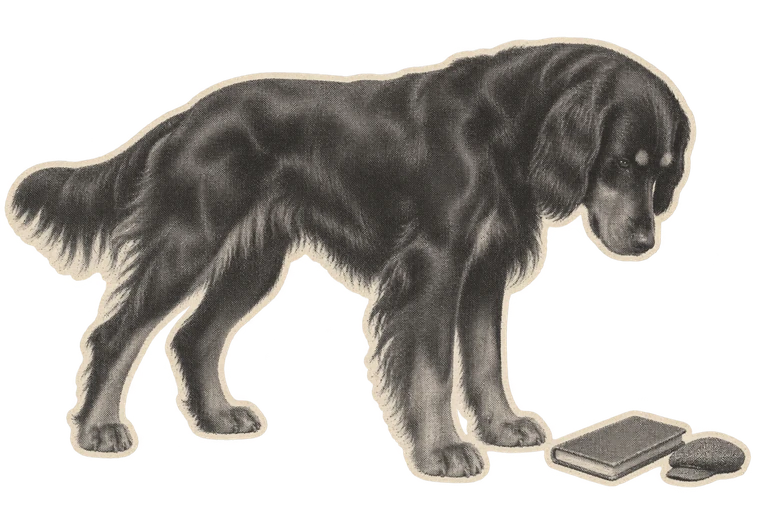
Meet the version who has already been for a walk
Ask about everyday handling, rest, and what happens when the dog comes across wildlife. Meet adults if possible. For a puppy, see the mother where the litter is raised and ask for proof of the actual parent results. If you’re considering a rescue, ask what the team has had a chance to observe. 13 26 38 44 49 50
Consider the muddy week when everyone’s busy. If you still have a secure way for the dog to explore, a quiet place to rest and time for the coat checks, you’ve gone further than choosing a nice looking dog. 12 16 27 28
Gordon Setter notes / 13
Bringing one home
| Ask | Good evidence |
|---|---|
| Which screening results? | Named dogs, dates and exact relevant tests. 38 49 |
| How do they walk and recover? | A real example from before and after a walk. 26 33 |
| How do they settle? | Actual household behaviour, not a breed-wide promise. 12 22 |
| What is unknown? | Clear gaps and a plan to get help when needed. 24 44 |
Sources
- S1Royal Kennel Club Gordon Setter UK profile and testing recommendationsSource · checked 21 November 2026
- S2Royal Kennel Club official Gordon Setter UK breed standardSource · checked 21 November 2026
- S3Gordon Setter Association own account of Scottish development and breed historySource · checked 21 November 2026
- S4British Gordon Setter Club breed history and UK standardSource · checked 21 November 2026
- S5Royal Kennel Club separate UK Setter breed entriesSource · checked 21 November 2026
- S6FCI Gordon Setter official breed nomenclatureSource · checked 21 November 2026
- S7PDSA Gordon Setter veterinary breed profile including bloatSource · checked 21 November 2026
- S8Original rcd4 association in Gordon and Irish Setters; additional causes remainSource · checked 21 November 2026
- S9Royal Kennel Club pointer and setter work in UK field trialsSource · checked 21 November 2026
- S10PDSA guidance on grass seeds and paw or ear symptomsSource · checked 21 November 2026
- S11Dogs Trust preventing or managing chasingSource · checked 21 November 2026
- S12Dogs Trust settling practiceSource · checked 21 November 2026
- S13Dogs Trust comfortable handlingSource · checked 21 November 2026
- S14Dogs Trust reactivity and spaceSource · checked 21 November 2026
- S15PDSA vet guidance on home health checksSource · checked 21 November 2026
- S16PDSA vet guidance on groomingSource · checked 21 November 2026
- S17Blue Cross general grooming supportSource · checked 21 November 2026
- S18PDSA vet guidance on body conditionSource · checked 21 November 2026
- S19Dogs Trust harness fittingSource · checked 21 November 2026
- S20Dogs Trust safe travelSource · checked 21 November 2026
- S21PDSA vet guidance on ear symptomsSource · checked 21 November 2026
- S22Dogs Trust introducing time aloneSource · checked 21 November 2026
- S23Dogs Trust recognising separation distressSource · checked 21 November 2026
- S24Dogs Trust sourcing behaviour supportSource · checked 21 November 2026
- S25Dogs Trust positive reinforcementSource · checked 21 November 2026
- S26Dogs Trust recall and long lineSource · checked 21 November 2026
- S27Dogs Trust enrichment and search gamesSource · checked 21 November 2026
- S28PDSA vet guidance on exerciseSource · checked 21 November 2026
- S29Natural England keeping dogs under control in the countrysideSource · checked 21 November 2026
- S30Dogs Trust warm-weather careSource · checked 21 November 2026
- S31PDSA veterinary GDV emergency signsSource · checked 21 November 2026
- S32Canine Arthritis Management accessible routes and surfaces for dogsSource · checked 21 November 2026
- S33PDSA vet guidance on stiffness and limpingSource · checked 21 November 2026
- S34Dogs Trust resource guardingSource · checked 21 November 2026
- S35Dogs Trust supervising dogs around childrenSource · checked 21 November 2026
- S36Dogs Trust introducing dogs and catsSource · checked 21 November 2026
- S37Dogs Trust introducing dogsSource · checked 21 November 2026
- S38Royal Kennel Club exact Gordon Setter Health Standard rowSource · checked 21 November 2026
- S39Royal Kennel Club BVA/RKC/ISDS clinical eye screening schemeSource · checked 21 November 2026
- S40Royal Kennel Club BVA/RKC hip scoring schemeSource · checked 21 November 2026
- S41Royal Kennel Club BVA/RKC elbow screening schemeSource · checked 21 November 2026
- S42PDSA assessing sight changesSource · checked 21 November 2026
- S43PDSA veterinary advice on eye problemsSource · checked 21 November 2026
- S44Dogs Trust rehoming and matching guidanceSource · checked 21 November 2026
- S45Dogs Trust original UK breed lifespan tableSource · checked 21 November 2026
- S46McMillan et al. original lifespan study and methodsSource · checked 21 November 2026
- S47Dogs Trust finding a dog walkerSource · checked 21 November 2026
- S48PDSA costs and insuranceSource · checked 21 November 2026
- S49Royal Kennel Club Health Test Results FinderSource · checked 21 November 2026
- S50RSPCA buying a puppy and seeing the motherSource · checked 21 November 2026
