
Breed guide / Goldador
Living with a Goldador
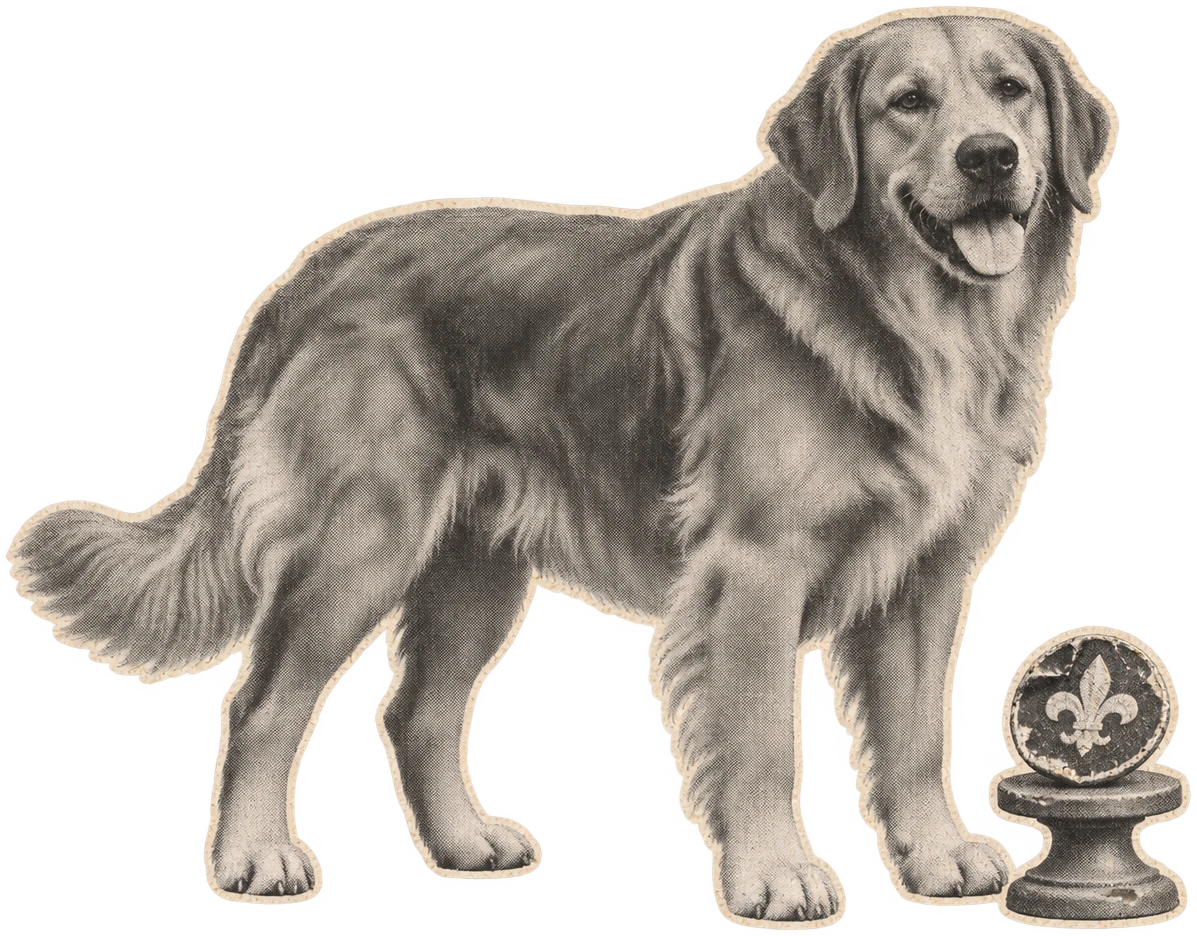
A Goldador is the name people use for a Labrador Retriever and Golden Retriever cross. Think sizeable retriever, not a Golden that comes with Labrador instructions. Yours might have more coat, more interest in carrying things or more opinion about what’s for dinner than the dog next door. Give them something to bring back, somewhere to dry off and a food routine the whole house sticks to. 1234
Jump to a section
The short version
If your dog is always looking for something to carry, put a toy by the front door and see if they’ll pick it up before the first shoe goes missing. Teach the exchange when it’s something you don’t mind them having. Chasing them round the kitchen for a sock is a marvellous game if you’re the one with the sock. 2 5 6
Check their waist and feel the ribs through the coat rather than making a call from a photo. If you use food on walks and during training, take it from a measured allowance where that suits their diet. That way nobody has to remember what happened in the park when the dog wants a second dinner. 7 8
Goldador notes / 01
Make the basics easy
| Start here | Try this |
|---|---|
| Carrying | Offer a safe item before the clothes pile becomes the obvious choice. 5 6 |
| Food | Measure what the dog gets for the day, including what you use to reward them. 7 8 |
| Coat | Brush down to the skin where the coat is longer, without pulling at tangles. 9 |
| Walks | Make some time for sniffing or finding something, not just covering ground. 10 11 |
What the name tells you
A UK Labrador rescue uses Goldador for the Labrador Retriever and Golden Retriever cross. Guide Dogs uses that same pairing in its own breeding programme. Those are separate points: the name describes a cross and Guide Dogs selects particular individual dogs. It doesn’t follow that every dog with the label has documented parents, is a first cross or is suited to assistance work. 1 2 12
Size up the dog in front of you
The two written parent standards overlap but aren’t identical. The UK Labrador ideal at the shoulder is 56–57 cm for dogs and 55–56 cm for bitches. The Golden standard gives 56–61 cm and 51–56 cm respectively. Don’t use either as a size chart for the cross. Check the individual’s build and condition. 8 13 14
For a harness, measure their own chest and check it while they’re snuffling along head-down. At home, make sure they can turn and lie down in the spot you picked for their bed without half the dog sticking into the hall. 15 16
Dry the dog, not just the floor
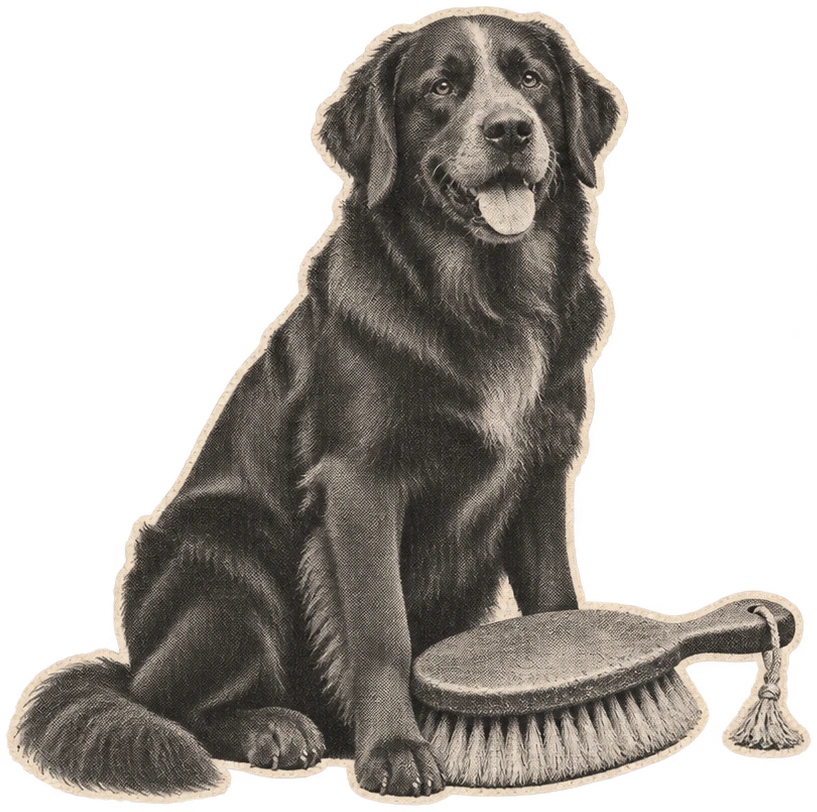
A Labrador’s coat is short and dense; a Golden carries more feathering. A cross can land between them or look rather more like one parent. Once the mud’s off, check the longer hair behind the ears and on the legs where tangles can sit close to the skin. 3 4 9 13 14
Keep a dog towel where you actually come in. Check the ears after wet walks or swimming if that’s a regular habit. If there’s a new smell, soreness, discharge or repeated head shaking, get advice rather than pushing a cleaning product in further. 18 19
Goldador notes / 04
After a wet walk
Say hello without the full body tackle
If your dog loves company, teach them that a person coming in doesn’t mean they have to launch at them. Start behind a gate or with space. Ask your visitor to wait until the dog’s feet are down and the dog chooses to approach. If yours hangs back, let them. The word retriever does not make getting fussed a compulsory activity. 1 20 21
Pay attention to what the dog is telling you when they already have a toy or chew. A retrieve and a swap are skills you practise in a calm moment, not a rule that says everybody can take things off the dog. 5 22
Goldador notes / 05
Give greetings room
Make bringing it back worthwhile
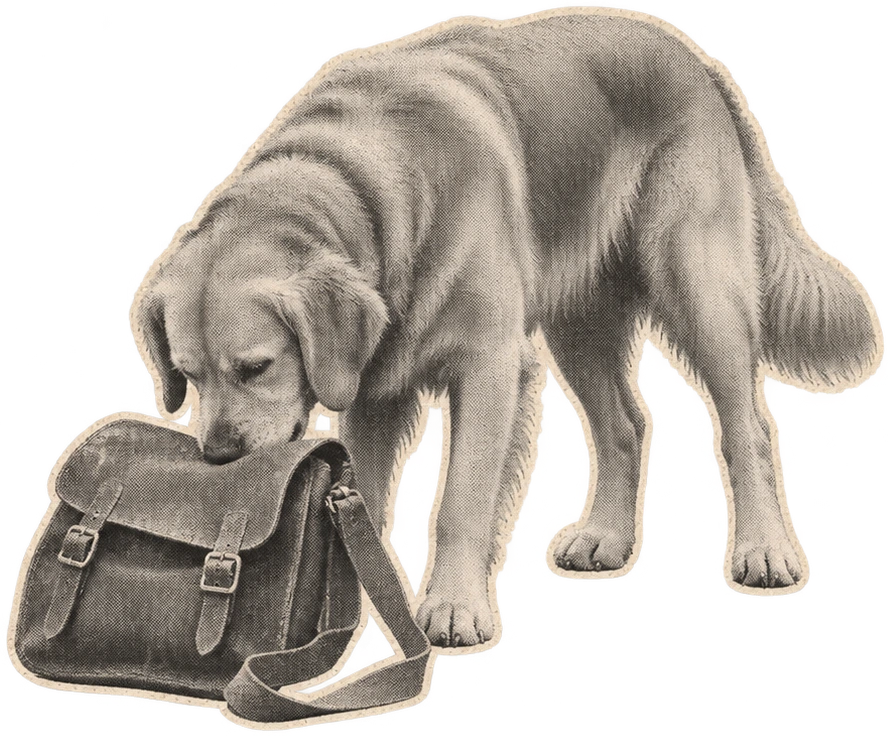
Try a quiet retrieve with a familiar toy. Start close, let the dog pick it up and offer an exchange when they bring it near. Give the toy back sometimes if it’s safe. Not everything they bring you needs to vanish straight into a cupboard. 5 6 10
For dogs who prefer a search, put the toy where they can see you hide it, then try out of sight. Use food if they like it and you can count it towards their daily ration. Build recall separately, in a place where you can get it right without having to call five times. 7 10 11
Leave something in the tank
A normal walk can include a sniff, an easy retrieve and a chance to slow down. Repeated hard chasing isn’t the only way to exercise a retriever. Build activity to suit the dog’s age and condition, and don’t keep throwing if you’re already seeing them slow, move differently or put less weight through a leg. 23 24
If they enjoy water, use a safe spot where they can get out again. Don’t assume they’ll swim because of the name. Keep them away from suspect algal blooms and stick to shade and cooler hours when it’s hot. 18 25
Goldador notes / 07
Build up the outings
| When | Plan |
|---|---|
| Growing up | Keep the outing suited to the individual, not an adult running schedule. 23 |
| Finding things | Use easy searches and walk between them instead of constant hard sprints. 10 23 |
| Swimming | Check water quality, footing and a route out. 18 |
| Slowing or limping | Ease off and get a new or recurring problem assessed. 24 |
One breakfast, however convincing they are
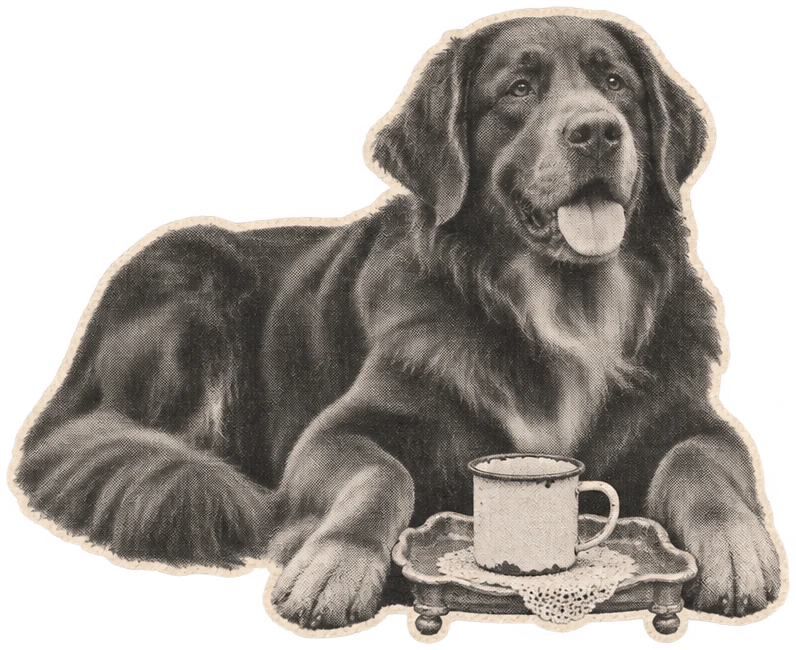
Put the food measure beside the bag and give everyone the same way of recording meals. Training rewards, chews and the bits from preparing dinner count too. Work from the dog’s actual condition and your vet’s guidance if it’s changing. 7 8
Researchers found a particular POMC change associated with weight and interest in food in studied Labradors. That finding is useful context for one parent breed, not proof your Goldador carries the change or will have a weight problem. What you feed and the shape you see over time are things you can actually check. 7 8 26
Keep hands out of the food pile
Supervise children and dogs actively, then separate them if you’re cooking or answering the door. Teach children to leave sleeping or eating dogs alone. If your dog picks up a child’s toy, have an adult manage the exchange. Get the toy bin out of reach rather than adding more people to the chase. 5 22 27
For other pets, use gradual introductions with room to get away. Being keen to say hello doesn’t mean the other dog or the cat is keen to receive it. A barrier buys everybody a bit of time. 28 29
Health screening: two sets of parents’ results
For breeding under the current Royal Kennel Club standard, Good Practice for both parent breeds includes hip and elbow screening and eye testing. The Golden row also includes gonioscopy and GR_PRA2 DNA; additional Best Practice is GR_PRA1 and ICT-A DNA. The Labrador Good Practice row also includes CNM, EIC, MCD, prcd-PRA, SD2 and STGD DNA tests; HNPK DNA is its extra Best Practice test. These are pre-breeding recommendations for the parents. They don’t certify the health of the cross. 3 4 30 31 32 33
Get unexpected exercise weakness, a recurring limp or a painful eye checked by a vet. A dog that collapses needs urgent veterinary advice. A test result for a particular variant won’t tell you what’s causing a new problem today. The parent figures from UK lifespan research aren’t a measured Goldador lifespan and we don’t average them to make one. 24 30 33 34 35 41
Goldador notes / 10
Health conditions and screening
| Check | How to use it |
|---|---|
| Hips and elbows | Ask to see actual parent scores from recognised schemes. 30 31 32 |
| Clinical eye checks | Both parent rows include eye testing; Golden adds gonioscopy. 30 33 |
| Golden DNA | GR_PRA2 is Good; GR_PRA1 and ICT-A are additional Best. 30 |
| Labrador DNA | CNM, EIC, MCD, prcd-PRA, SD2 and STGD are Good; HNPK adds Best. 30 |
| Movement | Notice changes getting up or stepping onto a kerb, and seek assessment. 24 |
| Ear changes | A new smell, persistent shaking or discharge isn’t something to leave for weeks. 19 |
| Lifespan | No verified representative Goldador figure used in this guide. 35 |
Price it with real portions
The bills come from the dog you actually have. Price the food in its real portions, check insurance exclusions and excesses, and ask your local vet what regular care costs before assuming it’ll match a friend’s. If there’s more coat, work out if you want help with nails, matting or a proper wash rather than budgeting for the name on the profile. 7 9 36
Ask anyone who’ll walk them what happens when they see water, another dog or an unattended football. What you need is somebody who’s listened to how your dog walks, not somebody who promises all retrievers are easy. 11 37
Goldador notes / 11
Plan the costs
Two retrievers, not a job guarantee
Both parent breeds sit in the Royal Kennel Club gundog group. Retrieving is a useful starting point when you’re looking for games, but a real dog might have more interest in carrying a toy, sniffing along the hedge or lying in the kitchen doorway. Guide Dogs uses selected Labrador and Golden Retriever crosses. That’s a programme with its own breeding and training, not a description of every pet with the same ancestry. 2 3 4 12
Goldador notes / 12
The Guide Dogs pairing
Ask what they’re like on a wet Wednesday
For a rescue, ask about the actual dog on an ordinary walk, how they respond when offered a swap and what helps them settle. Any known parent records may help, but an honest account of day-to-day life is worth more than guessing from the coat. For a puppy, meet them with their mum where they were bred and ask what both parents were screened for. 1 30 38 39
Pick one or two routines to get right first. Give them space to eat, offer a toy they can carry and keep the first outings easy. There’s plenty of time to work out if you’ve got the dog that brings the ball back or the one who takes it somewhere quiet. 5 10 16 38
Goldador notes / 13
Ask to see the routine
| Ask about | Look for |
|---|---|
| Parent records | Results for both, with the applicable tests chosen for the actual parent dogs. 30 40 |
| Coat handling | What they can comfortably have brushed today. 9 |
| Keeping things | What they like to carry and what happens if you offer a swap. 5 22 |
| Settling | A familiar routine, space to rest and a gentle first week. 16 38 |
Sources
- S1Labrador Rescue South East & Central, first-hand Goldador label and placementSource · checked 21 November 2026
- S2Guide Dogs, first-hand description of its Labrador and Golden pairingSource · checked 21 November 2026
- S3Royal Kennel Club Labrador Retriever profile and current parent screeningSource · checked 21 November 2026
- S4Royal Kennel Club Golden Retriever profile and current parent screeningSource · checked 21 November 2026
- S5Dogs Trust teaching an exchange instead of chasingSource · checked 21 November 2026
- S6Dogs Trust teaching a dog to pick up a toy and bring it backSource · checked 21 November 2026
- S7PDSA food portions and treatsSource · checked 21 November 2026
- S8PDSA assessing body conditionSource · checked 21 November 2026
- S9PDSA grooming, checking skin and avoiding tugging tanglesSource · checked 21 November 2026
- S10Dogs Trust enrichment and search gamesSource · checked 21 November 2026
- S11Dogs Trust recall and safe long-line useSource · checked 21 November 2026
- S12Royal Kennel Club crossbreed name scope and variable inheritanceSource · checked 21 November 2026
- S13Royal Kennel Club Labrador written standard, coat and heightSource · checked 21 November 2026
- S14Royal Kennel Club Golden Retriever written standard, coat and heightSource · checked 21 November 2026
- S15Dogs Trust introducing and fitting a harnessSource · checked 21 November 2026
- S16Dogs Trust introducing settling and mat trainingSource · checked 21 November 2026
- S17Dogs Trust safer travel with a dogSource · checked 21 November 2026
- S18PDSA swimming and water safety including blue-green algaeSource · checked 21 November 2026
- S19PDSA recognising ear infection signsSource · checked 21 November 2026
- S20Dogs Trust jumping up and low-pressure alternative behaviourSource · checked 21 November 2026
- S21Dogs Trust reading body languageSource · checked 21 November 2026
- S22Dogs Trust food and resource guardingSource · checked 21 November 2026
- S23PDSA exercise by age, comfort and conditionSource · checked 21 November 2026
- S24PDSA limp and pain in dogsSource · checked 21 November 2026
- S25Dogs Trust safety in hot weatherSource · checked 21 November 2026
- S26Raffan et al., original 2016 Labrador POMC and appetite studySource · checked 21 November 2026
- S27Dogs Trust child and dog supervisionSource · checked 21 November 2026
- S28Dogs Trust cat and dog introductionsSource · checked 21 November 2026
- S29Dogs Trust dog-to-dog introductionsSource · checked 21 November 2026
- S30Royal Kennel Club central Health Standard, separate Labrador and Golden rowsSource · checked 21 November 2026
- S31British Veterinary Association hip dysplasia schemeSource · checked 21 November 2026
- S32British Veterinary Association elbow dysplasia schemeSource · checked 21 November 2026
- S33British Veterinary Association clinical Eye SchemeSource · checked 21 November 2026
- S34Royal Kennel Club EIC test and condition overviewSource · checked 21 November 2026
- S35McMillan et al., original UK dog longevity cohort and methodsSource · checked 21 November 2026
- S36PDSA dog ownership costs and insurance considerationsSource · checked 21 November 2026
- S37Dogs Trust guidance on finding a dog walkerSource · checked 21 November 2026
- S38Dogs Trust settling a rehomed dogSource · checked 21 November 2026
- S39RSPCA advice on selecting and visiting a breederSource · checked 21 November 2026
- S40Royal Kennel Club individual health results finderSource · checked 21 November 2026
- S41PDSA emergency advice for a collapsed petSource · checked 21 November 2026
