
Breed guide / Giant Schnauzer
Living with a Giant Schnauzer
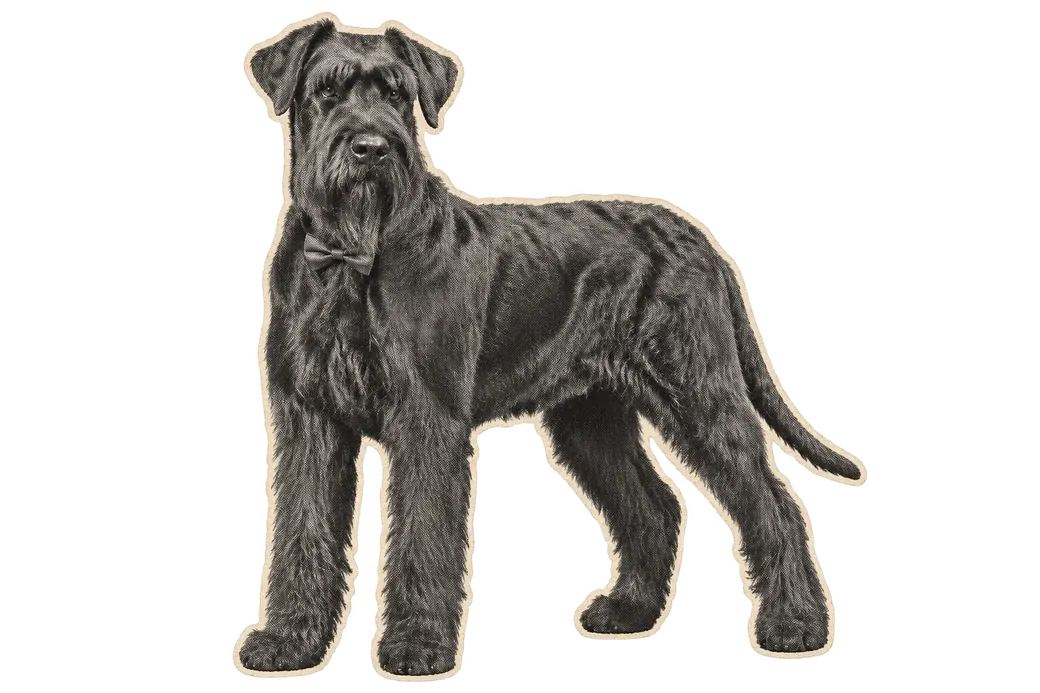
The Giant Schnauzer is the tall German working dog with a square frame and a wiry jacket. The beard is big enough to bring half the water bowl with it. It's a separate breed from the smaller Schnauzers. The useful question at home is whether everybody who takes the lead can turn this dog away from something they really want to investigate. 1 2 3 8
Jump to a section
Make a U-turn nobody has to win
Practise turning away when nothing exciting is happening. Say your cue and turn with the lead loose. Reward the dog when they come with you. When that works, try it somewhere with a bit more going on, still far enough away that your dog can turn naturally. You want a move you can use in the space between a parked car and a hedge, not a demonstration of who's stronger. 8 9
Giant is the name on the record
In the UK, Giant Schnauzer is a separate Working group entry. The medium Schnauzer, often called the Standard, sits in the Utility group, as does the Miniature. Check the full name before comparing health tests; the beard is no help with the paperwork. 1 4 5
Measure the turn, not just the dog
The Royal Kennel Club's ideal shoulder heights are 65–70 cm for males and 60–65 cm for females. They describe the standard, not a guarantee. If you're sorting a bed or car setup, measure your dog lying down and turning as well as standing. Check that someone can walk through the hall without everyone having to negotiate whose turn it is. 2 13
A long beard and leg furnishings can hide how the dog stands or moves. Feel for their ribs and check their waist under the coat; ask the vet to show you what healthy body condition looks like on your own dog. 2 14
Look under the beard, not just at it
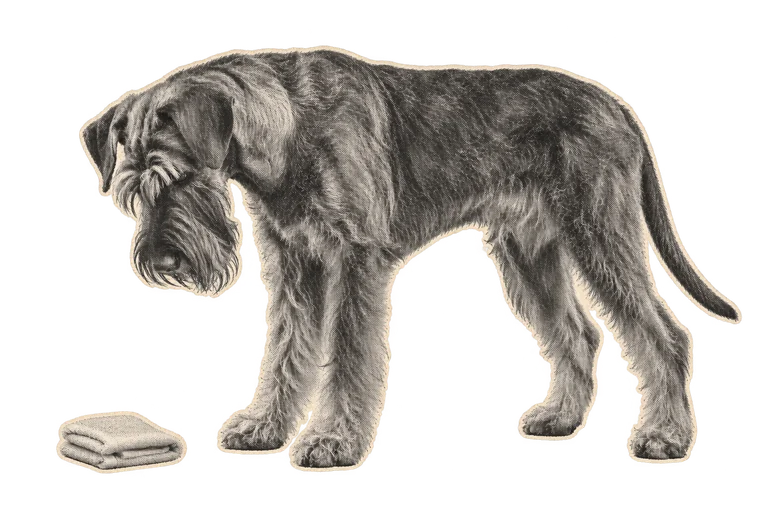
The breed standard describes a harsh jacket with an undercoat. It's the beard and leg hair that collect the muck. Keep a towel by the water bowl and gently press the wet beard rather than dragging at it. Check the underside for debris. If the skin looks sore or the same smell keeps coming back, speak to your vet. 2 10
Giant Schnauzer notes / 04
Field notes
| Bit of dog | Practical check |
|---|---|
| Front legs and between the toes | Feel the longer hair for tangles or bits picked up outside. Stop if handling seems painful. 10 |
| Body jacket | Ask a groomer familiar with wire coats to show you what they'll do and what needs doing at home. 2 10 |
| Face | Practise short, rewarded touches before you need to get something off the beard. 10 |
Let the visitor stand up without an escort
A visitor on the sofa and a visitor suddenly walking down the hall are two different things to a dog. If your dog watches every move, make more space and use a secure barrier rather than asking them to stay put while a stranger keeps walking past. Reward them when they can let somebody move without following. 6 7
Keep the dog and visitors apart if you are worried about somebody being hurt. If behaviour has changed or you're getting growling or snapping, speak to the vet and ask about a properly qualified behaviourist. 6 15
Teach them to park out of the way
Pick somewhere clear of the door swing and the line through the kitchen. Practise going there while nothing needs carrying and nobody is coming in. Then add one thing the dog can cope with, like you lifting a bag. Reward a relaxed stay and let the dog leave. If they get up to investigate, make it easier rather than saying the cue louder. 7
A small object search can be a sensible way to give the dog work indoors. Ask them to find a safe toy, then put the game away and give them some breathing room; every activity doesn't have to finish with the dog revved up. 7 16
Pick a walk you can both enjoy
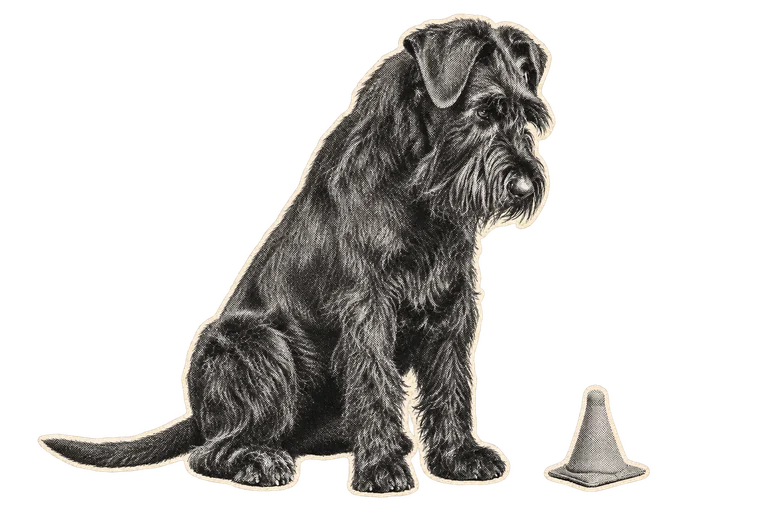
Give the dog time to move at an easy pace and sniff. Use quieter routes to get lead practice in, then choose harder ones when you're both managing. If your Giant can walk past a gate in comfort one day and can't the next, look for what has changed before assuming they're ignoring a skill they know. 8 9 17
Fit exercise to what the dog can manage now, especially if they are older or getting their fitness back. Ask your vet if you are unsure. In hot conditions, a cooler short outing or a rest is better than trying to finish the usual route regardless. 17
Make it easy to keep them out of the doorway
Use barrier and bed positions that work with a long dog and that people will actually close. If you regularly step over the dog to answer the door, change the layout. A calm dog on a bed to the side is easier to live around than one on a mat sandwiched between the shoe rack and the front door. 6 7
Keep some practice on their own as well. If you use a camera, watch for repeated pacing or calling rather than assuming quiet means they are resting. Keep absences within what they can manage and get help if distress continues. 18
Take the dog's size out of the decision
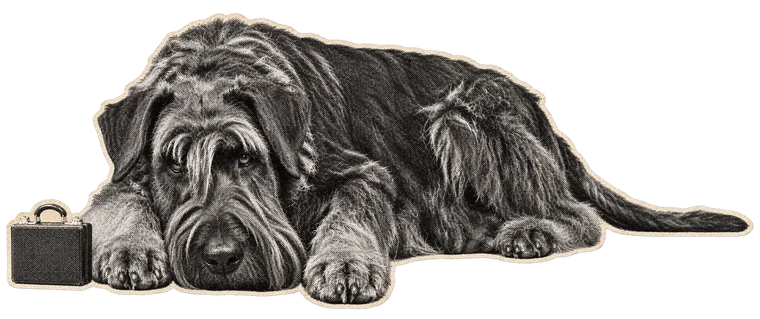
Teach children to leave the dog alone while they're eating or resting. A supervising adult needs to be able to intervene; if you can't, use a suitable barrier. Even friendly play can knock somebody over, so keep active games with adults if space is tight. Give any resident cat a dog-free spot and a route away, and supervise introductions. 19 20
Ask for the actual heart and eye tests
The Royal Kennel Club's Good Practice list includes genetic diversity advice, BVA/RKC hips and elbows and the prcd-PRA DNA test. Its additional Best Practice tests include DCM and PRA5 DNA testing, clinical eye screening including litter screening, and the HUU DNA test. Ask for the dated results and what test each certificate actually shows. 1 5 11 21
Giant Schnauzer notes / 10
Field notes
| Distinction | Why it matters |
|---|---|
| PRA named on a certificate | Ask whether it is prcd-PRA, PRA5 or a clinical eye exam. They are different checks. 1 5 11 |
| Clear for the tested DCM variant | This is a result for a specific variant, not a certificate that the heart is disease-free or a diagnosis for a symptomatic dog. 11 12 |
| Collapse, fainting or breathing difficulty | Contact an emergency vet immediately. Don't wait for a DNA result or assume the cause. 12 |
The RKC profile puts lifespan in its over-twelve-years category. It doesn't give a measured median or tell you what to expect for an individual Giant. 1
Price the things that have to fit the actual dog
Ask for a wire-coat grooming quote before you commit to a regular slot. Tell a walker what the dog is like in a narrow lane or past another dog; check they are comfortable handling that dog, rather than relying on the group-walk blurb. Get insurance quotes at your own postcode and read the excess and ongoing-condition limits. 8 10 22
Giant Schnauzer notes / 11
Field notes
The original job involved cattle
Giant Schnauzer notes / 12
Field notes
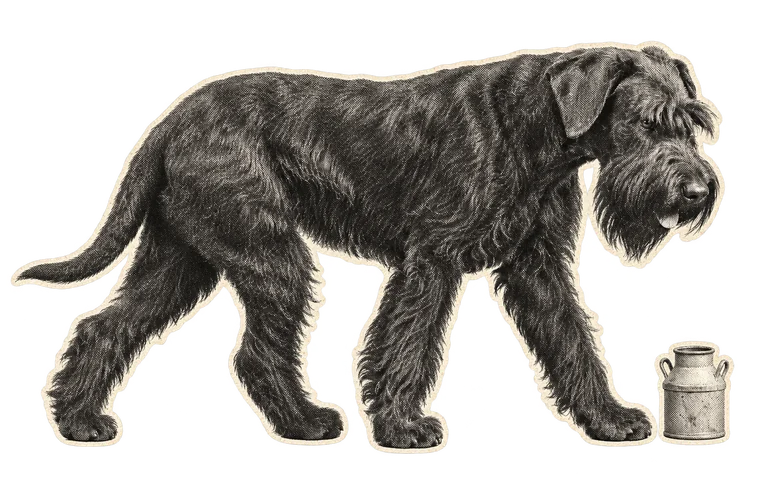
The FCI lists Germany as the country of origin. Its breed standard describes the forebears driving cattle in southern Germany. The UK profile traces a later move to city guarding work after more livestock travelled by railway. That's history, not advice to put your dog in charge of the front door. 2 3 23
Meet the dog off the show lead
Giant Schnauzer notes / 13
Field notes
If you're meeting an adult, ask to watch a handler walk away from something interesting and see how the dog settles with people moving nearby. Ask what the dog already tolerates at the groomer. For a puppy, check the parents’ results under the Giant Schnauzer entry. See the puppy with its mum where it was raised. 1 6 8 10 24
Sources
- S1Royal Kennel Club Giant Schnauzer breed profile and health guidanceSource · checked 22 November 2026
- S2Royal Kennel Club Giant Schnauzer breed standardSource · checked 22 November 2026
- S3FCI Giant Schnauzer nomenclatureSource · checked 22 November 2026
- S4Royal Kennel Club Schnauzer breed standardSource · checked 22 November 2026
- S5Royal Kennel Club Health Standard, separate Schnauzer entriesSource · checked 22 November 2026
- S6Dogs Trust visitor-management and behaviour guidanceSource · checked 22 November 2026
- S7Dogs Trust settling adviceSource · checked 22 November 2026
- S8Dogs Trust loose-lead and chasing managementSource · checked 22 November 2026
- S9Dogs Trust recall adviceSource · checked 22 November 2026
- S10Dogs Trust handling and groomingSource · checked 22 November 2026
- S11Giant Schnauzer Club screening and test descriptionsSource · checked 22 November 2026
- S12PDSA dilated cardiomyopathy in dogs, diagnosis and clinical signsSource · checked 22 November 2026
- S13Highway Code rule 57, safe transportSource · checked 22 November 2026
- S14PDSA body condition scoringSource · checked 22 November 2026
- S15Animal Behaviour and Training Council practitioner typesSource · checked 22 November 2026
- S16Dogs Trust dog enrichment and activitiesSource · checked 22 November 2026
- S17PDSA exercising your dogSource · checked 22 November 2026
- S18Dogs Trust separation anxiety and observationSource · checked 22 November 2026
- S19Dogs Trust children and dogsSource · checked 22 November 2026
- S20Dogs Trust helping dogs and cats live togetherSource · checked 22 November 2026
- S21British Veterinary Association Canine Health SchemesSource · checked 22 November 2026
- S22PDSA pet insurance guideSource · checked 22 November 2026
- S23FCI Giant Schnauzer official standard and breed originsSource · checked 22 November 2026
- S24RSPCA responsible puppy-buying guidanceSource · checked 22 November 2026
