
Breed guide / German Wirehaired Pointer
Living with a German Wirehaired Pointer
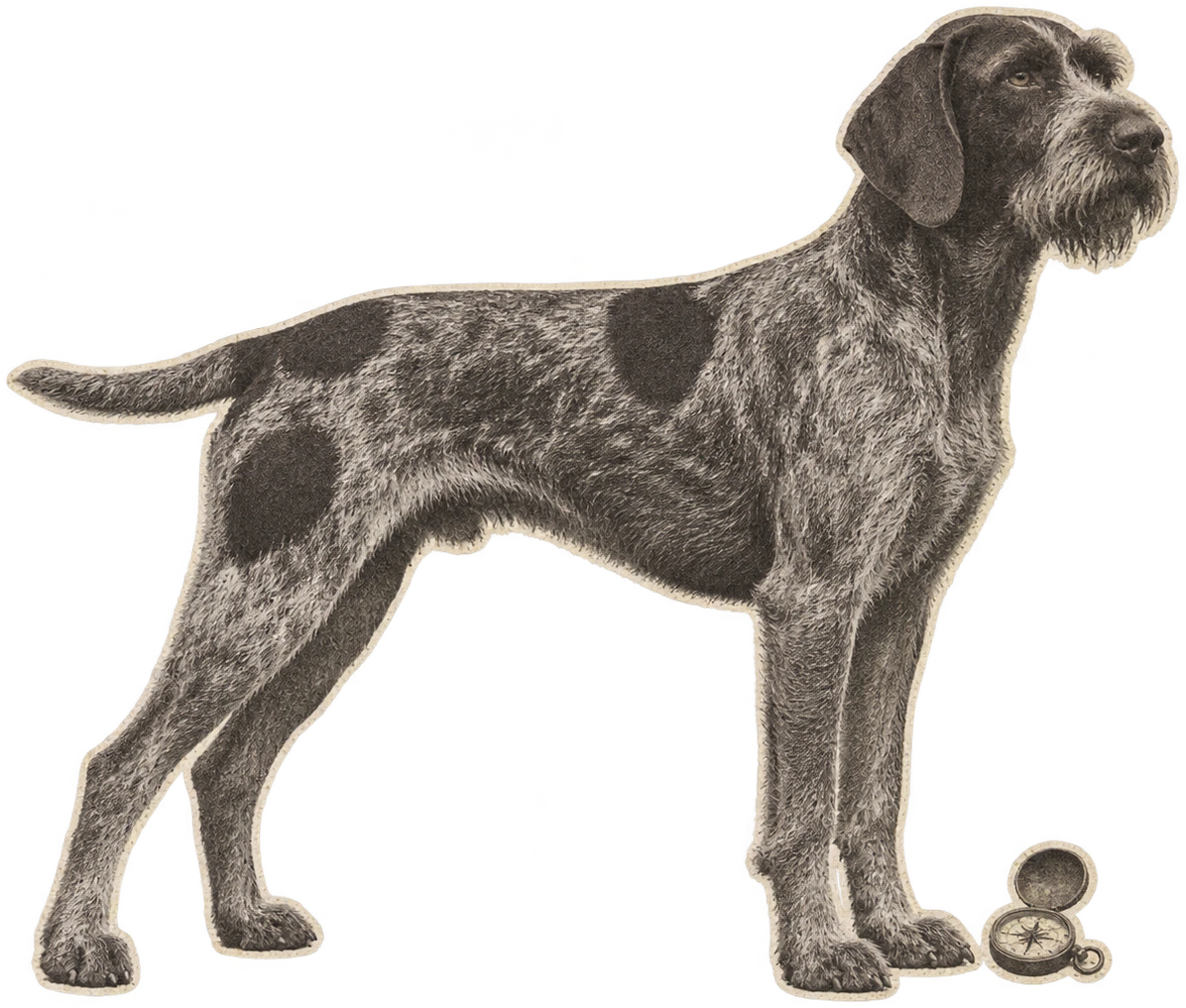
The German Wirehaired Pointer is a versatile gundog with a stiff weather-resistant coat, big eyebrows and a beard you’ll be picking bits of field out of. It was developed to search and work on land and in water. If yours spends a walk taking the entire hedgerow apart with their nose, give them somewhere safe to do that and teach a turn before they find something better than you. The other useful skill is knowing when the walk’s finished. 12382325
Jump to a section
The short version
Use a route with enough room to change direction before a narrow gate or a field with livestock. If you’ve got a dog who speeds up as soon as their nose goes down, put the long line away before the path narrows, not during the encounter. Save the longer line for suitable ground where you can see who or what’s coming. 15 21 23 27
When you get back from rough grass, look between the toes, at the ear flaps and through the beard. Sudden repeated head shaking or a sore swelling between the toes is more than a bit of mud to brush off. Ask the vet rather than probing for a grass seed yourself. 5 17 18 19
German Wirehaired Pointer notes / 01
Where to start
| Start here | What to try |
|---|---|
| Lead before the gate | Shorten up or turn away while there’s still room to do it. 21 23 27 |
| Nose work at home | Set a small search with a clear finish and somewhere to rest. 11 24 25 |
| Check after long grass | Look at feet, beard, armpits and ears when the dog is comfortable. 2 5 19 |
| Unusual bleeding | Tell the vet, and get urgent help if heavy or not stopping. 38 42 45 |
Wirehaired is not just what happened to a Shorthaired in the rain
The Royal Kennel Club has separate breed entries for the German Wirehaired Pointer and German Shorthaired Pointer. They have related working histories, but breeding records and breed standards aren’t interchangeable. The FCI lists the Deutsch Drahthaar as standard 98, with its own working-trial designation. UK registrations and FCI or German working credentials are different things; verify the actual records rather than guessing from the name on an advert. 1 2 3 10 12
German Wirehaired Pointer notes / 02
Check the name
Fit for the dog that’s actually trying to walk off
The UK standard suggests 60–67 cm at the shoulder for males and 56–62 cm for females. Fit kit to the dog in front of you. Watch the harness while they walk with their head low and while they turn; a neat fit when they stand still doesn’t tell you where the straps will go when they lean into it. Feel ribs and waist rather than assessing condition through wiry hair. 2 15 16
German Wirehaired Pointer notes / 03
Measure yours
Get to the skin without taking the beard off
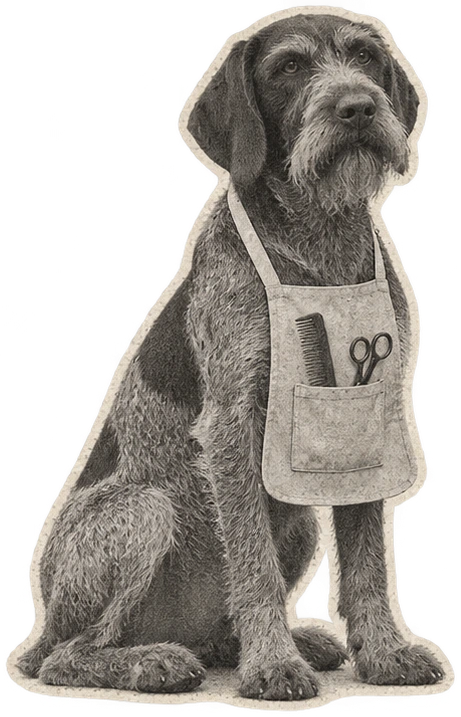
Explore the wiry coat with your fingers before trying to comb a knot out. Check where a harness sits and where hair is longer around the eyebrows and muzzle. Look at the feet and outer ear after rough cover, too. Head shaking, paw licking or a sore swelling after a walk calls for a vet check; poking around in the ear canal is unhelpful. 2 5 17 18 19 20
Ask a groomer with wire-coat experience what your dog needs, especially if hair has started to mat. Work in short sessions and don’t make a sore patch the place you teach them to put up with brushing. The point is a comfortable dog, not a tidier set of eyebrows. 5 9 17 20
German Wirehaired Pointer notes / 04
Check beard and feet
| Where | What to do |
|---|---|
| Beard | Separate the hair gently and check it for trapped bits after outings. 2 5 17 |
| Toes and nail beds | Check for tenderness, stuck seeds or persistent licking. 18 19 |
| Ear flaps and armpits | Look at visible skin; ask the vet about a sore ear or sudden shaking. 18 19 |
| Wire coat | Ask a groomer what their individual coat needs. 9 17 |
Watch the bit just before the dog goes
On a walk you might see stillness, a head turn or a suddenly tight line as the dog picks something up. Make that the moment you add distance, while they can still turn with you. If the dog’s already at full stretch, don’t make repeated calls their normal background noise. Change the set-up and practise where they have a chance. 8 11 21 23
German Wirehaired Pointer notes / 05
Let them switch off
| What you see | Useful first step |
|---|---|
| Locks on to movement | Change direction early and practise turning somewhere easier. 8 21 23 |
| Paces after the walk | Put the lead and toys away and make a quiet place available. 11 25 |
| Scans the window for every visitor | Reduce the view and reward stepping away before it gets noisy. 14 21 |
Give them work you can both call off
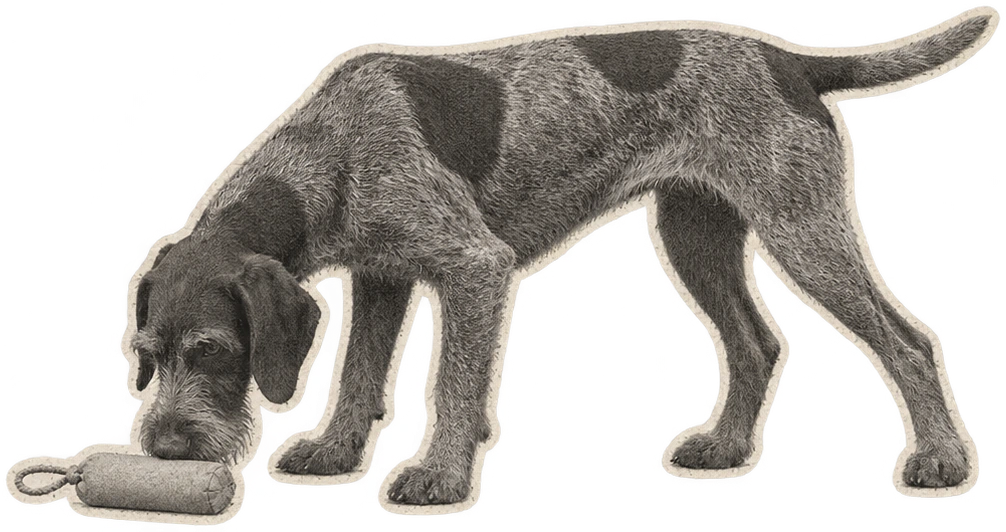
Put a familiar toy or part of their food where they can find it easily at first. Let them work it out, reward returning to you, then put the set-up away and give them a pause. Build distance and distraction one at a time. In real life you want the dog to take a breather when the gate opens, not only to find the hidden stuff. 11 23 24 25
German Wirehaired Pointer notes / 06
Call off a search
On lead isn’t the same as stuck indoors
An adult can have a worthwhile outing on a well-fitted harness and lead, especially if they get time to stop and investigate. Use a suitable secure open area for longer-line practice and shorten up near roads, livestock, bicycles or narrow paths. Work out the turnaround before committing to a route. A favourite field isn’t available just because you can see through the gate. 15 21 23 26 27
If you walk near water, avoid strong currents, steep banks and suspected blue-green algae. The breed’s working history and protective coat aren’t instructions to swim. Keep hot days easier and ask a vet when a new limp keeps changing what your dog can comfortably do. 2 3 13 28 29
German Wirehaired Pointer notes / 07
Change route early
| Situation | Better call |
|---|---|
| Regular adult walk | Include places to sniff and build the pace around the dog. 24 26 |
| Narrow path or livestock | Manage the lead before you’re sharing the space. 21 23 27 |
| Steep bank, current or algae | Keep the dog out and choose a dry route. 13 |
| Heat, stiffness or injury | Pick an easier outing and ask about persistent changes. 28 29 |
The dog needs a place to finish the day
Put the towel and things you need for a paw check near the door. Set up a separate resting spot where they aren’t in the middle of every crossing, and teach the move there when nobody’s waiting at the gate. Move the treat pouch and training dummy out of sight if they keep the dog a bit too hopeful. 20 24 25 30 31
German Wirehaired Pointer notes / 08
Move the bed
Set things up before the cat or kids get involved
A dog that spots movement and weighs more than a small child can make an ordinary game a bit much. Have an adult supervise and stop games before they get too lively. Introduce other animals with space to leave. If your dog can’t disengage from a cat or small animal, separate them and ask for sound behaviour advice rather than letting them try to sort it out. 8 21 22 31 32 33
German Wirehaired Pointer notes / 09
Give them a way out
Health: read the results before you need them
The live Royal Kennel Club table has no separate Good Practice entry for this breed. Its Best Practice list includes DNA testing for type 2 von Willebrand disease (vWD2), BVA/RKC hip and elbow screening and the BVA/RKC/ISDS eye scheme. The breed page also has vWD2 registration rules for imported dogs and litters from overseas sires. Read those separately if relevant: they are RKC registration rules, not general UK import law. For breeding, ask to see actual reports and the basis of any hereditary result. 1 35 36 37 43 46
Type 2 von Willebrand disease affects clotting. A primary study found an associated VWF variant in German Wirehaired and Shorthaired Pointers. If your dog has a known result or a history of unusual bleeding, flag it to the vet before a planned procedure. Unexplained bleeding needs advice; heavy or uncontrolled bleeding is an emergency whatever the result says. The study and the screening scheme do not tell us current UK prevalence. 38 39 42 45
The Dogs Trust UK study reported a 13.0-year median lifespan, a 12.5–13.6-year interval and 138 recorded deaths. That’s a cohort estimate. It’s not how long your dog will live, or how long they’ll be free of health conditions. 40 41
German Wirehaired Pointer notes / 10
Health conditions and screening
| Health conditions and screening | Useful action |
|---|---|
| vWD2 | Ask for the exact result and tell the vet about any previous unusual bleeding. 1 35 38 |
| Hips and elbows | For a litter, check official reports on both parents. 1 35 37 46 |
| Eye examination | Check the separate result, not just a DNA-panel description. 1 35 36 |
| Imported dog or overseas sire | Read the separate current UK RKC registration requirements. 1 |
| Heavy or uncontrolled bleeding | Call a vet immediately. 42 45 |
| Repeat stiffness | Ask the vet rather than diagnosing it through the breed name. 29 37 |
| 13.0 years | The UK study’s estimated median lifespan, not a prediction for yours. 40 41 |
Price the support before it becomes urgent
If you need a walker, ask who handles the dog, how they deal with wildlife or livestock and when they use a lead. Find out whether the groomer deals with wire coats and what happens if your dog won’t tolerate a long session. Read your insurance excess and what the policy excludes, not just the figure at the top. 7 9 17 20 22 44
German Wirehaired Pointer notes / 11
Price the coat
| Cost | What to ask |
|---|---|
| Walker | Number of dogs, pace, lead rules and how they handle a dog who fixes on other animals. 7 21 23 44 |
| Groomer | Wire-coat experience and handling preferences. 9 17 |
| Vet and insurance | Ask about the excess, known conditions and money to set aside. 44 |
| At-home kit | Replace a frayed lead, check the harness and have a grippy route inside. 15 30 |
A practical coat for a practical job
The breed’s German history is about a pointing dog expected to work across different ground and weather, not just look the part. The FCI history describes input from rough-coated gundogs and the German Shorthaired Pointer. In the UK the Wirehaired and Shorthaired have separate entries, so don’t turn a shared ancestor into a blanket description of what your dog will do. 1 3 4 10 12
German Wirehaired Pointer notes / 12
Working origins
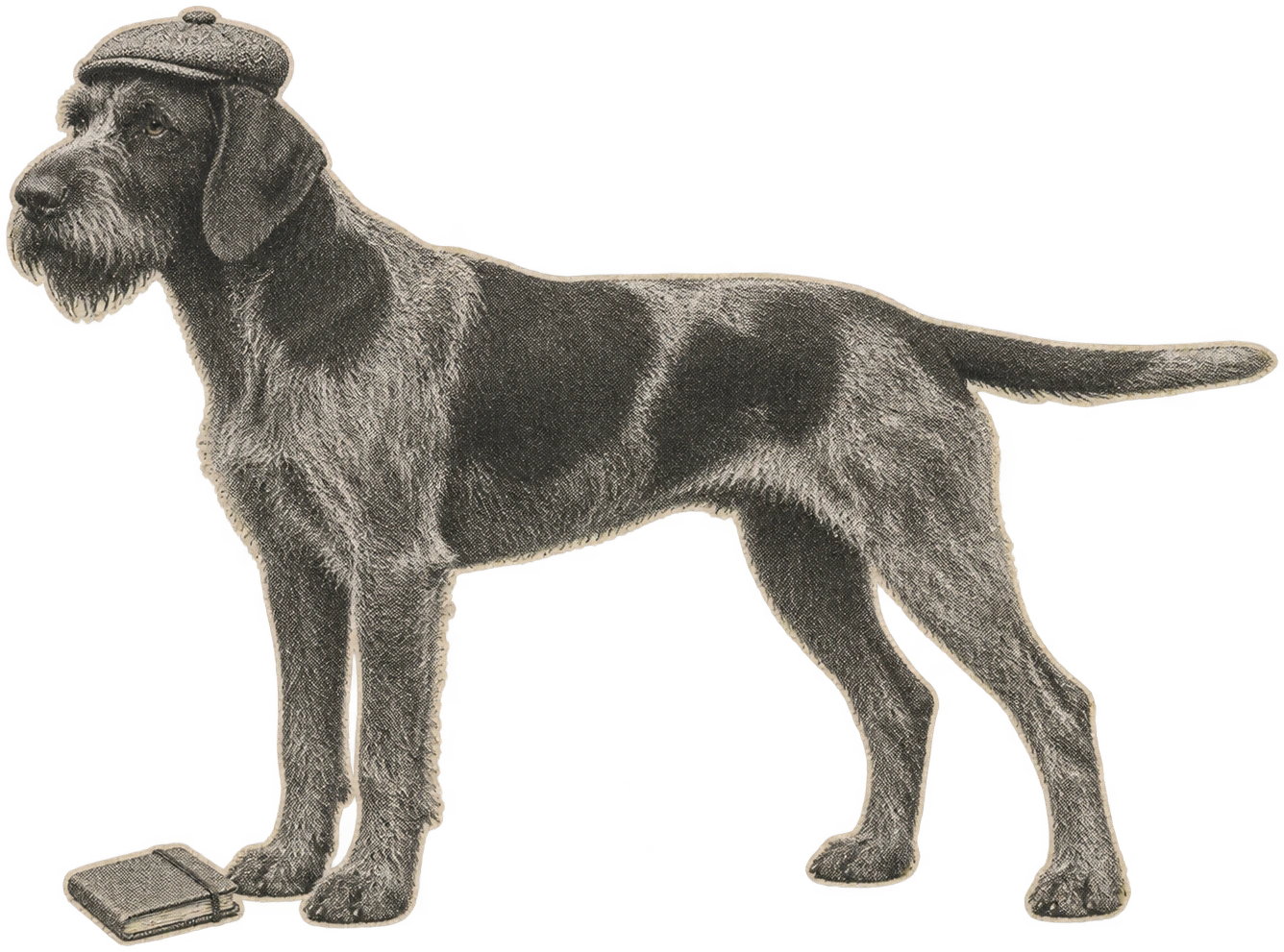
| Historic detail | Why it matters |
|---|---|
| Rough coat | A practical covering for work outdoors, not a reason to ignore the skin. 2 3 |
| German working history | The FCI describes versatile work in places including field and water. 3 4 |
| Shorthaired input | A historical connection, not a current substitute breed entry. 3 10 12 |
Ask what happens on the boring days
With a rescue, ask how they manage on a lead, whether they’ve lived with other animals and what they do at home after a walk. With a puppy, see the mother and litter where they’re raised, check parents’ results and ask what the pup already knows about touch and ordinary household life. If someone says they’ll settle once you give them enough exercise, ask for an example of what settling actually looks like. 6 20 25 32 35 46 47
German Wirehaired Pointer notes / 13
Ask about a day
| What to ask | Good evidence |
|---|---|
| Can I see a normal walk? | Ask about a route, encounters and current lead routine. 15 23 |
| What is the dog like indoors? | Listen for observations about being left, grooming and winding down. 6 20 25 |
| Can I read both parents’ records? | Named results with dates and a reason for any missing check. 1 35 46 |
| Can I see the litter with their mother? | A visit where the pups actually live. 47 |
Sources
- S1Royal Kennel Club German Wirehaired Pointer profile, UK tiers and registration restrictionsSource · checked 21 November 2026
- S2Royal Kennel Club German Wirehaired Pointer breed standardSource · checked 21 November 2026
- S3FCI Deutsch Drahthaar standard 98, history and working roleSource · checked 21 November 2026
- S4German Wirehaired Pointer Association UK breed historySource · checked 21 November 2026
- S5PDSA veterinary grooming and coat maintenanceSource · checked 21 November 2026
- S6Dogs Trust introducing time alone, using a recordingSource · checked 21 November 2026
- S7Dogs Trust finding a suitable walkerSource · checked 21 November 2026
- S8Dogs Trust safe management of chasingSource · checked 21 November 2026
- S9German Wirehaired Pointer Club UK breed and care contextSource · checked 21 November 2026
- S10FCI official Deutsch Drahthaar nomenclature and working-trial designationSource · checked 21 November 2026
- S11Dogs Trust reward-based trainingSource · checked 21 November 2026
- S12Royal Kennel Club separate German Shorthaired Pointer breed standardSource · checked 21 November 2026
- S13PDSA water safety for dogs and blue-green algae avoidanceSource · checked 21 November 2026
- S14Dogs Trust barking triggers and changing the viewSource · checked 21 November 2026
- S15Dogs Trust harness fitting and checking free movementSource · checked 21 November 2026
- S16PDSA body condition at homeSource · checked 21 November 2026
- S17Blue Cross assessing and caring for coat, skin and matsSource · checked 21 November 2026
- S18PDSA home health check including feet and skinSource · checked 21 November 2026
- S19PDSA veterinary advice on grass seeds and ear and paw signsSource · checked 21 November 2026
- S20Dogs Trust building comfort with handlingSource · checked 21 November 2026
- S21Dogs Trust recognising and managing reactivitySource · checked 21 November 2026
- S22Dogs Trust sourcing qualified behavioural supportSource · checked 21 November 2026
- S23Dogs Trust recall and long-line trainingSource · checked 21 November 2026
- S24Dogs Trust safe enrichment and search gamesSource · checked 21 November 2026
- S25Dogs Trust building settling skillsSource · checked 21 November 2026
- S26PDSA tailoring dog exercise to the individualSource · checked 21 November 2026
- S27Natural England Countryside Code on keeping dogs controlled and protecting livestockSource · checked 21 November 2026
- S28Dogs Trust safe outings in hot weatherSource · checked 21 November 2026
- S29PDSA veterinary guidance for limping and stiffnessSource · checked 21 November 2026
- S30Canine Arthritis Management veterinary access and safe flooring guidanceSource · checked 21 November 2026
- S31Dogs Trust children and dog supervisionSource · checked 21 November 2026
- S32Dogs Trust safer dog and cat introductionsSource · checked 21 November 2026
- S33Dogs Trust introductions to another dogSource · checked 21 November 2026
- S34Dogs Trust resource guarding and separate feedingSource · checked 21 November 2026
- S35Royal Kennel Club central live Health Standard German Wirehaired Pointer rowSource · checked 21 November 2026
- S36Royal Kennel Club BVA/RKC/ISDS Eye SchemeSource · checked 21 November 2026
- S37British Veterinary Association hip screening schemeSource · checked 21 November 2026
- S38Primary VWF variant study in German Wirehaired and Shorthaired PointersSource · checked 21 November 2026
- S39UC Davis veterinary genetics vWD type 2 interpretationSource · checked 21 November 2026
- S40Dogs Trust original 2024 UK longevity table exact German Wirehaired Pointer rowSource · checked 21 November 2026
- S41McMillan et al. original UK dog longevity studySource · checked 21 November 2026
- S42PDSA urgent first aid guidance for severely bleeding woundsSource · checked 21 November 2026
- S43Royal Kennel Club named DNA tests and risk interpretationSource · checked 21 November 2026
- S44PDSA costs and insuranceSource · checked 21 November 2026
- S45Animal Trust UK veterinary triage for bleedingSource · checked 21 November 2026
- S46Royal Kennel Club health results finderSource · checked 21 November 2026
- S47RSPCA buying a puppy and seeing mother with the litterSource · checked 21 November 2026
