
Breed guide / German Shorthaired Pointer
Living with a German Shorthaired Pointer
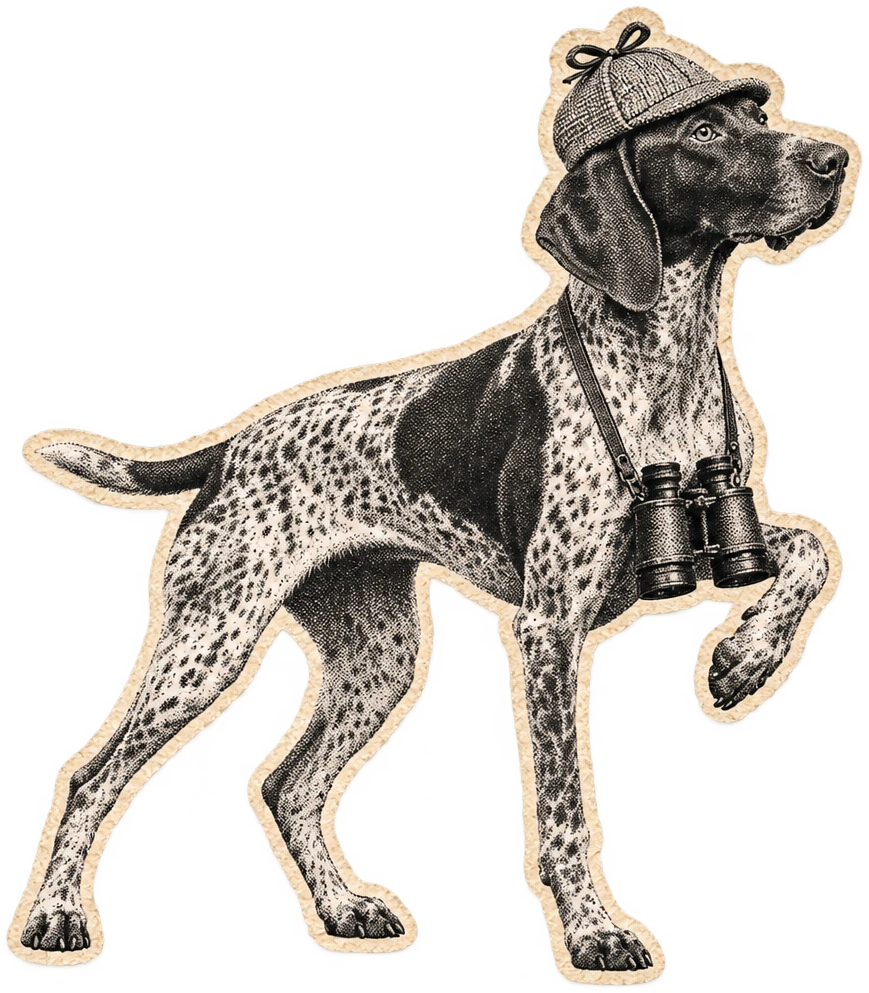
A German Shorthaired Pointer is an athletic German gundog bred to find game and point out where it is. Retrieving it was part of the job too. If you live with one, you don’t need a shooting estate. You do need to give that nose something to do, teach them to look back before they disappear into the scenery, and give them somewhere to get properly off duty when you get home. A quick lap of the block can be the warm-up, not the walk. 1245911
Jump to a section
The short version
With a GSP, I’d spend less time deciding how to wear them out and more time making the walk worth staying with you for. Let them sniff, then get them to find a toy you’ve hidden somewhere easy. One good game with you is a better reason to check in than hearing their name shouted from the far end of a field. Keep them on a lead wherever there’s a chance they’ll run after livestock or wildlife. 4689
At home, take the excitement down a notch on purpose. Wipe them down when you come in and let them lie somewhere quiet. If you put another ball in their mouth every time they’re bored, don’t be surprised when they bring one to the sofa during the news. They can learn that lying down pays as well. 91112
German Shorthaired Pointer notes / 01
First jobs for you and the dog
| Start here | Why bother? |
|---|---|
| Practise the check-in | Reward the dog looking back before they’ve reached the end of the line. 67 |
| Give the nose a job | Hide a familiar toy and let them find it. 910 |
| Teach a quiet finish | Practise settling separately from running around. 11 |
| Have a health plan | Know the breeding checks and the signs of a possible bloat emergency. 320 |
What GSP means
GSP is short for German Shorthaired Pointer. The FCI uses Deutsch Kurzhaar in Germany and calls the breed the German Short-Haired Pointing Dog in its English listing. The German Wirehaired and Longhaired Pointers are separate breeds. They sound similar, which is where it’s easy to get the paperwork muddled. If you’re reading health advice, check which one it’s about. 12313
Liver and white with freckles, known as ticking, is a familiar look. The UK standard also describes solid liver or black and spotted or ticked combinations. There’s no prize in your kitchen for having the most freckles. Find out how healthy the dog is and see how the two of you actually get on. 135
Height, build and getting the gear right
The UK breed standard gives 58 to 64 cm at the shoulder for males and 53 to 59 cm for females. Those are show-standard ranges, not a verdict on your dog. There’s a deep chest and short back in the standard, which is a good reason to take an actual tape measure to the dog instead of buying a harness by breed name. 114
A GSP can look lean and athletic without needing to be underweight. Ask your vet to show you how to feel for the ribs and look for a waist, then get to know your own dog’s normal shape. A change in that shape, weight or movement means more than somebody’s post saying what their dog weighs. 1516
German Shorthaired Pointer notes / 03
How big is a Shorthaired Pointer?
Short coat, muddy feet
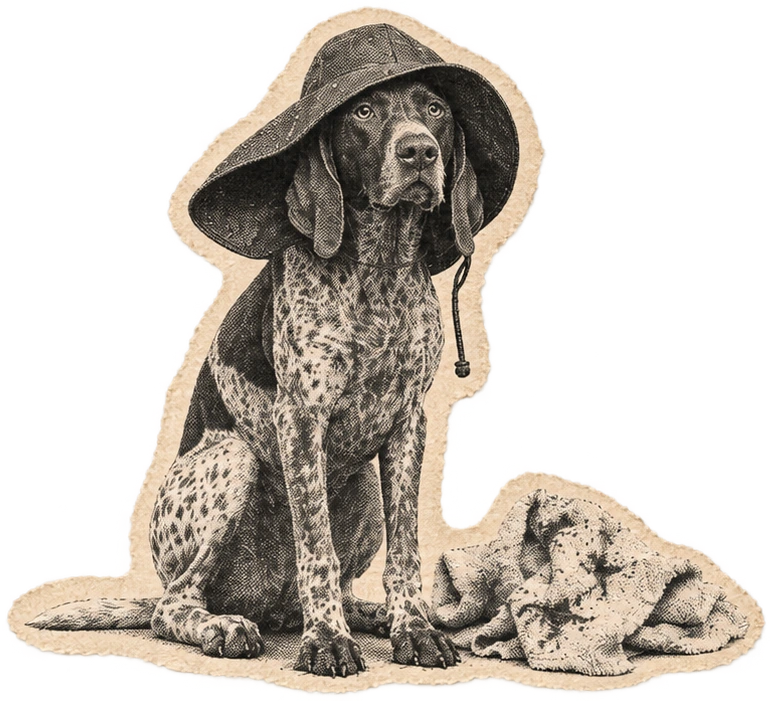
A GSP doesn’t have a long coat to brush out, but it can bring half the bridleway home on four feet. Keep a towel by the door. After a walk through long grass, check between the toes and around the ear flaps and coat for seeds. It’s a quicker job when the dog has already learned that having a foot held briefly is unremarkable. 1171819
If they keep shaking their head after a walk or suddenly won’t leave one foot alone, call your vet for advice. A seed can travel under the skin or lodge in the ear canal. Don’t go rooting into the ear to see if you can find it. On a grim wet day, take the individual dog’s comfort as your cue for how long to stay out. 1718
German Shorthaired Pointer notes / 04
The return-from-walk check
| On the way back in | What to check |
|---|---|
| Feet | Between the toes and around the pads after grass and mud. 18 |
| Ear flaps | Look where you can see, without probing inside. 18 |
| One-sided shaking or sore paw | Tell the vet what started and where the dog’s been. 18 |
| Handling | Reward an easy paw or ear check and end before they’re trying to get away. 19 |
Why they stop dead at the hedge
A point is that sudden stillness when a dog locates something. The nose points forward and sometimes one front foot comes up. If you’ve never had one, it can be a surprise to watch a dog go from nosing round the verge to looking like someone hit pause. It’s not a guarantee they’ll stay there. The difference between looking and following is precisely why you want room and a lead near wildlife. 146
Learn the little things your own dog does before they’re off. Maybe the pace changes or the head swings towards a hedge. Reward an early glance back, change direction when there’s still slack, and give yourself more distance next time if they couldn’t disengage. Don’t test recall by approaching the same rabbit twice. 67
German Shorthaired Pointer notes / 05
Before the chase starts
| What you see | The useful response |
|---|---|
| Quick glance back | Reward it while they can still choose you. 67 |
| Fixed attention towards the hedge | Add distance and manage with the lead, rather than testing off-lead control. 68 |
| Repeated lunging at moving things | Change the route and get qualified support if you’re struggling to manage it. 621 |
Give them a job they can finish
Put a familiar toy down while the dog watches and send them to find it. Next time put it briefly out of sight in an otherwise easy room. When they bring it back, trade it for a reward and have another go only if they’re still interested. You can be done before the kettle boils and they’ve done something they were built for besides sniffing the post. 491022
For recall, start in a boring place. A long line on a well-fitting harness can help you practise on suitable ground where it can’t snag and won’t trip other people. Switch to a short lead near livestock, roads or places with signs requiring it. If a secure space and a short walk are the only things you can manage that day, use them rather than gambling on the dog coming back. 67814
German Shorthaired Pointer notes / 06
Give the nose a job

The walk isn’t just exercise
Both the Royal Kennel Club and PDSA put this type of dog on the high-exercise side. A fit adult typically needs a proper daily commitment, but a breed-page time isn’t a prescription for an individual, especially a growing puppy or a dog with sore joints. An interesting route with stops to sniff and chances to work with you is a different outing from running a fixed distance and straight back indoors. 35923
Check if the route goes through fields with animals, near nesting birds or across access land with restrictions before you give them more line. In England and Wales the Countryside Code sets out controls around livestock and seasonal restrictions on Open Access land. Follow local signs elsewhere too. If you don’t have suitable ground, a booked secure field can be a more useful outing than spending the whole walk hoping there isn’t a pheasant. 68
German Shorthaired Pointer notes / 07
Get the walk right
| Situation | Adapt the plan |
|---|---|
| Healthy adult | Plan meaningful daily exercise with sniffing and training, not just letting them out back. 359 |
| Puppy, older or unwell | Let age, development and veterinary advice guide the amount and type of activity. 23 |
| Livestock and wildlife | Keep control; use a short lead around livestock and check route-specific rules. 68 |
| Newly stiff or limping | Ease off and speak to your vet rather than trying to walk it off. 16 |
Get the dog an off switch at home
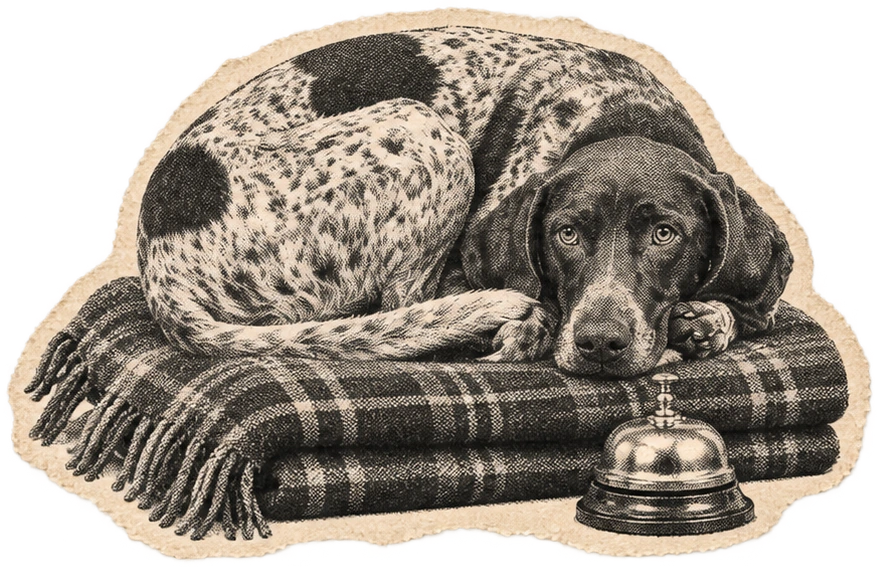
A quieter dog doesn’t necessarily appear just because you’ve been out longer. Pick a bed away from a window or a busy doorway. Reward lying down when the dog chooses to do it, without a big chat and a game attached. Do it on ordinary days rather than waiting until you have six people coming for dinner and nowhere else to put them. 111222
If they follow you from room to room, start tiny when you practise leaving: a few moments out of sight while they’re still comfortable. If they pace or bark as soon as you step away, reduce the difficulty rather than waiting them out. A dog walker can help you cover an awkward day; get advice if being alone itself is the problem. 2425
German Shorthaired Pointer notes / 08
A quiet finish at home
Other dogs, children and cats
An excited GSP can clear the hallway in three strides. That’s a bad place to see how they’ll get on with a toddler. Keep an adult supervising and give both a place to move away. Separate the dog for chews and quiet time so the child never has to guess whether they’re welcome on the bed. 526
A dog that’s comfortable with one cat may still chase another outdoors. If cats already live with you, ask what the prospective dog has actually done around them. Set up a barrier and give the cat hiding places and routes out. Keep the first dog-to-dog meetings calm too, rather than expecting a resident dog to tolerate being bounced into straight away. 62728
German Shorthaired Pointer notes / 09
Help everyone get along
Health, lifespan and the checks to ask for
The Royal Kennel Club places elbow, eye and hip screening in Best Practice for the German Shorthaired Pointer. Its standard does not list a separate Good Practice test for this breed at the date checked. A blank column doesn’t mean breeding without screening is fine. For hips and elbows, ask for the actual BVA/RKC results; for eyes, ask for the clinical certificate. The tests look at different things. 329303132
Cone degeneration is an inherited cause of day blindness; a specific CNGB3 variant has been documented in this breed. That’s a separate potential question about DNA and family history, not a substitute for the clinical eye scheme and not one of the three RKC Best Practice entries above. If you notice your own dog struggling to see in bright light, speak to your vet rather than assuming you’ve identified the cause. 3313334
PDSA lists gastric dilatation-volvulus (GDV) as a concern for German Pointers. Repeatedly trying to be sick without bringing anything up, especially with a swollen belly, drooling or restlessness, needs the emergency vet now. Don’t wait to see if the belly swells: it isn’t always obvious. 520
In the 2024 UK longevity dataset, 3,313 German Shorthaired Pointers contributed to the breed estimate of 13.4 years median (95% CI 13.3 to 13.6). That’s a population estimate, not a target for the dog in front of you. For an individual, use your vet’s advice and keep a note of any changes to movement, vision, appetite or recovery after activity. 1635
German Shorthaired Pointer notes / 10
Health conditions and screening
| Condition or check | What to know |
|---|---|
| Hips | Royal Kennel Club Best Practice: BVA/RKC hip scoring. Ask to see the result for each parent. 32930 |
| Elbows | Best Practice: BVA/RKC elbow grading. A hip score doesn’t cover this. 32932 |
| Eyes | Best Practice: clinical BVA/RKC/ISDS Eye Scheme. 32931 |
| Cone degeneration | Separate DNA and family-history question; tell the vet about changes in bright-light vision. 3334 |
| Sudden retching without vomit | Possible GDV even without an obviously swollen belly. Emergency vet now. 520 |
| Ongoing stiffness, limping or reduced activity | Get an individual vet assessment. A breed screening result won’t diagnose the dog’s symptom. 163032 |
| UK lifespan estimate | 13.4 years median in the 2024 dataset, not an individual forecast. 35 |
What to put in the budget
The short coat doesn’t require the budget of a dog that needs regular clipping. The costs I’d actually check are food, harnesses, cover for the days you can’t do the main walk, and training in a setting where you can keep the dog under control. Check whether you can reach places they can sniff and move safely without relying on a daily paid field. 561436
Price insurance with the actual dog’s age and history. Look at the excess and annual limit. Ask what happens with a joint or eye problem that needs more than one visit. Find the out-of-hours vet before there’s an emergency, especially if the nearest place after closing time isn’t your usual practice. 2036
German Shorthaired Pointer notes / 11
What to put in the budget
| Cost | What to check locally |
|---|---|
| Food and equipment | Normal diet, a well-fitted harness, lead and towels. 51436 |
| Weekday cover | Walker or sitter comfortable with the dog’s size and behaviour outdoors. 636 |
| Training | Reward-based recall, scentwork classes if you want them, and secure space if you need it. 61021 |
| Vet care | Routine care, insurance terms and out-of-hours provision. 2036 |
Why they hunt, point and retrieve
The GSP was developed in nineteenth-century Germany as an all-round gundog. Hunt, point and retrieve describes three parts of the job: search for game, show where it is without rushing in, and bring back what the handler asks for. Breed clubs still run training and working events based on those abilities. 243738
You don’t have to recreate the field trial in the back garden. The useful bit to borrow is working together: let them use their nose and reward them when they bring something back. You can practise a pause separately. You’ll know you’ve made it interesting enough when they look at you to see if there’s another go, not at the gap in the fence. 46910
Bringing one home
If you’re buying, give the breeder’s adult dogs time to get over the greeting and see what they do next. You’re buying the dog that’s awake, however nice the litter looks asleep. Ask how the parents are in the house and around wildlife, then ask for the full set of screening results for both. Check names and dates. A result for a relative or an unspecified DNA panel isn’t the same as the three things you asked for. 3293940
GSP Rescue UK can be a starting point if an adult might suit you better. Ask for examples from an ordinary day: how much lead the dog needs on a path, how they respond if a bird moves, and what happens after the walk when there’s nothing left on the calendar. If you’ve already got one, those are good things to write down before asking a trainer to help. 6212841
German Shorthaired Pointer notes / 13
Ask about an ordinary day
| Ask about | What you’re checking |
|---|---|
| The parents | Meet the mother with her litter if buying a puppy; ask for relevant history as well as certificates. 340 |
| Actual UK results | Get named hip, elbow and eye results for both parents. 2939 |
| The walk | Find out how the dog behaves around sights and scents where you’ll live. 62841 |
| After the walk | Ask how they switch off, cope alone and fit around an ordinary home routine. 112441 |
Sources
- S1Royal Kennel Club German Shorthaired Pointer standardSource · checked 21 November 2026
- S2FCI Deutsch Kurzhaar nomenclature and German originSource · checked 21 November 2026
- S3Royal Kennel Club breed profile and screeningSource · checked 21 November 2026
- S4German Shorthaired Pointer Club on the original breed and HPR workSource · checked 21 November 2026
- S5PDSA German Pointer guide covering both Shorthaired and WirehairedSource · checked 21 November 2026
- S6Dogs Trust advice on chasingSource · checked 21 November 2026
- S7Dogs Trust recall and long-line practiceSource · checked 21 November 2026
- S8Countryside Code, England and WalesSource · checked 21 November 2026
- S9Dogs Trust practical enrichment and scent gamesSource · checked 21 November 2026
- S10Blue Cross getting started with scent workSource · checked 21 November 2026
- S11Dogs Trust settling practiceSource · checked 21 November 2026
- S12Guide Dogs on different forms of enrichmentSource · checked 21 November 2026
- S13Royal Kennel Club list of breed standardsSource · checked 21 November 2026
- S14Dogs Trust walking equipment and trainingSource · checked 21 November 2026
- S15PDSA healthy weight and body conditionSource · checked 21 November 2026
- S16PDSA health changes to check with your vetSource · checked 21 November 2026
- S17PDSA grooming petsSource · checked 21 November 2026
- S18PDSA grass seeds in dogs, including paws and earsSource · checked 21 November 2026
- S19Dogs Trust how to practise handlingSource · checked 21 November 2026
- S20PDSA GDV risk, symptoms and emergency adviceSource · checked 21 November 2026
- S21RSPCA reward training and finding professional helpSource · checked 21 November 2026
- S22Dogs Trust reward-based trainingSource · checked 21 November 2026
- S23PDSA exercise needs by individual and life stageSource · checked 21 November 2026
- S24Dogs Trust teaching time aloneSource · checked 21 November 2026
- S25Dogs Trust support for unwanted behavioursSource · checked 21 November 2026
- S26Dogs Trust guidance for dogs and childrenSource · checked 21 November 2026
- S27Dogs Trust safe introductions and living with catsSource · checked 21 November 2026
- S28Dogs Trust specific German Shorthaired Pointer rehoming guidanceSource · checked 21 November 2026
- S29Royal Kennel Club Health Standard, separate rows for the German PointersSource · checked 21 November 2026
- S30BVA and Royal Kennel Club Hip Dysplasia SchemeSource · checked 21 November 2026
- S31BVA hereditary Eye SchemeSource · checked 21 November 2026
- S32BVA and Royal Kennel Club Elbow Dysplasia SchemeSource · checked 21 November 2026
- S33UC Davis Veterinary Genetics Laboratory on CNGB3 and day blindnessSource · checked 21 November 2026
- S34European College of Veterinary Ophthalmologists manual for the breedSource · checked 21 November 2026
- S35Dogs Trust, breed-level data for the McMillan et al. 2024 UK longevity studySource · checked 21 November 2026
- S36PDSA routine costs and exclusionsSource · checked 21 November 2026
- S37German Shorthaired Pointer Association breed historySource · checked 21 November 2026
- S38German Shorthaired Pointer Club events and working disciplinesSource · checked 21 November 2026
- S39Royal Kennel Club Health Test Results FinderSource · checked 21 November 2026
- S40RSPCA responsible breeder checksSource · checked 21 November 2026
- S41GSP Rescue UKSource · checked 21 November 2026
