
Breed guide / Fox Terrier
Living with a Fox Terrier: Smooth or Wire?
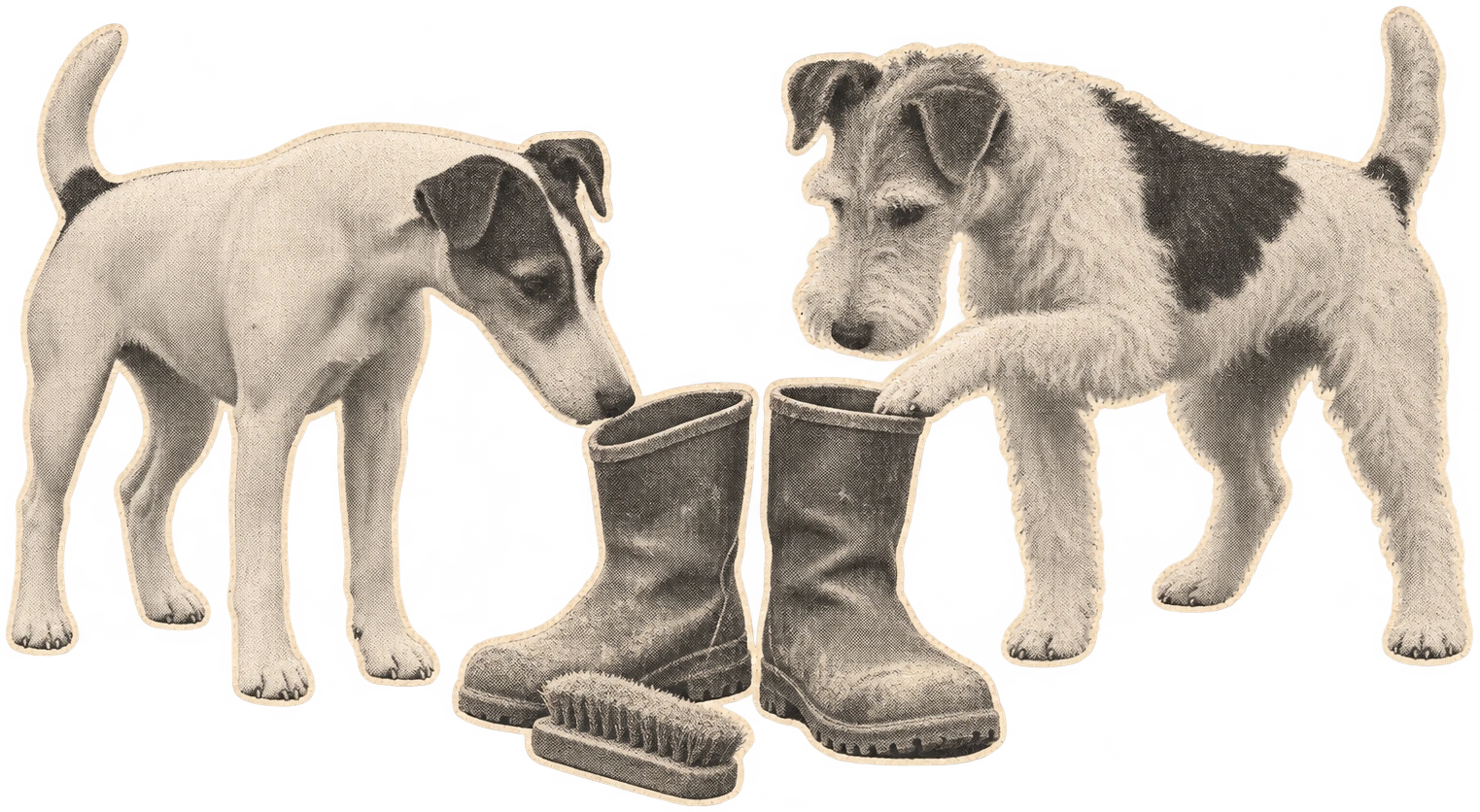
A Fox Terrier is a compact British terrier with a sharp eye for movement and a face that can look quite innocent while it works out what’s under your shed. There are two UK breeds here, Smooth and Wire, and the coat makes a real difference to the brush you’ll use. What you’ll want for either is a way to interrupt a chase, a garden with fewer loopholes than your dog thinks it has and somewhere to switch off afterwards. 123456
Jump to a section
The short version
Check the gap under the gate at dog height and teach a turn away from the hedge while nothing particularly exciting is moving in it. A recall that works in your front room isn’t the one to rely on next to a busy road. If you want to give them a good hunt for something, hide a toy where they can find it safely. 6 7 8 9
Check which coat you have before you book a groomer. A Smooth has a flat, short coat; a Wire has a hard jacket and longer hair around the face. Either can have a sore eye, so don’t wait to see if a painful squint clears up because the dog otherwise seems fine. 3 4 10 11
Fox Terrier notes / 01
Where to start
| Start here | Try this |
|---|---|
| Out walking | Practise turning away before you have a serious distraction. 6 7 |
| Garden | Look for gaps and repeated triggers along the fence. 6 8 |
| Grooming | Choose the brush and routine for your dog’s actual coat. 3 4 10 |
| Sore eye | Ask the vet promptly, especially if they’re holding it shut. 11 |
Two Fox Terriers, not one standard with a choice of haircut
The Royal Kennel Club lists Fox Terrier (Smooth) and Fox Terrier (Wire) separately. They share British working roots, but they have separate written standards and breed records. “Fox terrier” on a rehoming profile can be a description rather than a registered name, so ask what the person actually knows before trying to match a dog to a standard. 1 2 3 4 5
Fox Terrier notes / 02
Meet both breeds
Small enough to slip through a gap, solid enough to pull
Both UK written standards specify up to 39 cm at the shoulder for males, with females slightly smaller. The Smooth standard gives 7.5–8 kg for males and 7–7.5 kg for females. The Wire standard gives a male show-condition ideal of 8 kg, with females slightly lighter. Those are descriptions of the standards, not health targets or a substitute for checking your own dog’s shape. 3 4 12
Measure the chest for a harness and see how it fits once the dog turns or backs up. If the coat changes after grooming, check the straps again rather than adjusting everything from memory. 10 13
The Smooth gets a brush; the Wire needs a plan for its jacket
For a Smooth, a soft brush or grooming mitt can pick up loose hair. Check where the collar rubs and look between the toes after rough ground. A coat that’s easy to brush still doesn’t tell you much about what’s caught in a paw. 3 10 14
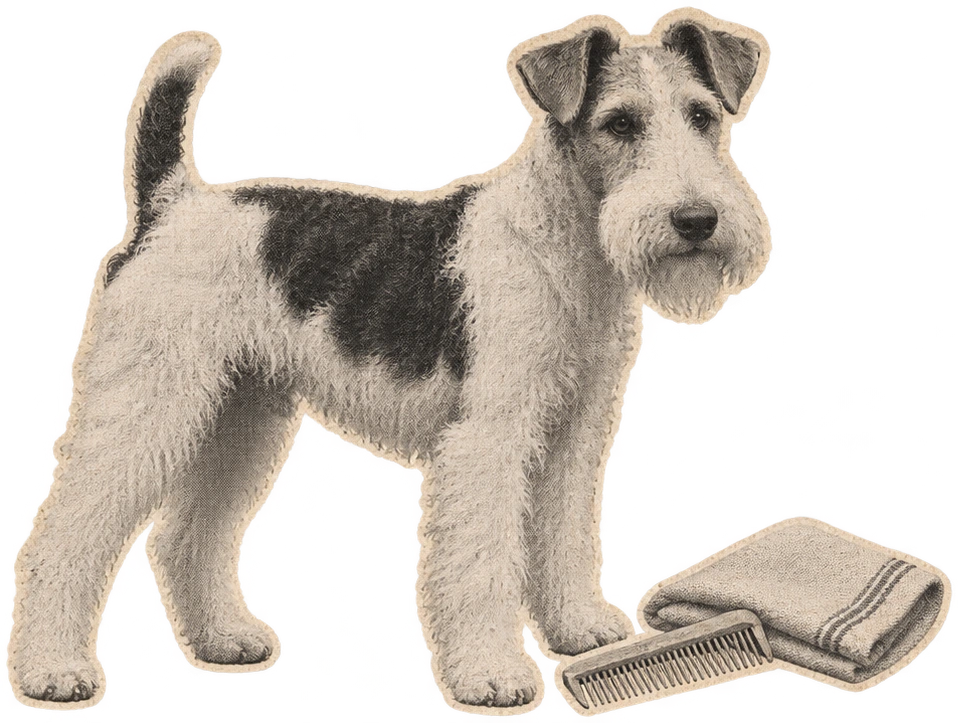
For a Wire, get a comb through the beard and leg hair in small sections and ask a groomer who knows wire coats about clipping or hand stripping. Hand stripping removes dead hairs and is used to maintain wire texture; a pet clip is another option to discuss. Don’t try pulling at an uncomfortable dog or cutting out a tight mat with scissors around the face. 4 10 15 16
Fox Terrier notes / 04
Two coats to care for
| Coat or spot | Useful routine |
|---|---|
| Smooth body coat | Brush gently and check where straps touch the skin. 3 10 13 |
| Wire jacket | Have a groomer assess the coat and talk through the options. 4 15 |
| Wire beard and legs | Check for wet food, mud and knots before they settle in. 4 10 |
| Eyes and paws on either | Notice soreness or a change in how the dog moves. 11 14 |
The first little look is your chance to act
If they prick up, freeze or lean towards a moving cat, it’s easier to ask for a turn there than once the lead’s gone tight. Pick routes with somewhere to move away. Not every Fox Terrier will react to the same things and the coat doesn’t tell you which dog will be easier on a lead. 6 17 18
If there’s barking along the fence, check what passes on the other side and whether you can get the dog away before it gets going. If neighbours only hear it when you go out, see what happens on a recording. Watching a squirrel and being frightened of being alone are not the same job for you to fix. 18 19 20
Fox Terrier notes / 05
Spot the first look
| What you see | First change |
|---|---|
| A narrow path and something moving | Make space early while your dog can still switch attention. 6 17 |
| Regular barking at the fence | Manage the view and bring them away from the trigger. 8 18 |
| Noise or pacing when nobody’s home | Check by video and get help if they’re distressed. 19 20 |
Give the nose something better to do
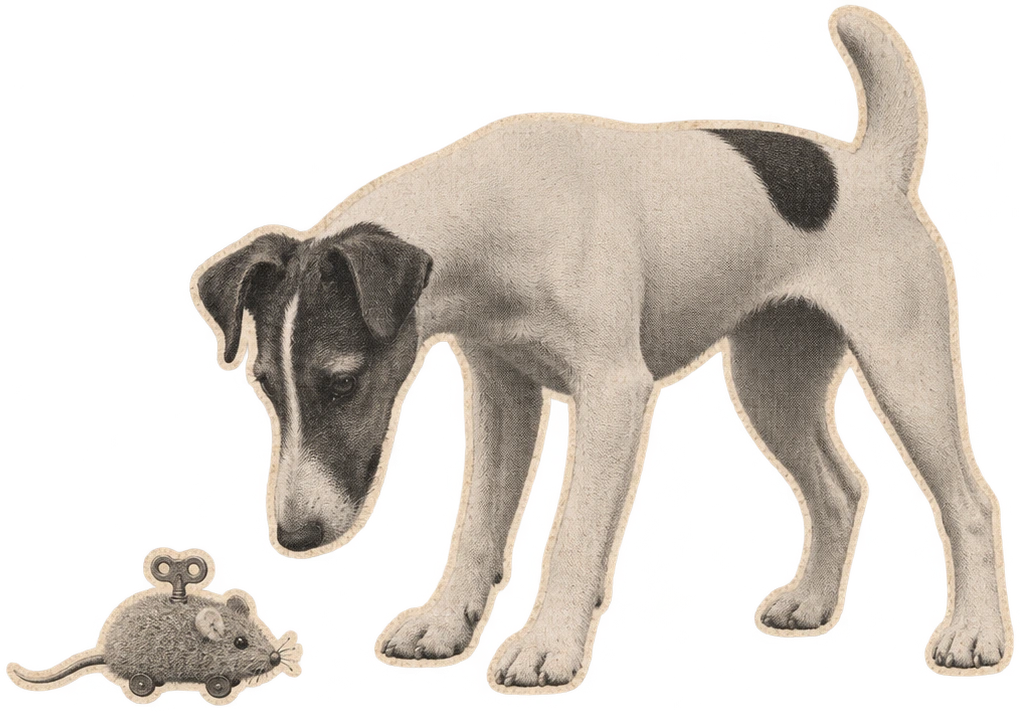
Hide a toy at the edge of a patch of grass and let them find it. Let them have a proper sniff rather than digging around beside a drain. If they struggle, make the next find easier. Finish while they’re still interested, put the toy away and reward a bit of calm back at home. 7 9 21 22
Teach recall separately, somewhere with plenty of space away from traffic. If you need a long line, put it on a well-fitted harness. Reward the dog for coming right back rather than for glancing over their shoulder from under a hedge. 7 13
Somewhere to stretch their legs without borrowing someone else’s rabbit
Walk at a pace that suits your dog and give them time to check the verges. If you want to practise without a lead, choose an enclosed area if their return isn’t dependable. Keep the dog on a lead around livestock and where a chase would put them or another animal at risk. 6 7 23 24
Use shorter or cooler outings when it’s hot, and don’t push them through a limp. Tell the vet about recurring changes, and note when they happen. A dog always hopping for a few steps on the way home hasn’t necessarily just picked up a funny running style. 23 25 26
Fox Terrier notes / 07
Choose the ground
| Situation | Practical choice |
|---|---|
| Quiet open ground | Give them a few places to sniff rather than just adding distance. 9 23 |
| Unreliable recall | Use a suitable long line or a genuinely secure area. 7 |
| Livestock ahead | Keep the lead on and give the animals room. 24 |
| Repeat limp or hesitation | Scale back the outing and ask the vet. 26 |
Check the bottom of the fence as well as the top
Walk the garden edges and look behind dense plants and bins. Don’t count on a nearby shed to fill a gap just because you can’t see through it from the back door. If an animal on the wall keeps setting them off, supervise garden time and give them something to do further away. 6 8 9
If you’ve got a dog that’s permanently on duty at the window, try a quiet bed away from the view. Build up short periods alone gradually and see what they can actually manage. It’s not much of a rest area if every passer-by comes with a full report to the household. 18 19 21
Don’t make the cat or the children control the meeting
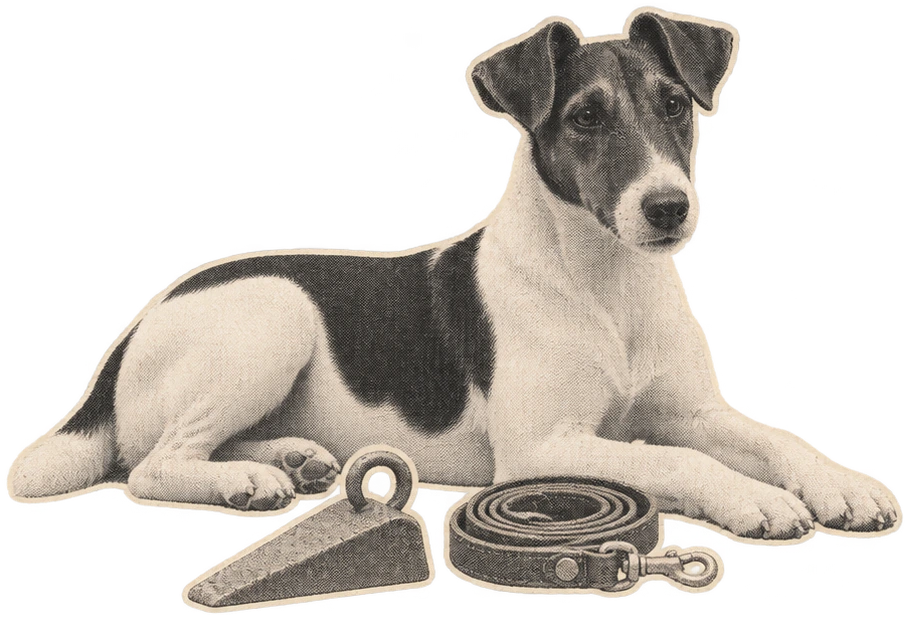
Have an adult supervise with children and let the dog go away when they’ve had enough. If fast games are getting everybody overexcited, separate the dog and the game before it gets rough. “He’s only small” isn’t much comfort to a child who’s being chased round the garden. 6 17 27
Give cats a route to get away without passing the dog, and make sure smaller pets can be safely separated. If you’re bringing in another dog, start with calm introductions and give them space apart for food, toys and rest. Judge what you actually see, not which coat either one’s got. 6 28 29
Health: check which Fox Terrier the evidence is about
The Royal Kennel Club’s individual Smooth and Wire pages both highlight genetic diversity under Good Practice and the BVA/RKC/ISDS Eye Scheme under Best Practice. Get the actual eye screening results if you’re buying a puppy. A clinical eye exam doesn’t cover every future problem, and a painful or closed eye needs advice now regardless of the parents’ results. 1 2 11 30 31 32
A 2015 study identified a KCNJ10 variant in three related Smooth-Haired Fox Terriers that were already affected by hereditary ataxia, a problem with movement and coordination. That isn’t a UK prevalence estimate, a test recommendation in the RKC Best Practice list above, or evidence for all Wires. If your dog suddenly seems unsteady or has difficulty walking, ring your vet promptly rather than trying to match them to a paper. 1 2 33 34
The published 2024 UK Dogs Trust table has a 13.5-year median under the label Wire Fox Terrier. It doesn’t show a separate Smooth Fox Terrier estimate, so it’s not a comparison between the two or a forecast for the dog in your kitchen. 35 36
Fox Terrier notes / 10
Health conditions and screening
| Topic | What to do with it |
|---|---|
| Smooth and Wire eyes | Check the clinical screening results and don’t ignore a painful eye. 1 2 11 31 |
| Smooth study | Three affected related dogs are a case series, not UK odds. 33 |
| Movement changes | Ask the vet about wobbling, stumbling or a noticeable change in how they walk. 26 34 |
| Lifespan | 13.5 years is the median displayed under Wire, with no separate Smooth result shown. 35 36 |
| Screening | Read the actual results, date and name on each record. 1 2 37 |
| Breeding | Ask both about results and how relatedness was considered. 1 2 32 |
| Urgent conditions | Don’t wait on a painful eye or sudden trouble standing. 11 34 |
Spend on the right sort of help
For a Wire, get the grooming quote for the finish you need and ask what’s expected of you between visits. For a Smooth, a basic grooming setup might do for the body coat, but still make time for coat, paw and skin checks. Don’t book the same thing for both just because the shop’s system says Fox Terrier. 3 4 10 15
Read insurance limits and exclusions, and get prices tied to the actual dog rather than a general breed figure. Talk to walkers about chasing and safe lead use while you’re still deciding. You’ll get more from that conversation than telling them afterwards what it means when the dog suddenly stops in front of a hedge. 6 38 39
Fox Terrier notes / 11
Ask for the right trim
| Cost | Ask about |
|---|---|
| Wire grooming | Price of a pet clip or appropriate hand stripping, and what maintenance is needed. 15 |
| Smooth kit | A brush or mitt suitable for a short coat. 3 10 |
| Insurance | Excesses, limits and ongoing or pre-existing conditions. 38 |
| Walker | Where they walk, when they use a lead and what they do around wildlife. 6 39 |
Same working roots, two separate standards
The UK Fox Terrier Club describes the Smooth and Wire as British in origin, and the Royal Kennel Club’s breed accounts show how the two became distinct entries from earlier working terriers. Those roots explain the name and why a small dog needed to be able to move well. They don’t tell you what a particular one is like with your cat. 1 2 3 4 5
Fox Terrier notes / 12
British roots
Meet the grown dog somewhere it normally goes
If you’re adopting, ask to see what the dog’s like on a walk and what happens when the walk ends. Find out how they cope with visitors, other animals, being left and, for a Wire, having that beard and the legs handled. Ask where those observations were made so you don’t confuse what goes on in a kennel with what might happen at home. 6 16 19 40
If you’re going to see a litter, meet the pups with their mum and find out which Fox Terrier you’re looking at. Check the parents’ eye results and ask about movement and eye problems in the family. Watch an adult when there’s no toy in sight. You’re going to live with that version as well. 1 2 21 37 41
Fox Terrier notes / 13
Meet the adult
| What to ask | Why it helps |
|---|---|
| Which breed and what’s known about the parents? | Keeps the breed identification and results straight. 1 2 37 |
| How do they behave around wildlife? | Helps you choose routes and sort out safe lead use. 6 7 |
| What grooming have they actually had? | Makes it easier to carry on without starting from scratch. 10 16 |
| How do they switch off after a walk? | Gives you a useful clue about settling in your home. 21 40 |
Sources
- S1Royal Kennel Club Fox Terrier (Smooth) breed profile and pre-breeding adviceSource · checked 21 November 2026
- S2Royal Kennel Club Fox Terrier (Wire) breed profile and pre-breeding adviceSource · checked 21 November 2026
- S3Royal Kennel Club written UK Fox Terrier (Smooth) standardSource · checked 21 November 2026
- S4Royal Kennel Club written UK Fox Terrier (Wire) standardSource · checked 21 November 2026
- S5UK Fox Terrier Club own account of both breeds' originsSource · checked 21 November 2026
- S6Dogs Trust tips for dogs chasing movementSource · checked 21 November 2026
- S7Dogs Trust reward-based recall and safe long-line useSource · checked 21 November 2026
- S8Dogs Trust preventing escapes and checking boundariesSource · checked 21 November 2026
- S9Dogs Trust scent games and enrichmentSource · checked 21 November 2026
- S10PDSA veterinary guidance on grooming and short coatsSource · checked 21 November 2026
- S11PDSA veterinary advice on a painful or held-shut eyeSource · checked 21 November 2026
- S12PDSA dog body condition checkSource · checked 21 November 2026
- S13Dogs Trust introducing and fitting a harnessSource · checked 21 November 2026
- S14PDSA home health and paw checksSource · checked 21 November 2026
- S15American Fox Terrier Club original grooming handout about wire hair, hand stripping and pet clipsSource · checked 21 November 2026
- S16Dogs Trust low-pressure handling for grooming and checksSource · checked 21 November 2026
- S17Dogs Trust reading the dog's body languageSource · checked 21 November 2026
- S18Dogs Trust understanding and managing barking triggersSource · checked 21 November 2026
- S19Dogs Trust gradual training for time aloneSource · checked 21 November 2026
- S20Dogs Trust advice on spotting and managing separation distressSource · checked 21 November 2026
- S21Dogs Trust teaching a dog to settleSource · checked 21 November 2026
- S22Dogs Trust helping a dog calm down after excitementSource · checked 21 November 2026
- S23PDSA tailoring exercise to the dog's age and conditionSource · checked 21 November 2026
- S24Natural England countryside code, livestock and leadsSource · checked 21 November 2026
- S25Dogs Trust hot-weather care and exerciseSource · checked 21 November 2026
- S26PDSA veterinary signs and when to get help for limpingSource · checked 21 November 2026
- S27Dogs Trust children and dog safetySource · checked 21 November 2026
- S28Dogs Trust introducing dogs and catsSource · checked 21 November 2026
- S29Dogs Trust introducing another dogSource · checked 21 November 2026
- S30Royal Kennel Club central Health Standard and separate Smooth and Wire entriesSource · checked 21 November 2026
- S31British Veterinary Association clinical Eye SchemeSource · checked 21 November 2026
- S32Royal Kennel Club maintaining genetic diversitySource · checked 21 November 2026
- S33Original 2015 affected Smooth-Haired Fox Terriers KCNJ10 report and sample detailSource · checked 21 November 2026
- S34PDSA veterinary guidance on loss of balance or inability to standSource · checked 21 November 2026
- S35McMillan et al. original UK dog longevity cohortSource · checked 21 November 2026
- S36Dogs Trust published longevity table, displayed label Wire Fox TerrierSource · checked 21 November 2026
- S37Royal Kennel Club named-dog results lookupSource · checked 21 November 2026
- S38PDSA the costs of owning and insuring a dogSource · checked 21 November 2026
- S39Dogs Trust finding a suitable walkerSource · checked 21 November 2026
- S40Dogs Trust settling a rescue dogSource · checked 21 November 2026
- S41RSPCA choosing a breeder and meeting a litter with its motherSource · checked 21 November 2026
