Breed guide / Flat Coated Retriever
Living with a Flat Coated Retriever
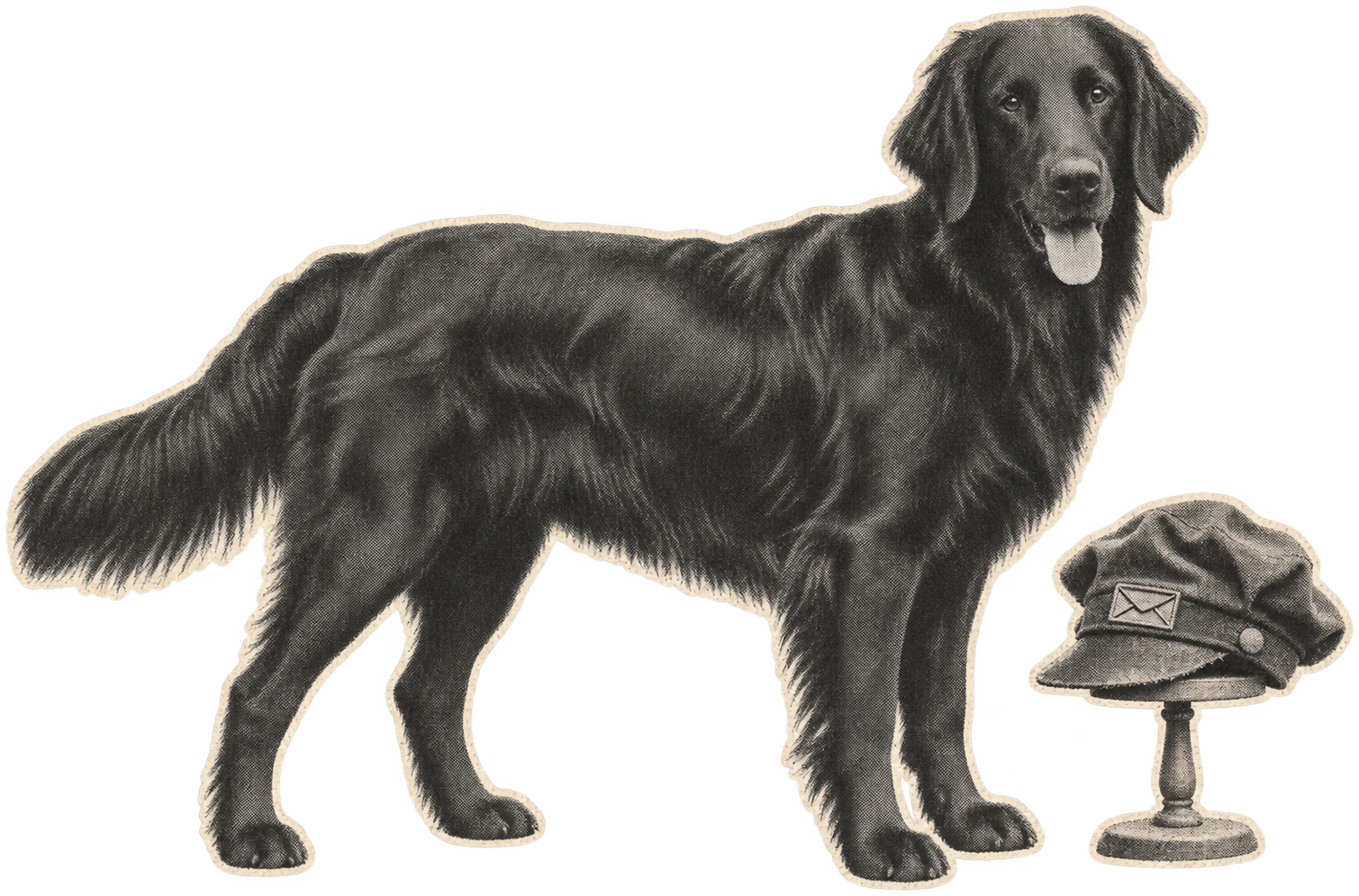
The Flat Coated Retriever is a British gundog with a long, clean head, black or liver coat and enough energy for more than a quick turn round the block. If yours likes to carry things, put something they’re allowed to have by the door. Work on the bit where the walk’s finished and they can switch off, too. It’s useful to have a dog who brings you the post, less useful if you never get to open it. 12345
Jump to a section
The short version
Give them a useful job out on the walk that doesn’t always involve a sprint. Hide a familiar toy, let them sniff on an easy stretch or practise bringing something back nearby. At home, pay attention when they settle down instead of waiting until they’ve brought you the third thing they’ve found in the hallway. 3 4 5 6
Put your hands over the coat while they’re relaxed and get used to their normal shape. Ask the vet about new lumps and changes in movement. A painful or suddenly cloudy eye needs urgent attention. 7 8 9
Flat Coated Retriever notes / 01
First changes
| Start here | Practical move |
|---|---|
| Carrying | Offer a safe toy before letting them choose from the post, shoes or towels. 3 |
| Walks | Give the nose a job and keep hard chasing from becoming the whole outing. 4 6 |
| Home | Reward resting somewhere out of the way. 5 |
| Health | Learn what’s normal; get a new lump examined and a painful eye seen urgently. 7 9 |
Flat Coated is the breed, not a haircut
The Royal Kennel Club lists this breed as Retriever (Flat Coated). The Flatcoated Retriever Society runs the UK breed club under its own spelling. The breed isn’t a Labrador with long hair or a dark Golden Retriever. Black and liver are the two colours in the UK written standard. 1 2 10 11 12
Flat Coated Retriever notes / 02
What flat coated means
Look under the feathering before judging shape
The UK written standard gives preferred heights of 58–61 cm for males and 56–58 cm for females. Those describe the breed ideal, not an individual weight or feeding target. Feel the ribs and waist beneath the coat and ask the vet to show you what healthy condition looks like for yours. 2 14
Adjust the harness while the dog’s standing, then see what it’s like on the move. Check for rubbing behind the front leg underneath the coat. If the dog can turn round but the straps don’t stay put, go back to the fit rather than tightening everything another notch. 15 16
Get the wet out of the hair
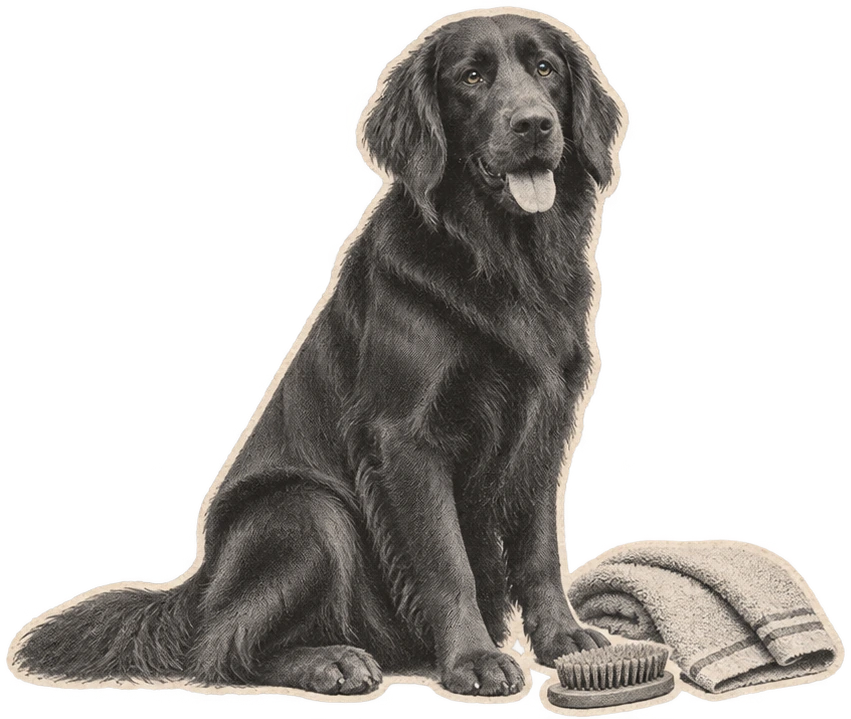
The coat carries more feathering around the legs and tail. Check those areas after a muddy outing. Don’t brush over a packed bit and hope it’ll be easier tomorrow. Break the grooming up and check behind the ears and where the straps sit. 2 15 16
If swimming is part of the walk, look at the outer ears and dry the coat afterwards. Get a new smell, discharge or constant head shaking checked. Don’t use a cotton bud inside their ear. Long grass can leave seeds in paws, ears or around eyes, so notice how the dog behaves afterwards. 18 19 20
Flat Coated Retriever notes / 04
After a wet outing
It’s all right if they don’t say hello
If your dog arrives at people at full speed, practise while there’s still space to move away. Reward four paws down or a look back at you before they reach anyone. If they hang back when someone offers a hand, let them. A cheerful greeting one day isn’t an agreement to be handled every time. 21 22
A dog who’s suddenly reluctant to play or go out may not need more encouragement. Look for a change in stride, appetite or how they cope with being touched. Get a recurring change checked instead of assuming they’ve lost interest. 8 23
Flat Coated Retriever notes / 05
Greetings with room
Make giving things back worth the bother
Use a familiar toy. Give them room to pick it up, then trade when they come near rather than reaching in to take it. Sometimes return the toy afterwards. It makes a difference if handing it over doesn’t always mean it’s gone. 3 24
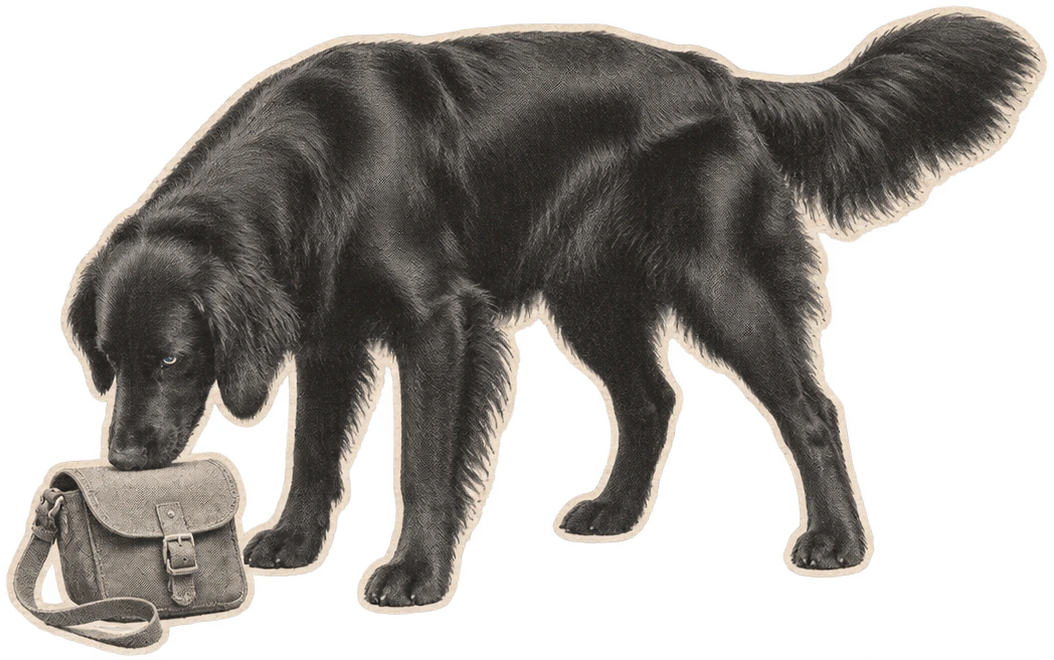
Put an easy find into a walk and leave time to sniff between attempts. Practise a separate recall cue away from busy spots. When they’re learning, a long line on a well-fitting harness can help in suitable places. Use a normal lead near traffic or animals they might chase. 4 15 25
Give an active dog a bit of variety
A healthy adult usually needs an active routine, but not every walk has to be fast. Build up according to age, fitness and how they move. If your dog’s coming back from an injury or tires much sooner than they used to, don’t add distance until you know what’s going on. 1 6 8
Water is an option if they like it and there’s a safe way out. Avoid strong currents and suspect algal blooms. In warmer weather pick an easier outing at a cooler time. Check how they move once they’ve had a rest; the end of a walk doesn’t always tell the whole story. 8 18 26
Flat Coated Retriever notes / 07
Vary the walk
| Situation | Better plan |
|---|---|
| They enjoy retrieving | Make some rounds a search rather than repeated hard chasing. 4 6 |
| Water | Use safe water with an easy exit; skip it if unsure. 18 |
| Hot weather | Use cooler hours and give up the hard exercise. 26 |
| New stiffness | Ease off and get an ongoing or recurring problem checked. 8 |
Practise stopping while nothing’s going on
Set the bed where they can see enough of the house to relax without getting up for every passing footstep. Reward them when they lie down there by choice. Get this working while you’re reading or making dinner, not while six people have just come in. 5
Build time alone gradually if it’s hard for them. Watch what they do with the time, not just how long you stayed out. A familiar toy or short search can be useful as part of the routine; it isn’t a cure for distress. 4 27 28
Flat Coated Retriever notes / 08
Practise stopping
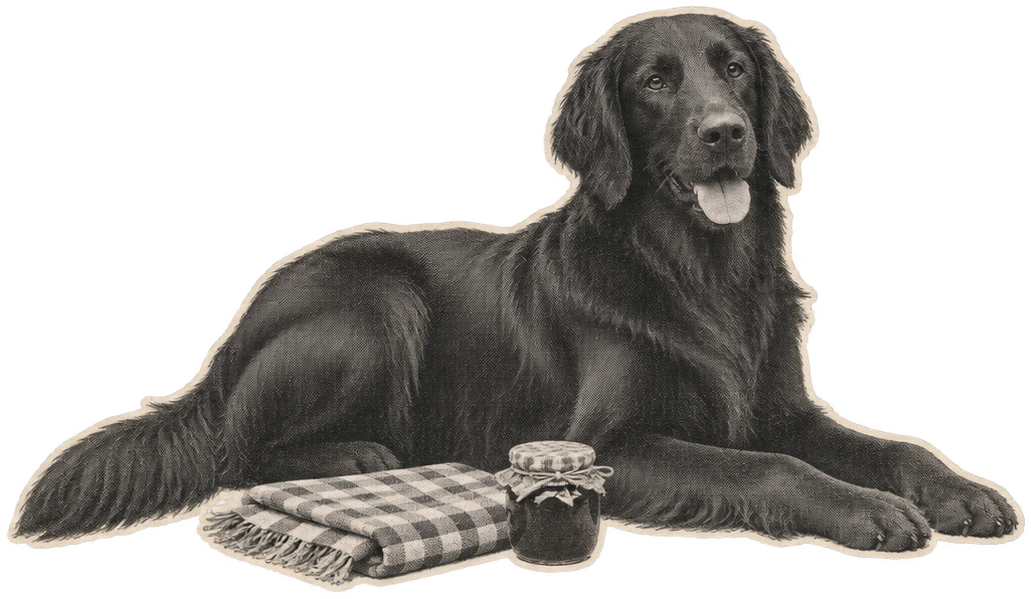
Don’t make the dog everyone’s entertainment
Let children help hide a toy while an adult supervises. Don’t let them take a found item out of the dog’s mouth or climb into the resting spot. A fairly friendly dog can still knock a small child over on the way to see what they’ve got. 3 22 30
Use barriers and easy exits when introducing household animals. Start at a distance and watch what each does. Don’t let a first greeting turn into a chase because you assumed a retriever would never mind the cat. 22 31 32
Know what needs a proper check
Get a new lump examined, even if it doesn’t look dramatic. In an older UK study of 174 Flat Coated Retrievers, cancer was a substantial cause of death in the dogs followed, and soft tissue sarcomas, including histiocytic sarcoma, featured prominently. It doesn’t tell you what a lump is or give a current personal risk. Not all new lumps are cancer, and some cancers don’t start with a lump you can feel. 7 33
For breeding, Royal Kennel Club Good Practice lists clinical eyes and gonioscopy for pectinate ligament abnormality (PLA). Best Practice adds hip scores and elbow grades. Screening isn’t a diagnosis; a painful or abruptly cloudy eye needs urgent veterinary help regardless of previous results. 9 13 34 35 36
The 2024 UK longevity study estimated a median of 11.7 years among 2,148 Flat Coated Retrievers in its data. That’s a separate cohort, not an update to the older study’s cancer rate or a prediction of how many years any one dog will live or stay well. 37 38
Flat Coated Retriever notes / 10
Health conditions and screening
| Issue | How to use the information |
|---|---|
| New lump | Have it checked rather than choosing by appearance or feel. 7 |
| A painful, cloudy or held-shut eye | Get urgent veterinary advice. 9 |
| Clinical eye testing | Good Practice in the BVA/RKC/ISDS scheme. 13 34 |
| Gonioscopy for PLA | Good Practice check of the eye’s drainage angle. 13 34 |
| Hips and elbows | Additional Best Practice screening, not a guarantee about movement. 13 35 36 |
| Cancer research | Older UK cohort gives breed context, not an individual diagnosis. 33 |
| Lifespan | 11.7-year UK cohort median, not a forecast. 37 38 |
Work out what the weekly routine costs
Plan how much the dog actually eats, whether you’ll want grooming help and when you need somebody else to walk them. Ask your local practice about routine costs and check insurance exclusions and limits. The cheapest policy isn’t much of a bargain if it excludes the care you need. 16 29 39
Ask a walker what happens when a dog keeps picking up things from the path or can’t settle in a group. A route they can describe in useful detail beats a promise to wear the dog out. 3 25 40
A retriever that used to be called wavy
The Royal Kennel Club and breed society describe a history in British working retrievers, with Wavy Coated Retriever among the earlier names. The modern Flatcoat sits in the UK gundog group. Let the history give you ideas for things they might enjoy. It isn’t a job description every pet has to follow. 1 2 10
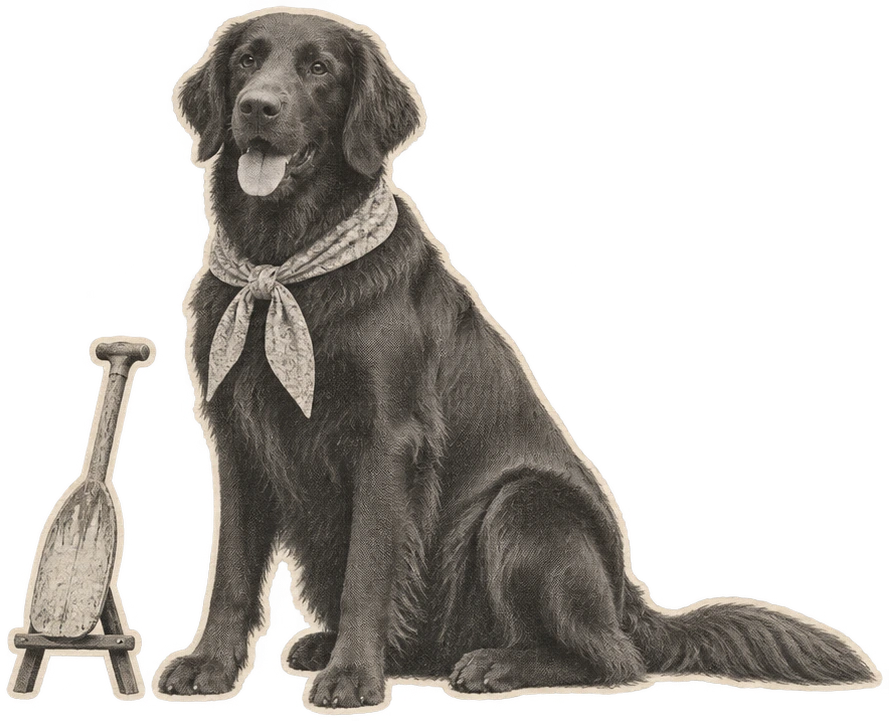
Ask about a day at home, not just the walk
For an adult, ask what happens after the outing. Find out how they settle, what they bring you and how they are with brush, harness and veterinary handling. For a puppy, meet them with their mum where they were bred, see the named parent test results and ask about relevant family history. 13 22 41 42 43
Start with one familiar resting space, some quiet outings and a toy they’re allowed to bring you. Leave the half-hour demonstration of what a retriever can do until you’ve found out what makes them comfortable. 3 5 41
Flat Coated Retriever notes / 13
Ask about life at home
| Ask or arrange | Useful detail |
|---|---|
| Screening | Actual results rather than a verbal “vet checked”. 13 43 |
| Grooming and handling | Where they’ll accept the brush and when they need a break. 16 22 |
| Walks | A route they know and what works when they find something to carry. 3 25 |
| First week | A rest spot and a predictable simple routine. 5 41 |
Sources
- S1Royal Kennel Club Flat Coated Retriever breed profile and historySource · checked 21 November 2026
- S2Royal Kennel Club written Retriever (Flat Coated) standardSource · checked 21 November 2026
- S3Dogs Trust teaching an exchange instead of chasingSource · checked 21 November 2026
- S4Dogs Trust enrichment and search gamesSource · checked 21 November 2026
- S5Dogs Trust mat and settle trainingSource · checked 21 November 2026
- S6PDSA exercise by age, comfort and conditionSource · checked 21 November 2026
- S7PDSA veterinary advice on new lumps and tumours in dogsSource · checked 21 November 2026
- S8PDSA limp and pain in dogsSource · checked 21 November 2026
- S9PDSA veterinary advice on eye pain and holding an eye shutSource · checked 21 November 2026
- S10Flatcoated Retriever Society, historical naming of the FlatcoatSource · checked 21 November 2026
- S11Royal Kennel Club Labrador written standard, coat and heightSource · checked 21 November 2026
- S12Royal Kennel Club Golden Retriever written standard, coat and heightSource · checked 21 November 2026
- S13Royal Kennel Club current Health Standard, Flat Coated row and distinct retrieversSource · checked 21 November 2026
- S14PDSA checking a dog's body conditionSource · checked 21 November 2026
- S15Dogs Trust introducing and fitting a harnessSource · checked 21 November 2026
- S16PDSA grooming and skin checksSource · checked 21 November 2026
- S17Dogs Trust safer travel with a dogSource · checked 21 November 2026
- S18PDSA swimming and water safety including blue-green algaeSource · checked 21 November 2026
- S19PDSA recognising ear infection signsSource · checked 21 November 2026
- S20PDSA veterinary guidance on grass seeds in paws, ears and eyesSource · checked 21 November 2026
- S21Dogs Trust jumping up and low-pressure alternative behaviourSource · checked 21 November 2026
- S22Dogs Trust low-pressure handlingSource · checked 21 November 2026
- S23Dogs Trust reading body languageSource · checked 21 November 2026
- S24Dogs Trust teaching a dog to pick up a toy and bring it backSource · checked 21 November 2026
- S25Dogs Trust recall and safe long-line useSource · checked 21 November 2026
- S26Dogs Trust safety in hot weatherSource · checked 21 November 2026
- S27Dogs Trust practising time alone graduallySource · checked 21 November 2026
- S28PDSA separation anxiety and veterinary or behaviour helpSource · checked 21 November 2026
- S29PDSA practical dog feeding and treatsSource · checked 21 November 2026
- S30Dogs Trust child and dog supervisionSource · checked 21 November 2026
- S31Dogs Trust cat and dog introductionsSource · checked 21 November 2026
- S32Dogs Trust dog-to-dog introductionsSource · checked 21 November 2026
- S33Dobson et al., original older UK Flat Coated Retriever mortality cohortSource · checked 21 November 2026
- S34Royal Kennel Club gonioscopy guidance and PLA scopeSource · checked 21 November 2026
- S35British Veterinary Association hip dysplasia schemeSource · checked 21 November 2026
- S36British Veterinary Association elbow dysplasia schemeSource · checked 21 November 2026
- S37McMillan et al. original UK dog longevity cohort, methods and supplementary breed estimatesSource · checked 21 November 2026
- S38Dogs Trust original 2024 UK longevity table, Flat Coated Retriever rowSource · checked 21 November 2026
- S39PDSA dog ownership costs and insurance considerationsSource · checked 21 November 2026
- S40Dogs Trust guidance on finding a walkerSource · checked 21 November 2026
- S41Dogs Trust settling a rehomed dogSource · checked 21 November 2026
- S42RSPCA advice on selecting and visiting a breederSource · checked 21 November 2026
- S43Royal Kennel Club individual health results finderSource · checked 21 November 2026