
Breed guide / English Foxhound
Living with an English Foxhound
An English Foxhound is a big, short-coated scent hound that was developed to work in a pack. A smell can keep it interested long after your idea of a walk is finished. If you live with one, the useful skill isn’t calling louder. It’s noticing when the dog first catches the trail and leaving yourself enough room to turn before it has decided where you’re both going. 12347
Jump to a section
Know what the first sign of a trail looks like
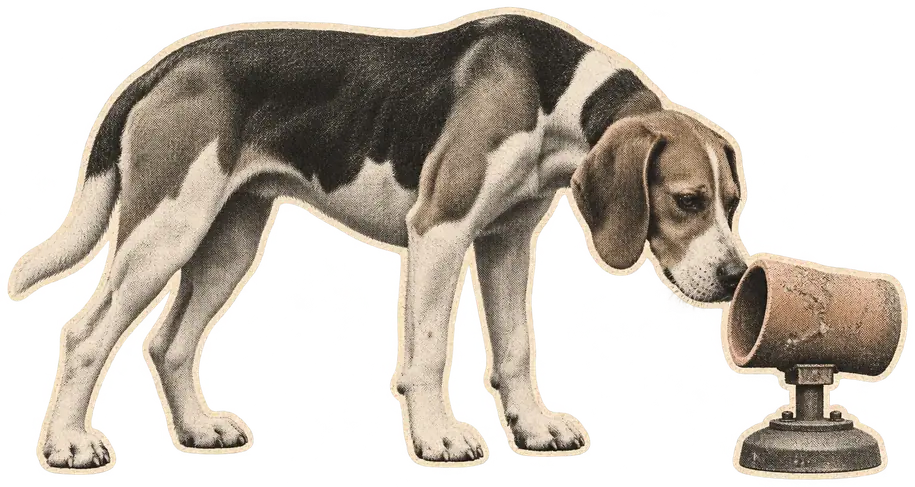
Watch on a regular lead walk, not beside a busy road or loose with wildlife. For your dog it might be the nose locking onto one patch, a quick change of direction or a sudden pull towards a gap. See whether they can still look back at you and follow a turn. If they can’t, move away and give yourself more space before trying again. 567
English Foxhound notes / 01
Field notes
| When | What to practise |
|---|---|
| Before the nose fixes | Reward the dog for turning with you on an easy stretch. 567 |
| Where it is safe to sniff | Use a clear release cue and let them get on with the interesting bit. 58 |
| Right by a road, stock or wildlife | Use a secure ordinary lead; choose a safe route rather than a recall test. 579 |
Foxhound doesn’t always mean the same hound
English Foxhound notes / 02
Field notes
Fit equipment before the dog finds out for you
English Foxhound notes / 03
Field notes
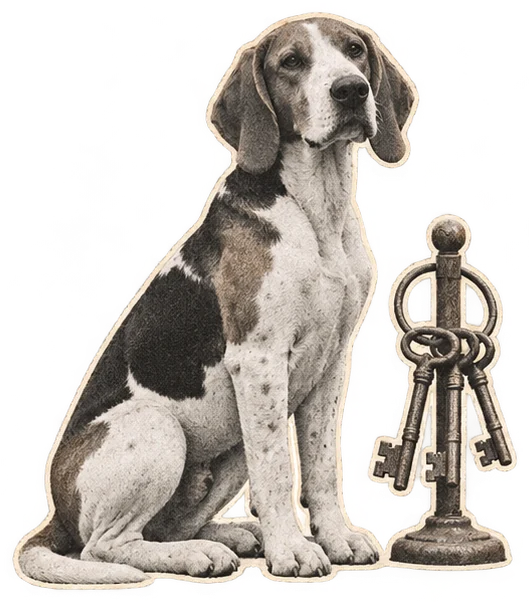
The UK standard describes a short, dense coat and an approximate height of 58–64 cm. That is a breed description, not a promise about the strength or size of your own dog. Check harness fit with the dog moving and make sure it can’t simply back out. Use a car restraint designed for that purpose rather than attaching a walking lead to the boot. 1611
Make the gate a two-step job
English Foxhound notes / 04
Field notes
Have the lead and a secure barrier between the hound and the road when somebody opens the gate at a busy moment. Practise the turn inside first. For a car boot, check where the dog will wait while you release its restraint and attach the walking lead. A gap doesn’t stay small for long when there’s a hound pushing at it. 671112
A kennel routine doesn’t come with the carpet
English Foxhound notes / 05
Field notes
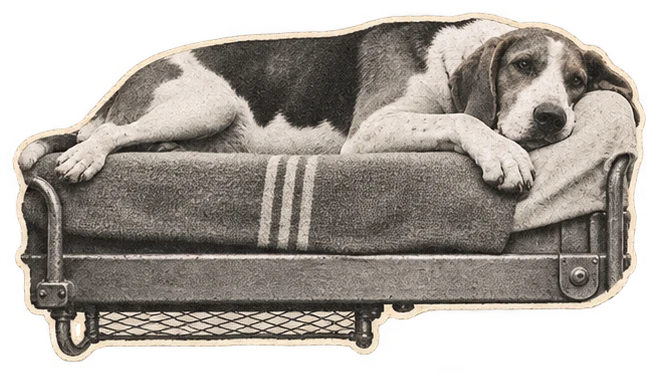
Some dogs will have lived in a home; others may know a kennel routine much better. Ask, then look for the ordinary things: using the outside door to toilet, lying down while a person moves round the kitchen, and staying relaxed when another dog leaves the room. Use a calm predictable setup, with easy trips outside and one change to practise at a time. Don’t mistake a dog standing quietly for a dog already at ease. 3131415
Give the nose a job with a finish
English Foxhound notes / 06
Field notes
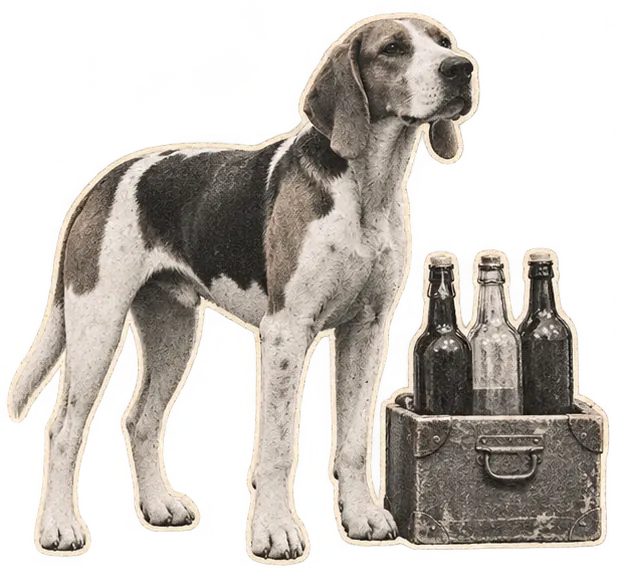
A food or toy search on safe ground lets the dog follow its nose without rehearsing a chase. Start short, let the dog find and finish rather than immediately throwing in another search, and teach a cue that says you’re moving on. If you try a long line, use a suitable harness and ground with space, away from traffic or other people’s legs. 5678
Don’t turn every walk into a race
English Foxhound notes / 07
Field notes
Scent and movement can both matter to this hound. Plan walks with time to explore, but base intensity and distance on the dog’s condition, age and recovery, not what pack dogs historically did. Look at feet and between the toes after rough or muddy ground, and keep an eye out for persistent licking or a new limp. 1234161718
Find out what time alone actually looks like
English Foxhound notes / 08
Field notes
A pack background doesn’t mean every dog needs a resident companion or that adding one will fix distress. Use a recording to see what your dog does when left in an arrangement you’ve introduced gradually. If the dog is distressed, reduce the difficulty and seek suitable support before leaving it longer. 3131920
Observe the animals, not the breed description
English Foxhound notes / 09
Field notes
Ask what your dog has actually done around cats, dogs and children. Arrange controlled introductions with space and a way out, and never use a cat to test whether the hound will chase. Separate animals around food and chews if needed and keep children away from a resting dog. Don’t leave children to supervise introductions. 714212223
Don’t let a thin evidence base turn into invented certainty
The Royal Kennel Club’s central Foxhound row shows no named Good or Best Practice test. The breed profile advises prioritising genetic diversity under Good Practice. The Foxhound Club’s code also asks for records of any actual health screening; that is not a fixed RKC test panel. Ask which dogs the records refer to, and discuss any specific family history with your vet. 22425
English Foxhound notes / 10
Field notes
| What you’re checking | What it means |
|---|---|
| A change in movement | Persistent stiffness, new limping or a reluctance to take familiar steps warrants a call to your vet, not an assumption about how hard the dog used to work. 17 |
| Ears | Check for a change in smell, redness or repeated head shaking. Ask the vet about symptoms; don’t clean deep into a sore ear. 1826 |
| UK lifespan evidence | The 2024 Dogs Trust table has a Foxhound row, not a separately verified English Foxhound-only result. It estimated a median of 13.0 years (95% CI 11.4–16.9) from 71 entries, including 31 deaths. This is a small, broadly labelled cohort, not a breed-only or individual forecast. 2728 |
Pay for care that can handle the lead
English Foxhound notes / 11
Field notes
Ask a walker or boarding provider how they manage arrivals, doors and handovers; if they have a secure enclosed exercise area, ask how it’s checked and shared. Consider suitable travel equipment and whether care will still work when the dog gets older. Keep a separate out-of-hours plan and check insurance exclusions. 611132930
Take the history, leave the job in the past
English Foxhound notes / 12
Field notes
The Royal Kennel Club and UK Foxhound Club describe the English dog’s pack and hound-working history. For a pet, you can borrow the useful part and offer safe opportunities to search; it isn’t an instruction to pursue wildlife or put the dog with a pack. Follow the rules for wherever you walk. 23489
Ask for an actual handover
English Foxhound notes / 13
Field notes
If you’re rehoming, watch a short walk and ask what has actually been observed indoors, at a gate and around resident animals. See how the equipment goes on and agree who to go back to if there’s a problem. For a puppy, see the mother with the litter at its home and match records to the dogs. Unknown behaviour is an important answer, not a detail to talk around. 6131415212531
Sources
- S1Royal Kennel Club official Foxhound standardSource · checked 21 November 2026
- S2Royal Kennel Club Foxhound breed and health profileSource · checked 21 November 2026
- S3UK Foxhound Club, English Foxhound breed historySource · checked 21 November 2026
- S4FCI separate English Foxhound entrySource · checked 21 November 2026
- S5Dogs Trust lead, recall and long-line adviceSource · checked 21 November 2026
- S6Dogs Trust harness fittingSource · checked 21 November 2026
- S7Dogs Trust chasing and safe alternativesSource · checked 21 November 2026
- S8Dogs Trust safe enrichment and scent activitiesSource · checked 21 November 2026
- S9Natural England Countryside CodeSource · checked 21 November 2026
- S10FCI separate American Foxhound entrySource · checked 21 November 2026
- S11Dogs Trust car travel and restraintsSource · checked 21 November 2026
- S12Dogs Trust door and visitor managementSource · checked 21 November 2026
- S13Dogs Trust settling a rescue dogSource · checked 21 November 2026
- S14Dogs Trust asking about a rescue dogSource · checked 21 November 2026
- S15UK Foxhound Club rescue and hound sourcingSource · checked 21 November 2026
- S16PDSA activity by age, dog and fitnessSource · checked 21 November 2026
- S17PDSA limping and stiffnessSource · checked 21 November 2026
- S18PDSA health checks, paws and earsSource · checked 21 November 2026
- S19Dogs Trust learning to spend time aloneSource · checked 21 November 2026
- S20Dogs Trust separation distressSource · checked 21 November 2026
- S21Dogs Trust safe cat introductionsSource · checked 21 November 2026
- S22Dogs Trust children and dogsSource · checked 21 November 2026
- S23Dogs Trust bringing in a second dogSource · checked 21 November 2026
- S24Royal Kennel Club central named health tiersSource · checked 21 November 2026
- S25UK Foxhound Club code and recording screeningSource · checked 21 November 2026
- S26PDSA ear symptomsSource · checked 21 November 2026
- S27Dogs Trust research team's UK breed-label results tableSource · checked 21 November 2026
- S28McMillan et al., original study methodsSource · checked 21 November 2026
- S29Dogs Trust selecting a walkerSource · checked 21 November 2026
- S30PDSA budgeting for dog careSource · checked 21 November 2026
- S31RSPCA buying a puppy and verifying the homeSource · checked 21 November 2026
