
Breed guide / English Bulldog
Living with an English Bulldog
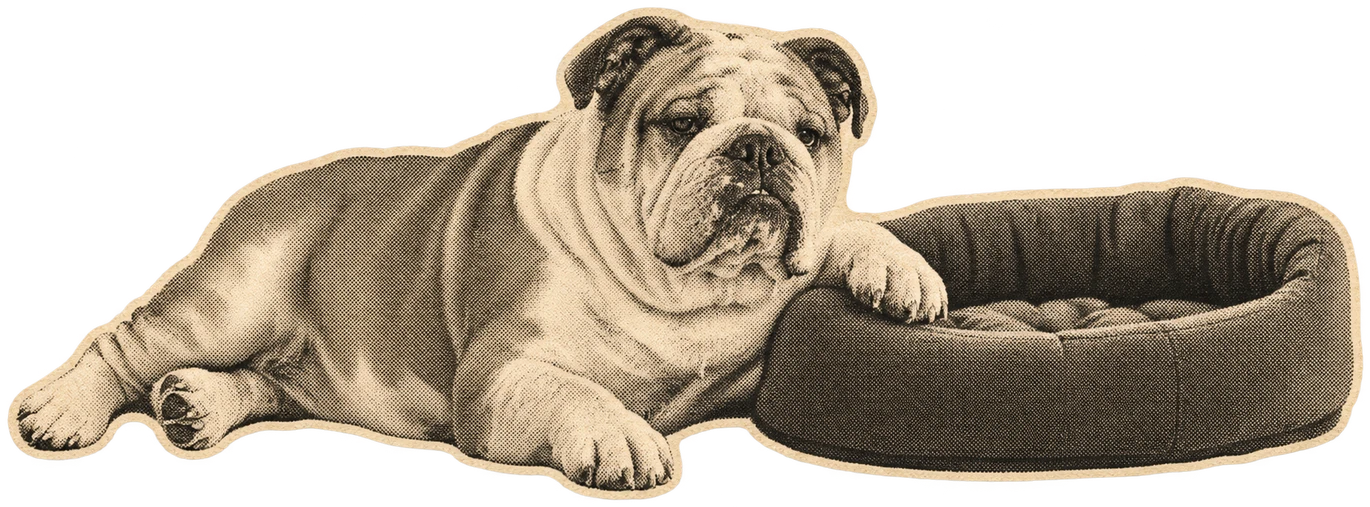
English Bulldogs are broad, low-built dogs with short muzzles. At home, pay more attention to how easily they breathe, get up and move than to how deep their folds are. And that perfectly good bed you bought? Apparently one elbow in it counts.
Jump to a section
The short version: listen on a quiet morning
Get to know what your Bulldog sounds like when they’re awake, settled and not expecting anything. If you only hear them when somebody’s at the door, you’ll struggle to tell excitement from effort. A dog shouldn’t have to fight for a breath to get round the block, and a loud snore doesn’t prove they’re having a lovely sleep. If breathing is regularly noisy or walking wipes them out, tell your vet what you see rather than writing it off as a Bulldog thing. And if you’re thinking of getting one, watch an adult walk and settle before you fall in love with the puppy photos. 12
English Bulldog notes / 01
What to notice first
| Sort this early | What it looks like at home |
|---|---|
| Know their usual breathing | Notice breathing while awake at rest and how they recover after a gentle walk. Ask the vet about changes or noises you hear repeatedly. |
| A cool, easy route | Pick a walk you can cut short. Leave time for sniffing and give hard exertion in the heat a miss. |
| A bed they can actually use | Put it somewhere cool and quiet, with grip on the way there and enough floor space to turn round. |
| Somewhere for the records | Keep vet notes and insurance terms where the person who takes the dog can find them. |
Names: Bulldog is the name on the paperwork
The Royal Kennel Club registers this breed as the Bulldog, in its Utility group. “English” and “British” help distinguish it in conversation. The French Bulldog and American Bulldog are distinct types, and statistics gathered on the English Bulldog aren’t interchangeable with either. An “Olde English Bulldogge” listing isn’t a different spelling of an RKC Bulldog certificate. Ask what’s actually documented. If a seller wants to talk colour before the parents’ breathing results, you’ve learned something useful already. 34
English Bulldog notes / 02
One breed, three everyday names
| Label | What you can reasonably infer |
|---|---|
| Bulldog | The RKC name for the breed covered here. |
| English Bulldog | Common disambiguating name; used in the 2022 VetCompass paper. |
| British Bulldog | Common usage; not a second breed in this guide. |
| French or American Bulldog | Not interchangeable with the English Bulldog; use their own evidence. |
| Olde English Bulldogge or Bulldog cross | Ask about documented ancestry and the individual dog. Do not apply English Bulldog figures by looks. |
| RKC show group | Utility. It doesn’t tell you how one dog will behave at home. |
| Colour | Pick for health and function. RKC does not register merle Bulldogs; colour paperwork is not a health report. |
Size: a short dog can still be quite a lift
They don’t need long legs to take up the entire footwell. For a harness, measure chest and neck on the dog you’ve got. For a ramp, find out what they actually weigh and whether they’ll use it on a surface with grip. The show weights are a description, not a target. One 2016 vet-record study found an adult median of 25.55 kg, with the middle half between 22.83 and 28.48 kg. If the scales are creeping upwards, the useful conversation is body condition and movement, not whether their dad weighed more. 546
English Bulldog notes / 03
A short dog can still be heavy
| Measure | What the figure means |
|---|---|
| UK show description | 25 kg male; 23 kg female. Judging description, not the ideal weight of your dog. |
| UK clinical-record median | 25.55 kg among adult Bulldogs with data in the 2016 comparative study; middle half 22.83–28.48 kg. The investigators considered adult records after 18 months of age. |
| Separate 2013 UK records | Mean among adults with recorded weights: 27.6 kg males (SD 4.6), 24.3 kg females (SD 4.1). Means from another historical cohort, not directly comparable with the 2016 median. 7 |
| Height | The linked UK show standard supplies no numerical height target; measure for your actual equipment and doorways. |
| Access and weight | Measure floor-to-boot height and weigh the actual dog before choosing a ramp or equipment. If mobility is changing, discuss it with your vet rather than repeatedly lifting a painful dog. |
Coat: it’s short, but that isn’t the whole job
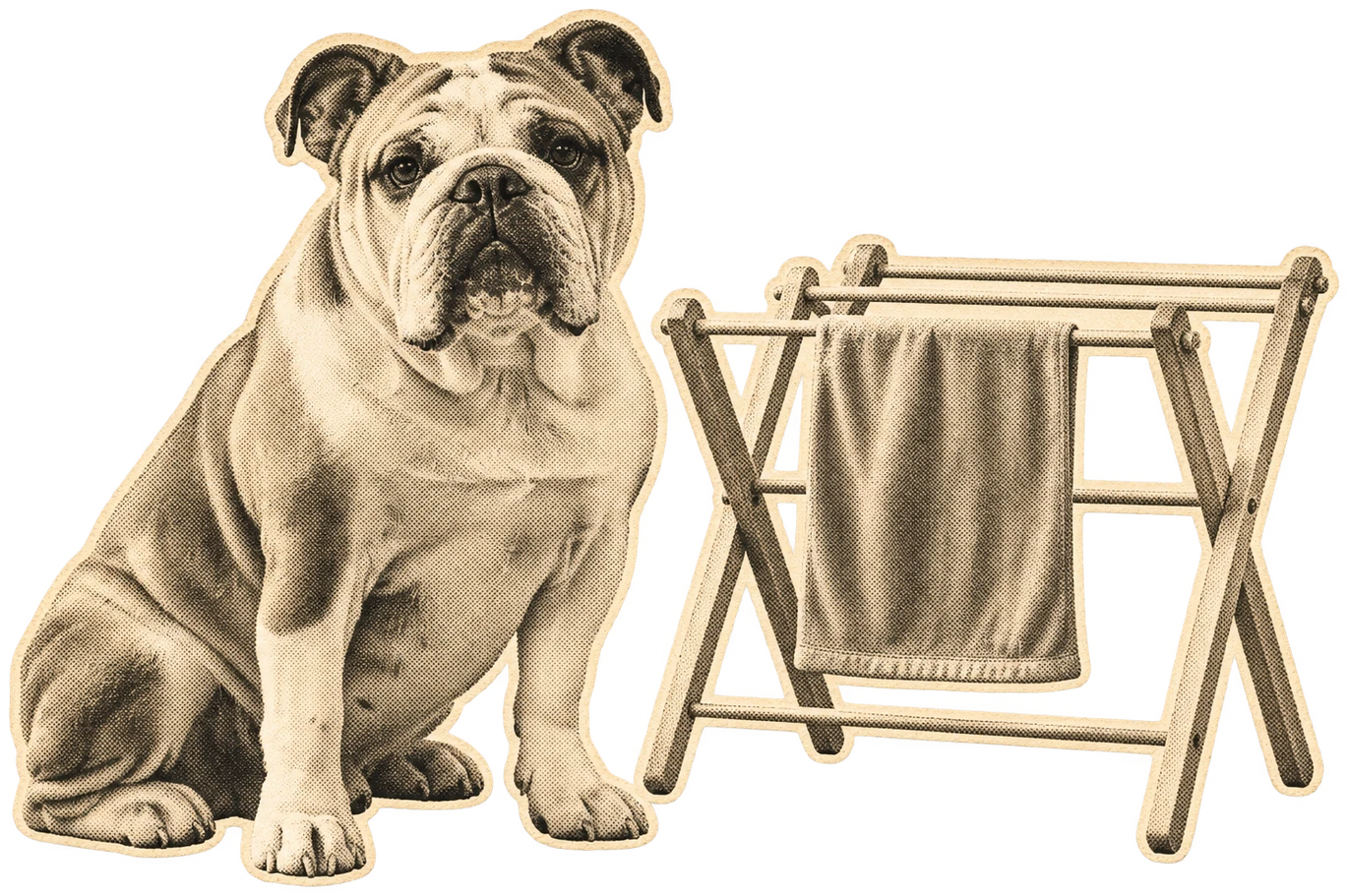
The hair isn’t much trouble. The places where skin touches skin are the part to pay attention to. Get a sense of what the face, feet and area around the tail normally look and smell like. If something suddenly smells different or they’re rubbing a cheek on the rug, that’s worth a closer look. Ask your own vet to show you which folds your dog needs checked and how to handle them without turning it into a wrestling match. 58
English Bulldog notes / 04
What to look at under the coat
| Job | What to look for |
|---|---|
| Brush | The short coat still sheds; a brushing session is useful for noticing what has changed. |
| Face folds | Look for redness, soreness, discharge or a new smell, rather than assuming the shape explains everything. |
| Around the tail | Notice repeated licking or avoiding a touch. Don’t prise open a painful fold. |
| Feet | Watch for licking one foot, swelling between the toes, or a change in how they put weight on it. |
| Eyes | Redness, rubbing, discharge or squinting is a health check, not a grooming job. |
| Handling | Reward short calm contact, leave them room to step away and keep it easy. |
| Coat colour | No premium colour will make a dog breathe, move or see better. The standard rejects heavy nose rolls that interfere with eyes or nose. |
Temperament: don’t confuse stopping with refusing
Some Bulldogs are sociable, some want to know you first, and some consider a visitor an event worth attending from the other side of the baby gate. The breed name doesn’t tell you which one you’ll get. Pay attention to how quickly the dog can switch off once the exciting bit is over. A dog who always used to walk with you and has suddenly started planting at the gate might be uncomfortable, not suddenly stubborn. 93
English Bulldog notes / 05
Watch what happens before they stop
| Moment | More useful than a temperament label |
|---|---|
| Somebody arrives | See whether the dog can move away and settle. Don’t insist they greet everyone. |
| They pause on the walk | Notice temperature, footing and any change in gait or breathing. Stop rather than dragging them onwards. |
| They used to tolerate a touch | Sudden guarding of an ear, face or foot may have a physical cause; take the change seriously. |
Training: the mat and the door
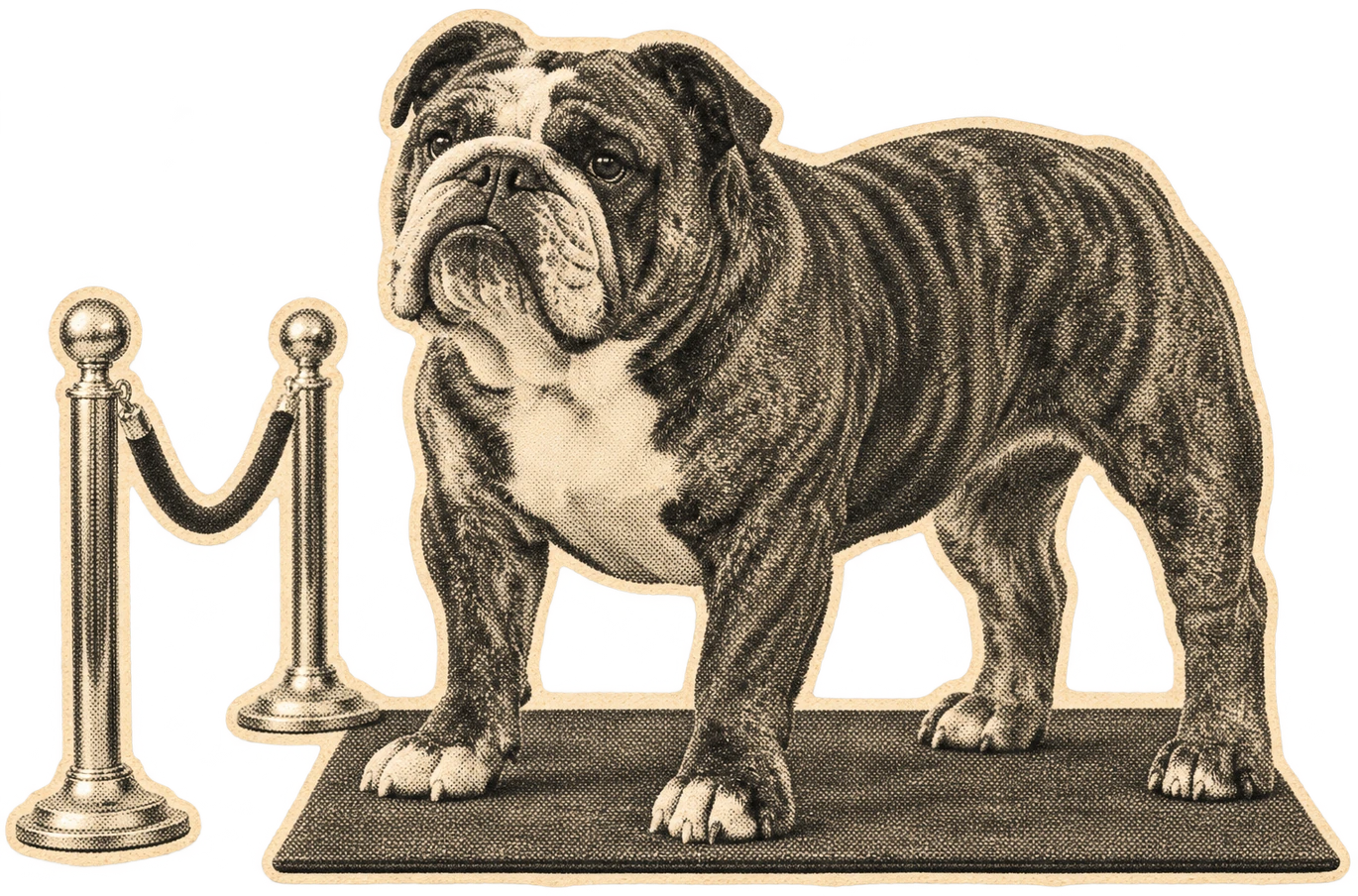
A dog who can go to a mat while you open the front door has just given you a spare hand. Start with the door shut and nobody arriving. The same goes for a harness or letting you see an ear: briefly reward the bit they can do and end while everybody still gets on. There’s no measured “Bulldog learning speed” here. 109
English Bulldog notes / 06
What to practise at the door
| Skill | An ordinary first go |
|---|---|
| Settle somewhere useful | Reward a moment on the mat in a quiet room before practising with company. |
| Wait at an opening door | Use a barrier for safety while you gradually teach moving away from the door. |
| Return to you | Practise in a quiet secure place where coming back can lead to something they like. |
| Calm handling | Reward one brief look at a paw or one calm harness touch. Get veterinary advice if the touch appears painful. |
Exercise: make it a walk, not a test
A little sniff around the quieter bit of the park can be a good walk. It doesn’t have to look impressive on your watch. Bulldogs can be keen on going out and still have trouble coping with heat or getting their breath back. Choose a cooler time in warm weather, and plan a short way home. The PDSA breed page gives a general exercise guide, but no clock can tell you what a dog with a breathing or mobility problem can safely manage. 611
English Bulldog notes / 07
What a comfortable walk looks like
| Situation | What to plan for |
|---|---|
| Comfortable adult on a cool day | Several manageable outings can be easier to adjust than one long march. Let them sniff. |
| Warm day | Plan shade and a shorter option; skip strenuous exercise. Never assume a record from a cooler day applies. |
| Puppy, older dog or known condition | Ask their vet about their individual limits, rather than following the adult guideline. |
| New difficulty or slower recovery | Stop the outing and get veterinary advice. Struggling to breathe, collapse or grey/blue gums is an emergency. 12 |
At home: the cool bit behind the sofa
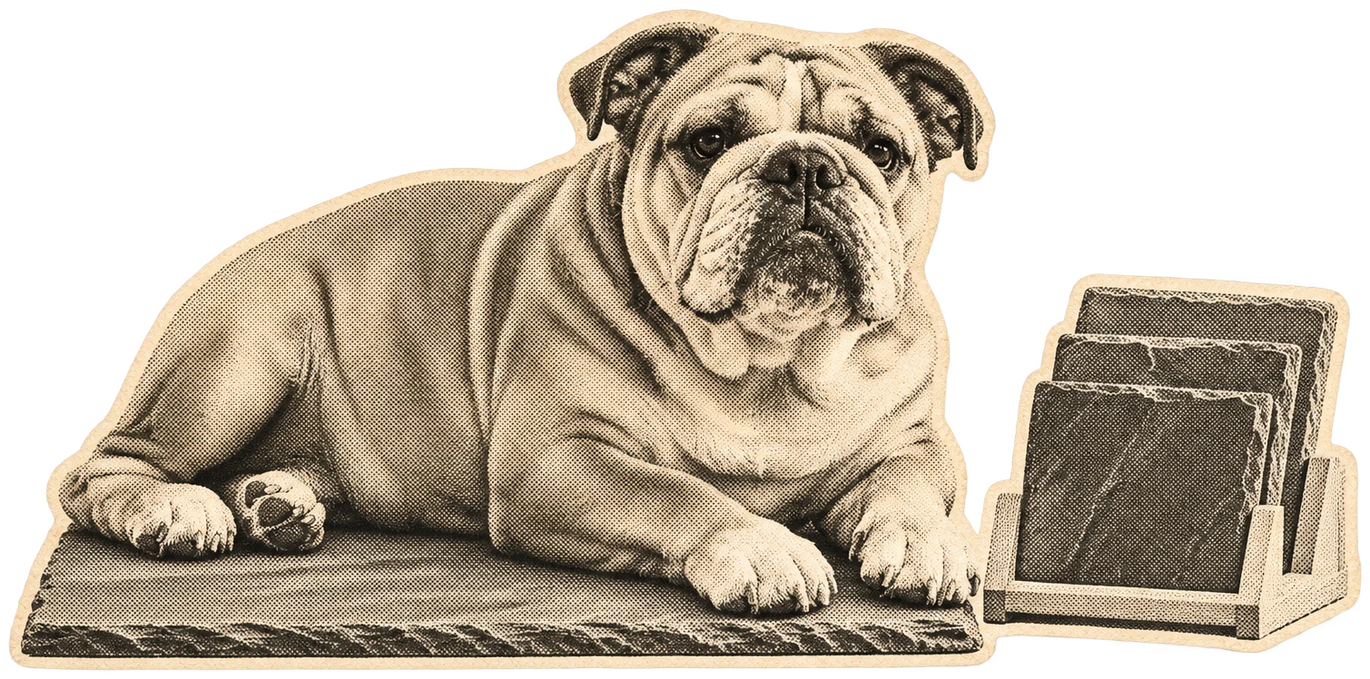
Before you buy a new bed, watch which part of the room they lie in when the heating goes on. Give them a cool spot where they can stretch out and nobody has to step over them. Check the slippy bit between the kitchen and back door as well. If you keep hearing claws skitter on the same corner, a grippy route is more useful than another reminder to walk nicely. Build up alone time on days you can check how it goes; the fact they didn’t move in front of you all evening is not evidence they’ll be fine when you leave. 610
English Bulldog notes / 08
Make the cool spot easy to reach
| Home check | A change you can actually make |
|---|---|
| Rest | Choose a cool quiet place with space to turn and an easy exit. |
| Hard floors | Give them a low, secure grippy route rather than a loose mat that slides. |
| Steps and boot | Use a route they can negotiate comfortably. Ask the vet about a new reluctance or limp. |
| Doorway | Use a gate if visitors would otherwise have to squeeze past the dog. |
| Leaving alone | Start with manageable absences; if they won’t settle, don’t test the limit by leaving longer. |
| Summer plan | Know the coolest room, how you’ll change the walk, and the vet’s out-of-hours number. |
Children, cats and other dogs: leave a way out
A dog who doesn’t get up when a child leans over isn’t necessarily enjoying it. Put the dog’s rest spot where they won’t keep being visited. An adult should watch shared time closely enough to intervene, or use a gate if they can’t. Ask a rescue how this dog has behaved around other pets; you want details of encounters, not a green tick for “good with everybody”. 1314
English Bulldog notes / 09
Leave a way out
| Who | What you can set up |
|---|---|
| Children | Supervise; separate when you cannot. Leave sleep, food and chews alone. |
| Dogs | Introduce calmly with space; don’t start by sharing a prized toy or food in a tight room. |
| Cats and other pets | Ask for prior observations; use separation and exits. Never assume safety from the breed or a single meeting. |
| Anybody new | Let the dog approach or leave, rather than cornering or hugging them. |
Health: noisy breathing isn’t a breed feature to put up with
A Bulldog can have an excellent afternoon and still have a problem that needs a vet. Tell them what happens and when: breathing at rest or after a short walk, the eye they keep closing, the foot they keep licking. Breathing difficulty, collapse or blue-grey gums: contact an emergency vet immediately. Don’t wait to get the perfect recording. 12
English Bulldog notes / 10
What the records and screening can tell you
Recorded health conditions and study limits
The 2022 VetCompass paper randomly sampled 2,662 English Bulldogs and 22,039 other dogs from 905,544 UK dogs under veterinary care in 2016. At least one disorder was recorded for 2,017/2,662 Bulldogs (75.8%) and 14,534/22,039 comparators (65.9%). After adjustment, the odds ratio for at least one recorded disorder was 2.04 (95% CI 1.85–2.25). That is not double the observed percentage and not a lifetime probability. The recorded proportion also misses unrecognised or unrecorded illness. 4
| Recorded diagnosis in 2016 | Adjusted odds ratio vs other dogs (95% CI) |
|---|---|
| Skin-fold dermatitis | 38.12 (26.86–54.10) |
| Cherry eye (third-eyelid gland prolapse) | 26.79 (18.61–38.58) |
| BOAS | 19.20 (13.31–27.69) |
| Interdigital cyst | 12.96 (8.95–18.76) |
The same analysis had only 4.2% formally diagnosed with BOAS in primary care that year. This is not a clinical screening estimate or reassurance that the rest were unaffected. In a separate 2013 study of 1,621 Bulldogs among 445,557 UK practice dogs, common diagnoses included ear inflammation 12.7% (206), pyoderma 8.8% (142) and skin-fold dermatitis 7.8%. Do not attach the 2013 percentages to the 2016 sample. 7
| Lifespan evidence | What each study estimated |
|---|---|
| McMillan et al. 2024 | UK multi-source median survival 9.8 years (95% CI 9.7–10.0), 11,065 Bulldogs and 4,743 recorded deaths. 15 |
| Teng et al. 2022 | Period life expectancy at birth 7.39 years (95% CI 7.08–7.69), English Bulldog life-table sample 476. Different dataset and measure; don’t average the two or predict a dog’s remaining lifespan. 16 |
Eight things worth noticing
BOAS and breathing
Regular airway noise while awake, repeatedly stopping on an easy walk, taking unusually long to recover or unrestful sleep are things to tell the vet. Severe difficulty, collapse or blue-grey gums are urgent. A good day doesn’t rule out a problem. 1
Heat illness
The short face can make cooling harder. In warm weather keep plans easy to change, and do not exercise them in the heat of the day. If they seem distressed or weak after heat exposure, treat it as urgent and contact a vet immediately. 11
Skin and tail folds
A new smell, redness, discharge, rubbing or pain needs attention. Let the vet help if a fold is sore or difficult to check. 8
Cherry eye
A pink lump at the inner eye corner might be the gland of the third eyelid, but it merits a veterinary check rather than a diagnosis from a picture. 4
Painful eyes, dry eye and inward-rolling lids
Squinting, rubbing, a newly closed eye or discharge can indicate a painful problem. Get prompt veterinary advice. 17
Between the toes
Persistent licking at one spot, swelling or walking differently is worth checking. Don’t assume every lump is the common diagnosis in the breed study. 2
Movement
A change in gait, difficulty rising or suddenly avoiding a step can all merit a proper assessment. The healthy-looking show walk and the actual dog moving round your house are different things. 3
Urinary signs and HUU
The HUU DNA test is in the RKC Best Practice tier for breeding; it is not an explanation for an individual dog’s symptoms. If your dog strains to pass urine, call the vet promptly; if unable to pass urine, call an emergency vet immediately. 318
| Before breeding or choosing a pup | What the current UK scheme says |
|---|---|
| RKC Good Practice | Respiratory Function Grading (RFG, for BOAS) and BVA/KC/ISDS eye screening. |
| RKC Best Practice | Both Good Practice checks plus HUU DNA, BVA/KC hip and elbow testing. |
| Respiratory grading | The RKC/Cambridge scheme assesses dogs from 12 months and recommends reassessment every two years. It is an assessment, not a lifetime clearance. Ask for the actual grade/date for both parents. 19 |
| Other schemes | The Breed Council scheme and Breed Watch show observations are separate; colour or a show title is not an equivalent. 20 |
| Shape in front of you | The UK standard calls for open nostrils and rejects pinched nostrils and heavy nose rolls. Watch adults move and breathe: plausible shape, registration and formal results are all different evidence. |
Costs: the insurance quote deserves a proper read
Don’t price a Bulldog by the food bill. Price the normal month and then ask what would happen if the dog needed repeat visits for the same thing. Read the excess, any percentage you pay yourself and whether the policy covers a condition that comes back next year. Get the actual quote for the dog you’re considering. 216
English Bulldog notes / 11
Price the next year, not the puppy
| Budget line | Figure or question |
|---|---|
| Medium-dog setup comparator | PDSA £531, based on 2024 basket prices. Not a breed quote. |
| Medium-dog routine comparator | PDSA £83 a month; the separate Bulldog profile lists £80 minimum monthly. Different guides; use neither as a ceiling. |
| Lifetime comparator | £9,000–£14,000 modelled minimum for medium dogs in the general PDSA guide, not Bulldog life expectancy or a prediction. |
| Buying or adoption | No verified current breed-wide price used. Ask what paperwork is included, not what counts as a rare colour. |
| Vet budget | Ask how your vet handles routine and out-of-hours fees and how insurer payments work. |
| Cover | Check exclusions, any health condition limits and repeat treatments; a low quoted monthly premium doesn’t answer these. |
History: the look has changed before
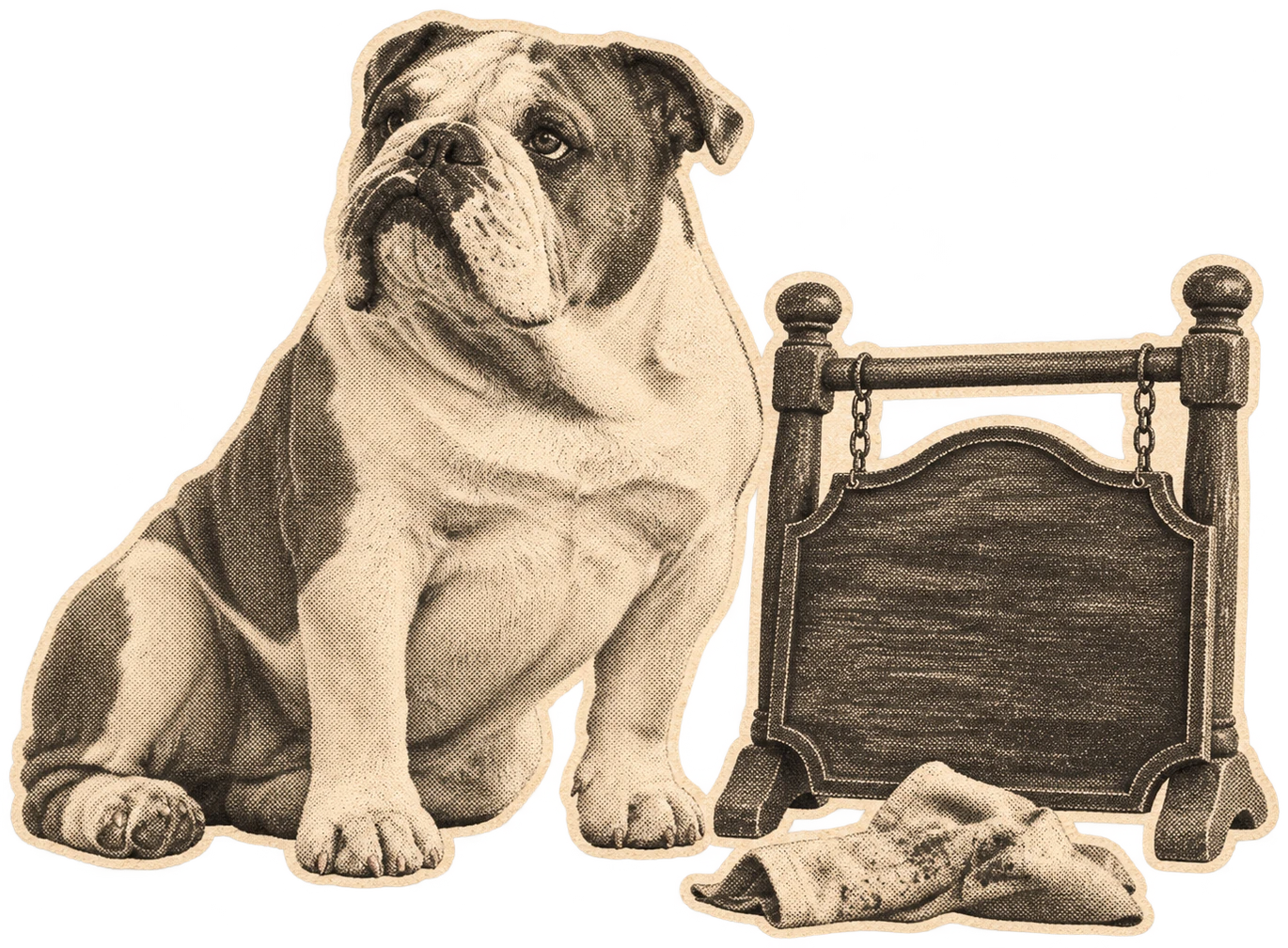
The RKC traces the breed to bull-baiting, banned in Britain in 1835, and records recognition in 1873. Exhibition breeding later helped establish parts of the shape we recognise now; present-day health advice is not an argument for freezing that shape. The thing to keep is a dog who can have a good life in an ordinary house, not a photo that looks like a pub sign. 34
English Bulldog notes / 12
The shape has changed before
| Then | What to do with it now |
|---|---|
| Old working history | It tells you where the name came from, not what an individual dog will do around a child or another dog. |
| Late Victorian exhibition shape | Features have changed before; avoid exaggeration and look first for function. |
| RKC recognition, 1873 | A date in breed history, not evidence for claims about the health of any particular line. |
Bringing one home: watch the dog after the walk
If you’re adopting, ask how this dog does on a quiet walk and how long it takes them to settle after it. Ask about their eyes, skin folds and any previous breathing investigations, and get the vet records if available. If you’re buying a puppy, meet the pup with their mother where they were raised; verify the parents’ results and watch the mother move and breathe comfortably. A seller who won’t let you see that is making the decision easier, just not in the way they intended. Already got a Bulldog? Write down one thing that’s changed this month and bring that to the next vet conversation. 221923
English Bulldog notes / 13
What to ask before you decide
| When | One useful check |
|---|---|
| Before committing | Obtain records, see the adult move and breathe, check actual cover and be ready to walk away. |
| First days | Register with a vet, update chip keeper details and keep the arrival calm and predictable. |
| At the routine review | Ask about breathing at rest and after activity, healthy body condition and folding/eyes that need observation. |
Sources
- B1Cambridge BOAS recognitionReference · checked 20 November 2026
- B2RVC breed study summaryReference · checked 20 November 2026
- B3RKC breed profileReference · checked 20 November 2026
- B4VetCompass study definitionReference · checked 20 November 2026
- B5RKC breed standardReference · checked 20 November 2026
- B6PDSA Bulldog profileReference · checked 20 November 2026
- B7Original studyReference · checked 20 November 2026
- B8PDSA skin-fold dermatitisReference · checked 20 November 2026
- B9Dogs Trust reward-based trainingReference · checked 20 November 2026
- B10Dogs Trust settling guideReference · checked 20 November 2026
- B11PDSA heatstroke guidanceReference · checked 20 November 2026
- B12PDSA breathing emergenciesReference · checked 20 November 2026
- B13Dogs Trust dog-and-child safetyReference · checked 20 November 2026
- B14Dogs Trust choosing with childrenReference · checked 20 November 2026
- B15Dogs Trust breed tableReference · checked 20 November 2026
- B16Scientific Reports Table 3Reference · checked 20 November 2026
- B17PDSA eye ulcersReference · checked 20 November 2026
- B18PDSA urinary signsReference · checked 20 November 2026
- B19SchemeReference · checked 20 November 2026
- B20Breed Watch Category 3Reference · checked 20 November 2026
- B21PDSA minimum cost basketReference · checked 20 November 2026
- B22Defra buyer guidanceReference · checked 20 November 2026
- B23GOV.UK microchippingReference · checked 20 November 2026
Five original generated editorial photo-first newspaper cutouts. The generated photographs and their print treatments do not document clinical examples.
