Breed guide / Dutch Shepherd Dog
Living with a Dutch Shepherd Dog
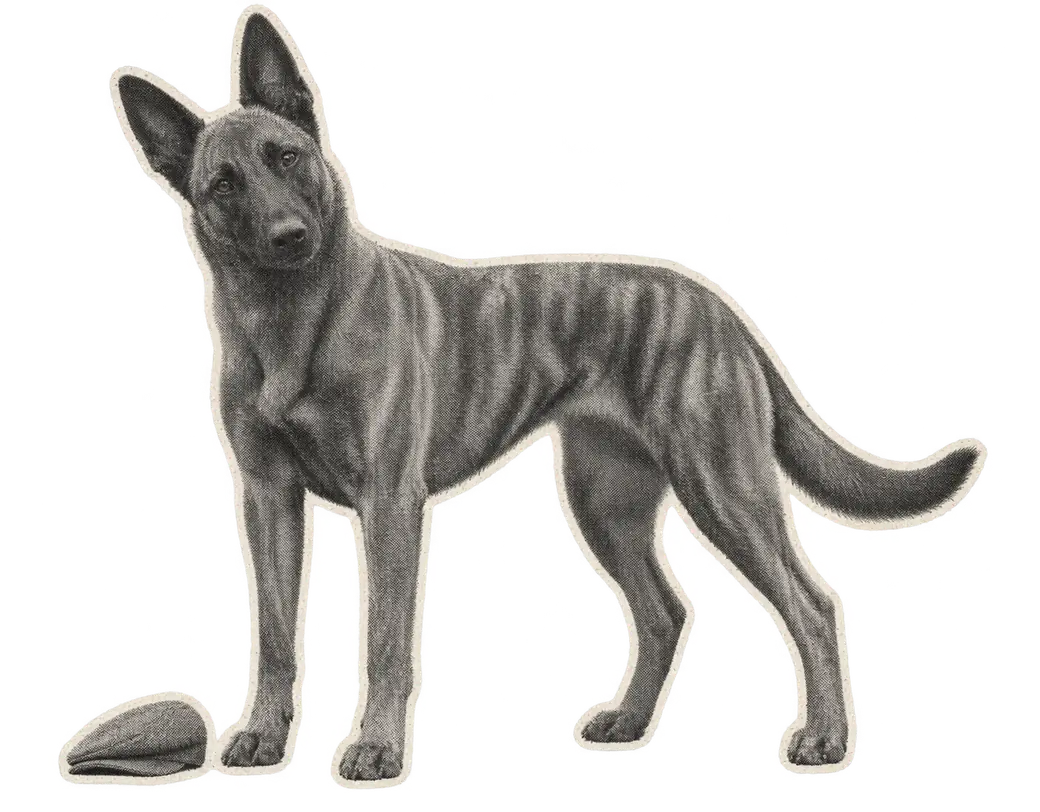
A Dutch Shepherd Dog is a medium, athletic herding dog from the Netherlands, usually recognisable by the brindle coat and upright ears. It was bred to work away from the handler when it needed to and to come back into the job when asked. In a house, you’ll want to teach the second half as well as enjoying the first. Not every sound at the gate requires a full investigation. 1 2 5
Jump to a section
Start with how the dog comes back down
If you own one already, pay attention to what happens after something exciting. Can they turn away from the fence? Settle after a walk? See somebody at the door without needing to go right up to them? These are useful skills on an ordinary week. Teach the easy version first, in a quiet place where the dog can actually think. 12 14 27 43
At the door, put the gate or lead in place before you open it. Practise going to a mat without a guest on the step; later let somebody quietly enter while the dog has room. If your dog barks, stiffens or can’t disengage, add distance rather than trying the same greeting louder. 12 14 20 43
Dutch Shepherd Dog notes / 01
Short version
| First check | What to do |
|---|---|
| New people at the door | Make space before opening it. 12 14 |
| Can’t stop watching movement | Move further away and reward a relaxed check-in. 11 27 |
| Always busy indoors | Teach a short settle when there isn’t much going on. 12 |
| New unsteadiness or pain | Get veterinary advice, not a stricter training session. 33 |
Dutch, Belgian and German are not coat descriptions
The FCI recognises the Dutch Shepherd Dog, Hollandse Herdershond, with short-haired, long-haired and rough-haired varieties. The Royal Kennel Club’s current UK breed-standard list does not have a Dutch Shepherd Dog entry. German Shepherd Dog and Belgian Shepherd varieties have separate names and records. A striped dog with pointed ears is not proof of any of those pedigrees. 1 2 3 9
If a dog is described as a Dutch Shepherd or a working-line cross, ask what is documented. A rescue label may be an informed estimate, not a test result. Appearance alone tells you even less about whether a dog can live comfortably in your particular home. 1 5 10
Fit for an athletic dog, not a size on the internet
The FCI calls it a medium dog with a slightly longer body than shoulder height. Its standard gives 57–62 cm for males and 55–60 cm for females at the shoulder. Those are standard figures, not a target. Assess body condition with your hands and the dog’s movement, not from how sharp or fluffy the outline looks. 2 19
Fit the walking harness while they turn and lower their head. If it slips forward when they back away, it isn’t safely fitted. Pick the car setup separately and measure whether the dog can lie comfortably in it. 20 21
Three coats, three sets of places to look
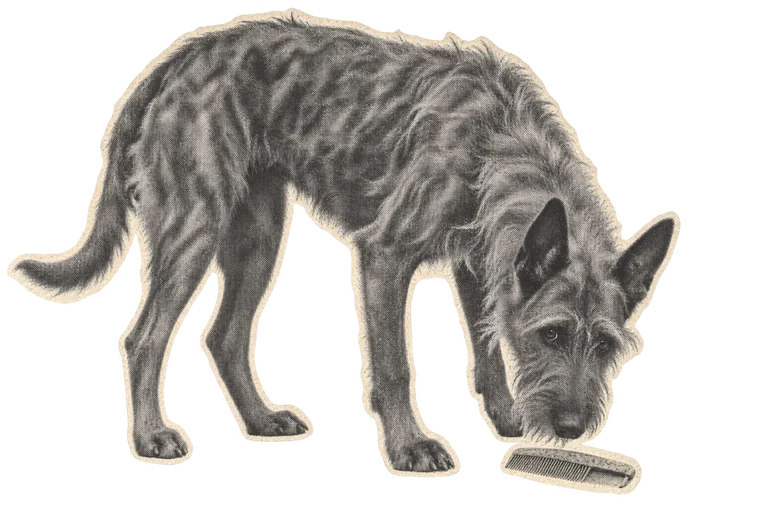
A short coat is close to the body but still has a useful undercoat; check under the collar and harness after wet walks. The long coat is straight; check the neck, back of the legs and tail furnishings for knots and damp. The rough coat is harsh and tousled; ask a groomer who knows wire coats to help with the appropriate finish and check the more furnished face and feet. 2 5 15 16 17
Whatever the coat, don’t keep brushing a sore patch to see if it improves. Look for rubbing beneath kit, concentrated licking, head shaking or a sudden problem with touch. Persistent signs or an embedded seed warrant advice from your vet. 13 15 22 23
Dutch Shepherd Dog notes / 04
Coat and grooming
Train the dog you’ve got, not the line name
A dog can be interested in work and still need careful introductions to traffic, visitors or being alone. Field, sport and pet labels don’t tell you how they respond in your home. Notice how much distance they need, whether they recover from a surprise and what they actually choose to do in a quiet room. 5 10 12 14 24
Teach a calm resting place and short, tolerable departures separately. If your dog looks distressed, shorten the step or get professional help. More exercise may change how tired they are; it doesn’t by itself teach a dog to feel safe when left. 12 24 25 26 42
Dutch Shepherd Dog notes / 05
Temperament
A useful job has a stop cue
A simple search for a toy and a reliable end are better than improvising another round every time the dog wants one. Reward the first easy return, then deliberately make space for quiet. On a walk, practise turning with you before bikes or livestock are close enough to be the main event. 11 12 27 28 29
If you want a class or sport, choose a qualified instructor who adjusts the job to the dog and uses rewards. If a session regularly leaves the dog pacing, unable to switch off or harder to manage, revisit the difficulty and setup rather than adding another session. 12 26 27 42
Make exercise sustainable
Vary the day with steady walking, sniffing and some practical training. Build activity around the dog’s age, health and conditioning. Ask the vet before increasing demands after an injury, and skip exercise in unsafe heat. Changing plans isn’t letting the dog down. 29 30 32 33
Keep a lead on in unsafe places. Near livestock, traffic or running people, use space rather than banking on a new cue. If the dog sticks to the task even when tired, notice recovery and gait afterwards, not only willingness to go again. 11 20 28 31 33
Dutch Shepherd Dog notes / 07
Exercise
| Outing question | What to do |
|---|---|
| Can the dog recover normally? | Notice a new limp or unusual stiffness and seek vet advice if needed. 33 |
| Is it too hot? | Swap the time, route or activity. 32 |
| Can you create space? | Use lead management, especially near stock or other moving distractions. 11 31 |
| Is the route new? | Start at an intensity the dog can manage and observe. 28 30 |
Don’t make the house another shift
Choose a resting spot where the dog can see you if they want without seeing every person outside. Give them a way out of the room; use gates to prevent surprises at the front door, not to force a close greeting. Put the lead where you can get to it without hanging it right over the bed. 12 13 14 20
A garden is useful when the boundary is secure; it isn’t a substitute for outings or shared activity. If the fence becomes a busy lookout, try a shorter supervised visit and a quieter job. 11 29 30 43
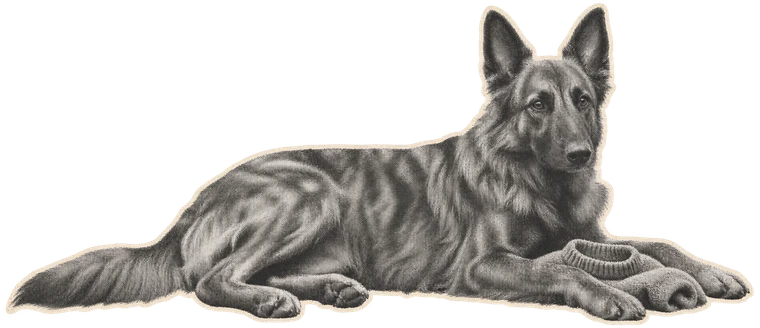
Movement is everybody’s business
Set up child and dog contact with an adult paying attention. Keep rowdy games separate if the dog keeps following or intercepting the players, and make the bed off limits to children. If you can’t actively supervise, separate. 11 13 35
Give cats and smaller pets a secure route away. Don’t use the first meeting to test whether the dog will chase. With other dogs, start with space and manage valuable food or chews. Persisting problems deserve qualified help, not repeatedly changing which animal has to leave. 26 34 36 37 42
Ask which organisation a screening report belongs to
There is no Dutch Shepherd Dog row in the Royal Kennel Club’s Health Standard. Published Dutch club rules should be labelled as such, not portrayed as British registration requirements. The Dutch NHC and VVHH rules both include parent hip and elbow checks, with differences elsewhere. The VVHH’s published rules advise an ECVO eye exam including gonioscopy for rough-haired dogs. The NHC lists clinical eyes including gonioscopy as strongly advised in the rules linked here. Ask which version applies and get the dog's actual report. 4 6 7 38 39 40
A Dutch diversity study looked at a limited breeding population and an inherited bleeding variant. It doesn’t give UK prevalence for the breed or a risk figure for every coat variety. A commercial panel doesn’t replace an examination of a dog with symptoms. New unexplained limping needs vet advice, and a painful, red or cloudy eye warrants an urgent call. 8 18 33 41
Dutch Shepherd Dog notes / 10
Health
| Topic | What you can rely on |
|---|---|
| Formal UK tiers | There isn’t a Dutch Shepherd Dog Health Standard row to borrow from. 3 38 |
| Hips and elbows | Both named Dutch club documents include parent checks; retain the original scheme and scores. 6 7 40 |
| Eye screening | Gonioscopy examines the drainage angle; it is not a test for all eye disease. 39 |
| Rough-haired dogs | VVHH explicitly recommends specialist eye examination with gonioscopy for this variety; confirm current source-specific rules. 4 7 |
| Current painful eye | Call a vet promptly. Do not infer cause from a screening certificate. 18 41 |
| Genetic findings | A specific Dutch breeding-population study, not UK rates or a substitute for clinical care. 8 |
| Lifespan | No defensible Dutch Shepherd Dog estimate in the cited UK breed table; do not import German or Belgian figures. 44 45 |
Leave room in the budget for useful support
Price secure walking and travel equipment, and budget for training support if you need it. Ask a walker how they manage moving things and narrow paths before agreeing to a group walk. If yours is rough-coated, find out what suitable grooming help is available instead of assuming every groomer offers the same service. 16 20 21 26 46
Read exclusions, cover limits and the out-of-hours arrangements. The point is knowing what you’ll do if your dog is injured, not working out the cheapest-looking monthly figure. 47
A farm dog before it was a photo on the internet
The FCI history describes shepherds’ dogs that kept sheep away from crops and worked around Dutch farms. The bigger picture is a dog that could handle different jobs, not a dog whose life had to consist of stopping whoever came through a gate. 1 2
For an ordinary street and an ordinary house, teach the helpful bit: work with you, finish the job and move on. Dogs can learn a search, a hand target or a comfortable rest without any need to rehearse guarding or chasing people. 12 27 29
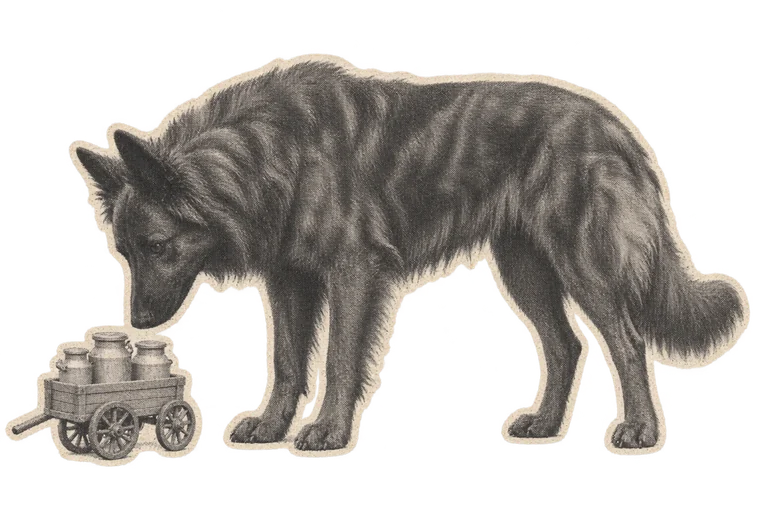
Ask what happens when nothing is happening
Meet adults where you can. Ask about a quiet evening, the door opening and how the dog copes when left. If the answers are all about what they can do on a training field, you’re still missing useful information. For a rescue, ask what the dog has actually shown; for a puppy, see the mother with the litter and ask for known parental test results. 6 7 10 24 48
A job on paper might sound brilliant. The question is whether the exercise, calm time and handling in your real week make sense for this particular dog. The dog won’t be comparing you with anybody’s show video. 12 29 30
Dutch Shepherd Dog notes / 13
Bringing one home
| Ask | What helps |
|---|---|
| What is actually known about ancestry? | Named records where they exist and a clear account of gaps. 1 10 |
| Which scheme issued the report? | Original document, dog identity and date. 6 7 40 |
| How do they settle? | An example from a home or other quiet setting. 12 24 |
| Who can help if the dog struggles? | A vet and appropriate behaviour support. 26 42 |
Sources
- S1FCI official Dutch Shepherd Dog breed record and three coat varietiesSource · checked 21 November 2026
- S2FCI official English breed standard including origins, construction and coatsSource · checked 21 November 2026
- S3Royal Kennel Club current UK breed standards indexSource · checked 21 November 2026
- S4Dutch national kennel organisation description of rough-haired Dutch ShepherdSource · checked 21 November 2026
- S5Dutch companion-animal guidance centre guide to the three varieties and practical owner careSource · checked 21 November 2026
- S6Nederlandse Herdershonden Club published breeding regulations, healthcare sectionSource · checked 21 November 2026
- S7Vereniging voor de Hollandse Herder published 2025 breeding regulations, healthcare sectionSource · checked 21 November 2026
- S8Original Utrecht research in the Dutch Shepherd population on diversity and panel screeningSource · checked 21 November 2026
- S9FCI Dutch Shepherd distinct from German and Belgian breed nomenclatureSource · checked 21 November 2026
- S10Dogs Trust rehoming and matching guidanceSource · checked 21 November 2026
- S11Dogs Trust preventing or managing chasingSource · checked 21 November 2026
- S12Dogs Trust settling practiceSource · checked 21 November 2026
- S13Dogs Trust comfortable handlingSource · checked 21 November 2026
- S14Dogs Trust reactivity and spaceSource · checked 21 November 2026
- S15PDSA vet guidance on home health checksSource · checked 21 November 2026
- S16PDSA vet guidance on groomingSource · checked 21 November 2026
- S17Blue Cross general grooming supportSource · checked 21 November 2026
- S18PDSA vet guidance on glaucoma or painful eyesSource · checked 21 November 2026
- S19PDSA vet guidance on body conditionSource · checked 21 November 2026
- S20Dogs Trust harness fittingSource · checked 21 November 2026
- S21Dogs Trust safe travelSource · checked 21 November 2026
- S22PDSA vet guidance on grass seedsSource · checked 21 November 2026
- S23PDSA vet guidance on ear symptomsSource · checked 21 November 2026
- S24Dogs Trust introducing time aloneSource · checked 21 November 2026
- S25Dogs Trust recognising separation distressSource · checked 21 November 2026
- S26Dogs Trust sourcing behaviour supportSource · checked 21 November 2026
- S27Dogs Trust positive reinforcementSource · checked 21 November 2026
- S28Dogs Trust recall and long lineSource · checked 21 November 2026
- S29Dogs Trust enrichment and search gamesSource · checked 21 November 2026
- S30PDSA vet guidance on exerciseSource · checked 21 November 2026
- S31Natural England keeping dogs under control in the countrysideSource · checked 21 November 2026
- S32Dogs Trust warm-weather careSource · checked 21 November 2026
- S33PDSA vet guidance on stiffness and limpingSource · checked 21 November 2026
- S34Dogs Trust resource guardingSource · checked 21 November 2026
- S35Dogs Trust supervising dogs around childrenSource · checked 21 November 2026
- S36Dogs Trust introducing dogs and catsSource · checked 21 November 2026
- S37Dogs Trust introducing dogsSource · checked 21 November 2026
- S38Royal Kennel Club current screening tiers lookup; no Dutch Shepherd Dog rowSource · checked 21 November 2026
- S39BVA/RKC/ISDS specialist gonioscopy guidanceSource · checked 21 November 2026
- S40Royal Kennel Club Hip Dysplasia screening scope and scheme comparabilitySource · checked 21 November 2026
- S41PDSA veterinary symptoms of painful eye requiring prompt reviewSource · checked 21 November 2026
- S42APBC finding accredited behaviour supportSource · checked 21 November 2026
- S43Dogs Trust training and managing barkingSource · checked 21 November 2026
- S44Dogs Trust original UK breed lifespan tableSource · checked 21 November 2026
- S45McMillan et al. original lifespan study and methodsSource · checked 21 November 2026
- S46Dogs Trust finding a dog walkerSource · checked 21 November 2026
- S47PDSA costs and insuranceSource · checked 21 November 2026
- S48RSPCA buying a puppy and seeing the motherSource · checked 21 November 2026