
Breed guide / Dogue de Bordeaux
Living with a Dogue de Bordeaux
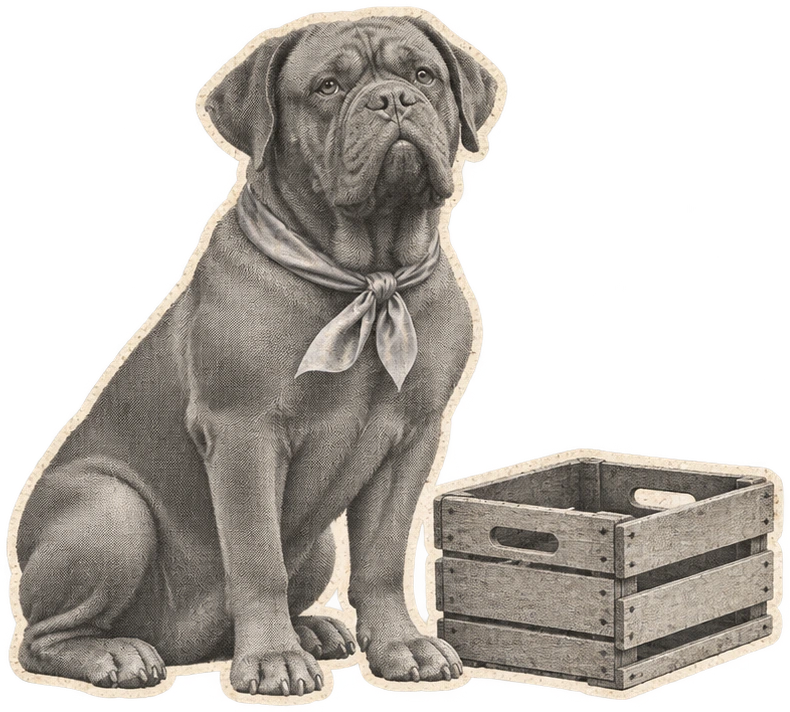
The Dogue de Bordeaux is a broad, muscular French mastiff with a short coat and short muzzle. Living with one is mostly about getting ordinary moments right: room at the front door, walks at a pace they can breathe comfortably at and a plan for getting a very heavy dog into a car if they can’t manage it alone. Get to know their breathing on a normal day. Struggling for breath is an emergency, not a breed trait. 1234
Jump to a section
The short version
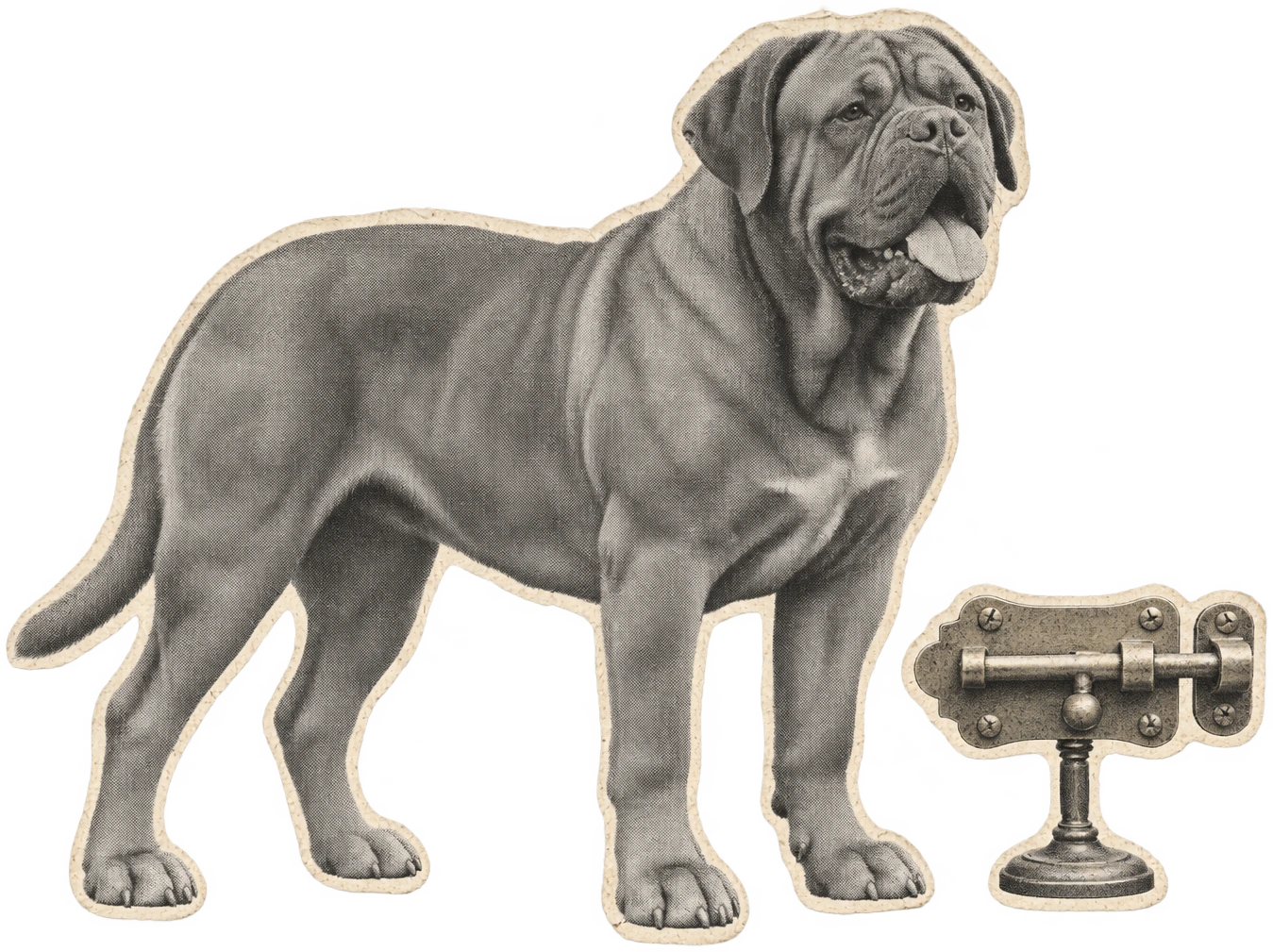
Set up a barrier before you need to open the front door. Practise a quiet turn on the lead before you need to get past something exciting. This is a lot easier than trying to move a fully grown dog by pulling harder than they do. 2 5 6
Listen to how they breathe when resting and walking. If they’re regularly noisy, tiring early or taking a long time to settle afterwards, book a vet check. If they’re struggling to breathe or collapse, call the emergency vet straight away. 3 4 7
Dogue de Bordeaux notes / 01
First things first
| Start here | Practical move |
|---|---|
| Front door | Have the dog behind a secure barrier before opening it. 5 |
| Lead | Practise turning away and moving with you in a quiet place. 6 |
| Breathing | Notice the usual pattern and get recurring changes checked. 3 |
| Emergency | Struggling to breathe or collapse needs urgent veterinary advice. 4 7 |
Dogue de Bordeaux is the breed name
The Royal Kennel Club lists it by the French name. You may also hear French Mastiff. “Mastiff” alone can mean several things, including a different breed with its own UK entry. A large head and fawn coat aren’t enough to identify a dog or tell you how it will behave. 1 2 8 9
Plan for the weight you can’t just pick up
The UK standard gives ideal shoulder heights of 60–68 cm for males and 58–66 cm for females. It gives minimum show-standard weights of 50 kg and 45 kg respectively. Those are written breed dimensions, not targets for your dog’s food bowl. Ask the vet what healthy condition looks like rather than trying to get them bigger. 2 10
Measure the actual chest for a harness and check how it sits when they move. Work out how you can get them into the car without a leap if they’re sore or older. Test a safe, stable arrangement early rather than buying something for the first time on the way to the emergency vet. 11 12 13
Short coat, awkward places to check
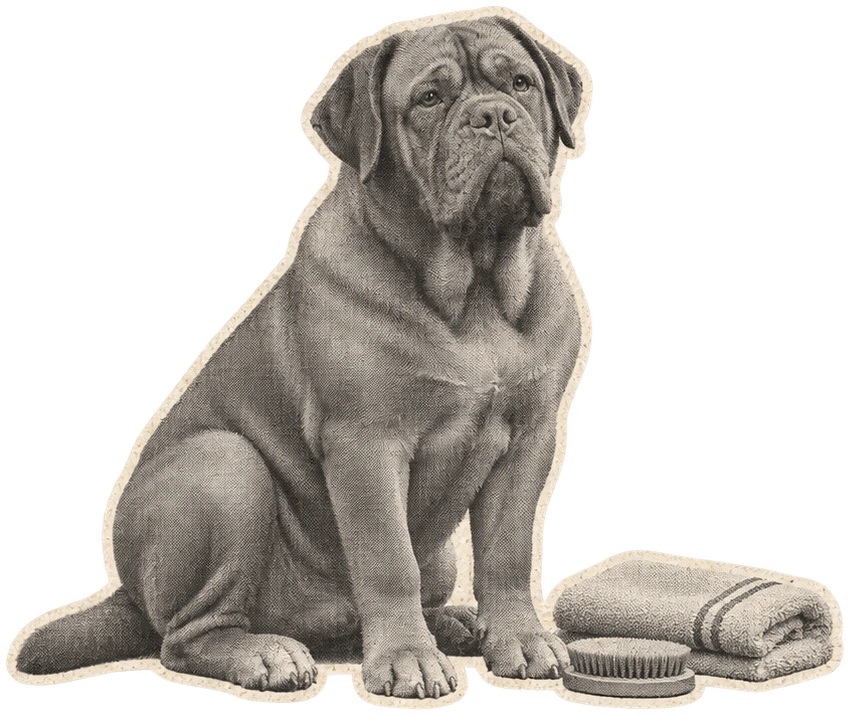
Brush gently and have a look under the straps and around any folds where moisture stays. If the skin gets red, sore, smelly or weepy, ask the vet what’s causing it. A shorter coat means you can see more of the dog, not that skin problems can’t be hidden. 2 14 15
Practise a quick look or touch while the dog is comfortable, then let them step away. If they suddenly pull back when you approach one side of the face, consider a sore ear or eye and get advice. 16 17 18
Dogue de Bordeaux notes / 04
Awkward places to check
Make the door calm before somebody arrives
Decide where the dog waits when someone knocks. Practise with someone they know and get the gate shut before the real delivery starts. If the dog is worried, don’t use a visitor to lure them over. Let them stay back without being followed. 5 16 19
Don’t assume every Dogue will behave the same around visitors. If this dog stiffens, stares or moves away, use space. Sudden changes can be a sign they’re uncomfortable, especially alongside a change in movement. 19 20
Dogue de Bordeaux notes / 05
Calm before the door opens
Teach the turn before you need the turn
Practise a few loose-lead steps on an empty stretch. Reward them before the lead goes tight. Teach them to turn with you while the distraction is still far off. If there’s not enough room, take another route rather than asking for a perfect pass on a narrow path. 6 21
Use gentle search games at home or on a quiet walk. Hide a familiar toy where they can find it without having to run. Stop when they’ve got what they came for instead of making each turn more exciting. 22
Walk at the pace their breathing allows
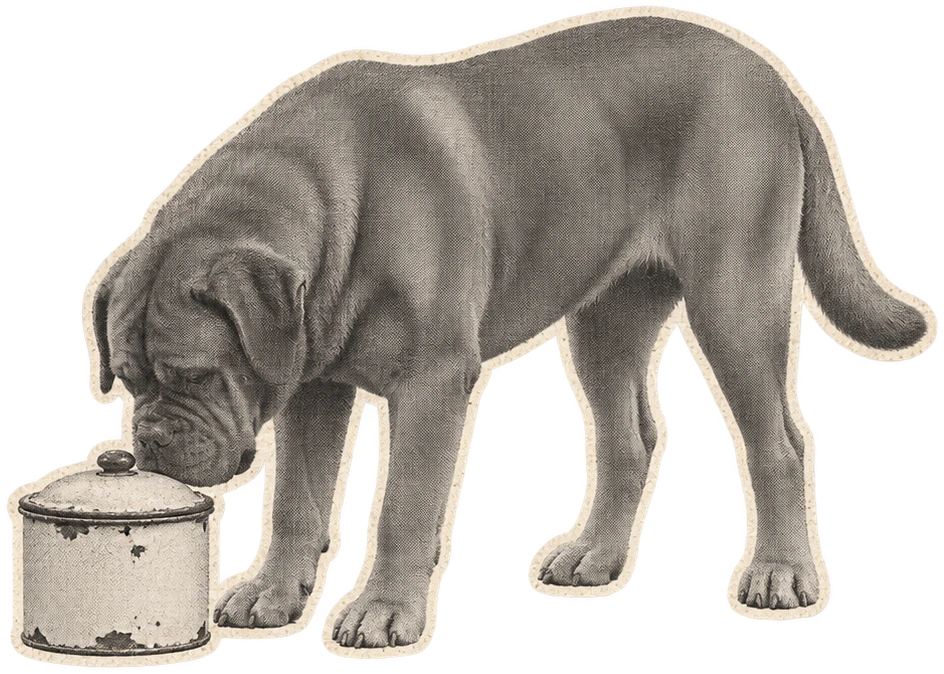
Give them activity that suits their age, joints and breathing. On a warm or humid day, go at a cooler hour and make it easier. Don’t use noise or heavy panting as a sign they’ve finally done enough; use comfortable movement and recovery to judge how the outing went. 3 23 24
Bring a change in movement, breathing or recovery to the vet. If they’re really struggling for breath, don’t wait for a booked appointment or try an exercise test at home. Ring for emergency advice. 3 4 7
Dogue de Bordeaux notes / 07
Walk at their pace
| Situation | Better choice |
|---|---|
| Hot or humid day | Cooler hours, shade, water and less effort. 24 |
| Growing dog or returning from illness | Ask the vet what activity suits them now. 23 |
| New tiredness or noise on walks | Get recurring changes assessed. 3 |
| Struggling to breathe or collapsing | Contact the emergency vet immediately. 4 7 |
A quiet place to lie without being in the way
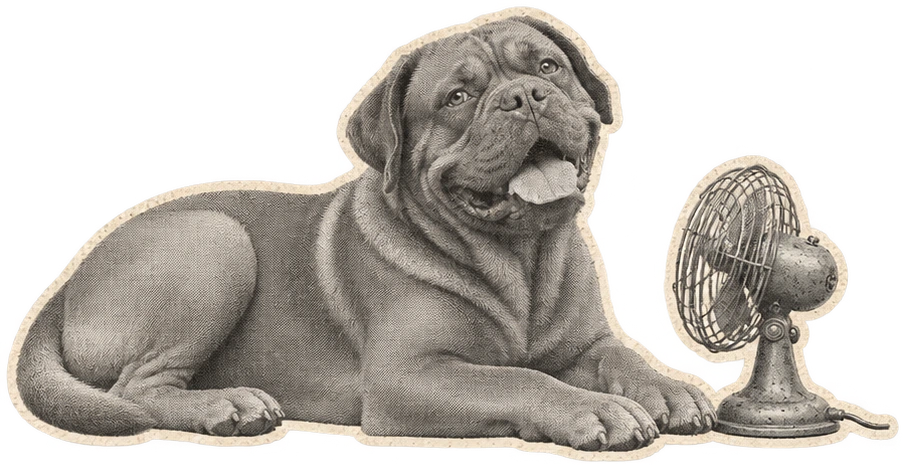
Give them a bed they can stretch out in, with good grip around the edge and a clear route to water. Move it out of the warmest room and the busiest doorway. Half a Dogue across an exit is a good reason to move the bed, not to keep asking them to get up. 13 24 25
Measure meals and let them eat without other animals or children getting in the way. Note where the vet and emergency practice are before you need to get there. If the dog is suddenly retching without bringing anything up, looks swollen or is very distressed, call the emergency vet rather than waiting to see if their dinner settles. 26 27
Leave room for everybody to move away
Adults should supervise children around dogs and separate them when they can’t watch. Even a friendly Dogue can knock a child over by turning round, so keep greetings calm and give the dog a child-free place to rest. Don’t expect a child to hold the lead. 2 28
For other animals, ask what this dog has actually done around them. Use barriers and gradual introductions, and arrange separate space if that’s what everyone needs. An animal who can leave has better options than one backed into the corner. 19 29 30
Understand the difference between screening and an emergency
Brachycephalic obstructive airway syndrome (BOAS) can make breathing harder for short-muzzled dogs. A 2026 Cambridge-led study tested 898 dogs across 14 breeds, including the Dogue de Bordeaux. In that recruited sample, the breed was in the study’s moderate-risk group. That is a study category, not a population estimate or proof that an individual is affected. Noisy breathing, tiring or failing to recover comfortably still need individual assessment. 3 4 31
As of 21 November 2026 the Royal Kennel Club and University of Cambridge Respiratory Function Grading Scheme lists Dogue de Bordeaux as eligible. That is separate from the RKC pre-breeding Health Standard row. The row lists elbows, clinical eyes and hips as Good Practice and no additional Best Practice test. Don’t call RFG unavailable because it isn’t on that row. 1 32 33 34 35 36
The 2024 UK longevity study estimated a median of 11.1 years for 3,427 Dogues de Bordeaux. It’s one cohort, not a forecast or a measure of years well. The newer VetCompass giant-dog analysis had 5,156 Dogues in its underlying records, but its overall giant-dog mortality figure combines breeds and cannot be substituted for a Dogue-specific estimate. 37 38 39
Dogue de Bordeaux notes / 10
Health conditions and screening
| Issue | How to use it |
|---|---|
| Breathing distress or collapse | Emergency advice now. 4 7 |
| Possible bloat or GDV | This is an emergency; call immediately if GDV is suspected. 27 |
| Grading for BOAS | Dogs of the breed are eligible for the formal RFG scheme. 32 |
| Clinical eyes | RKC Good Practice screening, not a substitute for checking a painful eye. 18 33 34 |
| Hips and elbows | Good Practice; ask for named parent results. 33 35 36 |
| Additional Best Practice | None listed on that RKC row as checked. 33 |
| Lifespan | 11.1-year UK cohort estimate, not an individual forecast. 37 38 |
Price the plan, including getting there
Ask the local practice what routine care costs and check what an insurance excess or exclusion would mean if you needed a referral. Price food by the dog’s actual portion and check the cost of safe transport or a walker who can handle them. Being able to take them out on a quiet day isn’t the only thing you’re paying for. 10 12 26 40
Ask a walker what they do if the dog gets hot, is uncomfortable or can’t pass another dog safely. A good answer includes where they’d turn back and when they’d call you. 6 24 41
Dogue de Bordeaux notes / 11
Cost your actual plan
A French mastiff, not a job offer
The breed’s French history includes work as a guard dog. The Royal Kennel Club places it in the working group. That history helps explain the name and substantial build, but it isn’t a claim that your pet should guard the house or meet visitors in any particular way. 1 2 8
Ask about the hardest ordinary bit
For an adult, ask about their breathing on a quiet outing, what they do when somebody comes to the door and how they get in and out of a car. For a puppy, meet the mum where they were raised, ask for the parent screening records and ask about breathing and mobility in the family. 3 12 32 33 42 43 44
Sort the door, travel and resting arrangements before the dog arrives. If you’re already living together, pick the first change that will be useful tomorrow, not the one that looks best in a photo. 5 12 25 42
Dogue de Bordeaux notes / 13
Ask about real life
| Ask or arrange | Useful detail |
|---|---|
| Health | Actual eye, hip and elbow screening, plus relevant individual history. 33 44 |
| Breathing | What you’ve observed on an ordinary walk and whether a vet has assessed it. 3 32 |
| Handling | How they move through the door, on a lead and into transport. 5 6 12 |
| First week | Feet, temperature, space to rest and simple outings. 13 24 42 |
Sources
- S1Royal Kennel Club Dogue de Bordeaux profile and current pre-breeding Good PracticeSource · checked 21 November 2026
- S2Royal Kennel Club Dogue de Bordeaux written UK breed standard and dimensionsSource · checked 21 November 2026
- S3PDSA BOAS signs and clinical assessmentSource · checked 21 November 2026
- S4PDSA emergency advice if your dog is struggling to breatheSource · checked 21 November 2026
- S5Dogs Trust calm arrival and visitor managementSource · checked 21 November 2026
- S6Dogs Trust loose-lead walkingSource · checked 21 November 2026
- S7PDSA emergency advice for a collapsed petSource · checked 21 November 2026
- S8PDSA veterinary Dogue de Bordeaux profile, alternate name and historySource · checked 21 November 2026
- S9Royal Kennel Club Mastiff separate registry breed entrySource · checked 21 November 2026
- S10PDSA checking a dog's body conditionSource · checked 21 November 2026
- S11Dogs Trust introducing and fitting a harnessSource · checked 21 November 2026
- S12Dogs Trust safer travel with a dogSource · checked 21 November 2026
- S13Canine Arthritis Management veterinary home adaptations for safe footing and movementSource · checked 21 November 2026
- S14PDSA grooming and skin checksSource · checked 21 November 2026
- S15PDSA advice for irritation and infection in skin foldsSource · checked 21 November 2026
- S16Dogs Trust low-pressure handlingSource · checked 21 November 2026
- S17PDSA recognising ear infection signsSource · checked 21 November 2026
- S18PDSA veterinary advice on eye pain and holding an eye shutSource · checked 21 November 2026
- S19Dogs Trust reading body languageSource · checked 21 November 2026
- S20PDSA limp and pain in dogsSource · checked 21 November 2026
- S21Dogs Trust reward-based focus trainingSource · checked 21 November 2026
- S22Dogs Trust enrichment and search gamesSource · checked 21 November 2026
- S23PDSA exercise by age, comfort and conditionSource · checked 21 November 2026
- S24Dogs Trust safety in hot weatherSource · checked 21 November 2026
- S25Dogs Trust mat and settle trainingSource · checked 21 November 2026
- S26PDSA practical dog feeding and treatsSource · checked 21 November 2026
- S27PDSA veterinary guidance on urgent GDV symptomsSource · checked 21 November 2026
- S28Dogs Trust child and dog supervisionSource · checked 21 November 2026
- S29Dogs Trust cat and dog introductionsSource · checked 21 November 2026
- S30Dogs Trust dog-to-dog introductionsSource · checked 21 November 2026
- S31Tomlinson et al. 2026 original UK 898-dog study across 14 breeds, includes Dogue de BordeauxSource · checked 21 November 2026
- S32Royal Kennel Club and Cambridge current RFG scheme eligibility and scopeSource · checked 21 November 2026
- S33Royal Kennel Club central Health Standard, Dogue de Bordeaux rowSource · checked 21 November 2026
- S34British Veterinary Association clinical Eye SchemeSource · checked 21 November 2026
- S35British Veterinary Association hip dysplasia schemeSource · checked 21 November 2026
- S36British Veterinary Association elbow dysplasia schemeSource · checked 21 November 2026
- S37McMillan et al. original UK dog longevity cohort, methods and supplementary breed estimatesSource · checked 21 November 2026
- S38Dogs Trust original UK longevity table, Dogue de Bordeaux rowSource · checked 21 November 2026
- S39O’Neill et al. 2026 original UK VetCompass giant-dog cohort methods and resultsSource · checked 21 November 2026
- S40PDSA dog ownership costs and insurance considerationsSource · checked 21 November 2026
- S41Dogs Trust guidance on finding a walkerSource · checked 21 November 2026
- S42Dogs Trust settling a rehomed dogSource · checked 21 November 2026
- S43RSPCA advice on selecting and visiting a breederSource · checked 21 November 2026
- S44Royal Kennel Club individual health results finderSource · checked 21 November 2026
