
Breed guide / Dobermann
Living with a Dobermann
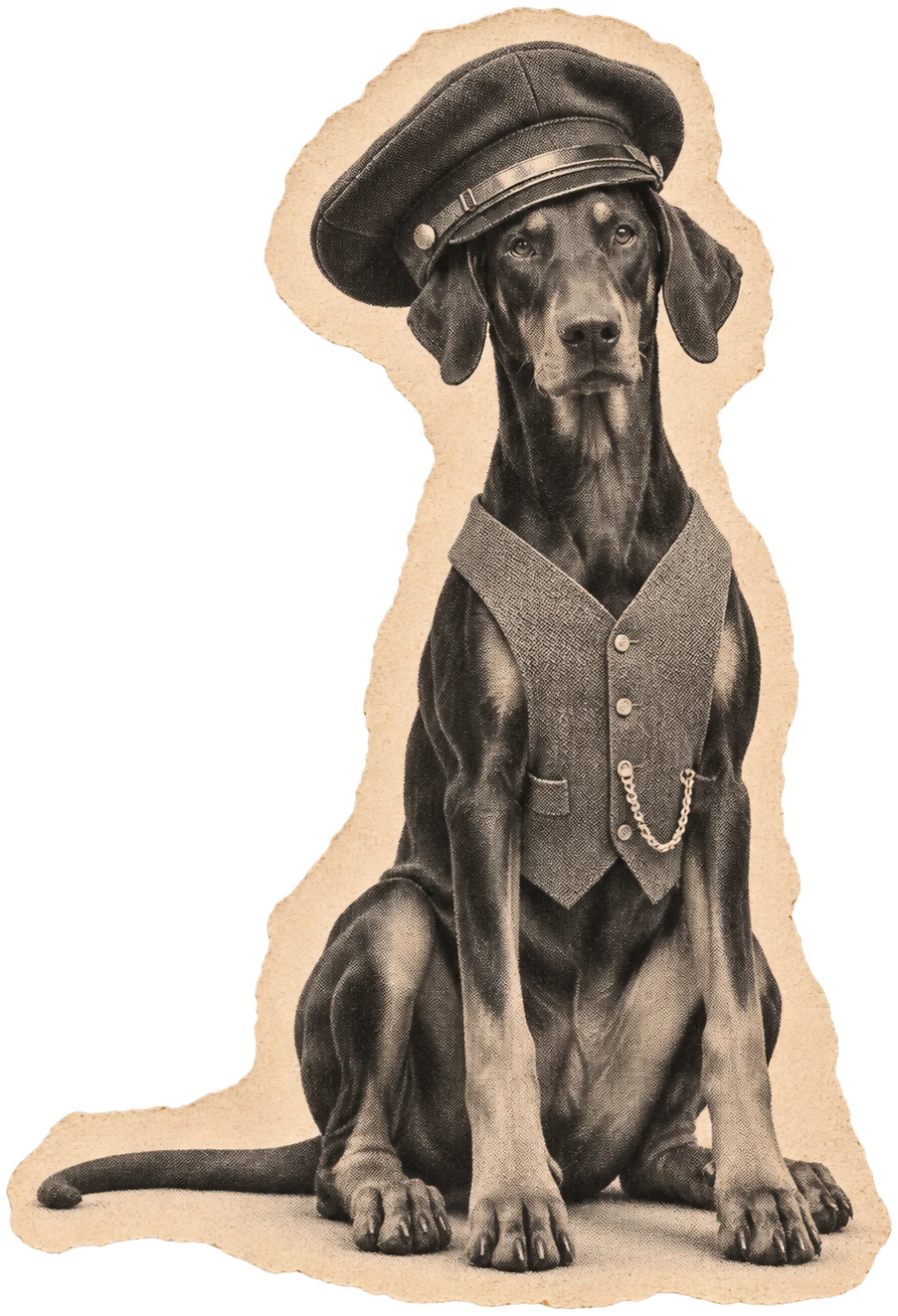
A Dobermann is a tall, quick, short-coated working dog from Germany. The dog that looks like it’s guarding a nightclub can be the same dog trying to fit on the armchair with you. They’re strong enough that pulling on the lead matters, alert enough that the front door needs a plan, and prone to a heart condition that can be silent. Give them decent walks and a way to switch off, and ask your vet about heart screening before you need a reason to. 123510
Jump to a section
The short version
The first two jobs I’d teach a Dobermann are waiting while a door opens and turning back towards you on a walk. Neither looks particularly good on Instagram. Both are useful when you’ve got one hand on the shopping and several stone of dog have just noticed something you haven’t. Start with an easy door or a quiet bit of pavement, and get the practice in before you need it. 3111213
If you already have one, make sure you’ve got the emergency vet’s number and ask at your next visit what their heart-screening plan would look like. A dog can still be asking for another lap of the park when a heart problem is already detectable. Symptoms and late-night emergencies are a separate matter, covered in the health section below. 5678
Dobermann notes / 01
The first things to sort
| Start here | What helps |
|---|---|
| At the door | Teach a wait away from the threshold. Use a barrier when you need management rather than practice. 1011 |
| Out and about | Reward turning towards you before they hit the end of the lead. Practise somewhere boring first. 1213 |
| At the vet | Ask about regular cardiology screening, even if the dog looks fit and well. 56 |
| On the fridge | Save the out-of-hours vet details and know what dry retching or collapse means. 78 |
Dobermann, Doberman and Pinscher
Dobermann, with two n’s at the end, is the Royal Kennel Club’s UK spelling. The papers that call the breed Doberman Pinscher are talking about the same breed, not a different size or variety. A Miniature Pinscher is a separate breed. Don’t use a body weight, suitability statement or health result for one to fill in a gap for the other. 124914
The Royal Kennel Club standard describes a short coat and accepts several colours with rust markings. That’s a description, not a shopping list. A breeder who can show you an actual heart screening report is telling you more than somebody who can spend ten minutes explaining how special a particular shade is. 125
Size, weight and how much room they need
The UK show standard’s ideal height at the shoulder is 69 cm for males and 65 cm for females. The FCI standard, a separate international reference, gives approximate weights of 40 to 45 kg for males and 32 to 35 kg for females. Those are standards, not a target you need to feed your own dog towards. A vet can help you assess body condition and note changes over time. 1415
For actual living space, look at the dog in front of you. Can they turn and lie comfortably in the car? Will a gate stand up to a large dog leaning against it? Is there a bed long enough for them to stretch out without you stepping over them every time you make a cup of tea? If they’re reluctant to jump into a car when they used to jump straight in, that’s worth a vet conversation rather than a harder shove from behind. 31516
Dobermann notes / 03
How big is a Dobermann?
Coat, ears and getting them used to being checked
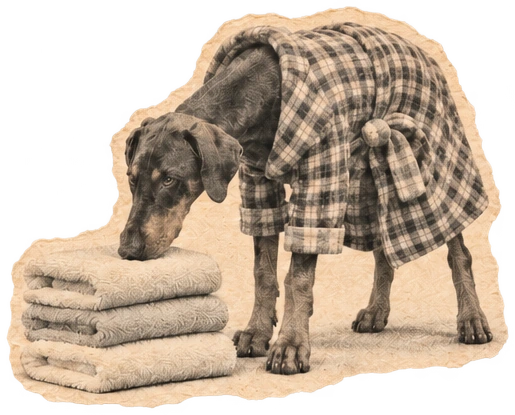
The short coat is low on faff, not exempt from care. A soft brush or grooming mitt will deal with loose hair, and a quick pass over the belly, feet and the bits under the harness gives you a chance to spot a rub. If yours shivers on a wet, cold walk, shorten the outing or try a well-fitting coat that leaves their shoulders free. 131718
Normal Dobermann ears hang down. Pointed ears in pictures are often a result of cropping, not a sign that the dog is a proper Dobermann. If you’re getting your own dog used to having their ears or feet handled, do a quick touch, reward and let go. Try again another day if they’re pulling away. Make it easier while they still believe you’re only checking a paw. 41920
Dobermann notes / 04
The short coat and natural ears
| Check | Good habit |
|---|---|
| Short coat | Use a soft brush or mitt; check skin as well as hair. 17 |
| Wet and cold | Pay attention to the dog’s comfort and how well any layer fits. 18 |
| Ears and paws | Practise easy handling rather than forcing an examination at home. 19 |
| Cropped appearance | Upright cropped ears are a cosmetic alteration, not breed authenticity. 420 |
Temperament and the front door
A Dobermann is often very tuned in to what the household’s doing. The bit to keep an eye on is when noticing everything turns into not being able to leave anything alone. A dog who barks once, takes a treat and comes back to you is in a different place from one who stays stiff and fixed on the visitor long after they’ve sat down. Give the second dog space rather than marching them up to say hello. 31021
If arrivals are hard work, have one easy arrangement that applies to everyone: dog behind a sturdy gate before the door opens, visitor gets in and settles, dog gets let out only if that suits the dog and the people. It’s close to impossible to tell how a dog feels about a person while that person’s leaning over them in a narrow hall. If there’s lunging, snapping or an existing bite history, skip the informal introductions and get professional support. 102122
Dobermann notes / 05
Read the dog at the door
| What you see | What to do with it |
|---|---|
| Notices, then comes away | Reward the comeback and make it an everyday option. 1013 |
| Can’t stop watching | Move away from the front door and make it easier to settle. 1021 |
| Lunges, snaps or has bitten | Manage access to visitors and get help through your vet or a qualified behaviourist. 2122 |
Training that comes in handy
Practise a loose lead when you could practically walk in your slippers. Reward the shoulder coming back level with you and move on while there’s still slack. When the dog manages that, try a little more going on, not the entire school run. The difference in effort between moving a 7 kg dog that’s lunging and moving a 35 kg dog that’s lunging is a good argument for boring beginnings. 31223
Teach an emergency turn separately. Pick a phrase, say it once with the dog already inclined to follow and reward a turn back with you. Try it on the ordinary walks too, so it doesn’t become the announcement that they’re about to miss out on something. A long line clipped to a harness can make recall practice safer in an appropriate open space. 121323
Dobermann notes / 06
Practice for a heavy dog
Exercise without running them into the floor
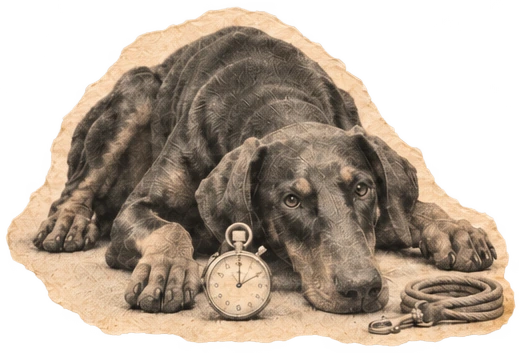
If you’ve got a fit adult Dobermann, expect exercise to be a decent part of your day. Put some time into letting them sniff and explore instead of spending the lot trying to get them panting. If the dog comes back from every walk wired and spends another hour looking for the next thing to do, try a calmer route and a short search game rather than making the walk faster. 32425
Ease off and speak to your vet if your dog is struggling to keep up on familiar walks, develops a cough or takes longer than normal to recover. A change from their usual is the useful bit to tell the vet. If they collapse or are struggling to breathe, ring the emergency vet now. Don’t use another lap of the park as a test. 67
Dobermann notes / 07
Give the walk a purpose
| Situation | Plan |
|---|---|
| Fit adult | Regular outings suited to the dog, with time to sniff and training folded in. 32425 |
| Puppy or older dog | Ask the vet to help find activity appropriate for their age and health. 24 |
| Newly slowing down or coughing | Tell your vet what’s changed rather than upping the exercise. 67 |
| Collapse or breathing difficulty | Contact your vet immediately for emergency help. 7 |
Life at home: give them somewhere off duty
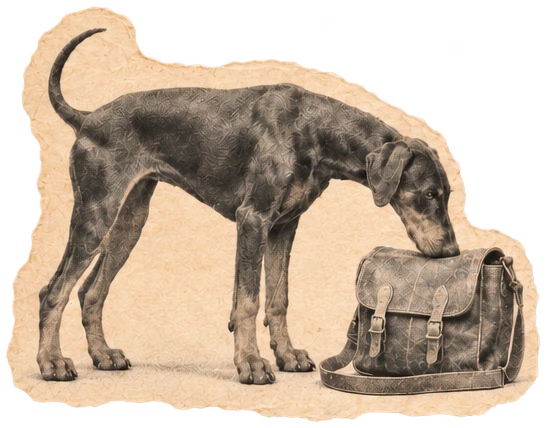
A big dog leaning against your leg while you make dinner can be quite nice until you’re carrying a hot tray. Set a proper resting place away from the route to the oven and practise using it when nothing interesting is going on. Pop a reward over when they choose to lie down there and give them a bit of peace. 26
If your dog shadows you everywhere, make very short absences unremarkable rather than shutting the door on them for the first time when you have to leave for work. If they’re pacing, panting or calling for you as soon as you go, shorten the practice to what they can handle and ask for help if it isn’t settling. A gate can give visitors room to get in safely; it doesn’t fix a dog’s distress at being left alone. 102127
Dobermann notes / 08
A place to go off duty
| Home habit | How to start |
|---|---|
| Leave the kitchen clear | Bed out of the traffic, away from the threshold and open oven. 26 |
| Settle without a prompt | Reward the dog when they choose to lie down rather than making it a long obedience exercise. 26 |
| Practise alone time | Start short and below the point at which they become distressed. 27 |
Children, dogs and cats
Size matters here even if everyone’s friendly. A Dobermann who barrels over to see someone can knock a small child down without meaning to. Keep an adult involved, offer the dog an escape route, and separate them when there’s food, a chew or a lot of running about. Don’t let a child climb onto the dog’s bed to see whether they’ll mind. 328
Before adding another pet, ask about the individual dog’s history and behaviour around similar animals. For a cat, set up a proper barrier and a high or separate route the cat controls. It’s not progress if the dog gets one step nearer each day but the cat now spends the whole evening upstairs. End an introduction while everyone can still move away. 2229
Dobermann notes / 09
Make room for everyone
Heart screening, bloat and other health checks
Dilated cardiomyopathy (DCM) affects the heart muscle and can also disturb the heart’s rhythm. A 2010 European study followed 412 Dobermanns. Its estimate of 58.2% cumulative prevalence compared dogs with DCM at any age with healthy dogs over seven. It’s not 58.2% of all 412 dogs, a current UK survey or a prediction for your dog. Screening matters precisely because some affected dogs aren’t visibly ill at first. 56731
The European Society of Veterinary Cardiology guideline recommends starting screening at three and repeating it annually for life, using both a heart ultrasound (echocardiogram) and a 24-hour ECG (Holter). Ask your vet when to start for your own dog and whether family history or previous results change the plan. A 2026 genetics study found an association with a variant involving RNF207 across populations; that does not turn a DNA panel into a substitute for the two clinical tests. Ask for dated clinical results for both parents if you’re buying a puppy. 5632
Bloat with a twist (GDV) is a different emergency. A Dobermann repeatedly trying to be sick with nothing coming up, especially with drooling, restlessness or a swollen belly, needs the emergency vet now. The swelling isn’t always easy to see, so don’t wait for it. Collapse or struggling to breathe also means emergency help now, whatever you suspect is behind it. 78
A 2024 UK study put median lifespan at 11.2 years (95% CI 11.0–11.5; 3,531 dogs recorded under Doberman Pinscher). That describes the group, not how long one dog will live. As well as cardiology, ask what the vet wants to know before an operation, especially if you know your dog’s von Willebrand disease status or have seen unusual bleeding. 23933
Dobermann notes / 10
Conditions, screening and emergencies
| Condition or check | What an owner should know |
|---|---|
| Dilated cardiomyopathy (DCM) | Ask about regular vet-led screening with a Holter and echocardiogram. Collapse or difficult breathing means emergency help. 567 |
| Gastric dilatation-volvulus (GDV) | Dry retching can be a warning even without an obvious swollen belly. Call the emergency vet immediately. 8 |
| von Willebrand disease (vWD1) | The Royal Kennel Club’s Good Practice DNA test. Tell your vet about known results or abnormal bleeding before procedures. 233 |
| Inherited eye disease and hips | Best Practice adds a PHPV eye exam at least once before breeding and BVA/RKC hip scoring. 23435 |
| DINGS2 | Best Practice also adds this DNA test for a form of inherited deafness with balance problems. 236 |
| Hind-leg weakness or wobbliness | Wobbler syndrome is a recognised breed concern. New weakness or unsteadiness needs a vet assessment, not home diagnosis. 316 |
| UK lifespan estimate | 11.2 years median in the 2024 study; a population figure, not an individual forecast. 9 |
What they’ll cost you
The coat won’t be the big line on most bills. Budget for feeding a large dog, gear that fits, someone who can actually handle your dog if you need cover, and the usual vet costs. Then ask a local practice or cardiology service how much a Holter and scan cost. Annual screening isn’t the sort of extra you want to find out about from a breeder after the dog’s home. 3537
When you get an insurance quote, compare exclusions and ask directly about routine screening and referral cover. Those are two different questions: paying for a test on an apparently healthy dog is not the same as paying for treating a diagnosed condition. If a cost guide quotes a minimum for a large dog, it’s not a promise about your actual bill. 537
Dobermann notes / 11
What to budget for
| Cost | What to price locally |
|---|---|
| Daily basics | Food, replacement kit and basic preventive care for a large dog. 337 |
| Cardiology | Ask about both tests and follow-up, not just the cost of an initial appointment. 56 |
| Support | Training or behaviour advice and a walker or sitter who can manage the individual dog. 212237 |
| Insurance and emergencies | Read the limits and exclusions. Decide what you’d need to cover yourself. 37 |
Why the breed was developed
The Dobermann comes from Germany and is named after Friedrich Louis Dobermann. The FCI’s history says he was believed to have worked as a tax collector and part-time dog catcher, among other jobs. The Royal Kennel Club links the breed to service as well as guarding. Treat any precise recipe for what went into the first dogs with more caution than the internet generally does. 24
The interesting bit for an owner now is what you do with a quick dog that notices what’s changed. You can put it to work finding something on a walk, looking back towards you on cue or going to a bed when someone knocks. Getting the dog to take over security for the cul-de-sac is an option they may invent for themselves; it’s not a hobby you need to encourage. 3101325
Dobermann notes / 12
From Germany to your front door
Buying, adopting or checking paperwork later
When asking a breeder about heart screening, ask which dog was tested, when, and which tests were actually done. Get the dated ultrasound and Holter reports for both parents where possible, alongside the Royal Kennel Club screening results. “Parents health tested” can mean one DNA kit. It doesn’t tell you what was checked, what the results were or whether the heart tests are current. 253839
If you’re adopting, try the breed rescue route as well as general rescues. Ask what happened on an ordinary walk, how the dog coped with visitors and what medical history is written down. No paperwork isn’t a reason to blame the dog. It’s a reason to book a check and give the vet a new starting point. For your own dog, put the cardiology results somewhere you can find them next year. 5213040
Dobermann notes / 13
Check the actual reports
| Ask for | Why it’s useful |
|---|---|
| Named parents and dates | Make sure the reports are for the correct dogs and show when they were tested. 2538 |
| Clinical heart screening | Ask for both the Holter and echo. A DNA result isn’t the same check. 532 |
| The other health results | Check vWD1, DINGS2, eyes and hips against the current breed recommendations. 234353638 |
| Handling and home history | Stories about walks, visitors and rest give you something to plan around. 213040 |
Sources
- S1Royal Kennel Club Dobermann breed standardSource · checked 21 November 2026
- S2Royal Kennel Club Dobermann profile and breeding recommendationsSource · checked 21 November 2026
- S3PDSA Dobermann breed and owner guideSource · checked 21 November 2026
- S4FCI Dobermann standard and historySource · checked 21 November 2026
- S5European Society of Veterinary Cardiology breed screening guidelineSource · checked 21 November 2026
- S6LMU Munich cardiology information for Dobermann ownersSource · checked 21 November 2026
- S7PDSA cardiomyopathy and emergency guidanceSource · checked 21 November 2026
- S8PDSA GDV signs and immediate guidanceSource · checked 21 November 2026
- S9Dogs Trust breed-level figures from the UK longevity studySource · checked 21 November 2026
- S10Dogs Trust preparing for visitorsSource · checked 21 November 2026
- S11Dogs Trust doorway trainingSource · checked 21 November 2026
- S12Dogs Trust lead skillsSource · checked 21 November 2026
- S13Dogs Trust recall practiceSource · checked 21 November 2026
- S14Royal Kennel Club Miniature Pinscher standardSource · checked 21 November 2026
- S15PDSA weight and body condition guidanceSource · checked 21 November 2026
- S16PDSA changes in health and behaviourSource · checked 21 November 2026
- S17PDSA grooming and coat careSource · checked 21 November 2026
- S18PDSA winter walking and layering adviceSource · checked 21 November 2026
- S19Dogs Trust building handling skillsSource · checked 21 November 2026
- S20RSPCA ear cropping and the Dobermann appearanceSource · checked 21 November 2026
- S21Dogs Trust on aggressive behaviour towards visitorsSource · checked 21 November 2026
- S22RSPCA reward training and professional adviceSource · checked 21 November 2026
- S23Dogs Trust positive reinforcement and rewardsSource · checked 21 November 2026
- S24PDSA tailoring exercise by age and individual needSource · checked 21 November 2026
- S25Dogs Trust enrichment and scent workSource · checked 21 November 2026
- S26Dogs Trust settle trainingSource · checked 21 November 2026
- S27Dogs Trust training for time aloneSource · checked 21 November 2026
- S28Dogs Trust dogs and childrenSource · checked 21 November 2026
- S29Dogs Trust introducing dogs and catsSource · checked 21 November 2026
- S30Dogs Trust on choosing and meeting an individual dogSource · checked 21 November 2026
- S31Wess et al. 2010 prospective European cardiomyopathy cohortSource · checked 21 November 2026
- S32Animal Genetics 2026 cross-population evaluation of Dobermann DCM variantsSource · checked 21 November 2026
- S33Dobermann Society of Great Britain on inherited health and bleedingSource · checked 21 November 2026
- S34BVA eye schemeSource · checked 21 November 2026
- S35BVA hip dysplasia scoring schemeSource · checked 21 November 2026
- S36Royal Kennel Club DINGS2 scheme announcementSource · checked 21 November 2026
- S37PDSA cost of ownership guide and exclusionsSource · checked 21 November 2026
- S38Royal Kennel Club Health Test Results FinderSource · checked 21 November 2026
- S39RSPCA checking a responsible breederSource · checked 21 November 2026
- S40Dobermann Society of Great Britain rescue directorySource · checked 21 November 2026
